
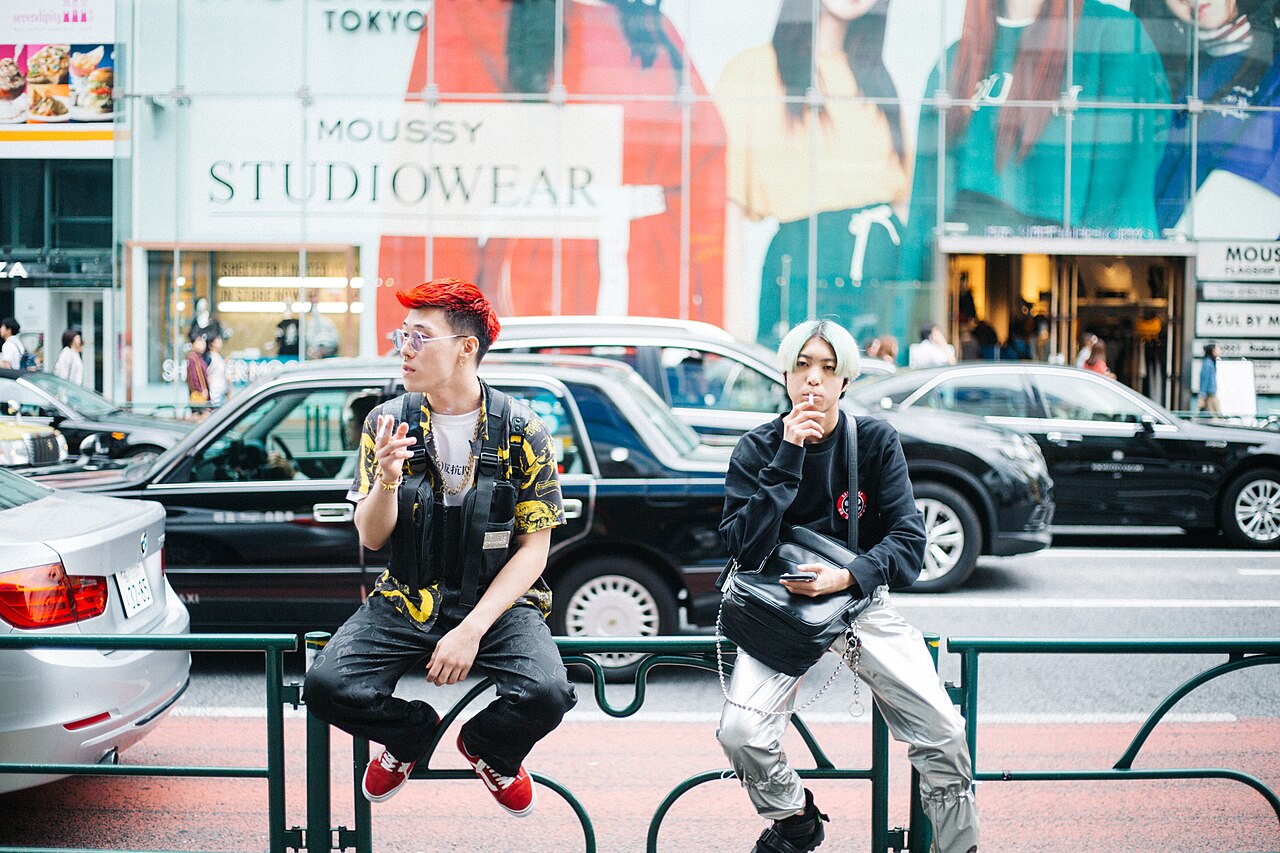
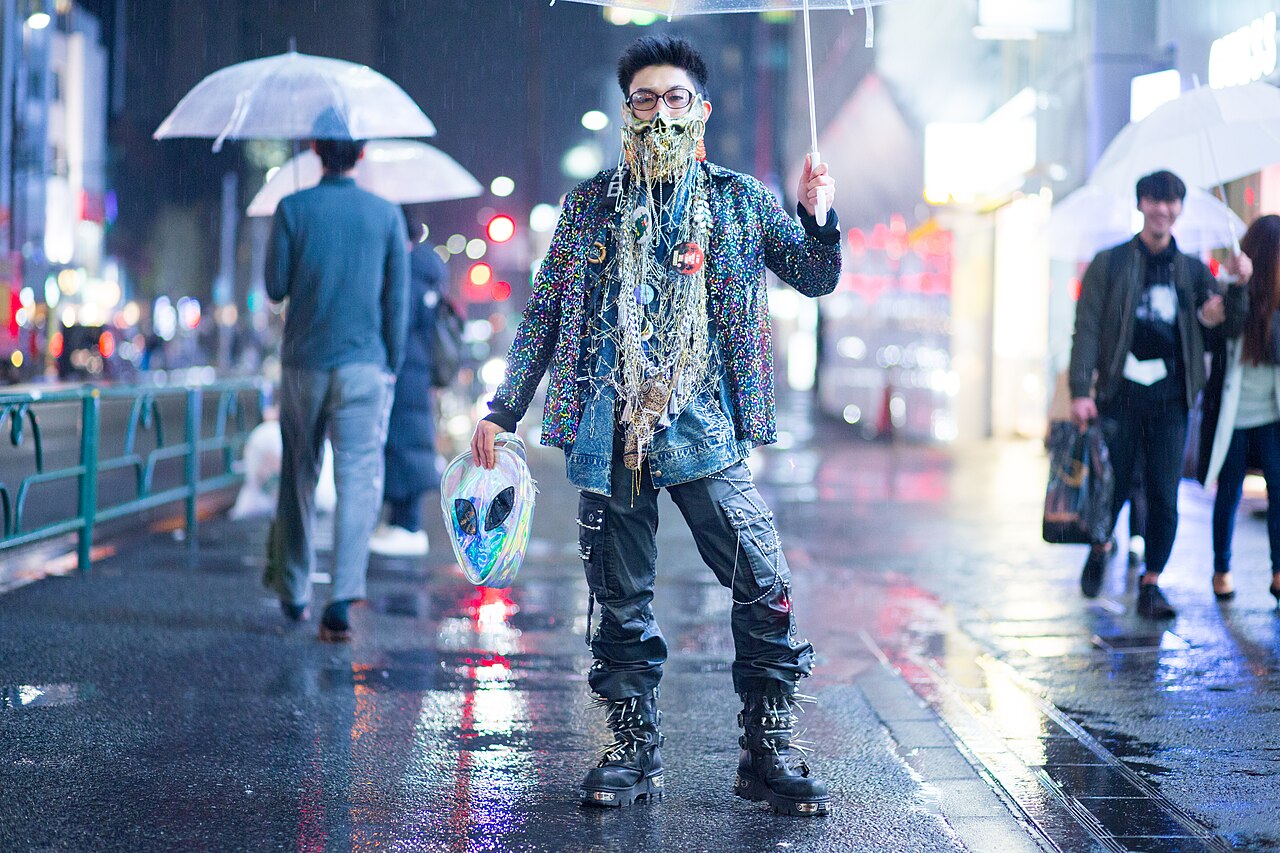
Male harajuku fashion is the men’s side of the street style that formed around Tokyo’s Harajuku district, and it is a group of substyles rather than one look. It covers visual kei, harajuku goth and punk, oversized printed streetwear, decora leaning accessory piles, and cosplay worn as ordinary dress. The shared method across all of them is layering clashing textures and silhouettes, letting accessories carry the outfit, and building height into platform or chunky soled shoes. The scene has never run on gendered dress codes, so men wear makeup, platforms, and pieces sold as womenswear inside it.
If you have only seen harajuku through photos of pastel dresses and hair clips, the men’s version can look like a different scene entirely. It is not. The same rules apply: layer things that should not go together, let accessories carry the outfit, and build height into your shoes.
What Male Harajuku Fashion Actually Is
Male harajuku fashion is an umbrella term for the men’s street styles that grew out of one Tokyo neighborhood, not a dress code. Harajuku names a place, so the looks filed under it share an origin rather than a palette. Lolita coordinates, decora accessory piles, gothic black, and visual kei stage looks all count, and men have been part of the scene since it formed.
A District, Not a Uniform
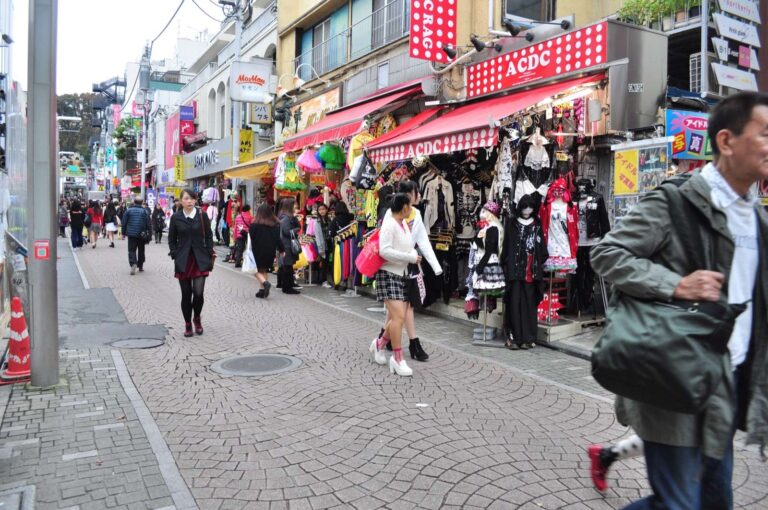
Harajuku is a district in Shibuya, Tokyo, built around Harajuku Station on the JR Yamanote loop line, between Shibuya and Shinjuku. Takeshita Street and the Ura-Harajuku backstreets behind it have long been packed with independent boutiques, vintage shops, and small designers, which is why experimentation concentrated there instead of anywhere else in Tokyo.
Because the name points at a place, “harajuku fashion” covers styles that share almost nothing visually. What they have in common is an origin, not a palette. That is worth knowing before you start shopping, because there is no single men’s harajuku outfit to copy.
Why the Scene Was Never Gendered
Harajuku dressing has never been bound by gendered dress codes, and the layering logic works the same whether you are building around trousers, a skirt, or an oversized jacket. The style grew out of 1980s Japan, when a highly uniform, work driven society pushed young people to answer back through clothes rather than protest.
Weekend crowds swapped the mandatory uniform of the week for something loud, and nobody was checking whether the wearer was a man or a woman. That is still the operating assumption. Men in the scene wear makeup, platform boots, and pieces sold as womenswear without it reading as a statement about anything except taste.
Where the Style Came From
Male harajuku fashion traces back to postwar Shibuya, where the Washington Heights housing complex for United States forces stood from 1946 to 1964 and its surrounding shops brought Western clothing into the area. Independent stores opened along Takeshita Street through the 1970s, Sunday pedestrian zones gave outfits an audience from 1977, and visual kei bands plus FRUiTS magazine carried the men’s look abroad from 1997.
The Post War American Import
In 1946 a housing complex called Washington Heights was built in Shibuya for United States Armed Forces personnel. It operated until 1964, and the shops that opened nearby to serve American servicemembers brought Western clothing and culture into the area. After the 1964 Tokyo Olympics repurposed the site as the Olympic Village, a younger generation moved into the neighborhood and started launching their own clothing labels instead of simply buying imports.
That mix set the pattern the district still follows. Early harajuku dressing meant putting traditional Japanese garments next to modern Western ones and seeing what happened.
Takeshita Street and the Boom Years
By the 1970s independent shops were opening along Takeshita Street, the narrow pedestrian lane running through the middle of Harajuku, and the district was becoming a hub for fashion, rock, and avant garde ideas at the same time. Fashion department stores arrived in the 1980s and the neighborhood locked in its reputation as Japan’s most fashionable address.
The street itself did a lot of the work. From 1977 to 1998, Omotesando was closed to traffic every Sunday, creating a pedestrian zone known as hokoten where young people gathered to show off outfits, dance, and perform. Substyles that had been forming for years, including gothic lolita, sweet lolita, decora, and kogal, hardened into distinct communities during the 1990s.
Music, Magazines, and Global Attention
Two things carried harajuku beyond Tokyo. In 1997 photographer Shoichi Aoki launched FRUiTS, a monthly magazine of candid street snapshots that became a visual archive of the scene at its peak. Around the same period, visual kei bands were exporting a men’s look built on stage costume, and pop culture did the rest. Gwen Stefani put harajuku inspired styling into her performances in the 2000s and introduced the aesthetic to a Western audience that had never seen it.
The district’s own retail history runs alongside that. 6%DOKIDOKI, opened in Harajuku in 1995 by artist Sebastian Masuda, is one of the longest running names attached to the neighborhood’s colorful side, and it is part of why the area is now described as a birthplace of kawaii culture.
| Era | Years | What happened | Why it mattered for men |
|---|---|---|---|
| Post war | 1946 to 1964 | Washington Heights housing and its shops | Western menswear entered the district |
| Street fashion rises | 1970s to 1980s | Takeshita Street growth, hokoten Sundays | Public space to be seen in an outfit |
| Music crossover | 1980s to 1990s | Visual kei emerges from the rock scene | A men’s look with its own vocabulary |
| Global spread | 1997 to 2000s | FRUiTS launches, Western media picks it up | Men’s street snaps circulate worldwide |
The Substyles Men Wear Most
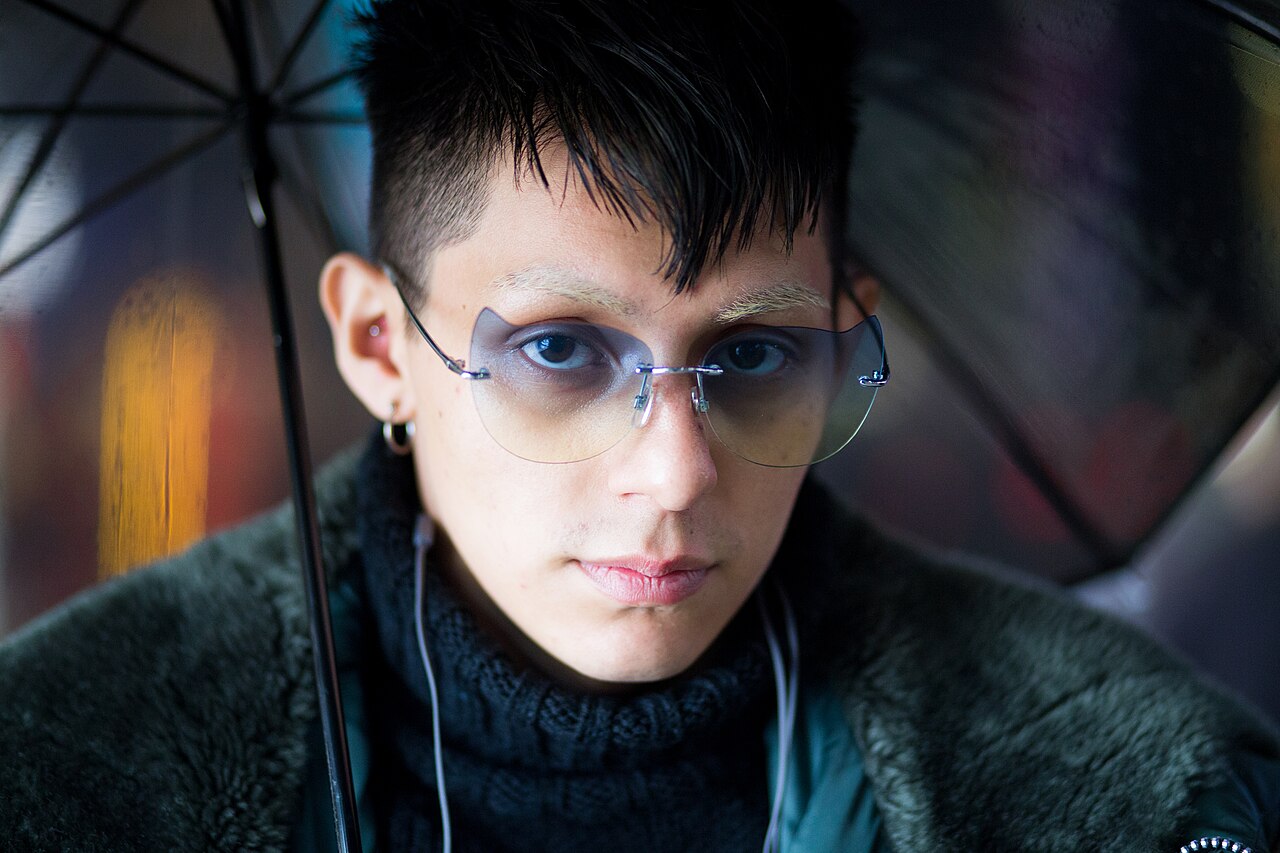
Men in harajuku cluster around six substyles: visual kei, harajuku goth, punk leaning street, oversized printed streetwear, decora leaning looks, and cosplay. They share layering, accessory volume, and platform footwear, and almost nothing else visually. Visual kei and printed streetwear are the two most common entry points for men new to the style, one through music and one through ordinary streetwear silhouettes.
The full range of harajuku substyles includes several that are dominated by womenswear; the six below are the ones that recur on the men’s side.
| Substyle | Core look | Signature pieces |
|---|---|---|
| Visual kei | Theatrical, androgynous, music driven | Dark or colored punk cuts, dramatic hair, makeup |
| Harajuku goth | All black with local street detailing | Chains, chokers, dark metals, lace, oversized hats |
| Punk leaning street | Edgy and rebellious | Leather, spikes, plaid, studded belts |
| Printed streetwear | Oversized silhouettes and bold graphics | Graphic tees, roomy jackets, wide trousers |
| Decora leaning | Maximal color and accessory volume | Hair clips, plastic jewelry, character goods |
| Cosplay | Character dressing worn as fashion | Full costume, matched makeup and props |
Visual Kei
Visual kei came out of Japan’s music scene in the early 1980s and peaked in the first half of the 1990s. The name translates roughly as “visual genre”, and it describes a music and clothing style at once: a band could play rock, metal, or rap as long as the look and the stage performance carried equal weight. X Japan sit among the founders of the movement.
The clothing runs to punk inspired cuts in black or strong color, extravagant bleached or dyed hair, and a deliberately androgynous silhouette. It is frequently mistaken for emo, which it is not. For men this is the most fully developed harajuku look available, and visual kei remains the entry point most Western fans find first, partly because the bands travel.
Harajuku Goth and Punk
The goth corner of the district is centered on the area around Takeshita Street, and it has stayed there for years. All black clothing, dark accessories, and a moody register make it the direct opposite of the neighborhood’s kawaii reputation, and the range inside it runs from vintage leaning gothic lolita to wilder visual kei goth.
What separates harajuku goth from Western goth is what gets mixed in. Local street fashion, anime and manga references, brighter accent colors, and more varied fabrics all show up, so the layering and the lace sit next to chains and oversized hats rather than replacing them. The punk side of the same corner leans on leather, spikes, and plaid, and it shares a lot of its wardrobe with harajuku goth.
Printed Streetwear
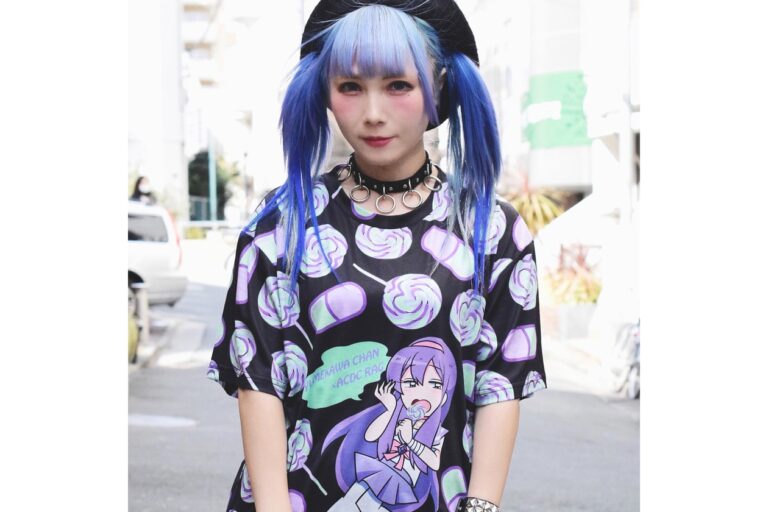
Oversized streetwear with strong graphics is the most wearable men’s route through harajuku, because it starts from a silhouette most people already own. Japanese streetwear built its reputation on roomy cuts, bold prints, and layering, and Harajuku is where that vocabulary was assembled. Graphic tees with large anime prints and jackets with metallic or high shine finishes are the usual statement pieces.
Relaxed cuts do a lot of the work. Roomy jackets and wide trousers give the outfit its volume and its freedom of movement, and a lot of Japanese streetwear still reads that way today.
Decora Leaning Looks
Decora appeared in Harajuku in the late 1990s and is built on accumulation. The point is to layer as many colorful accessories as possible, often until they obscure the clothing underneath, and there is very little structure beyond that. Men wear it, though usually with a lower accessory count than the full decora coordinates the style is famous for.
One piece of practical advice from inside the scene: keep one dominant color running through the outfit, otherwise the whole thing tips into noise. Acid brights, layered garments, and plush bags are the standard components.
Cosplay
Cosplay, short for costume playing, means dressing as a manga, anime, or game character, and in Japan it functions as a clothing style rather than a once a year hobby. Walk through Harajuku on a weekend and you will find people in full character dress standing next to people in ordinary street looks. The commitment is to the character rather than the silhouette: the costume has to be accurate, and the makeup and props are part of it.
How to Build a Male Harajuku Outfit
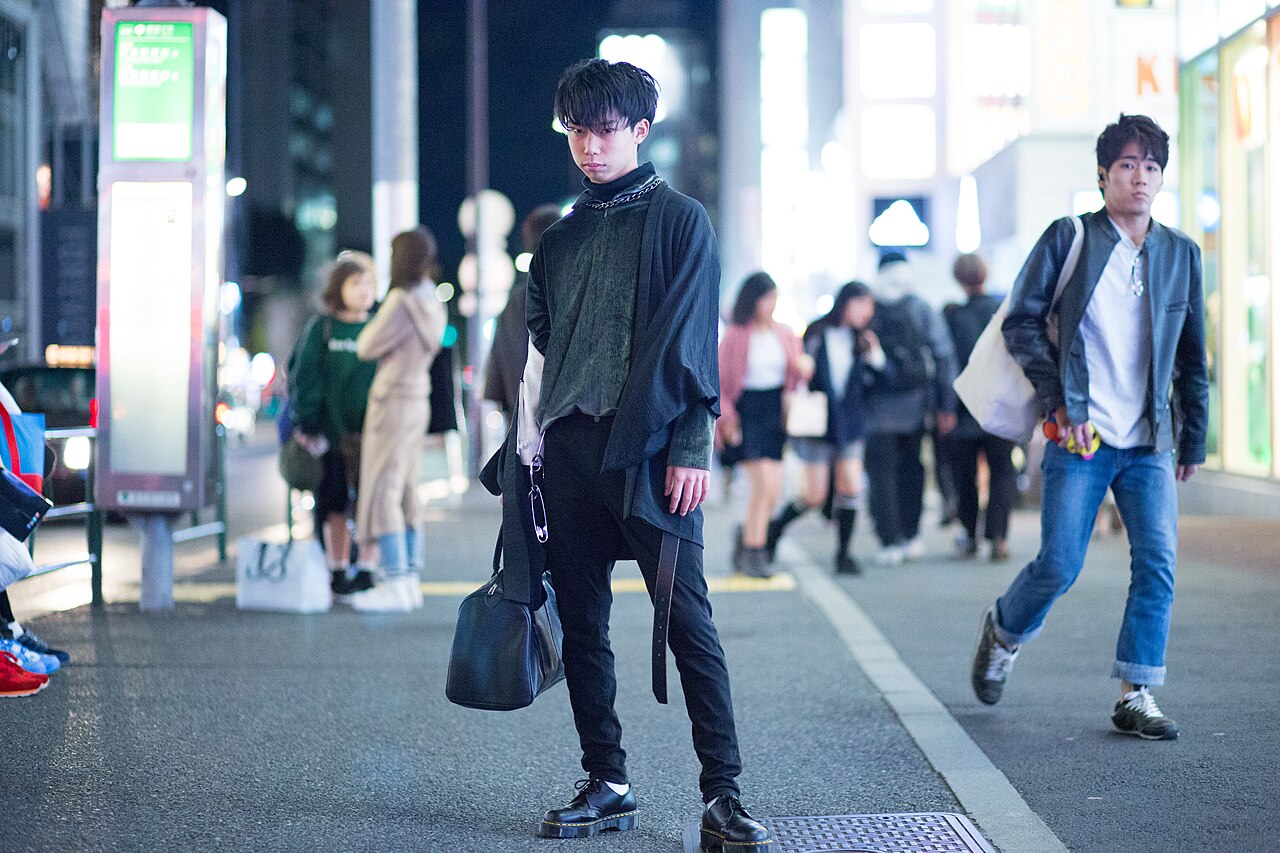
Building a male harajuku outfit works in five moves. Layer contrasting textures, patterns and silhouettes rather than matching them. Add one statement piece, usually a graphic tee or a metallic jacket. Stack accessories such as chains, harnesses and chunky rings. Finish on platform or chunky soled shoes. Treat hair and makeup as part of the outfit, not a finishing touch. None of it requires Japanese brand pieces to start.
Layering
Layering is the foundation, and it means deliberately mixing textures, patterns, and silhouettes in one outfit. Conventional advice tells you to match. Harajuku runs on contrast instead, which is why an oversized jacket over slim fit trousers works, or a long tunic shirt under a shorter vest.
Build it in order. Start with a base layer, add a bottom half that either complements or clashes on purpose, then put outerwear over the top and let small things peek out from underneath, a cuff or a sock or a belt buckle. Here is a starting sequence that holds up across substyles:
- Begin with a plain base, a tee and trousers
- Add one or two harajuku pieces, a graphic tee or a printed jacket
- Mix textures and patterns rather than matching them
- Layer accessories on top
- Finish with platform or chunky soled footwear
Statement Pieces
Every men’s harajuku outfit needs at least one item doing the heavy lifting. Graphic tees with bold anime prints and futuristic jackets with metallic finishes are the usual candidates, and they are what pulls attention through the rest of the layers.
Balance is the safest way in. One standout piece against a more restrained outfit produces something wearable, while stacking several strong pieces at once produces mess, which is the most common way a men’s harajuku outfit goes wrong.
Accessories
Accessories are where harajuku separates from ordinary streetwear, and the working philosophy is that more is more. On the men’s side that means chunky necklaces, leather harnesses, studded belts, chunky rings, and layered chains, with hats, scarves, and sunglasses adding another pass. Playful items belong too, plush keychains and colorful bags included.
A large share of it is not bought finished. Repurposing vintage finds, hand decorating cases, assembling charm bracelets out of thrift store parts, and adding pins, patches, or fabric paint to plain garments are all standard practice. The goal is a set of pieces that reads as yours rather than a package someone else assembled.
Footwear
Platform shoes and chunky soles are the most consistent thread across every harajuku substyle. Height and visual weight at the bottom balance out layered, accessory heavy outfits and shift the proportions of the whole silhouette, which is why the shoes matter more here than in most street styles.
The specific pair follows the substyle. Gothic and visual kei looks take buckled platform boots with an industrial feel, and lace up combat boots do similar work. Brighter, decora leaning outfits take colorful platform sneakers instead. Traditional Japanese sandals, geta, also turn up paired with fully modern outfits, which is very much in the spirit of how the district started.
Hair and Makeup
Hair and makeup are not finishing touches in harajuku, they carry as much weight as the clothes in several substyles. Vibrant wigs, bold dye jobs, and clip in extensions all appear, and the color usually either echoes or deliberately fights the outfit palette.
Makeup on men is normal here rather than remarkable, and it varies by substyle. Visual kei and the goth corner run to dramatic dark eye work, smudged shadow, and sharp liner. If you are experimenting, start light and build up, and give the skin some preparation first, because dramatic makeup shows every uneven patch underneath.
Mistakes That Flatten the Look
Male harajuku outfits fail in four predictable ways: wearing every strong piece at once, letting a single element dominate, skipping a dominant anchor color, and following the rules too literally in a scene built on breaking them. Each one is fixable by subtraction rather than by buying more.
- Wearing every strong piece at once, which produces an outfit with no focal point instead of a maximal one
- Letting a single element dominate, such as heavy glitter piled on top of already heavy dark eye makeup
- Ignoring color anchoring, when one dominant color running through the outfit is what keeps decora leaning looks readable
- Sticking too closely to rules, which is the one mistake the scene genuinely punishes
Wearing Male Harajuku Fashion Outside Japan
Male harajuku fashion works outside Japan by starting with one statement piece worn against clothes you already own, sourcing the rest from thrift, vintage and DIY customization rather than Japanese labels, and adjusting the layering by season. Most people wearing the style have never shopped in Harajuku, and the scene’s own method has always been secondhand and hand made rather than brand led.
Start With One Piece
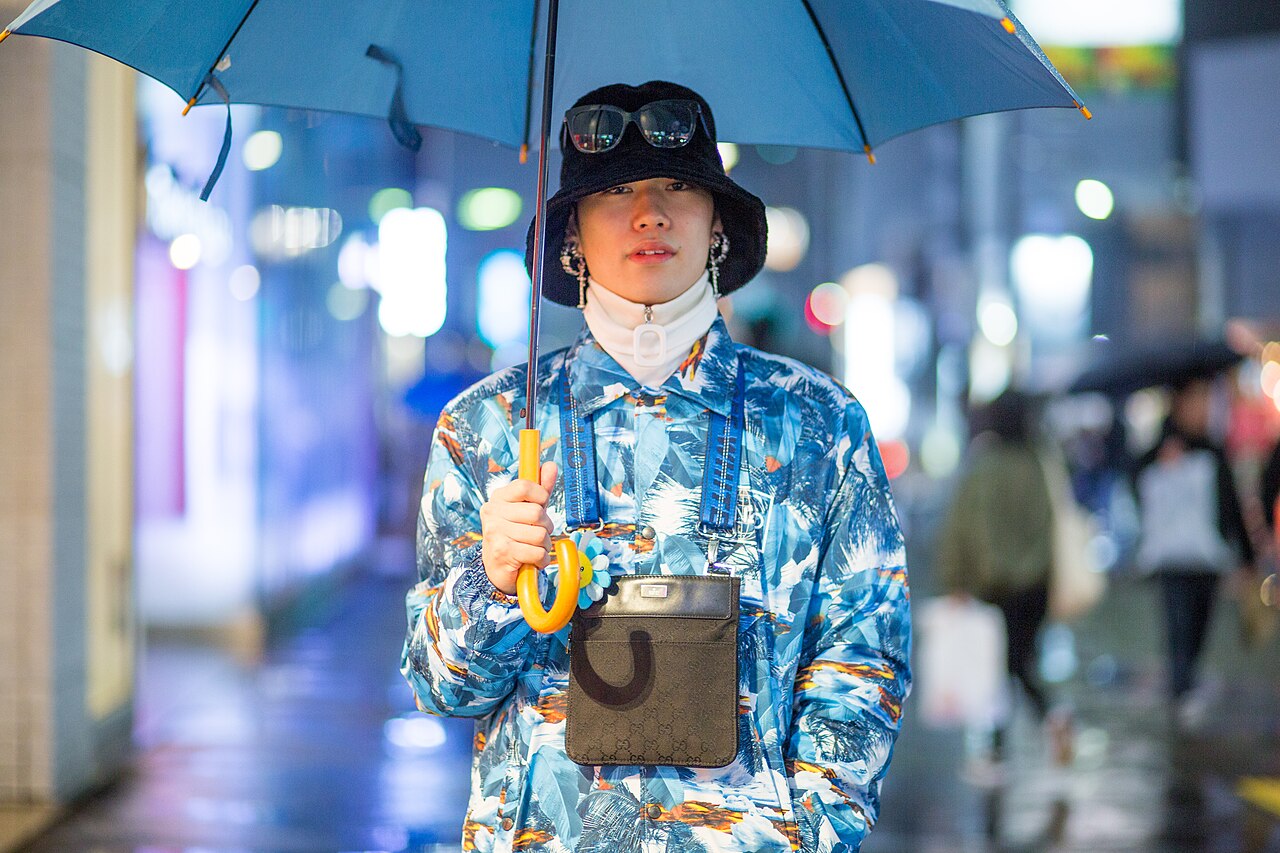
The lowest risk entry is a single statement item worn against clothes you already own. A printed jacket over a plain base, or platform boots under otherwise ordinary trousers, gets you into the style without turning the outfit into a costume. That approach also travels better than a full coordinate does when you are pairing harajuku pieces with everyday Japanese casual wear rather than committing to one substyle.
Adding pieces one at a time also lets you find out what you actually like. Try an oversized jacket, then denim, then something more daring, instead of arriving at the deep end on day one.
Thrift, Vintage, and DIY
Secondhand shopping is not a budget compromise in this scene, it is closer to the core method. Harajuku’s own vintage stores are treasure hunts that reward patience, and the same logic works at any thrift shop: you are looking for one piece nobody else will be wearing. Customization then does the rest, through pins, patches, fabric paint, or hand cut hems.
Street snap archives are the record of what men in the scene actually wear, as opposed to how catalogs present it. Photographs taken on the street over the years show proportion and accessory volume more accurately than a styling guide does, which makes them the better thing to study before you buy anything.
Seasonal Adjustments
Layering behaves differently across the year. Summer means lightweight fabrics, layers you can shed through the day, and socks doing accessory duty. Winter is when the style is easiest, because texture becomes the point: faux fur, chunky knits, and outerwear treated as part of the outfit rather than something worn over it.
FAQs
Is harajuku fashion only for women?
No. Harajuku fashion has never been bound by gendered dress codes, and men have been part of the scene since it formed. Bold patterns, oversized pieces, edgy accessories, and makeup are all standard on the men’s side, and visual kei and punk in particular are heavily male.
What are the popular harajuku brands for men?
Harajuku is not a brand led scene, which is why the question is harder to answer than it looks. The district’s identity came from independent boutiques, vintage shops, and small designers rather than a set of labels, and a large share of what people wear is secondhand, customized, or made by the wearer. The useful answer is a method rather than a list: hunt vintage racks, watch what turns up on the street, and customize what you find.
Do men wear makeup in harajuku fashion?
Regularly, and it is not treated as unusual. Visual kei is built partly on dramatic makeup and theatrical hair, and the goth corner runs to dark smudged eye work and sharp liner. In several substyles the makeup carries as much of the look as the clothing does.
Is harajuku fashion expensive?
It does not have to be. Some labels sit at the high end, but the style is built on creativity rather than spend, so thrifted and DIY pieces mixed with one or two key statement items will get you there. The accessory culture in particular runs on repurposed and hand made items.
Is harajuku fashion still popular?
The peak era of wildly dressed weekend crowds is generally considered to be behind the district, but the scene did not disappear. It moved partly into online communities and events, newer looks such as jirai kei and the Y2K revival keep emerging, and committed enthusiasts still carry the style on the street in Harajuku itself.
If you want to start with one piece rather than a full coordinate, Kamicrew’s Japanese street style collection is built around the kind of graphic outerwear and printed tees that anchor a harajuku outfit.
Kamicrew Best Seller

Dont Touch Me Yokai Ukiyo-E Japanese T-Shirt
$25.49+
$29.99
(15% off)


Summer Vibes Salty Kawaii Japanese Hoodie
$44.99+
$49.99
(10% off)


Japanese Pin Horror 80s Retro Aesthetics T-Shirt
$25.49+
$29.99
(15% off)


El Gran Maja Japanese Kaiju T-Shirt
$25.49+
$29.99
(15% off)


Who Wants The Perfect Body Japan Capybara Kawaii Japanese Unisex Shirt
$25.49+
$29.99
(15% off)


Monster 8 Mask Vintage Animal Hoodie
$44.99+
$49.99
(10% off)


I Hate People Japanese Opossum Vintage Animal Hoodie
$44.99+
$49.99
(10% off)


I Got That Dog In Me Small Turtle Vintage Animal T-Shirt
$25.49+
$29.99
(15% off)

The Creation Of Cat Ukiyo-E Japanese T-Shirt
$25.49+
$29.99
(15% off)