
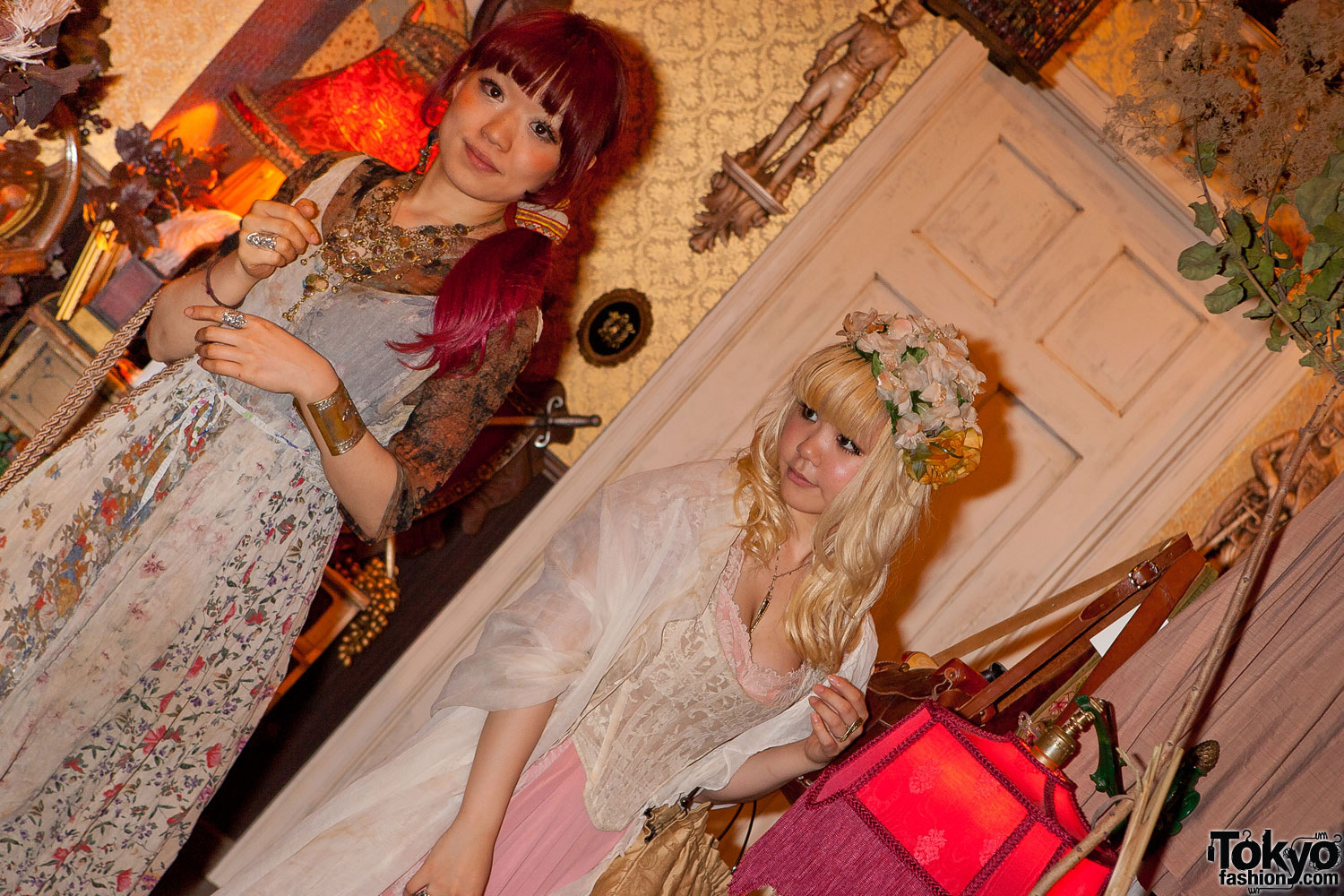
Dolly kei is a Japanese fashion style built on European vintage clothing, antique dolls and the visual world of old fairy tales, worn in heavy layers of dark jewel tones and obviously secondhand fabric. It grew out of a single Shibuya antique boutique, Grimoire, and was at its most visible between 2010 and 2012. Almost every piece in a coordinate is thrifted, antique, handmade or reconstructed rather than bought from a brand.
The name is the most confusing thing about it. Dolly kei sounds like it should mean something cute and doll-like, and the actual look is darker, older and more adult than that. The term was coined outside Japan and was never used by the people who invented the style, which is worth getting straight before anything else.
What Dolly Kei Is
Dolly kei is defined by three things at once: every garment reads as vintage, the palette runs dark, and the layers run deep. Lace, embroidery, faux fur and oversized accessories borrowed from the creepier end of fairy tales fill out the coordinate. The clothes are meant to look battered and worn rather than new, and clashing patterns are encouraged rather than corrected.
Coordinates do not have to look cohesive in the conventional sense. Clashing patterns, colours and accessories are actively encouraged, and the effect is closer to a collected wardrobe than a matched outfit. What the style does insist on is that its historical and cultural influences stay visible: European folk dress, Romani culture, clothing worn by peasants in the Middle Ages, and the story worlds of the Brothers Grimm and Hans Christian Andersen.
There is no strict rulebook. No set hemline, no required silhouette, no fixed heel height. Layering matters enormously in practice but is not technically mandatory. Dolly kei sits at the darker and older end of Tokyo’s street subcultures, closer to a European antique shop than to anything pastel.
Where the Name Dolly Kei Came From
The name dolly kei was coined outside Japan, by the international fan community. It came from “Dolly” (ドーリー), the name one of Grimoire’s creators used for her own line of accessories, which outsiders mistook for the name of the entire style. The Japanese wearers who built the look called their clothing antique, used or simply vintage instead.
Hitomi Nomura, Grimoire’s founder, has written about what vintage means to her on her own blog in exactly those terms. The creators never accepted the borrowed label, and one of them is reported to have laughed the first time she heard the mistranslation. It stuck anyway, spread far enough that Japanese media eventually referred to it as ドーリー系, and it is now unlikely to be replaced. The style also travels under Dolly Style, Antique Kei, Grimoire Kei and Antique Dolly Fashion.
One quirk follows from all this. Inside Japan, “dolly kei” is generally understood to mean a doll-like look in a broad sense, so the term only points at this specific style when it is used abroad.
How Dolly Kei Started in Shibuya
Dolly kei formed around Grimoire, a Shibuya boutique founded by Hitomi Nomura that billed itself as a European and US antique shop. It ran as an active street style from roughly 2009 to 2012, peaked between 2010 and 2012 when street snaps of it were common, and declined steadily after 2012.
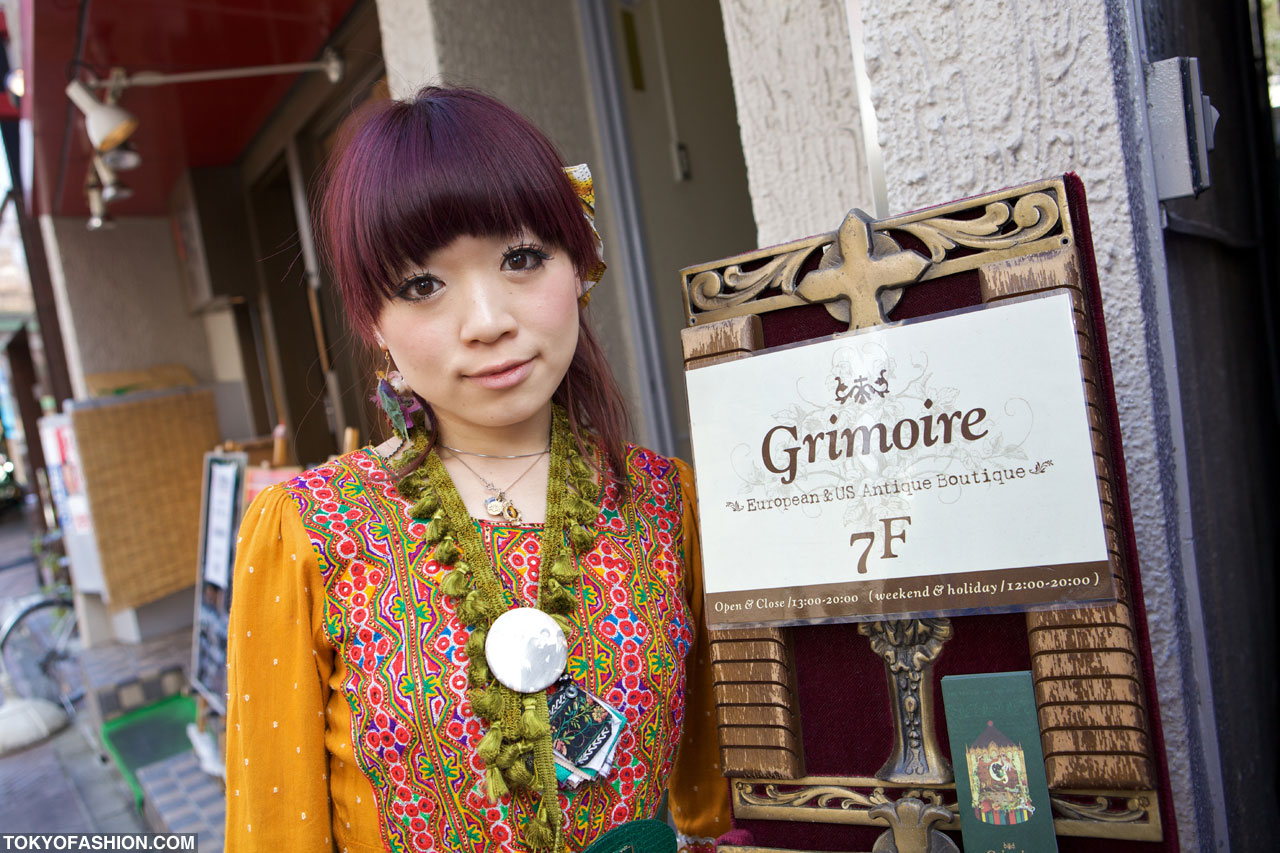
Grimoire stocked hand-selected, frequently reconstructed vintage pieces in an interior that visitors compared to a museum. Nomura has said the look drew on used and vintage clothing from America and Europe, on European folk tales, and on films and stories including Harry Potter and Alice in Wonderland.
For part of that run dolly kei was treated as a sister style to mori kei, which is where a lot of the confusion between the two started.
What Defines the Dolly Kei Look
Four elements define a dolly kei coordinate: a dark jewel-tone or black palette, heavy visible texture such as embroidery, lace, tassels and fur, deep layering that is usually pulled in at the waist, and large antique-looking accessories worn in quantity. Hair and makeup stay natural, and footwear is Victorian or vintage-looking with no rule on heel height.
Colour and Fabric
Black and jewel tones carry most of the style. Dark greens, reds, blues and browns come up repeatedly, along with any colour you would expect to find in an ethnic pattern or a medieval tapestry. Light and pale shades including white do appear, and one strand of the style leans that way deliberately, but the dark palette is far more common and far more associated with the look.
Texture does as much work as colour. Embroidery, tapestry, lace, tassels, fur and floral prints get combined in a single coordinate, and mixing weights and patterns is the point rather than a mistake. A dolly kei outfit without a significant amount of visible texture tends not to read as dolly kei at all.
Layering and Silhouette
Layering is the mechanism that makes the style work, and the guiding instinct is more is more. Skirts and dresses dominate, with sweaters, shawls, capes and coats stacked over them. Hemlines run anywhere from mini to floor length.
Where dolly kei separates from the forest styles it gets confused with is the waist. Mori keeps its layers loose and shapeless; dolly kei frequently pulls them in with a belt or occasionally a corset, so the silhouette ends up more defined even under a lot of fabric.
Accessories
Accessories carry as much of dolly kei as the garments do. They run large and deliberately unsubtle, there is no upper limit on how many go into one outfit, and coordinates can end up looking pleasantly cluttered.
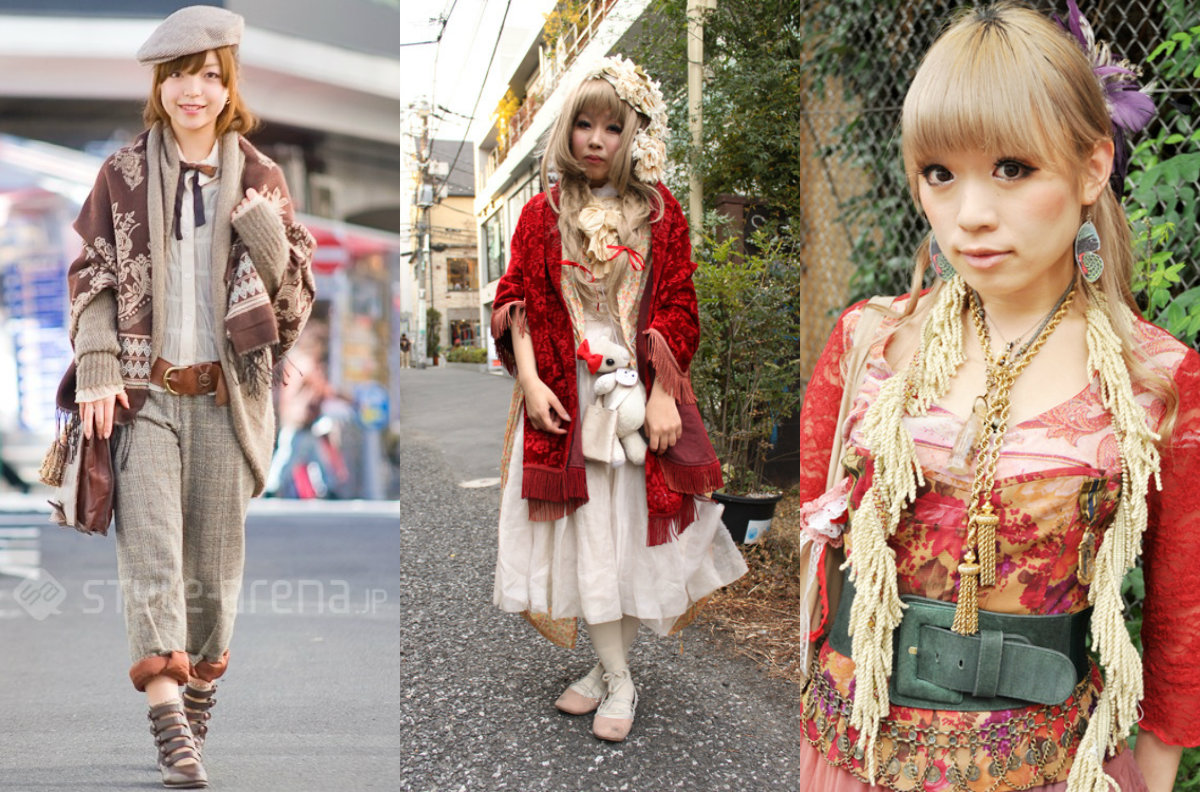
Tassels went through a long run of popularity, as did fur. Brooches, layered necklaces, hair ornaments, lace chokers, oversized crosses and other religious relics all appear, alongside vintage toys and small antiques used as jewellery. Handmade and one-of-a-kind pieces are prized specifically because they are handmade, and the more visibly worn an item is, the better it sits in the style.
Hair, Makeup and Shoes
Hair stays natural and fairly simple. Waves, braids and loose updos are the standard, in dark natural colours: black, brown and deep red. Makeup is usually natural too, though thick lashes and heavy blush are common enough to read as part of the look.
Footwear is the least regulated part of the style. Simple, vintage-looking shoes suit it best, with Victorian styles and mary janes the most frequent picks, and handmade shoes turn up as well. Heel height is entirely open.
Why Dolly Kei Reads as Creepy but Stays Subtle
Dolly kei does use unsettling objects. Animal bones, real fur and antique doll heads or loose doll parts get worked into outfits, and the fairy tale references skew toward the grim originals rather than the sanitised versions. Those elements stay small and carefully placed, so the reputation for creepiness is only half right.
The difference from cult party kei is placement. In dolly kei the unsettling elements register as an odd detail on an otherwise elegant outfit instead of being the first thing anyone notices. Cult party kei puts them front and centre; dolly kei tucks them in.
Dolly Kei for Men
Men’s dolly kei existed from the beginning and had a solid following of its own. It works on identical principles, with the same vintage sourcing, the same dark palette and the same heavy layering, and swaps most of the skirts and dresses for trousers.
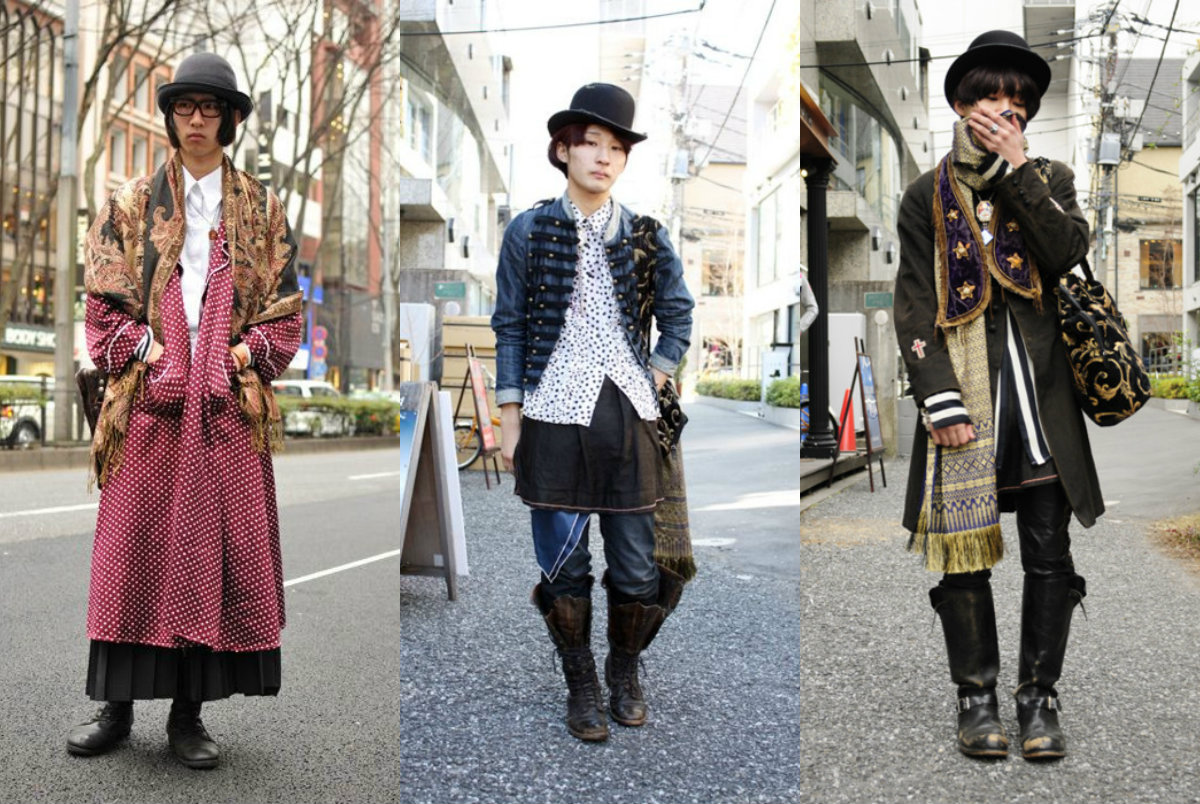
Bowler hats, tapestry scarves, embroidered waistcoats and long coats do a lot of the work in a men’s coordinate, with the same emphasis on visible age and texture that drives the women’s version.
Dolly Kei Next to Lolita, Mori Kei and Cult Party Kei
Dolly kei, mori kei and cult party kei all layer heavily and source from vintage rather than brands, which is why they get confused. Dolly kei is the dark, jewel-toned one with a defined waist, mori kei is the loose earth-toned one, and cult party kei is the pale unsettling one. Lolita is the outlier: rule-bound, pristine and built on brand pieces.
Of the three, cult party kei is the closest relative to dolly kei, and the styles genuinely traded elements: red crosses and pale peignoirs crossed over from cult party into dolly coordinates fairly often.
The comparison people ask about most is with lolita. The two share Victorian, doll-like and generally old-fashioned reference points, which is where the resemblance ends. Lolita is built on rules, on a defined silhouette and on a youthful, kawaii register, and its garments are meant to look pristine. Dolly kei has no rules to speak of, no set hemline and no interest in looking young or cute, and it wants its clothes to look old and worn. If you have read about gothic lolita, the darker palette will feel familiar even though the construction philosophy is the opposite.
| Style | Palette | Silhouette rules | Main sourcing | Mood it aims for |
|---|---|---|---|---|
| Dolly kei | Jewel tones and black | None, hem and heel open | Vintage and antique | Old, dark, slightly haunted |
| Mori kei | Earth tones and cream | Loose, undefined waist | Vintage and natural fabrics | Soft and pastoral |
| Cult party kei | Pale, white and pastel | Loose and layered | Vintage and handmade | Pale and unsettling |
| Lolita | Varies by substyle | Strict and defined | Brand pieces | Neat and doll-like |
The practical tell is condition. Mori kei and lolita both want their clothes to look cared for, while dolly kei wants visible age on every layer.
Where to Find Dolly Kei Clothes
Dolly kei clothing comes from vintage, antique and consignment shops, flea markets, craft shops and ordinary secondhand rails rather than from labels. One-of-a-kind and handmade pieces are the goal, and reconstructing old clothing is standard practice rather than a shortcut.
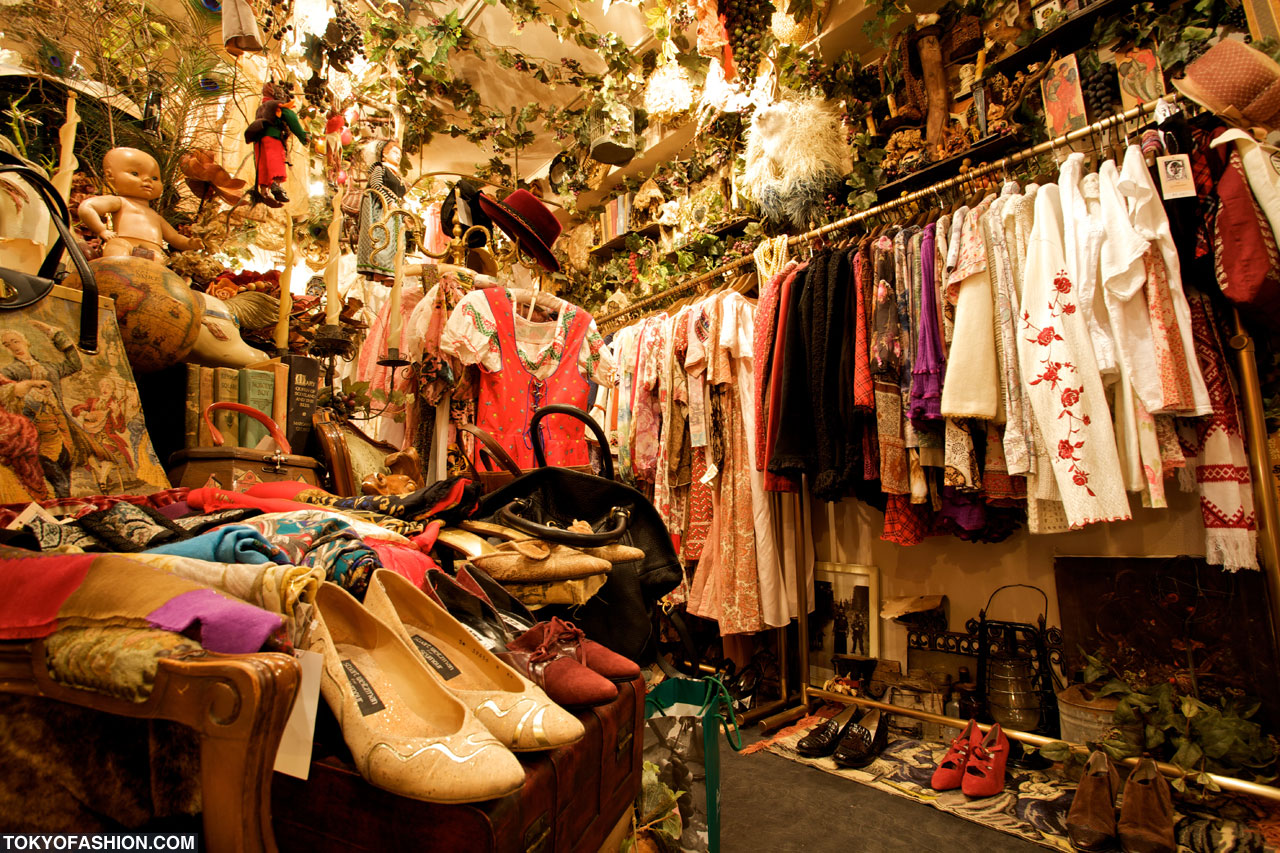
Because dolly kei was never brand-centric, the sourcing question has an unusually open answer. Unique items are the goal, so the hunt matters more than the label.
Certain kinds of garment recur often enough to be worth recognising on a rail. The 1970s prairie and Victorian-revival dress, midi or maxi length with lace panels, floral prints and slightly faded cotton, lands squarely in the aesthetic, and secondhand examples of it turn up far more reliably than any single maker does. Reconstruction is normal too: cutting down, re-trimming and combining old garments is part of how the style has always been assembled.
Is Dolly Kei Still Worn Today
Dolly kei is widely treated as an inactive style. Its popularity dropped sharply after 2012, it is rarely seen on the street now, and much of the material that documented it has disappeared from the internet along with the blogs and photo sets that hosted it. A small number of wearers in Japan and abroad still put coordinates together.
The style retains a certain notoriety in natural and gothic J-fashion circles, where it comes up regularly in discussions of the era. Some habits attached themselves to it without ever being requirements. Nomura has said outright that dolly kei had no lifestyle and was simply an aesthetic, but a recognisable set of interests clustered around it anyway:
- Antique shopping
- Thrifting
- Collecting animal bones
- Taxidermy
- Herb gathering
The community that documented all of this largely lived on LiveJournal and early blog platforms, which is part of why it has proved so hard to trace. The influence outlasted the street presence, though, and shows up in later vintage-leaning and dark natural styles.
FAQs
What is dolly kei fashion?
Dolly kei is a Japanese fashion style based on European vintage clothing, antique dolls and old fairy tales, worn in heavy layers of dark jewel tones with lace, embroidery, fur and large accessories. Garments are meant to look battered and old, and coordinates deliberately clash patterns and textures.
Why do the creators reject the name dolly kei?
Because they never chose it. The term was coined abroad from “Dolly”, the name of an accessory line by one of the shop’s creators, and the people behind the style described their own work as antique, used or vintage. One of them reportedly laughed on first hearing the mistranslation, but the name had already spread too widely to replace.
How is dolly kei different from lolita fashion?
Lolita is rule-based, with a defined silhouette, set proportions and a cute, youthful register, and its pieces are meant to look pristine. Dolly kei has no fixed hemline, silhouette or heel height, prizes clothing that looks worn and distressed, and aims for an older and darker mood rather than a kawaii one.
What is the difference between dolly kei and mori kei?
Both styles layer heavily and source from vintage rather than brands, and they were treated as sister styles for part of dolly kei’s run. Mori kei uses earth tones and cream and keeps its layers loose and shapeless. Dolly kei uses jewel tones and black and usually pulls the layers in at the waist with a belt or corset.
Where can you shop for dolly kei clothes?
Vintage, antique and consignment shops are the main sources, supplemented by flea markets and craft shops. The style was never brand-driven, so one-of-a-kind, handmade and reconstructed pieces count for more than any particular label, and secondhand 1970s prairie and Victorian-revival dresses are commonly worked in.
Is dolly kei still worn today?
Only rarely. It is widely considered an inactive style after its popularity fell away following 2012, though a small number of wearers in Japan and elsewhere still put coordinates together, and its influence persists in other vintage-leaning dark styles.
If the dark, layered, slightly haunted end of Japanese street style is what draws you in, Kamicrew’s Japanese shirt collection is a reasonable place to start building around.
Kamicrew Best Seller

Dont Touch Me Yokai Ukiyo-E Japanese T-Shirt
$25.49+
$29.99
(15% off)


Summer Vibes Salty Kawaii Japanese Hoodie
$44.99+
$49.99
(10% off)


Japanese Pin Horror 80s Retro Aesthetics T-Shirt
$25.49+
$29.99
(15% off)


El Gran Maja Japanese Kaiju T-Shirt
$25.49+
$29.99
(15% off)


Who Wants The Perfect Body Japan Capybara Kawaii Japanese Unisex Shirt
$25.49+
$29.99
(15% off)


Monster 8 Mask Vintage Animal Hoodie
$44.99+
$49.99
(10% off)


I Hate People Japanese Opossum Vintage Animal Hoodie
$44.99+
$49.99
(10% off)


I Got That Dog In Me Small Turtle Vintage Animal T-Shirt
$25.49+
$29.99
(15% off)

The Creation Of Cat Ukiyo-E Japanese T-Shirt
$25.49+
$29.99
(15% off)