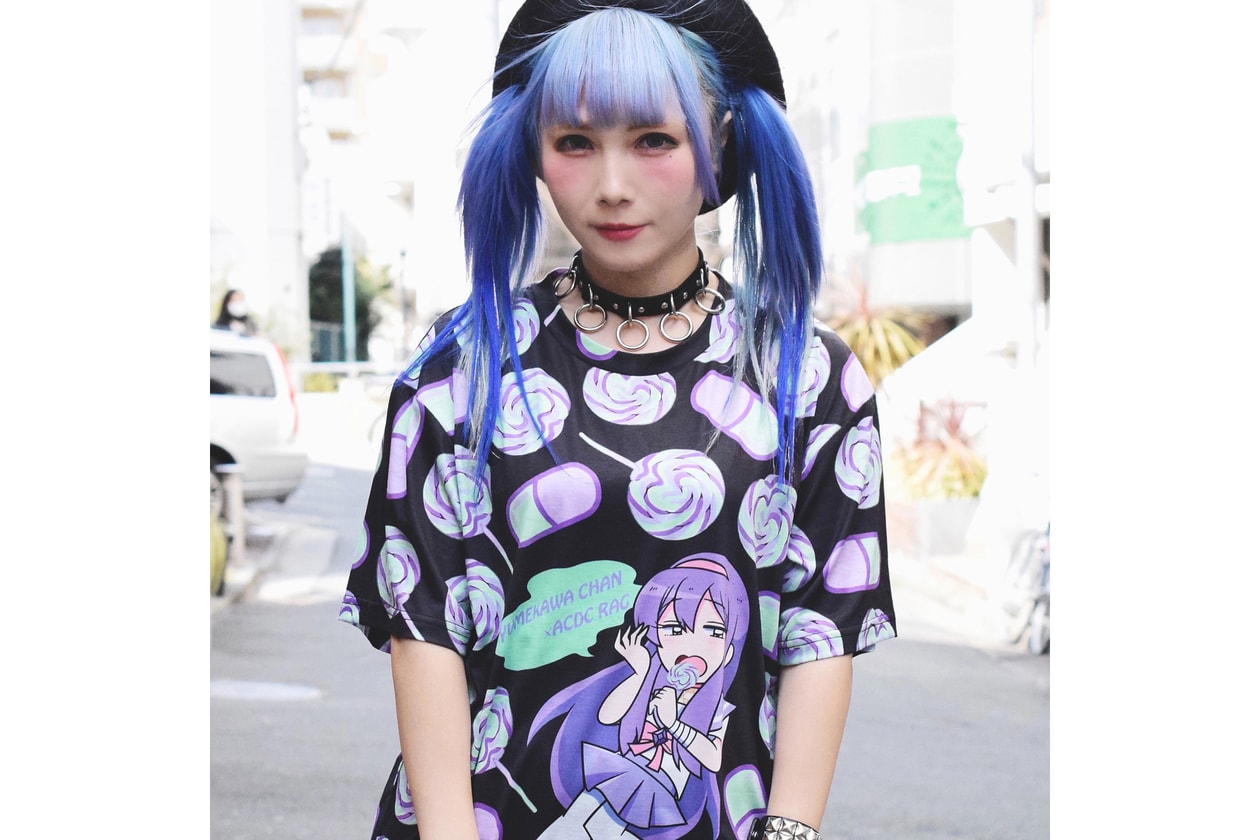
Menhera fashion is a Japanese street style that pairs pastel kawaii clothing with medical imagery: syringes, pills, bandages, gauze and crosses printed across sweaters, skirts and accessories. The name comes from menhera, Japanese internet slang for “mental health-er,” and the look is often called sick cute. It began on Japanese message boards around 2000 rather than in a boutique, and it still carries that origin in its graphics.
Most people meet the style through its softer public name, yami kawaii. The two overlap heavily, but they are not identical, and the difference explains a lot about how the subculture reads in Japan today.
What Menhera Actually Means in Japanese Fashion
Menhera names the wearer, not the garment. The word contracts mentaru herusu, the Japanese rendering of “mental health,” into a label for a person, roughly “mental health-er.” In a fashion context it covers the aesthetic and who is wearing it at once, which is why the term feels heavier than a normal style label. Menhera is not describing a silhouette. It is describing what someone is saying by wearing it.
That is the split you notice first when you look at the clothes. The garment shapes and the colors are borrowed almost wholesale from kawaii fashion: pale palettes, soft knits, pleated skirts, plush accessories. What sits on top of them is the opposite: hospital iconography, tired anime faces, references to self-harm. Sick cute is the usual English shorthand, and it is a fair one, because neither half of the phrase is decorative.
How Menhera Fashion Started on Japanese Message Boards
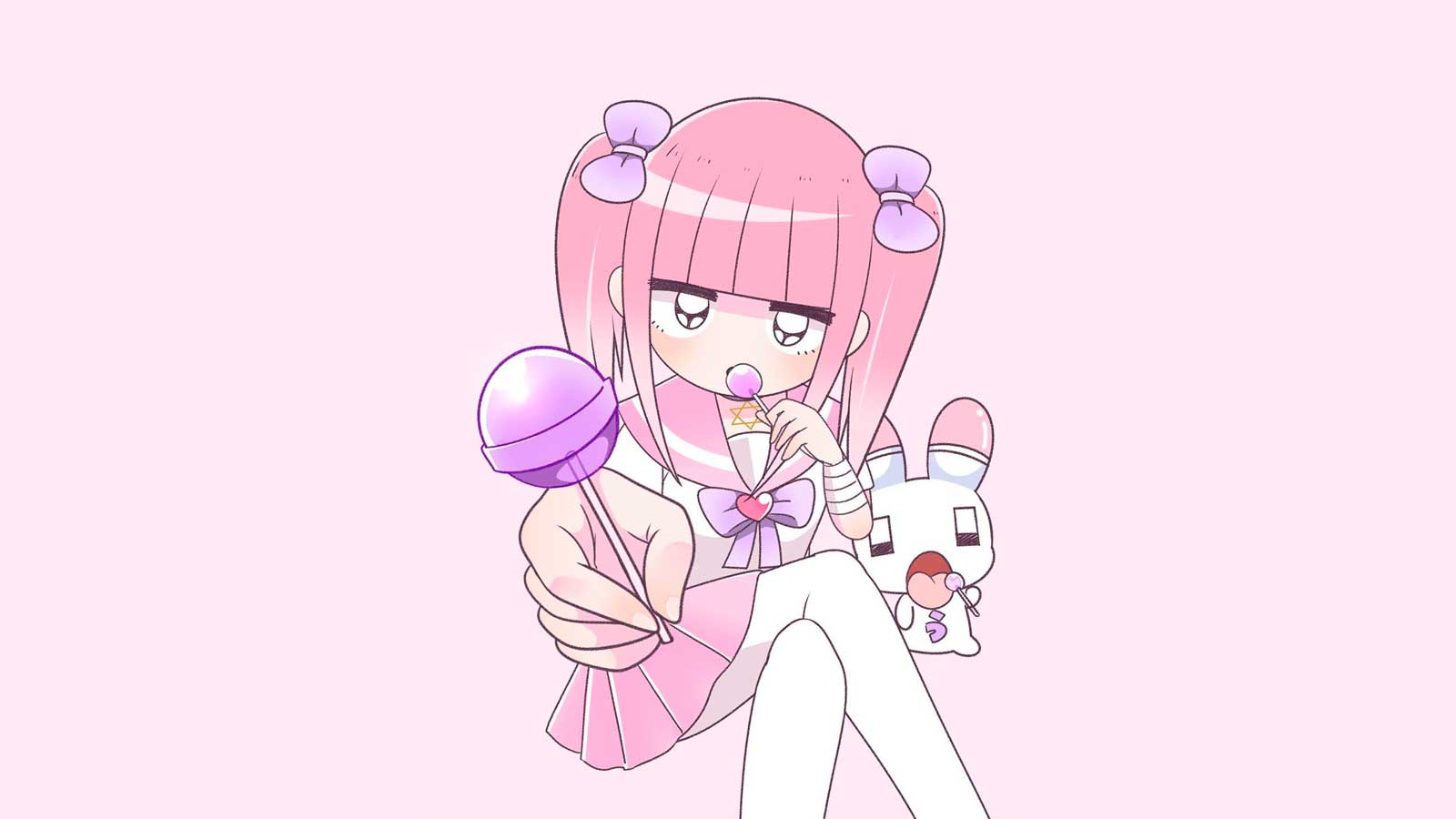
Menhera fashion started as a word on 2channel’s mental health board around August 2000, where posters used it to describe themselves. Vent art shared on the same boards codified the medical imagery years before it reached clothing. Two Menhera-chan characters, Kotoha’s in 2012 and Bisuko Ezaki’s in 2013, carried that imagery into visible Harajuku street fashion.
The term stayed inside that community for a few years. By 2003 it had leaked outward, and by 2005 it was circulating on the newsflash VIP board, where it turned pejorative and became attached specifically to women, often as shorthand for someone difficult or attention seeking. The association with borderline personality disorder traits dates from that period.
Alongside the slang, the boards carried vent art: drawings people posted to express what they were feeling, usually featuring the same medical props that later became the fashion vocabulary. That art is the actual bridge between a message board word and a clothing style. The imagery was already codified before anyone printed it on a hoodie.
Kotoha’s autobiographical Menhera-chan arrived in 2012, and in 2013 the manga artist Bisuko Ezaki created his own Menhera-chan, which is the version that carried the aesthetic into mainstream visibility and gave the subculture a face. Yami kawaii spread as the gentler umbrella term at roughly the same time, because mental illness remains a sensitive subject in Japan and a softer name traveled further. In Harajuku, where the look took physical form, it landed among the same crowds already wearing decora fashion and other maximalist pastel styles.
The Visual Language: Medical Motifs and Vent Art
The menhera visual language runs on a short, repeating set of medical motifs: syringes, pills and capsules, bandages and gauze, first aid crosses, and vent art illustrations that depict the artist’s own emotional state. Razor blade and noose shapes appear as well, usually as charms or jewelry rather than prints, and they are the contested part of the style.
The motif set is small and repeats deliberately. If a piece is doing menhera properly, it is usually pulling from this list:
- Syringes, pills and capsules, printed as an all-over pattern or as a single large graphic
- Bandages and gauze, either printed or worn as real wrapping on arms and legs
- Crosses, drawn closer to a first aid cross than a religious one
- Razor blade and noose shapes, most often as small charms, pins or jewelry rather than prints
- Vent art graphics, meaning illustrations that depict the artist’s own emotional state instead of a mascot
- Distressed lettering, raw edges and washed out dye treatments that make a new garment read as worn down
The razor and noose accessories are the part that draws criticism, and it is worth being honest about why. Seko and Kikuchi documented a “risuka bangle,” a wrist cut bracelet, as a piece that turned self-injury into something removable and buyable. Some commentators read that as opening a conversation. Others read it as shock value wearing the language of advocacy. Both readings are live inside the subculture itself.
The Menhera Color Palette
The menhera palette is pastel first: baby pink, soft blue and mint green, the same range you would find in any sweet Harajuku wardrobe. Those pastels carry the medical graphics rather than fighting them, and the contrast is the whole point, since soft color makes a dark motif land harder than black would. Color is what keeps the style legible as kawaii instead of goth.
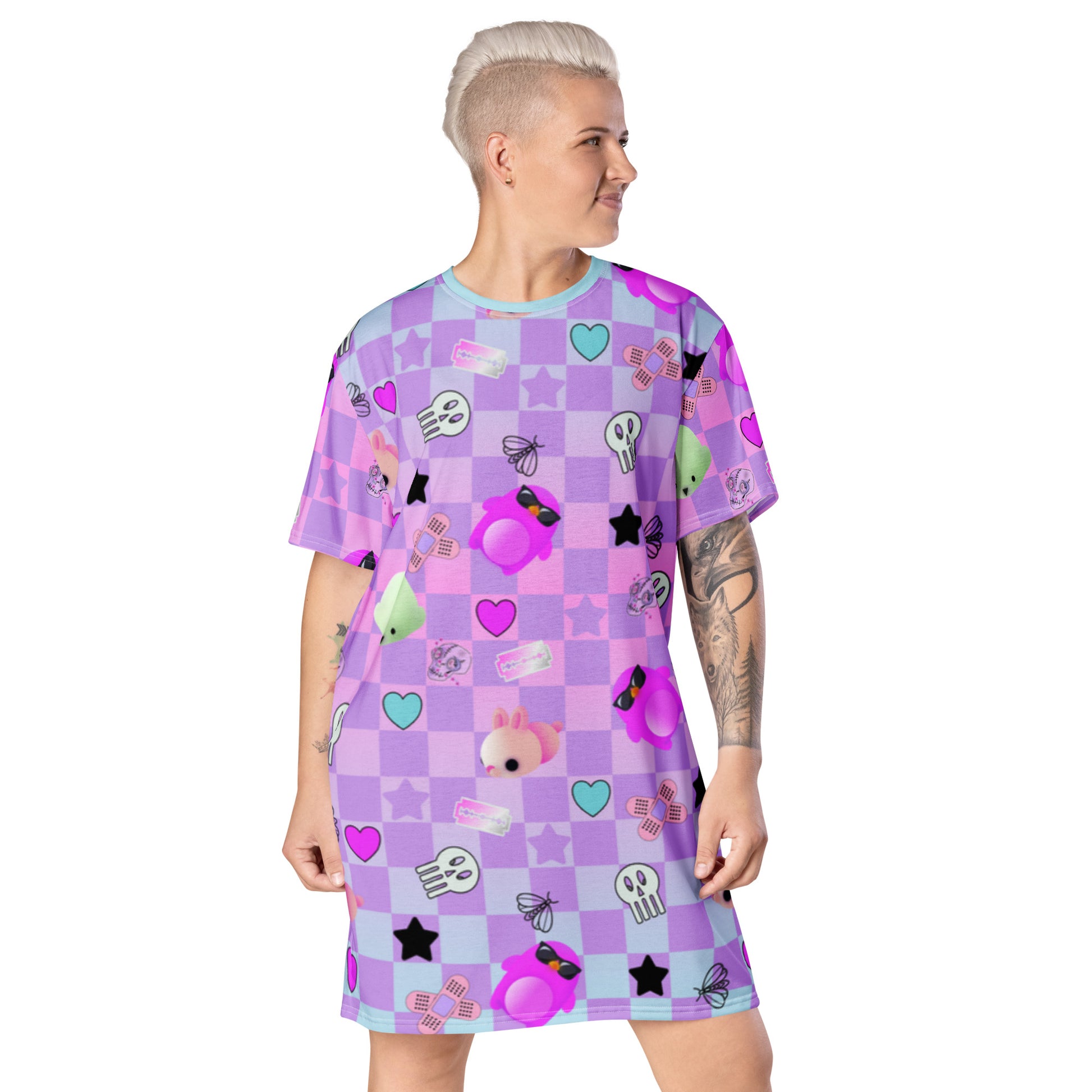
The second register is washed out rather than bright. Washed black, faded white and ivory, and pale colorways that look sun bleached appear constantly, especially on the more distressed pieces. Where the palette runs into dreamier lavender and sugar tones, menhera starts to border on yume kawaii, which shares the pastel base but drops the hospital imagery entirely.
Menhera and Yami Kawaii: What Separates Them
Menhera and yami kawaii describe the same clothes from different angles. Menhera names the person and their mental health and can be read as pejorative in Japan, while yami kawaii names the aesthetic and is the safer term to use in public. Yami kawaii also stretches wider, covering dark cute imagery beyond the medical motifs.
The two terms have become close to interchangeable in everyday use, and plenty of shops file them under one heading. The distinction that still holds is about what each word names.
| Menhera | Yami kawaii | |
|---|---|---|
| What the word names | The person and their mental health | The aesthetic |
| Origin | 2channel slang, around 2000 | Popularized alongside Menhera-chan, 2013 onward |
| Tone in Japan | Can be read as pejorative | Socially safer, more usable in public |
| Visual range | Medical motifs, vent art | The same motifs, plus wider dark cute imagery |
In practice, “yami kawaii” is what people say out loud and “menhera” is what the clothing is actually about. A neighboring style worth keeping separate is jirai kei, which shares the fragile, wounded mood and some of the same color discipline but builds its look from ribbon trimmed blouses and pleated skirts rather than syringes and gauze.
What a Menhera Wardrobe Is Built From
A menhera wardrobe is built from loose, soft, printed basics: oversized sweaters and cardigans, leggings, tiered and pleated skirts, distressed crop tops, and shirt dresses. Detailing carries the style further than cut does, through raw edges, cross appliqués, studded belts and platform mary janes. Medical motifs usually enter an outfit through accessories rather than the main garment.
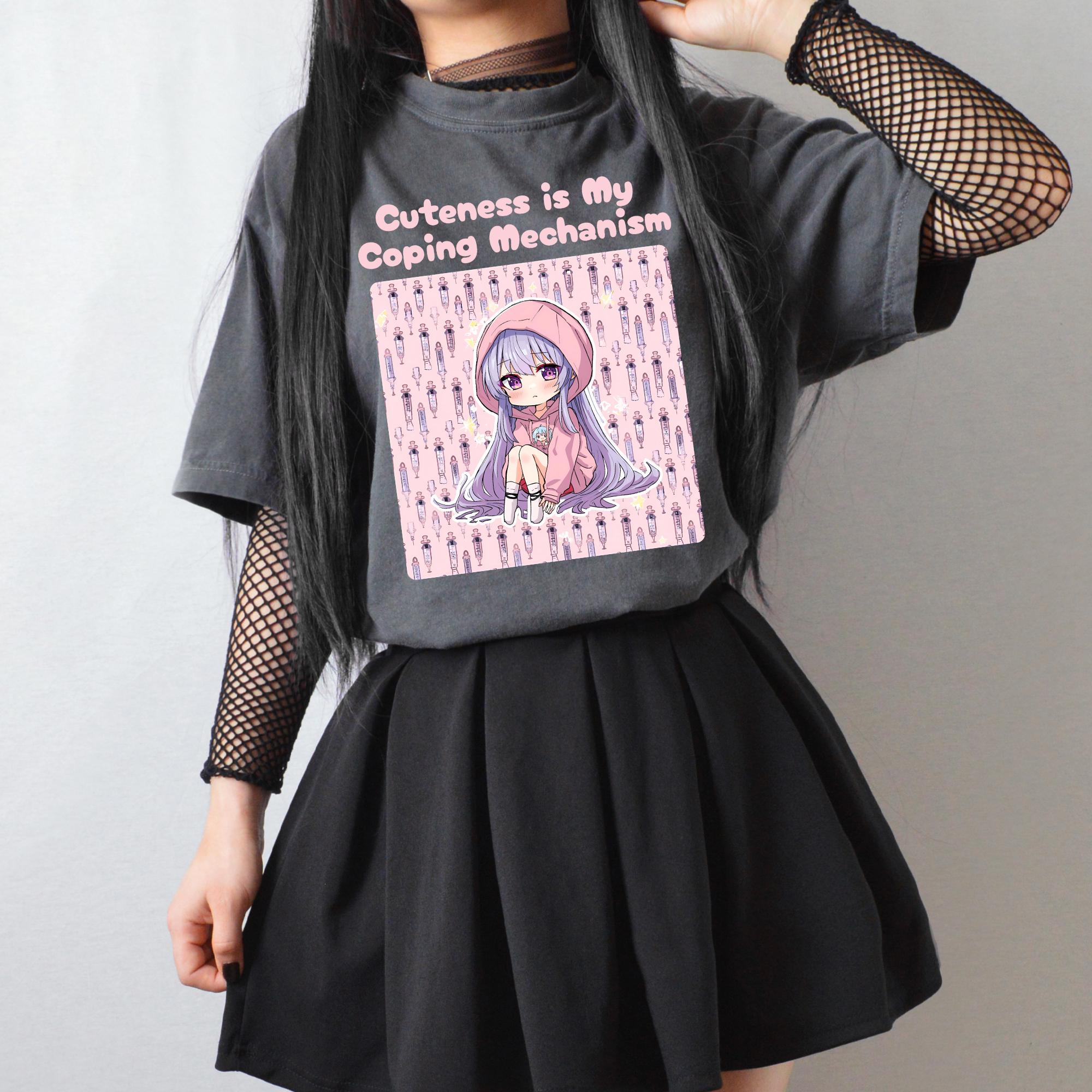
The garment list is comfortable before it is anything else. Loose fitting, soft and easy to wear is the default, which fits a style that started with people drawing at home rather than dressing for a runway.
- Oversized sweaters and cardigans, usually printed rather than plain
- Leggings, worn under skirts as often as on their own
- Tiered mini skirts and pleated skirts
- Distressed crop camisoles and raw edged crop tops
- Low rise cargo and bootcut jeans on the streetwear leaning side of the style
- Long sleeve bodysuits, cropped corsets and ruffled button up blouses
- Shirt dresses and printed vests
Detailing does more work here than cut. Raw or frayed edges, lace and cross appliqués, ruffles, studded belts and oversized bows recur across pieces that otherwise have nothing in common. Footwear tends toward platform mary janes and chunky boots. Accessories are where the medical motif usually enters an outfit that is otherwise plain: bandage accessories or pastel syringes pinned to a pocket, pin badges, and pastel medical themed jewelry.
Why the Style Matters in Japan
Menhera fashion matters in Japan because it puts a private subject in public view. Japan treats mental illness as a private matter, and public discussion of suicide has long been constrained by that. The World Health Organization’s Japan office lists mental health among the country’s priority health topics, alongside suicide prevention. Wearing a syringe print in daylight states something that is difficult to say in conversation, and the sentiment most often attached to the style is that it is okay not to be okay.
The research on how menhera girls are portrayed is worth reading directly. In their 2022 study in Frontiers in Communication, Yukari Seko and Minako Kikuchi sort fictional menhera characters into three recurring types:
- The sad girl, defined by anxiety, low self esteem and loneliness, for whom self-injury reads as coping rather than communication
- The mad woman, fixated on a romantic interest, whose self-injury is drawn as interpersonal manipulation
- The cutie, the yami kawaii practitioner, where the dark motif becomes something worn and taken off
Their argument is that rendering mental illness wearable partly destabilizes the older idea that a sick or damaged female body is undesirable. The same study notes a 2017 survey in which 13 percent of respondents had used the word menhera about themselves in everyday conversation, which is a useful measure of how far a message board term traveled. Search interest rose sharply across 2010 and 2011, and by May 2021 there were 27 books and five gaming apps with menhera in the title, all published from 2012 onward.
None of that settles the criticism. A style built from self-harm imagery will keep drawing the objection that it aestheticizes the thing it claims to destigmatise, and that objection is not unreasonable.
How to Style Menhera Without Flattening It
Styling menhera comes down to choosing which motifs you are actually claiming. Build the outfit from one printed anchor piece, a pastel sweater or a shirt dress, and keep the leggings and skirt plain so the palette holds it together. Pink eye makeup and placed sticker bandages finish the look, and the self-harm motifs stay a separate decision rather than a default.
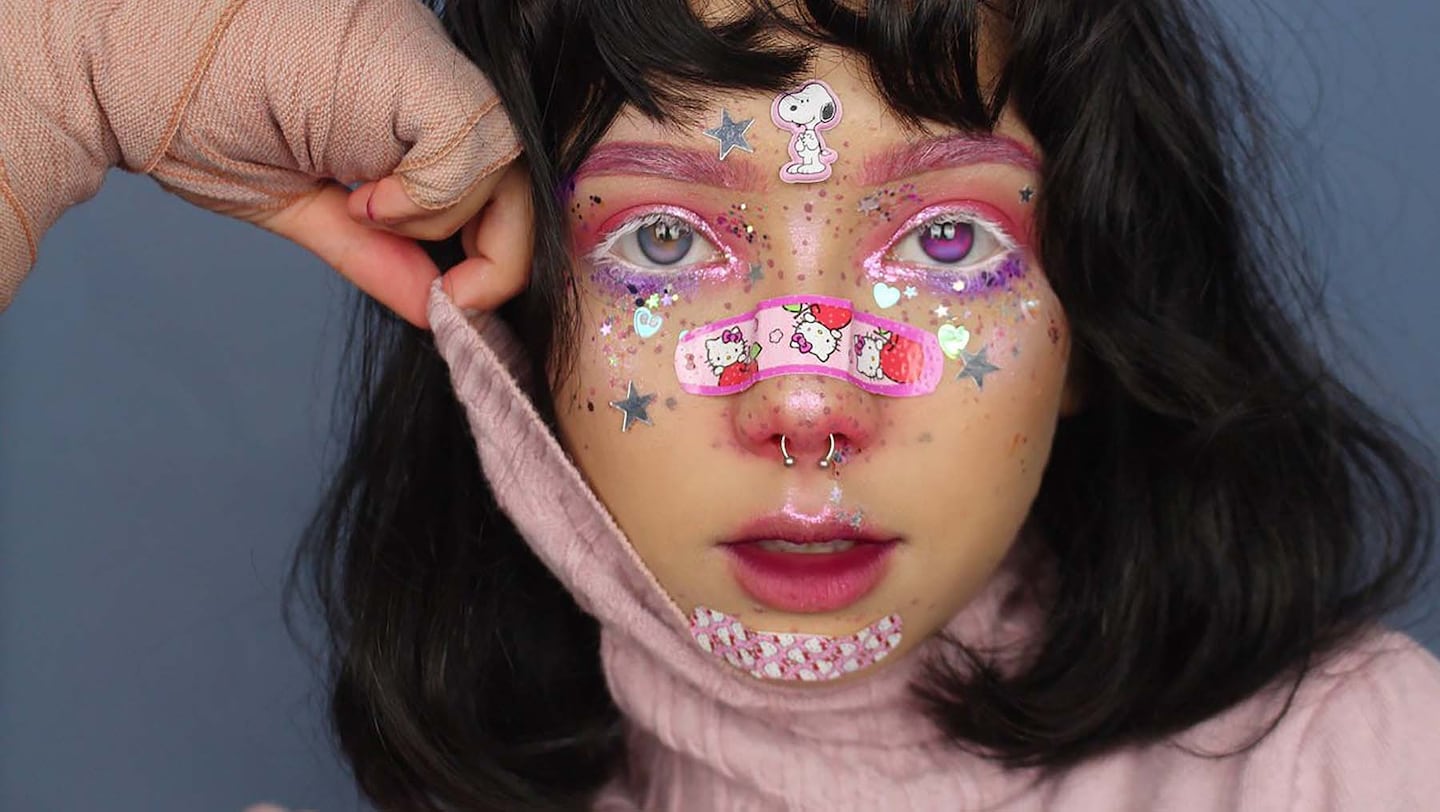
The most common mistake is treating the motifs as a pattern library. A syringe print reads very differently from a razor blade charm, and the second one carries a claim the first does not. If you are drawn to the look for its color and silhouette, the pastel palette, the oversized knits and the distressed prints will get you there without borrowing imagery about self-harm.
Build from one anchor piece and keep the rest quiet. An all over printed sweater or shirt dress does enough on its own next to plain leggings and a pleated skirt; the palette holds the outfit together. Makeup follows the same logic, running pink around the eyes for a flushed, unwell look, with sticker bandages placed as deliberate marks rather than scattered. Keep the styling soft, since stiff tailoring fights everything the style is doing.
If pastel graphics and dark cute motifs are the part that appeals to you, our kawaii shirt collection is a good place to start building the printed layer of the look.
FAQs
What is menhera fashion?
Menhera fashion is a Japanese street style that prints medical imagery, syringes, pills, bandages, gauze and crosses, onto pastel kawaii clothing such as oversized sweaters, pleated skirts and shirt dresses. The name comes from Japanese internet slang for “mental health-er,” and English speakers usually call the look sick cute.
Is menhera fashion offensive?
It depends heavily on which pieces you wear. The pastel and medical print side of the style is widely worn without objection, while razor blade and noose accessories are contested inside the subculture itself, with some reading them as advocacy and others as shock value.
Is menhera the same as jirai kei?
No. Both share a fragile mood and a restrained color range, but jirai kei is built from ribbon trimmed blouses, pleated skirts and a doll like silhouette, while menhera is defined by medical motifs and vent art graphics.
What colors define menhera fashion?
Baby pink, soft blue and mint green form the core, carried over from kawaii fashion. Washed black, faded white and pale, sun bleached colorways cover the more distressed end of the style.
Can you wear menhera style outside Japan?
Yes, and much of the clothing now sells internationally. The one thing that does not travel intact is the context: outside Japan the medical imagery loses its specific relationship to Japanese silence around mental illness, so it reads as aesthetic rather than as statement.
Kamicrew Best Seller

Dont Touch Me Yokai Ukiyo-E Japanese T-Shirt
$25.49+
$29.99
(15% off)


Summer Vibes Salty Kawaii Japanese Hoodie
$44.99+
$49.99
(10% off)


Japanese Pin Horror 80s Retro Aesthetics T-Shirt
$25.49+
$29.99
(15% off)


El Gran Maja Japanese Kaiju T-Shirt
$25.49+
$29.99
(15% off)


Who Wants The Perfect Body Japan Capybara Kawaii Japanese Unisex Shirt
$25.49+
$29.99
(15% off)


Monster 8 Mask Vintage Animal Hoodie
$44.99+
$49.99
(10% off)


I Hate People Japanese Opossum Vintage Animal Hoodie
$44.99+
$49.99
(10% off)


I Got That Dog In Me Small Turtle Vintage Animal T-Shirt
$25.49+
$29.99
(15% off)

The Creation Of Cat Ukiyo-E Japanese T-Shirt
$25.49+
$29.99
(15% off)