
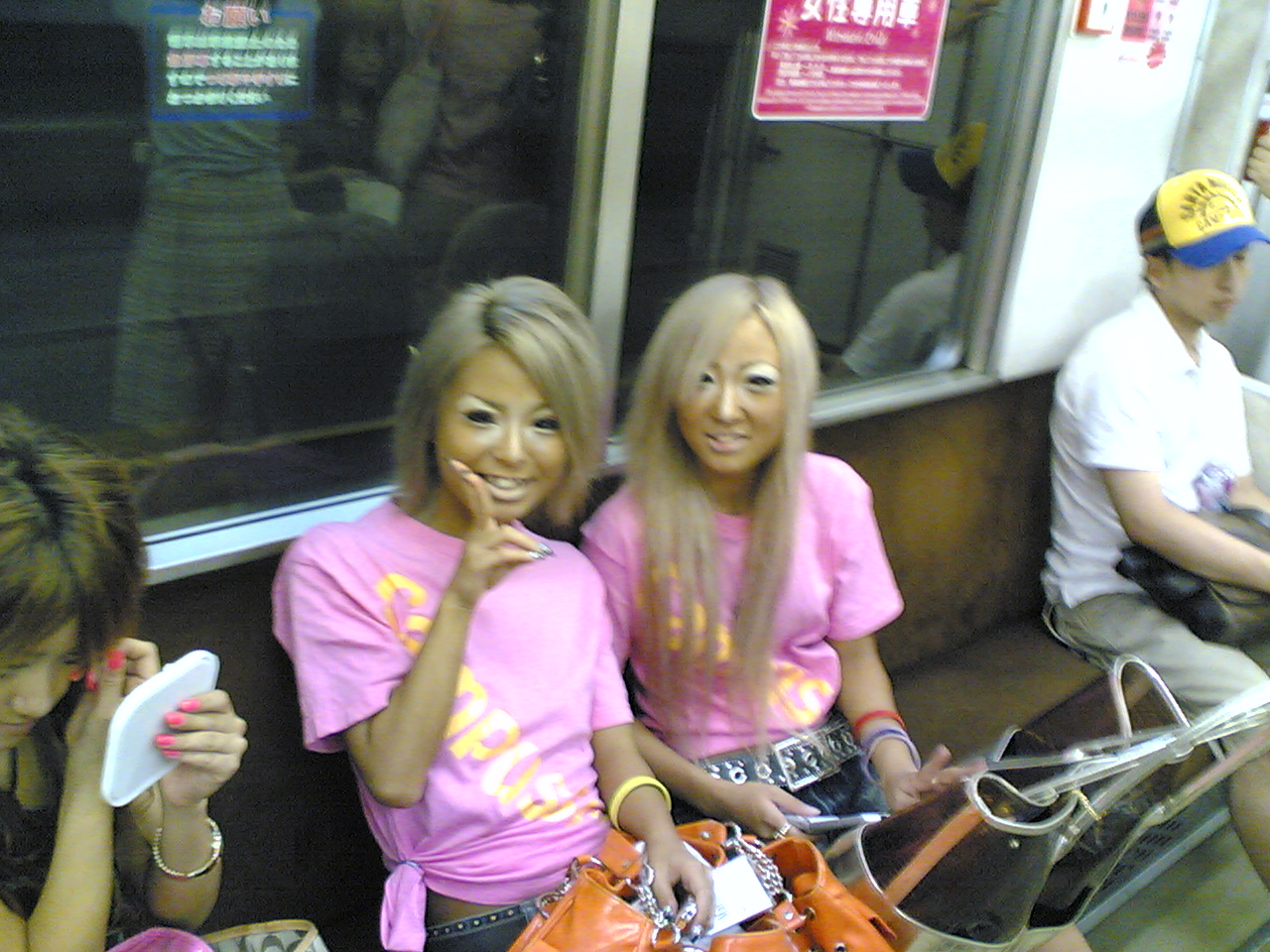
Ganguro (ガングロ) is a Japanese alternative fashion style defined by a deep artificial tan, heavily bleached hair, and near-white makeup on the lips and around the eyes. It is a substyle of the wider gyaru subculture, emerged in the mid-1990s, centred on Tokyo’s Shibuya and Ikebukuro districts, and peaked in popularity around the year 2000 before a nationwide return to pale skin ended its mainstream run.
Almost every element of the look inverts something in traditional Japanese beauty. Where the old ideal prized pale skin, dark hair, and restrained makeup, ganguro girls went bronzed, platinum, and loud. That inversion is the whole point of the ganguro style, and it is why the trend still gets written about a quarter of a century after it faded.
What Is Ganguro?
Ganguro is a gyaru substyle defined by tanned skin rather than by a single garment or silhouette. The name comes from ganganguro or gangankuro (ガンガン黒), which reads roughly as “exceptionally dark” or a burn-black look. The tan was the entry requirement, and the bleached hair, white concealer, and plastic gems layered on top existed to push the contrast further.
Because it sits inside gyaru, ganguro shares vocabulary with the rest of that family. Gyaru itself is a slang term for a loose grouping of young women, and it covers everything from the schoolgirl-derived kogal look to the far more extreme variants that came later. Anyone comparing the different gyaru styles will notice ganguro sitting at the darker, louder end of the spectrum rather than in the middle of it.
Ganguro Makeup: White Lips, Black Liner, and Face Gems
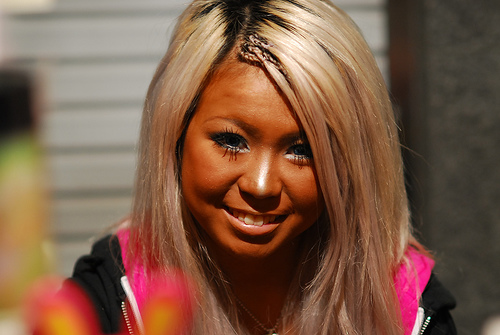
Ganguro makeup works by maximum contrast: a deeply tanned base offset by near-white lips and eyeshadow. The standard kit is white concealer used as both lipstick and eyeshadow, thick unblended black liner, stacked false lashes, and applied decoration in the form of plastic gems, pearl powder, facial stickers, and colored contact lenses.
- Black ink eyeliner, drawn thick and unblended
- White concealer used as both lipstick and eyeshadow
- False eyelashes, often stacked for density
- Plastic facial gems and pearl powder applied directly to the skin
- Facial stickers placed around the eyes and cheekbones
- Colored contact lenses to shift the eye away from its natural shade
Sunset Media Wave described the result as a meticulously crafted mess of self expression, and that phrase captures the tension in it. Nothing here is accidental, even though the finished face reads as deliberately chaotic to anyone raised on a neutral-makeup standard.
Ganguro Skin and Hair: The Bleach and Bronze Rule
Ganguro skin and hair run in deliberately opposite directions. The tan came from sunbeds and self-tanning products, and Shibuya salons built real businesses on supplying it. Hair went the other way, bleached to red, blonde, silver-grey, or the platinum shade most closely associated with the look. High bleach against dark skin is the single most recognizable ganguro combination, and the fastest way to distinguish a ganguro girl from the pale-skinned gyaru substyles around her.
Ganguro emerged during a decade when Tokyo street style was fragmenting fast, and it belongs to the same restless stretch of 90s Japanese fashion that produced kogal, decora, and a dozen other named looks within a few years of each other.
Ganguro Clothing and Accessories
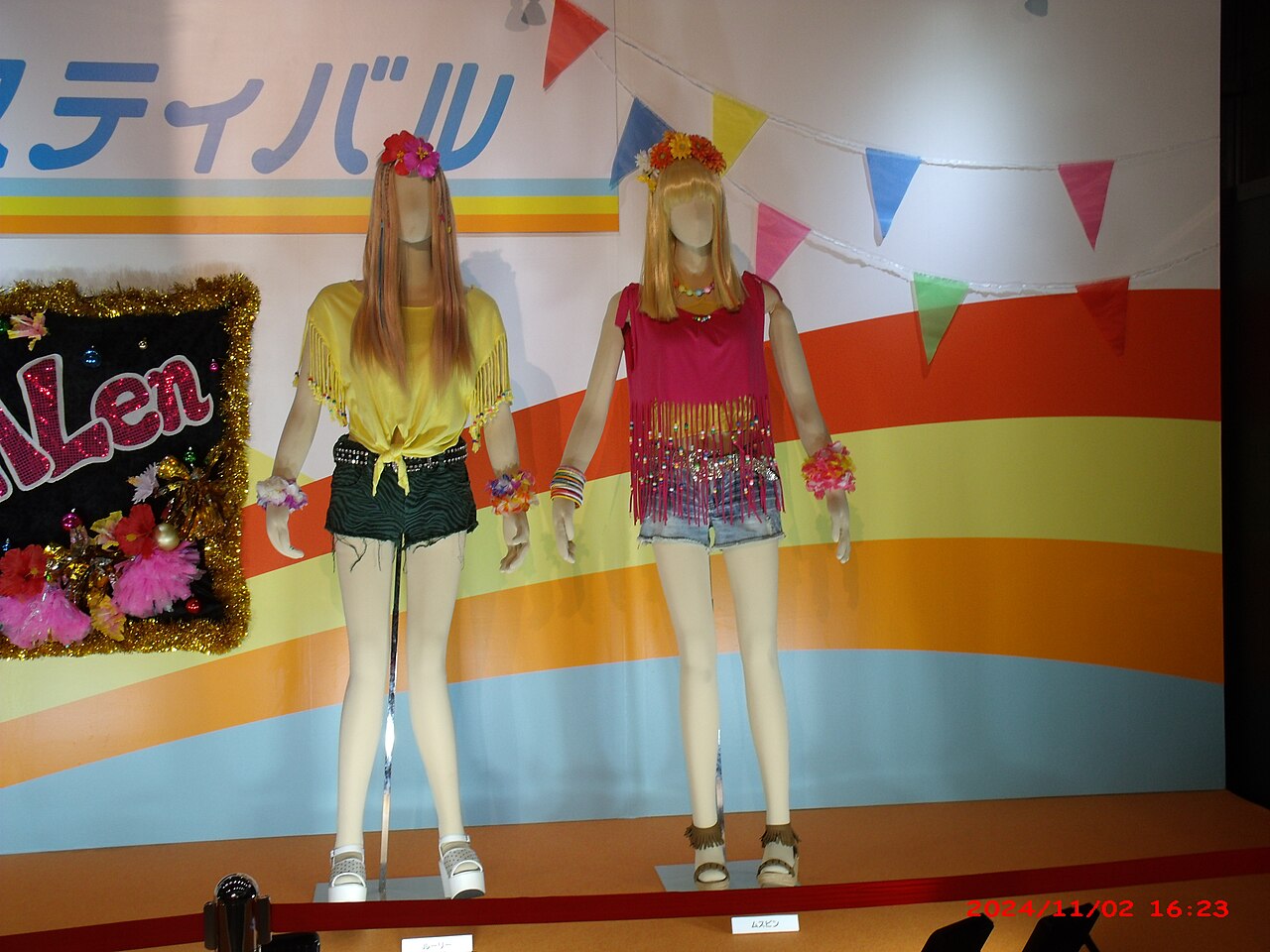
Ganguro clothing follows the same logic as the face: bright beats subtle, tall beats flat, and more beats less. The recurring pieces are sky-high platform shoes, brightly colored and often skimpy outfits, tie-dyed sarongs and miniskirts, oversized faux flower hair pieces, and stacked plastic jewellery worn several items at a time.
- Platform shoes, frequently sky-high
- Brightly colored and often skimpy outfits
- Tie-dyed sarongs and miniskirts
- Large faux flower hair pieces
- Multiple bracelets, rings, and necklaces worn at once
- Multicolored plastic accessories layered across wrists and neckline
This maximalist stacking is part of why ganguro reads as street fashion rather than as a costume. The pieces themselves were ordinary Shibuya shop stock, and the styling did the work. That approach shows up across the wider family of Harajuku fashion styles, where the arrangement of cheap, available items matters more than any single label.
Ganguro vs Yamanba vs Manba: What Actually Differs
Ganguro, yamanba, and manba are three stages of the same tanned gyaru lineage rather than three unrelated tribes. Ganguro came first in the mid-1990s. Yamanba is the more extreme style that evolved out of it, named after the yamanba, a mountain hag from Japanese folklore the look was meant to evoke. Manba arrived later, from around 2008, as yamanba’s own evolution.
| Style | Skin and hair | Defining details |
|---|---|---|
| Ganguro | Deep tan, bleached red, blonde or silver-grey hair | White concealer on lips and eyes, black liner, face gems |
| Yamanba | Deep tan, bleached hair | White lipstick, pastel eyeshadow, metallic adhesives under the eyes, bright circle lenses |
| Manba (from around 2008) | Darker tan, neon hair with pink especially common | Heavier white makeup, wool dreadlocks emulating braids, fewer Hawaiian lei accessories, punk elements |
Read the table as a progression rather than as three separate tribes. Each step darkened the skin, brightened the hair, and thickened the white makeup, which is why the labels blur in period photographs and why people who lived through it often used them loosely.
Why Ganguro Emerged in Japan
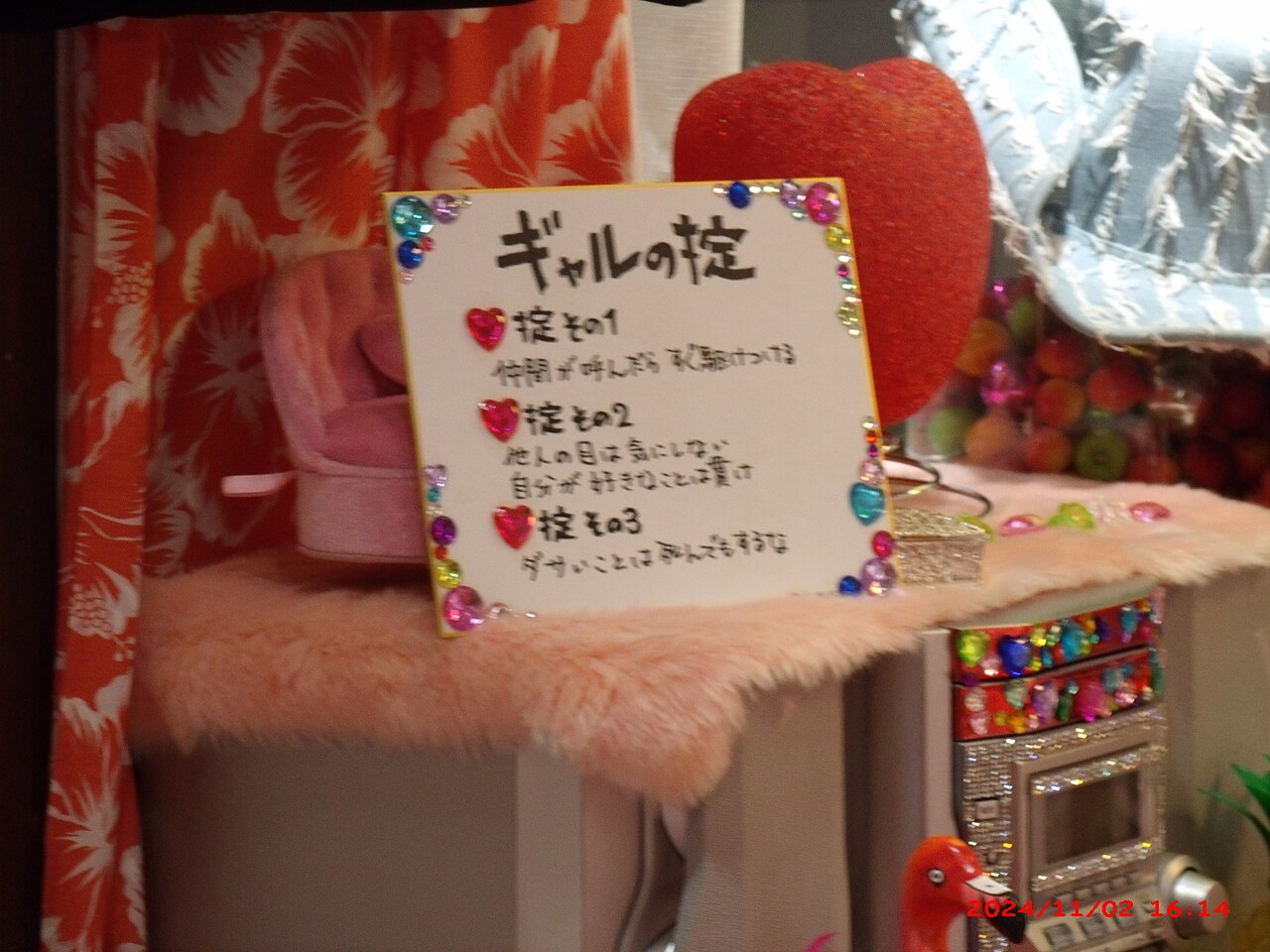
Ganguro emerged as a visible rejection of Japanese beauty and behaviour norms. A University of Southern California scholarly project on Japanese beauty and the body reads the tan through Sharon Kinsella’s essay Black Faces, Witches, and Racism Against Girls (in Bad Girls of Japan, 2005): darkening the skin rejected an ideal that tied pale skin to Japanese identity and to sexual propriety, so the tan itself carried the defiance. The style broke school appearance rules and social expectation in the same gesture, and it did so in the busiest shopping districts in Tokyo, where it could not be missed.
What it rejected was specific: fair skin, dark hair, innocence, and fragility. What it borrowed was equally specific, an exaggerated version of the carefree bronzed and platinum-blonde California girl. Sunset Media Wave draws a parallel to Riot Grrrl, where a feminist movement also reclaimed a set of unflattering signals on purpose. Ganguro girls were not trying to look conventionally beautiful and were not failing at it. They were opting out.
Individuality is the other half of the explanation. A group whose members all bleached, tanned, and gemmed their faces still functioned as a way of standing out from the crowd, because the crowd looked nothing like them. In a culture that rewards blending in, taking on a shared uniform that no one else wanted was itself the statement.
Who Made Ganguro Famous: Buriteri, egg Magazine, and Para Para
Ganguro spread through magazines and salon models rather than through designers. Buriteri, nicknamed after the dark soy sauce used in teriyaki, was one of the most famous early ganguro girls: she appeared constantly in egg magazine at the height of the craze and modeled for the Shibuya tanning salon Blacky, before social pressure and hostile press pushed her to abandon the style entirely.
The magazines were the engine. egg, Ageha, Popteen, and Ego System supplied the reference images that told readers what counted as correct, and the look spread through those pages rather than through any single designer. The culture also overlapped with para para, a Japanese synchronized dance style, though most people were committed to one scene or the other rather than both.
A handful of adherents never left. Fragments Magazine profiled Erimokkori in 2017, then 24 and more than a decade into the style she adopted in her early teens, describing her as one of the few people in Japan still living it full time.
How Ganguro Faded
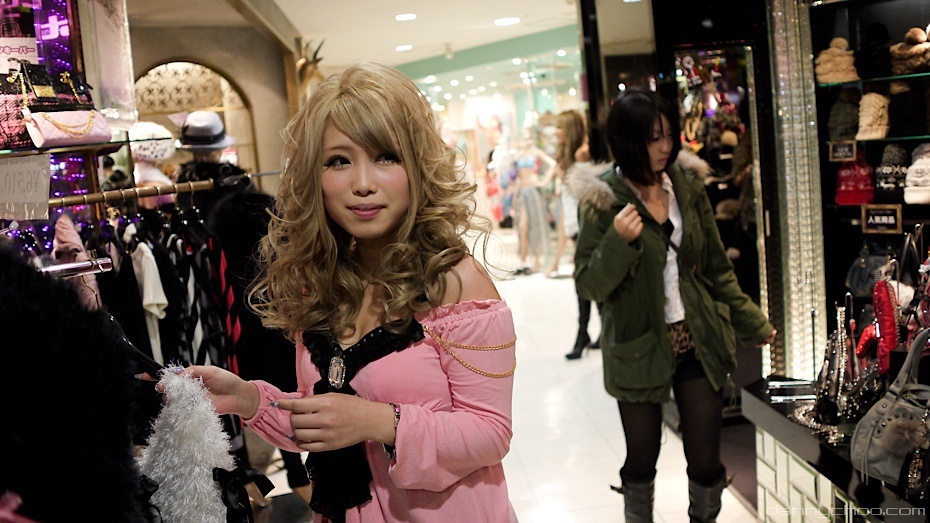
Ganguro faded from around 2000, when a bihaku or beautiful white craze pulled the Japanese beauty ideal back toward porcelain skin. Pop singer Ayumi Hamasaki, pale at her debut, is credited with accelerating the swing, since young women were imitating the singers they liked rather than holding a tanning position on principle.
The reversal was thorough. Reporting from Shibuya in 2004, The Guardian found the same girls back on the same streets under parasols, and put the share of Japanese women using whitening products in a daily skincare routine at around 60 per cent. Ganguro had become old news inside a country the article called notorious for its super-fads.
The look did not disappear so much as recede into a cult following, and its visual DNA kept surfacing in the neon-heavy Y2K Japanese fashion that followed it.
Ganguro Timeline
- Mid-1990s, ganguro emerges from the gyaru subculture in Shibuya and Ikebukuro
- Late 1990s, popularity peaks, tanning salons and egg magazine drive the look nationwide
- Around 2000, the trend reaches its high point and the bihaku craze begins to pull against it
- Early 2000s, ganguro fades from the mainstream but keeps a cult following
- 2004, pale skin is firmly back in Shibuya, with whitening products a mass-market category
- Around 2008, manba carries the extreme end forward with darker tans and neon hair
- 2017, only a small number of committed adherents remain
FAQs
What does ganguro mean?
Ganguro (ガングロ) comes from ganganguro or gangankuro (ガンガン黒), which reads roughly as “exceptionally dark” or a burn-black look. The name refers to the deep artificial tan that defines the style, not to any garment. Tanned skin was the entry requirement, and the bleached hair and white makeup were built on top of it.
Is ganguro the same as gyaru?
No. Gyaru is the broad subculture, a slang term covering a loose grouping of young Japanese women and everything from the schoolgirl-derived kogal look to far more extreme variants. Ganguro is one substyle inside gyaru, distinguished by its deep tan and bleached hair, sitting at the darker and louder end of the gyaru spectrum.
What is the difference between ganguro and yamanba?
Yamanba is the more extreme style that evolved out of ganguro, named after the yamanba, a mountain hag from Japanese folklore. Ganguro pairs a deep tan with white concealer on lips and eyes, black liner, and face gems. Yamanba adds pastel eyeshadow, metallic adhesives under the eyes, and bright circle lenses over the same tanned, bleached base.
When did ganguro fashion end?
Ganguro peaked around 2000 and faded from the mainstream in the early 2000s, as the bihaku or beautiful white craze restored pale skin as the ideal. By 2004, The Guardian reported that around 60 per cent of Japanese women were using whitening products as part of a daily skincare routine, and Shibuya girls were carrying parasols.
Do people still wear ganguro?
Only a small number do. Ganguro survives as a cult following rather than a street trend. Fragments Magazine profiled Erimokkori in 2017, then 24 and more than a decade into the style, describing her as one of the few people in Japan still living it full time. Its visual DNA also persists in Y2K-influenced Japanese fashion.
Ganguro was never about looking agreeable, and that is what makes it worth studying now. If the bright, contrast-heavy side of Japanese street fashion is your thing, Kamicrew’s kawaii graphic tees carry the same appetite for color into something you can actually wear on a Tuesday.
Kamicrew Best Seller

Dont Touch Me Yokai Ukiyo-E Japanese T-Shirt
$25.49+
$29.99
(15% off)


Summer Vibes Salty Kawaii Japanese Hoodie
$44.99+
$49.99
(10% off)


Japanese Pin Horror 80s Retro Aesthetics T-Shirt
$25.49+
$29.99
(15% off)


El Gran Maja Japanese Kaiju T-Shirt
$25.49+
$29.99
(15% off)


Who Wants The Perfect Body Japan Capybara Kawaii Japanese Unisex Shirt
$25.49+
$29.99
(15% off)


Monster 8 Mask Vintage Animal Hoodie
$44.99+
$49.99
(10% off)


I Hate People Japanese Opossum Vintage Animal Hoodie
$44.99+
$49.99
(10% off)


I Got That Dog In Me Small Turtle Vintage Animal T-Shirt
$25.49+
$29.99
(15% off)

The Creation Of Cat Ukiyo-E Japanese T-Shirt
$25.49+
$29.99
(15% off)