


Kogal is the branch of Japanese gyaru fashion built on a modified high school uniform. A kogal took the standard school outfit and pushed every part of it somewhere the school did not intend: the skirt shortened to a mini, the socks slouched into thick white bundles, the hair bleached or dyed brown, the skin tanned, the makeup heavy. The style ran through the 1990s, peaked in 1998, and gave way to ganguro at the end of the decade. Its individual pieces, loose socks above all, outlasted the subculture that invented them.
What Kogal Means
Kogal means “high school gal.” The word contracts kokosei gyaru (高校生ギャル) into kogyaru, コギャル, and it names the high-school-aged branch of the wider gyaru subculture. What marks a kogal is not a wardrobe bought new but a school uniform worn against the rules, with the skirt shortened and the socks slouched.
Gyaru is the Japanese pronunciation of the English word “gal,” and it entered common use in 1972 through a jeans brand advertisement. Adding kokosei, high school student, narrows the term to the youngest tier of that subculture.
The term did not start as a compliment or as a fashion label. It began as bouncer shorthand, a way for club staff to sort adults from minors at the door. The girls themselves generally skipped it and simply called themselves gyaru. That gap between what outsiders called the style and what its wearers called it runs through the whole history of kogal.
What separates kogal from the rest of gyaru fashion is the uniform. Other gyaru substyles are built on ordinary clothes. Kogal is built on the sailor fuku and the blazer-and-pleats set, worn well outside school rules and often well outside school hours.
Where the Kogal Look Came From
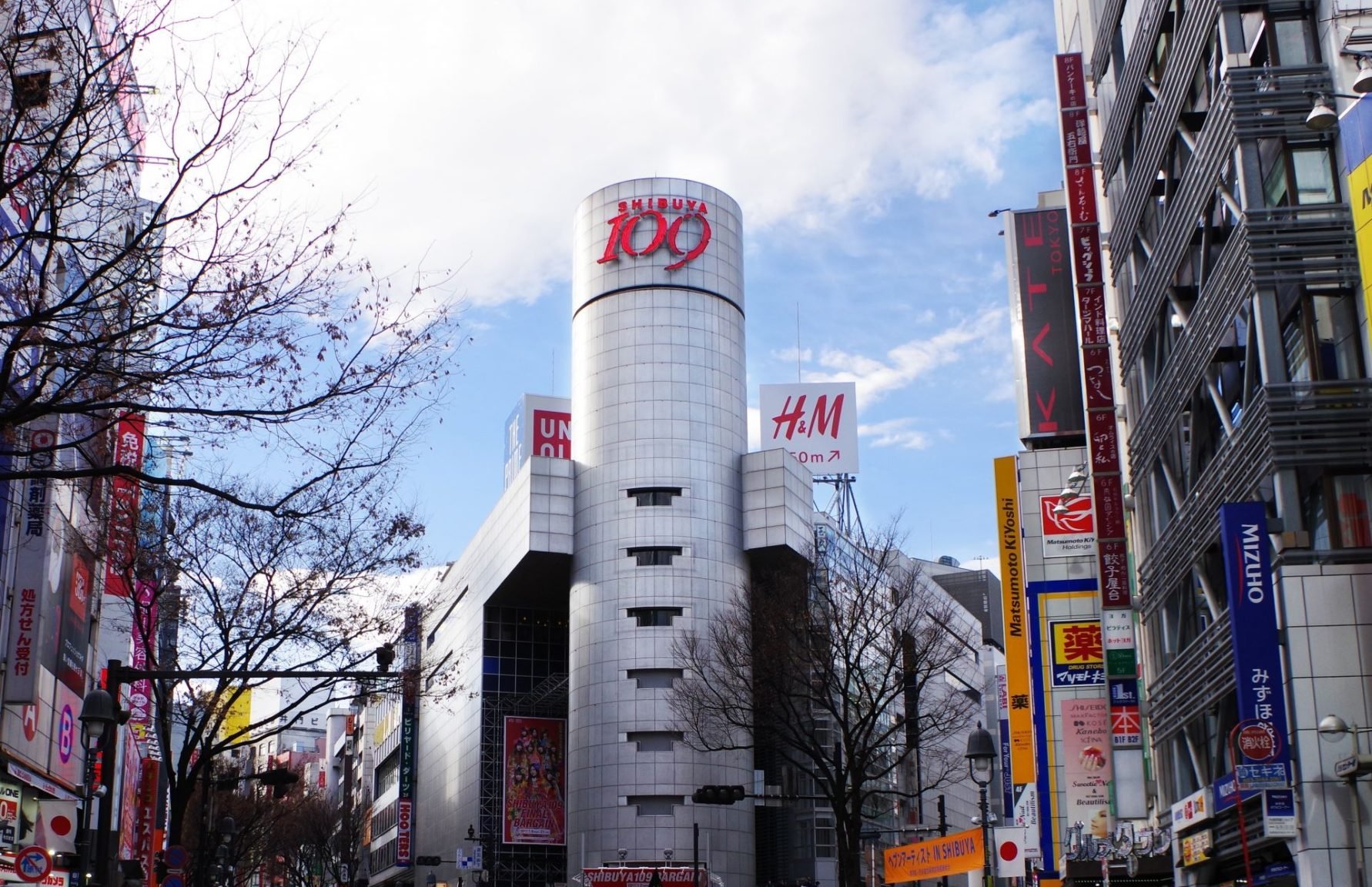
Kogal began among private school dropouts in the early 1990s, who broke a strict dress code in the two cheapest ways available: shortening the skirt and slouching the socks. Three media events then turned that rebellion into a national style, the 1993 television special Za kogyaru naito, Namie Amuro’s platform shoes in 1994, and the launch of Egg magazine in 1995.
The groundwork was laid earlier. Japanese fashion in the 1970s and 1980s was heavily divided by age, and a run of gyaru magazines appeared to serve the teenage end of it. Popteen began publishing monthly in 1980. Around the same period the motorcycle-oriented Yankii and Bosozoku Gals subcultures were developing their own visual codes of rebellion, and the first kogals came out of that environment. For them the shortened skirt and the loose socks were the most visible way to break a dress code that governed everything else about how they looked.
Mass attention arrived in 1993, when Za kogyaru naito, “The Kogal Night,” put the style in front of a national audience. In 1994 the singer Namie Amuro popularized platform shoes and became a defining style influence. In 1995 Egg launched specifically for kogal readers, which gave the look a permanent print home and a faster feedback loop. Television, a pop star and a dedicated magazine together turned a dress-code rebellion into a recognizable national style, one of the clearest examples of how 1990s Japanese fashion moved through media rather than through designers.
What a Kogal Outfit Looks Like
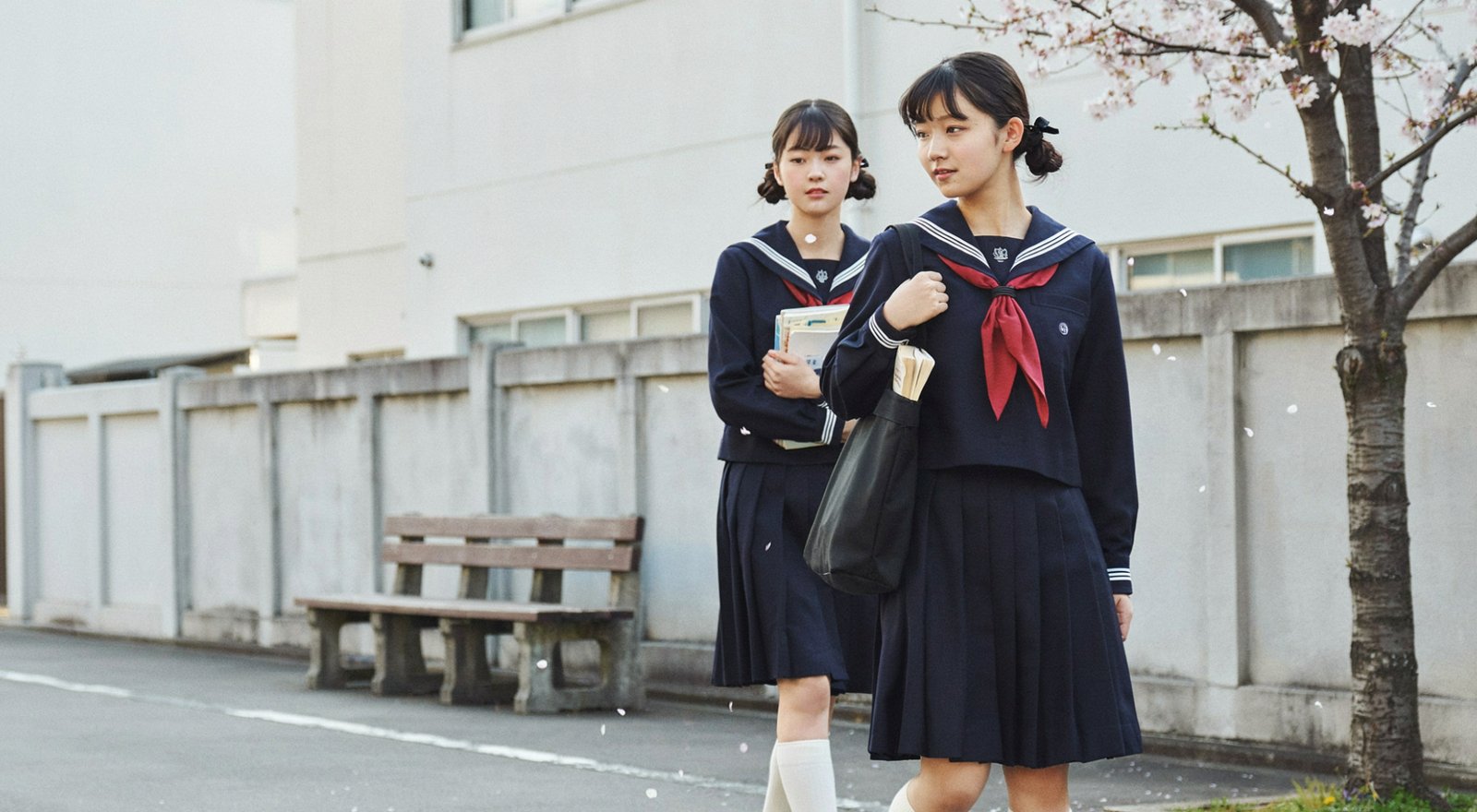
A kogal outfit is a school uniform pushed out of regulation. The base is a sailor fuku or a blazer-and-pleats set. The skirt is cut to a mini, the socks are thick and slouched, the shoes are platform boots, and the accessories run to Burberry check scarves and kawaii charms clipped to bags and mobile phones. The pieces that recur across the style are these:
- The sailor fuku or a blazer uniform, worn as the foundation of the outfit rather than as school clothing
- A shortened or micro skirt, taken well above the regulation length
- Loose socks, thick and slouched, sometimes falling far enough to partly cover the shoes
- Platform boots, and platform shoes generally after Namie Amuro made them a fixture in 1994
- Burberry check scarves
- Kawaii accessories clipped and hung on bags and mobile phones
The designer element is often misread. Plenty of kogals were not buying authentic luxury goods at all. Counterfeit designer items bought from back-alley markets were a normal part of the look. What the style chased was the visual signal of the brand, not the brand.
Loose Socks, the Detail Everyone Remembers
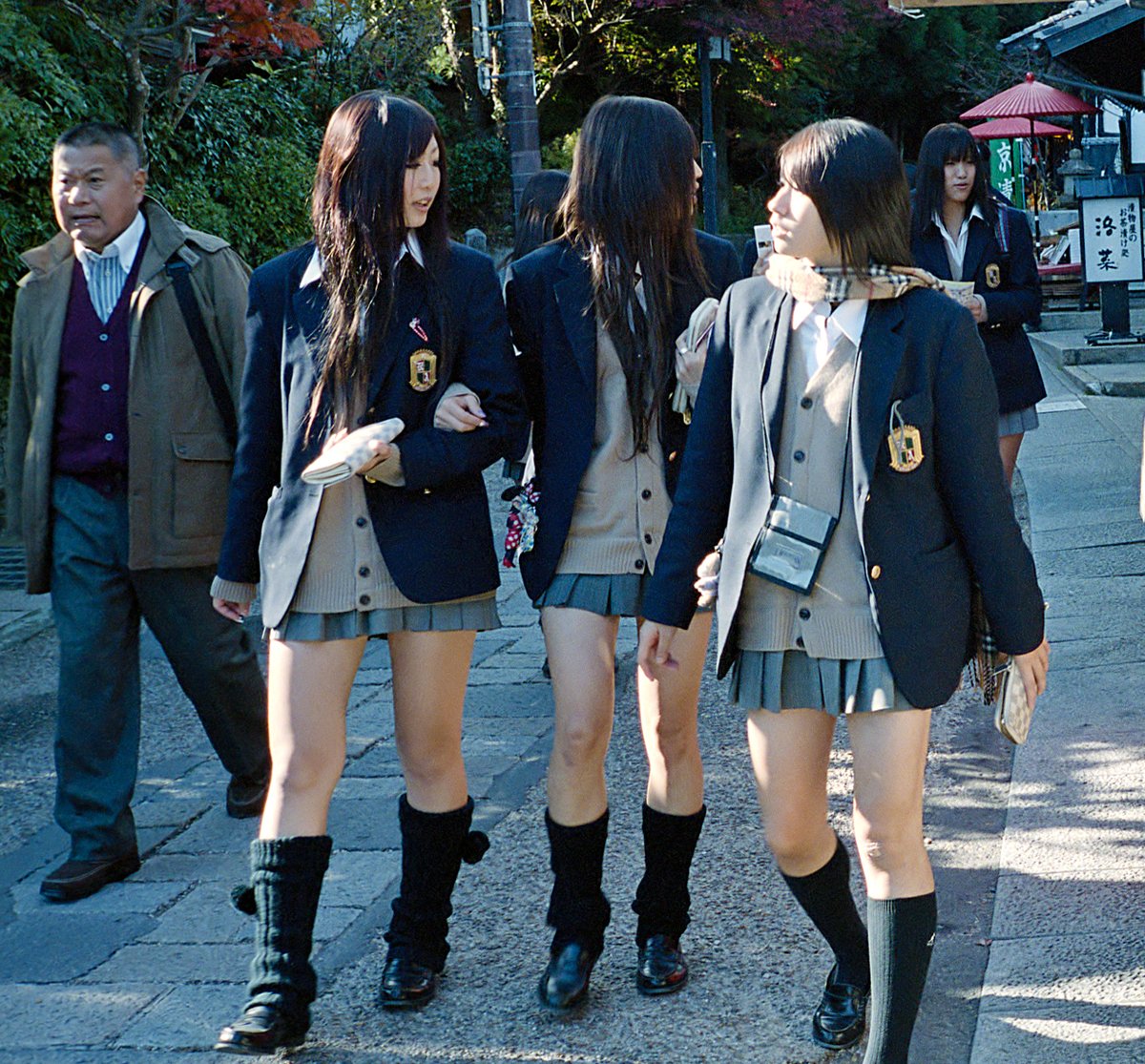
Loose socks are the single most recognizable kogal item. They are not knee-highs. They are deliberately oversized, worn slouched and bunched down the calf, and in their fuller versions they drop low enough to partly swallow the shoe. Their job is to close the long stretch of bare leg a shortened skirt leaves, which resets the proportions of the entire silhouette.
That is why the sock reads as a style decision rather than as hosiery. It was also, alongside the skirt length, one of the two original acts of dress-code rebellion the earliest kogals made, and the pairing has stayed inseparable ever since. Shorten the skirt without the socks and the look is simply a shorter skirt.
Kogal Gyaru Makeup
Kogal gyaru makeup works by contrast against artificially tanned skin. The tan is the base layer of the face, white eyeshadow does most of the highlighting, and lipstick stays light rather than deep, so the brightest points of the face sit against the darkest background the wearer can produce. Hair follows the same logic, bleached or dyed brown, running at the flashier end to light brown and platinum blonde.
Kogal makeup is heavy rather than subtle, which is the point: the face is meant to register from across a street, not up close.
Kogal tanning is a tan, and it should not be confused with what came later. The extreme dark makeup people often picture when they hear “gyaru” belongs to ganguro, the substyle that displaced kogal at the end of the decade.
Kogyarugo, the Slang Kogals Invented
Kogyarugo is the in-group slang kogals built for themselves, and it drew enough academic attention that the linguistic anthropologist Laura Miller published a study of kogal slang and how the media assessed it in the Journal of Linguistic Anthropology. It worked by contracting Japanese phrases, translating English phrases literally, attaching an -ingu suffix to verbs, and abbreviating phrases into roman letters.
The vocabulary was not decoration. It was a working dialect, and recurring examples include:
- Ikemen (イケ面), “cool dude”
- Cho-kawaii (超かわいい), “totally cute”
- Cho maji de mukatsuku (超マジでむかつく), “really super frustrating”
- Biba jibun (ビバ自分), “long live the self”
The construction methods are more interesting than any single word. The roman-letter abbreviations turned maji de mukatsuku into MM and maji de kireru go byoumae into MK5. Kogals also used a suffix -ra meaning “like” or “learned from,” which is how followers of Namie Amuro’s style became Amura.
How Japan Talked About Kogals
Japanese media coverage of kogals was heavy and rarely kind. Reporting tied the style to enjo kosai, compensated dating, and read its material focus as evidence of psychological or spiritual emptiness in modern Japanese life. The 1997 film Bounce Ko Gals put that narrative on screen. The specific claim that high school girls were selling sex to buy luxury goods was later debunked as a stereotype.
Critics also accused kogals of conspicuous consumption funded by wealthy parents. What the coverage left behind was a gap between the reporting and the girls, summed up by one schoolgirl quoted as saying that people only saw her as a kogal, like the ones they saw on television.
Academic readings of the same subculture are more generous. Some feminist commentary described kogals as cleverly negotiating their own position in a male patriarchal world. The scholar Sharon Kinsella argued that the phenomenon was better understood as a media practice of fetishizing school uniforms than as anything kogals themselves were driving. Read sociologically, the style has been treated as a marker of the changing role of women in capitalist Japan, a turn away from tradition and nationalism toward what has been called stateless consumerism, expressed through hedonism, blunt language and a willingness to criticize men openly.
From Kogal to Ganguro and Yamanba
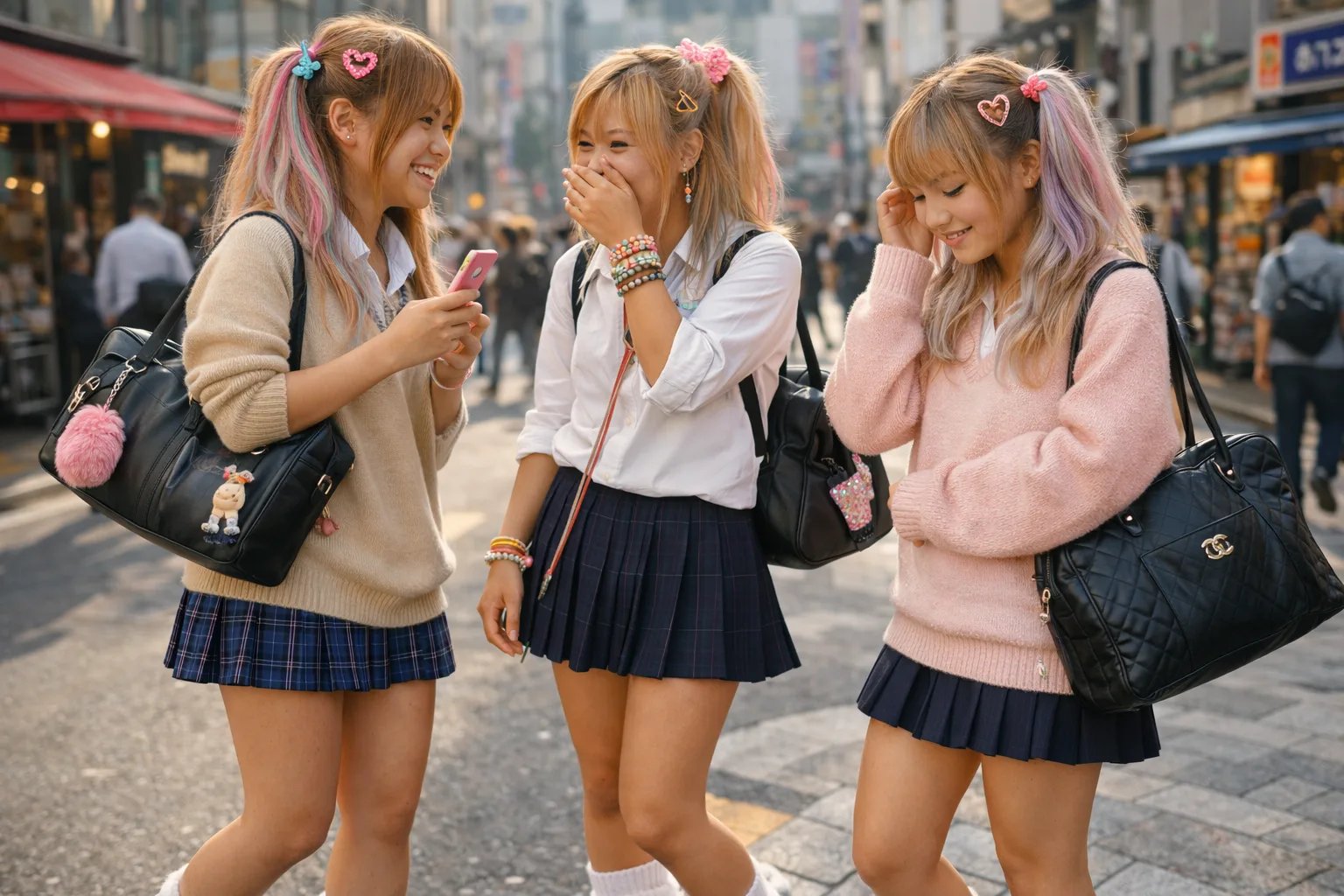
Kogal culture peaked in 1998 and then gave way to substyles that abandoned its uniform base. Ganguro pushed the tan far darker and the makeup far more extreme, gaining ground through the same Egg magazine that had built the kogal audience. Yamanba, the “mountain hag” styling, followed and pushed further still. Later branches reversed or restyled the premise entirely.
| Gyaru substyle | How it differs from kogal |
|---|---|
| Ganguro | Much darker tan and far more extreme makeup; displaced kogal at the end of the 1990s |
| Yamanba | The “mountain hag” styling, pushing the ganguro extremes further |
| Shiro Gyaru | Built on skin whitening, reversing the tanning premise entirely |
| Onee Gal | A Hollywood-influenced direction aimed at older wearers |
| Hime gyaru | The “princess gal” style, a full princess aesthetic that appeared in 2007 |
Each of these is a distinct substyle rather than a rebrand of kogal, and the uniform base that defined kogal does not carry into most of them.
Is Kogal Still Around
Kogal is not a live subculture. It stopped being a focus of Japanese fashion and media attention after its late-1990s peak, and it has not returned as an organized style, even though Japanese students still sexualize their uniforms.
The individual pieces are a different story. Loose socks have been resurfacing in streetwear, now worn with bulky sneakers rather than platform boots, and the shortened pleated skirt has never really left. What survives is the styling grammar rather than the subculture: a uniform silhouette treated as raw material, with the proportions deliberately thrown off.
FAQs
Is kogal the same thing as gyaru?
No. Gyaru is the broad subculture, and kogal is the high-school branch of it. The name itself says so, since kogyaru contracts kokosei gyaru, “high school gal.” What makes kogal specific is that the outfit is built on a modified school uniform rather than on ordinary clothes.
Why did kogals wear loose socks?
Loose socks started as dress-code rebellion, alongside the shortened skirt, among the private school dropouts who formed the earliest kogal group. They stayed because of how they look: a thick slouched white mass at the ankle closes the bare leg a mini skirt leaves and rebalances the whole silhouette.
What is the difference between kogal and ganguro?
Kogal is built on a modified school uniform and uses an ordinary tan as the base for its makeup. Ganguro pushed the tan far darker and the makeup far more extreme, and it displaced kogal at the end of the 1990s, gaining ground through the same Egg magazine that had built the kogal audience.
Is kogal still popular in Japan?
The subculture is not. Kogal stopped being a focus of fashion and media attention after its 1998 peak. Individual elements have returned, especially loose socks, which are turning up in current streetwear paired with bulky sneakers instead of platform boots.
What does kogyarugo mean?
Kogyarugo is the slang kogals developed, and it means roughly “kogal language.” It worked by contracting Japanese phrases, translating English literally, adding an -ingu suffix to verbs, and abbreviating phrases into roman letters such as MM and MK5.
If the kogal grammar of pleats, slouch and deliberately-off proportions is the part you want to wear, you will find it in Kamicrew’s Japanese street style collection.
Kamicrew Best Seller

Dont Touch Me Yokai Ukiyo-E Japanese T-Shirt
$25.49+
$29.99
(15% off)


Summer Vibes Salty Kawaii Japanese Hoodie
$44.99+
$49.99
(10% off)


Japanese Pin Horror 80s Retro Aesthetics T-Shirt
$25.49+
$29.99
(15% off)


El Gran Maja Japanese Kaiju T-Shirt
$25.49+
$29.99
(15% off)


Who Wants The Perfect Body Japan Capybara Kawaii Japanese Unisex Shirt
$25.49+
$29.99
(15% off)


Monster 8 Mask Vintage Animal Hoodie
$44.99+
$49.99
(10% off)


I Hate People Japanese Opossum Vintage Animal Hoodie
$44.99+
$49.99
(10% off)


I Got That Dog In Me Small Turtle Vintage Animal T-Shirt
$25.49+
$29.99
(15% off)

The Creation Of Cat Ukiyo-E Japanese T-Shirt
$25.49+
$29.99
(15% off)