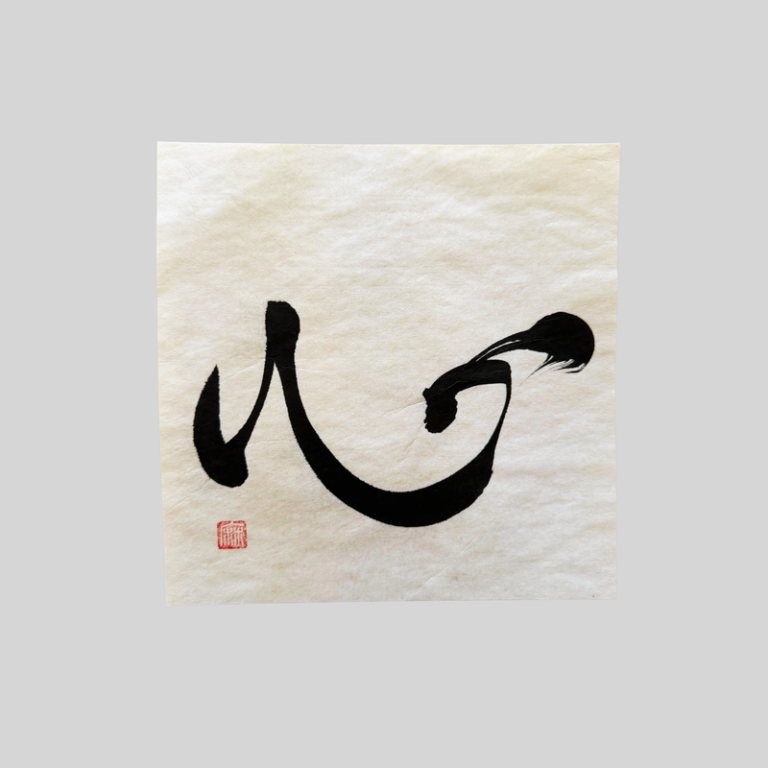

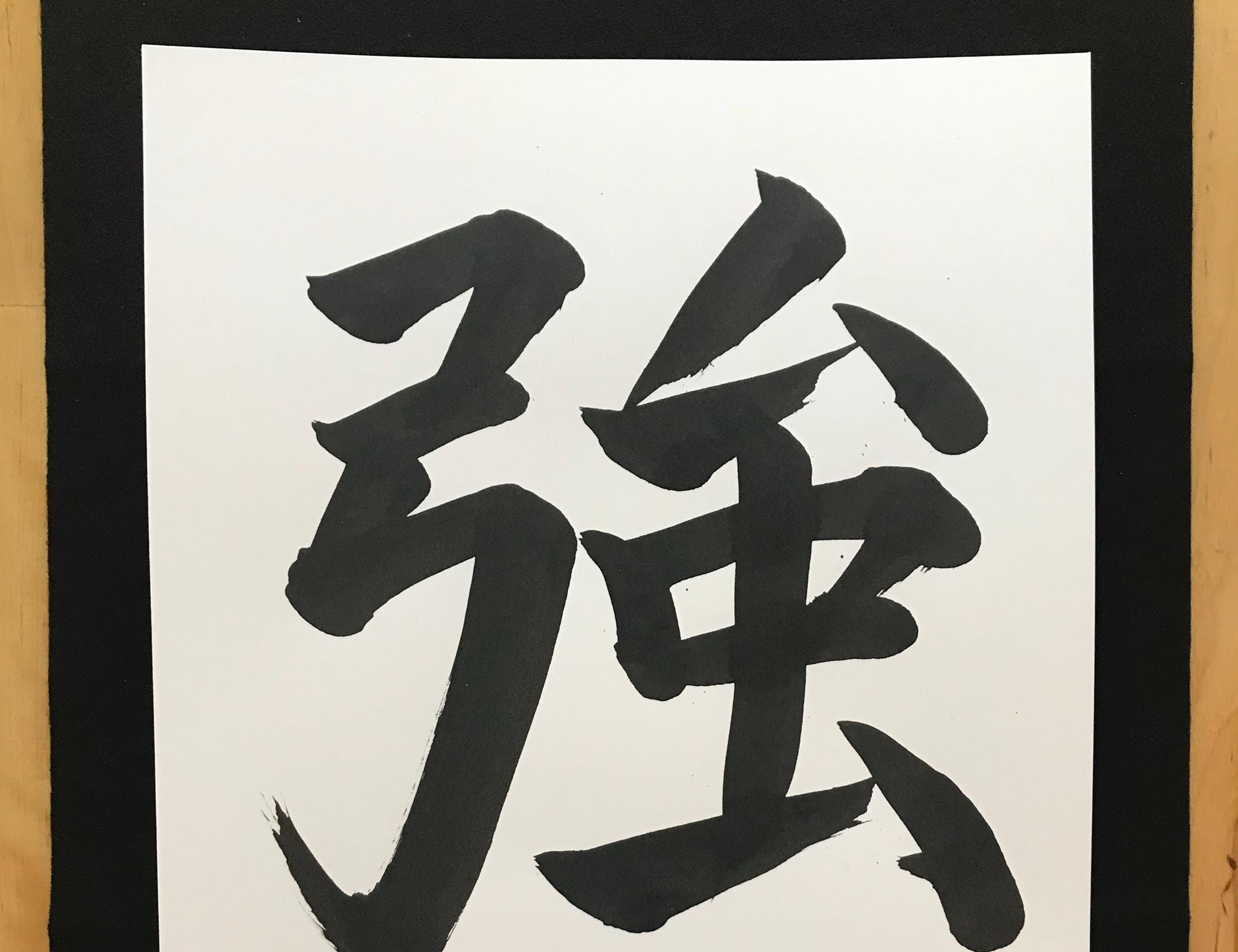
The Japanese symbol for strength is one of two kanji: 力 (chikara), meaning power, force, or physical ability, or 強 (tsuyoi/kyō), meaning resilient, tough, or hard to overcome. 力 fits raw physical strength; 強 fits inner strength, discipline, and endurance. Most searches for a “strength symbol” for a tattoo, gift, or design are closer to 強’s meaning.
The Two Kanji for Strength: 力 and 強
力 and 強 are both called “the Japanese symbol for strength,” but they carry different meanings. 力 is a two-stroke character read chikara, meaning power, force, or ability in a physical, practical sense. 強 is an 11-stroke character read tsuyoi as an adjective, describing the quality of being strong, resilient, or difficult to defeat, rather than force itself.
| Kanji | Reading | Strokes | Best for |
|---|---|---|---|
| 力 | chikara (kun), riki/ryoku (on) | 2 | Physical power, capability, raw force |
| 強 | tsuyoi (kun), kyō/gō (on) | 11 | Inner strength, resilience, toughness |
元気 (genki) is a related word that means energy or vigor, not strength, and is easy to confuse with both kanji when browsing designs.
Origin and History of 力 and 強
力 and 強 come from different roots and reached their current meaning through different paths, one from farm labor, the other from a weapon.
力 began as a pictograph of a plow, tied to the physically demanding work of tilling land in early East Asian agriculture. Its meaning broadened over centuries from the literal strength needed for farm labor to power, effort, and capability in general. It now appears in everyday words like 力量 (rikiryou, ability) and 協力 (kyouryoku, cooperation).
強 combines 弓 (yumi, “bow”), which supplies the meaning, with a phonetic component historically linked to 弘 (kō, “vast” or “great”). The character likely first described a taut, powerful bow, and its meaning stretched from physical tension to general toughness and resilience. Both 力 and 強 are jōyō kanji, part of Japan’s official list of kanji taught through compulsory education and approved for government documents, which is why both appear in textbooks, signage, and design work without needing further explanation to a Japanese reader.
Other Japanese Symbols of Strength
Kanji are not the only way strength is represented in Japanese art and design. Four recurring non-kanji symbols carry a related meaning:
- Ensō (円相): a hand-drawn ink circle used in Zen calligraphy, associated with enlightenment, the void, and inner strength.
- Koi fish: shown swimming against the current, representing perseverance and the strength to push through obstacles.
- Tiger: a guardian and warrior figure in Japanese art, standing for strength, courage, and territorial protection. Kamicrew’s Byakko tiger is the mythological version of this same guardian symbolism.
- Dragon: associated with power and resilience alongside wisdom and good fortune, as covered in the Ryujin kanji and sea-god meaning.
Strength Symbols in Japanese Tattoos and Fashion
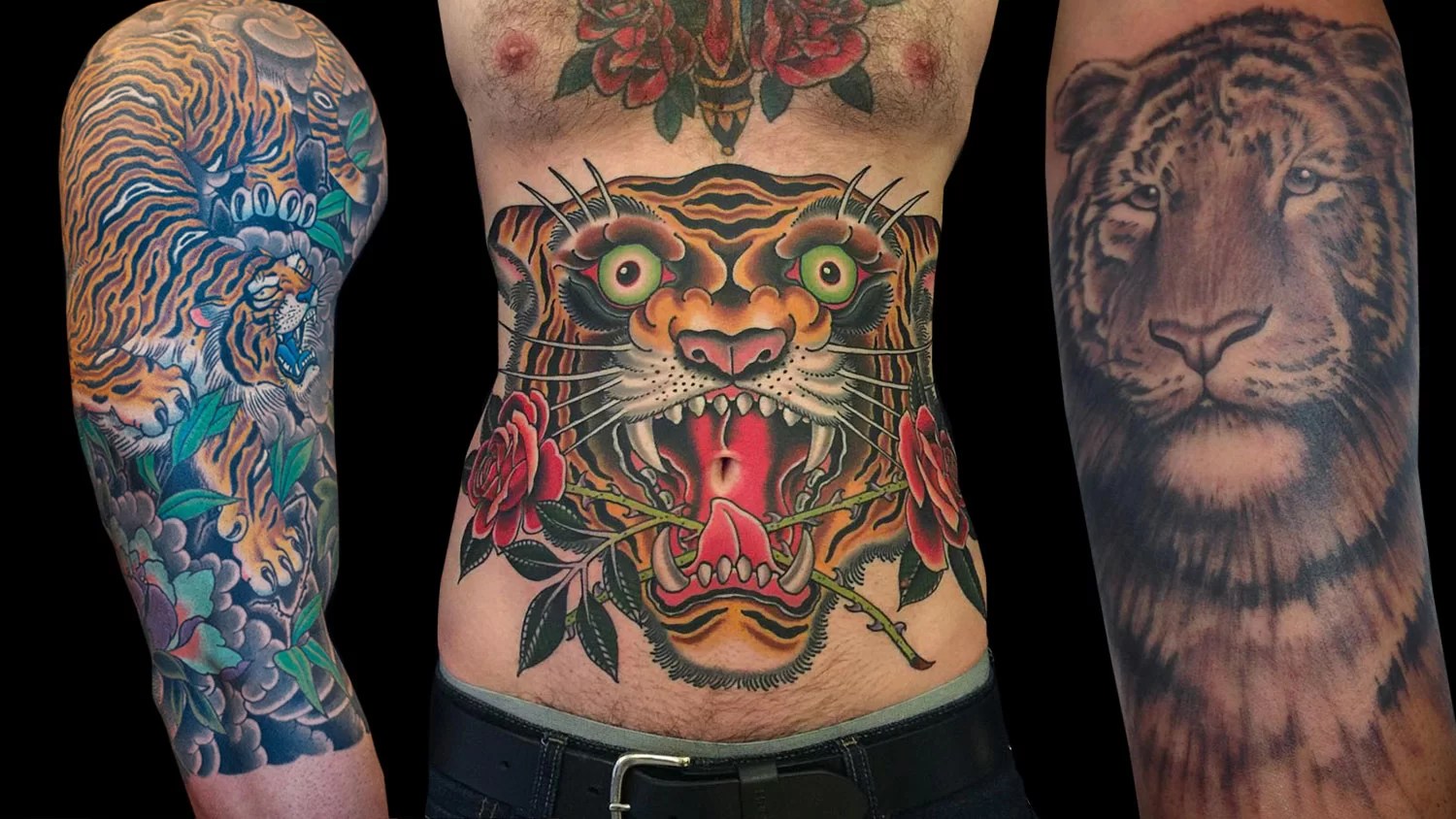
Tiger and lion tattoos are the most common non-kanji strength symbols in traditional Japanese tattooing (irezumi); kanji tattoos of 力 or 強 are the most common direct symbols.
In irezumi, animals carry specific meanings the way kanji do. Tigers represent strength, courage, and protection, drawn fierce and ready to defend their territory. Lions carry a similar message, styled to look majestic and commanding, evoking the qualities of a strong leader. Bamboo shows up as a background motif for a related but distinct idea: it bends without breaking, so it stands for resilience and flexibility rather than raw force.
Kanji tattoos of 力 or 強 work as standalone pieces because they are compact and specific. 強 reads as “strong, resilient, tough” and suits a design about inner strength, recovery, or discipline. 力 reads as “power, force, ability” and suits a design about raw physical strength. The same discipline runs through samurai armor, built around function and endurance rather than decoration.
Kamicrew’s yokai and mythology graphic tees use the same tiger, dragon, and kanji imagery for anyone who wants the meaning on fabric rather than skin.
FAQs
What is the Japanese symbol for strength?
The two main answers are 力 (chikara), meaning power, force, or physical ability, and 強 (tsuyoi), meaning strong, resilient, or tough. 力 fits raw physical strength; 強 fits inner strength and endurance.
Should I use 強 or 力 for a strength tattoo?
Use 強 if the tattoo is about inner strength, resilience, discipline, or toughness under pressure. Use 力 if the message is raw power, physical force, or capability. Most strength-tattoo searches are closer to 強’s meaning.
What is the difference between 強 and 力?
強 describes being strong, resilient, or hard to overcome, it is a quality. 力 means power, force, ability, or physical strength, it is closer to a resource or capacity. The two overlap in English translation but are not interchangeable in Japanese.
What Japanese tattoo symbolizes strength?
Beyond the kanji themselves, tiger and lion tattoos are the most common strength symbols in traditional Japanese tattooing. Both are drawn fierce and imposing, representing courage, power, and the qualities of a strong leader.
Is there a Japanese kanji for courage?
Yes, 勇 (yuu) means courage, bravery, or valor, and is a separate character from both strength kanji. It is often chosen alongside 強 or 力 when a design needs to combine strength with bravery.
Kamicrew Best Seller

Dont Touch Me Yokai Ukiyo-E Japanese T-Shirt
$25.49+
$29.99
(15% off)


Summer Vibes Salty Kawaii Japanese Hoodie
$44.99+
$49.99
(10% off)


Japanese Pin Horror 80s Retro Aesthetics T-Shirt
$25.49+
$29.99
(15% off)


El Gran Maja Japanese Kaiju T-Shirt
$25.49+
$29.99
(15% off)


Who Wants The Perfect Body Japan Capybara Kawaii Japanese Unisex Shirt
$25.49+
$29.99
(15% off)


Monster 8 Mask Vintage Animal Hoodie
$44.99+
$49.99
(10% off)


I Hate People Japanese Opossum Vintage Animal Hoodie
$44.99+
$49.99
(10% off)


I Got That Dog In Me Small Turtle Vintage Animal T-Shirt
$25.49+
$29.99
(15% off)

The Creation Of Cat Ukiyo-E Japanese T-Shirt
$25.49+
$29.99
(15% off)