
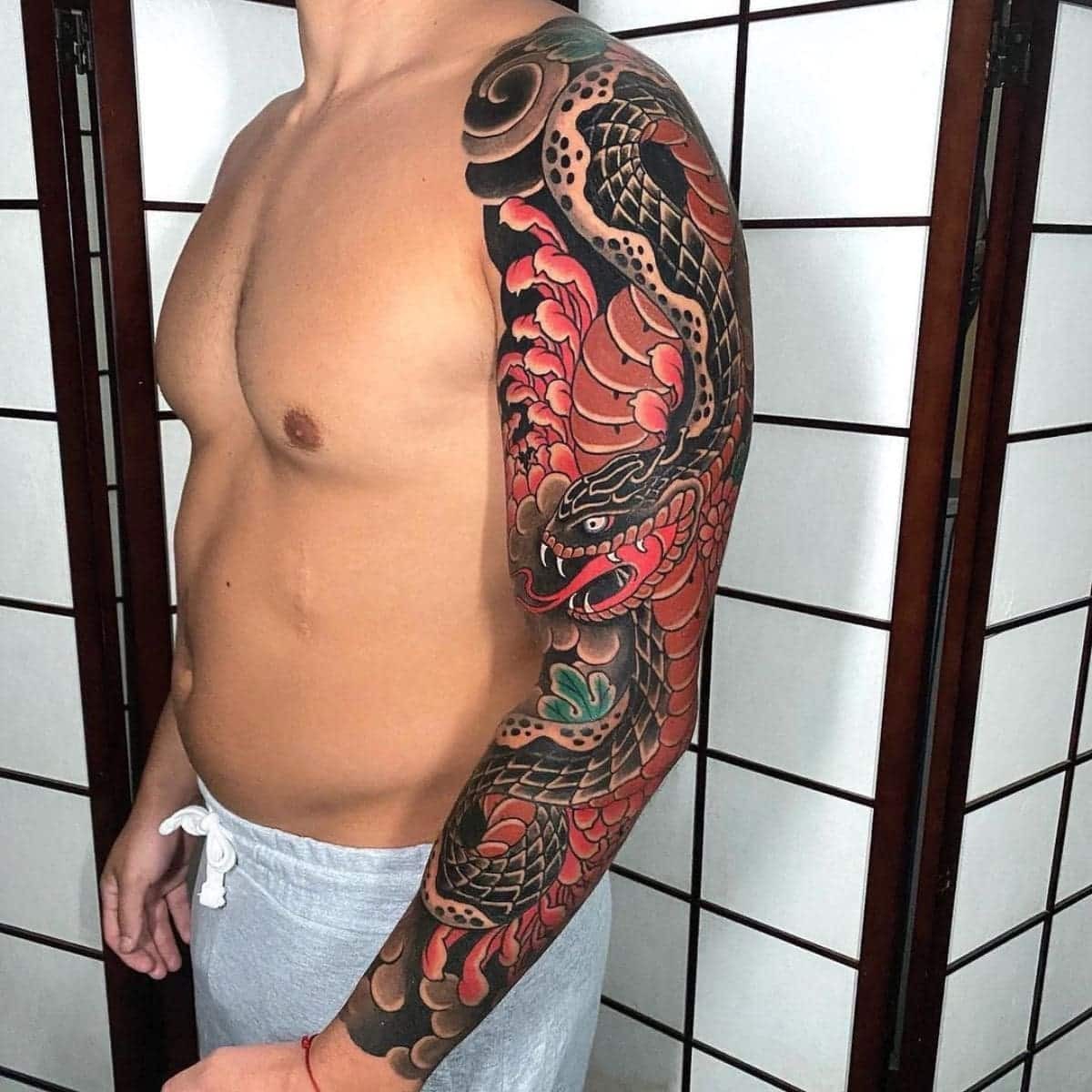
In Japanese tattooing, a snake (hebi) tattoo means protection, transformation, and rebirth. Unlike in Western tattoo culture, where snakes often read as dangerous or evil, hebi in irezumi are guardians, sacred, wise, and tied to shedding an old self to become new. Color changes the emphasis: black leans toward wisdom, red toward protection, white toward the sacred.
What a Snake (Hebi) Tattoo Means
A hebi tattoo carries dual symbolism: guardian and warning in one figure. As a guardian, it wards off illness, disaster, and bad luck, and in some Shinto beliefs snakes are messengers or incarnations of deities. As a reminder of danger, the same creature’s venom and unpredictability stand for life’s unforeseen risks. Placement adds a layer: on the arm, hebi reads as protection; on the back, it can hint at overcoming something from the past.
Where the Symbolism Comes From
The reverence behind a hebi tattoo predates tattoo art by centuries, rooted in Shinto belief rather than invented for body art. A peer-reviewed survey of traditional beliefs in Japan found that snakes have long been regarded as a god, a messenger of a god, or a creature that brings a curse if harmed, a belief with real conservation consequences since snakes tied to shrines are still protected today. That same guardian-deity framing carries into modern irezumi, most directly through Benzaiten, a goddess whose messenger is a white snake, and through Ugajin, a snake-bodied deity of wealth and harvest.
Snake Tattoo Meaning by Color
Color shifts a hebi tattoo’s meaning as much as the pose does: black and red are the two most common choices, tied to dignity and protection respectively.
| Color | Japanese name | Meaning |
|---|---|---|
| Black | Kuro | Wisdom, dignity, formality |
| Red | Aka | Vitality, strength, protection against evil |
| Blue | Ao | Protection, healing |
| White | Shiro | Purity, sacred status, tied to the goddess Benzaiten |
| Yellow | Ki | Longevity, courage, loyalty |
| Green | Midori | Energy, vitality, youth |
| Purple | Murasaki | Royalty, high status |
Snake and the Japanese Zodiac
Hebi is one of the twelve signs in the Japanese zodiac, and a zodiac-themed hebi tattoo leans on personality symbolism rather than protection or rebirth. People born in a snake year are traditionally described as mysterious, wise, intuitive, and lucky in business, alongside a private, sometimes guarded side.
Common Pairings: Snake With Other Motifs
A hebi tattoo rarely stands alone in traditional irezumi; the paired motif adds a second layer of meaning:
- Peonies: combines the snake’s protection with wealth and beauty.
- Skull: highlights the natural cycle of life, death, and rebirth.
- Hannya mask: portrays an internal struggle, often jealousy or negative emotion being overcome. Kamicrew’s guide to Japanese folklore masks covers the hannya’s own symbolism in more depth.
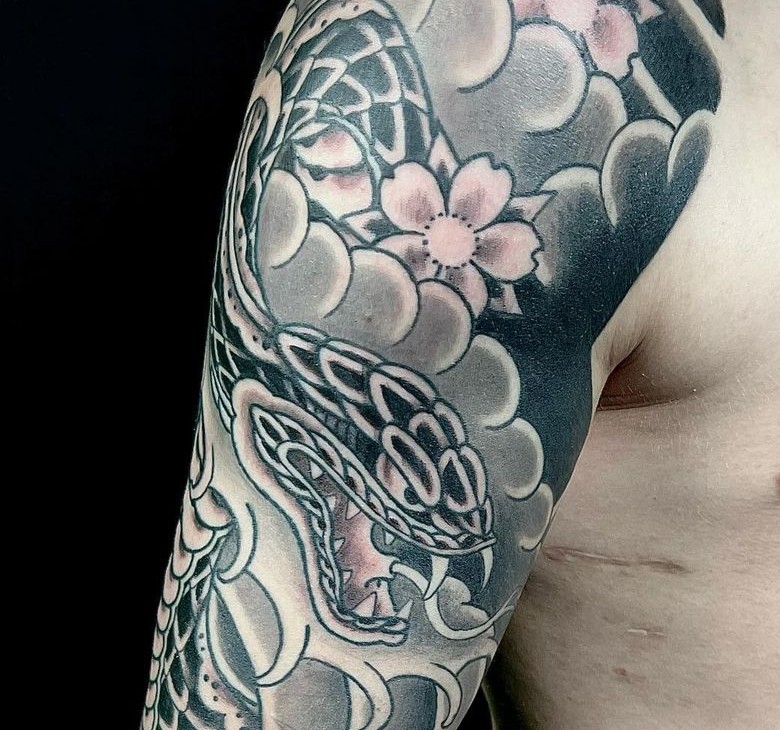
- Cherry blossoms: pairs the snake’s permanence with the fleeting, seasonal beauty of sakura.
Snake Tattoos at Kamicrew
Kamicrew’s yokai and mythology tees draw from the same guardian-deity symbolism covered in Japanese folklore’s gods and yokai, snake included, for anyone who wants the meaning without committing to ink. Readers comparing tattoo symbolism across creatures can also see how a different guardian figure is treated in the tengu tattoo meaning guide.
FAQs
What does the snake represent in Japan?
In Japanese culture and irezumi, the snake (hebi) represents protection, transformation, and rebirth. Snakes are traditionally seen as messengers or incarnations of deities and are believed to bring blessings and ward off evil.
What does a snake tattoo symbolize?
A snake tattoo symbolizes transformation and renewal, tied to how snakes shed their skin, alongside protection and, in Japanese tradition, guardianship rather than danger.
What does it mean if a girl has a snake tattoo?
The meaning does not change by gender: transformation, power, and rebirth are the core themes. Many people, regardless of gender, choose a snake tattoo to mark personal change, independence, or resilience.
Does snake tattoo color change the meaning?
Yes. Black leans toward wisdom and dignity, red toward vitality and protection, white toward purity and sacred status, and yellow toward longevity and courage, among other color-specific meanings.
Kamicrew Best Seller

Dont Touch Me Yokai Ukiyo-E Japanese T-Shirt
$25.49+
$29.99
(15% off)


Summer Vibes Salty Kawaii Japanese Hoodie
$44.99+
$49.99
(10% off)


Japanese Pin Horror 80s Retro Aesthetics T-Shirt
$25.49+
$29.99
(15% off)


El Gran Maja Japanese Kaiju T-Shirt
$25.49+
$29.99
(15% off)


Who Wants The Perfect Body Japan Capybara Kawaii Japanese Unisex Shirt
$25.49+
$29.99
(15% off)


Monster 8 Mask Vintage Animal Hoodie
$44.99+
$49.99
(10% off)


I Hate People Japanese Opossum Vintage Animal Hoodie
$44.99+
$49.99
(10% off)


I Got That Dog In Me Small Turtle Vintage Animal T-Shirt
$25.49+
$29.99
(15% off)

The Creation Of Cat Ukiyo-E Japanese T-Shirt
$25.49+
$29.99
(15% off)