
Japanese folklore masks are carved or moulded faces that stand in for the creatures, spirits and deities of Japanese belief. The faces that recur most often are oni, hannya, kitsune, tengu, kappa, namahage, hyottoko and okame. They are not one tradition. A Noh mask cut from hinoki cypress for a medieval play and a papier mache fox sold at a shrine stall share a visual language and almost nothing else in function. Masked performance in Japan is documented from the seventh century, when Gigaku dance drama arrived, and every stage of that history left a face still in use on stage and at shrine festivals.
What follows stays with the masks as objects of theatre, ritual and craft: who carves them, what each face does in performance, and where they are still worn. How the same motifs travel onto a traditional Japanese mask print in contemporary wardrobes is a separate story with its own rules.
A short history of Japanese folklore masks
Masked performance in Japan dates from the seventh century, with Gigaku dance drama recorded as arriving in 612 CE, and the traditions stack rather than replace one another. Gigaku came with Buddhist dance drama, Bugaku followed at the imperial court, Noh and Kyogen formalised in the medieval Muromachi period, and regional Kagura and festival masks carried the folk strand forward. Each stage left a category of face still worn today.
- Seventh to eighth centuries: Gigaku masks, worn in Buddhist dance drama. Surviving examples are held in collections such as the Tokyo National Museum’s Gigaku holdings.
- Imperial court: Bugaku, a ritual dance tradition with masked roles, performed at shrines and temples and predating Noh.
- Medieval Muromachi period: Noh and Kyogen become established forms.
- Medieval to Edo periods: Japanese facial armour, the mengu and menpo worn by warriors, built from wood, leather, iron and lacquer.
- Regional traditions: festival masks and Kagura, the Shinto dance in which masks represent deities, spirits and mythical creatures.
- Modern era: decorative masks, cosplay pieces and stage props.
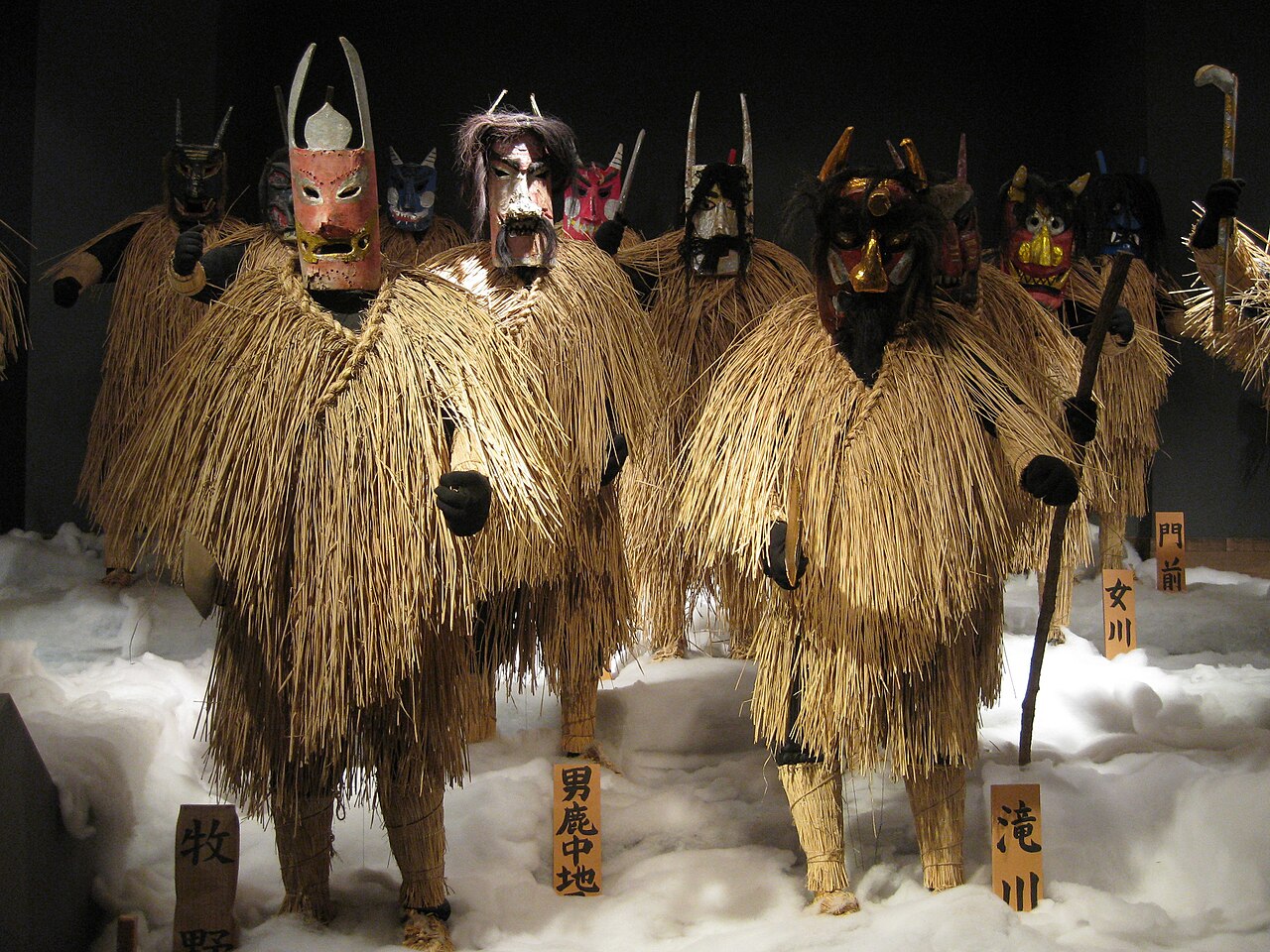
The folk strand never stopped. On the Oga peninsula in Akita, Namahage performers still go house to house on New Year’s Eve in wooden ogre masks and straw capes, frightening children into good behaviour.
Noh masks: the face that changes when it moves
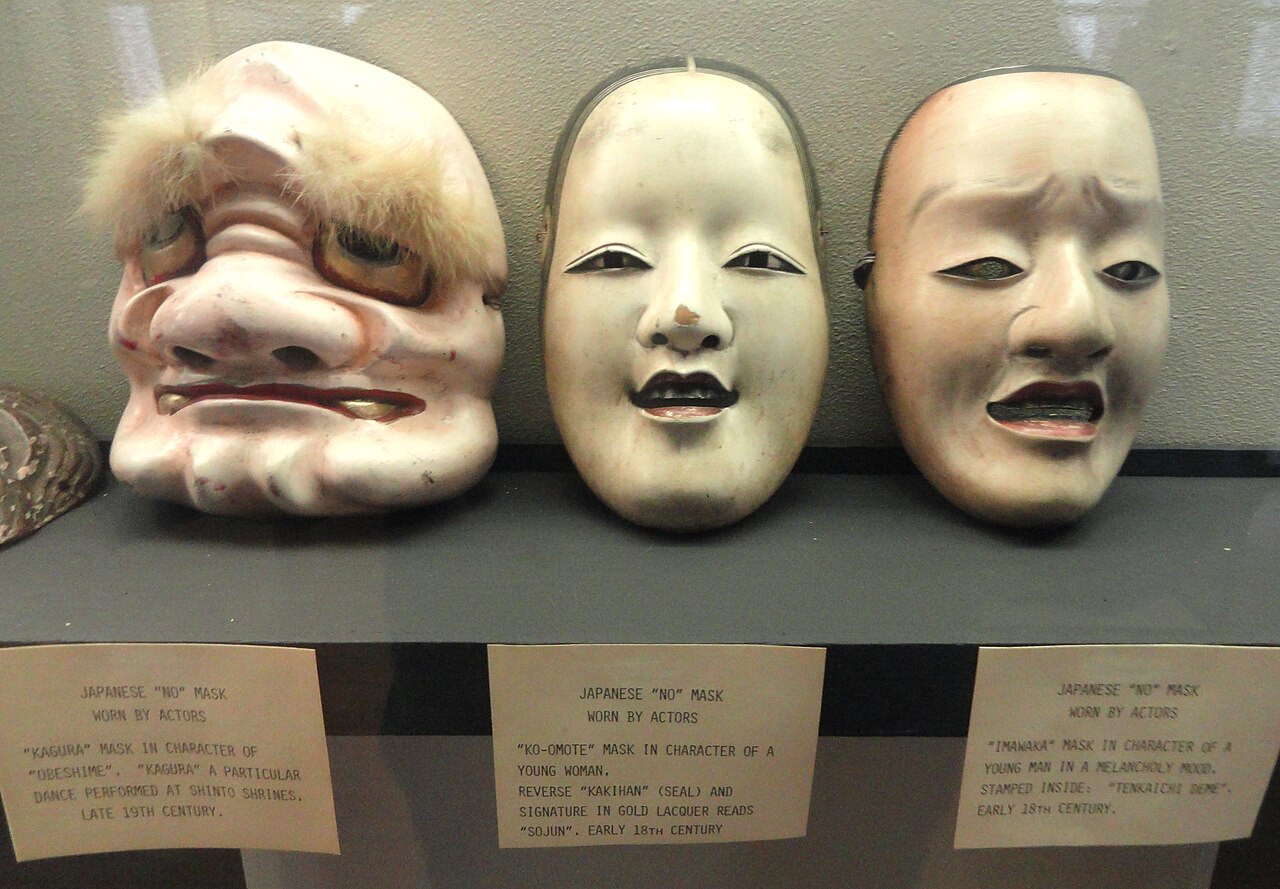
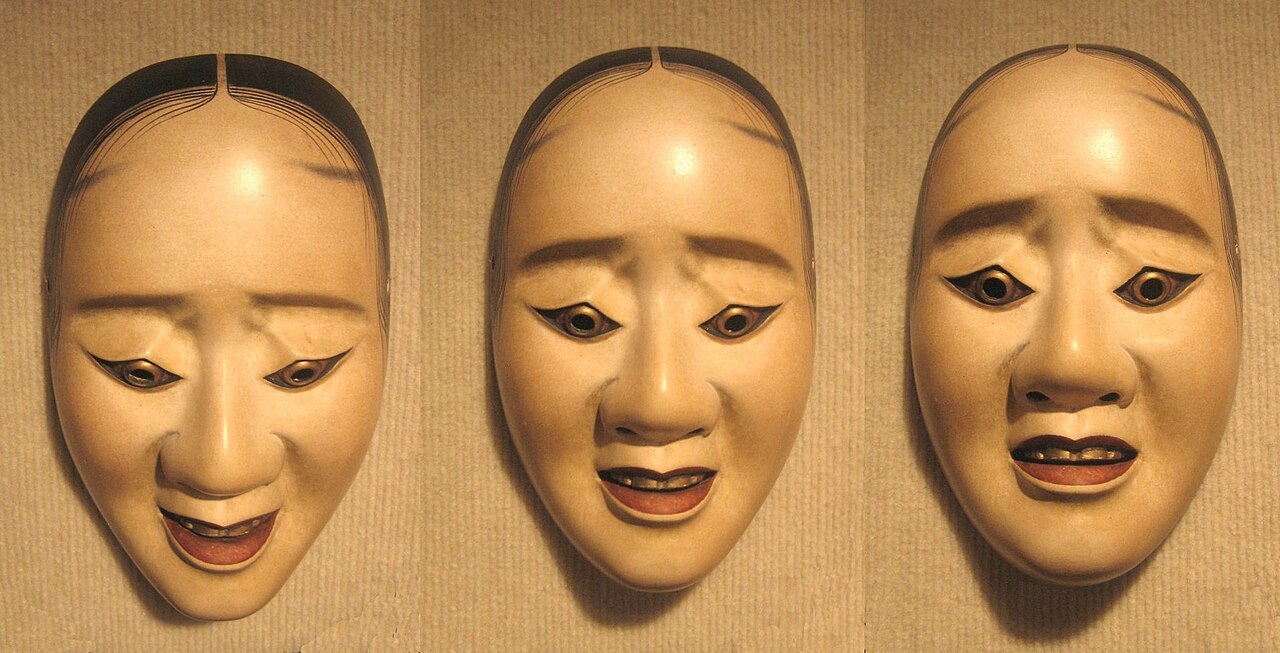
Noh theatre took shape in the fourteenth century, and its mask, called omote, sits at the centre of the form. Carvers cut it from hinoki cypress and finish it with lacquer and paint, leaving the expression deliberately ambiguous, so a small tilt of the head does the work a change of expression would do on a bare face.
The word omote matters: this is a face the actor takes on, not a disguise laid over one. A well made Noh mask reads as sad from one angle and cheerful from another. There are hundreds of individual types, grouped into five broad classes: human, animal, demon, god and monster. Male actors historically wore them to play women and elderly characters, and that convention has survived into the present even though women now perform.
The wider form is called Nogaku, covering both Noh and the comic Kyogen played in the same space, with Kyogen using masks far less often. Japan designated Nogaku an Important Intangible Cultural Property in 1957, and UNESCO inscribed it on the Representative List of the Intangible Cultural Heritage of Humanity in 2008.
Japanese folklore mask types and what each one means
The folklore faces you meet most often are oni for danger and punishment, hannya for jealousy, kitsune for cleverness and Inari worship, tengu for pride and martial skill, kappa for river danger, namahage for New Year discipline, hyottoko for village comedy and okame for good fortune. What matters as much as the meaning is the setting each one belongs to, because a face carved for the Noh stage and a face worn in a village rite are read differently. Meanings shift by region and context rather than following a fixed code.
Most of these faces come out of the yokai tradition, and what a given yokai symbolizes largely decides how its mask is read.
| Mask | What it depicts | What it carries | Where it is worn |
|---|---|---|---|
| Oni | Horned demon, red or blue | Danger, punishment, disruptive power | Setsubun rites, folk festivals, Kagura |
| Hannya | Horned female demon | Jealousy, anger, anguish | The Noh stage, in possessed woman roles |
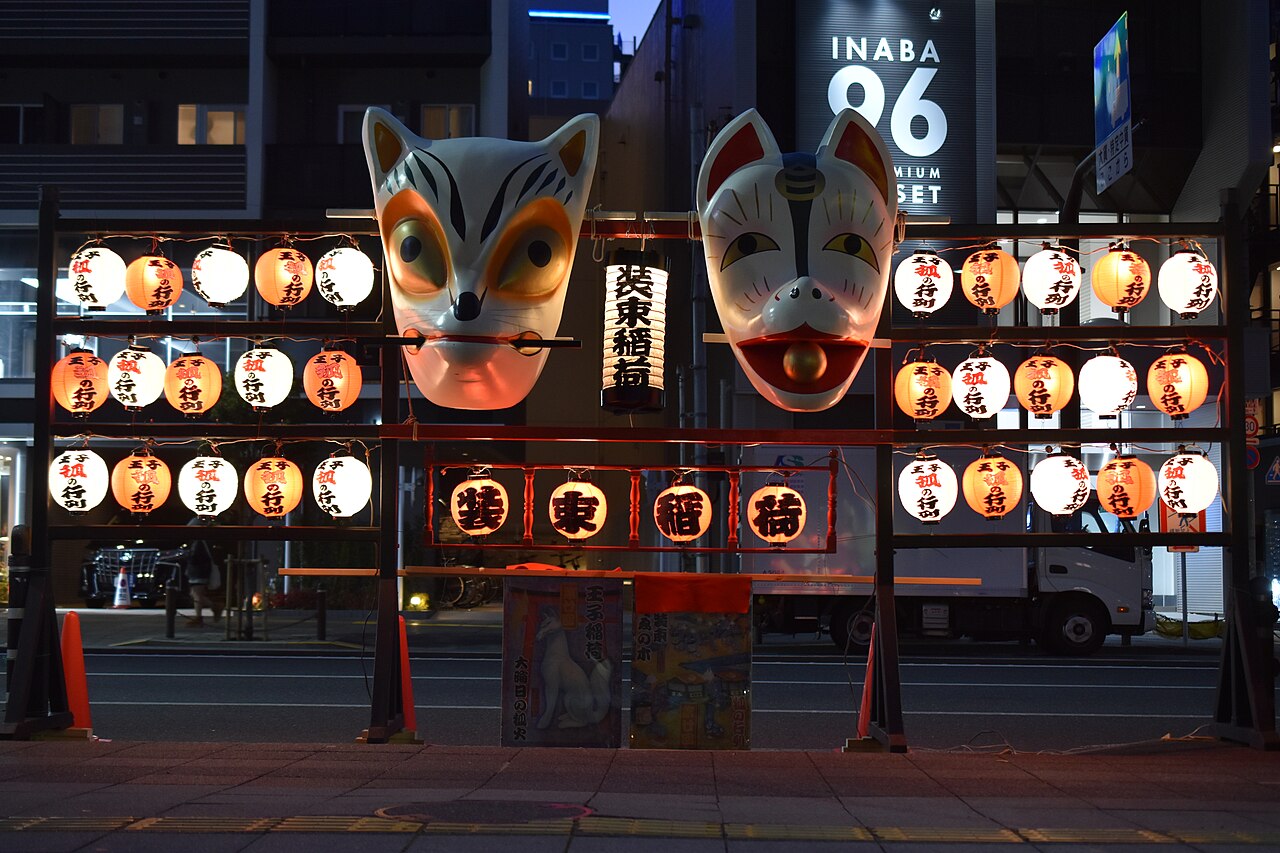
| Kitsune | Fox | Cleverness, transformation, Inari worship | Inari shrine ceremonies, Bon Odori, festival stalls |
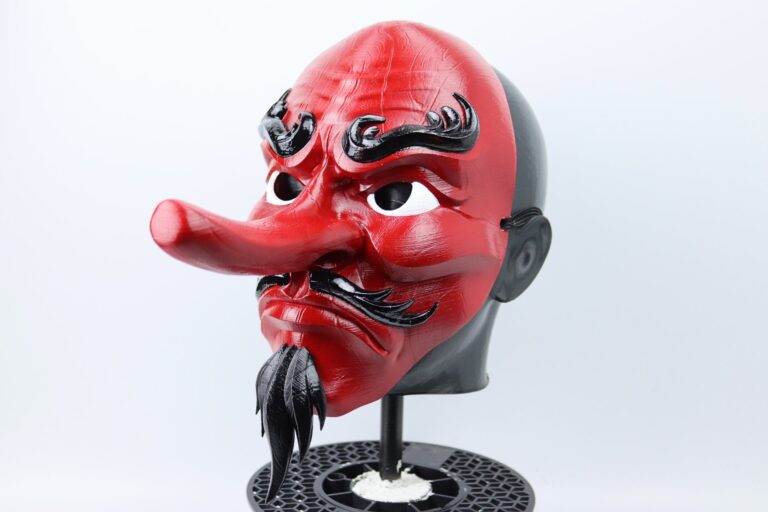
| Tengu | Long nosed mountain being | Pride, martial skill, mountain power | Shinto festivals, Buddhist theatre performances |
| Hyottoko | Fire blowing simpleton | Comedy, village humour | Festival dance and comic Kagura roles |
| Okame | Smiling round faced woman | Merriment, good fortune | Kagura and festival dance, lucky charms |
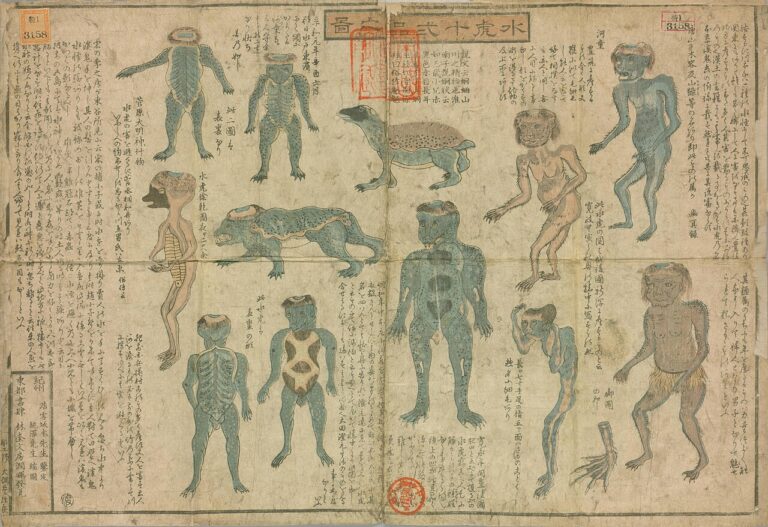
| Kappa | Water imp with a shelled back | Warning, river danger | Festival and folk performance |
| Namahage | Straw clad ogre | New Year discipline, good luck | New Year’s Eve house visits on the Oga peninsula |
The kitsune mask is the one most people meet first. Foxes are messengers of Inari, the deity of rice, fertility and agriculture, and fox masks turn up in Bon Odori folk dances and Shinto ceremonies as well as on festival stalls. Tengu began as bird like beings before the beak flattened into the long red nose that identifies the mask now, and the face appears at Shinto festivals and in Buddhist theatre performances. Hyottoko and Okame are the pair that carry comedy: Hyottoko takes his name from hi, fire, and otoko, man, for the figure who blows on a fire through a bamboo pipe, while Okame is the perpetually smiling woman associated with luck in marriage and with Amenouzume, the deity of entertainment.
Oni and hannya are not the same face
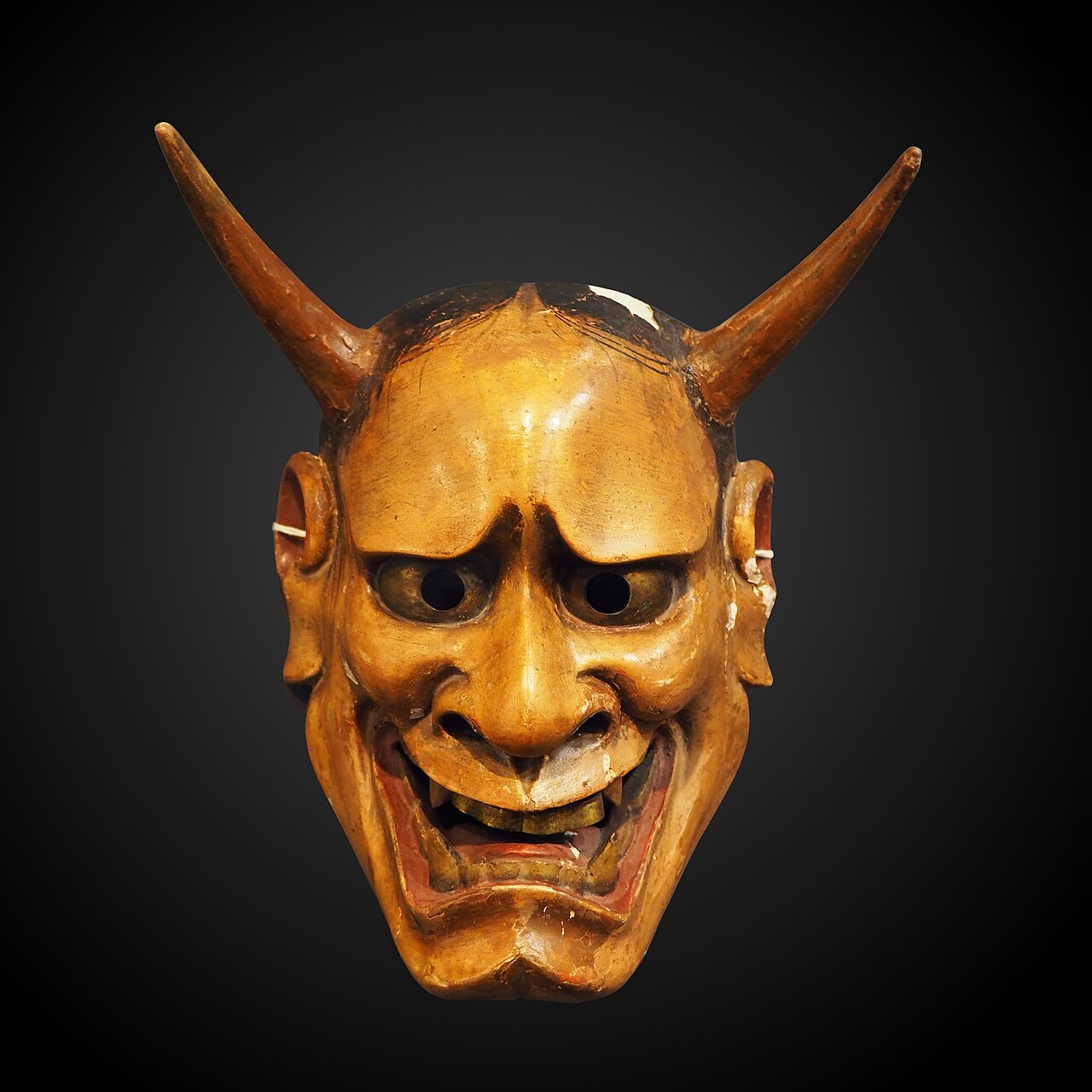
Oni masks and hannya masks are both horned, both demonic, and they get swapped constantly, but they depict different things. An oni mask depicts an ogre of folklore, a being that exists outside the theatre. A hannya mask depicts a Noh role: a woman transformed into a demon by jealousy, rage and unrequited love.
The oni of Japanese folklore is a creature in its own right, painted deep red or dark blue with wild hair, fangs and exaggerated features, blamed in folk belief for death, disease and misfortune.
Hannya, by contrast, is theatrical. In Noh the mask is worn by an actor playing a possessed woman rather than a monster that was always monstrous. The face carries two sharp horns, wide staring eyes and a protruding tongue set behind bared teeth. The stage versions are finished in pale flesh tones through to deep reds, and carvers vary the finish with how far the character has gone into rage, though that is a workshop practice rather than a fixed code. Decorative makers use much wider palettes, so a gold or silver hannya on a jacket is a modern design choice rather than a stage convention.
How Japanese folklore masks are made
Material tracks function. Noh masks are carved from hinoki cypress and lacquered to survive centuries of performance, while festival masks are built quickly from paper, cloth and papier mache. Namahage masks are wood, warrior mengu combine wood, leather and iron, and contemporary pieces use resin, fibreglass, silicone and latex.
- Noh masks: hinoki cypress, carved in fine detail, then lacquered and painted.
- Festival and folk masks: paper, cloth and papier mache, sometimes with glass or plastic eyes and horsehair, which is how kitsune and kappa masks are commonly built.
- Namahage masks: wood, worn with a mino straw cape.
- Warrior mengu: wood, leather and iron, finished with lacquer and gold.
- Contemporary pieces: resin, fibreglass, silicone and latex, and increasingly printed forms that are sanded, primed, hand painted and varnished.
Where Japanese folklore masks are still worn
The ritual calendar keeps these faces in active use. Kagura dancers wear them to embody deities at shrine festivals, participants throw soybeans at oni figures at Setsubun to drive evil out of the house, and the Namahage go door to door in Akita at the turn of the year. Noh companies keep their own masks in use across generations, some of them centuries old.
A fox mask used in sacred Kagura is a fundamentally different object from a decorative fox mask that shares its shape. The carving, the wood, the commissioning and the handling all differ, even when the silhouette is identical.
Outside the ritual and theatre settings these faces have also become a graphic language of their own, printed and tattooed and worn on stage. That is a story about design rather than about carving, and the useful habit either way is knowing which kind of object you are holding before you put it on.
FAQs
What are the main types of Japanese folklore masks?
The recurring folklore faces are oni, hannya, kitsune, tengu, kappa, namahage, hyottoko and okame. Alongside them sit the theatrical Noh masks, grouped into human, animal, demon, god and monster classes, and the warrior mengu that belong to armour rather than folklore.
What do Japanese masks represent?
It depends on the tradition. In Noh the mask represents a specific dramatic role and its emotional state. In shrine ritual and Kagura it lets a dancer stand in for a deity or spirit. At festivals it commonly works protectively, warding off evil or marking a seasonal rite such as Setsubun or New Year’s Eve.
How old is the Noh mask tradition?
Noh took shape in the fourteenth century, drawing on masked performance already present in Japan since the seventh century through Gigaku, recorded as arriving in 612 CE, and the court dance tradition Bugaku. Nogaku, the umbrella form covering Noh and Kyogen, was protected in Japan from 1957 and inscribed by UNESCO in 2008.
What is the difference between an oni mask and a hannya mask?
An oni mask depicts a demon from folklore, an ogre associated with disease, death and misfortune. A hannya mask depicts a human woman transformed into a demon by jealousy and grief, and it belongs specifically to Noh theatre. Hannya is narrower in origin and reads as tragedy rather than pure menace.
What does a kitsune fox mask mean?
A kitsune mask depicts a fox, the messenger of Inari, the deity of rice, fertility and agriculture. It carries associations of cleverness and transformation. Fox masks appear in Shinto ceremonies and Bon Odori folk dances as well as on festival stalls, where the same shape is sold as a decorative piece.
What wood are Noh masks carved from?
Noh masks are carved from hinoki cypress, then finished with lacquer and paint. Festival and folk masks use lighter materials such as paper, cloth and papier mache, sometimes with glass or plastic eyes and horsehair, while contemporary decorative masks are made in resin, fibreglass, silicone and latex.
Kamicrew designs around these faces because the stories behind them hold up. If a particular one caught your eye, the mythology themed pieces at Kamicrew are built from the same references.
Kamicrew Best Seller

Dont Touch Me Yokai Ukiyo-E Japanese T-Shirt
$25.49+
$29.99
(15% off)


Summer Vibes Salty Kawaii Japanese Hoodie
$44.99+
$49.99
(10% off)


Japanese Pin Horror 80s Retro Aesthetics T-Shirt
$25.49+
$29.99
(15% off)


El Gran Maja Japanese Kaiju T-Shirt
$25.49+
$29.99
(15% off)


Who Wants The Perfect Body Japan Capybara Kawaii Japanese Unisex Shirt
$25.49+
$29.99
(15% off)


Monster 8 Mask Vintage Animal Hoodie
$44.99+
$49.99
(10% off)


I Hate People Japanese Opossum Vintage Animal Hoodie
$44.99+
$49.99
(10% off)


I Got That Dog In Me Small Turtle Vintage Animal T-Shirt
$25.49+
$29.99
(15% off)

The Creation Of Cat Ukiyo-E Japanese T-Shirt
$25.49+
$29.99
(15% off)