
Japanese folklore is the accumulated body of myths, legends, folktales and local beliefs that Japan has carried for roughly two millennia. It explains where the islands came from, what the supernatural is, and what life and death mean. Four things sit inside it: the gods called kami, the shapeshifting creatures called yokai, the vengeful ghosts called yurei, and the moral folktales that parents have told children for centuries.
Almost all of it reaches a modern reader through two eighth century court chronicles, the Kojiki of 712 and the Nihon Shoki of 720, and through the painting, print and oral retelling that followed them.
What Japanese Folklore Is
Japanese folklore is the full body of traditional Japanese story and belief: the divine myths about the kami, plus hero tales, regional legends, ghost stories and creature lore. Japanese mythology is the narrower term sitting inside it, covering only the divine narratives about the kami and the founding of the country.
Three religious traditions shaped the material. Shinto is the indigenous one and it remains the cornerstone, practised by roughly 80 percent of the population at some 81,000 shrines. Buddhism arrived through trade and warfare, having travelled from India through China and Korea, and it merged with existing belief rather than replacing it. Taoism reached Japan in the 600s and brought an emphasis on nature’s role in the order of the world. Christianity appeared in the sixteenth century but was suppressed under the Tokugawa shogunate, and it left little mark on the older story cycles.
The result is layered rather than tidy. A single shrine legend can carry a Shinto kami, a Buddhist explanation of that kami’s origin, and a Chinese motif absorbed centuries earlier.
Where the Stories Come From
Japanese folklore survives through two eighth century court chronicles plus a set of later collections. The Kojiki, completed in 712, is the oldest surviving account of Japan’s myths, legends and history. The Nihon Shoki followed in 720. Creature lore travelled on a separate track, through paintings, illustrated scrolls, woodblock prints and plain oral tradition.
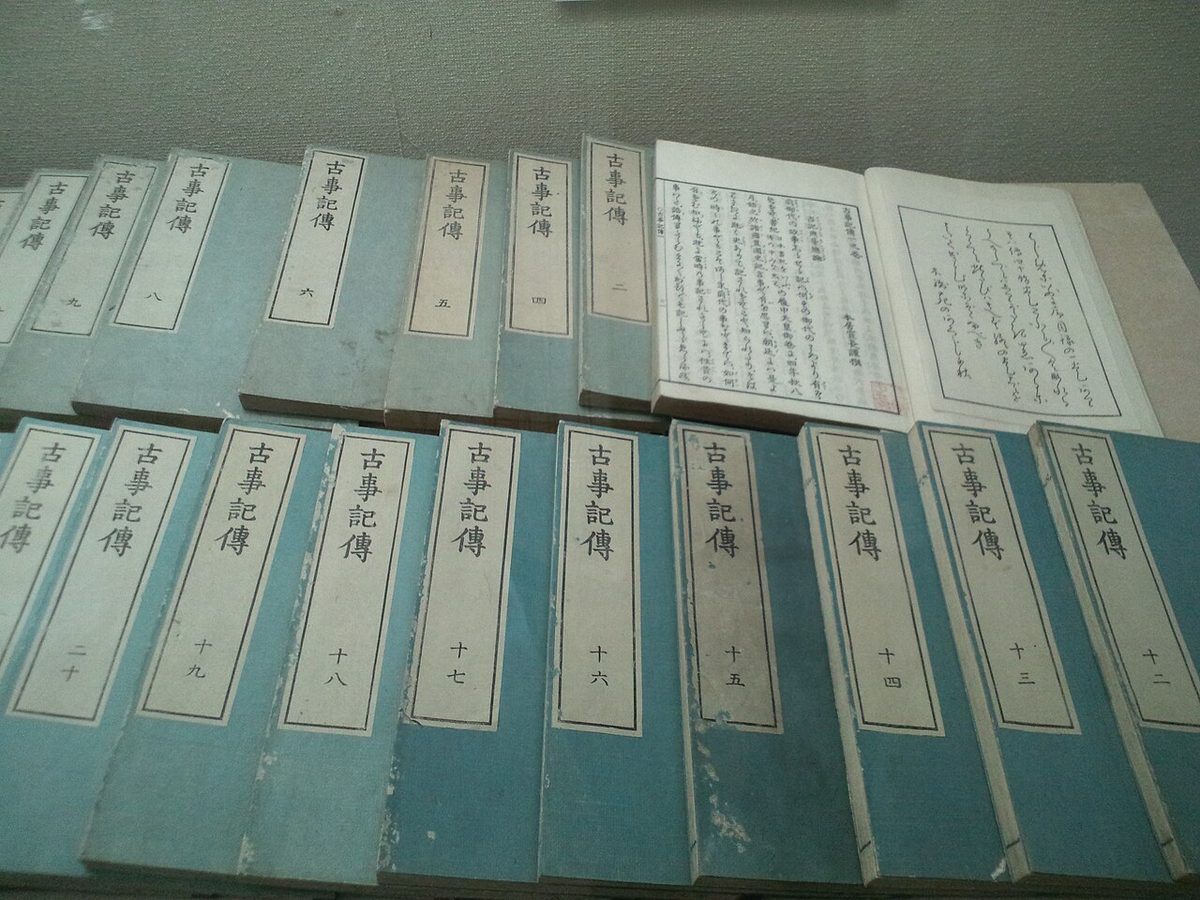
Both chronicles were ordered by the Imperial Court. The Kojiki sets out creation, divine origins and imperial genealogy in one sequence. The Nihon Shoki works as a parallel chronicle, enshrining the genealogy of the imperial family alongside warrior mythology. Several later collections fill in what the court chronicles left out.
| Text | Compiled | What it records |
|---|---|---|
| Kojiki | 712 | Creation, divine origins, imperial genealogy |
| Nihon Shoki | 720 | Parallel chronicle, imperial and warrior mythology |
| Fudoki | 713 to 723 | Regional myths and provincial legends |
| Kogo Shui | 807 | Ritual and clan traditions |
| Nihon Ryoiki | Heian period | Buddhist influenced narratives |
| Konjaku Monogatarishu | Heian period | Popular tales and anecdotes |
Scholarly cataloguing of this material continues today. Kokugakuin University’s Encyclopedia of Shinto indexes the kami, the classic texts and the rites attached to them, and it traces the deity lineages that the Kojiki and Nihon Shoki record differently from one another.
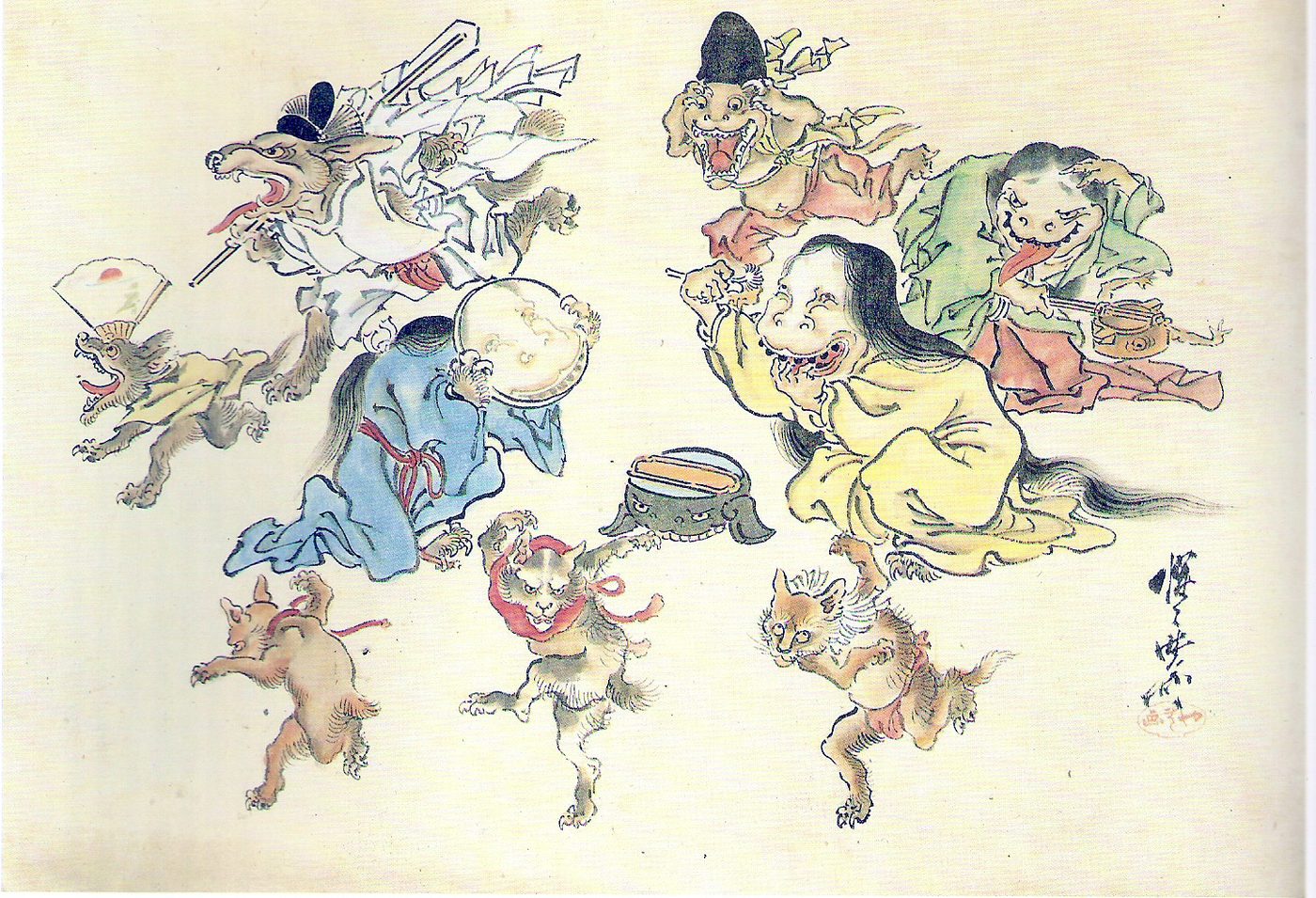
Not everything was written down. Creature lore in particular survived as images first, which is why so many yokai are known from a painting or a print centuries before any text pinned them down.
The Creation Myth and the Descent Into Yomi
The Japanese creation myth belongs to two deities, Izanagi and Izanami. Standing on a bridge above the primordial waters, they dipped a jewelled spear called Ame no nuhoko into the sea, and the brine that dripped from its tip formed the first land. Their union produced Oyashima, the eight great islands of Japan, along with a long line of kami.
Ritual detail matters in this story. Their first attempt at the marriage ceremony failed because Izanami spoke first, and the pair had to repeat it with the male deity speaking, a hierarchy the chronicle records without softening it.
Izanami died giving birth to Kagutsuchi, the fire god. Izanagi followed her into Yomi, the underworld, and tried to bring her back, but he broke the one condition placed on him and looked at her decomposed body, then fled. The purification he performed afterwards produced further kami, including the sun goddess. The myth is Japanese folklore’s explanation for the cycle of birth and death, and for the boundary between the living world and what lies beneath it.
The Major Kami of the Japanese Pantheon
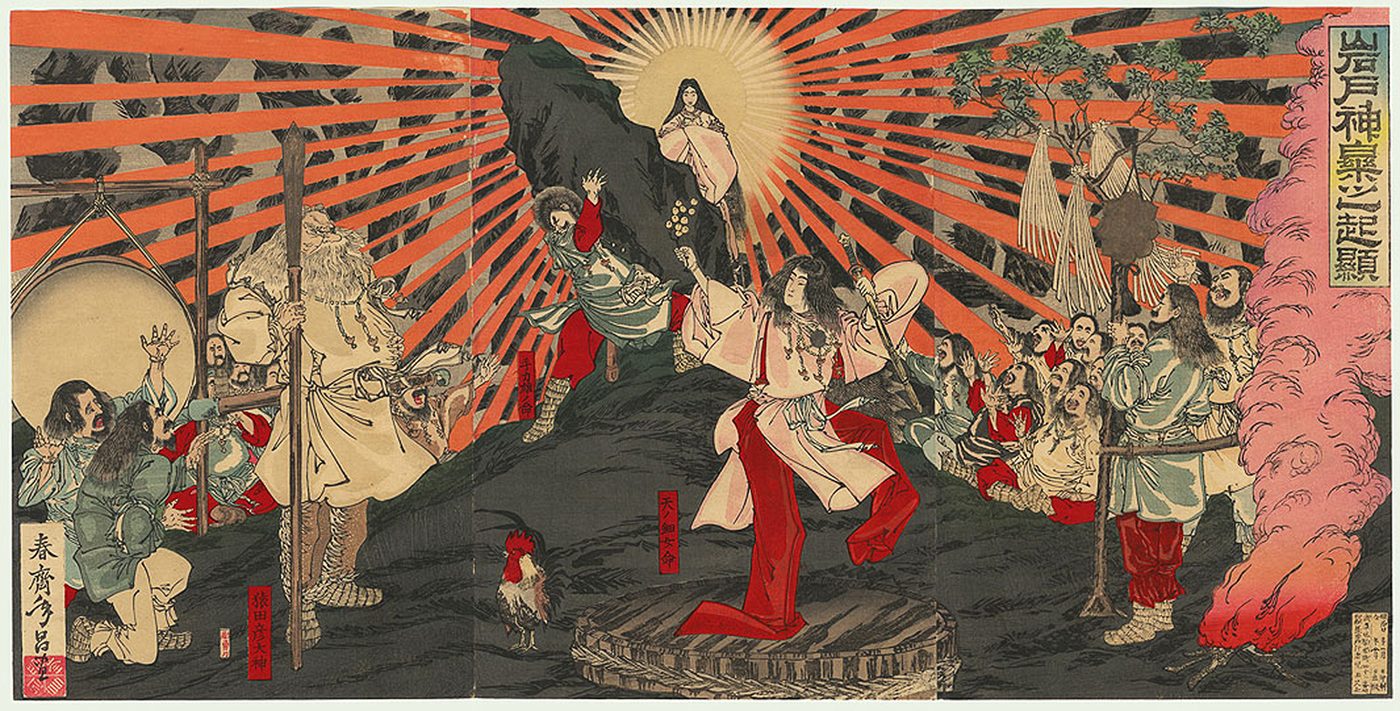
Kami is usually translated as god, though the word covers a wider range of divine beings and sacred presences, including countless kami attached to natural features. Seven figures recur across both eighth century chronicles: Amaterasu, Susanoo, Tsukuyomi, Inari, Hachiman, Ryujin and the Seven Lucky Gods.
| Kami | Domain |
|---|---|
| Amaterasu | Sun, ancestor of the imperial line |
| Susanoo | Storms |
| Tsukuyomi | Moon |
| Inari | Rice and fertility |
| Hachiman | Warriors and divine imperial rule |
| Ryujin | The seas |
| Seven Lucky Gods | Fortune |
Amaterasu was born from Izanagi’s eye and carries a double weight: she is the sun itself and she is the ancestress of the emperors. The best known episode about her begins with her sibling Susanoo, the storm god, desecrating her home in a fit of the violent temper he is remembered for. She shut herself in a cave and left the world dark. The other deities lured her out with the erotic dance of Ame no Uzume, and light returned. A separate quarrel, this one with the moon god Tsukuyomi, is why the sun and moon are never in the sky together. Among the sea kami, Ryujin holds the dragon god’s authority over tides and storms, which made him a fixture in coastal shrine legend. The Seven Lucky Gods are a later grouping of fortune bringing deities rather than a chronicle era one.
These genealogies were never neutral. Descent from Amaterasu through the first emperor Jimmu is what established the imperial line’s divine right to rule. The emperor himself was understood as a descendant of kami, in contact with them and inspired by them, rather than a god in his own person.
Yokai, Japan’s Supernatural Creatures
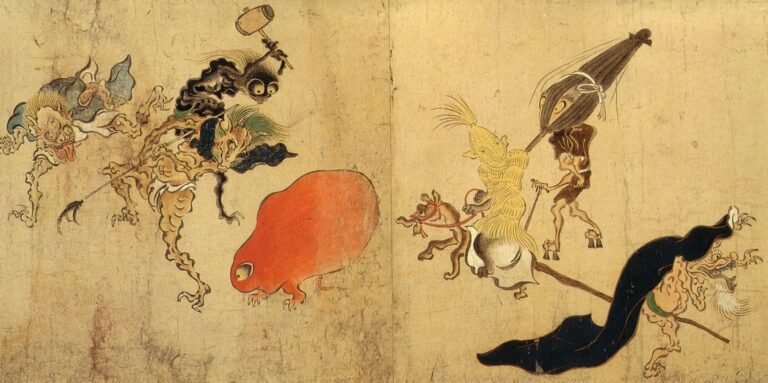
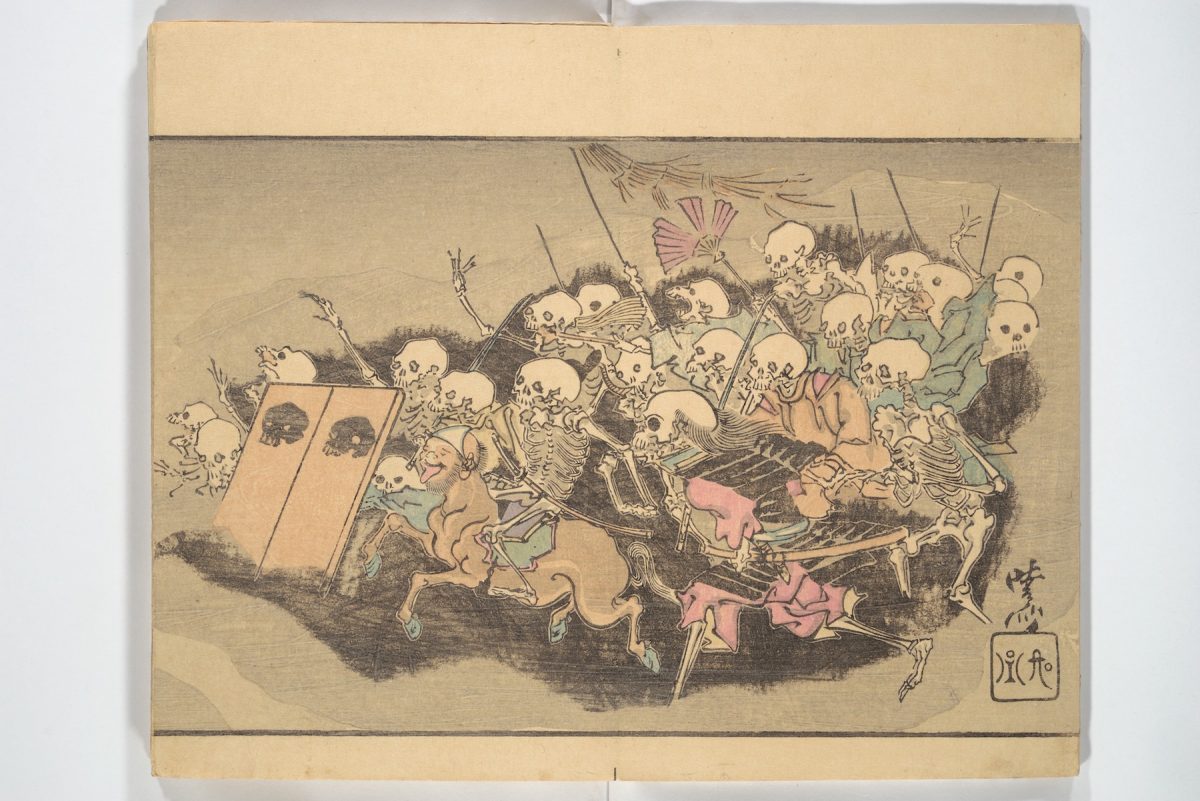
Yokai is the umbrella term for the ghosts, monsters and legendary figures of Japanese folk belief. They are typically shapeshifters who interact with humans directly. The surviving record for them sits in books, paintings, scrolls, prints and oral tradition rather than in the court chronicles, and cataloguers group them alphabetically as often as thematically, because the category is too broad for neat families.
A short sample shows the range.
- Kitsune, the fox, a shapeshifter of long standing in Japanese belief
- Tengu, mountain dwelling beings of considerable power
- Kappa, a water creature
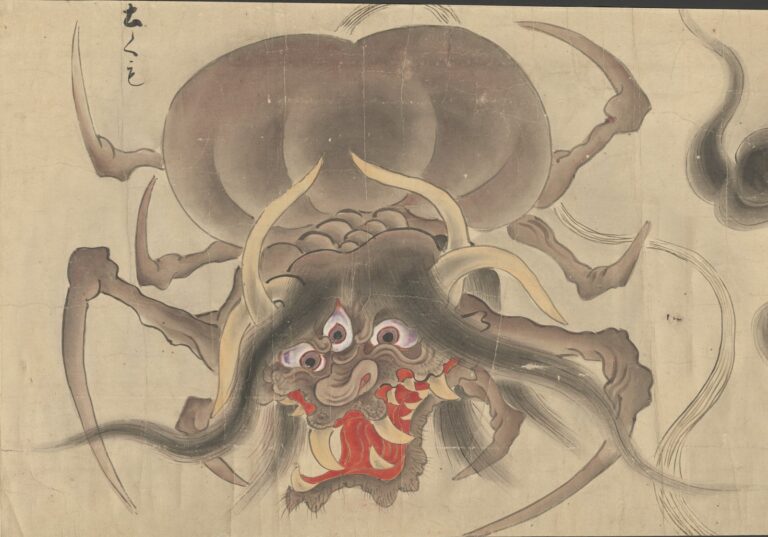
- Jorogumo, a spider demon whose name translates as whore spider
- Amabie, a prophetic creature
- Baku, an eater of dreams
- Bakeneko, a shapeshifting cat
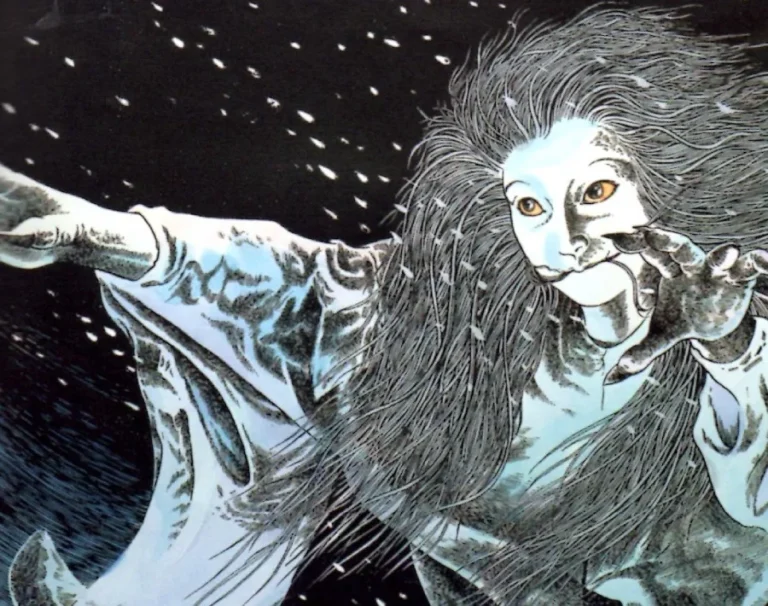
- Yuki onna, the snow woman
- Akaname, a bathroom spirit, and Amanojaku, a contrary spirit
- Yamabiko, the creature behind a mountain echo
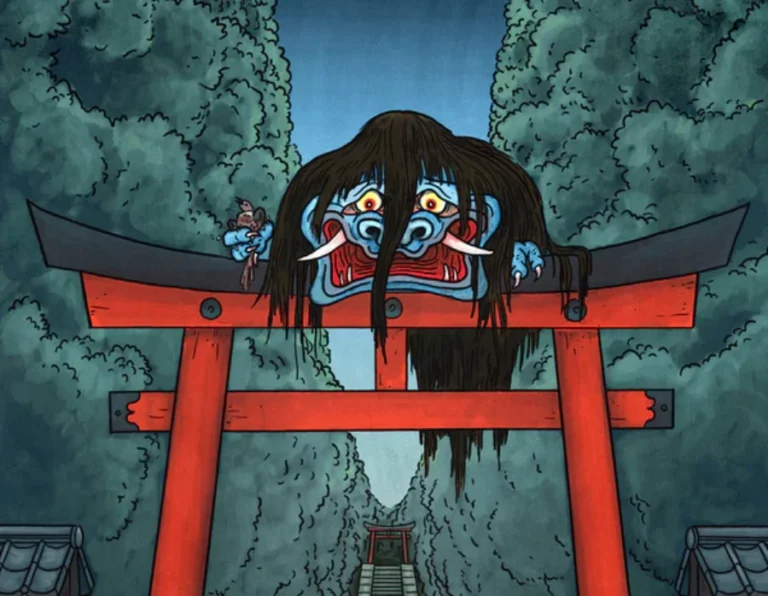
The horned oni is the demon most people picture first, and its role as an antagonist in hero tales made it the default face of the supernatural in Japanese art. Read across the whole category and the creatures start to look less like monsters and more like arguments, which is the sense in which yokai symbolise the anxieties of the people who told the stories.
Yurei and the restless dead
Yurei are the ghosts of Japanese folklore, and specifically its vengeful spirits. They sit inside the yokai catalogues alongside the creature entries, but their logic comes from the Izanagi and Izanami myth: the dead belong on the far side of a boundary, and a spirit that will not stay there is a problem for the living. The visual tradition treats them differently from the animal yokai, and yurei keep a distinct grammar of their own in Japanese art.
Folktales and the Lessons They Carry
Japanese folktales are the most widely told layer of the tradition, and most of them were framed as moral instruction. Momotaro, born from a peach, defeats a band of oni and stands for courage and dutifulness. Shita kiri Suzume warns against greed through a sparrow that turns out to be a fairy in disguise. Yamato Takeru is the legendary warrior of the hero cycle.
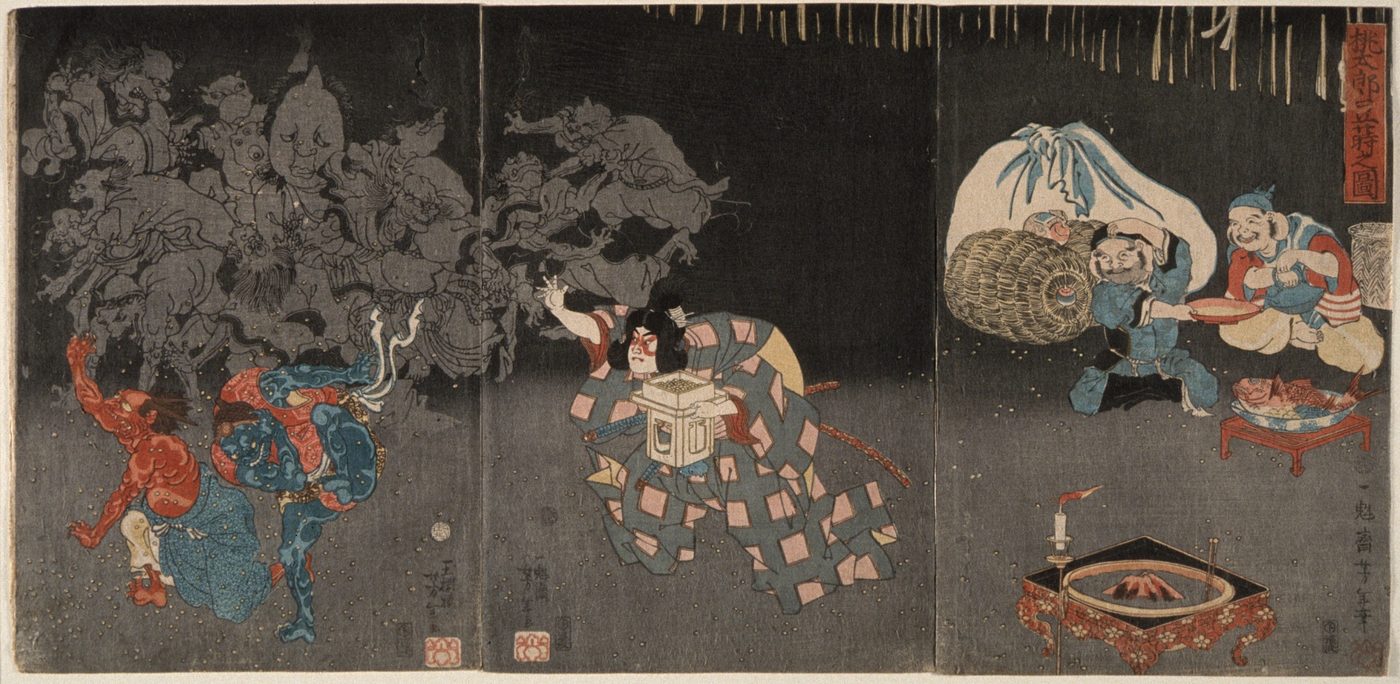
The recurring themes are harsher than the picture book versions suggest. In the Yamato Takeru cycle his wife Ototachibana throws herself into the sea to calm a storm on his behalf, and that logic of sacrifice runs through the whole layer. Warrior virtue shaped by bushido sits alongside it, along with purification, deities who devour humans, and episodes of sexual violence that later retellings quietly drop.
Japanese Folklore in Modern Culture and Fashion
Japanese folklore stays legible in modern culture because it was always visual. Yokai reached most people through painted scrolls and woodblock prints rather than through the chronicles, and that image tradition is what modern designers inherit. A Kyosai skeleton procession or a Kuniyoshi oni is already a graphic composition, built on flat colour, hard outline and a single readable silhouette.
That translates directly to apparel. When you wear a kitsune, an oni or a wave and dragon motif, you are wearing a design language that was refined over centuries for exactly this purpose, which is why folklore prints sit so comfortably on a tee or a hoodie without needing to be redrawn from scratch.
FAQs
What is the difference between Japanese folklore and Japanese mythology?
Japanese mythology refers to the divine narratives about the kami, the creation of the islands and the origins of the imperial line, mostly as recorded in the Kojiki and Nihon Shoki. Japanese folklore is broader and takes in those myths along with hero tales, regional legends, ghost stories and creature lore that never entered an official chronicle.
What are yokai in Japanese folklore?
Yokai are the ghosts, monsters and legendary figures of Japanese folk belief, usually shapeshifters who interact with humans. The category is deliberately wide, covering foxes, tengu, water creatures, animated objects and spirits tied to a single place or household task.
Are yokai and yurei the same thing?
No. Yurei are a subset. Yokai is the umbrella term for the whole range of supernatural creatures in Japanese folk belief, most of them shapeshifters. Yurei are specifically the ghosts of the dead, usually vengeful spirits that have not stayed on the far side of the boundary between the living and the dead. Yurei appear inside the yokai catalogues, but the visual tradition draws them differently from the animal yokai.
What are the main sources of Japanese folklore?
The two primary written sources are the Kojiki, completed in 712, and the Nihon Shoki, completed in 720. The Fudoki records provincial legends, while Kogo Shui, Nihon Ryoiki and Konjaku Monogatarishu add ritual, Buddhist and popular material. Creature lore survives largely through paintings, scrolls, prints and oral tradition.
How old is Japanese mythology?
The narratives span roughly two millennia. They circulated orally long before the Imperial Court ordered them compiled in the early eighth century, and they kept growing afterwards as Buddhist, Taoist and Chinese influences were absorbed into the existing Shinto framework.
If a particular creature or kami has caught your attention, Kamicrew’s yokai ukiyo-e shirt collection puts those same woodblock compositions on something you can actually wear.
Kamicrew Best Seller

Dont Touch Me Yokai Ukiyo-E Japanese T-Shirt
$25.49+
$29.99
(15% off)


Summer Vibes Salty Kawaii Japanese Hoodie
$44.99+
$49.99
(10% off)


Japanese Pin Horror 80s Retro Aesthetics T-Shirt
$25.49+
$29.99
(15% off)


El Gran Maja Japanese Kaiju T-Shirt
$25.49+
$29.99
(15% off)


Who Wants The Perfect Body Japan Capybara Kawaii Japanese Unisex Shirt
$25.49+
$29.99
(15% off)


Monster 8 Mask Vintage Animal Hoodie
$44.99+
$49.99
(10% off)


I Hate People Japanese Opossum Vintage Animal Hoodie
$44.99+
$49.99
(10% off)


I Got That Dog In Me Small Turtle Vintage Animal T-Shirt
$25.49+
$29.99
(15% off)

The Creation Of Cat Ukiyo-E Japanese T-Shirt
$25.49+
$29.99
(15% off)