
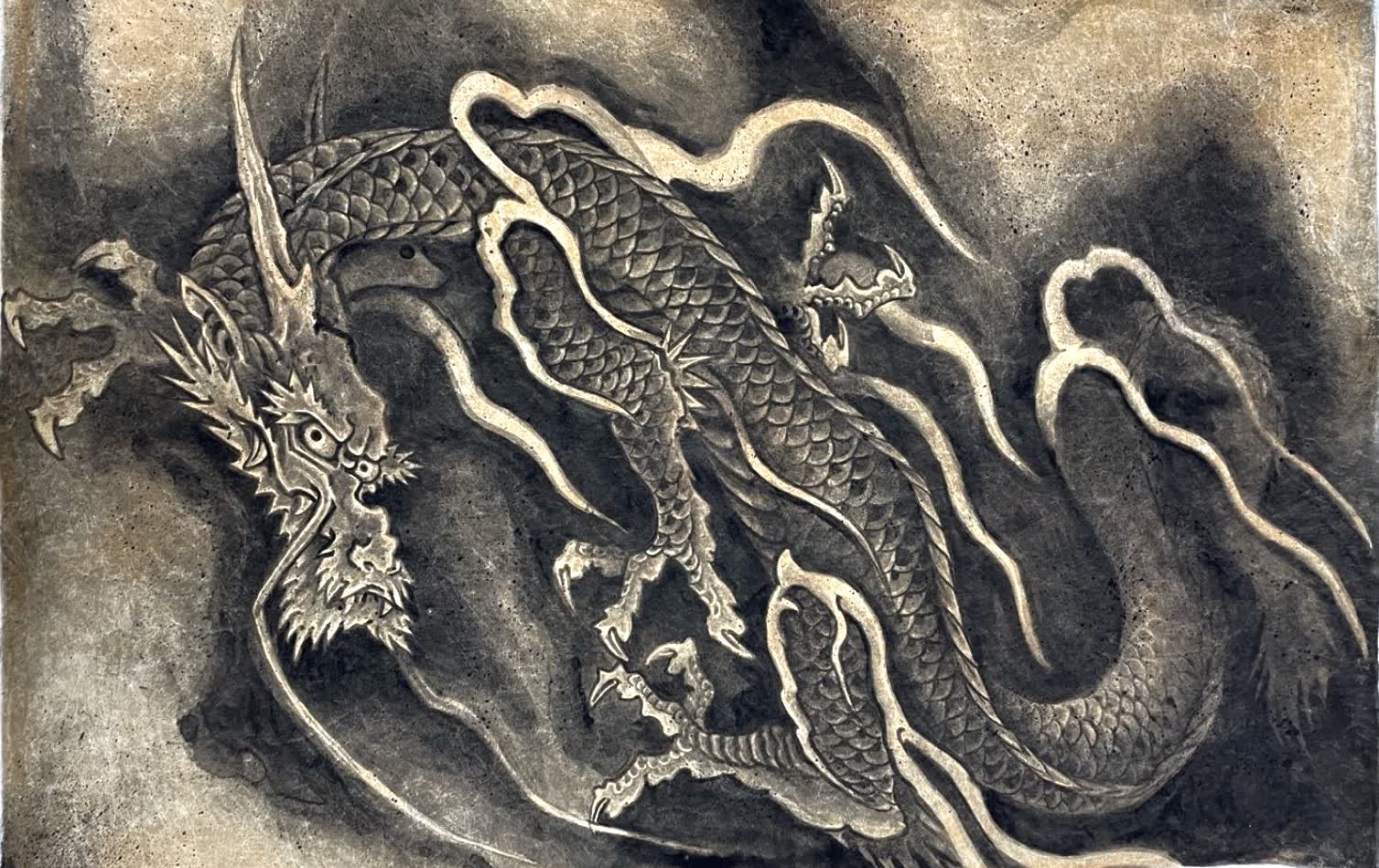
Ryujin is the dragon god who rules the sea in Japanese tradition, worshipped as a kami of water, tides, rainfall and fishing from a palace on the ocean floor. Shinto tradition identifies him with Watatsumi, Buddhist tradition with Shagara Ryuo, and ordinary usage simply calls him the dragon god of the sea. He commands the tide jewels, keeps a court of fish at Ryugu-jo, and is counted an ancestor of Japan’s imperial line.
The word carries two weights at once. Any dragon worshipped as the local kami of a lake, river or cave can be called a ryujin, and Japan has many, including the hachidai ryuo, Zennyo Ryuo, Kuzuryu and Seiryu. Used as a proper title, Ryujin points at one figure: the sea god who keeps a court of fish beneath the waves and lends humans the power to move the tide itself.
| Attribute | Detail |
|---|---|
| Name in Japanese | 龍神 (dragon + kami) |
| Domain | Sea, tides, rainfall, fishing |
| Other identities | Watatsumi (Shinto), Shagara Ryuo (Buddhist) |
| Home | Ryugu / Ryugu-jo, the Dragon Palace Castle |
| Treasures | Kanju and manju, the tide jewels |
| Daughters | Otohime, Toyotama-hime, Tamayori-hime, or Zennyo Ryuo |
| Messengers | Sea creatures, including the oarfish (ryugu-no-tsukai) |
| Earliest text | Kojiki, compiled in the 8th century |
Who Ryujin is in Japanese mythology
Ryujin is a dragon worshipped as a kami rather than fought as a monster. The title covers any dragon god of water in Japanese mythology and, used on its own, points at the ruler of the sea. What qualifies a dragon for it is conduct: the dragon protects a community, gives gifts, or has been pacified and bound to a promise.
Written 龍神, the title joins the character for dragon to kami, so the name Ryujin means dragon god before it ever settles on one deity. That descriptive quality is exactly why the same word stretches to cover a mountain lake’s guardian and the ruler of the entire ocean.
What separates a ryujin from a merely dangerous dragon is conduct rather than shape. Dragons in Japanese folklore swing between benevolent kami and tyrannical monsters. Some bestow gifts on the settlements near them. Others summon rainstorms and floods when they are displeased, and the worst of them demand human sacrifice or take women from their families to be their brides. The term ryujin is reserved mainly for the dragons that help people, or for those that were pacified and promised to do no further harm. Once that promise holds, a shrine usually appears nearby.
Ryugu-jo, the palace at the bottom of the sea
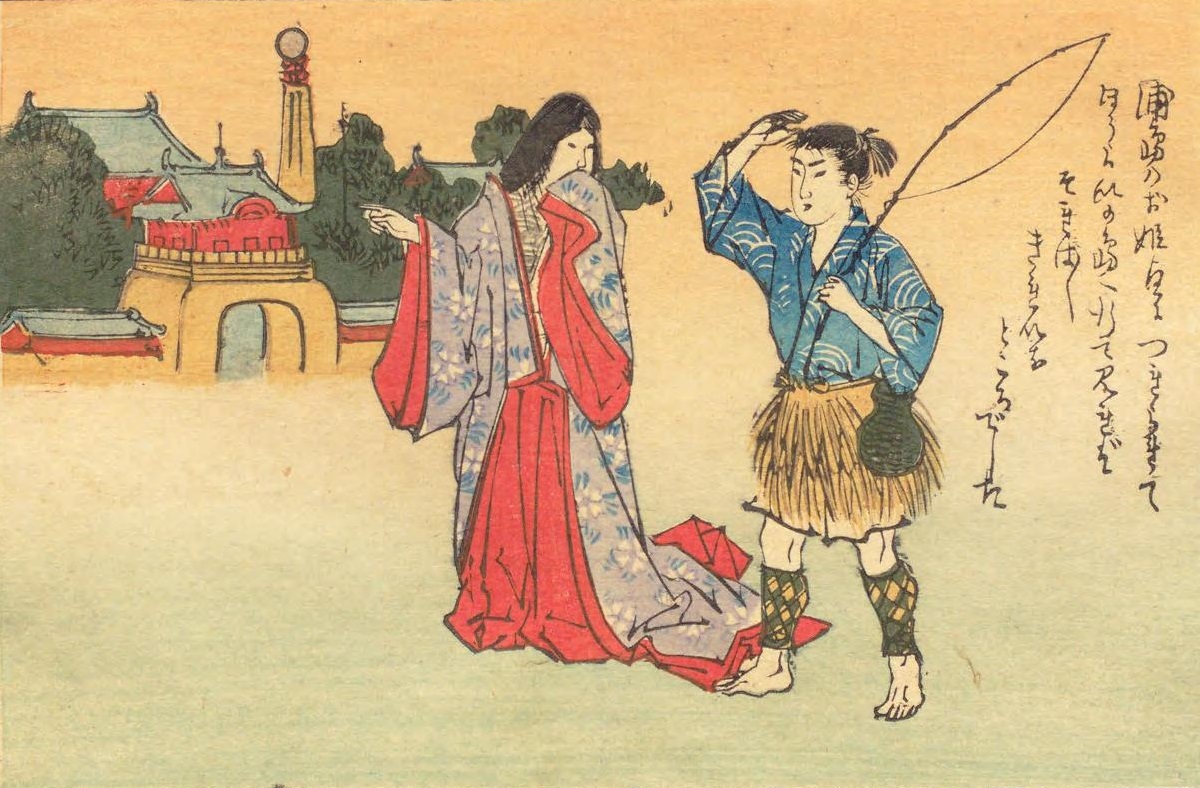
Ryugu, also called Ryugu-jo and translated as Dragon Palace Castle, is where Ryujin lives. Sources disagree about where it stands: the floor of Lake Biwa, the ocean bed, or somewhere beyond the distant horizon. The Kojiki, compiled in the 8th century, describes the sea god Watatsumi’s residence as a palace built like fish scales, and later tradition equates that structure with Ryugu.
Descriptions of the building are extravagant and rarely agree with each other. Basil Hall Chamberlain’s 1886 retelling gives the palace walls of coral, with trees bearing emeralds for leaves and rubies for berries, while Meiji era picture books furnish the inner chambers with treelike coral and gold, and a German version Englished by Andrew Lang faces the exterior in pearl and crystal and lights the hall with fish scales. What the older feudal versions do share is the view of four seasons on four sides: cherry blossom east, cicadas south, coloured maple leaves west, snow north.
Time inside the palace does not run at the pace of time above it. In the Urashima Taro legend the fisherman believes he has spent three years as Ryujin’s guest, and returns to find that more than three hundred years have gone by. Feudal period versions of the same tale stretch that gap to seven hundred years. Ryujin himself holds court there the way a king would on land, with sea creatures serving as his nobles, servants and messengers.
The tide jewels and what Ryujin can do
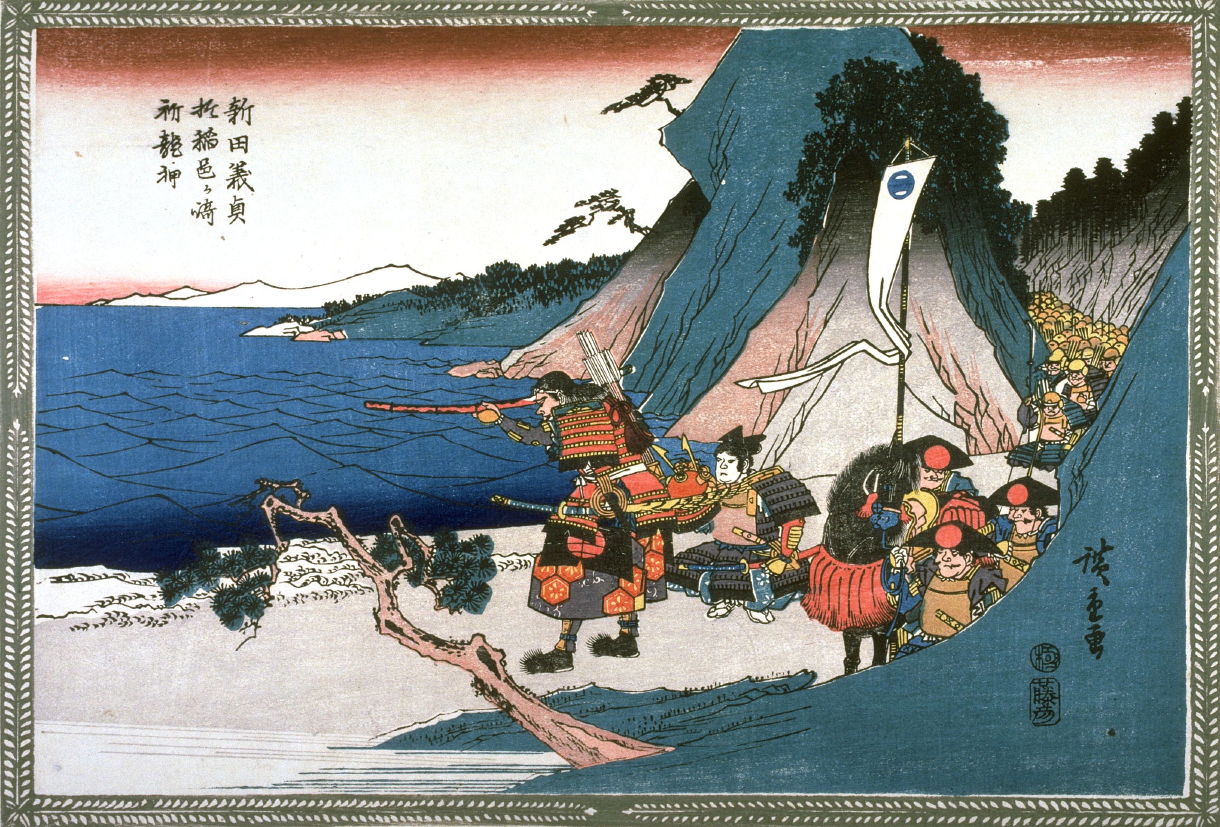
Ryujin’s power works through three things: the tide jewels, the weather, and the creatures of the sea. The tide jewels, kanju and manju, are a pair of pearl-like gems that lower and raise the water. Displeased dragons send storms and floods, sea creatures carry his messages to humanity, and humans who earn his favour receive treasure.
Anyone holding the tide jewels can drop or raise the water dramatically, which in the legends decides battles rather than fishing trips.
| Jewel | Kanji | Effect |
|---|---|---|
| Kanju | 干珠 | Makes the tide recede |
| Manju | 満珠 | Makes the tide rise |
Both jewels appear repeatedly in Japanese legend. When Ryujin’s son in law Hoori fought his brother Hoderi, Hoori used manju to raise the water and nearly drown him, forcing his submission. During the legendary 3rd century invasion of the Korean peninsula attributed to Empress Jingu, she is said to have used kanju to lower the ocean and strand the enemy fleet on the sea floor, then manju to bring the water back and destroy the stranded ships.
Beyond the jewels, sea creatures act as Ryujin’s emissaries, carrying his messages to humanity, including prophecies of a bumper harvest or warnings of a coming disaster. He also gives outright gifts to humans who earn them: Fujiwara no Hidesato received a bottomless sack of rice for killing an omukade. Some modern retellings add shapeshifting into human form, though older folklore sources concentrate on water, weather and treasure.
His daughters and the line of emperors
Ryujin’s daughters are named Otohime, Toyotama-hime and Tamayori-hime, or Zennyo Ryuo, depending on the tradition, and they deal with humans directly rather than through emissaries. Toyotama-hime’s marriage is the consequential one: from her union with the prince Hoori descends the imperial line, which makes Ryujin a dynastic ancestor and not only a weather deity.
Otohime is the princess who entertains Urashima Taro at the palace, and the same daughter whose grave illness sets off the tale of the monkey and the turtle.
In the Kojiki account of the two princes Hoderi and Hoori, the younger brother travels down to the sea god’s palace, marries into Ryujin’s household and returns victorious. Ancient imperial tradition traced Japan’s first emperor, Jimmu, back to the sea god through exactly this branch of the family.
How Ryujin is worshipped
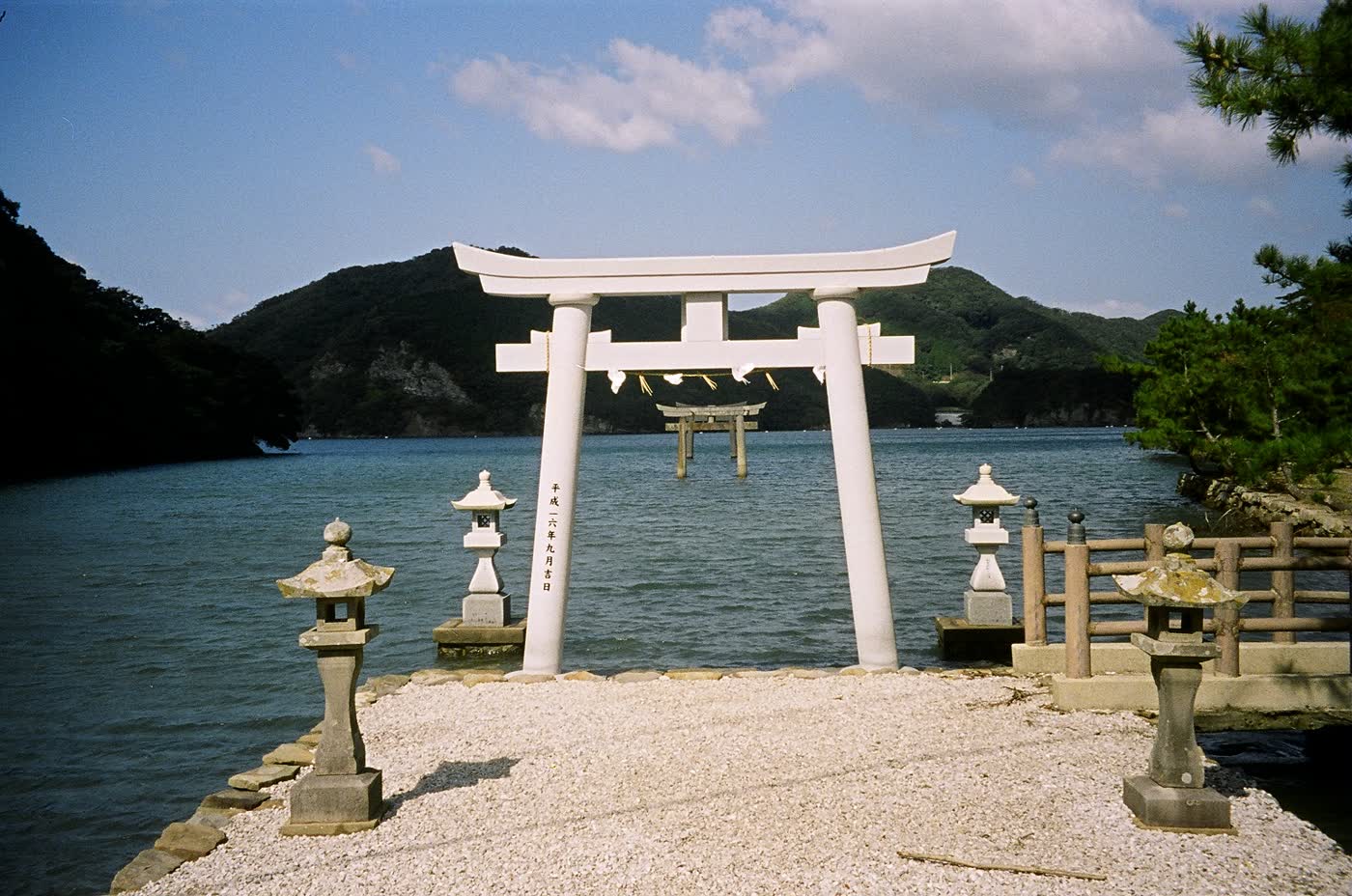
Ryujin is worshipped at shrines built within sight of the water he is believed to inhabit, as a god of agriculture and fishing and a guardian of the land. Offerings are local and practical, with seafood, sake and rice among the items commonly presented. The logic is direct: the deity that governs rainfall governs the rice crop, and the one that governs the sea decides whether the boats come back.
One of the most direct examples sits on Cape Nagasakibana in southern Kagoshima, also known as Cape Ryugu, where Ryugu Shrine takes its name from the palace itself. Local tradition holds that this is the shore Urashima Taro left from, and residents honour both Ryujin and sea turtles as protectors. In Ryukyuan religion the palace plays an even more fundamental role, treated as the source of the fire in every family and village hearth.
The sea keeps sending reminders. The Japanese name for the deep water giant oarfish is ryugu-no-tsukai, meaning messenger from the sea god’s palace. That real fish is thought to lie behind the jinjahime, an Edo period prophet beast that introduced itself as a servant of Ryugu and foretold a bountiful harvest followed by an epidemic. Not every sea spirit in the tradition is so useful. Sailors also told stories of the umibouzu, which offers ships nothing but wreckage, and the contrast is the point: a dragon that accepts worship and answers it is a kami, while one that only destroys stays a monster.
Ryujin in stories, art and modern culture
Ryujin appears in the Urashima Taro legend, in the folktale of the monkey and the turtle, across ukiyo-e prints, and in modern Japanese place names. The undersea palace became standard only in the modern period; the earliest versions sent the fisherman to a floating island instead. Katase-Enoshima Station and the asteroid 162173 Ryugu both carry the palace’s name today.
One well known folktale casts Ryujin as a short tempered king. When Otohime fell ill and the royal doctors prescribed medicine made from the liver of a living monkey, only the turtle could climb ashore to fetch one. The monkey escaped by convincing the turtle he had left his liver drying on a tree branch, and Ryujin took his fury out on the guards who had let the plan slip: he cut the flounder’s body in two, pulled every bone out of the jellyfish, and banished them both. That, the story explains, is why flounders lie flat on their sides and jellyfish drift boneless near the surface.
The Urashima Taro legend travelled further, and changed as it went. In the earliest and otogizoshi versions the fisherman does not go underwater at all; he sails to Horai, the Chinese Elysium on a floating island. Edo artists kept painting Ryugu above the waves even when the text beneath the picture placed it below them. The undersea palace was fixed in place by widely read modern editions such as the one the novelist Mori Ogai and his collaborators assembled between 1920 and 1921, which survives in the National Diet Library’s digital collection of Japanese legends.
The palace still turns up in unexpected places. Katase-Enoshima Station in Fujisawa, Kanagawa was built as a mock-up of Ryugu-jo, so ordinary commuters pass through a dragon palace to catch a train. Further out, the asteroid 162173 Ryugu is named after the same undersea palace.
Wearing the dragon god
Ryujin’s iconography reproduces well on clothing because it is already graphic: a long scaled body, whiskers, claws, coral, waves, and two pearls that mean something specific. Japanese streetwear has borrowed the ukiyo-e treatment of that vocabulary for decades, usually in indigo and off white, with the dragon wrapped around a sleeve or filling the back of a hoodie.
A wind god like Fujin gets the same treatment, because the elemental kami were given shapes that read clearly at a distance.
Wearing a dragon god print is not a religious statement, but knowing which dragon is on your back changes how the piece feels. If Ryujin’s world of tide jewels, coral palaces and fish court appeals to you, Kamicrew’s yokai and mythology tees are where those motifs live.
FAQs
Is Ryujin a god or a dragon?
Both. Ryujin is a dragon worshipped as a kami, a Japanese god. The name is written 龍神, joining the character for dragon to the character for kami. In Japanese tradition the distinction that matters is not dragon versus god but whether the dragon helps people, because only helpful or pacified dragons are given the title ryujin and a shrine.
Is Ryujin the same as Watatsumi?
Shinto tradition identifies Ryujin with Watatsumi, the sea god whose scale-built palace the Kojiki describes in the 8th century, and later tradition equates that palace with Ryugu. Buddhist tradition identifies him instead with Shagara Ryuo. The names attach to the same role, the ruler of the sea, through different religious traditions rather than describing separate deities.
What are Ryujin’s tide jewels?
The tide jewels are kanju (干珠), which makes the tide recede, and manju (満珠), which makes it rise. They are pearl-like gems that let their holder move the sea itself. Hoori used manju to nearly drown his brother Hoderi, and Empress Jingu is said to have used both to strand and then destroy an enemy fleet.
Where does Ryujin live?
Ryujin lives at Ryugu, also called Ryugu-jo or Dragon Palace Castle. Sources place it on the ocean bed, on the floor of Lake Biwa, or beyond the distant horizon. Time there runs differently: Urashima Taro believed he had spent three years as Ryujin’s guest and surfaced to find more than three hundred years gone.
Who are Ryujin’s children?
Depending on the tradition, Ryujin’s daughters are Otohime, Toyotama-hime and Tamayori-hime, or Zennyo Ryuo. Otohime entertains Urashima Taro at the palace. Toyotama-hime marries the prince Hoori, and ancient imperial tradition traced Japan’s first emperor, Jimmu, back to the sea god through that line.
Is Ryujin evil?
No. Ryujin belongs to the benevolent side of Japanese dragon lore, giving gifts, sending harvest prophecies and answering worship. He is not gentle, though. Displeased dragons send storms and floods, and in the tale of the monkey and the turtle Ryujin mutilates the flounder and the jellyfish for letting a plan slip.
Kamicrew Best Seller

Dont Touch Me Yokai Ukiyo-E Japanese T-Shirt
$25.49+
$29.99
(15% off)


Summer Vibes Salty Kawaii Japanese Hoodie
$44.99+
$49.99
(10% off)


Japanese Pin Horror 80s Retro Aesthetics T-Shirt
$25.49+
$29.99
(15% off)


El Gran Maja Japanese Kaiju T-Shirt
$25.49+
$29.99
(15% off)


Who Wants The Perfect Body Japan Capybara Kawaii Japanese Unisex Shirt
$25.49+
$29.99
(15% off)


Monster 8 Mask Vintage Animal Hoodie
$44.99+
$49.99
(10% off)


I Hate People Japanese Opossum Vintage Animal Hoodie
$44.99+
$49.99
(10% off)


I Got That Dog In Me Small Turtle Vintage Animal T-Shirt
$25.49+
$29.99
(15% off)

The Creation Of Cat Ukiyo-E Japanese T-Shirt
$25.49+
$29.99
(15% off)