
The Japanese symbol for fire is 火, read hi on its own or ka in compounds. It is a single four-stroke kanji that pictures rising flames, and it is one of the first kanji taught in Japanese schools. In Japanese culture the same character carries a second meaning: purification, not just destruction.
The Japanese Symbol for Fire: 火
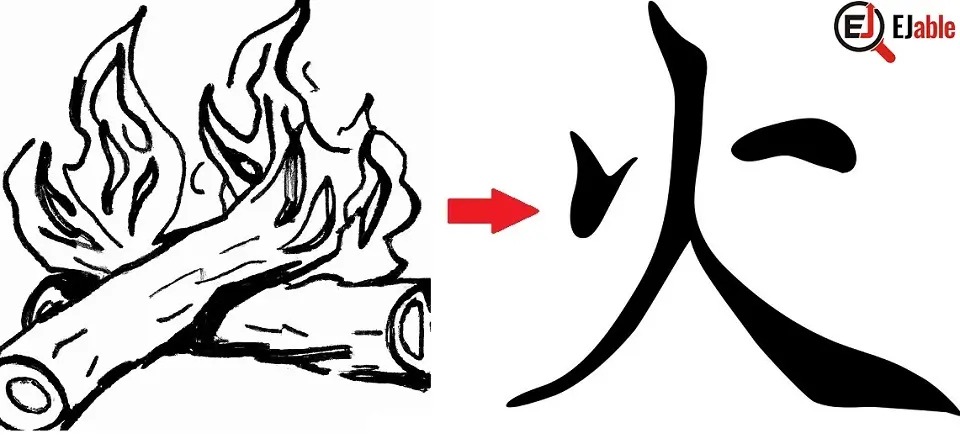
火 is a jōyō kanji and a JLPT N5 character taught in grade 1 in Japan, among the earliest kanji most learners encounter. On its own it is read hi (fire as an element, like the flame of a match or candle); in compounds it is usually read ka, as in 火曜日 (kayobi), Tuesday, literally “fire day.” The character originated on oracle bone script and bronze vessels as a picture of flames, later stylized into the modern four-stroke form. A common mnemonic reads the shape as two logs (the long strokes) with flame and smoke rising off them (the short strokes).
Fire’s Symbolism in Japanese Culture
Fire represents energy, warmth, purification, and transformation in Japanese culture, not simply danger or destruction. Its dual nature, life-sustaining and destructive at once, runs through Shinto ritual, where fire is used for purification, symbolizing the burning away of impurities rather than simple destruction.
Other Japanese Words for Fire and Flame
火 (hi) is the core word, but Japanese has several related words scaled by size and formality, from a single flame to a full inferno.
| Word | Reading | Meaning |
|---|---|---|
| 火 | hi | Fire as an element (a match, a candle) |
| 火事 | kaji | A destructive fire incident, like a house fire |
| 炎 | honō | Flame or blaze, visible dancing flames of any size |
| 火災 | kasai | The formal, official word for a fire disaster |
| 猛火 | mōka | A raging inferno |
Fire in Japanese Rituals and Festivals
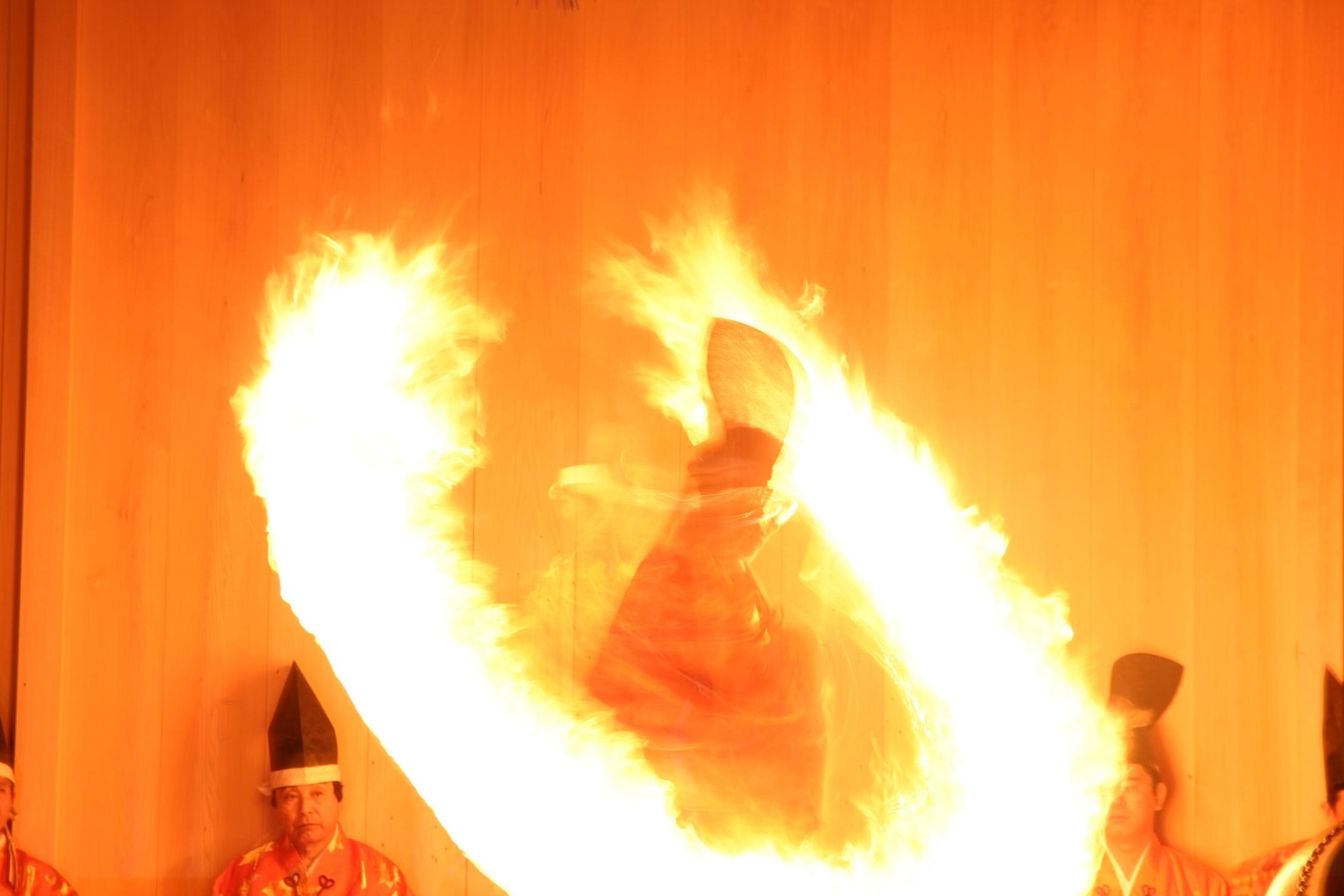
Fire festivals and goma fire rituals put the purification symbolism into practice: priests burn wooden prayer sticks or swing lit torches to clear away misfortune rather than to destroy for its own sake. The same logic connects fire to Suzaku, the vermilion firebird of the four mythological guardians, where flame stands for the south and for vitality rather than danger.
Everyday Words That Use the Fire Kanji 火
Once you know 火, it shows up inside a surprising number of common words:
- 花火 (hanabi): fireworks, literally “flower fire.”
- 火山 (kazan): volcano, literally “fire mountain.”
- 火傷 (yakedo): a burn.
- 火花 (hibana): a spark, literally “fire flower.”
- 火力 (karyoku): firepower or heating power.
Kamicrew’s yokai and mythology tees pull from the same elemental symbolism, fire included, alongside its counterpart water explored in the Ryujin kanji meaning, and alongside the other single-character symbol covered in the Japanese symbol for strength.
FAQs
What is the Japanese symbol of fire?
The Japanese symbol of fire is 火, a four-stroke kanji read hi on its own or ka in compounds. It pictures rising flames and is taught in grade 1 of Japanese schools.
What is the samurai symbol for fire?
There is no separate samurai-specific fire symbol; the kanji used is the same 火 (hi/ka) used throughout Japanese writing, including on historical banners and mon that referenced fire.
How do you say flame in Japanese?
Flame or blaze in Japanese is 炎 (honō). The kanji is literally one fire character stacked on another, and it can also describe the “flame” of passion for a hobby or a person.
What does 火 mean?
火 means fire. It is read hi when standing alone as the element itself, and ka in compound words like 火曜日 (kayobi, Tuesday) or 火山 (kazan, volcano).
Kamicrew Best Seller

Dont Touch Me Yokai Ukiyo-E Japanese T-Shirt
$25.49+
$29.99
(15% off)


Summer Vibes Salty Kawaii Japanese Hoodie
$44.99+
$49.99
(10% off)


Japanese Pin Horror 80s Retro Aesthetics T-Shirt
$25.49+
$29.99
(15% off)


El Gran Maja Japanese Kaiju T-Shirt
$25.49+
$29.99
(15% off)


Who Wants The Perfect Body Japan Capybara Kawaii Japanese Unisex Shirt
$25.49+
$29.99
(15% off)


Monster 8 Mask Vintage Animal Hoodie
$44.99+
$49.99
(10% off)


I Hate People Japanese Opossum Vintage Animal Hoodie
$44.99+
$49.99
(10% off)


I Got That Dog In Me Small Turtle Vintage Animal T-Shirt
$25.49+
$29.99
(15% off)

The Creation Of Cat Ukiyo-E Japanese T-Shirt
$25.49+
$29.99
(15% off)