
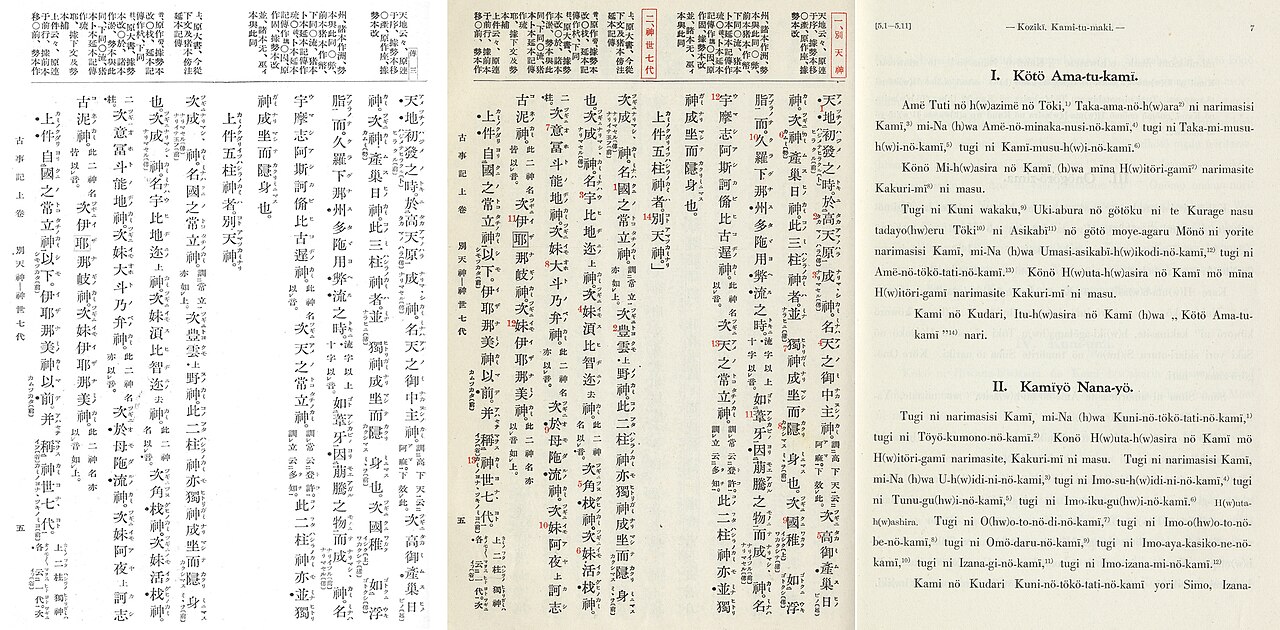
Amaterasu means shining in heaven. The name is written 天照, where 天 (ama) is heaven or sky and 照 (terasu) is to shine or illuminate, so the two characters together describe light arriving from above. That reading is not a poetic gloss added later. It is simply what the characters say.
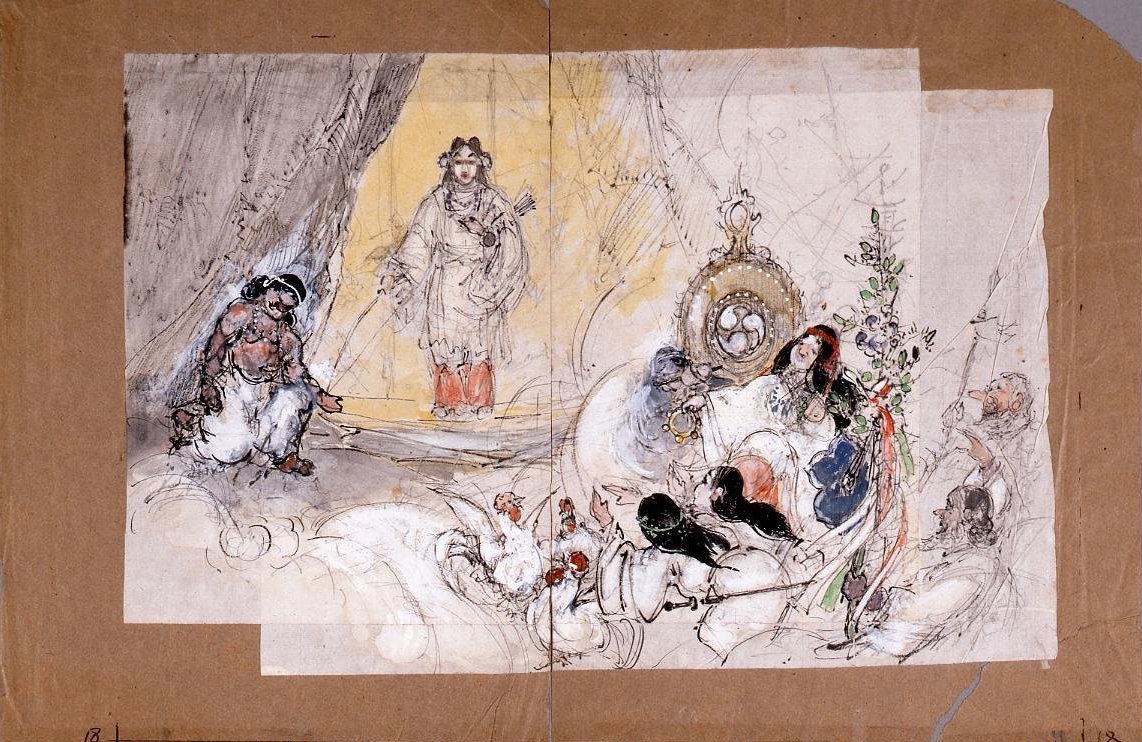
Amaterasu carries several other names, and each one frames her differently. Her full ceremonial name, Amaterasu Ōmikami, adds an honorific. An older name, Ōhirume no Muchi, calls her a woman of the sun rather than an action in the sky. Different classical texts reach for different forms, and a medieval reader would have said the same characters out loud in a completely different way, as Tenshō Daijin. Her withdrawal into the rock cave is where the meaning turns literal, because the world loses its light the moment the goddess who shines in heaven hides herself away.
What Amaterasu means
Amaterasu means shining in heaven, and translations of 天照 vary in wording while agreeing on sense. Common renderings include shining in heaven, shines from heaven, the one who illuminates heaven, and shining over heaven. All four describe the same thing: a source of light positioned above the world, not a light source among many.
The name breaks into two root elements, ama and terasu, and those roots do all the work. There is no hidden third component, no place name buried in it, and no family element of the kind many Japanese names carry. Name references classify Amaterasu as feminine and file it under Japanese mythology rather than everyday personal names, which is a fair reflection of how it is actually used.
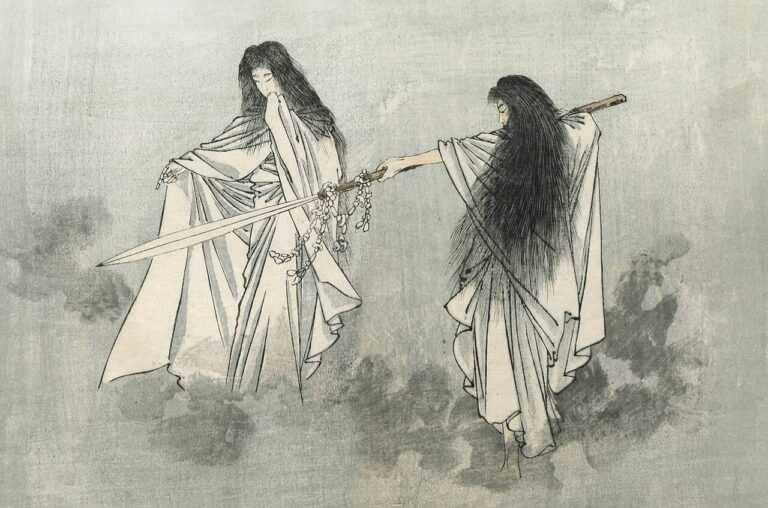
The name also arrives with a story already attached to it, since she is born when Izanagi cleanses himself after returning from the underworld. Japan’s royal family traced its ancestry back to her, which is part of why her name kept accumulating honorifics over the centuries instead of settling into one fixed form.
The kanji 天照, and how the name is written
Amaterasu is written with two kanji, 天照. 天 carries the sense of heaven or sky, and in compounds of this kind it also carries an imperial connotation. 照 is the shining character, the verb sense of illuminating something. Two characters, two jobs, and nothing else buried between them.
Written out across the scripts a Japanese reader would recognise, the name looks like this:
- Kanji: 天照
- Hiragana: あまてらす
- Katakana: アマテラス
- Romaji: Amaterasu, read as a smooth a-ma-te-ra-su with no stressed syllable
English speakers tend to hunt for a stress point and land on the third syllable. Japanese does not work that way, and the five syllables carry roughly equal weight.
Why Amaterasu reads as a verb, not a name
Amaterasu is not grammatically a noun. It descends from the verb amateru, to shine or illuminate in the sky, combined with an honorific auxiliary, and it functions as an attributive verb form that modifies whatever follows it. That is the detail most name guides skip.
The practical result is that the name is semantically transparent. A Japanese reader does not decode Amaterasu the way an English reader decodes Deborah or Helen, hitting a label first and looking up the etymology afterwards. The description arrives first. Spelled out in full, Amaterasu Ōmikami reads as the great august goddess who shines in heaven, which is a sentence about her rather than a tag applied to her.
Amaterasu Ōmikami, her full and formal name
Amaterasu Ōmikami is the form used when the name is given in full, and it appears written as 天照大御神, 天照大神, and 天照皇大神. Glossed out, it means the great and glorious kami who illuminates from heaven. The added element is ōmikami, great august deity, where ō means great and kami marks divine status.
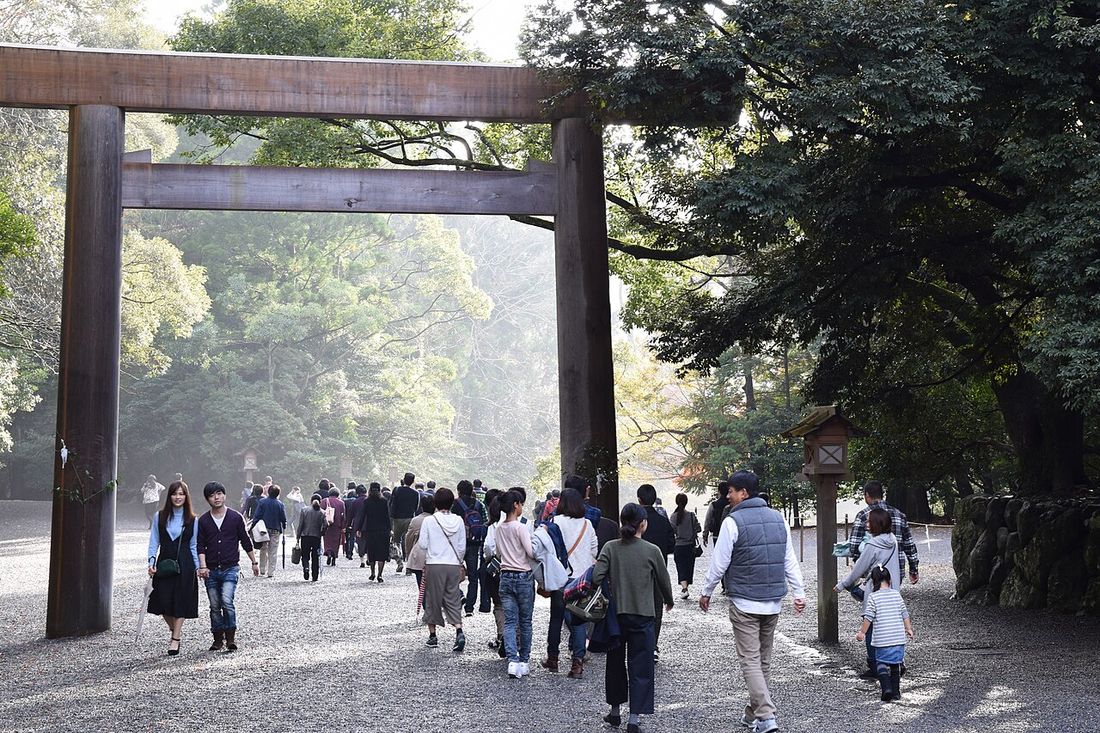
That honorific is the whole difference between the short and long forms, and it is doing social work rather than descriptive work. One variant, Amaterasu Sume(ra) Ōmikami (天照皇大神), pushes the imperial element further forward.
The formal name is not a museum artefact. It is the name in current ritual use: the official Ise Jingu site names Amaterasu-Omikami as the enshrined deity of the Naiku, or Inner Shrine, describing her as the ancestral kami of the imperial family and a guardian of Japan. Reconstructed into Old Japanese pronunciation, the same full name comes out closer to Amaterasu Opomikami.
Ōhirume, Hi no Kami, and her other names
Amaterasu carries more names than most kami, and the alternatives are not decorative. Ōhirume no Muchi (大日孁貴) is usually understood as great woman of the sun, or of the daytime, and one reference treats it as her chief title, glossing it as the great sun of the kami. Hi no Kami (日神) states the same idea plainly, sun deity, and Tenshō Daijin is the Sino-Japanese reading of the same characters as Amaterasu Ōmikami.
Kokugakuin University’s Basic Terms of Shinto records her as a goddess endowed with the virtue of the sun and lists Ōhirume no Muchi as her alternate name. The muchi ending is an appended honorific, not part of the description. It shows up in other deity names too.
| Name | Kanji | What it says | Where it appears |
|---|---|---|---|
| Amaterasu Ōmikami | 天照大御神 | Great august kami shining in heaven | Kojiki |
| Ōhirume no Muchi | 大日孁貴 | Great woman of the sun | Nihon Shoki |
| Amaterasu Ōhirume no Mikoto | 天照大日孁尊 | Both names joined together | Nihon Shoki |
| Hi no Kami | 日神 | Sun deity, plainly stated | Nihon Shoki |
| Tenshō Daijin | 天照大神 | Same characters, Chinese-style reading | Medieval and early modern use |
| Amaterasu Sume(ra) Ōmikami | 天照皇大神 | Imperial element brought forward | Variant form |
Tenshō Daijin deserves a note of its own. The characters are identical to 天照大神, but they are read with their Sino-Japanese values instead of the native Japanese ones, and that reading was common through the medieval and early modern periods. Anyone reading older material will meet Tenshō Daijin and Amaterasu Ōmikami describing the same goddess on the same page.
Why the Kojiki and the Nihon Shoki name her differently
The Kojiki settles on one form, Amaterasu Ōmikami, written 天照大御神 or 天照大神. The Nihon Shoki does not settle at all: it offers Ōhirume no Muchi, Amaterasu Ō(mi)kami, and Hi no Kami as variants, sometimes for the same episode. So there is no single correct name to memorise, and a source is not wrong for using a form you have not seen before.
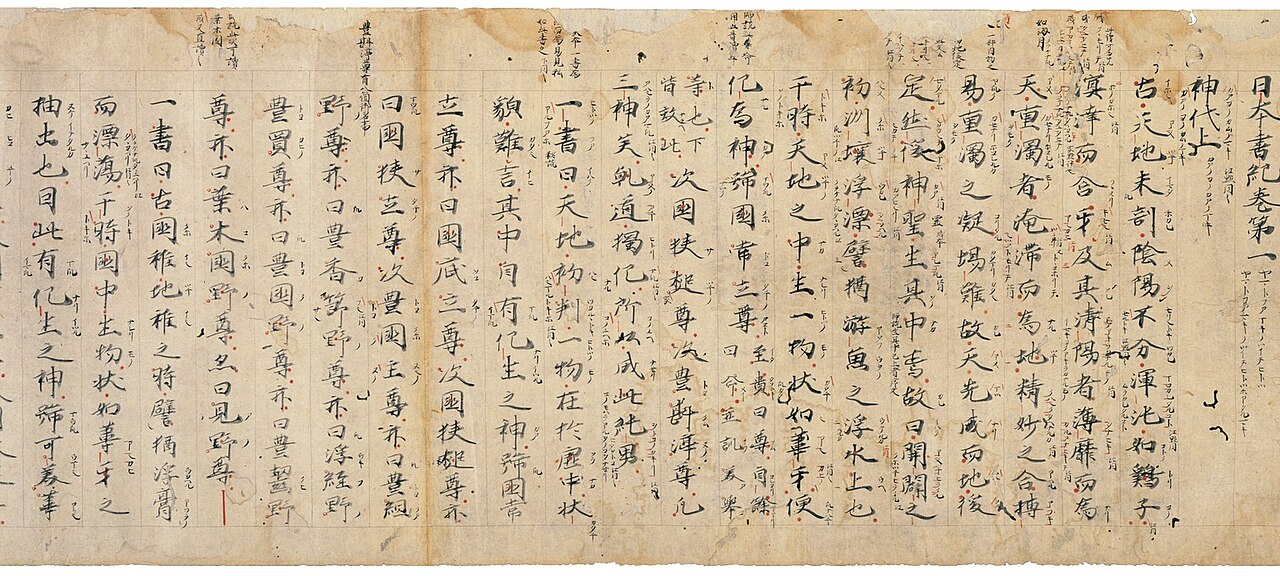
The form usually tells you which text or which era you are reading. Ōhirume points toward the Nihon Shoki. Tenshō Daijin points toward a medieval or early modern writer. Amaterasu Ōmikami is the form that carried forward into shrine practice and into most modern writing.
What the name does not tell you
Three things people expect to find in Amaterasu’s name are not in it: her gender, a marriage, and an animal. 天照 is grammatically neutral, she does not marry in the traditional myths, and no creature is written into any of her names.
- Gender is not in the kanji. 天照 is grammatically neutral, and nothing in shining in heaven marks a goddess rather than a god. Her femininity is carried by the other name, Ōhirume, where the sun element sits next to a woman element. She is consistently described as female, maternal and radiant, but that comes from the myths and from Ōhirume, not from 天照.
- Marriage is not in it either. Amaterasu does not marry in the traditional myths. She sends her descendants down to rule the land in her name instead, which is why the imperial genealogy runs through a grandson rather than a spouse.
- No animal is in it. Modern culture has attached a white wolf to her fairly firmly, and one popular guide names the white wolf as the animal most commonly linked to her today, but that association belongs to contemporary media rather than to the classical naming.
The honorific muchi, by contrast, appears in other deity names as well, a reminder that these titles are assembled from shared parts rather than invented one at a time.
Wearing the name
天照 works as a graphic because it carries its own meaning. Two characters that mean shining in heaven read as a compact block, legible to anyone who can read the characters without needing a caption or a translation underneath.
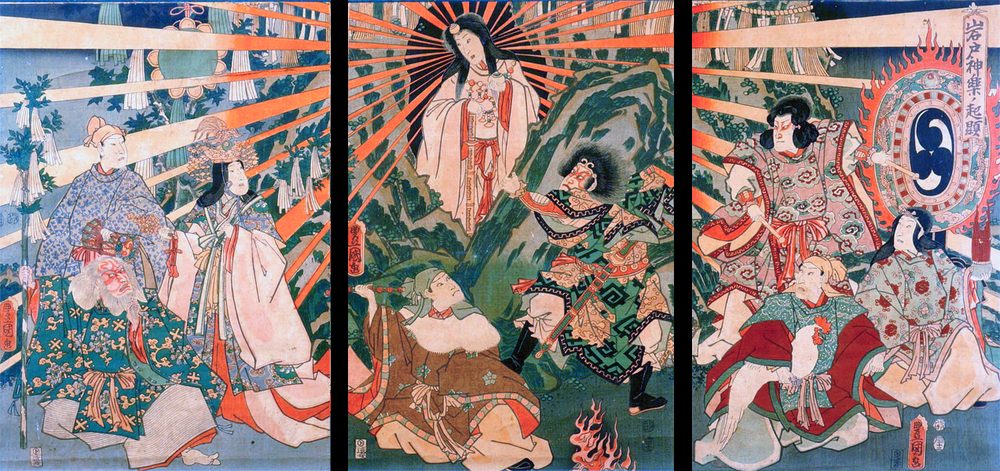
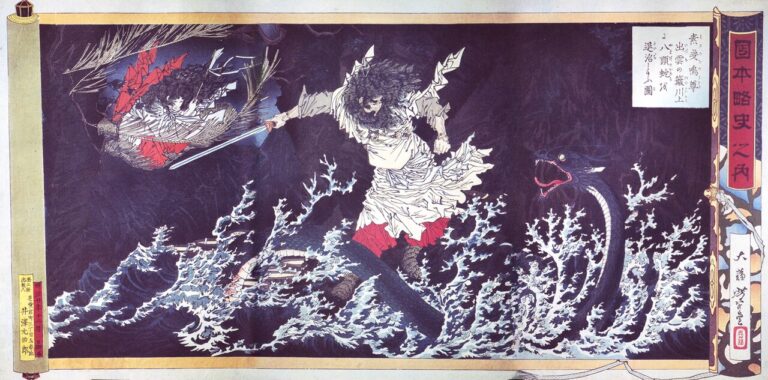
The visual tradition around her leans the other way, toward the woodblock prints of the cave door opening, all radiating orange lines and a figure stepping out into the light. Both are usable: the characters for something quiet, the print for something loud. If you like your mythology worn rather than shelved, the yokai and ukiyo-e shirts are where that print tradition lands at Kamicrew.
FAQs
What does the name Amaterasu mean?
It means shining in heaven. The name is written with 天 (ama), heaven or sky, and 照 (terasu), to shine, so the whole name describes light coming from above. Translations differ in wording, from shines from heaven to the one who illuminates heaven, but they carry the same sense.
What is the kanji for Amaterasu?
The kanji is 天照. In hiragana it is あまてらす and in katakana アマテラス. Her fuller name adds more characters and appears as 天照大御神, 天照大神, or 天照皇大神.
What is Amaterasu’s full name?
Amaterasu Ōmikami, meaning the great and glorious kami who illuminates from heaven. The ōmikami element means great august deity, and it is the name Ise Jingu uses for the deity enshrined at its Inner Shrine.
Is Amaterasu male or female?
Female. The kanji 天照 is grammatically neutral and says nothing about gender, but her other name, Ōhirume, means great woman of the sun, and she is described throughout the myths as maternal, wise and radiant.
Did Amaterasu marry anyone?
She does not marry in the traditional myths. Rather than ruling the land herself or through a spouse, she sent her descendants down to rule it in her name, which is how the imperial line traces back to her.
Kamicrew Best Seller

Dont Touch Me Yokai Ukiyo-E Japanese T-Shirt
$25.49+
$29.99
(15% off)


Summer Vibes Salty Kawaii Japanese Hoodie
$44.99+
$49.99
(10% off)


Japanese Pin Horror 80s Retro Aesthetics T-Shirt
$25.49+
$29.99
(15% off)


El Gran Maja Japanese Kaiju T-Shirt
$25.49+
$29.99
(15% off)


Who Wants The Perfect Body Japan Capybara Kawaii Japanese Unisex Shirt
$25.49+
$29.99
(15% off)


Monster 8 Mask Vintage Animal Hoodie
$44.99+
$49.99
(10% off)


I Hate People Japanese Opossum Vintage Animal Hoodie
$44.99+
$49.99
(10% off)


I Got That Dog In Me Small Turtle Vintage Animal T-Shirt
$25.49+
$29.99
(15% off)

The Creation Of Cat Ukiyo-E Japanese T-Shirt
$25.49+
$29.99
(15% off)