
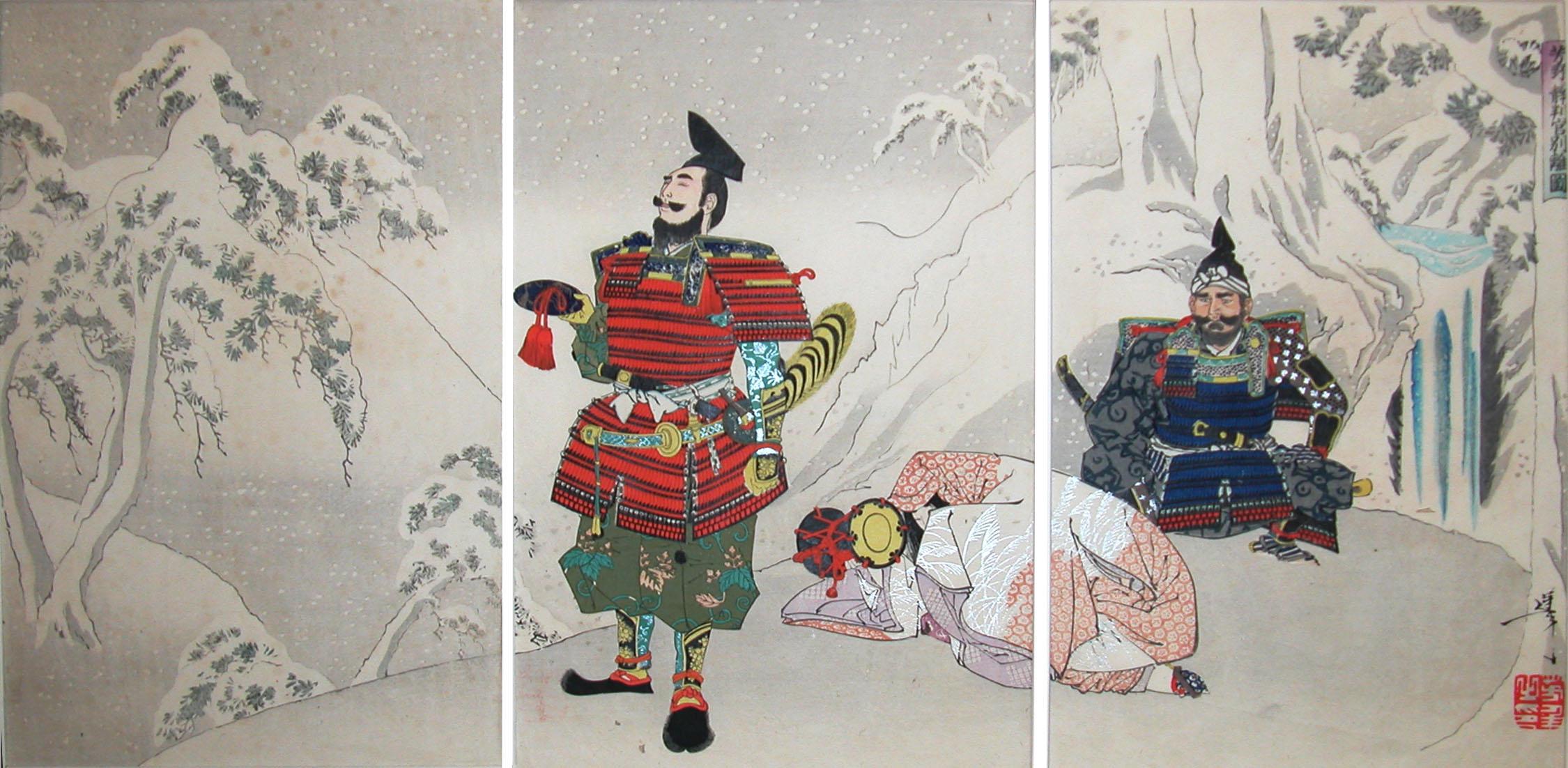
The meaning of a Japanese samurai tattoo is bushido, the samurai warrior code: honor, loyalty, courage, self-discipline, and the willingness to accept death rather than dishonor. The figure inked on the skin is a warrior in armor, but the meaning sits in the code he served rather than in the sword or the helmet. That is why the same design can read as a promise about how someone intends to live.
There is a second layer most guides skip. In traditional Japanese tattooing the samurai is one member of a whole category of human figures called jinbutsu, and not every armored man in a classical print is actually a samurai. Which figure you choose, and what you place around him, decides what the finished piece says.
What a Japanese Samurai Tattoo Means
A Japanese samurai tattoo means honor, loyalty, courage, nobility, self-discipline, and warrior spirit, the virtues gathered under bushido. Tattooers who work the subject read it as a claim about discipline, since the samurai earned his reputation through mastery over both body and mind. It also reads as a refusal to be governed by the fear of death.
That second reading has a line behind it that follows samurai imagery through tattoo culture: those who cling to life die, and those who defy death live. Read that way, the design is not decoration about fighting. It is a statement about what a person is willing to lose.
The historical frame matters to the reading. The samurai were the warrior administrators of Japan for roughly seven centuries, from the establishment of the first shogunate in the late twelfth century until the Meiji Restoration in 1868 ended the class outright, a span Columbia University’s Asia for Educators sets out as the age of the samurai, 1185 to 1868. Nobody has been a samurai for over 150 years, which is part of the appeal: the figure is finished, so what remains of him is the standard he was held to.
Bushido, the Code the Design Points At
Bushido, the warrior’s code, is what a samurai tattoo points at: honor, loyalty, sacrifice, courage, integrity, and self-discipline, with unshakable loyalty carrying most of the weight. The code is what turned a professional soldier into a role model for discipline, respect, and ethical behavior, and it is the standard the tattoo borrows when it names him.
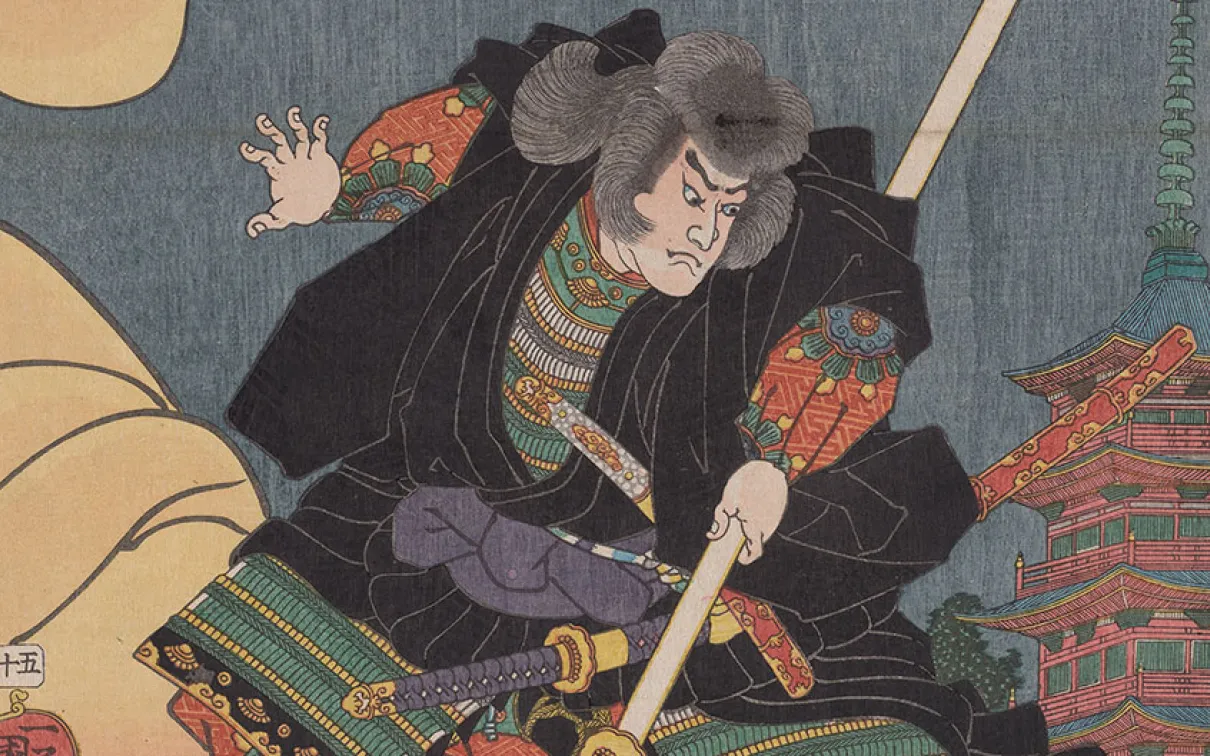
Tattoo artists who specialize in Japanese work describe samurai pieces as honoring that code first, ahead of any interest in the weapons or the armor. The virtue is the subject; the armor is how it gets drawn.
The code is also why a samurai piece so often has petals drifting through it. Falling cherry blossom is read as the bushido way itself, moral and ethical conduct held to even though the blossom lasts only days. Placing the two together says the warrior knows his life is short and behaves well anyway, which is a very different message from a warrior alone.
Samurai, Bushi, and the Warriors Who Are Not Samurai
Not every armored figure in Japanese tattooing is a samurai. Samurai originally named a formal position, a warrior in service to a feudal lord, while bushi is the broader word for warrior and is not a synonym. Classical prints also supply sengoku busho, the warlords of the civil war century, kyokaku, the street knights of Edo, and goketsu, strong heroes famed for feats rather than service.
During the Edo period the word samurai widened into something closer to a spiritual ideal, standing for loyalty, integrity, sincerity, and justice rather than for a rank on a household register. That is the sense most tattoo clients mean, even when the figure they pick belongs to one of the other categories.
This is where tattoo choices go wrong. Danshichi Kurobei, a favorite tattoo figure, is a kyokaku and not a samurai at all. Watanabe no Tsuna is both a busho and a samurai, and is famous mainly as a demon fighter rather than as a servant of a lord.
Women appear among these figures too. Tomoe Gozen is one of the recurring subjects in traditional Japanese tattooing, even though samurai is conventionally treated as a male term, and the historical record of female samurai warriors is what a design of her actually rests on.
The umbrella term for all of them is jinbutsu, meaning human figures, and it covers historical people, legendary heroes, kabuki characters, and folklore protagonists alike. Specialists in the tradition put the point bluntly: without understanding the character’s story and the spirit behind them, the work stays a lifeless copy.
Samurai Tattoo Designs and What Each Pairing Means
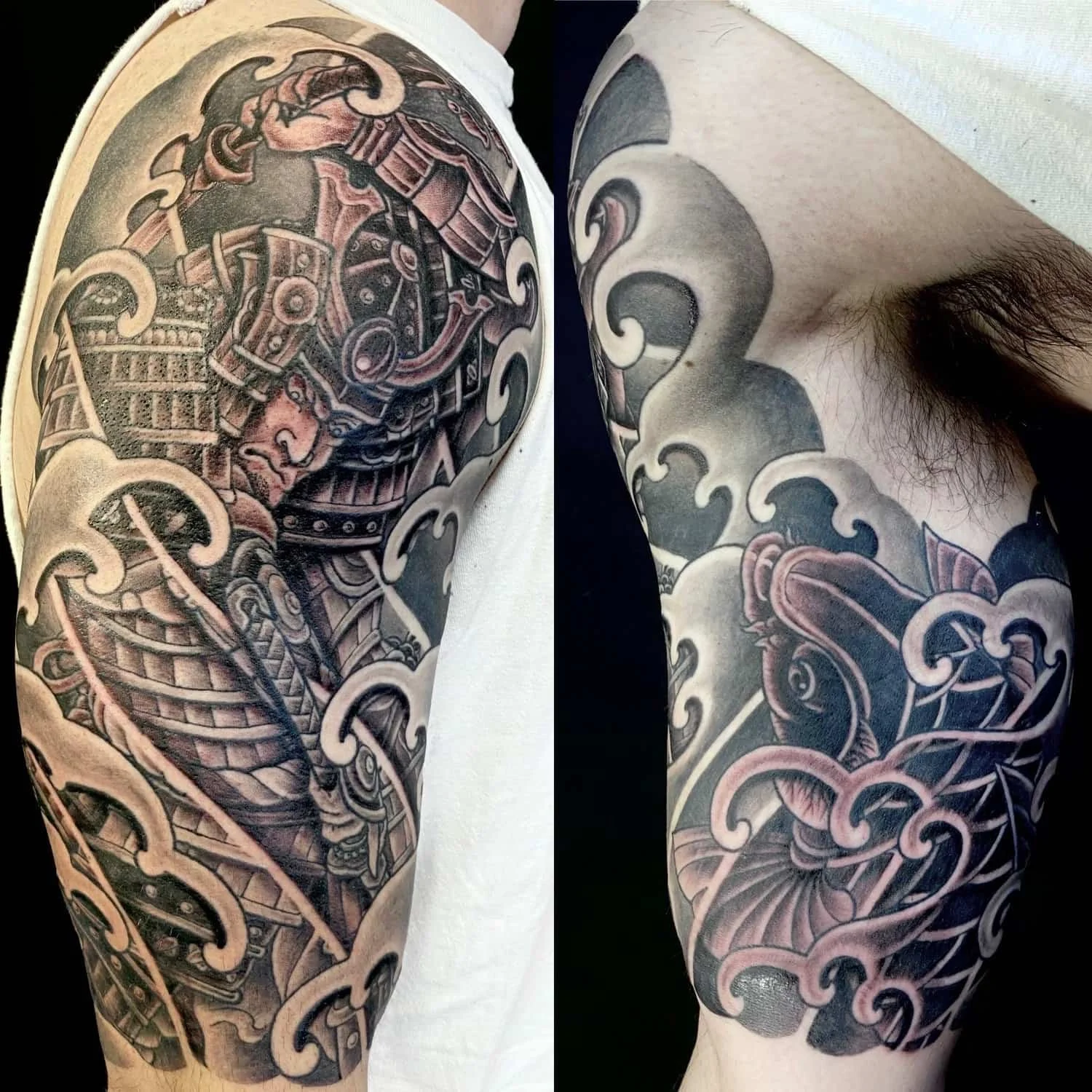
Most Japanese samurai tattoos pair the warrior with a second element, and that companion sets the specific meaning. A skull reads as victory over death, a horse as strength, speed, and nobility, a dragon as courage and strength, a koi as the ability to overcome obstacles, a pagoda as guardianship, and cherry blossom as the bushido way itself.
| Paired with | What the combination reads as |
|---|---|
| Skull | Victory over death, or strength to overcome evil |
| On horseback | Strength, speed, and nobility, since only samurai rode |
| Dragon | Courage and strength |
| Rising sun | Homage to Japanese heritage |
| In combat | Courage and skill under pressure |
| Koi fish | The ability to overcome obstacles |
| Pagoda | A guardian or protector |
| Cherry blossom | The bushido way, moral and ethical conduct |
Two of those companions arrive with their own established symbolism, so the pairing stacks rather than simply decorates. A Japanese dragon tattoo already carries strength, wisdom, and protection on its own, which is why a samurai facing one reads as courage measured against something far larger than a human opponent. Setting the warrior over a koi works the same way, since the fish is the standard emblem of perseverance and ambition and the warrior above it becomes the outcome of that climb.
Mitate and Yatsushi, the Hidden Layer in a Samurai Design
Mitate and yatsushi are the two devices Japanese warrior imagery developed under censorship, and both still shape how a traditional tattooer reads a figure. Mitate is playful allegorical reinterpretation, dropping visual cues into a familiar story so a print about an ancient battle comments on present authority. Yatsushi runs the other direction, depicting a noble or mythical figure as a commoner.
For a tattoo, this is the difference between a costume and a statement. A samurai rendered through yatsushi is not a weaker version of the subject. He is the same virtue, worn by someone with no rank to protect it, which is why the device blurs high and low and locates greatness in an ordinary body.
Style, Placement, and the Background Around the Figure
Samurai tattoos are large scale work. Shops that do them well place them as full body work or as a substantial piece on the back, shoulder, arm, or leg, in Asian color, Asian black and grey, or neo traditional styles. Scale is the reason: an armored figure needs room, or the plates and lacing collapse into grey noise.
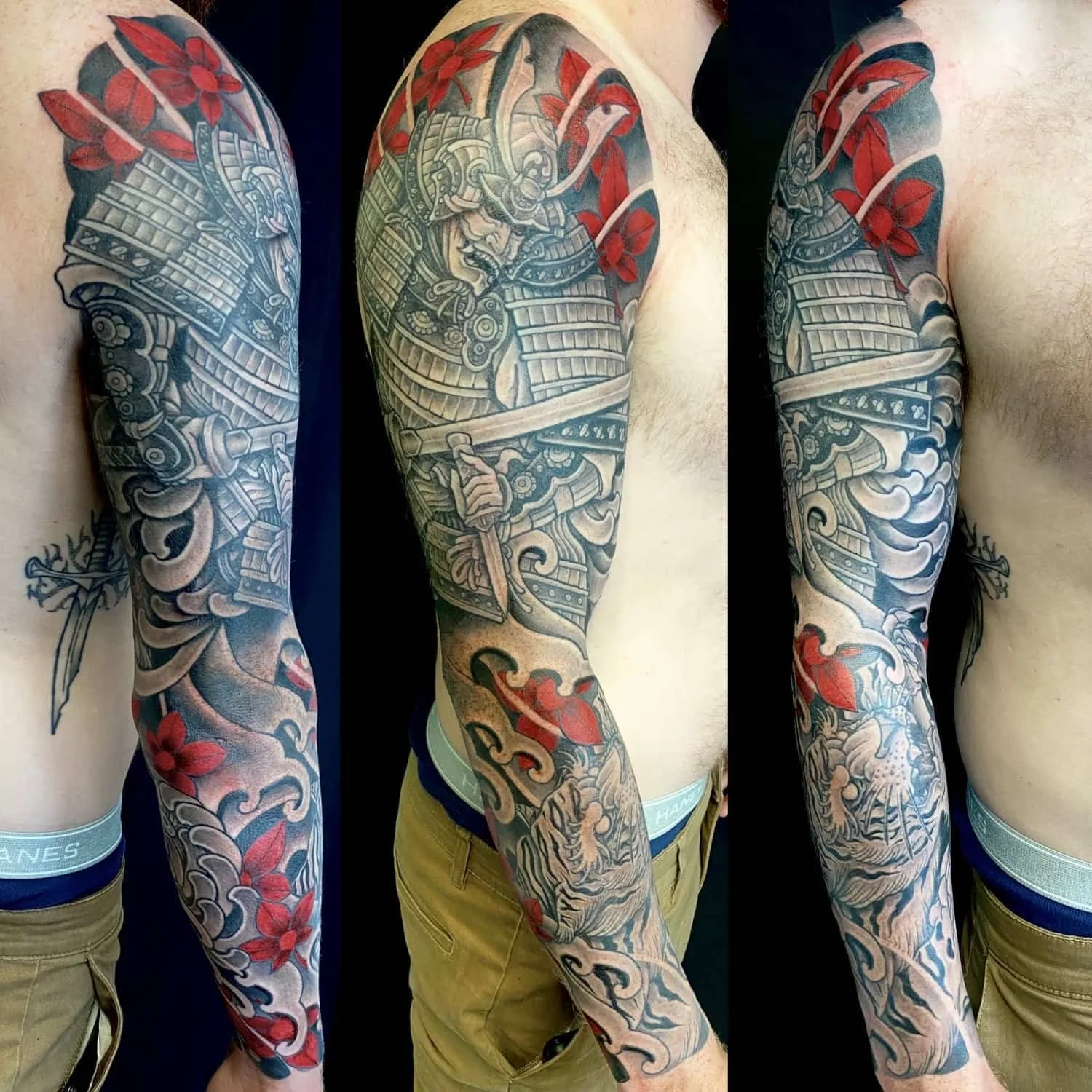
The background is a decision in its own right. Gakubori is the background composition worked around the main figure, and its job is to highlight the subject while bringing balance and harmony to the whole design, which is why waves, wind bars, and clouds turn up so consistently. Nukibori leaves the figure standing with no background at all, a cleaner and more graphic result that gives up that supporting structure.
Armor is what most of the drawing time goes into. A tattooer building a back piece is rendering a real object, so the individual parts of samurai armor govern how the figure reads: a face mask, a helmet with its crest, the laced plates across the chest. Get those wrong and the piece looks like fancy dress rather than a warrior.
Irezumi, and Why Samurai Imagery Ended Up on Skin
Irezumi means to insert ink, and the older word bunshin means decorating the body. Neither started as an art of heroes. Tattooing in Japan reaches back to the Yayoi period, when marks indicated high status, and by the Kofun period the state was using bokkei, punishment tattooing, to brand criminals. That criminal association clung to the practice for a very long time.
The turn came in the Edo period, when the boom in woodblock prints created demand for elaborate designs on skin. The warriors, demon fighters, and folk heroes that printmakers had made famous walked straight from paper onto bodies, and that is the direct ancestry of today’s samurai tattoo. Merchants also used tattoos as a way to carry wealth on their skin while public displays of it were restricted.
The Meiji government then made irezumi illegal, and it stayed illegal until the postwar occupation years, when tattooing was permitted again in 1948. In the interval the yakuza had adopted the art, which is a large part of why tattoos remain socially loaded in Japan and why many public baths and gyms still refuse entry to tattooed customers. Traditional tattooers, the horishi, have stayed private about their craft, apprenticeships run a decade or more, and a full traditional bodysuit costs into the tens of thousands of dollars.
Choosing a Samurai Figure You Can Stand Behind
Choosing a samurai figure means picking a named jinbutsu rather than a generic armored man. Learn what he did and check which category he belongs to before the stencil is drawn, because a kyokaku and a samurai carry different histories even when the armor looks similar. Then check that the virtue in his story matches the claim you are making.
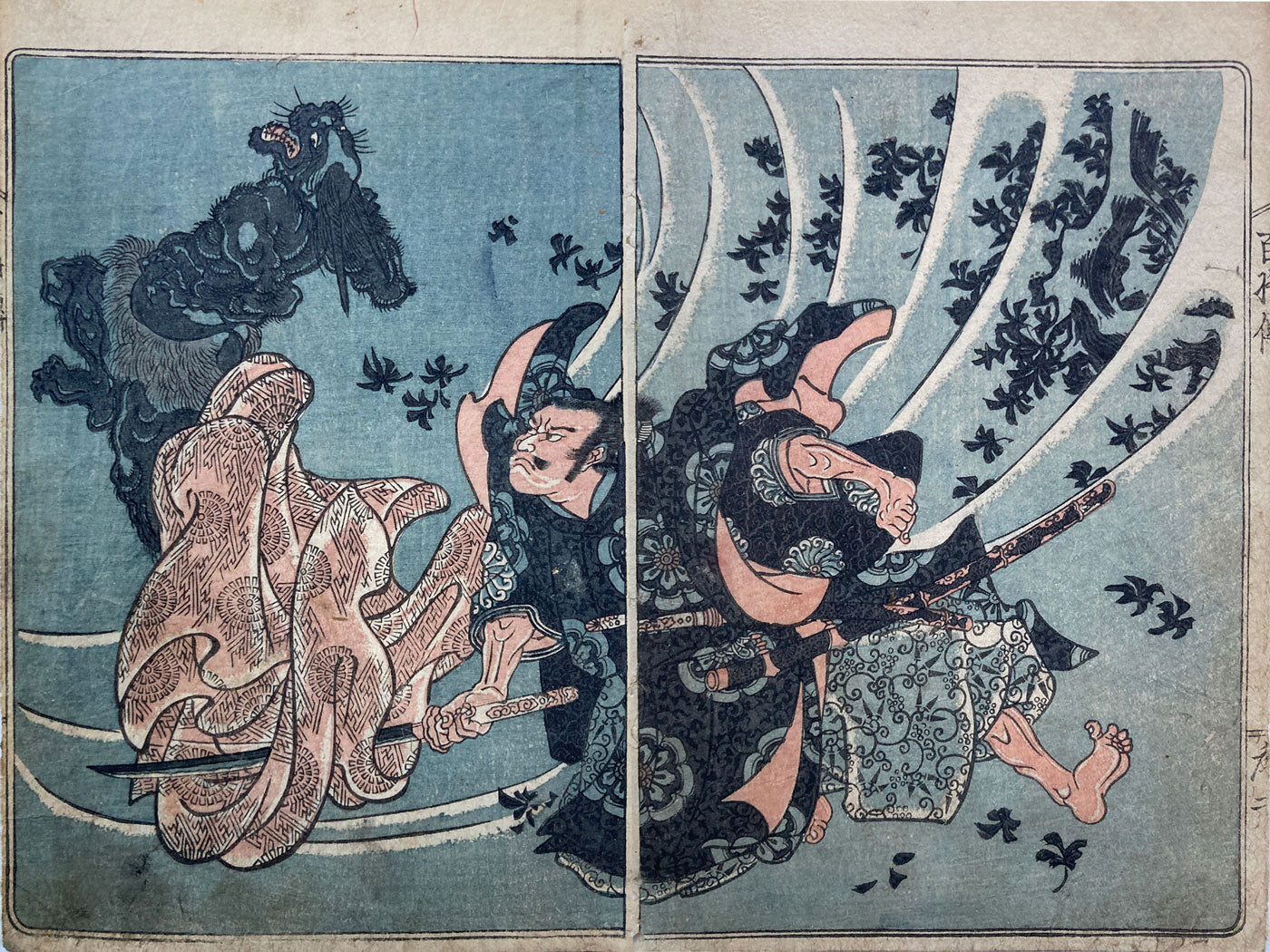
Samurai figures are among the most requested subjects in Japanese style tattooing, which means most of them arrive at the studio as a generic armored man. The traditional approach asks for the opposite, and it is the reason a tattooer in that tradition will ask who the figure is before asking how big it should be.
Two questions do most of the work. Whose story is this, and does the virtue in it match what you are claiming? If the answer to the first is nobody in particular, the piece will look correct and mean nothing, which is exactly the lifeless copy that specialists in the tradition warn about.
Wearing Samurai Motifs Without the Needle
A tattoo is permanent and a garment is not, and there is no pretending those are the same commitment. What they share is the vocabulary: the same armored figures, the same wave and blossom backgrounds, the same ukiyo-e drawing that gave irezumi its subjects in the first place. Kamicrew designs apparel around that vocabulary rather than around folklore scholarship, which is the honest limit of what a clothing brand can offer here.
If a samurai motif is something you want to live with before you commit to ink, the samurai shirts and hoodies are a reasonable place to start.
FAQs
What is the meaning of a Japanese samurai tattoo?
A Japanese samurai tattoo means bushido, the warrior code: honor, loyalty, courage, sacrifice, integrity, self-discipline, and accepting death rather than dishonor. The armored figure carries that code, and the element paired with him, such as a skull, a koi, or cherry blossom, narrows it to one specific claim about how the wearer intends to live.
What does a samurai tattoo symbolize?
It symbolizes bushido: honor, loyalty, courage, sacrifice, integrity, and self-discipline. The armored figure is the carrier, and the paired element, such as a skull, koi, or cherry blossom, narrows the meaning to a specific claim.
Is it disrespectful to get a Japanese samurai tattoo?
Not inherently, but the tradition expects you to know the figure. Specialists in Japanese tattooing hold that a character drawn without any grasp of his story remains a lifeless copy, so the respectful route is choosing a named jinbutsu and understanding why he matters.
Are tattoos still taboo in Japan?
To a degree, yes. Irezumi carried a criminal association for centuries, was outlawed under the Meiji government, and became linked with the yakuza before tattooing was legalized again in 1948. Many public baths and gyms still restrict entry to tattooed visitors.
Where do samurai tattoos usually go on the body?
Most are large scale work on the back, shoulder, arm, or leg, and some run as full body pieces. The figure needs enough space for the armor to be legible, which rules out small placements.
Is every armored warrior in a Japanese tattoo a samurai?
No. Classical prints also depict sengoku busho, the warlords; kyokaku, the street knights of Edo; and goketsu, strong heroes. Danshichi Kurobei, for instance, is a kyokaku rather than a samurai, despite appearing in the same visual tradition.
Kamicrew Best Seller

Dont Touch Me Yokai Ukiyo-E Japanese T-Shirt
$25.49+
$29.99
(15% off)


Summer Vibes Salty Kawaii Japanese Hoodie
$44.99+
$49.99
(10% off)


Japanese Pin Horror 80s Retro Aesthetics T-Shirt
$25.49+
$29.99
(15% off)


El Gran Maja Japanese Kaiju T-Shirt
$25.49+
$29.99
(15% off)


Who Wants The Perfect Body Japan Capybara Kawaii Japanese Unisex Shirt
$25.49+
$29.99
(15% off)


Monster 8 Mask Vintage Animal Hoodie
$44.99+
$49.99
(10% off)


I Hate People Japanese Opossum Vintage Animal Hoodie
$44.99+
$49.99
(10% off)


I Got That Dog In Me Small Turtle Vintage Animal T-Shirt
$25.49+
$29.99
(15% off)

The Creation Of Cat Ukiyo-E Japanese T-Shirt
$25.49+
$29.99
(15% off)