
A Japanese crane tattoo means long life, good fortune, and a bond that holds. The bird is the tsuru, Japan’s red-crowned crane, and tradition credits it with a lifespan of a thousand years. Fold a thousand paper ones and folklore says a wish for health, happiness, or peace is granted. That combination of longevity, luck, and loyalty is why the crane sits beside the dragon and the koi in traditional Japanese tattooing, and why a crane piece reads as hopeful rather than fierce.
What a Japanese Crane Tattoo Means
A Japanese crane tattoo means longevity and good fortune, and the belief that the bird lives more than a hundred years sits underneath every other reading of it. Because folding a thousand origami cranes is said to grant a wish for health, happiness, or peace, the motif also carries hope and resilience. A crane on the skin is usually a wish rather than a warning.
The second cluster of meanings is about character. Cranes are read as loyal, wise, and patient, and the bird’s habit of keeping one mate is where the fidelity reading comes from. Some artists and shops also attach prosperity and strength to the motif, which is why a crane turns up as often on a first tattoo as on a finished bodysuit.
Posture changes the emphasis. A crane in flight is the version most often chosen for freedom and transcendence, with the wings opened across the shoulder or the ribs and the background left dark for contrast. A standing crane, neck folded, leans toward grace and tranquility instead. Neither reading is fixed, and most people who pick the bird are picking something closer to a personal aspiration than a dictionary definition.
Tsuru, the Bird Behind the Motif
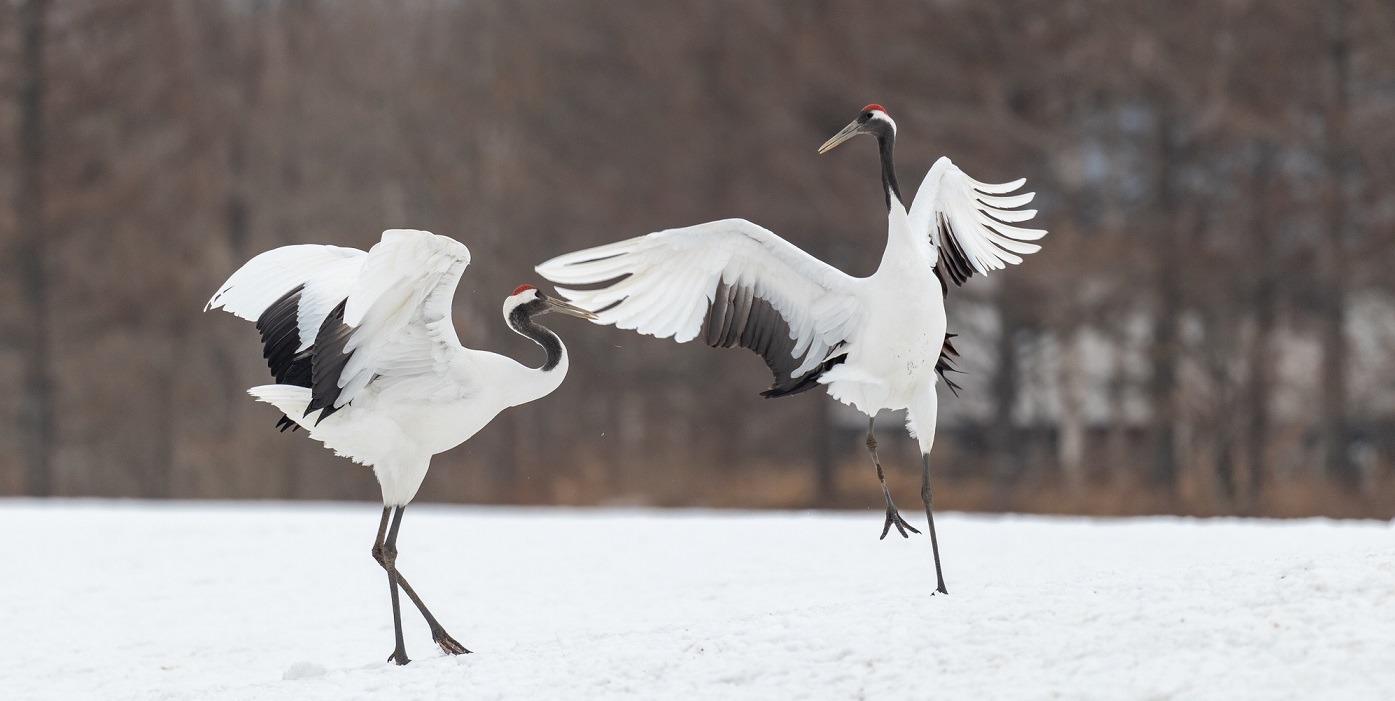
The tsuru of Japanese art is a real animal, the red-crowned crane, also called the Manchurian crane. It is a wetland bird of the crane family Gruidae, white with black-bordered plumage under a bare red crown, and it keeps one mate for life. Almost every stylized feature in a crane tattoo traces back to the living bird.
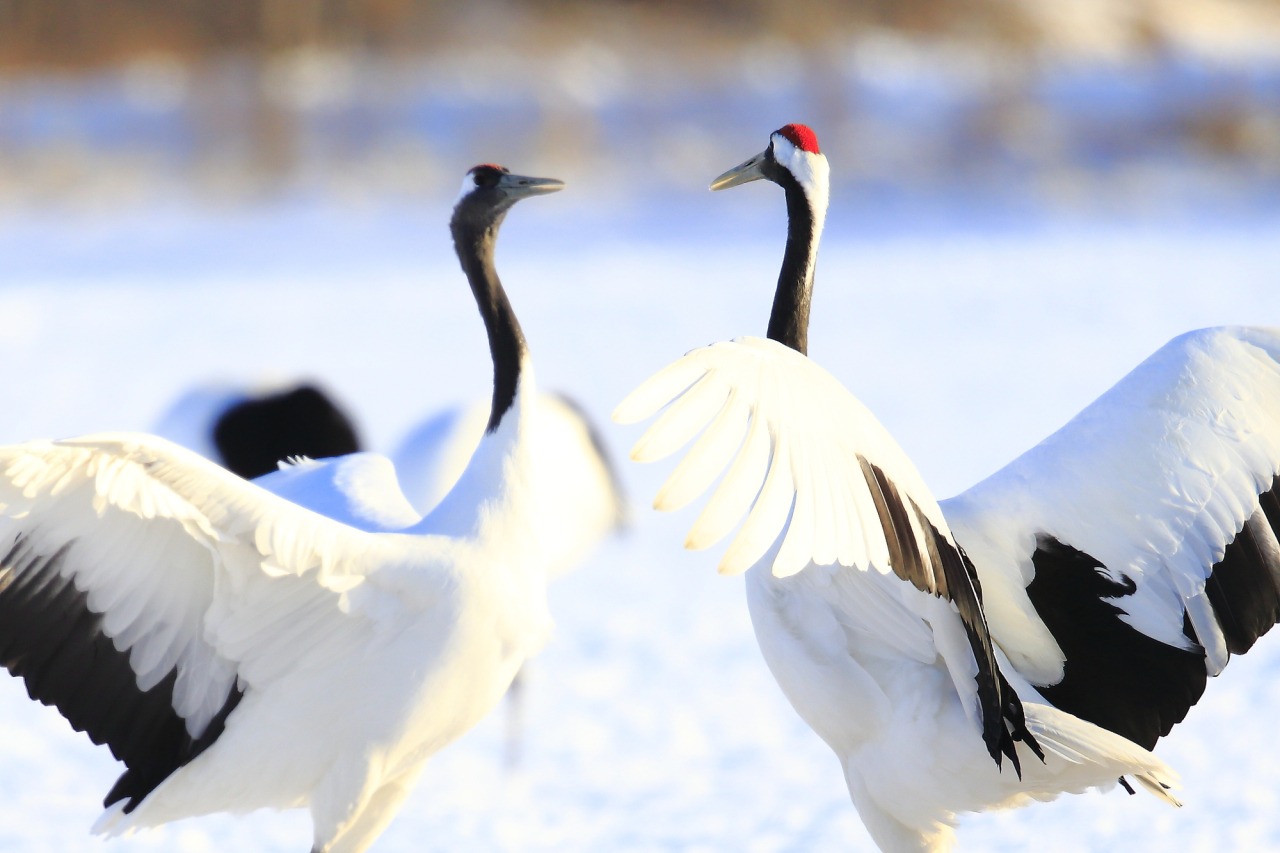
The traits an artist works from are all documented in the species itself.
- White plumage bordered with black, and a bare red patch on the crown that gives the species its name
- A wingspan of over two meters, and a standing height of roughly 158 centimeters
- Marshes and wetlands, with a resident population on Hokkaido in northern Japan and a mainland population that migrates to Siberia to breed
- Two or three eggs a clutch, of which typically one chick survives
- A mate chosen for life, which is the behavior the fidelity symbolism rests on
The species almost disappeared. Japan’s own count has recovered past a thousand birds, and the International Crane Foundation puts the world population at around 4,500 and rising, though the species is still listed as Vulnerable. A tattoo of a bird that came that close to being gone carries a little of that history whether the wearer knows it or not.
Where the Symbolism Comes From
Crane symbolism in Japan begins in folklore rather than biology. The word tsuru means crane, and the thousand-year lifespan attached to the bird is legend, which is how it became shorthand for a long life and for the luck that lets you have one. Peace, loyalty, wisdom, fidelity, beauty, and perseverance were layered on top of that oldest reading.
Those later readings widen the motif considerably. A pair of cranes signifies a happy marriage, which is why the motif appears so often on wedding textiles and gift wrapping. Cranes returning to the same wetland each year have also been read as the souls of ancestors coming home.
That range is what makes the crane useful in tattooing. A dragon narrows the meaning to power and protection; a crane leaves room for whatever the wearer brought to it.
Senbazuru and the Thousand Paper Cranes
A senbazuru is a thousand folded paper cranes strung together, and folklore holds that completing the thousand earns a wish, most often for someone’s recovery. The custom is known worldwide because of Sadako Sasaki, who folded cranes in hospital after developing leukemia from the 1945 atomic bombing of Hiroshima. Cranes are still folded for people who are ill or grieving.
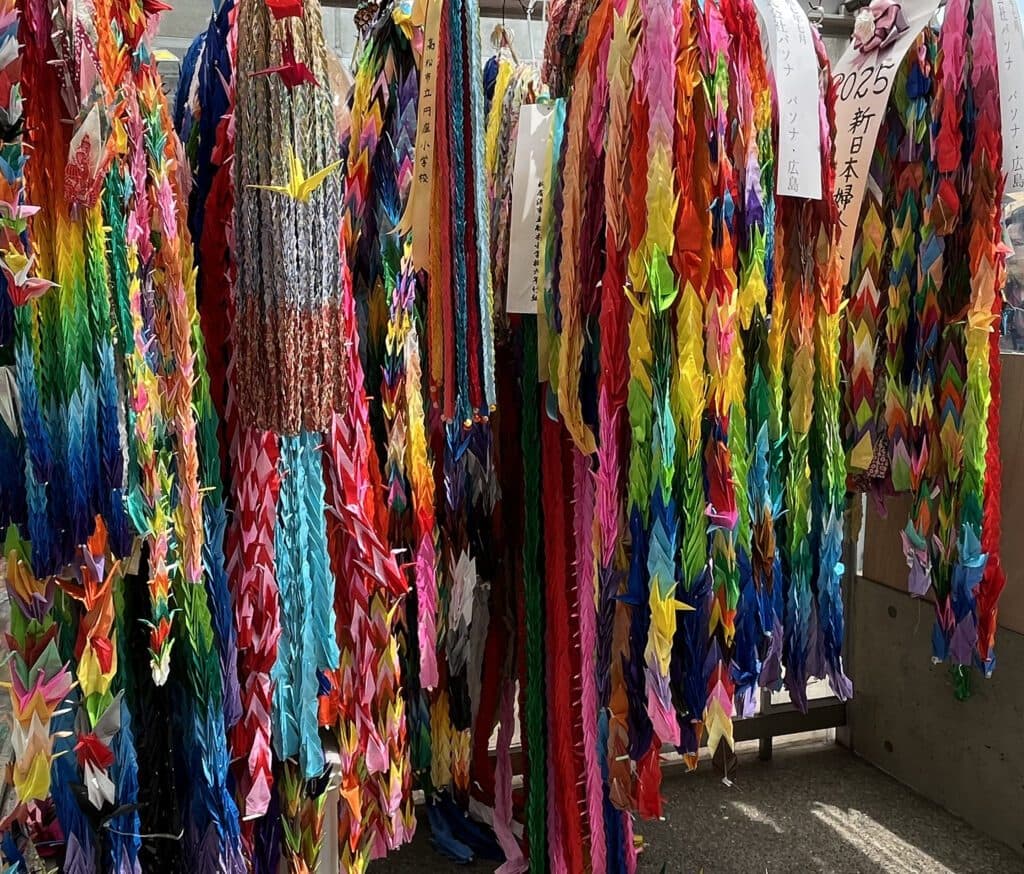
A single folded paper crane is an orizuru, from origami, which joins oru, to fold, and kami, paper. A thousand of them together is the senbazuru, and the wish is understood to be granted only once the full thousand is finished.
Sadako Sasaki was two years old when the atomic bomb fell on Hiroshima on 6 August 1945. She developed leukemia from the radiation, began folding cranes while in hospital, and died at twelve; her classmates folded the final 356 to complete her thousand. Garlands are still carried to Hiroshima’s peace park every year, which is how a bird that once meant a long life also became a Japanese symbol of peace.
Tattoo artists use this layer directly. A crane with folded paper wings, or a small orizuru worked into a larger piece, is a memorial choice more often than a decorative one.
How Cranes Are Drawn in Japanese Tattooing
Japanese crane tattoos fall into four treatments: traditional Japanese with bold outlines and saturated fills, black and gray using outline and shading only, watercolor with soft washes past the linework, and the compositional choice between a bird in flight and a standing bird. Because the crane is mostly white, artists usually set it against a dark background.
Cranes are chosen for their line as much as their meaning. The graceful curve of the body, the detailing in the feathers, and the length of the legs and neck give an artist a shape that fills a limb without crowding it.
- Traditional Japanese: bold outlines and saturated fills, usually in red, blue, yellow, and green, the same conventions that govern a Japanese dragon tattoo and the rest of the classical repertoire
- Black and gray: outline and shading only, which puts the weight on the feather detail and the negative space around the wings
- Watercolor: soft washes bleeding past the linework, popular for single cranes on the forearm or shoulder blade
- In flight versus standing: an open-winged bird spans a shoulder or back panel, while a standing crane suits a narrow vertical space like the calf or the outer forearm
Dark or busy backgrounds are common under a crane for a practical reason. The bird is mostly white, so it only reads from a distance if something behind it is not.
The Motifs Cranes Get Paired With
Cranes are rarely tattooed on bare skin. The five companions that come up most are cherry blossoms, waves and water, clouds, mountains, and a second crane, and each shifts what the piece is saying: transience against endurance, adaptability, open sky, permanence, and a lasting partnership.
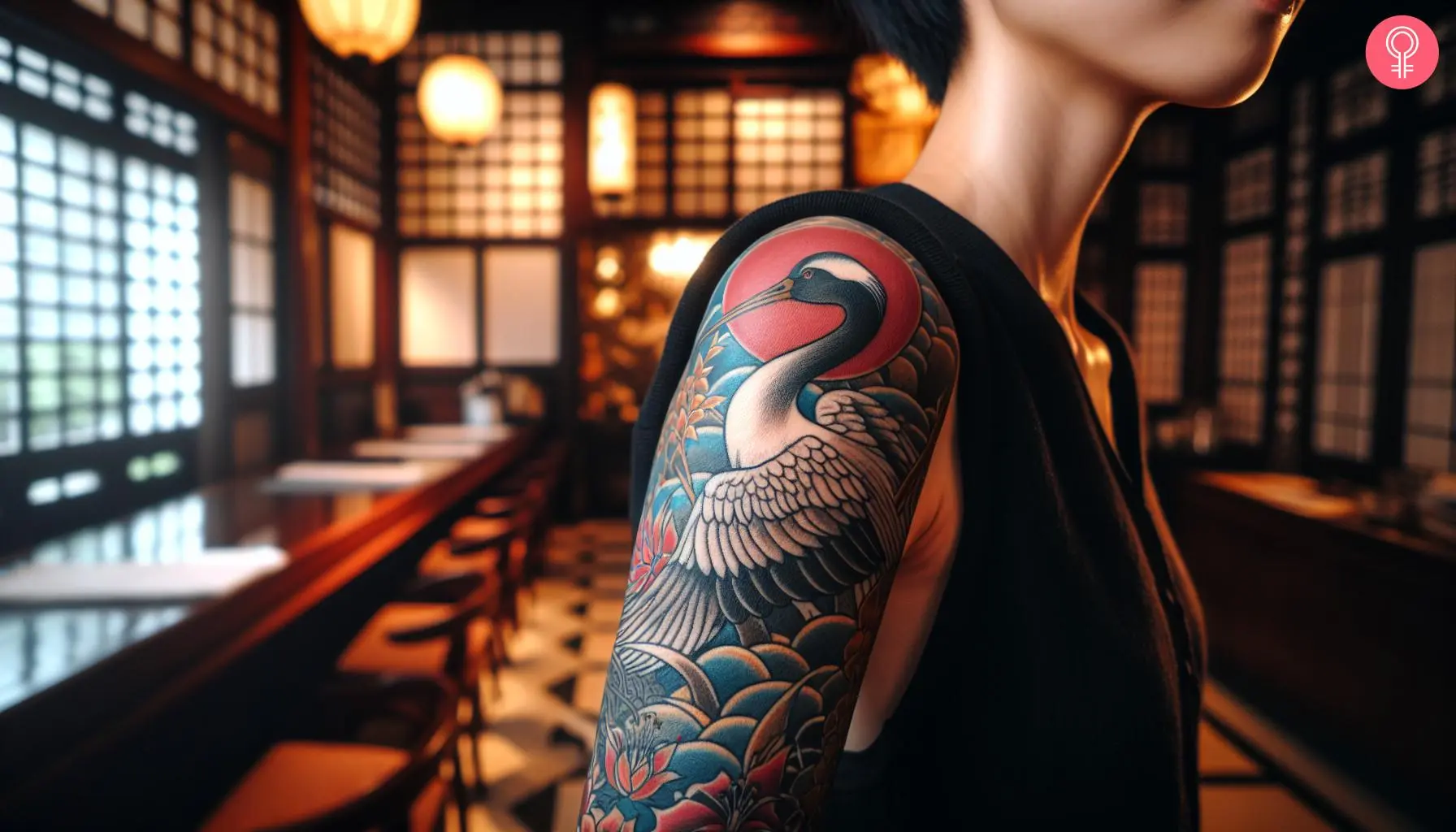
Japanese tattooing rarely leaves a subject unaccompanied, and the companion motif carries part of the meaning.
| Paired motif | What the pairing reads as |
|---|---|
| Cherry blossoms | Life’s transience set against the crane’s endurance |
| Waves and water | Adaptability and the flow of life |
| Clouds | Height, distance, and open sky |
| Mountains | Permanence, and a landscape to fly across |
| A second crane | A marriage or a lasting partnership |
The blossom pairing is the most loaded of the five, because sakura stands for how briefly things last and the crane stands for the opposite. Putting them in one composition is a deliberate contrast rather than decoration. Water is the other common ground: the stylized curls and combed lines of Japanese wave art give an artist a way to move a white bird through a dark field without a hard border.
Placement and Size
Size decides placement more than style does. Small cranes fit the wrist, ankle, or behind the ear, while larger designs need the chest, back, arms, legs, ribs, or stomach. A crane in flight wants width across a shoulder or the upper back; a standing crane reads vertically along the forearm, the calf, or the outer thigh.
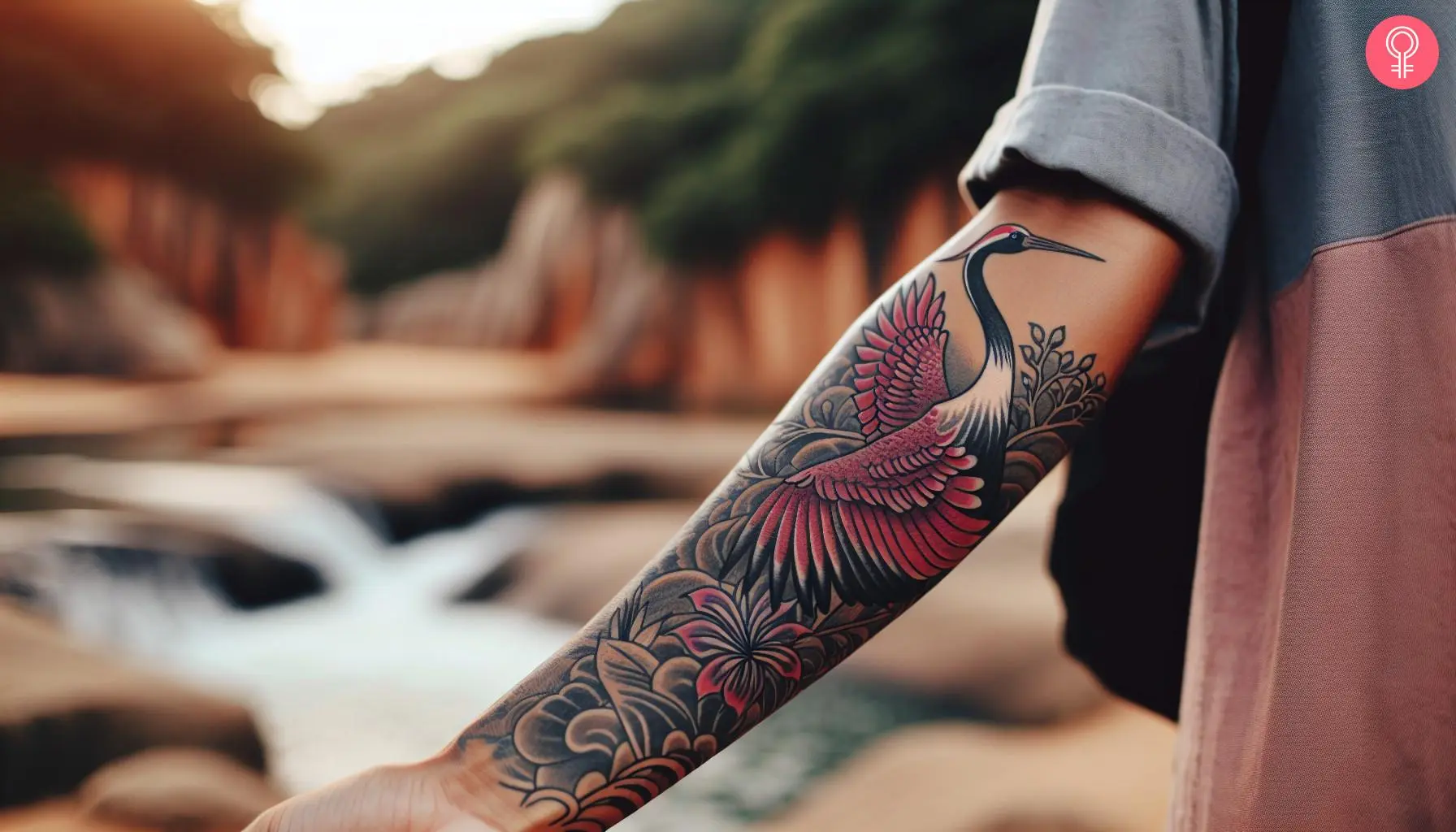
- Small cranes go almost anywhere, including the wrist, ankle, and behind the ear
- Larger designs sit best on the chest, back, arms, legs, ribs, and stomach, where there is room for the wingspan
- A bird in flight wants width, so shoulder, upper back, and ribs suit it better than a narrow panel
- A standing crane reads well vertically, along the forearm, the calf, or the outside of the thigh
Long necks and legs are easy to distort. A crane shrunk too far loses the feather detail that makes it a crane at all, so it is worth sizing up rather than squeezing the design into a smaller spot.
Choosing an Artist and Caring for a Fresh Crane Tattoo
Choose an artist whose portfolio shows finished Japanese compositions rather than single studies, because the skill being tested is whether a crane can be set inside a background that flows. Expect a large piece to take several sittings. Aftercare then protects the fine feather linework, which is the first thing to blur if the skin heals badly.
Traditional Japanese work is a specialism. Bring reference images, agree the composition and the placement before the machine is switched on, and expect the artist to want more than one session for anything large. Eat beforehand and turn up rested.
- Wash the tattoo daily with a mild soap and clean hands
- Moisturize lightly, often enough that the skin never dries and cracks
- Keep it out of direct sunlight for the first couple of weeks
- Wear loose clothing over the area so nothing rubs while it settles
- Do not scratch or pick, however much it itches
Wearing the Crane Without the Needle
Kamicrew is a Japanese-fashion streetwear label that builds apparel around Japanese mythology and traditional motifs, the crane among them. The crane was a textile pattern in Japan long before it was a tattoo, which is why it sits so naturally printed across a shirt or a jacket back. If you are still deciding on a piece, living with the bird on fabric for a season is one way to find out whether you want it on skin, and Kamicrew’s Japanese print shirts are a place to start.
FAQs
What do crane tattoos symbolize?
Crane tattoos symbolize longevity, good fortune, and hope, with loyalty and fidelity close behind because cranes keep one mate for life. A crane in flight is usually read as freedom, while a standing crane leans toward grace and calm.
What is the meaning of the thousand paper cranes in Japanese culture?
A thousand folded cranes strung together is a senbazuru, and folklore holds that completing the thousand grants a wish, most often for health, happiness, or peace. Sadako Sasaki’s cranes, folded in hospital after the 1945 bombing of Hiroshima, turned the custom into a peace symbol recognized worldwide.
What does a pair of cranes mean in Japanese art?
A pair of cranes signifies a happy marriage, which is why the motif appears so often on Japanese wedding textiles and gift wrapping. The reading rests on the bird’s habit of keeping one mate for life, so two cranes in a tattoo are usually a statement about a partnership rather than about the wearer alone.
How do you combine a crane tattoo with other Japanese symbols?
Cherry blossoms are the most common companion, setting the crane’s endurance against how briefly the flowers last. Waves and water suggest adaptability, clouds and mountains give the bird sky and landscape to move through, and a second crane turns the piece into a statement about a partnership.
What is the history of the crane in Japanese art and tattooing?
The crane’s meaning starts with folklore that credits the bird with a thousand-year life, which made it a symbol of longevity and luck long before it was a tattoo subject. Wedding textiles, gift wrapping, and origami carried it for centuries, and the senbazuru custom added the peace and recovery reading in the twentieth century.
What does a crane tattoo mean when the bird is in flight?
An open-winged crane is the version most associated with freedom and transcendence, and it is the composition artists reach for when the piece needs to span a shoulder, a back, or the ribs. Artists usually darken the background behind it, since a mostly white bird only reads at a distance against contrast.
Kamicrew Best Seller

Dont Touch Me Yokai Ukiyo-E Japanese T-Shirt
$25.49+
$29.99
(15% off)


Summer Vibes Salty Kawaii Japanese Hoodie
$44.99+
$49.99
(10% off)


Japanese Pin Horror 80s Retro Aesthetics T-Shirt
$25.49+
$29.99
(15% off)


El Gran Maja Japanese Kaiju T-Shirt
$25.49+
$29.99
(15% off)


Who Wants The Perfect Body Japan Capybara Kawaii Japanese Unisex Shirt
$25.49+
$29.99
(15% off)


Monster 8 Mask Vintage Animal Hoodie
$44.99+
$49.99
(10% off)


I Hate People Japanese Opossum Vintage Animal Hoodie
$44.99+
$49.99
(10% off)


I Got That Dog In Me Small Turtle Vintage Animal T-Shirt
$25.49+
$29.99
(15% off)

The Creation Of Cat Ukiyo-E Japanese T-Shirt
$25.49+
$29.99
(15% off)