
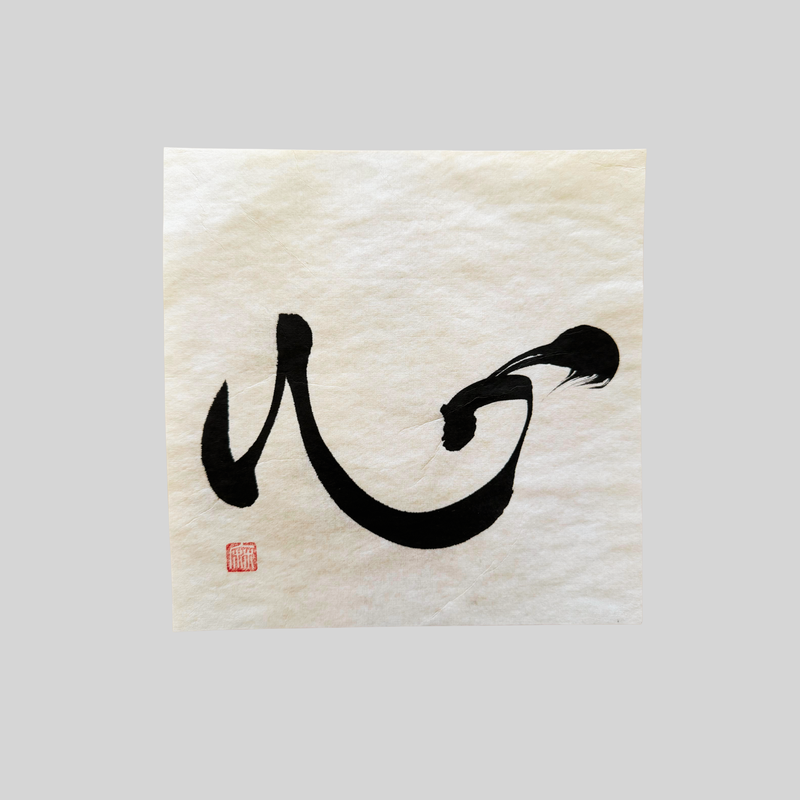
The Japanese heart symbol is 心, read kokoro (こころ) in its Japanese reading and shin (シン) in its Chinese-derived reading. It is written with four strokes, taught in grade 2 of Japanese schools, and tested at JLPT level N4. It means heart, but it stretches to mind, spirit, feeling, and the center of something.
心 is not the same thing as ♡. The rounded heart shape you type in a message is a Western pictogram that belongs to no single language, and Japanese calls it ハート (haato), not 心. 心 is a written character that began as a drawing of the organ itself and grew into the word for a person’s whole inner life.
| Character | 心 |
| Kunyomi (Japanese reading) | kokoro (こころ) |
| Onyomi (Chinese-derived reading) | shin (シン) |
| Strokes | 4 |
| School grade | Grade 2 |
| JLPT level | N4 |
| Core meanings | Heart, mind, spirit, feeling, center or core |
| Character type | Pictograph, also used as a radical |
What 心 means beyond the organ
心 carries four overlapping senses in Japanese: mind, spirit, feeling, and center or core. Translating it as “heart” captures only the third. English treats heart and mind as opposites, Japanese folds both into one character, so 心 can sit in a sentence about thinking as easily as in one about emotion.
- Mind, in the sense of mental faculties and thought
- Spirit, the inner essence of a person
- Feeling or emotion
- Center or core, the meaning it usually takes inside compounds
That refusal to split heart from mind explains most of the confusion learners run into when they meet 心 in a sentence about thinking rather than feeling. Kokoro is one of the more useful entries in the wider system of Japanese symbols for exactly that reason.
The four Japanese words that all translate as heart
Japanese splits the English word “heart” across four terms: 心臓 (shinzou) for the organ that pumps blood, 心 (kokoro) for the figurative heart, 胸 (mune) for the chest, and ハート (haato) for the ♡ shape. Three are native vocabulary and one is a loanword, and picking the wrong one is the most common mistake in a translated phrase.
- 心臓 (shinzou) is the organ that pumps blood, the word behind 心臓病 (shinzou-byou, heart disease) and 心臓発作 (shinzou hassa, heart attack), and by extension the core component of a machine
- 心 (kokoro) is the figurative heart, the one that appears in 心が動く (kokoro ga ugoku, to be moved) and 心の底から (kokoro no soko kara, from the bottom of one’s heart)
- 胸 (mune) means chest, and it stands in for heart in a small set of compounds such as 胸焼け (muneyake, heartburn)
- ハート (haato) is the English word written in katakana, kept in reserve for the senses the native words do not cover, mostly the shape itself in ハートマーク (haato maaku, heart mark) and ハート型 (haato-gata, heart-shaped)
ハート is the entry that matters for anyone searching for a Japanese heart symbol. The ♡ shape is ハート in Japanese, not 心, and a Japanese reader keeps the two apart without thinking about it.
How the shape of 心 came about
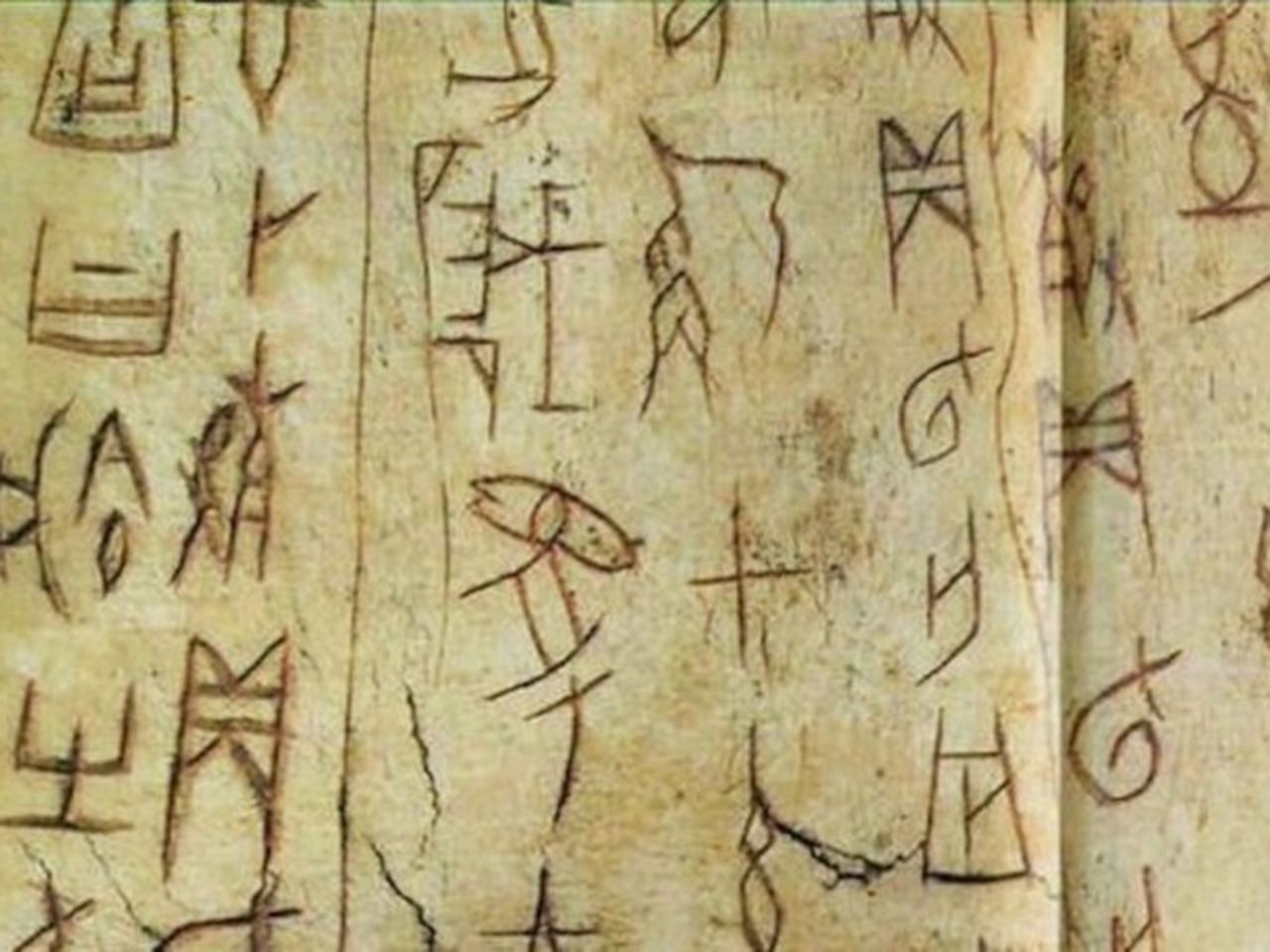
心 is a pictograph. Its earliest forms, found in oracle bone inscriptions and later bronze inscriptions, were detailed drawings of a human heart showing the chambers and the vessels leading out of it. Centuries of copying stripped away the interior detail and left the four strokes used today.
The modern form breaks down into two parts: one long curved sweep along the bottom, standing in for the body of the organ, and three short marks above it where the vessels used to be. That history is worth knowing before you try to memorize the character, because the modern shape looks nothing like a heart and every learner notices.
A mnemonic for remembering 心
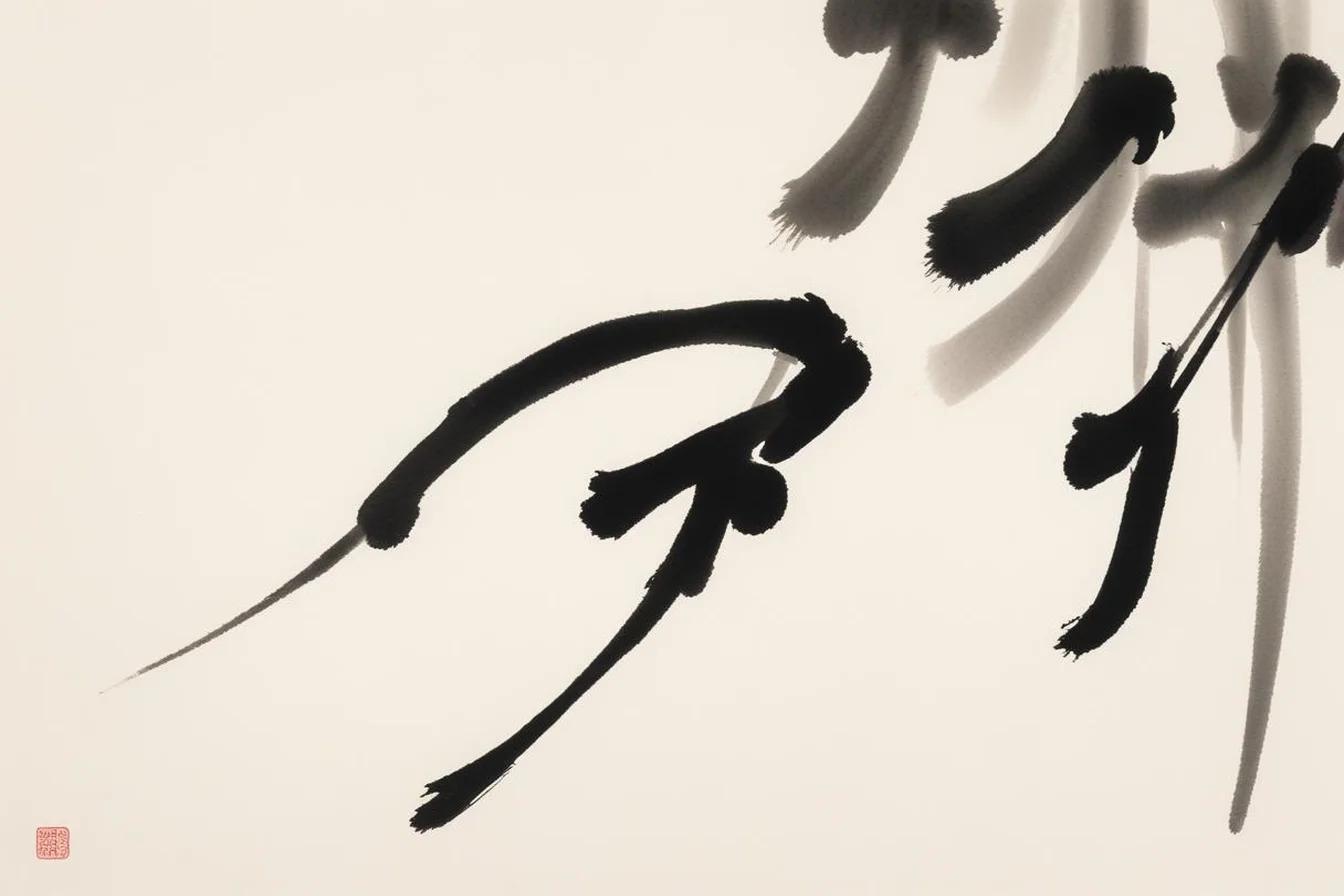
The standard mnemonic for 心 reads the three small strokes as arteries and the long bottom sweep as the heart they feed. It works as a memory aid, and it is honest about its own limits: three vessels do not match the anatomy of a real human heart, so the trick rests on the character’s pictographic ancestry rather than on a diagram of the organ.
Write it in stroke order a few times and the shape stops reading as three dots and a hook. It starts reading as one gesture, which is how calligraphers treat it.
心 and the ♡ heart symbol are two different things
心 and ♡ answer two different questions. ♡ is a pictogram that stands for love, for the organ, or for the card suit, and it belongs to no single language or writing system. 心 is a kanji: a word you can read aloud, use in a sentence, and stack into compounds. People searching for a Japanese heart symbol usually want one of the two.
| 心 | ♡ | |
|---|---|---|
| What it is | Kanji character | Pictogram or symbol |
| Readings | kokoro, shin | None, it is not read aloud as a word |
| Language | Japanese (and Chinese origin) | Language-independent |
| Usual sense | Heart, mind, spirit, feeling, center | Love, the organ, the card suit |
| Used in compounds | Yes, in hundreds of words | No |
Neither one is the Japanese character for romantic love. That job belongs to 愛 (ai) and 恋 (koi), which is why 心 rarely appears alone on anything meant to say “I love you”. If romance is the meaning you are after, the Japanese symbol for love is the character to start from, and 心 sits inside it as a component.
Why 心 carries so much weight in Japanese
心 is treated as the seat of emotion in Japanese, and the language keeps that idea physical rather than abstract. Everyday expressions locate sincerity, gratitude and grief in the 心 itself, and the character carries the same weight in literature as it does in speech.
- 心が痛む (kokoro ga itamu), literally “the heart aches”, used for the pain of empathy rather than a medical symptom
- 心から (kokoro kara), “from the heart”, marking a thank-you or an apology as genuine
Kokoro, one of the best known Japanese novels, takes its title from this character, and English editions usually render that title simply as Heart.
心 as a radical inside other kanji
心 is one of the most productive radicals in the writing system, and it marks a character as belonging to the world of emotion and thought. By EJable’s count it appears in 364 kanji, 67 of them Jōyō characters taught in Japanese schools. The Kangxi Dictionary files 1,115 characters under it. The radical takes three written forms depending on where it sits.
| Form | Where it sits | Examples |
|---|---|---|
| 心 | On its own, or at the bottom of a character | 思, 忘, 忍, 急, 悲 |
| 忄 | On the left of a character | 情, 快, 忙, 悩 |
| ⺗ | Underneath a character | Less common than 忄 and 心 |
Look at what the characters built on it have in common:
- 情 (jou), emotion or feeling
- 思 (shi), to think
- 愛 (ai), love
- 悲 (hi), sad
- 怒 (do), anger
- 恐 (kyou), fear
- 悩 (nou), worry
- 憂 (yuu), melancholy
- 忍 (nin), to endure
- 忘 (bou), to forget
- 快 (kai), pleasant
- 悪 (aku), bad or evil
- 急 (kyuu), to hurry
- 忙 (bou), busy
- 懐 (kai), to yearn
Nearly every one of them names something felt rather than something done. Even 忙 (busy) and 急 (hurry) are built as states of mind. A learner who knows 心 can guess the emotional register of a character they have never seen, which is more than most radicals give you.
Compound words built on 心
心 is prolific in vocabulary. EJable counts 374 Japanese words that begin with 心 and 898 words that contain it somewhere. The reading shifts between kokoro and shin depending on the compound, and the compound sense often leans on “center” or “mind” rather than “heart”.
| Word | Reading | Meaning |
|---|---|---|
| 心配 | shinpai | Worry or concern |
| 心臓 | shinzou | The heart as an organ |
| 心理 | shinri | Psychology or mentality |
| 心情 | shinjou | One’s feelings |
| 心地 | kokochi | A feeling or sensation |
| 真心 | magokoro | Sincerity and devotion |
| 一心 | isshin | Wholehearted, with one’s whole heart |
| 心強い | kokorozuyoi | Heartening or reassuring |
| 心細い | kokorobosoi | Lonely and helpless |
| 心得る | kokoroeru | To know something well |
| 気心 | kigokoro | Disposition or temperament |
| 心当たり | kokoroatari | A hint or a clue |
| 心外 | shingai | Unexpected and regrettable |
| 心音 | shin’on | Heart sounds |
| 心中 | shinjuu | Inner feelings, and also a double suicide |
Note the split between 心臓 for the muscle in your chest and 心 for everything else. A Japanese doctor uses the first. A song lyric uses the second.
Wearing 心 as a single-character motif
A four-stroke character reads clearly at any size, which is why 心 works as printed and embroidered artwork where a longer phrase would turn to mush. Brushed large across a tee or set small on a sleeve, it reads as one confident gesture, and the stroke weight matters more than the size: a thin digital version of 心 loses the brush energy that makes the character feel handmade.
心 belongs to the same family of single-character motifs as 力 and 強, the pair behind the Japanese symbol for strength, and it carries a quieter tone than either of them. One thing to know before you wear it: to a Japanese reader 心 says mind and feeling, not romance.
If a character with that kind of range appeals to you, the Japanese shirts at Kamicrew treat calligraphic and mythological motifs as artwork rather than as decoration.
FAQs
What does 心 (kokoro) mean in Japanese?
心 means heart, but it stretches to mind, spirit, feeling, and the center or core of something. Which sense applies depends on context and on the compound it sits in. Japanese does not treat heart and mind as opposites, so 心 works in sentences about thinking as well as sentences about emotion.
Is 心 the same as the ♡ heart symbol?
No. ♡ is a pictogram standing for love, the organ, or a card suit, and it belongs to no single language. 心 is a kanji with readings (kokoro, shin) that functions as a word in Japanese sentences and appears in hundreds of compounds. ♡ does not. In Japanese the shape itself is called ハート (haato), as in ハートマーク (haato maaku, heart mark).
How many strokes does the kanji 心 have?
Four: one long curved sweep along the bottom and three short marks above it. It is a grade 2 character in Japanese schools and appears at JLPT level N4. The three short marks stand where the blood vessels were drawn in the character’s earliest pictographic forms.
What is the difference between 心 and 心臓?
心臓 (shinzou) is the heart as a physical organ, the term a Japanese doctor uses. 心 (kokoro) is the heart as the seat of mind, spirit and feeling, the term a song lyric or a novel uses. The two are not interchangeable.
Which kanji use 心 as a radical?
Emotion and thought characters, mostly. 情 (feeling), 思 (think), 愛 (love), 悲 (sad), 怒 (anger), and 忍 (endure) all carry it, in the forms 心, 忄, or ⺗. By EJable’s count the radical appears in 364 kanji, 67 of them Jōyō characters taught in Japanese schools.
Kamicrew Best Seller

Dont Touch Me Yokai Ukiyo-E Japanese T-Shirt
$25.49+
$29.99
(15% off)


Summer Vibes Salty Kawaii Japanese Hoodie
$44.99+
$49.99
(10% off)


Japanese Pin Horror 80s Retro Aesthetics T-Shirt
$25.49+
$29.99
(15% off)


El Gran Maja Japanese Kaiju T-Shirt
$25.49+
$29.99
(15% off)


Who Wants The Perfect Body Japan Capybara Kawaii Japanese Unisex Shirt
$25.49+
$29.99
(15% off)


Monster 8 Mask Vintage Animal Hoodie
$44.99+
$49.99
(10% off)


I Hate People Japanese Opossum Vintage Animal Hoodie
$44.99+
$49.99
(10% off)


I Got That Dog In Me Small Turtle Vintage Animal T-Shirt
$25.49+
$29.99
(15% off)

The Creation Of Cat Ukiyo-E Japanese T-Shirt
$25.49+
$29.99
(15% off)