
The baku is a Japanese yokai that eats bad dreams. Written 獏 or 貘, it is a chimera assembled from the parts of several large mammals, and it was called by name after a nightmare so the dream would be devoured instead of remembered. It is one of the few supernatural creatures in Japan whose function is protective rather than frightening: the baku is summoned, not escaped.
The word carries a second meaning in modern Japanese, where baku is also the name of the Malayan tapir, and that overlap is why searching the term returns both a yokai and a living animal. The mythological baku does not haunt or punish anyone. Its whole function in Japanese folklore is to consume something the sleeper wants gone.
Where the Baku Came From
The baku is an import. It descends from the Chinese mo, written with the same characters, and it was familiar in Japan as early as the Muromachi period in the fourteenth and fifteenth centuries. Chinese descriptions of the creature centred on protection from illness rather than dreams: texts credited its skin or its image with repelling disease. Japanese tradition kept the protective idea and redirected it at sleep.
Folklore also gives the baku a creation story of its own. In one telling, the gods had finished making the animals and the baku was put together at the end from the leftover pieces, which explains a body that looks borrowed from five different species. That places it alongside other creatures Japan received from Chinese tradition and then made its own, including the kirin, another composite animal read as a good omen.
The nightmare-eating role came later than the earliest Japanese descriptions. By the Meiji era it was documented plainly: Lafcadio Hearn’s Kotto, published in 1902, describes a baku able to devour nightmares. Folklore scholarship has kept working on the question since, with Hori Tadao’s 2005 study of dream-eating and the Kaii-Yokai Densho Database both tracing how the belief was recorded and passed on.
What a Baku Looks Like
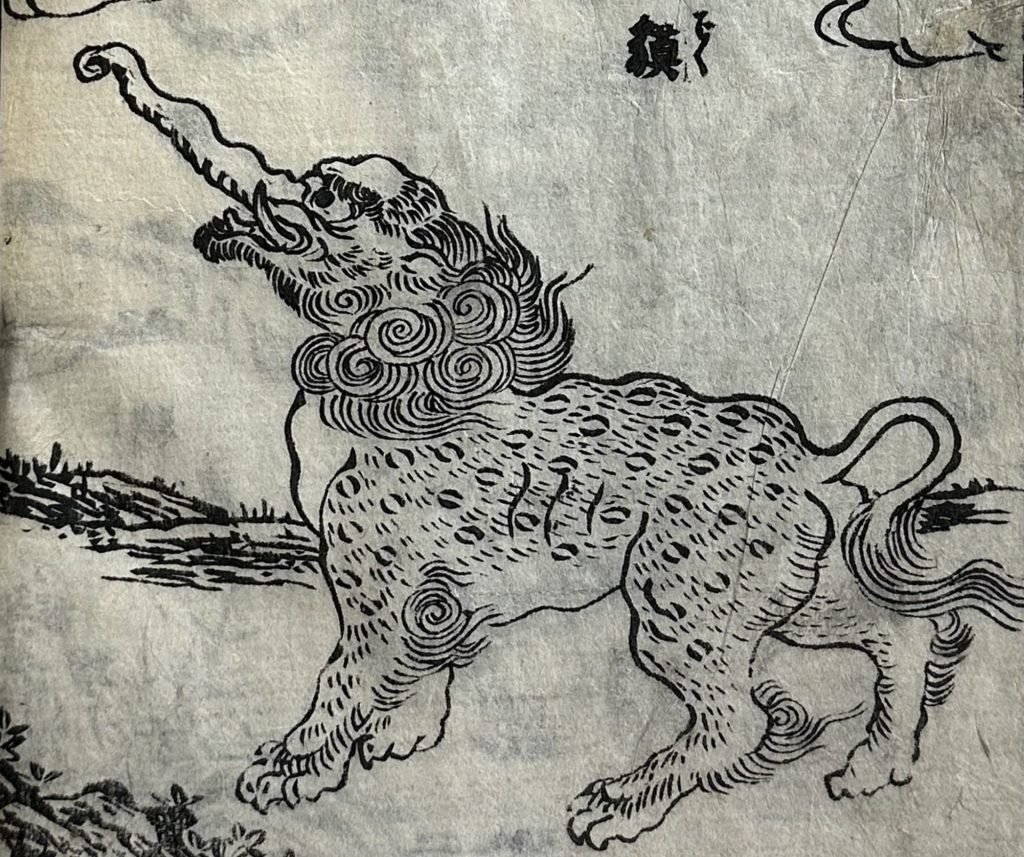
There is no single fixed baku. Classical sources describe the creature as a composite of large mammals, and the elephant’s head, trunk and tusks are the one constant. Which animals supply the ears, eyes, tail, body and paws changes from text to text, which is why no two illustrations of a baku agree in full.
| Source | Date | Animals it borrows from |
|---|---|---|
| Sankai Ibutsu | Early 17th century | Elephant trunk and tusks, rhinoceros ears, cow tail, bear body, tiger paws |
| Woodblock illustration | 1791 | Elephant head, tusks and trunk, plus horns and tiger claws |
| Later folklore collections | Later | Bear body, elephant head, rhinoceros eyes, ox tail, tiger legs |
The Sankai Ibutsu treats the creature as a shy Chinese chimera rather than a Japanese native. Across classical pre-Meiji woodblock prints the elephant features are the consistent thread, and they are the fastest way to tell a baku from the other horned and clawed yokai it gets confused with. Its habitat is given as deep forest, far from where people live, which is part of why the creature has to be called rather than simply encountered.
How the Baku Eats Nightmares
The baku feeds on human dreams, and specifically on bad ones. Folklore treats it as a guardian: it watches over sleepers, and evil spirits are said to keep away from places a baku inhabits. The practice attached to that belief is short and easy to remember. A child who wakes from a nightmare repeats three times, “Baku-san, come eat my dream.”
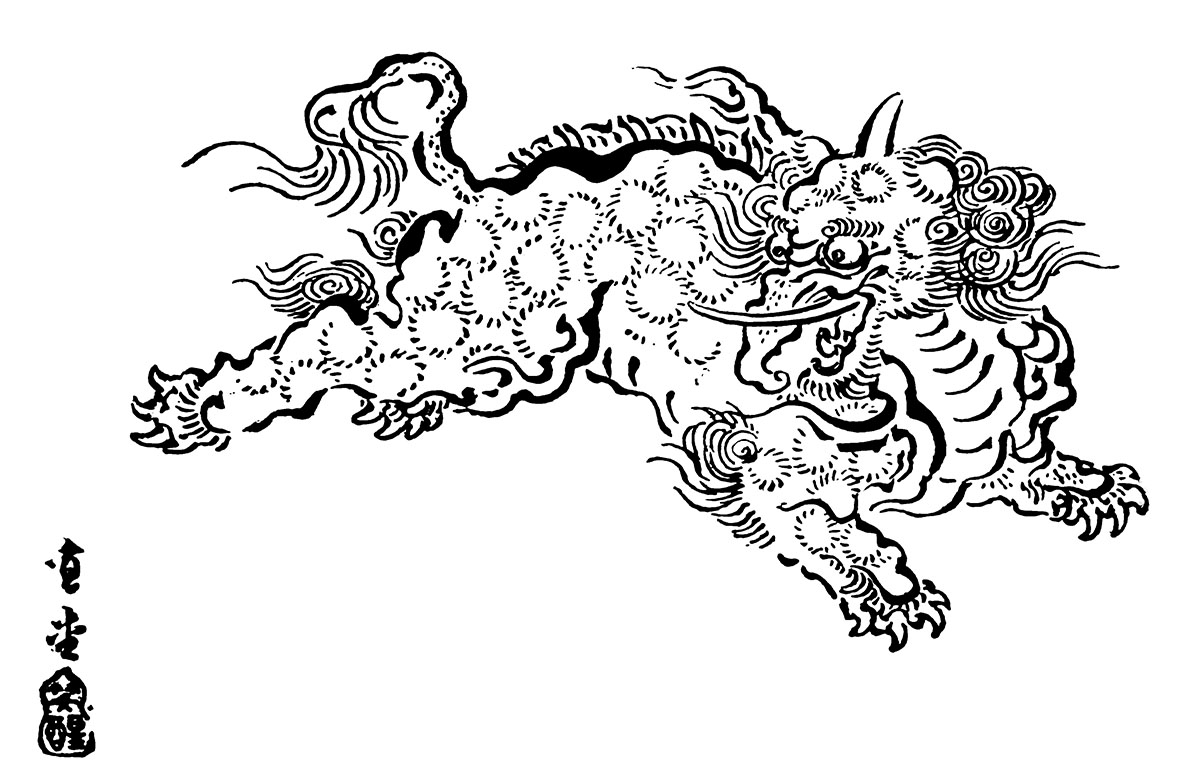
The creature can also be summoned before sleep rather than after, as protection against a bad dream arriving in the first place. This is the opposite relationship to the one Japan has with a yokai like the kappa, which folklore teaches you to escape or outwit. The baku is invited in.
The Warning Attached to the Charm
Calling the baku carries a condition, and it is the detail that makes the creature more interesting than a simple protective spirit. If the baku is still hungry after eating the nightmare, it may go on to devour the sleeper’s hopes and desires as well, leaving them to live an empty life. Calling on it too freely risks losing the good dreams along with the bad.
Read as folklore, that caveat does useful work. It keeps a protective charm from being used carelessly, and it puts a limit on how often a household should reach for supernatural help. The same logic runs through a lot of what yokai symbolize in Japanese belief, where a creature that solves a problem usually charges something for it.
Baku Charms, Pillows, and Temple Carvings
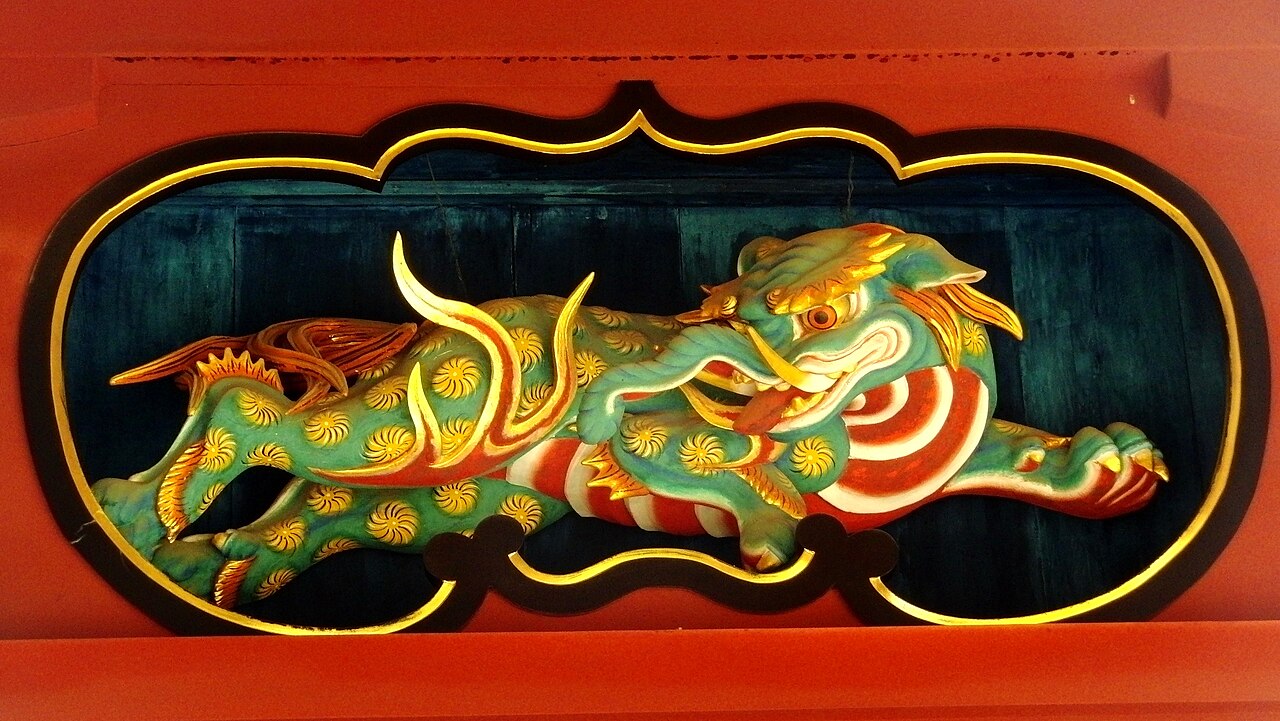
Because the baku had to be reachable at the moment a nightmare ended, its name and its image ended up on the objects closest to a sleeping person. The kanji for baku was embroidered onto pillows to keep bad dreams off, images of the creature turned up on pillows, screens and other objects connected with sleep, and in the 1910s it was common for Japanese children to keep a baku talisman at the bedside.
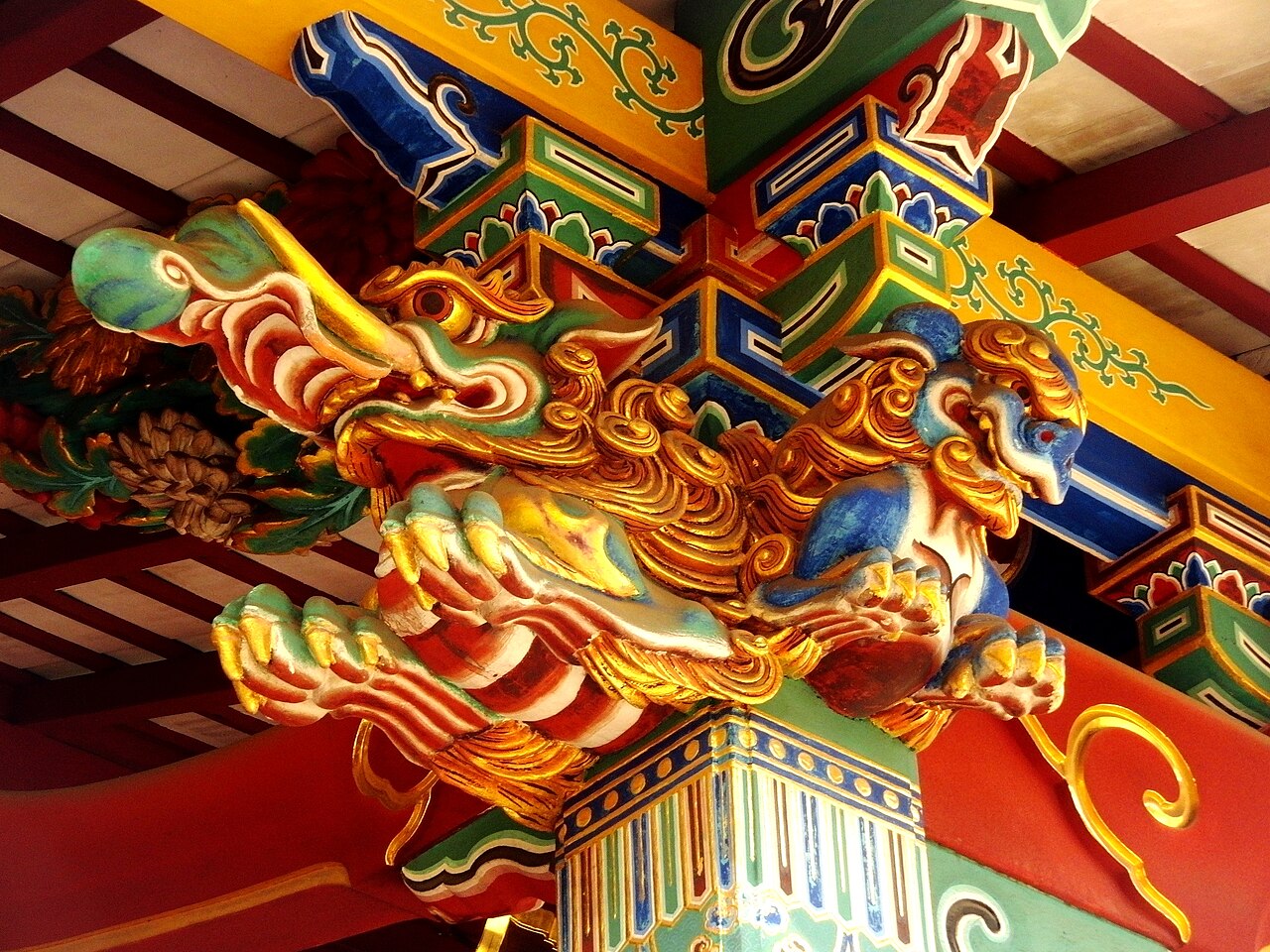
The written name and the image were both treated as good luck in talismans and charms. Away from the bedroom, the baku appears in netsuke carvings and in shrine and temple art, where deliberately fearsome versions of it are carved into the pillars above temple doors. The design brief there is the reverse of a bedside charm: at a doorway, the creature is meant to look like something a bad spirit would not walk past.
The Baku in Modern Culture
The baku never settled into one canonical design, and that has continued. Edo period prints, modern illustration, games and animation have each reshaped it, so the version a reader recognises depends largely on where they met it. Shigeru Mizuki’s yokai work brought the creature to a mass twentieth century audience, and it continues to appear in contemporary manga and anime, usually as a dream-related creature rather than a faithful copy of the classical chimera.
Merchandise followed the same path. Baku-themed charms, keychains, stickers and amulets are sold on the strength of the nightmare-eating story, which is the one part of the folklore that survives every redesign.
Baku the Yokai and Baku the Tapir
The Japanese word baku now has two current meanings: the traditional dream-devouring creature and the Malayan tapir. The two are not the same thing. The mythological baku is a chimera built from elephant, rhinoceros, tiger, ox and bear, while the tapir is a real animal that happens to share the short trunk and the heavy body.
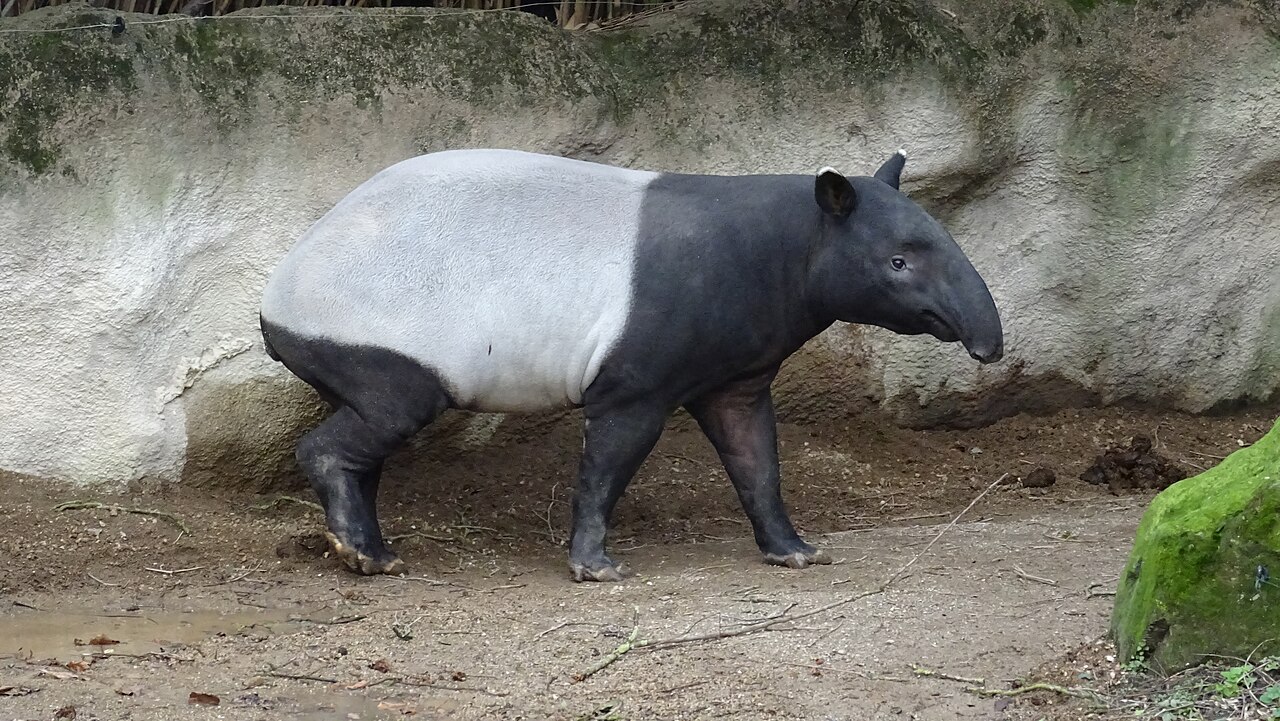
The shared name is why image searches for the term mix folklore prints with zoo photography, and why the tapir is sometimes described as the animal the baku was based on. The folklore came first and travelled from China, so the resemblance is best read as the reason the name was reused, not as evidence that the yokai was ever meant to be a tapir.
Wearing the Baku
The baku gives a design something most yokai do not: a protective creature with a striking silhouette and a story that reads on a single graphic. The elephant trunk and tusks give it an outline nobody mistakes for an oni or a kirin, the classical prints supply a spotted or striped body to work with, and the dream-eating idea carries a meaning without needing a caption.
If the baku is the yokai you want on a shirt, Kamicrew’s yokai shirt collection is where the folklore designs live.
FAQs
What does a baku eat in Japanese mythology?
The baku eats human dreams, and specifically bad ones. A sleeper who wakes from a nightmare calls the baku by name so the dream is consumed rather than remembered, and the creature can also be summoned before sleep as protection against a nightmare arriving at all.
What does a baku look like?
The baku is a chimera, and the exact combination varies by source. The most common description gives it the body of a bear, the head and trunk of an elephant, the eyes or ears of a rhinoceros, the tail of an ox or cow, and the legs and claws of a tiger.
Where did the baku myth originate?
In China. The baku descends from the Chinese mo, written with the same characters, and was familiar in Japan by the Muromachi period in the fourteenth and fifteenth centuries. Chinese tradition credited the creature with repelling disease, and Japanese tradition attached it to dreams instead.
Is a baku a tapir?
Not originally. Baku is the modern Japanese word for the Malayan tapir, so the term now covers both, but the mythological baku is a composite of elephant, rhinoceros, tiger, ox and bear rather than a real animal.
Why is the baku used as a good luck charm?
Because the baku’s written name and its image were both treated as protective. The kanji was embroidered onto pillows, Japanese children kept baku talismans at the bedside in the 1910s, and fearsome carvings of the creature were placed above temple doors to keep bad spirits out.
Kamicrew Best Seller

Dont Touch Me Yokai Ukiyo-E Japanese T-Shirt
$25.49+
$29.99
(15% off)


Summer Vibes Salty Kawaii Japanese Hoodie
$44.99+
$49.99
(10% off)


Japanese Pin Horror 80s Retro Aesthetics T-Shirt
$25.49+
$29.99
(15% off)


El Gran Maja Japanese Kaiju T-Shirt
$25.49+
$29.99
(15% off)


Who Wants The Perfect Body Japan Capybara Kawaii Japanese Unisex Shirt
$25.49+
$29.99
(15% off)


Monster 8 Mask Vintage Animal Hoodie
$44.99+
$49.99
(10% off)


I Hate People Japanese Opossum Vintage Animal Hoodie
$44.99+
$49.99
(10% off)


I Got That Dog In Me Small Turtle Vintage Animal T-Shirt
$25.49+
$29.99
(15% off)

The Creation Of Cat Ukiyo-E Japanese T-Shirt
$25.49+
$29.99
(15% off)