
An onryo (怨霊) is a vengeful spirit in Japanese folklore, the ghost of someone who died carrying a grudge so heavy that the soul refuses to move on and instead returns to harm the living. Unlike an ordinary ghost, which lingers over unfinished business, an onryo comes back specifically to take revenge, and folklore describes that revenge as effectively bottomless. The word joins on, meaning grudge or resentment, and ryo, meaning spirit, and it is translated as wrathful spirit, hatred spirit, or grudge spirit. Onryo are the reason a white funeral kimono and a curtain of black hair now read as “Japanese horror” almost anywhere in the world.
What Is an Onryo?
An onryo is a vengeful Japanese ghost defined by motive rather than by form. It returns to punish whoever wronged it, it can kill outright but usually prefers to draw the suffering out, and the harm spreads past the original wrongdoer to that person’s friends and family. An ordinary yurei lingers because something was left unfinished; an onryo lingers to take vengeance.
The spirits are usually, though not always, women who were wronged in life: traumatized, envious, humiliated, or simply enraged by what was done to them. Many are described bearing the wounds or marks of the way they died, which is why disfigurement is such a persistent feature of the most famous cases.
How the Onryo Belief Took Shape in Japan
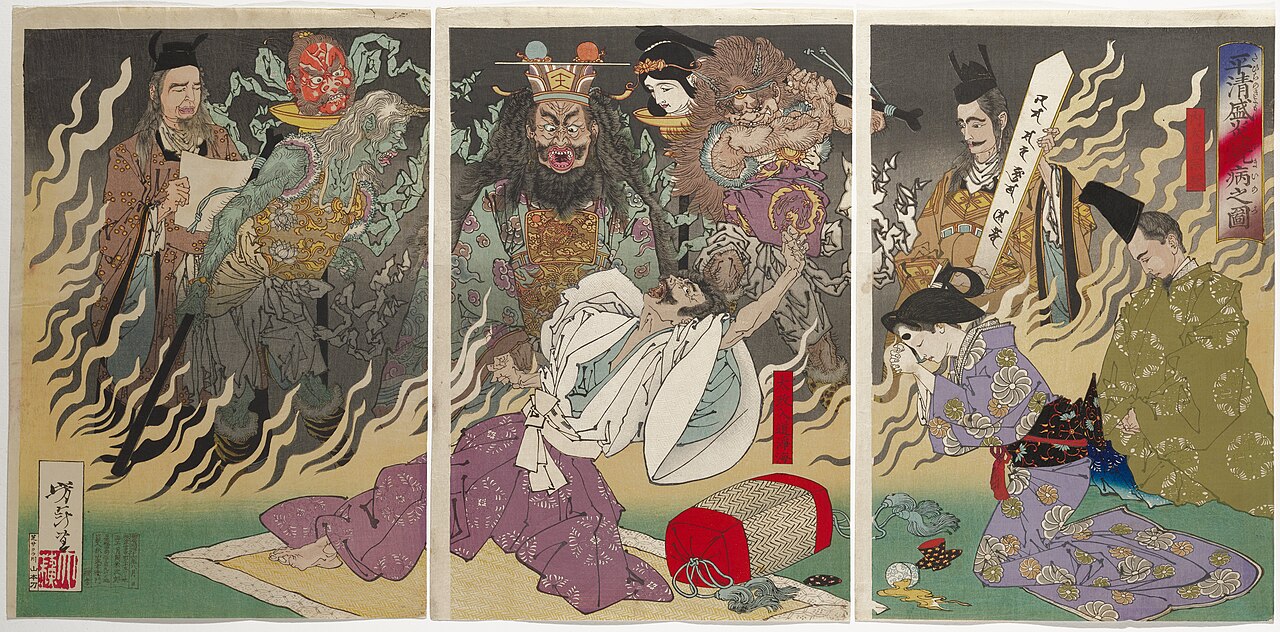
Onryo belief dates to roughly the eighth century, rooted in the idea that the spirit of a powerful and enraged person could reach back into the world and damage it. The earliest documented onryo cult formed around Prince Nagaya, who died in 729. The Shoku Nihongi, compiled in 797, records that the soul of Fujiwara Hirotsugu harmed the monk Genbo to death following a failed rebellion, which is among the first written accounts of a spirit destroying a living person’s health.
What makes the early tradition distinctive is scale. An angry spirit was not treated as a private haunting but as a public emergency, because the damage it caused was believed to arrive as tatari (祟り), a supernatural curse expressed through disaster: earthquakes, fires, storms, drought, famine, and epidemic disease. Early court records tie vengeful spirits to exactly those events, which is why appeasing one was a matter for the imperial government rather than for a family. Japan came to recognize three preeminent onryo:
- Emperor Sutoku, who died in exile still carrying his resentment.
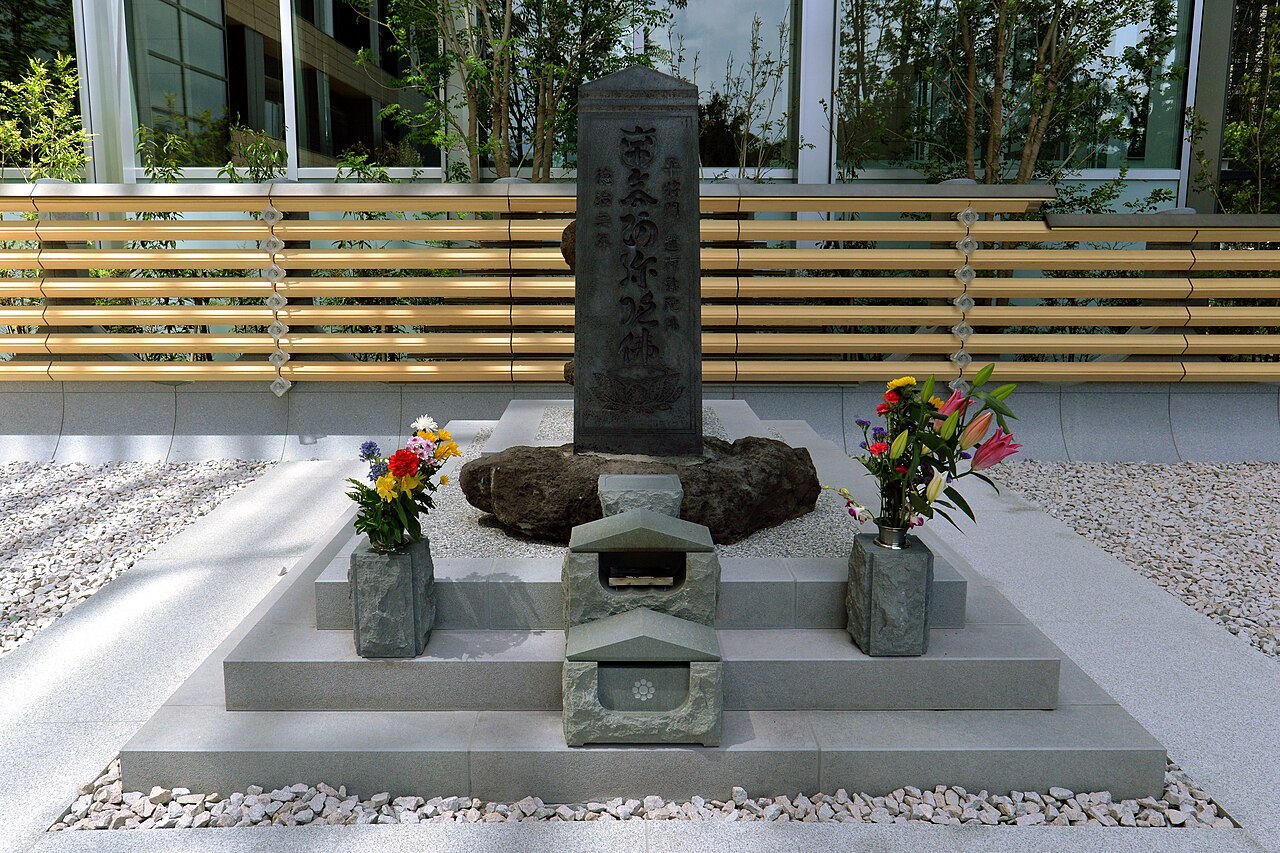
- Taira no Masakado, whose head mound near Tokyo Station has been left undisturbed through generations of redevelopment.
- Sugawara no Michizane, a disgraced official later blamed for lightning strikes and deaths among the men who ruined him.
What Turns a Spirit Into an Onryo
A spirit becomes an onryo when two conditions meet: extreme emotional intensity at the moment of death, and a death that was violent, unjust, or simply too early. Under the related belief in ikiryo, a spirit can separate from the body once hatred or resentment builds past a certain point, so the transformation does not always wait for a funeral.
The clearest recurring triggers are:
- Jealousy, rage, or hatred strong enough that the soul cannot pass on.
- Betrayal by a husband, lover, or employer, which drives the largest share of the surviving stories.
- Murder, war, and suicide, all of which leave the spirit marked by the manner of death.
- An unjust accusation followed by exile or execution, the pattern behind most of the aristocratic cases.
One trait sets onryo apart from other ghosts more sharply than appearance does. Their curse behaves less like a personal vendetta and more like an infection: it can pass to other people, and it can keep poisoning a place long after the spirit itself has been laid to rest. Where an ordinary ghost can be exorcised and released, the grudge of an onryo is described as never actually satisfied.
Famous Onryo in Japanese Folklore
Four figures carry most of the tradition’s weight: Oiwa, the disfigured wife at the centre of Yotsuya Kaidan; Okiku, the murdered maid of Bancho Sarayashiki; Sugawara no Michizane, the exiled official deified as a thunder kami; and Prince Sawara, falsely accused of treason by his own brother. Each shows a different way the belief worked in practice.
English-language collections such as Lafcadio Hearn’s In Ghostly Japan, published in 1899, introduced readers outside Japan to the country’s ghost tradition, and that route into English is a large part of why kaidan feel familiar to Western audiences today.
Oiwa
Oiwa is the most retold onryo of all, the centre of the play Yotsuya Kaidan. The family of her husband’s new match sent her a topical poison disguised as a facial cream, which disfigured her, and she died soon after when she accidentally punctured her own throat on a sword blade while trying to get past the man sent to keep her in the house. What follows in the story is not a physical attack but a sustained psychological unravelling of the man responsible. The tale is usually traced back to a real woman who died in the 1630s, and it carries a reputation for cursing its own productions, which is why producers still visit her grave to pray and ask permission before staging it again.
Okiku
Okiku, from Bancho Sarayashiki, was a maid who refused her employer’s advances. He hid one of the ten plates in her care, and when she found it missing he threw her into a well and killed her. Every night her spirit rises from that well counting the plates, and after nine it breaks off in a terrible shriek for the missing tenth. It is the most compact revenge story in the canon, and its shape survives almost intact into twentieth-century horror.
Sugawara no Michizane
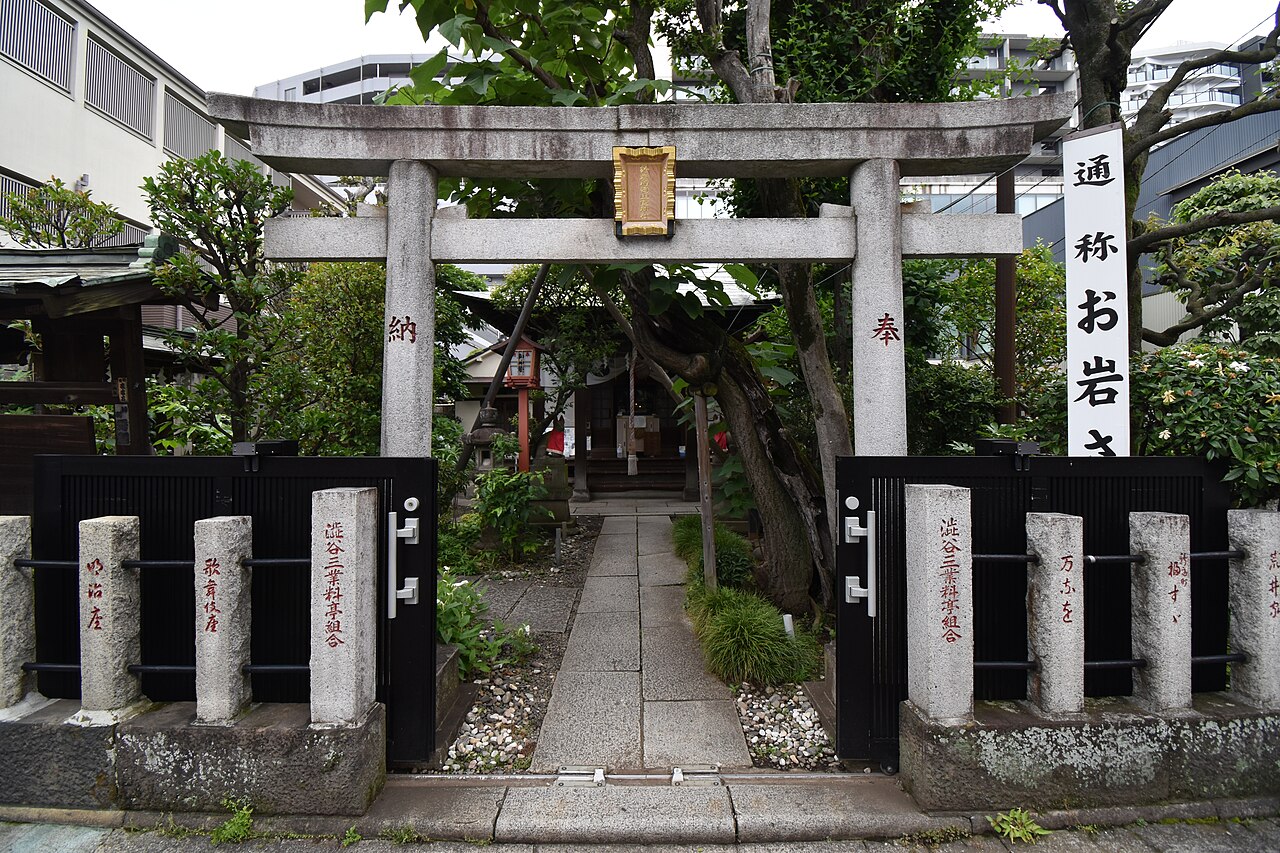
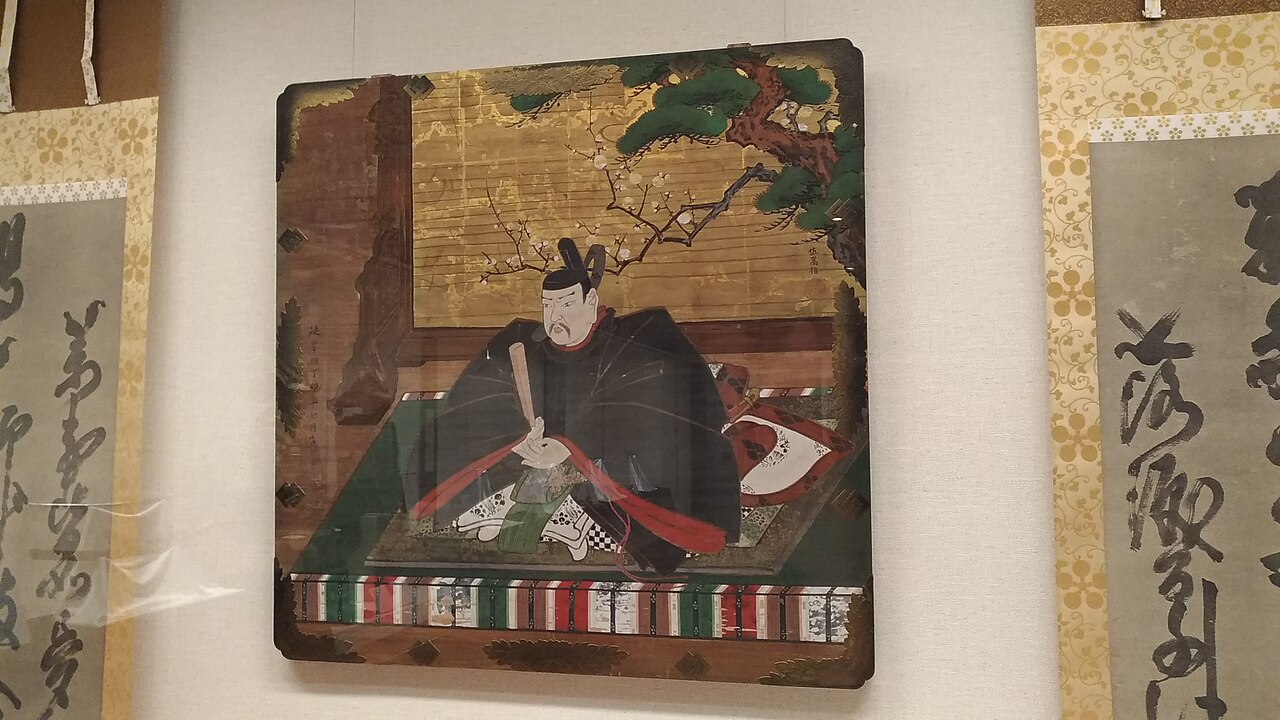
Michizane was exiled after a political fall and died away from the capital. Lightning then struck the imperial palace and killed several of the officials who had engineered his banishment. Rather than fight the spirit, the court promoted it: Michizane was deified as Tenjin, a thunder kami, and enshrined in Tenman-gu shrines across the country, where he is now venerated as a patron of learning.
Prince Sawara
Emperor Kanmu is said to have falsely accused his own brother of treason. Sawara was exiled and died of fasting, and a run of calamities followed. The emperor moved the capital twice and finally granted his brother posthumous imperial rank in order to settle the spirit, which shows how far the state would go when it believed an onryo was behind a national disaster.
Onryo, Yurei, and Goryo: How the Terms Differ
Yurei is the umbrella term for every lingering Japanese ghost, onryo is the vengeful branch of it, and goryo is narrower still, referring to the honoured or august spirits of nobility whose anger was held to require public rites rather than a private exorcism. The three words get used interchangeably in casual writing, and they are not interchangeable. The belief system built around calming goryo, goryo shinko, worked by enshrining the spirit as a kami.
The same habit of naming a spirit after its grievance shapes what yokai symbolize across the wider tradition.
| Term | Scope | Motive | Can it be laid to rest? |
|---|---|---|---|
| Yurei (幽霊) | All lingering ghosts | Unfinished business | Yes, through rites |
| Onryo (怨霊) | Vengeful subset of yurei | Grudge and revenge | Curse can outlast the spirit |
| Goryo (御霊) | Wronged nobility | Political injustice | Yes, via public enshrinement |
How an Onryo Is Appeased
An onryo was appeased through public restitution rather than through exorcism: restoring the dead person’s rank, enshrining the spirit as a protective kami, holding Buddhist memorial rites, and calling in court diviners. Because the damage was understood as a public emergency, the remedies were closer to statecraft than to ghost-hunting, and the same measures appear again and again in the court record.
Kokugakuin University’s Encyclopedia of Shinto documents the wider framework of belief and ritual these practices sit inside. The recorded responses were:
- Restoring the dead person’s rank and granting posthumous honours, as happened with both Michizane and Sawara.
- Deifying the spirit and enshrining it as a protective kami, converting a threat into a guardian.
- Buddhist memorial rites performed for the deceased.
- Divination and exorcism carried out by onmyoji, the court’s specialists in the occult.
Buddhist chanting and prayer are still the folk remedy in the stories themselves, and in the case of Oiwa the underlying logic is moral rather than ritual: the spirit only settles once the person who wronged her has been punished. That is the quiet argument inside most onryo tales. They are less about fear of the dead than about the cost of injustice going unanswered, a theme that also runs through the school-ghost tradition in the legend of Hanako of the toilet.
Onryo in Modern Japanese Horror
Modern J-horror’s two best-known ghosts are onryo built to the folklore template. Sadako Yamamura in the Ring series was killed by a doctor who infected her with smallpox and then sealed her body in a well, and she kills through a cursed videotape, which is Okiku’s well and the transmissible grudge-curse in a single figure. Kayako Saeki in Ju-On was murdered by her husband and haunts the house it happened in, so the curse infects the location rather than pursuing one target, exactly as the older accounts describe.
The figure now recurs well beyond film:
- Rin Yamaoka in Dead by Daylight, killed by her father.
- Hisako in Killer Instinct, who died defending her village and fights with a naginata.
- Yoshie Kimura in Death Forest, beaten to death in the woods.
- Mizu in Netflix’s Blue Eye Samurai, often compared to an onryo.
Where the Onryo Look Actually Comes From
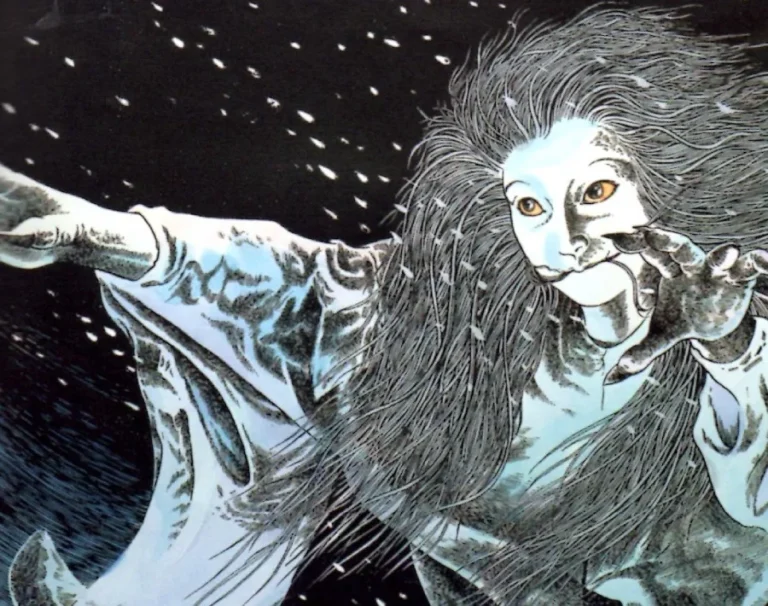
The onryo look, meaning the white burial kimono, the chalk-pale face, and the long unkempt black hair, comes from the Edo-period kabuki stage rather than from early folklore. Early accounts gave onryo no standard appearance at all. Kabuki refined the figure into a system of costume and makeup that audiences could read instantly, and it consisted of three elements:
- Shiro-shozoku, the white burial kimono worn for ritual suicide.
- Long, wild, unkempt black hair falling across and partly hiding the face.
- Oshiroi white foundation with a dramatic blue shadow fringe called aiguma, borrowed from how kabuki painted its villains.
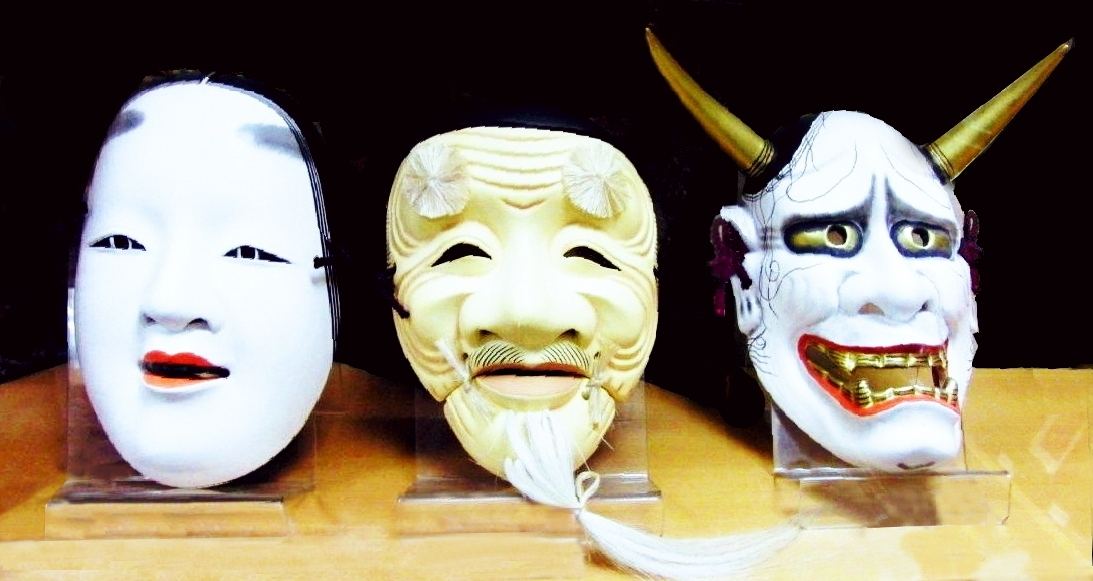
Noh handled the same figure differently, using the horned hannya mask to carry a woman’s rage on stage, while rakugo storytellers kept the tales alive in spoken form with no costume at all. Symbol-heavy retellings later added the details people now expect, including purplish veins under white skin and a white kimono marked with blood. When J-horror reached for a ghost in the 1990s, it did not invent anything. It picked up a theatrical costume that had been sitting on the kabuki stage for two centuries. The same borrowing shows up across the whole of Japanese folklore, where stage convention and belief have shaped each other for a very long time.
Wearing the Onryo Aesthetic
The onryo works as design material because its visual grammar is already reduced to essentials: stark white against black, a silhouette that reads as a kimono, hair as a graphic element instead of a hairstyle. Those are the same three ingredients that make a good print, which is why the vengeful spirit keeps reappearing in Japanese streetwear graphics rather than staying inside horror. Worn well, it carries the story with it, not just the scare.
FAQs
What does onryo mean?
Onryo (怨霊) joins on, meaning grudge or resentment, with ryo, meaning spirit, and is usually translated as wrathful spirit, hatred spirit, or grudge spirit. The term names a ghost by its motive: someone who died carrying a grudge heavy enough that the soul refuses to move on and instead returns to harm the living.
What is the difference between an onryo and a yurei?
Yurei is the umbrella term for any lingering Japanese ghost, and most yurei stay because something was left unfinished. An onryo is the vengeful subset, returning specifically to punish. A yurei can be laid to rest through rites, while the grudge of an onryo is described as never actually satisfied and can keep poisoning a place after the spirit itself has been settled.
Who is the most famous onryo?
Oiwa, the centre of the kabuki play Yotsuya Kaidan, is the most retold onryo. The family of her husband’s new match sent her a topical poison disguised as a facial cream that disfigured her, and she died when she accidentally punctured her own throat on a sword blade, then returned to psychologically unravel the man responsible. The story is usually traced to a real woman who died in the 1630s, and producers still visit her grave to pray and ask permission before staging it again.
Why are onryo shown in a white kimono with long black hair?
That costume is theatrical, not ancient. Edo-period kabuki dressed the vengeful spirit in shiro-shozoku, the white burial kimono worn for ritual suicide, gave her long unkempt black hair falling across the face, and painted her in oshiroi white foundation with a blue aiguma shadow. J-horror in the 1990s inherited that look rather than inventing one.
Can an onryo be stopped?
Historically the state attempted restitution rather than force: restoring the dead person’s rank, granting posthumous honours, enshrining the spirit as a protective kami, and commissioning Buddhist rites or exorcism by onmyoji. Sugawara no Michizane was pacified this way and deified as Tenjin. In the stories themselves the logic is moral, and Oiwa settles only once the man who wronged her is punished.
If a vengeful spirit belongs on your wardrobe as much as in your reading list, Kamicrew’s yokai collection is where these legends get translated into wearable graphics.
Kamicrew Best Seller

Dont Touch Me Yokai Ukiyo-E Japanese T-Shirt
$25.49+
$29.99
(15% off)


Summer Vibes Salty Kawaii Japanese Hoodie
$44.99+
$49.99
(10% off)


Japanese Pin Horror 80s Retro Aesthetics T-Shirt
$25.49+
$29.99
(15% off)


El Gran Maja Japanese Kaiju T-Shirt
$25.49+
$29.99
(15% off)


Who Wants The Perfect Body Japan Capybara Kawaii Japanese Unisex Shirt
$25.49+
$29.99
(15% off)


Monster 8 Mask Vintage Animal Hoodie
$44.99+
$49.99
(10% off)


I Hate People Japanese Opossum Vintage Animal Hoodie
$44.99+
$49.99
(10% off)


I Got That Dog In Me Small Turtle Vintage Animal T-Shirt
$25.49+
$29.99
(15% off)

The Creation Of Cat Ukiyo-E Japanese T-Shirt
$25.49+
$29.99
(15% off)