
Japanese symbols cover two different things that the same search term keeps colliding. One is the writing system: hiragana and katakana with 46 basic characters each, kanji adopted from Chinese, romaji in Latin letters, and a set of typographic marks that punctuate, repeat, and abbreviate. The other is motif, the cherry blossom, the koi, the chrysanthemum crest, images that carry meaning without spelling anything. This guide covers both, starting with the 46 characters Japanese children learn first.
| Symbol set | What it is | What it does |
|---|---|---|
| Hiragana (ひらがな) | 46 basic characters, near 71 with diacritics | Grammar: particles, verb and adjective endings, native words |
| Katakana (カタカナ) | The same 46 syllables in angular strokes | Loanwords, foreign names, onomatopoeia, emphasis |
| Kanji (漢字) | Chinese characters, more than 50,000 exist | Content words: nouns, verb and adjective stems, names |
| Romaji (ローマ字) | Japanese written in the Latin alphabet | Signs, passports, dictionaries, keyboard input |
| Typographic marks | dakuten, sokuon, 々, 〒 and others | Alter sound, repeat a character, stand in for a word |
| Motifs | Cherry blossom, koi, chrysanthemum crest | Carry cultural meaning without spelling anything |
Hiragana, the foundation of Japanese writing
Hiragana is the most basic and essential of the Japanese scripts, and the first one Japanese children learn. It has 46 basic characters, five of which are vowels, and each character stands for a syllable rather than a single consonant or vowel the way a Latin letter does. Counting the forms modified by diacritics, Go! Go! Nihon puts the working total closer to 71.
Its job inside a sentence is grammar. Hiragana carries particles, verb endings, adjective endings, and the suffixes that follow a kanji root, along with native Japanese words that have no kanji spelling. The shapes are rounded and cursive, a look that comes straight out of writing quickly with a brush. The dakuten (濁点) and handakuten (半濁点) markers extend the set without adding new shapes to memorize, which is why the 46 characters cover far more than 46 sounds.
Katakana, for foreign words and emphasis
Katakana is the angular Japanese script, and it covers the same 46 syllables as hiragana while looking nothing like it. Go! Go! Nihon breaks the set down as five singular vowels, 40 consonant-vowel pairs, and one standalone consonant. Its main job is foreign vocabulary: loanwords, foreign names, and imported product names.
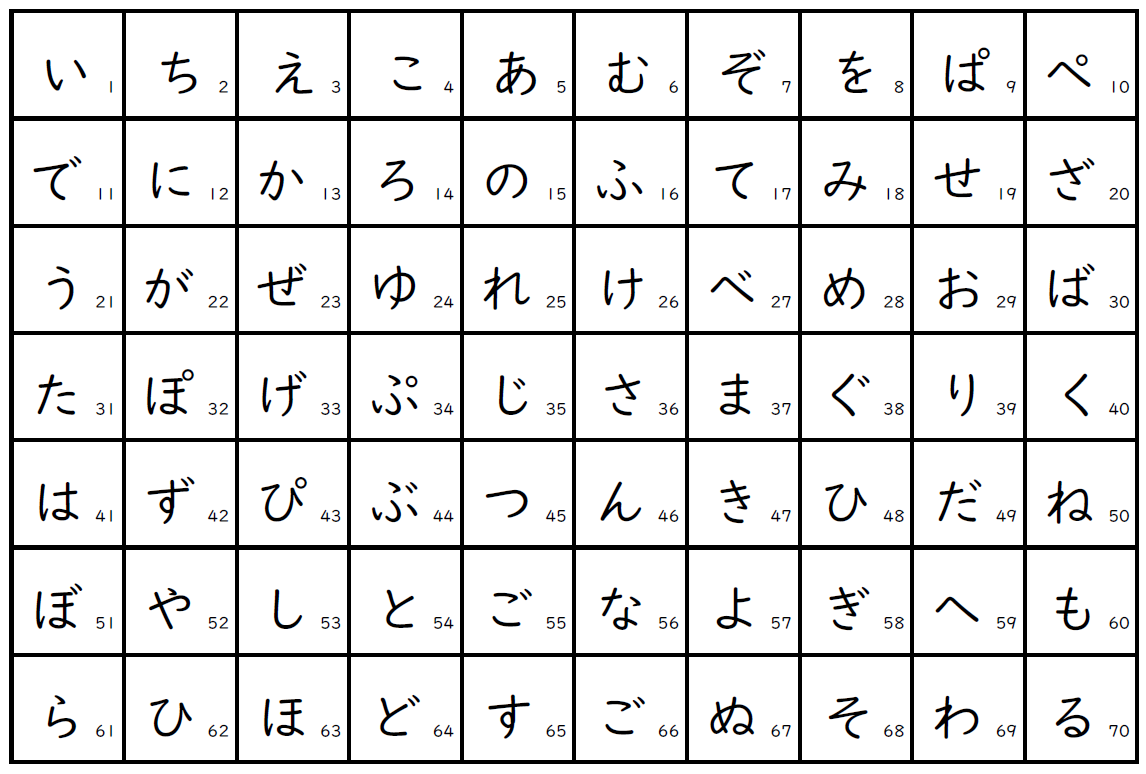
Katakana also handles onomatopoeia, which is why manga pages are so full of it, and it works as emphasis the way italics do in English. Advertising copy leans on it heavily for exactly that reason. Both syllabaries are usually taught from the same 5 by 10 grid, the gojuon (五十音), literally “fifty sounds.”
Kanji, meaning carried in Chinese characters
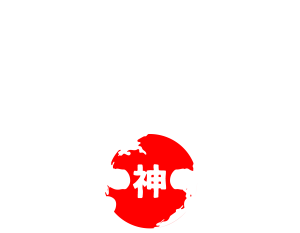
Kanji are Chinese characters adopted into Japanese, and each one carries meaning rather than sound alone, which is why a single character can be read several ways depending on the words around it. Readings split into onyomi (音読み), the sound-based readings that came in from Chinese, and kunyomi (訓読み), the native Japanese readings. 神, the kanji behind kami, is a compact example: shin or jin inside a compound, kami standing alone.
The counts sound worse than they are. More than 50,000 kanji exist, but the number in real circulation is far smaller. The jouyou kanji list published by Japan’s Agency for Cultural Affairs and taught in Japanese schools runs to more than 2,000 characters, an average Japanese adult reads somewhere around 2,000 to 3,000, and roughly 2,000 is also the working figure for the highest JLPT level. Inside a sentence, kanji carry the content words: nouns, the stems of verbs and adjectives, and personal and place names.
Single kanji are where the fashion and tattoo interest concentrates, because one character can hold an entire idea. 火, the kanji for fire, and 力 and 強, the two kanji that both translate as strength, get printed and inked far more often than any grammatical particle.
How all three scripts share one sentence
A normal Japanese sentence uses hiragana, katakana, and kanji at the same time. Kanji supplies the content words, hiragana wraps them in grammar as particles and verb endings, and katakana marks anything imported. A sentence about coffee at a cafe puts the coffee in katakana, the verb stem in kanji, and the particle and verb ending in hiragana.
Nothing flags the switch for the reader. The change in shape is part of reading, which is the single hardest thing to explain to someone used to one alphabet.
Romaji, Latin letters in modern Japanese
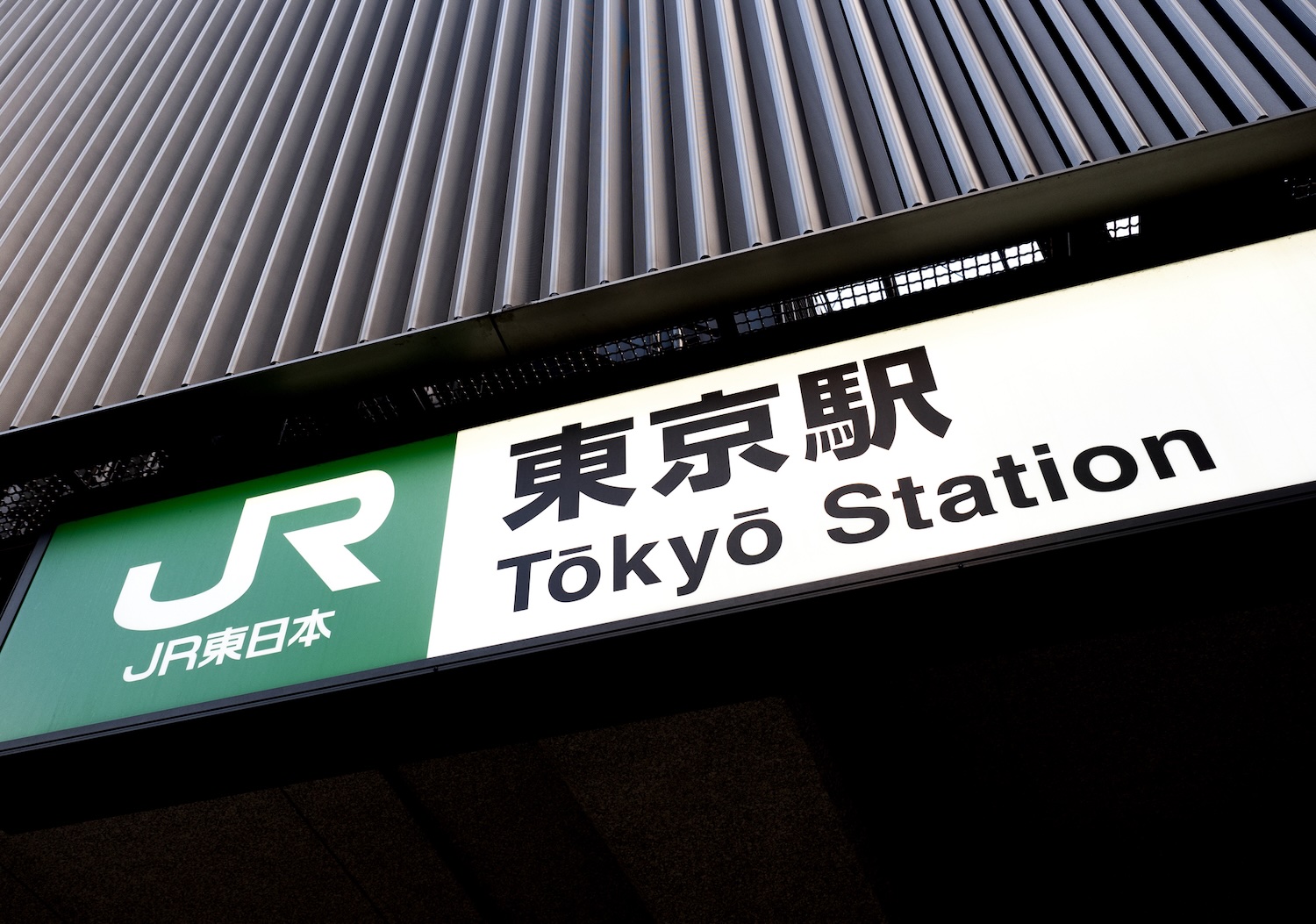
Romaji is Japanese written in the Latin alphabet, and its audience is mostly people who cannot read the other three scripts yet. Street signs, station names, maps, dictionaries, textbooks, and passports all use it, and it is how Japanese gets typed on a standard keyboard. Japan Experience is blunt about the limit: romaji is not a substitute for learning hiragana, katakana, and kanji, and a learner who never moves past it stalls.
The Japanese symbols that are not letters
Japanese uses a set of typographic symbols that are neither letters nor punctuation in the English sense. Some change how a character sounds, some repeat the character before them, and some stand in for a whole word. They are catalogued against the JIS X 0208 and JIS X 0213 encoding standards and assigned positions in the Unicode Consortium’s published code charts, which is how they survive being typed rather than brushed.
| Symbol | Name | What it does |
|---|---|---|
| ゛ | dakuten | Voices a consonant, た becomes だ, し becomes じ |
| ゜ | handakuten | Shifts the ha row to the pa row |
| っ / ッ | sokuon | Doubles the following consonant |
| ー | chounpu | Lengthens a vowel, used in katakana |
| 々 | noma, kurikaeshi | Repeats the previous kanji, 様様 is written 様々 |
| ゝ ゞ | hiraganagaeshi | Repeats the previous hiragana, voiced with ゞ |
| ヽ ヾ | katakanagaeshi | Repeats the previous katakana, voiced with ヾ |
The second group does the work English hands to punctuation, brackets, and reference marks.
| Symbol | Name | What it does |
|---|---|---|
| 。 | kuten | Ends a sentence, the Japanese period |
| 、 | touten | Separates clauses, the Japanese comma |
| ・ | nakaguro | Splits foreign words and list items |
| 「」 | kagikakko | Standard Japanese quotation marks |
| 『』 | nijuukagikakko | Double quotes, often around titles |
| 【】 | sumitsukikakko | Headings and dictionary definitions |
| ※ | komejirushi | Reference mark, close to an asterisk |
| 〆 | shime | Shorthand for 締切, deadline |
| 〒 | yuubin | Postal mark for post offices and postcodes |
| 〄 | JIS mark | Certifies Japanese Industrial Standards compliance |
A few of these travel outside plain text. 〒 fronts every Japanese address block, 々 turns up in shop names and surnames often enough to read as decorative, and 〓 exists purely as a proofreader’s placeholder for a glyph the printer could not set. Emphasis works differently too: rather than italics, Japanese sets small side dots called bouten alongside the characters being stressed.
Japanese symbols that are motifs, not characters
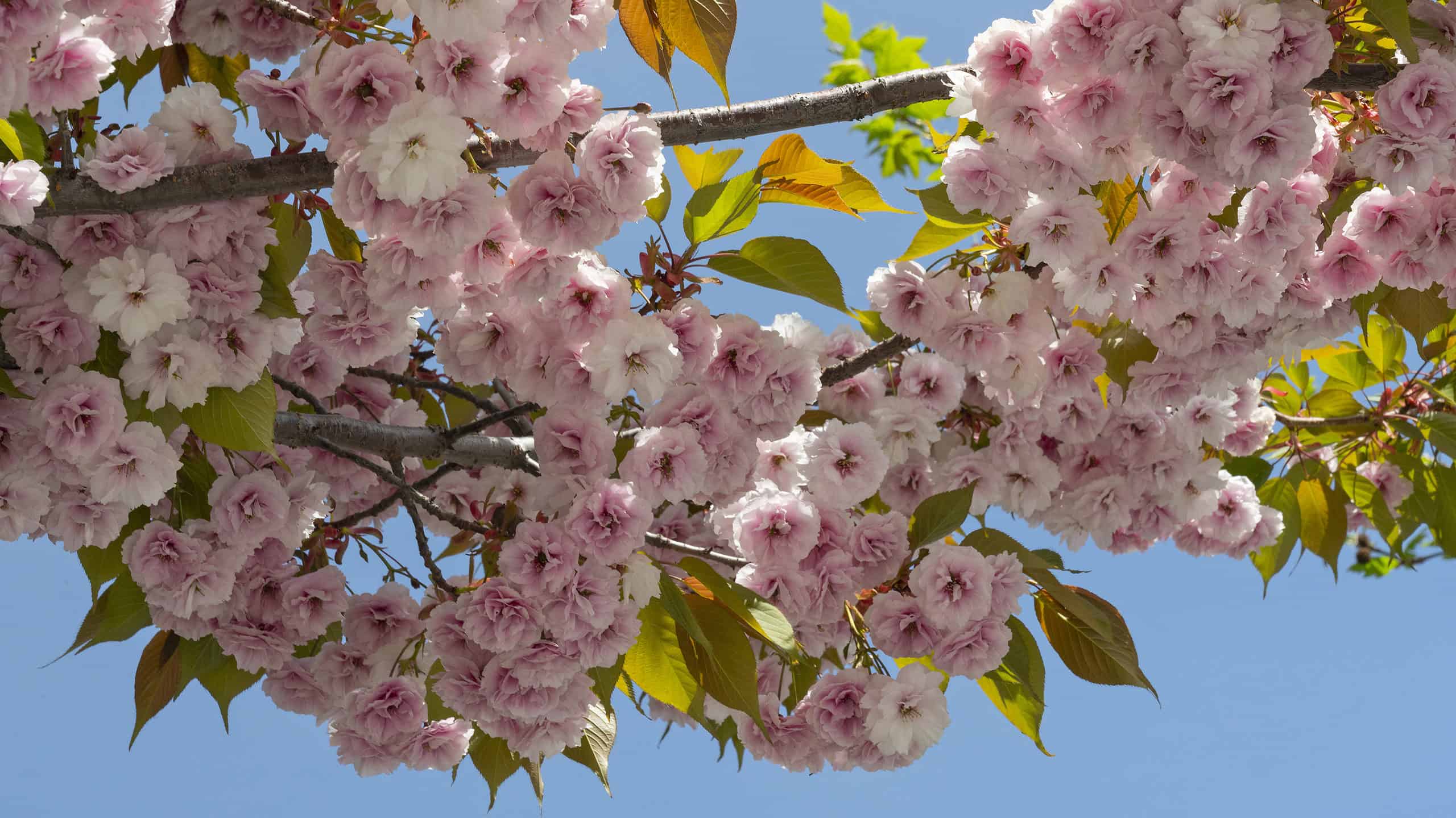
Japanese symbols in the visual sense are motifs rather than characters: the Hinomaru flag, the chrysanthemum crest, the cherry blossom, the koi. They carry meaning without spelling anything, and they run from official heraldry to flora and fauna that picked up meaning over centuries. Some of that status is written into law and some of it is purely de facto, and the split is not obvious from the outside.
- The Hinomaru, a red circle on white, is the national flag, and red and white are Japan’s primary national colors.
- The chrysanthemum crest is the Imperial seal; the paulownia crest serves as a government seal.
- Cherry blossom (Prunus serrulata) is the de facto national flower and the national tree, with the chrysanthemum sharing the flower role.
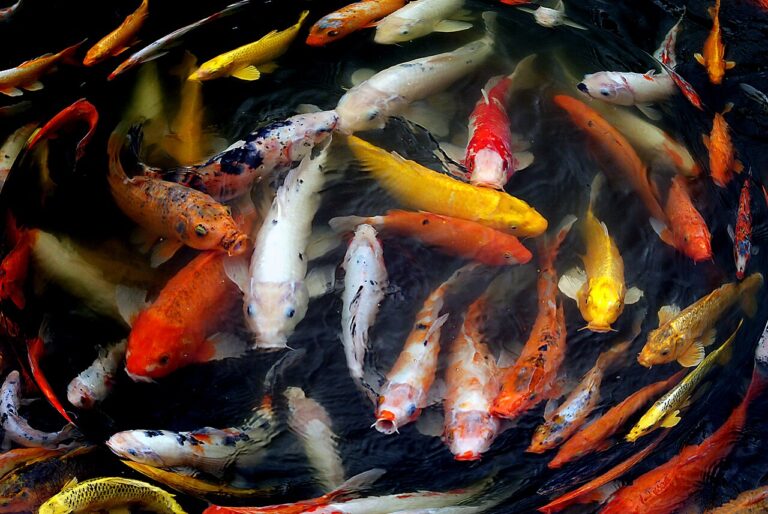
- The koi is Japan’s national fish, which explains how often it turns up in ukiyo-e prints and tattoo work.
- Mount Fuji and sumo hold their status de facto rather than by statute, as do the green pheasant as national bird and jade as national stone.
- The Kojiki and the Nihon Shoki sit alongside The Tale of the Heike and The Tale of the Bamboo Cutter as national epics, and that is where most of the kami imagery on Japanese apparel originates.
Yokai imagery sits outside that official list, and what yokai symbolize varies creature by creature rather than following a single scheme.
Tips for memorizing and practicing Japanese symbols
The fastest route through Japanese symbols is the order Japanese schools already use: hiragana, then katakana, then kanji, learned from the gojuon grid rather than a flashcard pile, with romaji treated as scaffolding you remove. Kanji is the one part that never closes, so the goal there is steady accumulation instead of completion.
- Learn hiragana first, then katakana. That is the order Japanese schools use and the order both learner guides recommend.
- Work from the gojuon grid instead of a random character list, so the 5 by 10 sound pattern carries part of the memory load.
- Treat dakuten and handakuten as one rule applied to characters you already know, not as dozens of extra characters.
- Read kanji inside words rather than alone, since the reading depends on the compound.
- Give romaji a deadline. Both guides warn that learners who stay on it stop progressing.
- Expect kanji to stay unfinished. Japan Experience calls it a lifelong endeavor, and native speakers keep meeting characters they have not seen before.
Shodo and the artistry behind the strokes
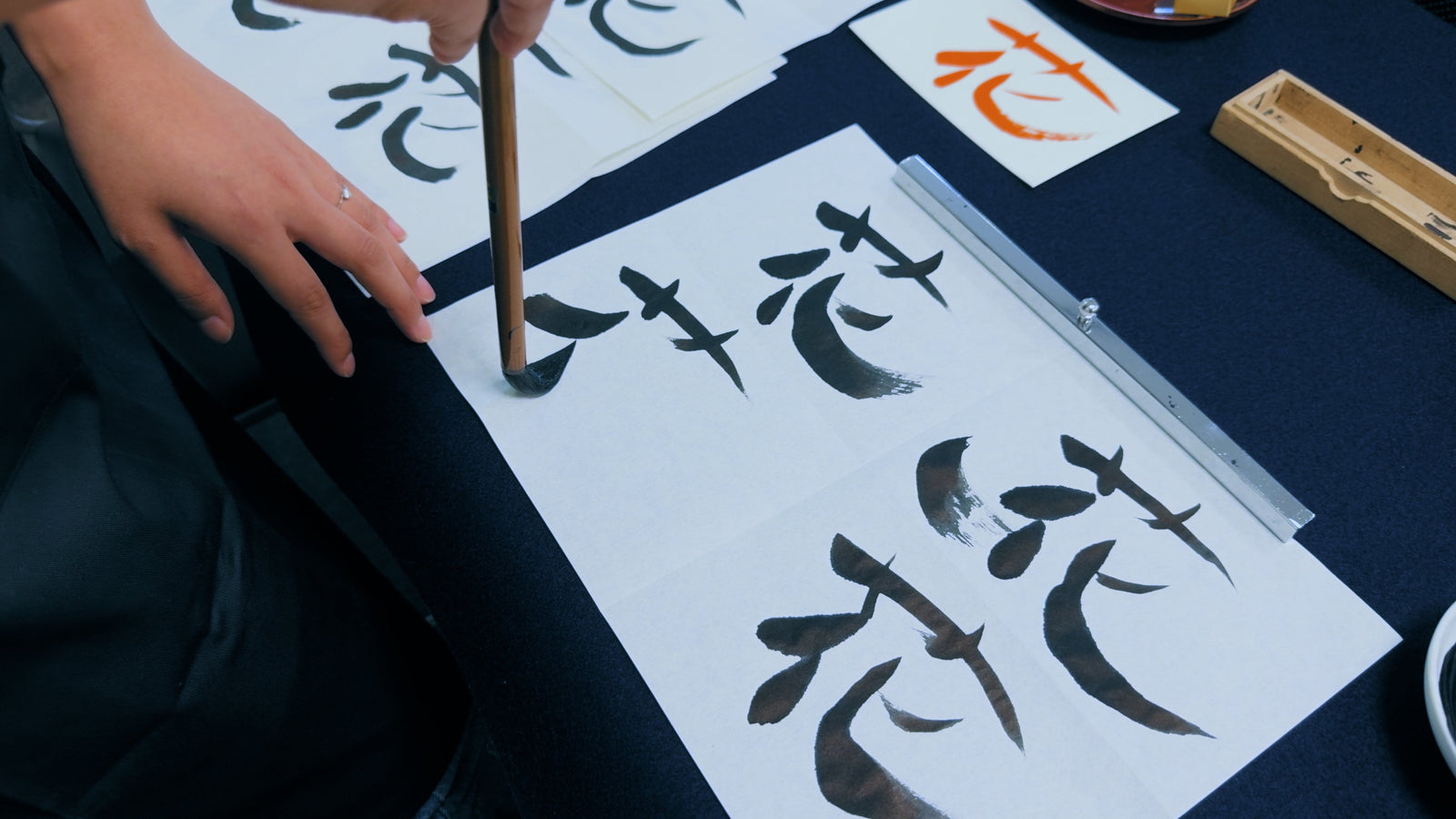
Shodo (書道) is Japanese calligraphy, the practice where these characters stop being information and become an object. The same kanji brushed by hand records stroke order, pressure, and speed in a way a printed glyph cannot, and hiragana’s rounded forms are themselves a fossil of brush writing.
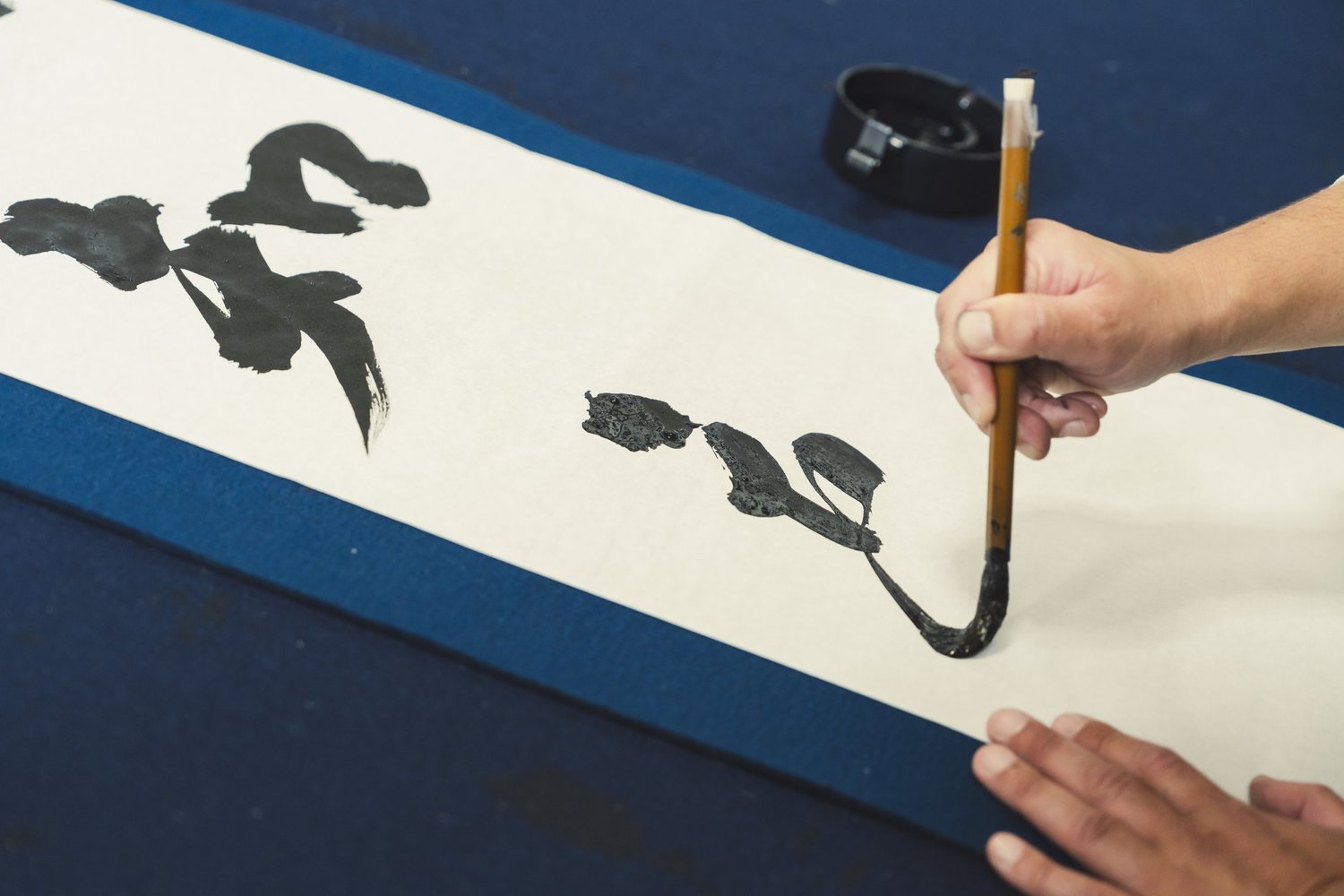
This is also why single characters translate so cleanly onto fabric. A brushed 火 or 強 reads as a graphic before it reads as a word, which is most of the appeal of wearing one. Kamicrew designs apparel around Japanese characters and folklore imagery, so if a character or a motif is the part that stuck, its Japanese-print shirts put the same kanji and imagery on something wearable rather than framed.
FAQs
What are Japanese symbols?
Japanese symbols cover two things. One is the writing system: hiragana and katakana with 46 basic characters each, kanji adopted from Chinese, romaji in Latin letters, and typographic marks such as dakuten and 々. The other is visual motifs, the cherry blossom, the koi, and the chrysanthemum crest, which carry cultural meaning without spelling anything.
How many Japanese symbols are there?
Hiragana and katakana have 46 basic characters each, or roughly 71 apiece once diacritics are counted. Kanji is open-ended: more than 50,000 exist, though the jouyou list taught in schools runs to more than 2,000, which is close to what an average adult reads.
What is the difference between hiragana and katakana?
They cover the same 46 syllables and differ in shape and in job. Hiragana is rounded and handles grammar and native Japanese words. Katakana is angular and handles loanwords, foreign names, onomatopoeia, and emphasis.
What does kanji represent in Japanese writing?
Meaning rather than sound. Each kanji stands for a concept and can be read several ways, splitting broadly into onyomi readings inherited from Chinese and kunyomi native Japanese readings.
Is romaji a real Japanese writing system?
It is a transliteration, not a script of its own. Romaji writes Japanese in Latin letters for signs, passports, dictionaries, and keyboard input, and both learner guides treat it as a temporary aid rather than a replacement for the three scripts.
What are Japan’s national symbols?
The Hinomaru, a red circle on white, is the national flag, and red and white are Japan’s primary national colors. The chrysanthemum crest is the Imperial seal and the paulownia crest a government seal. Cherry blossom is the de facto national flower and national tree, and the koi is the national fish.
Kamicrew Best Seller

Dont Touch Me Yokai Ukiyo-E Japanese T-Shirt
$25.49+
$29.99
(15% off)


Summer Vibes Salty Kawaii Japanese Hoodie
$44.99+
$49.99
(10% off)


Japanese Pin Horror 80s Retro Aesthetics T-Shirt
$25.49+
$29.99
(15% off)


El Gran Maja Japanese Kaiju T-Shirt
$25.49+
$29.99
(15% off)


Who Wants The Perfect Body Japan Capybara Kawaii Japanese Unisex Shirt
$25.49+
$29.99
(15% off)


Monster 8 Mask Vintage Animal Hoodie
$44.99+
$49.99
(10% off)


I Hate People Japanese Opossum Vintage Animal Hoodie
$44.99+
$49.99
(10% off)


I Got That Dog In Me Small Turtle Vintage Animal T-Shirt
$25.49+
$29.99
(15% off)

The Creation Of Cat Ukiyo-E Japanese T-Shirt
$25.49+
$29.99
(15% off)