
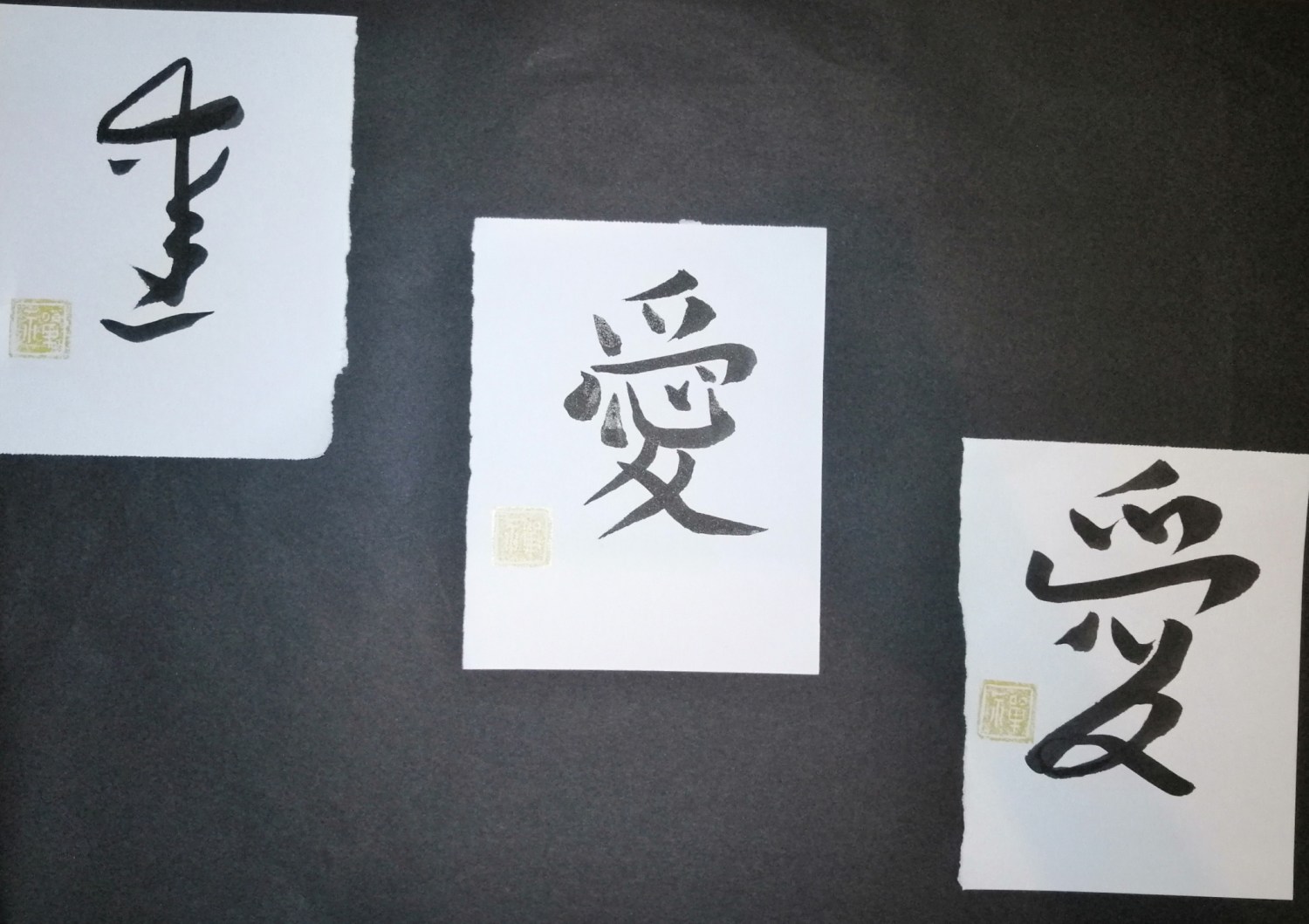
The Japanese symbol for love is one of two kanji: 愛 (ai), which covers love in every form, or 恋 (koi), which is romantic love and longing specifically. 愛 is the character that fits a parent, a friend, a country, or a lifelong partner. 恋 is the one that fits being in love with a particular person. Past the characters, Japanese culture tends to point at love through motifs rather than name it, and the two that carry it are the cherry blossom, for beauty that will not last, and the crane, for a bond meant to last.
The Two Kanji for Love: 愛 and 恋
愛 and 恋 both translate into English as love, and what separates them is scope. 愛 (ai) is love in the broad sense. It holds romantic love, but also love for family, for a friend, for a place, for a craft, and it carries the sense of caring for something outside yourself. 恋 (koi) is narrower. It describes romantic love, infatuation, and longing for one specific person, usually with some ache in it.
The two also combine. 恋愛 (renai) sets both characters side by side and is the ordinary Japanese word for romance or a romantic relationship, which is why it turns up in the language of dating and relationship advice where 愛 on its own would sound too large.
| Kanji | Reading | Strokes | What it covers | Best for |
|---|---|---|---|---|
| 愛 | ai | 13 | Love in every form: romantic, family, platonic, devotion to a place or pursuit | A design about love without a stated object |
| 恋 | koi | 10 | Romantic love, infatuation, longing for one person | A design specifically about being in love |
| 恋愛 | renai | 23 (10 plus 13) | Romance, a romantic relationship | Naming the relationship rather than the feeling |
Both characters are jōyō kanji, two of the 2,136 characters on the everyday-use list Japan set out in its 2010 revision and teaches through compulsory education, so either one reads as ordinary and legible to a Japanese reader rather than obscure. Single characters are also where most of the design interest sits, since one kanji can hold an entire idea. It is the same reason 力 and 強, the two kanji that both translate as strength, get printed and inked far more often than any full phrase, and it is one half of what Japanese symbols covers: written characters on one side, visual motifs on the other.
Ai, Koi, and Suki: How Love Gets Said Out Loud
Spoken Japanese has a three-step ladder for love: 好き (suki) is liking someone, 大好き (daisuki) is liking them a lot, and 愛してる (aishiteru) is the direct “I love you.” Confessions usually stop at the first two rungs. The written kanji 愛 and 恋 name the feeling outright, while spoken Japanese mostly circles it.
- 好き (suki) is the everyday word, closer to “I like you” or “I am fond of you,” and it is what most confessions actually use.
- 大好き (daisuki) is that same word intensified, landing somewhere between strong liking and love depending on who says it and to whom.
- 愛してる (aishiteru) is the direct “I love you,” built on 愛, and it is said far less often in Japanese than its English equivalent is in English.
The restraint is the point rather than a gap in the language. Affection is more often carried by attention and by what someone does than by a declaration, which is part of why 愛してる can land heavier in Japanese than “I love you” does in English. The symbols work on the same instinct. Instead of stating the feeling, a motif points at it and lets the reader finish the sentence.
Cherry Blossoms and Love That Does Not Last
The cherry blossom, sakura, is among the most widely recognized Japanese motifs read as a symbol of love, and what it symbolizes first is impermanence. Sakura bloom hard, hold for a short stretch, and fall. Japanese culture treats that narrow window as the thing worth valuing rather than a disappointment, and applied to love the reading follows directly: a feeling is precious because it will not stay exactly as it is, so the moment gets cherished while it is here.
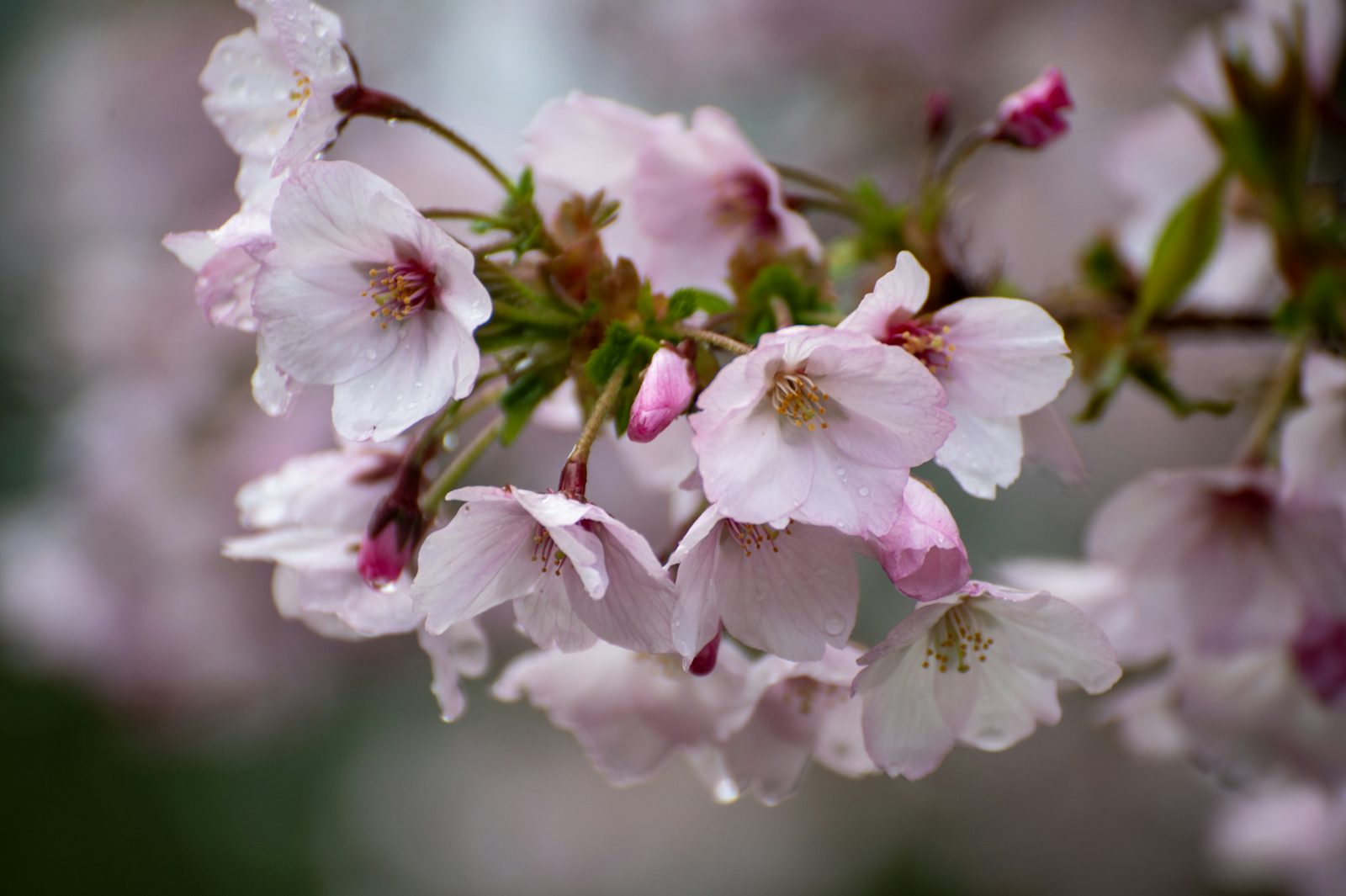
That makes sakura a more complicated love symbol than a heart. It carries beauty and loss in the same image, which suits the ache in 恋 better than the steadiness in 愛. The blossom is also Japan’s de facto national flower, which is part of why the motif is on everything from textiles to tattoo work rather than reserved for anything romantic.
Cranes and a Bond Meant to Last
The crane, tsuru, is the Japanese love symbol that stands for endurance rather than for the fleeting. In Japan it reads as a symbol of enduring commitment, the bond that holds for a lifetime, and it is the motif that appears when a relationship is being marked rather than mourned.
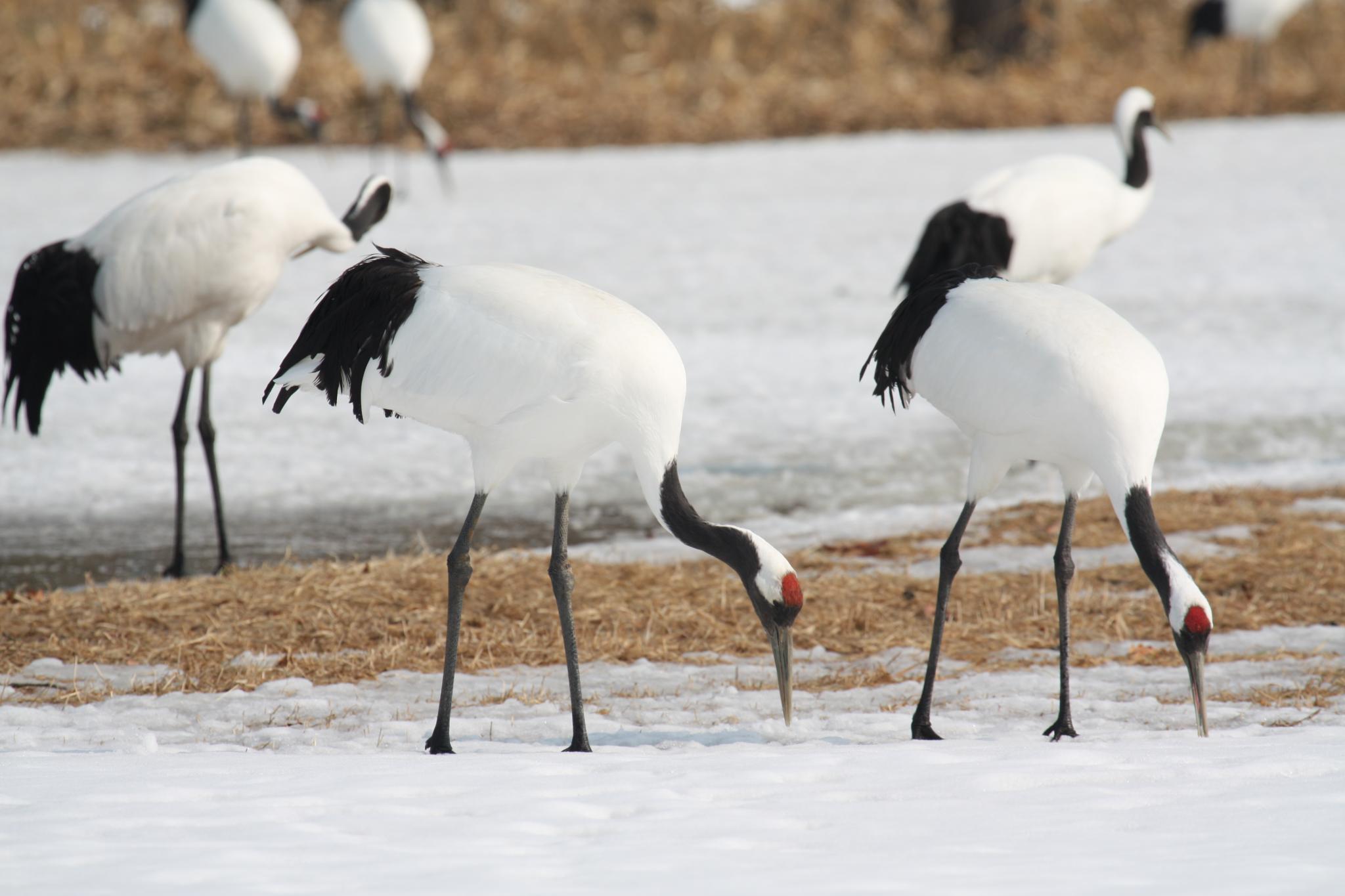
That is how it ends up on wedding textiles. Crane and cherry blossom embroidery covers the iro-uchikake, the colored outer robe a bride wears at the reception, where the motifs stand for longevity and happiness. Both symbols sitting on one garment is the whole idea compressed into an object: the moment is brief, the commitment is not.
Love Symbols in Japanese Tattoos and Fashion
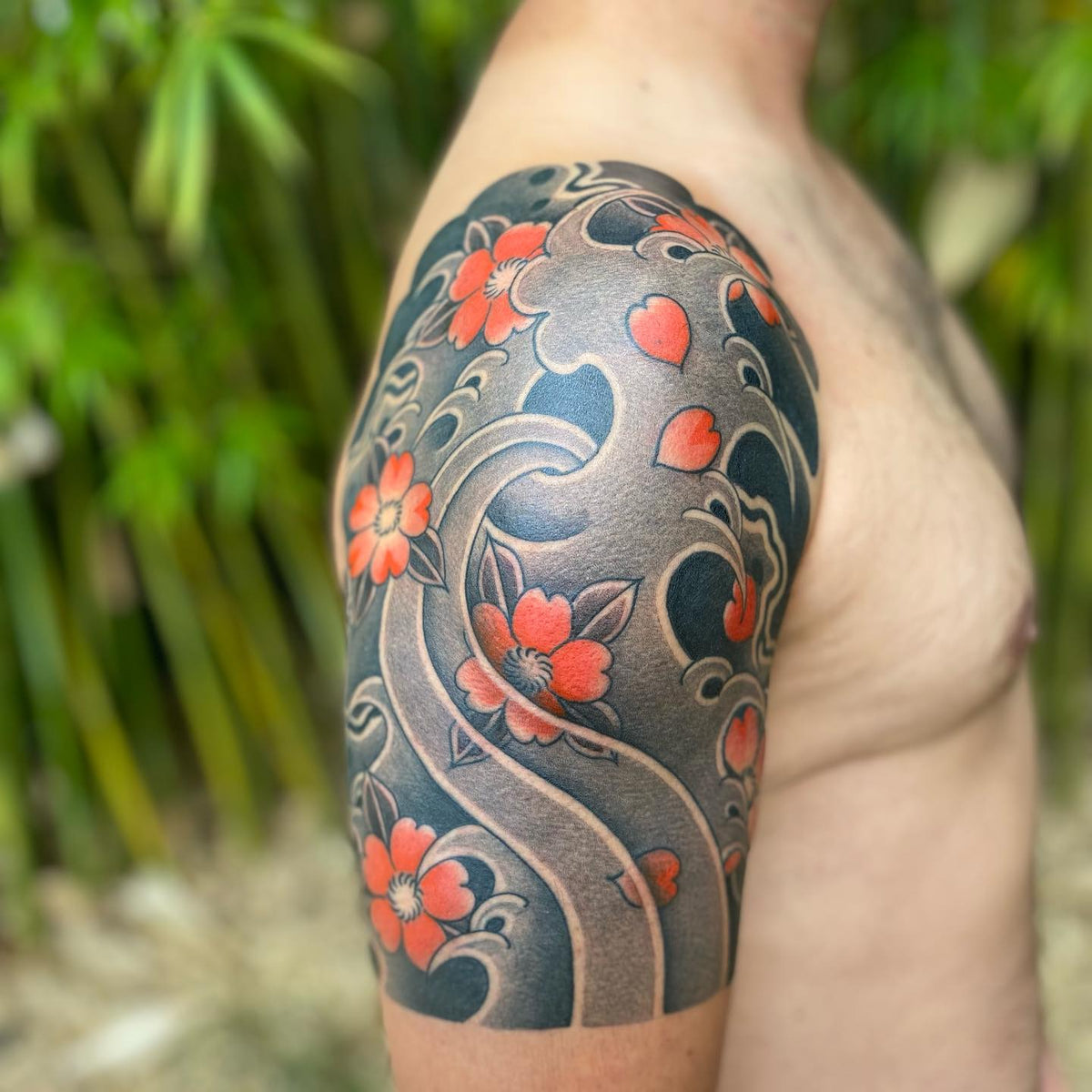
Two love symbols carry over onto skin and fabric. Sakura is the motif that translates best, and in Japanese tattooing it rarely appears alone: blossoms get set into wave and wind patterns so the petals read as falling, and the fall is the part carrying the meaning, not the flower. A single kanji, 愛 or 恋, is compact enough to stand as the whole piece on its own.
Kanji behave differently on a design. Because one character can hold the entire idea, choosing between the two is really a choice of scope. 愛 reads as love with no object named. 恋 pins the feeling to a person and says out loud that it is romantic.
Kamicrew is a Japanese-fashion apparel label that builds its designs around this kind of imagery, so if the sakura or one of the two kanji is the part that stuck, our Japanese-print shirts put it somewhere you can actually wear it.
FAQs
What are the Japanese symbols of love?
Two kanji and two motifs. 愛 (ai) is love in every form and 恋 (koi) is romantic love specifically. On the visual side, the cherry blossom stands for beauty and love that will not last, and the crane for a bond meant to hold for a lifetime.
What is the kanji for love in Japanese?
愛, read ai, is the standard kanji for love and covers romantic, family, and platonic love alike. 恋, read koi, is the second option and is limited to romantic love and longing. Both are jōyō kanji taught in Japanese schools.
What is the difference between ai and koi?
Scope. 愛 covers love in general, including love for family, friends, places, and pursuits. 恋 is narrower and describes romantic love, infatuation, and longing for one specific person. Put together as 恋愛 (renai) they form the everyday word for romance.
What do cherry blossoms symbolize in Japanese culture?
Impermanence, and beauty that counts precisely because it is brief. Sakura bloom for a short stretch and then fall, and that window is treated as the thing worth cherishing. Applied to love, it means valuing a feeling while it is present instead of assuming it will stay unchanged.
What does the crane symbolize in Japan?
Lasting commitment. The crane reads as the symbol of a bond meant to hold for life, which is why crane embroidery turns up on bridal kimono beside cherry blossoms, standing there for longevity and happiness.
Kamicrew Best Seller

Dont Touch Me Yokai Ukiyo-E Japanese T-Shirt
$25.49+
$29.99
(15% off)


Summer Vibes Salty Kawaii Japanese Hoodie
$44.99+
$49.99
(10% off)


Japanese Pin Horror 80s Retro Aesthetics T-Shirt
$25.49+
$29.99
(15% off)


El Gran Maja Japanese Kaiju T-Shirt
$25.49+
$29.99
(15% off)


Who Wants The Perfect Body Japan Capybara Kawaii Japanese Unisex Shirt
$25.49+
$29.99
(15% off)


Monster 8 Mask Vintage Animal Hoodie
$44.99+
$49.99
(10% off)


I Hate People Japanese Opossum Vintage Animal Hoodie
$44.99+
$49.99
(10% off)


I Got That Dog In Me Small Turtle Vintage Animal T-Shirt
$25.49+
$29.99
(15% off)

The Creation Of Cat Ukiyo-E Japanese T-Shirt
$25.49+
$29.99
(15% off)