
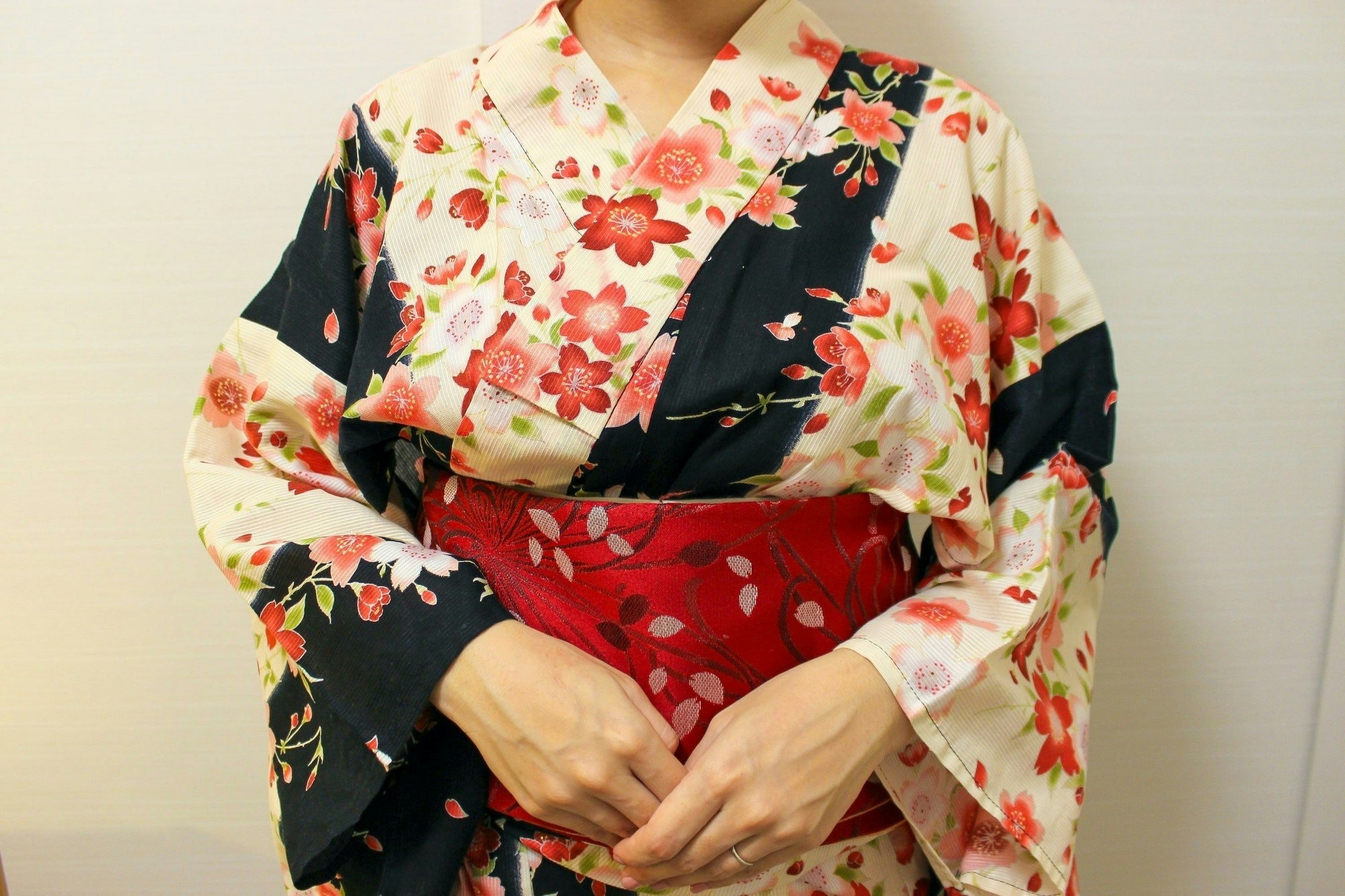
For most of its history, nothing was worn under a yukata. The garment started life as a bathing cloth pulled on over damp skin, so the yukata itself was the layer next to the body. An under layer became part of the etiquette only after the yukata moved outdoors as evening and festival wear: a thin cotton hadajuban for traditional dressers, and a light-colored V-necked T-shirt with light shorts for almost everyone else. This guide covers the historical layering, what women and men put on underneath today, the cords hidden under the obi, and why skipping the layer causes problems.
What Was Worn Under a Yukata
A yukata was traditionally worn directly on bare skin, so the question of an under layer barely existed while the garment still belonged to the bathhouse. The traditional Japanese answer, once yukata became outerwear, is a hadajuban (肌襦袢), literally a skin cloth, a short cotton under-robe worn against the body. Women dressing more formally reach for a nagajuban instead, the full-length under-robe made for kimono. The practical answer, and the one most people use, is a light-colored V-necked T-shirt with light shorts in cotton, which handles sweat better than synthetics in summer heat.
| Under layer | What it is | Typically worn by |
|---|---|---|
| Nothing | The yukata worn on bare skin, as bathing and sleeping wear | Historical practice, from the Heian period onward |
| Hadajuban | Short cotton under-robe, name means skin cloth | Women and men dressing traditionally |
| Nagajuban | Full-length under-robe made for kimono | Women dressing more formally |
| Kimono bra | Bra shaped to keep the chest line flat under the wrap | Women |
| Body liner for kimono | Thin liner sold beside the cords and belts at kimono shops | Women |
| Light V-necked T-shirt and light shorts | Plain cotton Western substitute, kept below the collar line | Women and men, the common modern choice |
| Suteteko | Long underpants cut for wearing with kimono | Men |
| Ordinary underwear only | No special layer, the yukata tied with one waist cord | Ryokan and onsen guests |
The Yukata Was Once the Layer Next to the Skin
Nothing went under a yukata because the yukata was the under layer. Yukata means bathing cloth, and in the Heian period (794 to 1185) that was the job description. Bathing then meant sitting in a steamed room and wiping sweat off the body rather than soaking in water, closer to a sauna than a bath, and the yukata protected the wearer from the hot steam. Because the cloth touched skin directly, it was cut from good material, originally quick-drying hemp fibers.
Nobles also wore it for ritual ablutions, where several people bathed at the same time and the garment’s main purpose was covering the bare body. Its use spread through the rest of society during the Azuchi-Momoyama period (1573 to 1603), worn on the way out of the bath as a drying cloth, and by the early Edo period it had entered the everyday wardrobe of ordinary people. That tracks the wider shift the Victoria and Albert Museum dates from the 16th century, when kimono became the principal item of dress for every class, with unlined versions kept back for humid summers. The same absorbency made the yukata a natural nightgown, which is how it stayed a garment for indoors.
Wearing it outside came later. From the Edo period, habits loosened and people began putting a yukata on in the evening for matsuri and fireworks, occasions where no formal attire was expected. The unlined cotton construction that still defines a yukata is a leftover from that bathing-cloth job, and as the garment turned into something you go out in, the etiquette caught up: wearing underwear beneath it became the expectation rather than the exception.
What Women Wear Under a Yukata Today
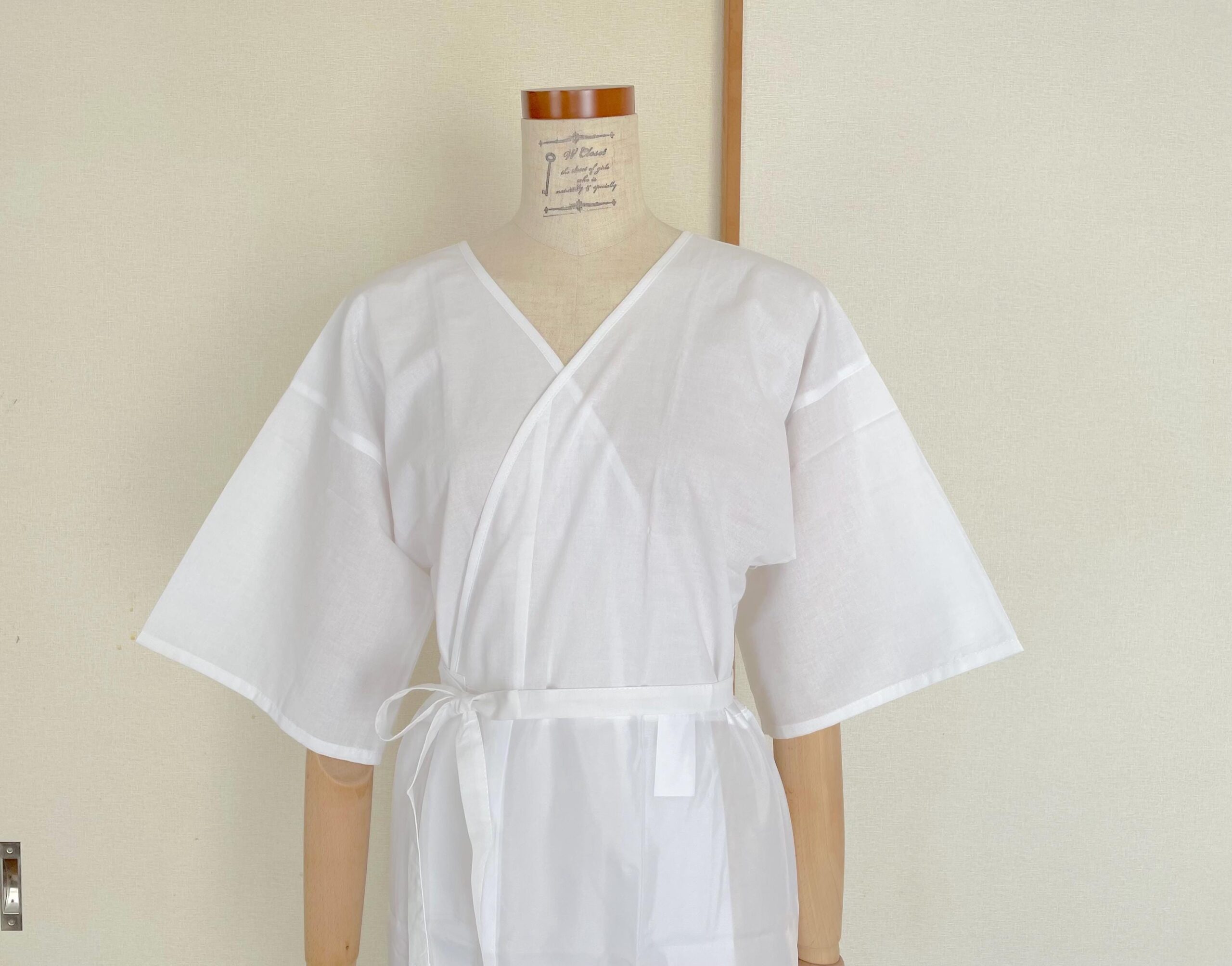
Women wear one of two things under a yukata: a Japanese under-robe, or a plain Western substitute. The under-robes are the hadajuban in a short cut and the nagajuban in a full length, both sold at kimono shops, and a nagajuban worn on its own even reads as a traditional summer look. The substitute is a light-colored V-necked T-shirt with light shorts in cotton, paired with a kimono bra in place of a regular one.
Nobody has to buy the traditional items. Kimono retailers say plainly that there is no need to buy something special, and that a light T-shirt does the job. A kimono bra keeps the yukata’s shape flat and stays comfortable over a long evening, and a body liner for kimono sits alongside the cords and belts on the same shelf.
Light colors matter for a practical reason. A dark top reads through thin summer cotton, and the whole point of the layer is that it stays invisible.
Where the neckline sits matters as much as the color. A yukata wraps left over right and closes high across the chest, which is why kimono shops point to a V-necked top: it stays below that collar line. A wide or low-cut neckline surfaces at the front of the wrap and creates the same problem a dark color does, with the layer that is meant to stay invisible showing itself instead. Keeping the front of the wrap closed is part of how the garment sits, so a deep neckline underneath works against the silhouette rather than adding to it.
What Men Wear Under a Yukata
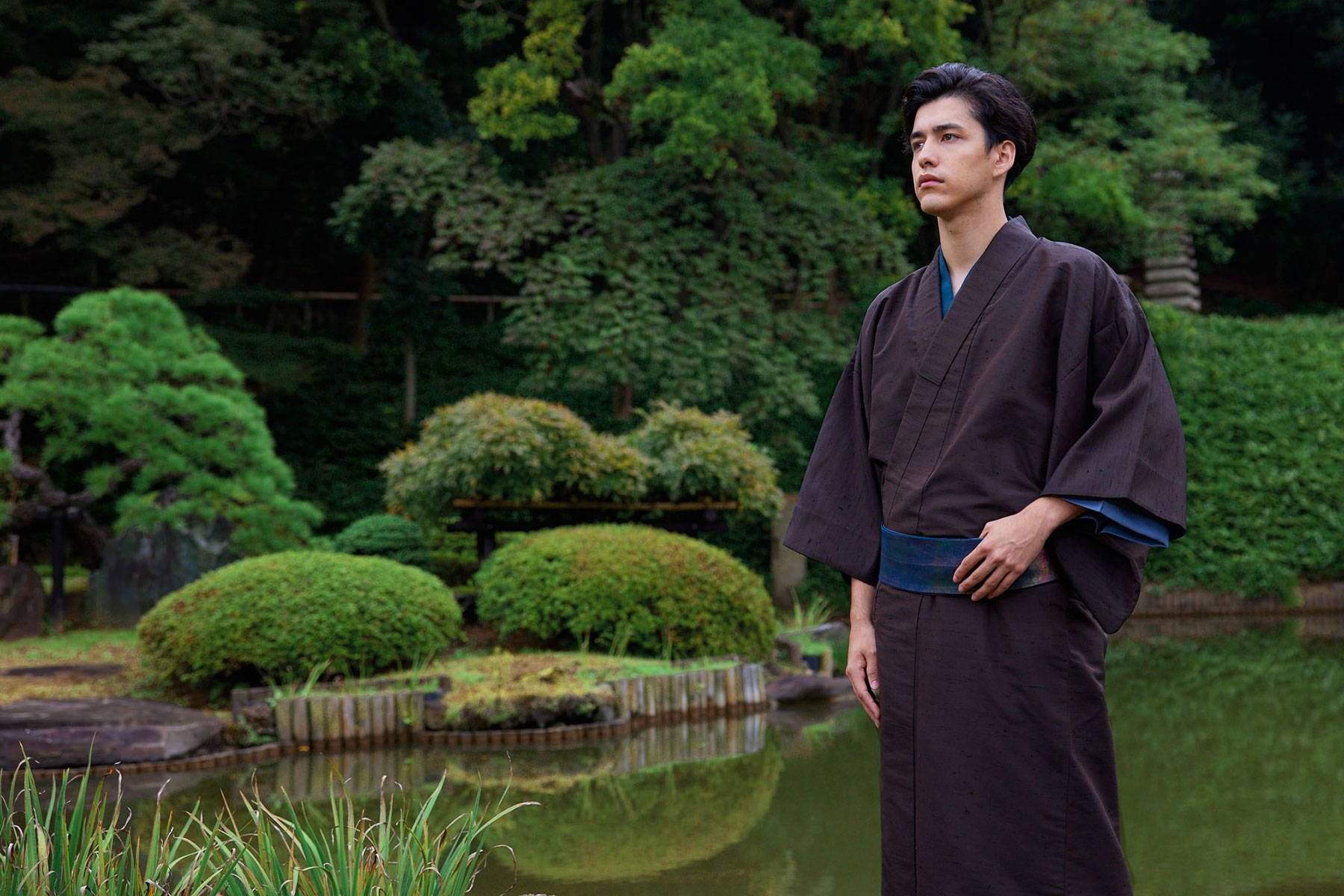
Men wear suteteko under a yukata, long men’s underpants cut for wearing with kimono and closer to boxer shorts than anything Western tailoring sells. A light T-shirt and shorts do the same work, and kimono shops list plain underclothes as the useful extra rather than a requirement. Men have less to think about here than women, and less to buy.
One difference in the garment itself changes the fit. A men’s yukata is not folded at the waist the way a woman’s is, so the length has to be right off the rack instead of being adjusted while dressing. That makes the under layer purely about comfort and sweat rather than about holding a silhouette in place.
The Cords and Belts That Sit Under the Obi
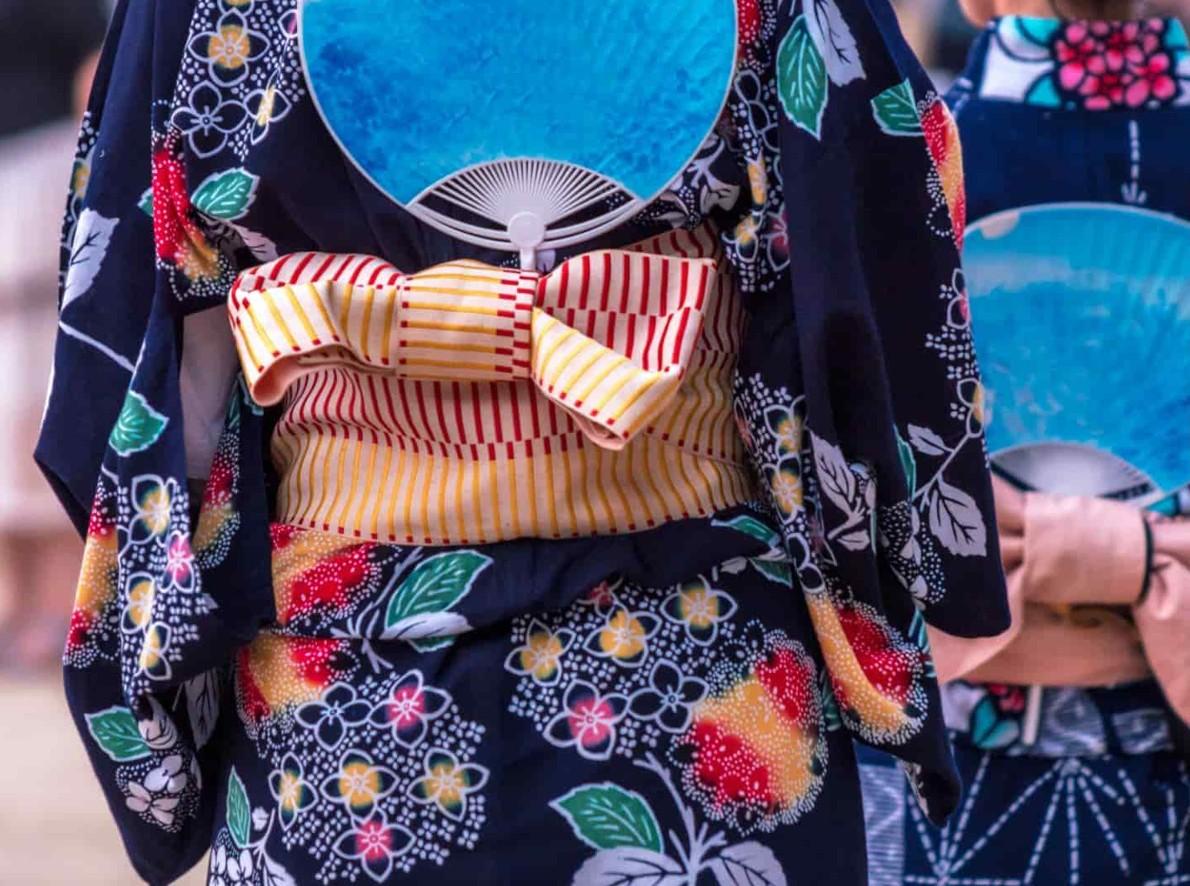
Four items sit between the yukata and the obi, and none of them show once the obi is tied. A woman dressing properly uses two or three koshihimo, the waist cords tied around the body, plus a datejime and a korin belt, an elastic band with a clip at each end that pins the collar line where it should be. An obi-ita, a rigid board slipped under the outer layer of the obi, keeps the belt from creasing or folding over. A man needs one koshihimo and nothing else.
Tying the cords firmly feels tight at first, and that is the intention: they hold posture upright and stop the yukata drifting open, much the way a corset does. Full kimono dressing order adds more layers and more cords again, which is a large part of why a yukata is the garment people can manage alone.
Ryokan and Onsen Yukata Follow Simpler Rules
A ryokan yukata goes on over ordinary underwear and nothing else. It is deliberately simplified so it can be tied with a single waist cord, with no special underwear, no extra ties, and no waist fold to work out. An undershirt and socks stay optional.
These yukata still carry the old function. They exist to cover the bare body on the way to and from the bath, and between baths, or to sleep in. That is also why the boundaries on them are tighter than on a festival yukata: in onsen towns you can stroll the streets in one, but wandering far beyond the inn in a ryokan yukata is not the done thing, and the yukata some Western-style hotels leave in the room is room wear only. When the evening air cools, the outer jacket that comes with it goes over the top like a coat, and a haori jacket does the same job with a festival yukata.
Why the Layer Underneath Matters
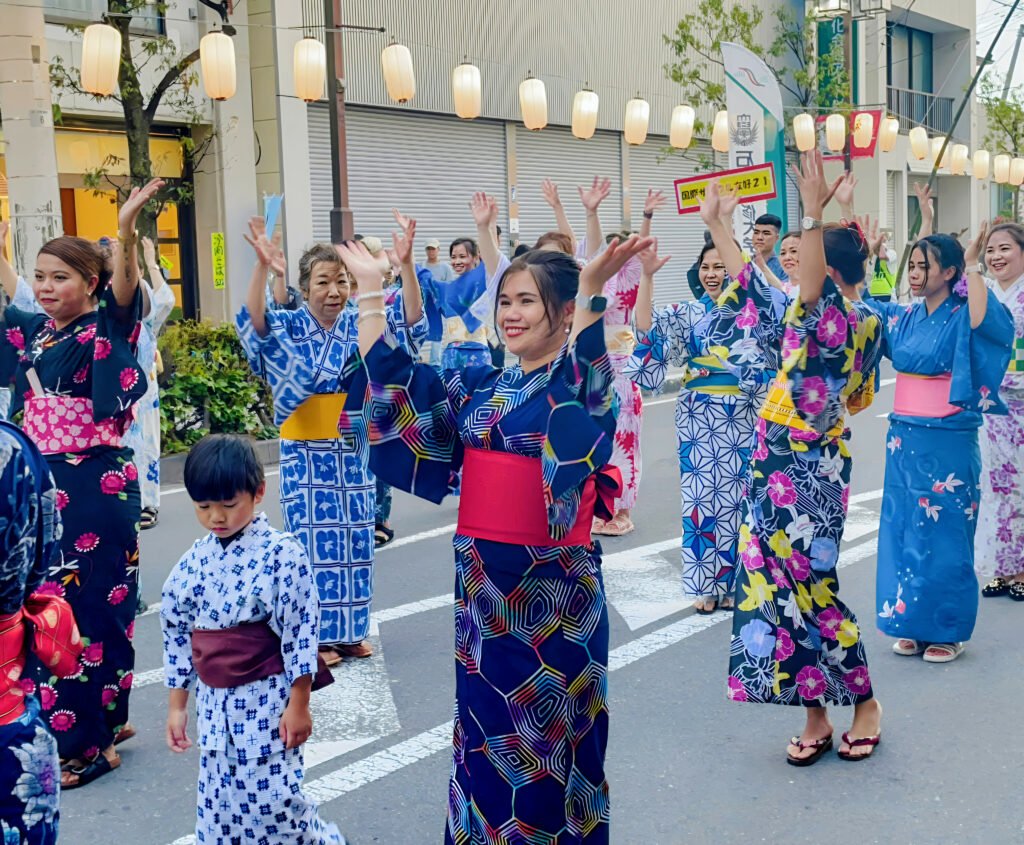
The under layer does three jobs: it keeps underwear hidden when the top of the yukata loosens over an evening, it catches sweat before it reaches the outer cotton, and it makes the garment comfortable to sit around in for hours. Plenty of people wear a yukata with nothing underneath, and the first two of those are what go wrong when they do.
It also protects the garment. Keeping the fabric off the skin is the simplest way to stop sweat reaching the outside of a yukata, which is the same reasoning behind sewing a protective panel into the underarm seams. When a stain does land, dabbing it out with a damp cloth beats washing the whole thing and fading the dye.
Socks are the one item that stays genuinely optional. A yukata is traditionally worn with an obi and geta and without the tabi socks a kimono calls for, though dressers often suggest thin socks anyway if geta straps rub or feet slip in the heat.
FAQs
What was worn under yukatas traditionally?
Nothing. A yukata was bathing wear pulled on over damp skin, so the garment itself was the layer next to the body from the Heian period (794 to 1185) onward. An under layer became standard only after the yukata moved outdoors as evening and festival wear in the Edo period, at which point a cotton hadajuban became the traditional choice.
Can you wear a bra under a yukata?
Yes, and a kimono bra is the recommended kind. It helps preserve the yukata’s shape and stays comfortable through a long evening, which a regular bra is not built to do.
What is a hadajuban?
A hadajuban (肌襦袢) is a short Japanese under-robe whose name means skin cloth. It is the Japanese-style underwear recommended beneath a yukata, and the longer version made for kimono is called a nagajuban.
What is suteteko?
Suteteko are long men’s underpants cut for wearing with kimono and yukata, closer to boxer shorts than to anything Western tailoring sells. They are the standard men’s under layer, though a light T-shirt and shorts do the same work.
What do you wear under a ryokan yukata?
Your own underwear, and nothing more. A ryokan or onsen yukata is simplified to tie with one waist cord, so no hadajuban, extra ties, or waist fold are involved. An undershirt and socks are optional, and the jacket supplied with it goes on top when the evening cools.
If the layered, wrapped silhouette of traditional Japanese dress is what draws you in, Kamicrew’s ukiyo-e-inspired streetwear carries the same motifs into tees and hoodies that work any day of the year.
Kamicrew Best Seller

Dont Touch Me Yokai Ukiyo-E Japanese T-Shirt
$25.49+
$29.99
(15% off)


Summer Vibes Salty Kawaii Japanese Hoodie
$44.99+
$49.99
(10% off)


Japanese Pin Horror 80s Retro Aesthetics T-Shirt
$25.49+
$29.99
(15% off)


El Gran Maja Japanese Kaiju T-Shirt
$25.49+
$29.99
(15% off)


Who Wants The Perfect Body Japan Capybara Kawaii Japanese Unisex Shirt
$25.49+
$29.99
(15% off)


Monster 8 Mask Vintage Animal Hoodie
$44.99+
$49.99
(10% off)


I Hate People Japanese Opossum Vintage Animal Hoodie
$44.99+
$49.99
(10% off)


I Got That Dog In Me Small Turtle Vintage Animal T-Shirt
$25.49+
$29.99
(15% off)

The Creation Of Cat Ukiyo-E Japanese T-Shirt
$25.49+
$29.99
(15% off)