
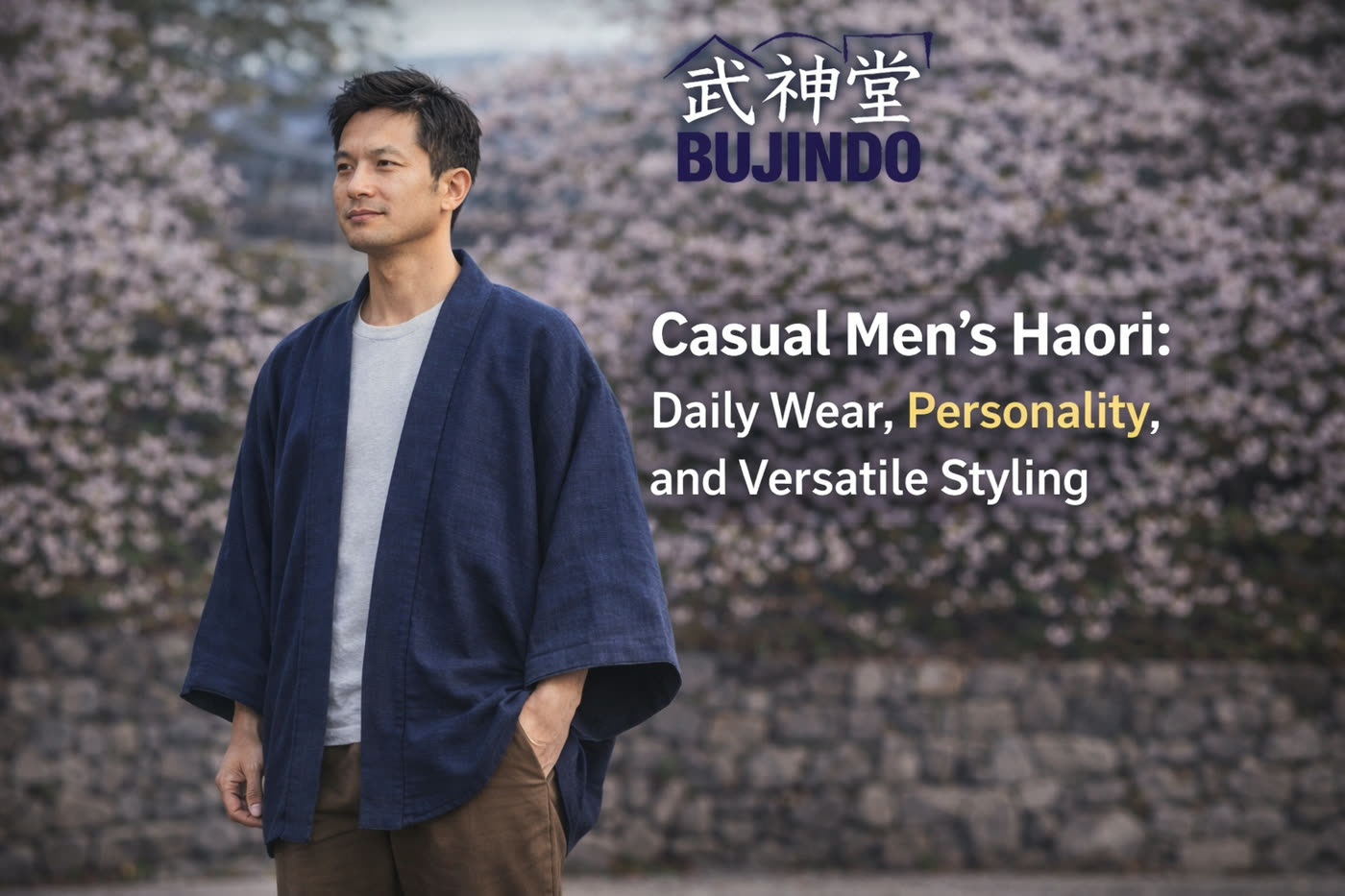
A haori is a traditional Japanese jacket worn over a kimono, cut like a shortened kimono with no overlapping front panels and closed loosely with a pair of cords called haori himo. Historically an outer layer for samurai and later wealthy merchants, the haori kimono jacket has become a piece people wear on its own today, over a T-shirt, jeans, or a yukata at a ryokan. This guide covers what a haori is, where it came from, the main types, and how to wear one without breaking the traditional rules that still shape the garment.
What a Haori Is (and How It Differs From a Kimono)
A haori is a traditional Japanese jacket worn over a kimono, cut shorter with no wrapped okumi panels and closed loosely with cords called haori himo instead of an obi. That missing obi and open front are what separate a haori from a kimono, which wraps closed and ties shut.
Structurally, a haori resembles a kimono cut short, usually falling to the hip or thigh rather than the ankle. It uses a noticeably thinner collar than a kimono and adds two small triangular panels at the side seams that a kimono does not have. The haori himo cords tie to loops sewn just inside the front edges.
That construction carries through to the different types of kimono themselves, which keep the wrapped, obi-secured closure a haori never uses.
The History Behind the Haori
The haori’s fashion status began in the Edo period, when wealthy merchants used plain exteriors with lavishly decorated linings to work around sumptuary laws that restricted how loudly they could dress. Geisha in Tokyo’s Fukagawa district started wearing haori over their kimono in the early 1800s, and by the 1930s women wearing haori had become an everyday sight.

Museums including the British Museum hold formal haori in their collections that show off exactly this pairing of a quiet exterior with a much richer inner lining.
Fukagawa’s geisha were known for setting unconventional fashion trends, and in modern Japan the jacket is now worn by both men and women alike.
Types of Haori (and Which One Fits the Occasion)
Haori come in a handful of standard types, sorted mainly by fabric and formality rather than cut. Cotton or polyester haori suit daily wear, tsumugi and summer haori suit everyday or warm-weather layering, and formal black silk montsuki haori are reserved for ceremonies.
| Occasion | Haori type | Why |
|---|---|---|
| Daily wear, ryokan or onsen | Cotton or polyester | Easy care, comfortable, casual |
| Everyday, understated style | Tsumugi (textured weave) | Textured but low key, works for daily and cultural events |
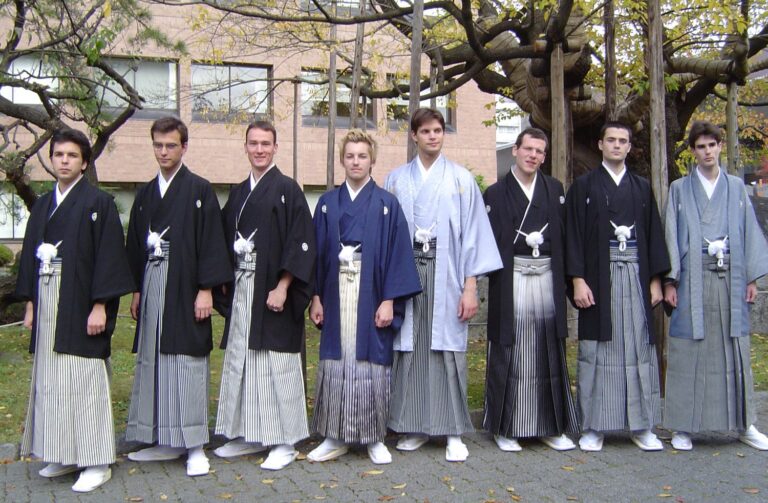
| Ceremonies, formal occasions | Formal black silk (montsuki, with a family crest) | Traditionally paired with kimono and hakama for dignity and respect |
| Warm weather layering | Summer haori | Lighter fabric keeps the layered look without overheating |
| Festivals, warrior styling | Jinbaori | Descended from the sleeveless over vest worn atop samurai armor, one of several pieces that make up traditional samurai clothing |
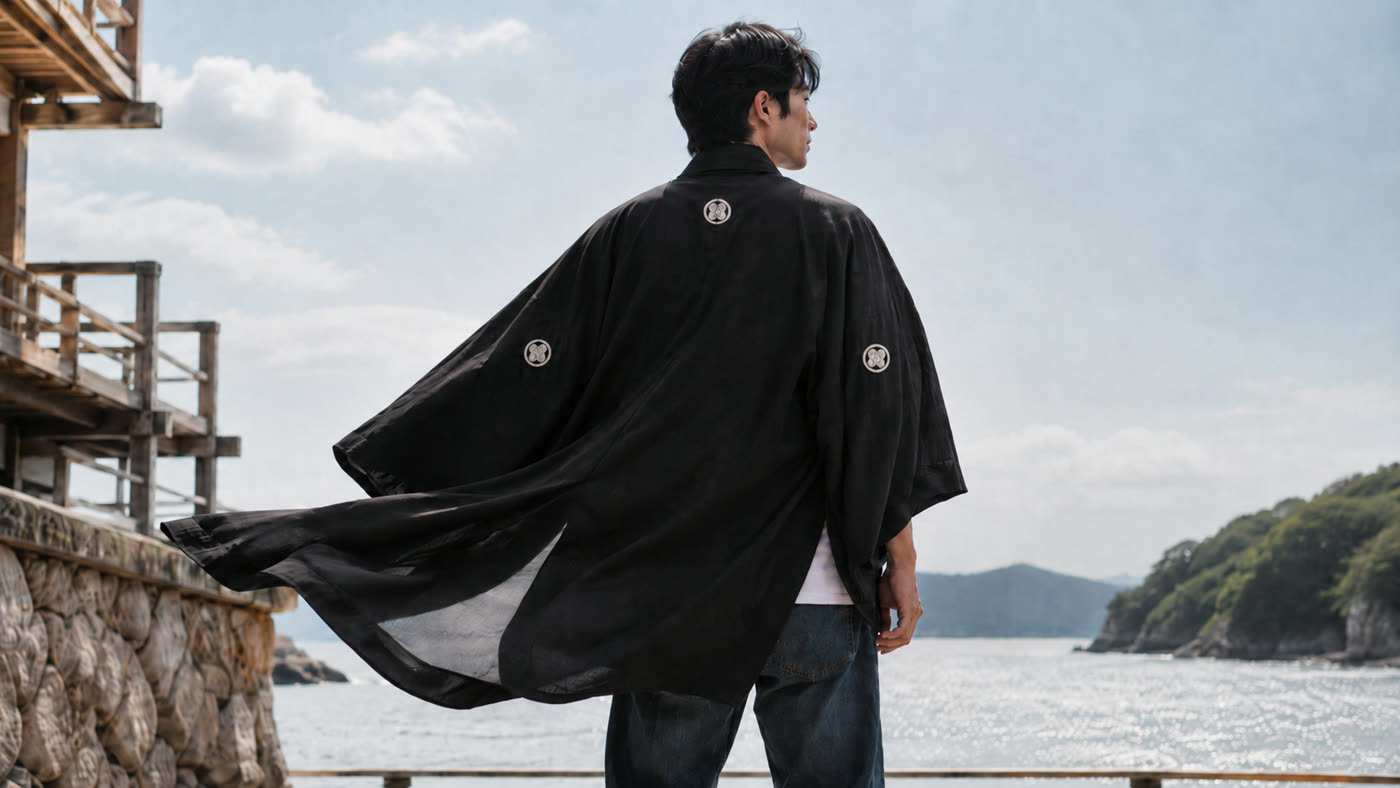
Formal montsuki haori often carry the same contrast the Edo period made popular: a sober black silk exterior with one, three, or five family crests, while the inner lining can hold richer artwork that only shows when the jacket moves or opens.
How to Wear a Haori Today
Wearing a haori today comes down to keeping it open rather than wrapped, tying the haori himo loosely if at all, and letting simple, plain clothing underneath do the rest of the work. The same rules apply whether it is styled with a T-shirt and jeans or layered over a yukata at a ryokan.
Keep It Open, Not Wrapped
A haori is not wrapped closed the way a kimono is. Let it hang open and fall straight so it reads as a clean vertical line instead of a tightened silhouette.
Tie the Haori Himo Loosely
The haori himo tie loosely at the chest and are decorative rather than functional. Traditionally, tie them in a simple, even knot. For a more modern, streetwise look, they can go untied altogether.
Style It With Everyday Clothes
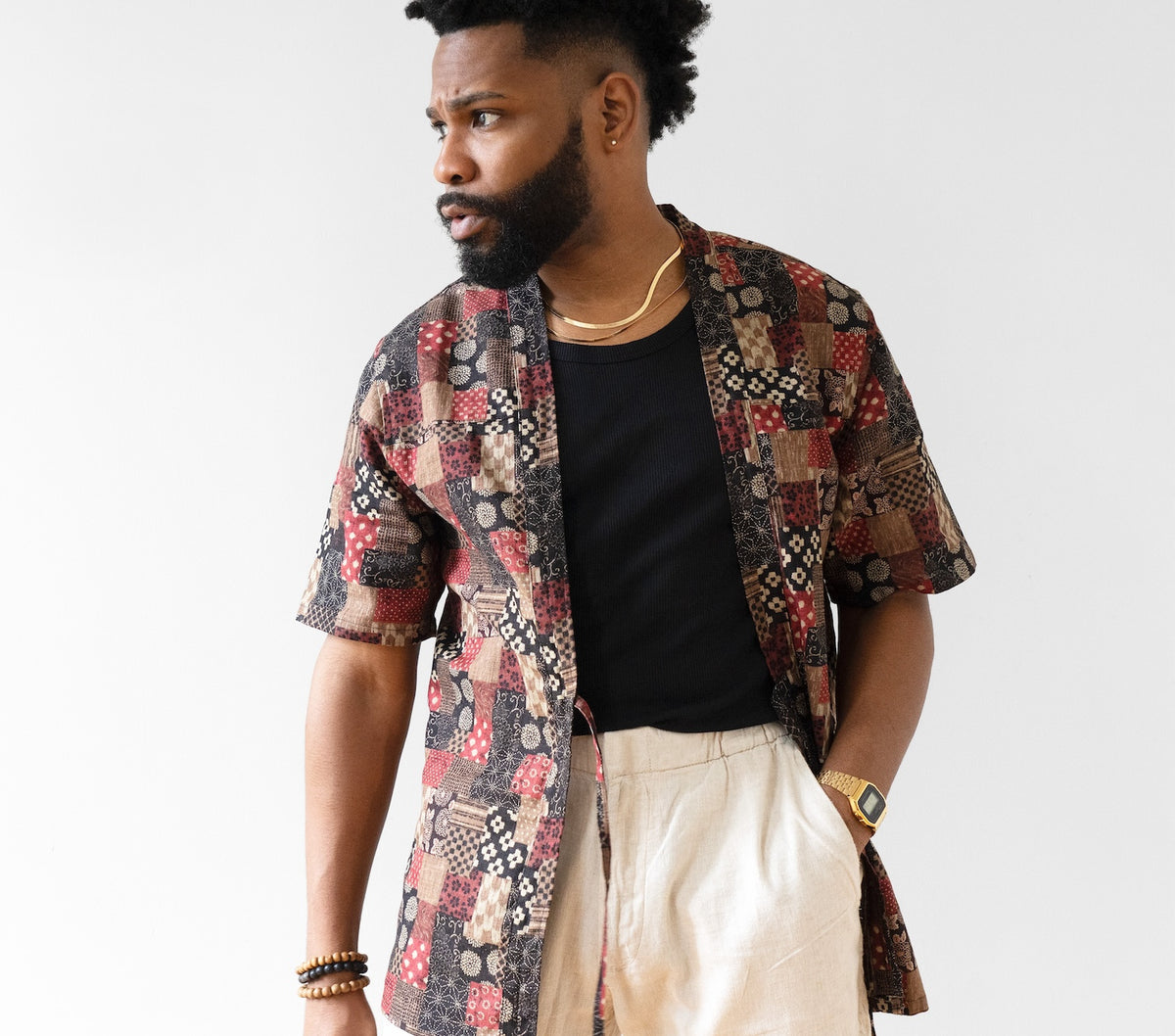
Pair a haori with a plain T-shirt or shirt, straight trousers or denim, and simple shoes. If the haori itself carries a bold print or crest, keep the rest of the outfit plain so the jacket does the talking. Traditional kimono dressing goes juban first, then kimono, then haori last as the outer layer, and the underlayer question comes up often enough that it is worth understanding what actually goes under a haori before mixing in modern basics.
Wear It Over a Yukata at a Ryokan or Onsen
A haori also works layered over a yukata during a ryokan or onsen stay, kept loosely tied or left open and away from wet areas. Treat it as a light jacket rather than a robe.
FAQs
Is it okay to wear a haori if you are not Japanese?
Yes. A haori is an everyday outer layer today, and wearing one respectfully mostly comes down to the traditional rules: worn open rather than wrapped shut, with a formal black silk montsuki haori reserved for occasions that call for it rather than treated as costume.
Can you wear a haori without a kimono?
Yes. Many people today wear a haori over a plain T-shirt, a shirt, or other everyday clothing rather than a kimono. The rules for tying the haori himo and keeping the silhouette clean stay the same either way.
Is a haori only for men?
No. Haori were worn only by men until the early 1800s, when geisha in Tokyo’s Fukagawa district began wearing them over their kimono. Women wearing haori became common by the 1930s, and today the jacket is worn by both men and women.
What is the difference between a haori and a hanten?
A haori is a light, open jacket meant as a refined outer layer, while a hanten is a padded, quilted jacket built mainly for warmth. A hanten sits closer to a winter coat, while a haori sits closer to a cardigan worn over a kimono or an outfit.
Do you need an obi to wear a haori?
No. An obi is what closes a kimono. A haori has no obi and is not meant to wrap shut. It closes loosely at the chest with a pair of cords instead.
If the haori’s clean silhouette and understated tradition speak to you, browse Kamicrew’s ukiyo-e-inspired streetwear for graphic tees and hoodies that carry the same traditional Japanese aesthetic into everyday wear.
Kamicrew Best Seller

Dont Touch Me Yokai Ukiyo-E Japanese T-Shirt
$25.49+
$29.99
(15% off)


Summer Vibes Salty Kawaii Japanese Hoodie
$44.99+
$49.99
(10% off)


Japanese Pin Horror 80s Retro Aesthetics T-Shirt
$25.49+
$29.99
(15% off)


El Gran Maja Japanese Kaiju T-Shirt
$25.49+
$29.99
(15% off)


Who Wants The Perfect Body Japan Capybara Kawaii Japanese Unisex Shirt
$25.49+
$29.99
(15% off)


Monster 8 Mask Vintage Animal Hoodie
$44.99+
$49.99
(10% off)


I Hate People Japanese Opossum Vintage Animal Hoodie
$44.99+
$49.99
(10% off)


I Got That Dog In Me Small Turtle Vintage Animal T-Shirt
$25.49+
$29.99
(15% off)

The Creation Of Cat Ukiyo-E Japanese T-Shirt
$25.49+
$29.99
(15% off)