

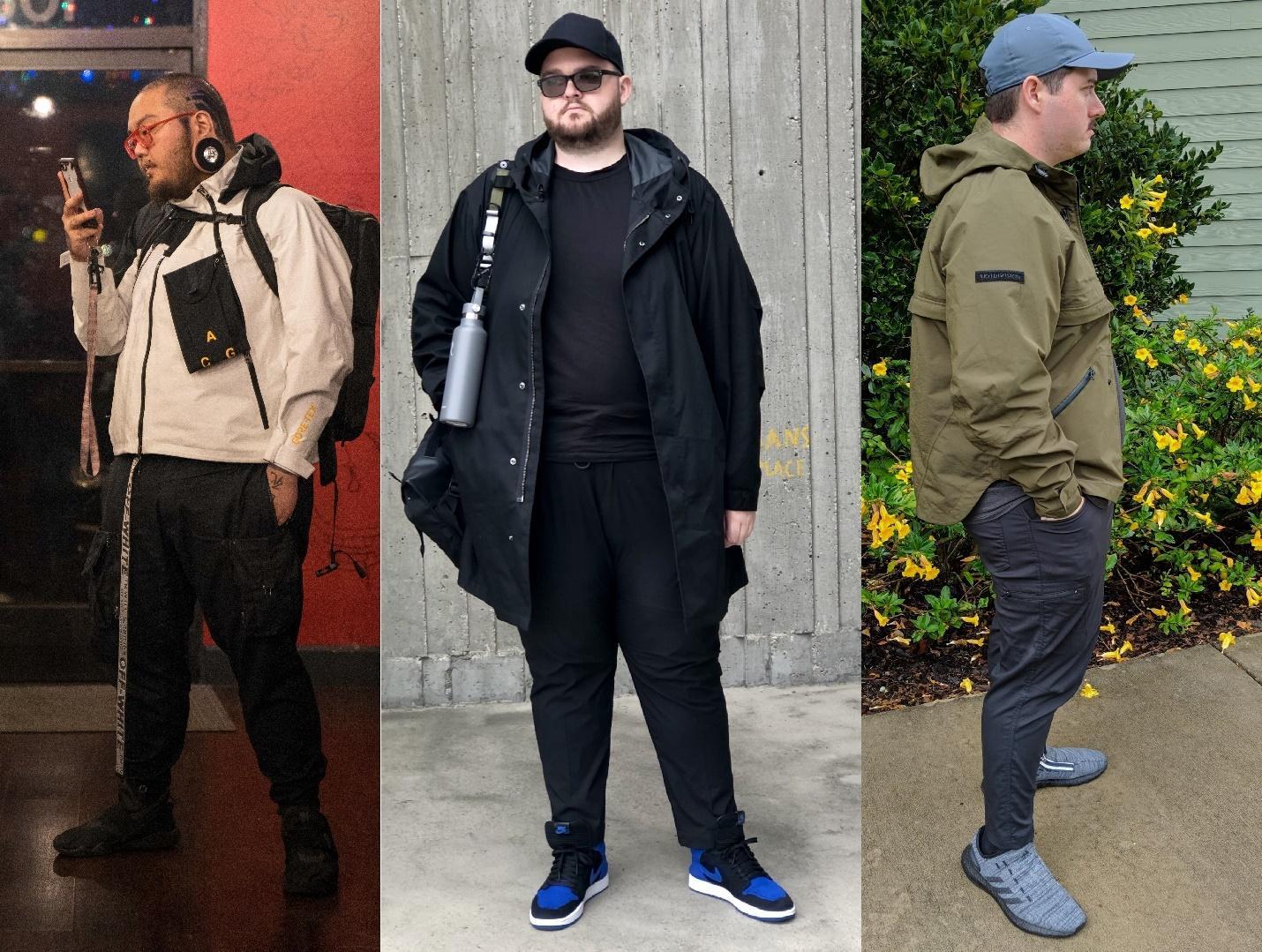
Japanese techwear is functional clothing made from technical performance fabrics and cut with the detail and proportion of Japanese design. It takes what outdoor and military gear do well, weatherproofing, mobility, and pocket space, and puts it into a silhouette built for a city street rather than a mountain ridge. The palette is monochrome or near it, the shells are nylon and membrane, and the hardware is adjustable: drawcords, storm flaps, buckles, and pockets sized for what people actually carry.
What separates Japanese techwear from techwear generally is the design vocabulary behind it. The same labels that use Gore-Tex and Cordura also borrow from the noragi and the kimono, so a garment reads as designed rather than issued. Construction standards match tactical and outdoor gear; the proportions, restraint, and detailing do not.
Where Japanese Techwear Came From
Japanese techwear has no single launch date. Japanese designers began experimenting seriously with technical fabrics in the late 1980s and continued through the 1990s, and by the turn of the 2000s the aesthetic had tilted openly futuristic. The most recent shift is toward sustainability and ethical manufacturing, which shows up in how the clothes are sourced and made rather than in how they look.
The technical fabric turn
Two things happened at once. Japan’s rapid technological growth put membranes, coatings, and high tenacity weaves within reach, and a generation of designers wanted to use those materials for something other than sportswear. The result was outerwear that read as fashion but performed like gear: waterproof and breathable laminates, abrasion resistant nylons, and later oddities including neoprene, self healing fabrics, and heat responsive materials.
Harajuku, cyberpunk, and military surplus
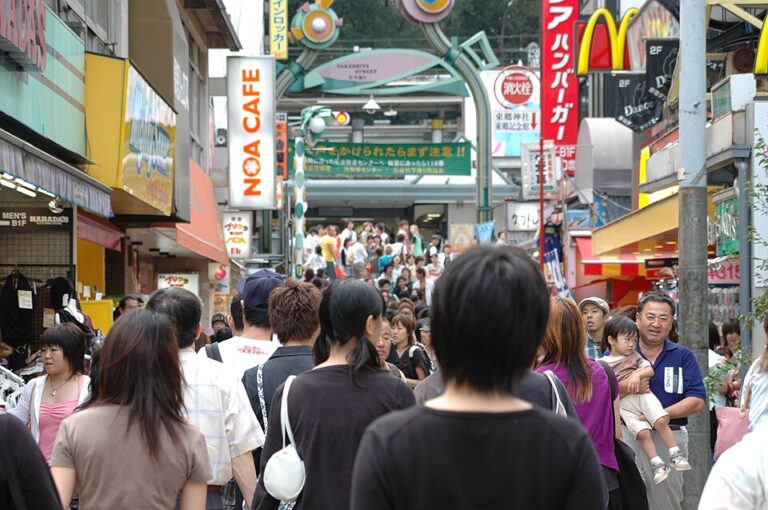
The street half of the story starts in the Japanese streetwear and Harajuku scenes of the 1990s and early 2000s. Science fiction and anime supplied the mood, dystopian and urban rather than pastoral, while outdoor brands and military surplus supplied the garments people cut apart and rebuilt. That overlap is why a techwear outfit and a cyberpunk fashion outfit often share the same shell jacket and the same all black palette while aiming at different things.
The Designers and Brands That Shaped It
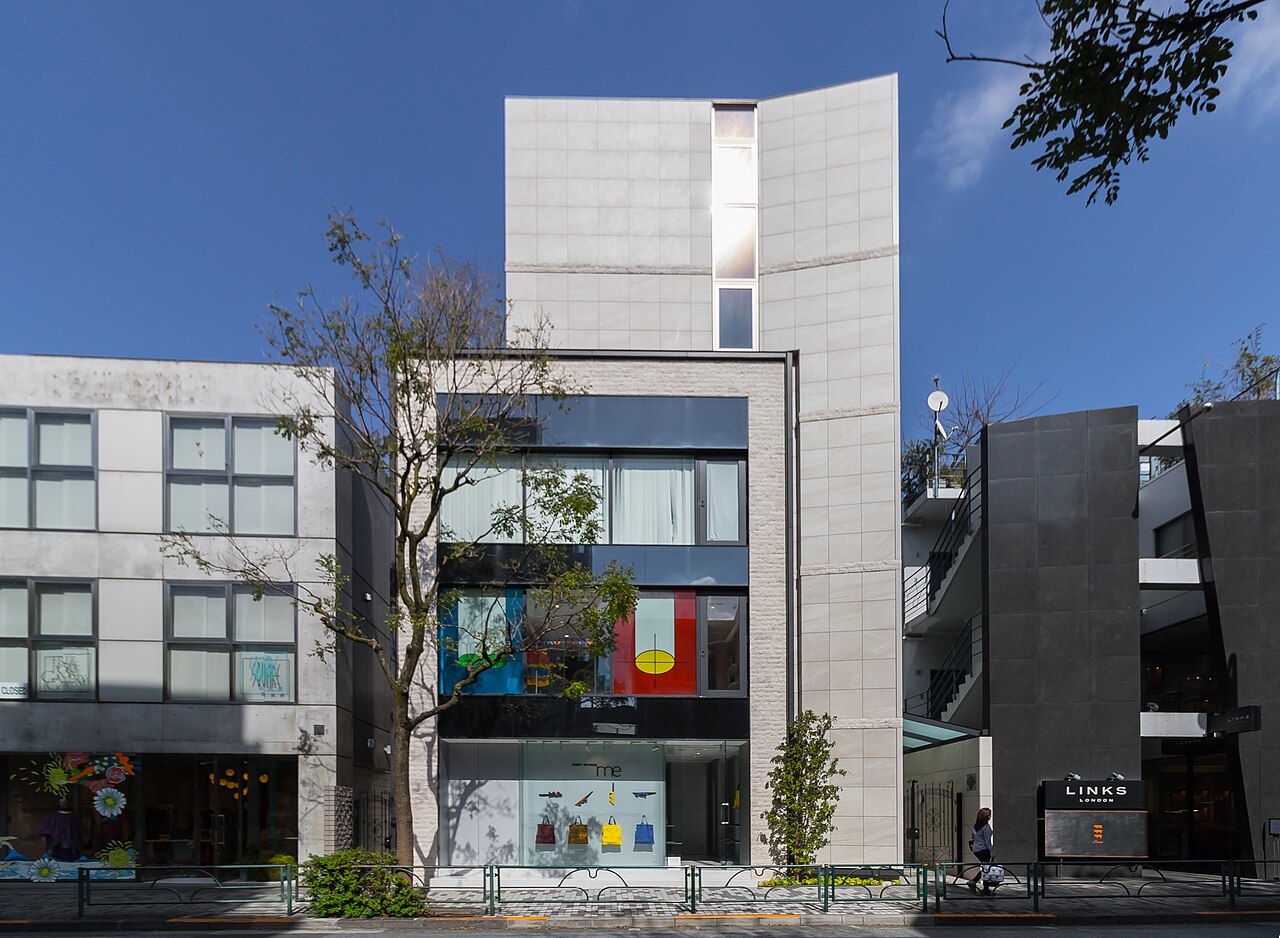
The Japanese techwear lineage runs through three groups: avant garde fashion houses such as Issey Miyake and Yohji Yamamoto, small technical labels including ACRONYM and MOUT RECON TAILOR, and sportswear companies that pivoted to city clothing, notably DESCENTE and Goldwin. That mixed ancestry is why the category never settled into one uniform.
- ACRONYM, founded by Errolson Hugh and Michaela Sachenbacher, works from a form follows function premise.
- Issey Miyake approached technical clothing through the textile itself. The Metropolitan Museum of Art holds an Issey Miyake pleated evening dress (Staircase Pleats, fall/winter 1994-95) that demonstrates his pioneering work with technical textiles.
- White Mountaineering, from Yosuke Aizawa, spent years on focused all black technical outerwear before widening into more eclectic streetwear.
- Final Home, designed by Kosuke Tsumura, is remembered for a transparent jacket lined with more than twenty pockets, conceived as wearable shelter rather than as a season’s outerwear.
- Visvim, under Hiroki Nakamura, reworks the noragi, the traditional Japanese work jacket, in modern and technical materials.
- Y-3 pairs Yohji Yamamoto’s avant garde approach with sportswear.
- DESCENTE ALLTERRAIN was spun out of a long established Osaka sportswear company in the early 2010s and makes minimal, utilitarian Gore-Tex city clothing.
- Goldwin started as a knitwear factory in Toyama Prefecture and turned toward everyday technical clothing in the mid 2010s, working mainly in Gore-Tex and Polartec.
- and wander was founded in the early 2010s by two designers who came out of Issey Miyake’s studio, and builds lightweight nylon and polyester outdoor pieces.
- MOUT RECON TAILOR arrived in the mid 2010s with an all black tactical wardrobe cut in Polartec and Schoeller fabrics.
Several of those names also appear in wider surveys of Japanese streetwear brands, since the line between a technical label and a streetwear label in Tokyo has never been firm.
Key Visual Elements of a Japanese Techwear Outfit
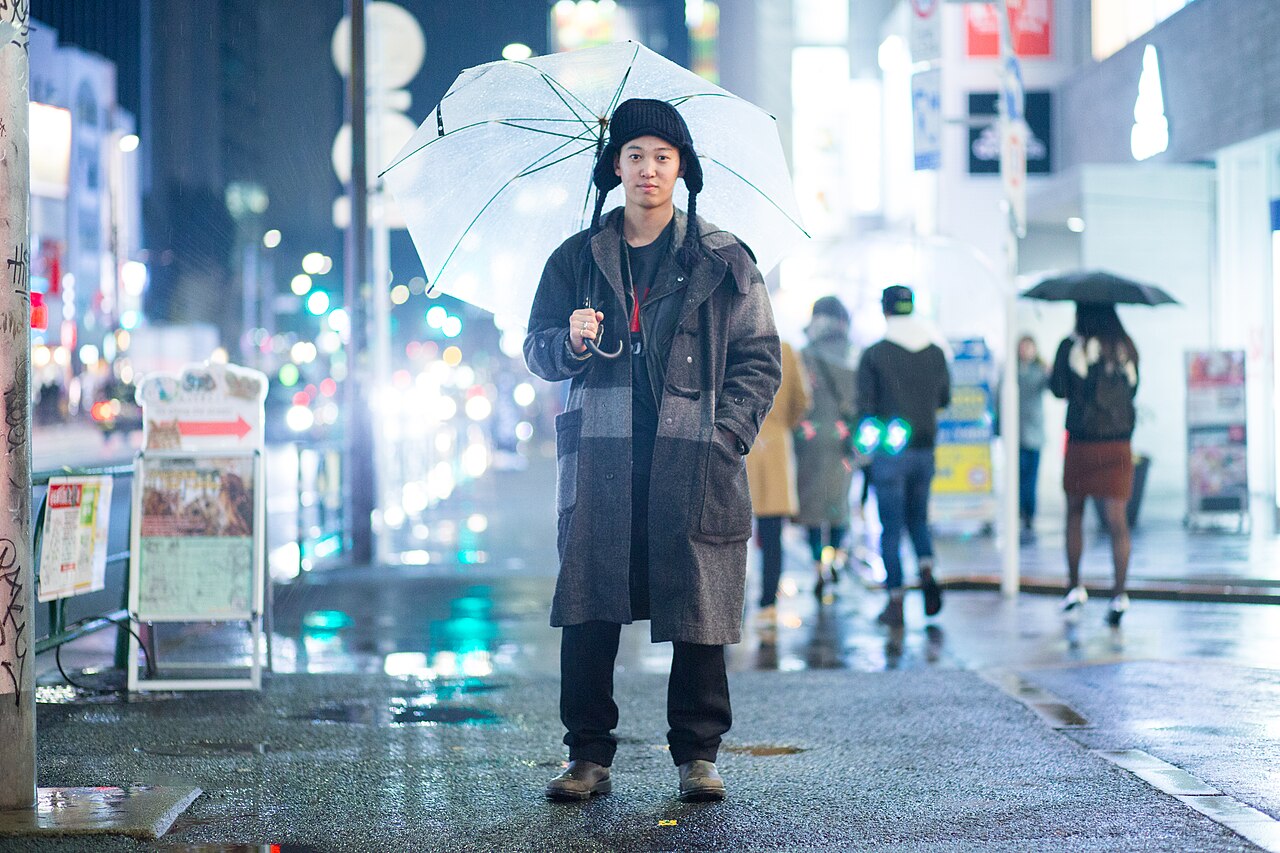
A Japanese techwear outfit is identifiable by five elements: a monochrome palette of black, gray, and white with earth tones as the warm alternative; a layered silhouette with tapered hems; adjustable hardware such as hoods, storm flaps, and protected zippers; carried accessories including sling bags and utility belts; and traditional Japanese cues such as wrapped fronts and noragi collars.
- Palette stays monochromatic or near it, usually black, gray, and white, with earth tones as the warm alternative. Muted colour is what lets the construction details read.
- Silhouette is layered and deliberately uneven, a roomy shell over something slimmer, with tapered hems at the ankle so nothing catches.
- Hardware and detailing means adjustable hoods, storm flaps, water resistant or protected zippers, reflective elements for low light, and a lot of pockets placed where a hand or a phone actually goes.
- Accessories carry as much of the look as the clothes: sling bags across the chest, utility belts, small gadget pouches, and technical sneakers or boots.
- Traditional cues appear as wrapped fronts, wide sleeves, and noragi collars. Those shapes come out of traditional Japanese clothing, and they are the clearest signal that an outfit is Japanese techwear rather than tactical gear.
The Fabrics and Construction Behind It
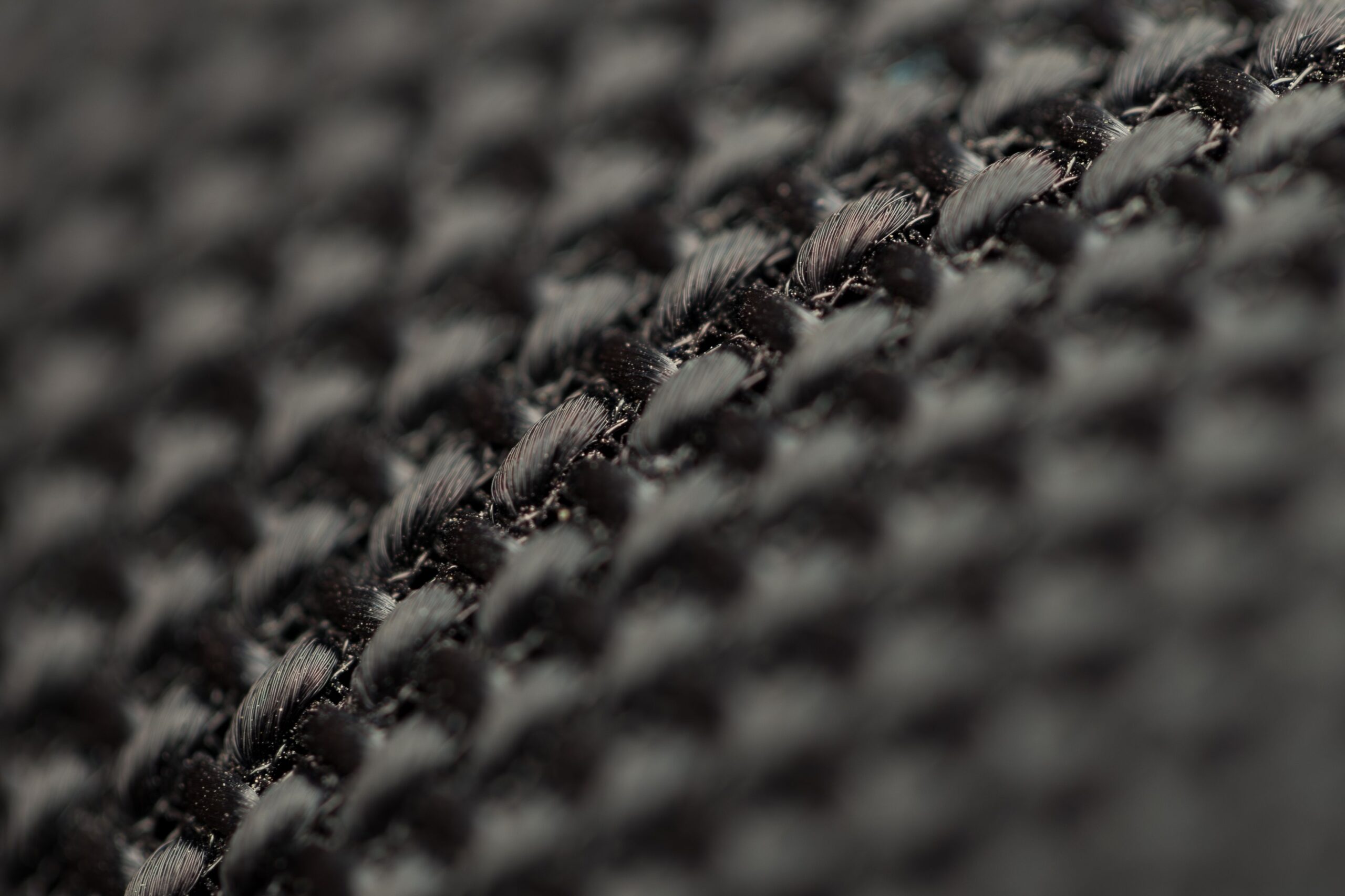
Japanese techwear outer shells are typically high tenacity nylon treated with a durable water repellent finish, and the waterproof pieces add a membrane or laminate behind it. Cordura appears where abrasion is the concern and Gore-Tex is the membrane most often named on a hangtag. Fabric choice, not styling, is what separates a working technical piece from one that only looks technical.
- Membrane shells only perform if the seams are taped and the zippers are protected by a storm flap or are water resistant themselves.
- Softshells and stretch wovens, often nylon mixed with elastane, trade full waterproofing for movement, and they are the better daily choice in anything short of sustained rain.
- Ripstop weaves add tear resistance, which matters on lightweight pieces more than heavy ones.
- Synthetic fills and high loft fleeces handle damp better than down does in city rain, so they suit a wet urban winter.
- Merino blends cut odour on long commuting days, though they snag faster than synthetics.
Patterning matters as much as fabric. Articulated knees, gusseted crotches, ergonomic or raglan sleeves, and underarm gussets are what let a stiff shell move with the wearer instead of fighting them, and tapered hems keep trouser fabric out of a bicycle chain.
Hard shell or softshell
| Attribute | Hard shell | Softshell |
|---|---|---|
| Waterproofing | Membrane, taped seams | Water repellent finish only |
| Movement | Stiffer | Stretch woven, flexible |
| Breathability | Lower | Higher |
| Best use | Prolonged rain | Daily wear, mixed weather |
How to Build a Japanese Techwear Look
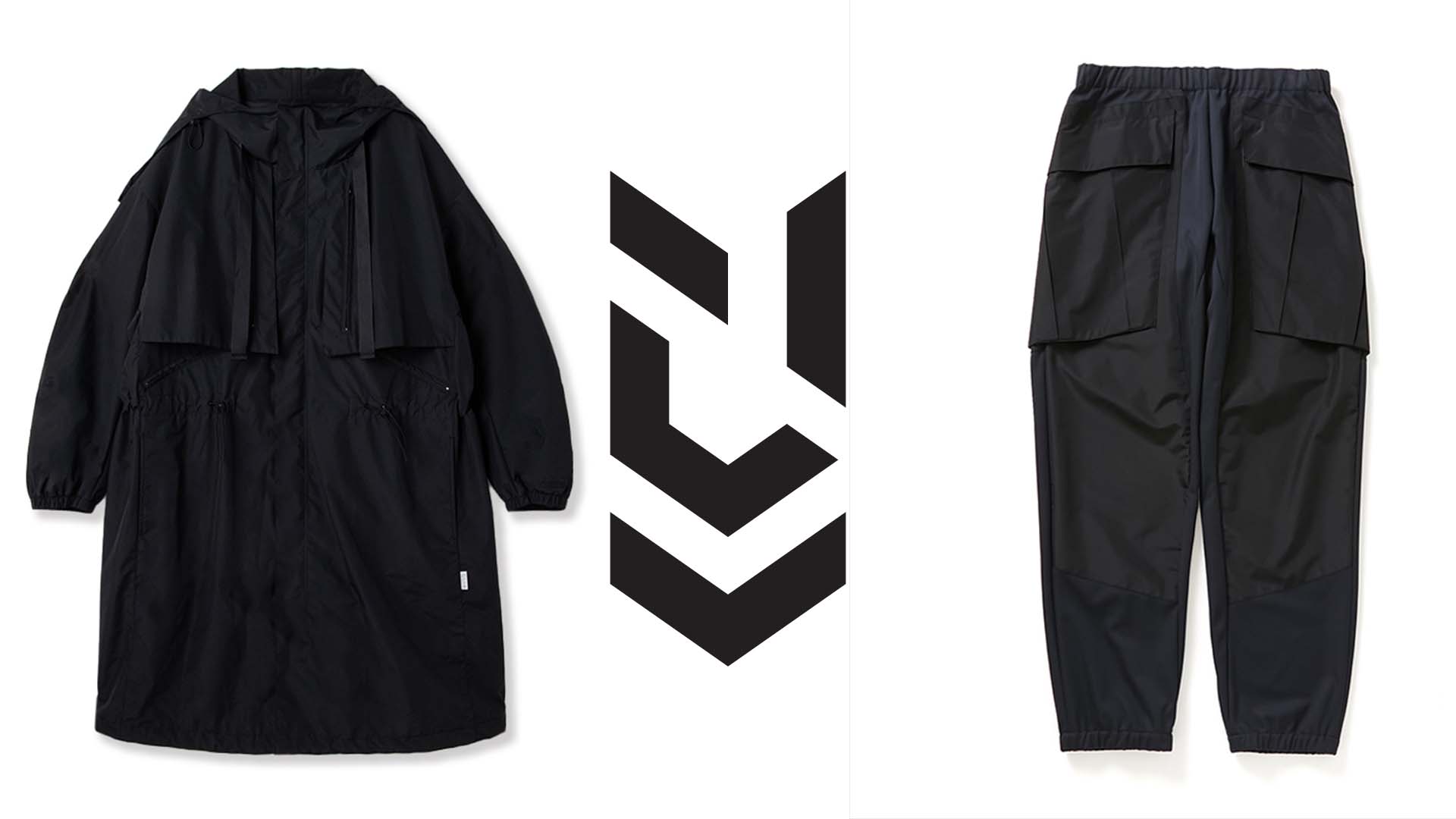
Building a Japanese techwear look starts with one shell rather than a full outfit. A plain black technical jacket with a weatherproof finish, an adjustable hood, and articulated sleeves anchors everything else. Cargo or utility trousers, technical sneakers or boots, a muted palette, and one or two carried accessories complete it.
- Buy the shell first. A black technical jacket with a weatherproof finish and articulated sleeves works over almost anything already in the wardrobe.
- Add the trousers next: cargo or utility pants in a nylon blend, tapered at the hem, with pockets reachable while walking.
- Put technical sneakers or boots under it, in the same muted colours as the rest.
- Learn the layering rule before buying a second jacket. In humid weather a breathable base plus a softshell is enough until rain sets in properly; in cold dry weather a wind shell over a warm midlayer beats one thick coat. Reserve the hard shell for prolonged rain.
- Check the fit for layering, not for the shop mirror. A shell should close comfortably over a midlayer.
- Accessorize with restraint. One or two pieces, a sling bag or a utility belt, rather than every strap and pouch at once.
Colour discipline is what makes the wardrobe compound. Sticking to black, gray, and earth tones means each new piece works with what is already there, which is the practical reason the palette became a rule.
Care keeps the pieces working. Wash cold on a gentle cycle with mild detergent, skip fabric softener because it damages coatings, and use low heat in the dryer, which can help reactivate the water repellent finish. When water stops beading on the surface and starts soaking in, the finish needs reapplying rather than the jacket needing replacing.
FAQs
What makes Japanese techwear different from regular techwear?
Regular techwear is defined by performance fabrics and utility. Japanese techwear adds a design vocabulary drawn from Japanese clothing, wrapped fronts, noragi collars, wide sleeves, and a restrained palette, so the garment reads as designed rather than issued. The construction standards are the same; the proportions and detailing are not.
Is Japanese techwear waterproof or only water resistant?
It depends on the piece. A shell with a membrane or laminate plus taped seams and protected zippers is waterproof in practice. A jacket with only a durable water repellent finish is water resistant, which handles a shower but not a sustained downpour.
Should I start with a hard shell or a softshell?
A softshell suits most people. It moves better, breathes better, and works for daily wear in mixed conditions. A hard shell is the right buy for anyone who regularly spends long stretches in real rain.
What does an articulated knee actually do?
Articulation means the pattern is cut with the joint already bent, using extra panels at the knee or elbow. The fabric follows the movement instead of pulling tight, which is why articulated trousers feel roomy while walking or cycling without being baggy.
How do you wash technical outerwear without ruining it?
Cold water, gentle cycle, mild detergent, and no fabric softener. A low heat tumble afterwards can help reactivate the water repellent finish. Reapply a repellent treatment once water stops beading on the shell.
If the Japanese half of Japanese techwear is the part that draws you in, that is where Kamicrew spends its time: Japanese streetwear and mythology themed pieces that layer easily under a shell and carry the cultural reference on purpose.
Kamicrew Best Seller

Dont Touch Me Yokai Ukiyo-E Japanese T-Shirt
$25.49+
$29.99
(15% off)


Summer Vibes Salty Kawaii Japanese Hoodie
$44.99+
$49.99
(10% off)


Japanese Pin Horror 80s Retro Aesthetics T-Shirt
$25.49+
$29.99
(15% off)


El Gran Maja Japanese Kaiju T-Shirt
$25.49+
$29.99
(15% off)


Who Wants The Perfect Body Japan Capybara Kawaii Japanese Unisex Shirt
$25.49+
$29.99
(15% off)


Monster 8 Mask Vintage Animal Hoodie
$44.99+
$49.99
(10% off)


I Hate People Japanese Opossum Vintage Animal Hoodie
$44.99+
$49.99
(10% off)


I Got That Dog In Me Small Turtle Vintage Animal T-Shirt
$25.49+
$29.99
(15% off)

The Creation Of Cat Ukiyo-E Japanese T-Shirt
$25.49+
$29.99
(15% off)