
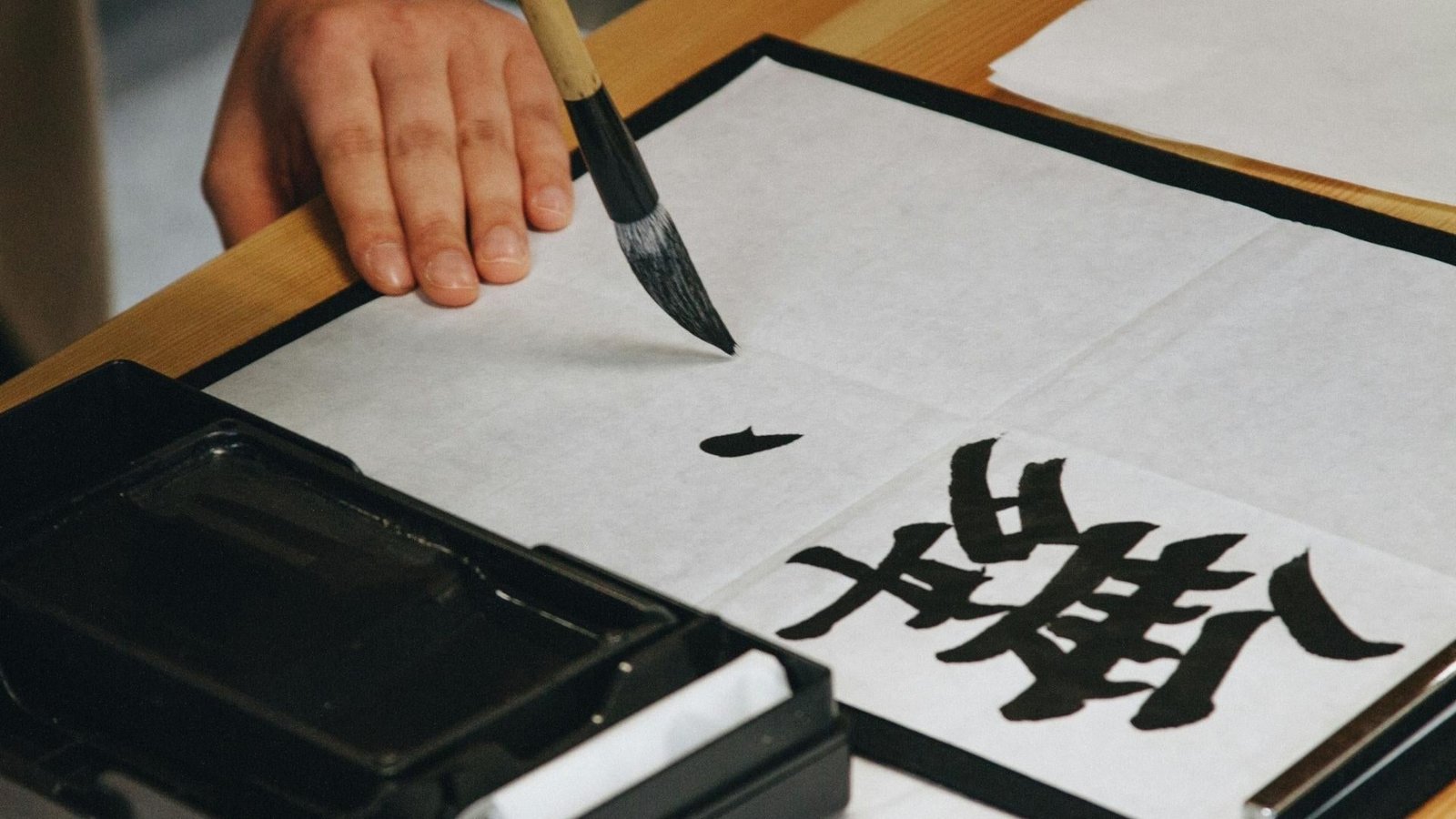
The symbol of peace in Japanese is one of two written forms: 和 (wa), the single kanji for harmony and calm balance, or 平和 (heiwa), the ordinary two-character word for peace as the absence of war. 和 is the compact one that ends up on scrolls, shirts and skin. 平和 is the one that plainly says peace. Past the characters, Japan’s most recognizable peace symbol is not written at all. It is a folded paper crane, and it carries that meaning because of one girl in Hiroshima.
和 and 平和: The Two Written Symbols for Peace
和 (wa) and 平和 (heiwa) both translate into English as peace, and what separates them is directness. 和 is a harmony character. It covers social ease, softened tension, balanced relationships, and people or ideas fitting together without conflict, which is why it is not simply a decorative stand-in for the English word peace. 平和 is the everyday word for a peaceful state, the one that fits peace after conflict or peace as the opposite of war.
| Written form | Reading | What it covers | Best for |
|---|---|---|---|
| 和 | wa | Harmony, calm balance, peaceful relations, and Japanese style | A one-character design where the message is peaceful harmony |
| 平和 | heiwa | Peace as a state, including peace without war or conflict | Wording that has to say peace outright |
| 平和主義 | heiwa shugi | Pacifism, peace as ideology and policy | Naming the principle rather than the feeling |
平和 is built out of 平 (flat, even, calm) and 和 (harmony), so the word itself describes a state where balance is being held rather than a simple gap between wars. That construction is the reason the two forms are so easy to mix up: 和 is already sitting inside 平和, doing half the work. Written characters are only one half of the picture, though. Japanese symbols run in two tracks, the writing systems on one side and the visual motifs on the other, and a good deal of what the culture says about peace it says on the motif side instead.
Where 和 Comes From, and Why It Reads as Harmony
和 is eight strokes and combines two parts: 禾, a stalk of grain, and 口, a mouth. Scholars generally read that pairing as the harmonious sharing of food, which slides naturally into agreement and peace between people. A second reading takes 禾 as a wind instrument such as a panpipe and 口 as its opening, making the character a picture of musical harmony instead. Either way the core idea is things fitting together, and over time it widened from agreement into peace, softening, and eventually into Japanese style itself.
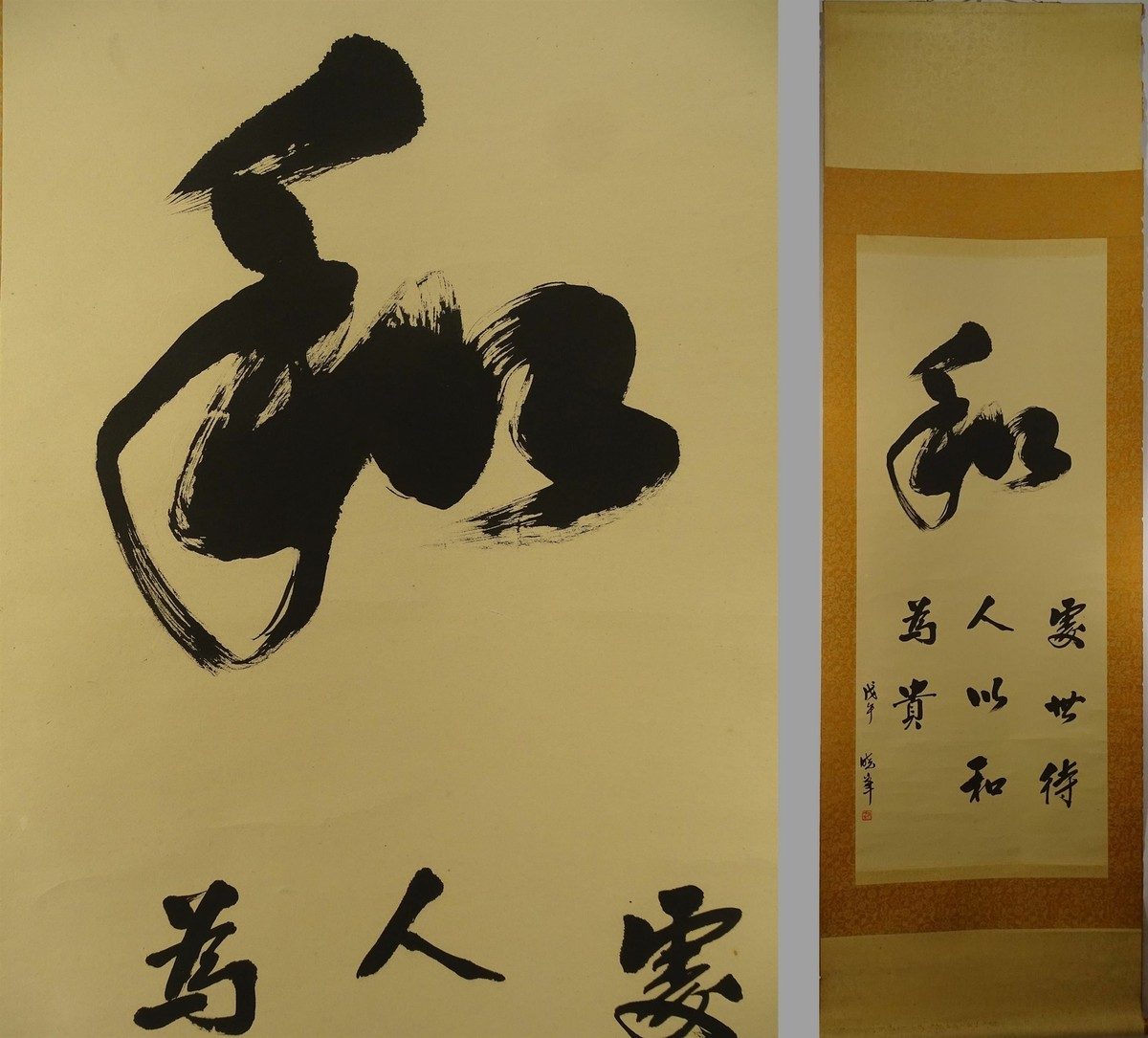
The main on-reading is ワ (wa). The kun-readings are the useful tell for how the character actually feels in Japanese: なごむ (nagomu), to feel calm or softened, and やわらぐ (yawaragu), to soften or ease. 和 is a common, everyday character taught in Japanese primary school, so readers meet it constantly rather than treating it as something exotic.
Its compounds show the same double life. 平和 (heiwa) is peace, 調和 (chōwa) is harmony or balance, and 和解 (wakai) is reconciliation. Then there is the other family, where 和 means Japanese style: 和食 (washoku) is Japanese cuisine, 和風 (wafū) is Japanese style, 和室 (washitsu) is a tatami room, 和紙 (washi) is Japanese paper, and 和服 (wafuku) is the traditional Japanese clothing that kimono and yukata belong to. Even the current era name, 令和 (Reiwa), is usually explained with that sense of auspicious harmony.
Heiwa, Heion, Anshin: The Other Japanese Words for Peace
Japanese splits peace across eight words that English flattens into one. 平和 (heiwa) is peace at the level of society, 和 (wa) is harmony between people, 平穏 (heion) is a settled personal situation, 安心 (anshin) is a secure heart, 静けさ (shizukesa) is quiet peacefulness, 穏やか (odayaka) is calm, 心の平和 (kokoro no heiwa) is inner peace, and 安泰 (antai) is lasting security. Which one fits depends on whether you mean a country, a room, or your own head.
- 平和 (heiwa) is peace at the level of society and ideology. It became especially loaded for Japan after the Second World War, and it is the word inside 世界平和 (sekai heiwa), world peace.
- 和 (wa) is harmony and balance, and it carries the idea of putting the group ahead of personal interest, which is treated as what keeps conflict low in the first place.
- 平穏 (heion) pairs 平 (flat, calm) with 穏 (gentle, mild). Compared with heiwa it is personal and situational: your surroundings and daily life are settled, not the world.
- 安心 (anshin) is 安 (safe) plus 心 (heart), literally a peaceful heart. It is the peace of knowing nothing bad is about to happen.
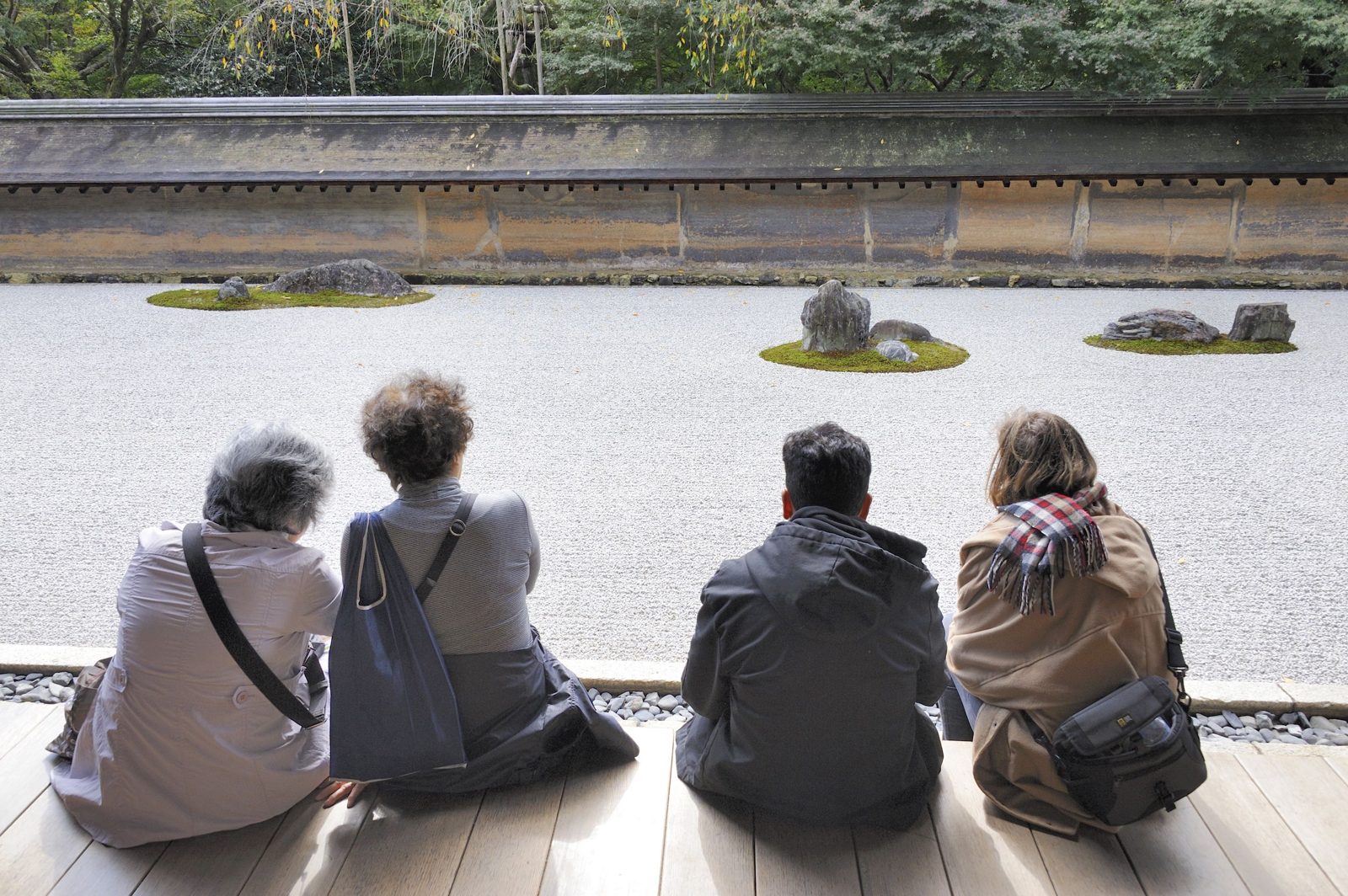
- 静けさ (shizukesa) is quiet peacefulness, and the quiet is atmospheric rather than a volume reading. It is the word for a tea ceremony or a walk through a zen garden.
- 穏やか (odayaka) describes calm things and calm people, a sea with no waves or someone who rarely argues.
- 心の平和 (kokoro no heiwa) is inner peace or peace of mind, a concept valued in Buddhist and mindfulness traditions and reached by letting go of anxieties rather than by winning anything.
- 安泰 (antai) is 安 (safe) plus 泰 (calm, stable), a formal word for lasting peace and security, used for a whole country or for a position that is not going anywhere.
ピース (piisu) exists too, the English word written in katakana, and it is casual to the point of being slang. In practice Japanese people use it for the two-finger gesture in photographs, which is worth separating out: the V sign is called a peace sign, but it is not a written Japanese translation of peace. If a design has to say peace, the word doing that job is 平和.
The Paper Crane, Sadako Sasaki, and Hiroshima
The crane was a traditional symbol of luck in Japan long before it was a symbol of peace, and the thing that turned it is a single biography. Sadako Sasaki (1943 to 1955) died of injuries caused by the 1945 atomic bombing of Hiroshima, and during her final illness she began folding paper cranes, following the tradition that whoever folds a thousand of them is granted a wish. The book Sadako and the Thousand Paper Cranes carried the story worldwide, and it has shaped peace movements ever since.
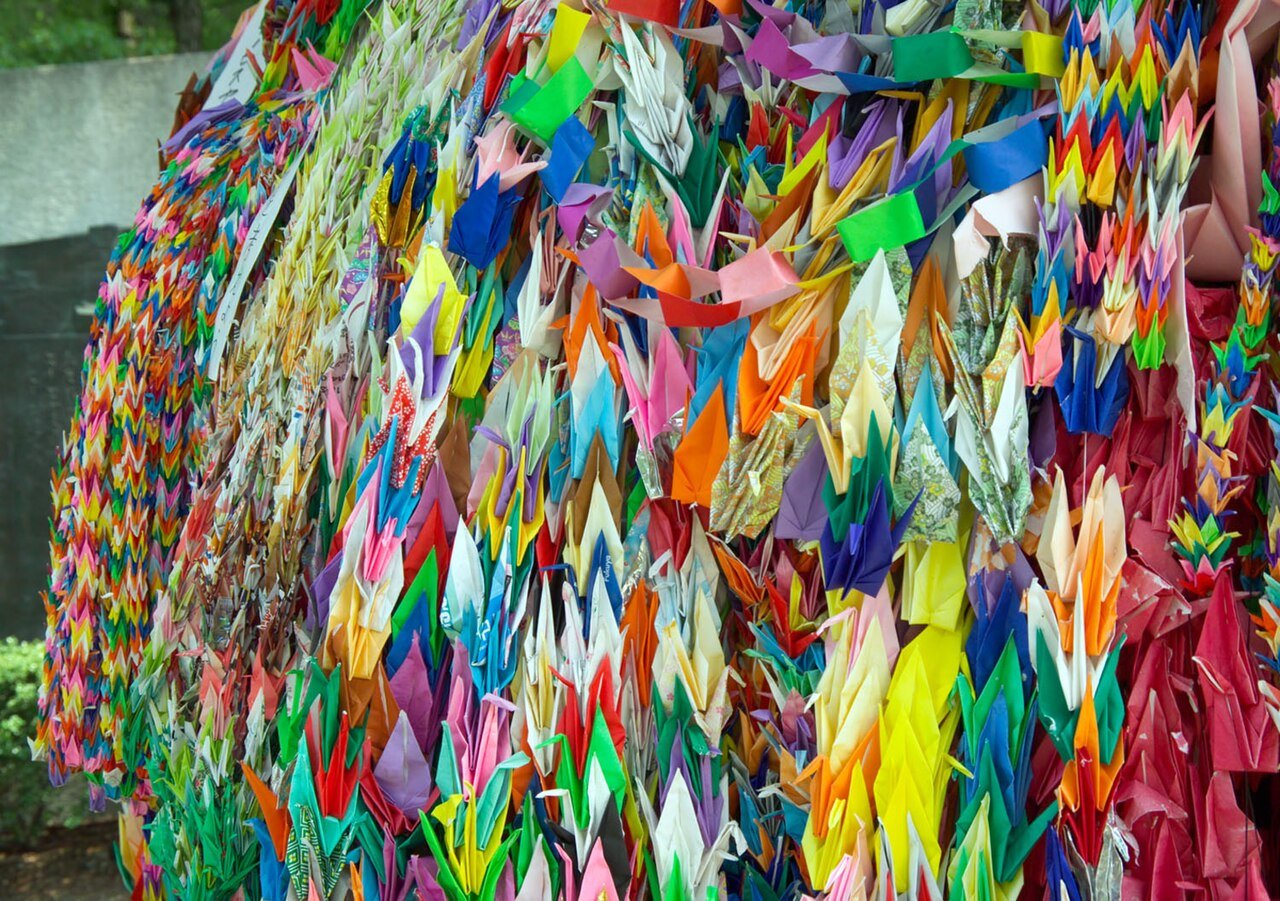
That thousand-crane set has a name, 千羽鶴 (senbazuru), and folding one is still an act people perform rather than a story they tell. Japanese school children dedicate senbazuru at the memorial to Sadako in Hiroshima Peace Park, and August 6 has become an annual peace day observed across Japan. Folded cranes are also what fills the peace museums, in Hiroshima and in Nagasaki, where they are displayed rather than tucked away.
There is a second, quieter symbol in those same parks that outsiders tend to miss. Water. Fountains, water sources and pools are built into the peace museums as memorials, because survivors described the injured, children among them, asking for water while they were in pain. Visitors leave water bottles at the monuments as tributes for the same reason. Moravian University students who studied in Japan wrote up how the water and the cranes work together across those sites, and the pairing tells you something about the Japanese approach: the symbol is usually an object someone hands over, not an emblem someone designs.
Compare that with how the West arrived at its peace symbols. The circled peace sign is a 1958 design by Gerald Holtom built from the semaphore signals for N and D, for nuclear disarmament, and the olive branch reaches back to 5th century BC Greece, where it stood for plenty and was believed to drive off evil spirits. Japan’s contribution to that vocabulary is a folded bird, and it is roughly seventy years old.
Choosing 和 or 平和 for a Design or a Tattoo
For a single verified glyph, 和 is the choice, and the honest label for it is peaceful harmony or calm balance rather than peace. It is short, visually balanced, and recognizable without reading as a slogan. When the wording has to say peace outright, especially peace as the absence of war, use 平和 and let it be two characters. The safest short copy for either is the plainest one: 和 means peaceful harmony, 平和 means peace.
Two cautions come with it. A tattoo is permanent, so confirm the nuance and the script with a qualified Japanese speaker before committing, and do not present 和 as a generic anti-war statement, because that is not the weight the character carries. Scope is the real decision here, the same way it is with 愛 and 恋, the two kanji for love, or with 力 and 強 for strength. Pick the character whose range matches what you actually mean, then label it in English so nobody has to guess.
Kamicrew is a Japanese-fashion apparel label, and it builds its prints around exactly this kind of imagery, kanji and motif both, so if 和 or the crane is the part that stuck with you, our Japanese-print shirts are where it turns into something you can wear.
FAQs
What is the Japanese kanji symbol for peace?
For a single kanji, 和 (wa) is the usual answer, since it means harmony, calm balance and peaceful relations. For the direct everyday word, especially peace without war or conflict, 平和 (heiwa) is clearer. 和 is eight strokes and 平和 adds 平 in front of it.
What does heiwa (平和) mean in English?
Peace, in the ordinary sense of a peaceful state. The word combines 平 (flat, even, calm) with 和 (harmony), so it describes peace as a balance being held rather than only the absence of fighting. It is the word in 世界平和 (sekai heiwa), world peace.
What is the difference between 和 and 平和?
和 is one character focused on harmony, balance and calm relations. 平和 is the two-character word for peace, particularly a peaceful state without war. In practice 和 suits a compact design about harmony, while 平和 is what you use when the text has to say peace.
What are the other Japanese words for peace?
Several, split by scale. 平穏 (heion) is a settled personal situation, 安心 (anshin) is feeling secure, 静けさ (shizukesa) is quiet peacefulness, 穏やか (odayaka) is calm, 心の平和 (kokoro no heiwa) is inner peace, 安泰 (antai) is lasting security, and 平和主義 (heiwa shugi) is pacifism as a policy.
Why is the paper crane a Japanese symbol of peace?
Because of Sadako Sasaki, who died in 1955 of injuries from the atomic bombing of Hiroshima and folded paper cranes during her illness, following the tradition that a thousand folded cranes earn a wish. Since then a thousand cranes, 千羽鶴 (senbazuru), have been dedicated at Hiroshima memorials, and the crane has read as peace far beyond Japan.
Kamicrew Best Seller

Dont Touch Me Yokai Ukiyo-E Japanese T-Shirt
$25.49+
$29.99
(15% off)


Summer Vibes Salty Kawaii Japanese Hoodie
$44.99+
$49.99
(10% off)


Japanese Pin Horror 80s Retro Aesthetics T-Shirt
$25.49+
$29.99
(15% off)


El Gran Maja Japanese Kaiju T-Shirt
$25.49+
$29.99
(15% off)


Who Wants The Perfect Body Japan Capybara Kawaii Japanese Unisex Shirt
$25.49+
$29.99
(15% off)


Monster 8 Mask Vintage Animal Hoodie
$44.99+
$49.99
(10% off)


I Hate People Japanese Opossum Vintage Animal Hoodie
$44.99+
$49.99
(10% off)


I Got That Dog In Me Small Turtle Vintage Animal T-Shirt
$25.49+
$29.99
(15% off)

The Creation Of Cat Ukiyo-E Japanese T-Shirt
$25.49+
$29.99
(15% off)