
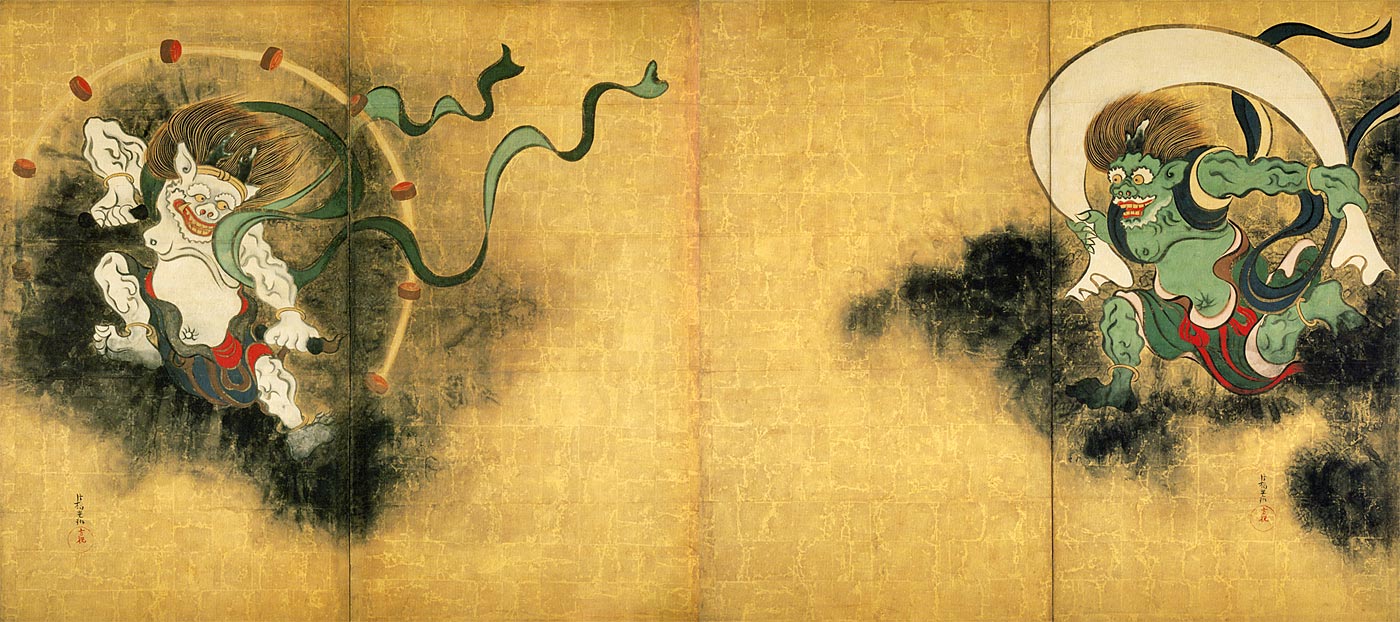
A traditional Japanese cloud tattoo means change. Clouds drift, break apart and reform, so the motif stands for the transient side of life and for the growth that comes out of it. The same shapes also carry good fortune and the divine, because Japanese painters put clouds around gods and Buddhas. On skin they do a second job: the swirls frame the main subject, fill the empty space in a sleeve and tie a large piece together.
That double role, meaning plus composition, is why clouds appear in so much traditional Japanese work without ever being the loudest thing in it. Below is what the symbolism rests on, where the motif came from, how artists draw it, and which subjects it is usually drawn around.
What a Traditional Japanese Cloud Tattoo Means
A traditional Japanese cloud tattoo means change, freedom, mystery, and good fortune or the divine. Clouds are not treated as weather in Japanese art. They appear in old stories and paintings as markers of the changing seasons and of the fleeting moments inside a life, and tattooing inherited that reading whole. Most people who wear cloud work are wearing one of those four ideas.
Change, Transformation, and Passing Time
Clouds float without stopping, which is the plainest reason the motif reads as the transient nature of life. Worn deliberately, it can mean going with the flow and dealing with problems as they arrive rather than bracing against them. A cloud sleeve, spread across a whole arm, has the same effect at scale: it keeps reminding the wearer that time is moving.
Freedom and Life on Your Own Terms
Nothing holds a cloud in place. That refusal to settle is why the design is read as freedom, and why it often marks a decision to live on one’s own terms. Some wearers push the reading further and take it as a promise to keep improving instead of settling for less.
Mystery and What Sits Behind the Cloud
Clouds hide things. They block the view and keep whatever is behind them out of sight, and Japanese art has long leaned on that. As a tattoo the association turns outward: it suits people drawn to the obscure, who would rather go looking for the hidden parts of the world than take the visible ones as the whole picture.
Good Fortune and the Divine
The oldest layer of the meaning is religious. Clouds signal good fortune and the divine in Japanese painting, where they are shown surrounding gods and Buddhas, and in Japanese culture natural elements are held to carry divine power in their own right. Cloud work can therefore say something quite specific: that the wearer takes the celestial side of nature seriously.
Clouds in Japanese Painting and Art
Clouds in Japanese painting are compositional devices rather than weather. On a folding screen, bands of stylized cloud cut across the surface and separate one episode from the next, so several scenes can share a single panel without colliding. Japanese-style cloud tattoos come straight out of these older art forms, and the compositional habit transferred along with the symbolism.
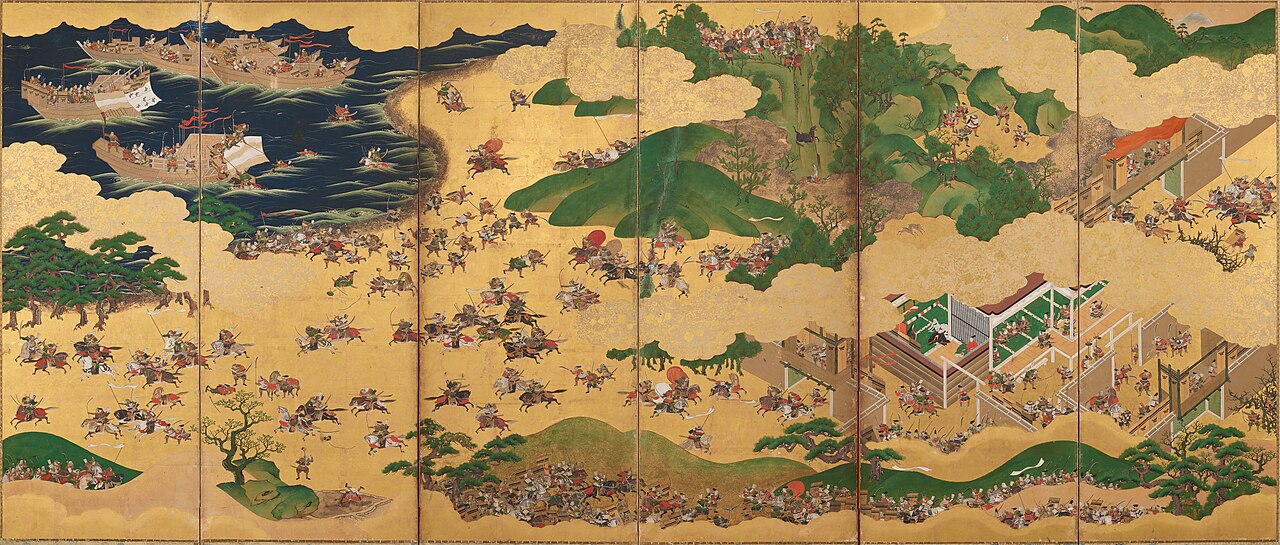
In tattooing the clouds do the same work at body scale. They frame a scene, carry movement and transformation through it, fill the space in a sleeve and add depth where a design would otherwise sit flat.
How Clouds Entered Irezumi
Clouds entered Japanese tattooing in the Edo period, from 1603 to 1867, when Japanese decorative tattooing developed into the advanced art form it is known as today. The catalyst was printed: the 1757 first Japanese edition of the Chinese novel Suikoden showed heroic men whose bodies were covered with dragons and other mythical beasts, flowers, ferocious tigers and religious images, and readers wanted the same thing on their own skin.
Cloud motifs in irezumi, the traditional Japanese art of tattooing, are a long-standing practice that has kept its symbolic roots while the style around it changed. Woodblock artists supplied the demand, using their printing tools to tattoo and working with Nara ink, which turns blue-green under the skin. That is the lineage behind traditional Japanese tattooing: the same hands cut the prints and cut the skin, so the print vocabulary moved across intact. Clouds, waves and wind bars entered the design set at that point and stayed there, and the motifs the prints made famous, dragons, tigers, cherry blossoms and koi, are still what cloud work is drawn around. The hand method itself survived as tebori, with its feathering motion known as hanebori and its thrusting motion known as tsuki-bori.
What Makes a Cloud Look Japanese
A Japanese cloud is softer and more swirling than a real one, and the bold outlines and ornamental patterning of irezumi are what set it apart from a generic cloud tattoo. Its curves are drawn to complement whatever else sits in the piece, usually wind or water, and its depth comes from shading and negative space rather than from detail.
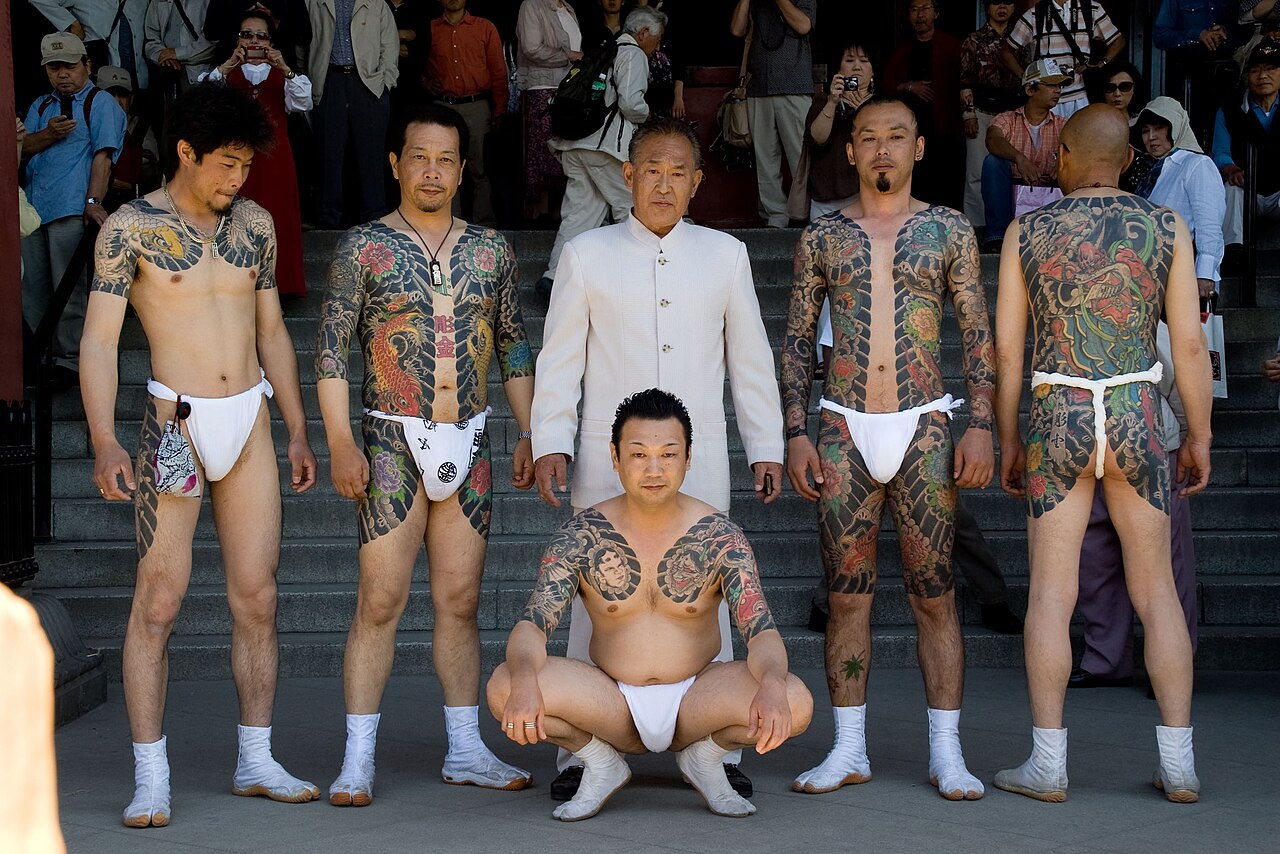
That shared shape language is why cloud work and Japanese wave art look so much alike. Color runs from the classic black and gray through to vivid blues and reds depending on the rest of the design, and deep black and brown shading can be pushed until a forearm reads as a stormy sky.
Two things separate a good cloud from a decorative squiggle. The first is the stencil, which decides whether the shapes flow with the body or fight it, and on a large piece that decision is made before any ink goes in. The second is what the artist does with shading and negative space, since the depth in traditional cloud work comes from the gaps as much as the lines.
Design Variations and Styles
Cloud designs hold up at almost any size, from a full back down to a wrist. The variations people ask for most are forearm clouds, full sleeves, half sleeves, traditional color work, minimalist clouds, shoulder pieces, small wrist or hand clouds, and the sun and cloud pairing. Placement shifts the emphasis of the motif more than it changes the meaning.
Forearm clouds
Several cloud motifs worked in deep black and brown ink, shaded heavily enough to read as an overcast sky. On the forearm the piece is easy to show, and the placement suits a reading built on steady daily effort rather than one dramatic change.
Full sleeve
Cloud patterns running the length of the arm, with clear swirls lifted by shading. A sleeve gives the motif room to say what it says best, that time keeps moving, and it doubles as the background any later addition can sit inside.
Half sleeve
Swirling clouds in deep black ink over half a limb. Wearers often choose it for balance and symmetry, and for the sense that the design connects them to something outside themselves.
Traditional color work
A cluster of clouds inked the traditional way, with a heavy black outline holding vivid color inside it. This is the version that captures the ethereal side of the motif and reads as a reminder to notice the present while it lasts.
Minimalist clouds
A pared-back cloud pattern for people who want the meaning without the density. Small and simple, it still points at the fleeting nature of time and at an appreciation of the natural world.
Shoulder placement
Cloud shapes across the shoulder, given depth by shading and open space. Because clouds screen the harsh sun, the placement carries a protective reading, and it suits anyone marking a stretch of difficulty they came through.
Small clouds on the wrist or hand
A single bold cloud, unmistakably Japanese despite the size. It signals a free spirit and a pull toward growth, and it works on the wrist or the hand where a larger piece would not.
Sun and clouds
Two natural forces in one design, inked in irezumi style. The sun brings light and warmth while the clouds bring mystery and darkness, so the pairing is chosen by people after balance, and both halves are tied to divinity and the pursuit of enlightenment.
Combining Clouds With Other Motifs
Clouds rarely stand alone in Japanese tattooing. They are paired with dragons, phoenixes and samurai to tell a story, and in a sleeve the cloud might wind around the creature so it reads as moving through the sky. The cloud supplies the backdrop, the depth and the movement that hold the other motifs together in one design.
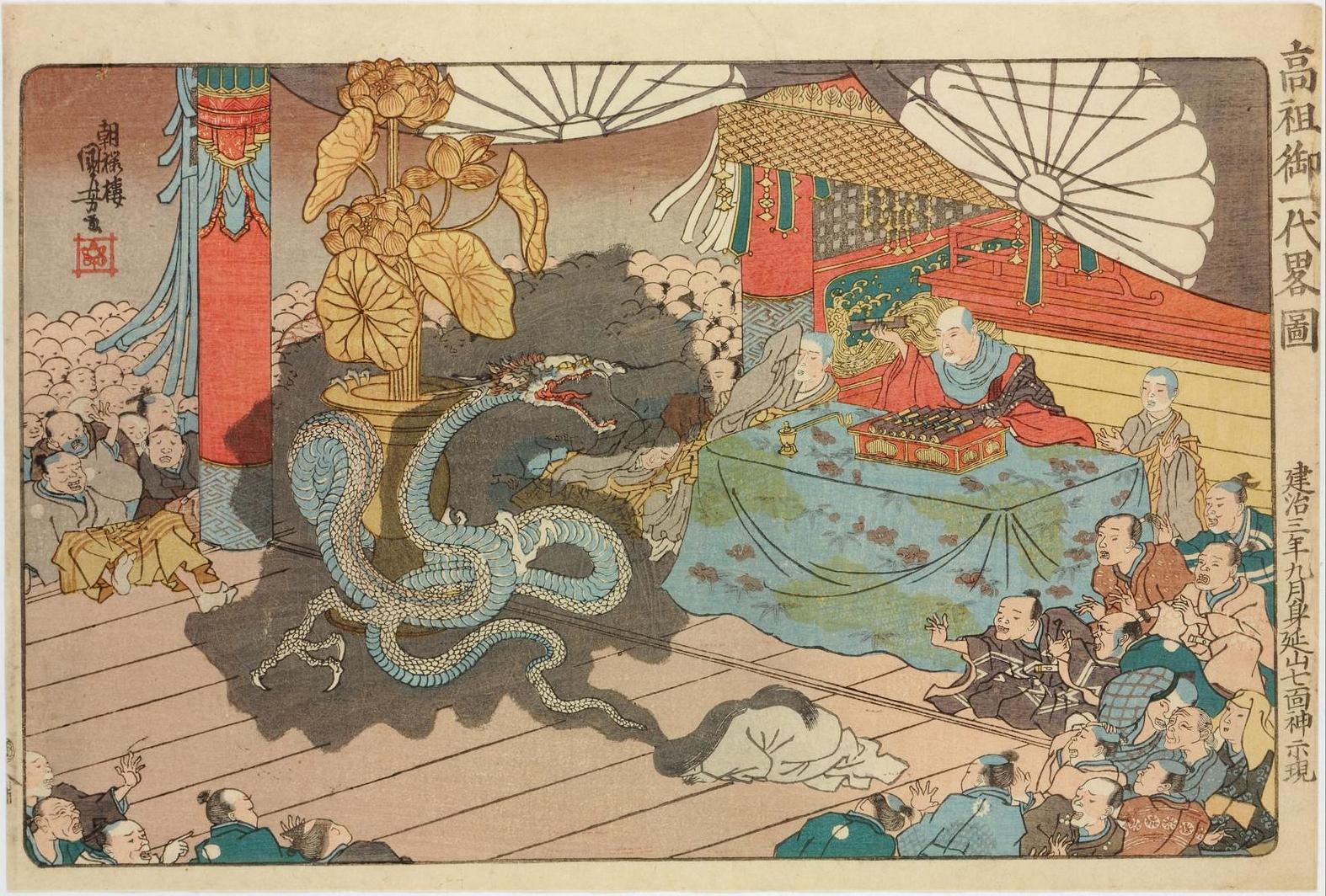
Kuniyoshi drew exactly that around 1835, sending a dragon up out of a dark cloud in the middle of a crowded temple hall. What the pairing gains is a narrative: each element contributes, and the cloud is what keeps them legible as one scene.
| Paired motif | What the pairing reads as |
|---|---|
| Dragon | Strength and protection, moving through the sky |
| Phoenix | Wisdom and rebirth |
| Samurai | A story told around a figure |
| Koi | Part of the classic irezumi motif set |
| Cherry blossoms | Transient beauty, doubled |
| Sun | Light against mystery, held in balance |
The Japanese dragon tattoo is the most common companion, and the cloud is what makes it legible as a sky creature rather than a serpent on a blank arm. Pairing clouds with cherry blossoms stacks one transient thing on another, which is why that combination reads so heavily.
Impermanence, Buddhism, and Personal Growth
Cloud tattoos carry the Buddhist idea of impermanence. Buddhist teaching holds that all conditioned existence, without exception, is transient, evanescent and inconstant, a doctrine carried in the Pali term anicca and the Sanskrit anitya, and clouds are the most ordinary image of that idea available.
That reading is not a modern invention laid over an old motif. Painters had already placed clouds around Buddhas. Tattooing kept the association and let wearers use it personally.
In practice that is where most cloud tattoos land. People choose them for what they represent as much as for how they look: life’s constant changes, the idea that a cloud eventually passes, a stretch of hard years survived, a growth curve still in progress. The philosophical side of Japanese culture returns often to the transient beauty of the world, and a cloud tattoo is a compact way of agreeing with it. That is also why the same design can mean very different things on two people, and why artists ask what you want it to say before drawing anything.
Choosing, Placing, and Caring for Cloud Work
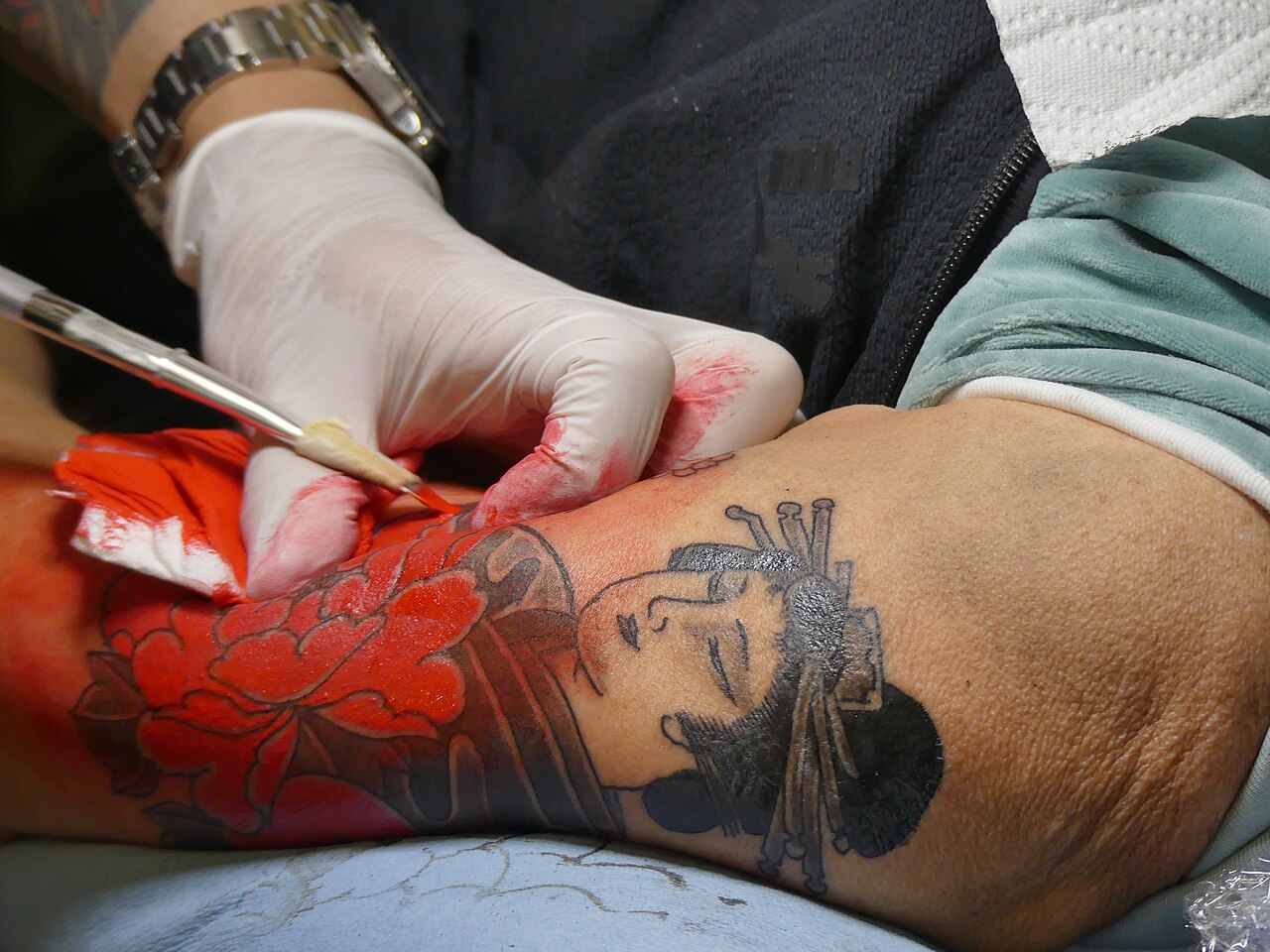
Choosing cloud work runs in three steps: settle which meaning you want the piece to carry, find an artist experienced in traditional Japanese tattooing, then follow their aftercare instructions. Size and placement belong in that consultation, before the stencil is cut. Keeping the tattoo moisturized and out of the sun is what holds heavy cloud shading crisp long term.
Deciding what you want it to say
Start with the meanings and work out which one is actually yours, because the design follows from that answer. Looking at cloud stencils shows the range, from dense traditional clusters to a single minimal shape. Size matters here too: clouds hold up on large body parts and in a minimal treatment on small areas, but the two decisions are not interchangeable.
Working with an artist
Someone experienced in traditional Japanese work is worth finding, because style compatibility and an understanding of the cultural and symbolic side of the motif both show in the finished piece. Expect a conversation about design, size and placement before the stencil is cut. It is also worth being straight about the cultural question: these motifs come from somewhere, and respecting their origins and meanings is part of choosing them well. Japanese tattooing still carries social and professional friction in places, which is a practical thing to weigh rather than a reason to avoid the art form.
Aftercare
Follow the artist’s instructions closely. Clean gently, use the ointment they recommend and keep the tattoo out of the sun while it heals. Long term, keeping it moisturized and protected from sun exposure is what holds the lines crisp and the colors strong, and on cloud work with heavy shading that maintenance is the difference between depth and mud.
Wearing the Motif Without the Needle
Cloud work is worth living with before it is permanent, and print is one way to test it. Kamicrew is a Japanese-fashion streetwear label that builds apparel around traditional Japanese motifs, clouds among them, so the Japanese-print shirts are where these swirling shapes turn up on fabric rather than skin.
FAQs
What does a Japanese cloud tattoo symbolize?
It symbolizes change, transformation and the impermanence of life, and depending on the wearer it also reads as freedom, mystery, or personal growth. The motif carries good fortune and the divine as well, since Japanese painting places clouds around gods and Buddhas.
What is the difference between a Japanese cloud tattoo and a regular cloud tattoo?
A Japanese cloud is stylized rather than realistic: softer, more swirling, and held together by the bold outlines and ornamental patterning of irezumi. It is also rarely the subject on its own, because Japanese cloud work is usually drawn as the background that frames a dragon, a phoenix or a samurai.
Can Japanese cloud tattoos be part of a larger design?
Yes, and that is their most common use. Cloud motifs work as a background or complement to other symbolic elements, filling space in a sleeve and creating one cohesive piece rather than a set of unrelated tattoos.
How do I choose the right Japanese cloud tattoo design?
Research the traditional motifs, decide which meaning you actually want to carry, then consult an artist who specializes in Japanese tattoo art. Placement and size should be settled in that conversation, not afterwards.
How should I care for a new Japanese cloud tattoo?
Keep it clean, keep it moisturized and keep it out of strong sun, especially while it is healing. Use the ointment your artist recommends and avoid sun exposure during the healing window.
What does a cloud and dragon tattoo mean together?
The dragon brings strength and protection, and the cloud puts it in the sky, so the pairing reads as a powerful creature in motion. The cloud also gives the composition its depth and movement, which is why the two are drawn together so often.
Kamicrew Best Seller

Dont Touch Me Yokai Ukiyo-E Japanese T-Shirt
$25.49+
$29.99
(15% off)


Summer Vibes Salty Kawaii Japanese Hoodie
$44.99+
$49.99
(10% off)


Japanese Pin Horror 80s Retro Aesthetics T-Shirt
$25.49+
$29.99
(15% off)


El Gran Maja Japanese Kaiju T-Shirt
$25.49+
$29.99
(15% off)


Who Wants The Perfect Body Japan Capybara Kawaii Japanese Unisex Shirt
$25.49+
$29.99
(15% off)


Monster 8 Mask Vintage Animal Hoodie
$44.99+
$49.99
(10% off)


I Hate People Japanese Opossum Vintage Animal Hoodie
$44.99+
$49.99
(10% off)


I Got That Dog In Me Small Turtle Vintage Animal T-Shirt
$25.49+
$29.99
(15% off)

The Creation Of Cat Ukiyo-E Japanese T-Shirt
$25.49+
$29.99
(15% off)