
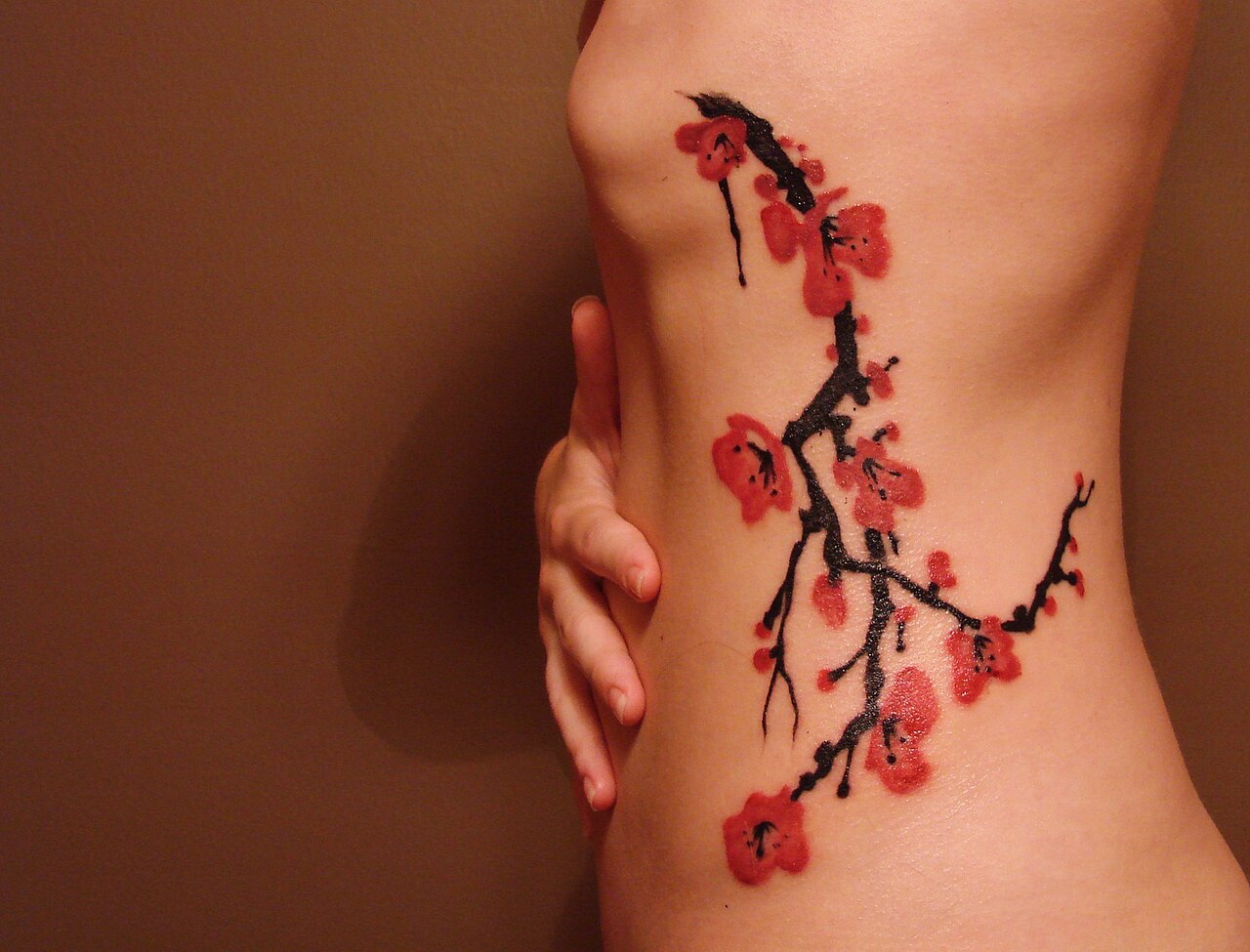
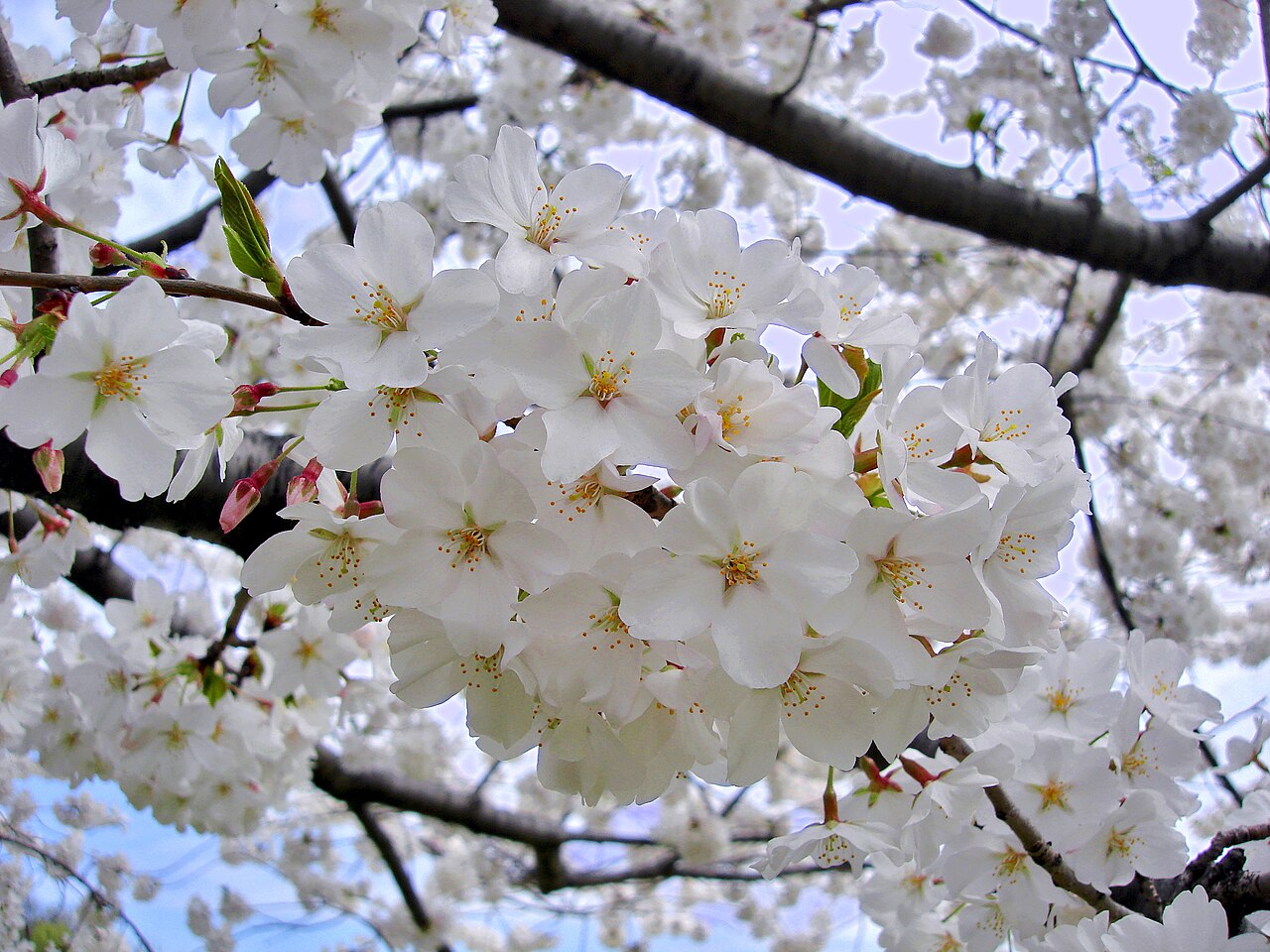
A Japanese blossom tattoo means impermanence. Sakura, the Japanese cherry blossom, opens, holds for a few days, then lets go, and that short life is exactly what the design points at. Everything else the flower carries, rebirth, beauty, strength, and the samurai’s readiness to die at the peak of his power, grows out of that one idea.
Which is why the same branch reads differently depending on who wears it and where it sits. Below are the core meanings, how Japan, China and Korea each read the flower, what your design choices do to the message, and where the tattoo tends to land on the body.
What a Japanese Blossom Tattoo Means
A Japanese blossom tattoo means impermanence first, and five further readings grow out of that: rebirth, beauty and feminine grace, the samurai code of Bushido, the strength of the tree that survived winter, and humbleness. Japanese aesthetics gathers the whole set under mono no aware, usually translated as the beautiful sadness of things.
Ask ten people wearing sakura and you get variations on that one theme.
The Blossom Stands for Impermanence
Life changes with every breath, and cherry blossoms last only days. That is where almost every artist starts, treating the tattoo as a reminder to notice the present while it is still here. The horticulture backs the poetry up. The US National Park Service defines peak bloom as the day 70 percent of the Yoshino cherry blossoms open, and records that the trees bloom for a period of several days, with rain, wind or frost cutting it shorter still.
A rose reads as love and a lotus reads as growth. Sakura points at time running out.
And for Rebirth, Right After
The bloom also announces that winter is over. Petals on a bare branch are the first proof spring arrived, so the same tattoo carries new beginnings and hope alongside the loss. In Japan the bloom is read as an opening rather than an ending, which is why the flower attaches so easily to fresh starts.
Beauty, Love and Feminine Grace
In Japan the flower is tied to feminine beauty, elegance and romanticism, and that association is a large part of why it became a tattoo at all. China pushes it further toward love and attraction, and cherry blossoms turn up in wedding ceremonies there as a sign of good luck in love.
The Samurai Read It as Bushido
Warriors made the connection first, and it is the reading that gives the flower its edge. For a samurai the blossom described the ideal life: burn brightly, then let go without hesitation. Falling petals mirrored a warrior’s willingness to die at the peak of his power, fully spent on his purpose, which is why sakura sits so close to Bushido and to courage, loyalty and living aware of mortality. The tattoo let a man carry both halves at once, the certainty of a short life and the duty to still find it beautiful.
The Tree Itself Stands for Strength
Look past the flowers and there is a trunk that survived a hard winter to produce them. That resilience is its own meaning, and it is why the design reads as strength rather than fragility. Strength in Japanese tattooing is not only written out in kanji like 力 and 強; sometimes it is a tree that made it to spring.
Both halves matter. The wood is hard and robust while the blossoms stay delicate and sweet, and samurai used that contrast on purpose.
Sakura Across Asia and What Each Culture Reads Into It
Japan, China and Korea all read the cherry blossom, and each one emphasizes something different. Japan treats sakura as its national flower and a symbol of how brief life is, Buddhism reads it as living in the present, China reads it as feminine strength and independence, and Korea ties it to national pride and renewal. Humbleness runs under all four readings.
The flower travels, and the meaning shifts with the border.
In Japan, Sakura Is the National Flower
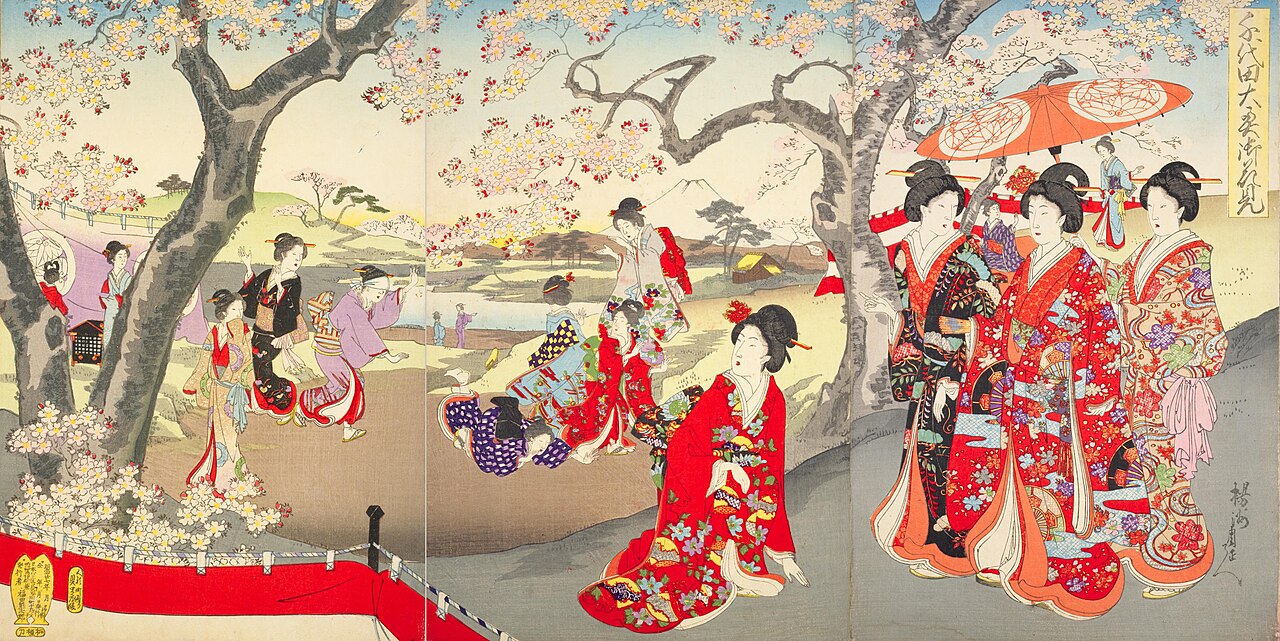
Japan treats the cherry blossom as its national flower, standing for the beauty of life and how semi-permanent that life turns out to be. Innocence, spring and simplicity come with it. Hanami, literally flower viewing, is the practice built around the bloom, and it dates back to the Nara period of 710 to 794 CE. It still runs as informal picnics under the trees, with yozakura viewing carrying on after dark under floodlights.
Buddhism Reads It as Living in the Present
Buddhist thought puts the weight on the present moment, and a flower that blooms briefly before disappearing makes that point without words. Worn as a tattoo it stands for self-knowledge and the work of gaining wisdom.
In China It Is Feminine Power
China reads sakura as feminine beauty, strength and independence, closer to self-reliance than to fragility. The Taoist idea of harmony with nature sits underneath it, and the tree surviving a harsh winter before blooming is again the point. What gets celebrated is endurance, and the balance between softness and power.
In Korea It Leans Patriotic
Korea ties the blossom to national identity and pride. As a recognized national symbol it stands for renewal, happiness and the promise of a fresh start, and it attaches easily to spring romance and new relationships.
And There Is Humbleness
One reading runs across all of them. Because the flowering cycle is so short, the flower argues for living humbly alongside other people, since anyone’s existence can be cut off in seconds.
Who Wears a Cherry Blossom Tattoo
Anyone can wear a cherry blossom tattoo. Sakura scales from a small wrist branch to a full back piece, which is why it reads well on very different people, and the additions are what shift with the wearer. Women often pair the blossoms with hearts, butterflies, stars or a full sakura tree, while men more often bring in skulls, fire or a geisha.
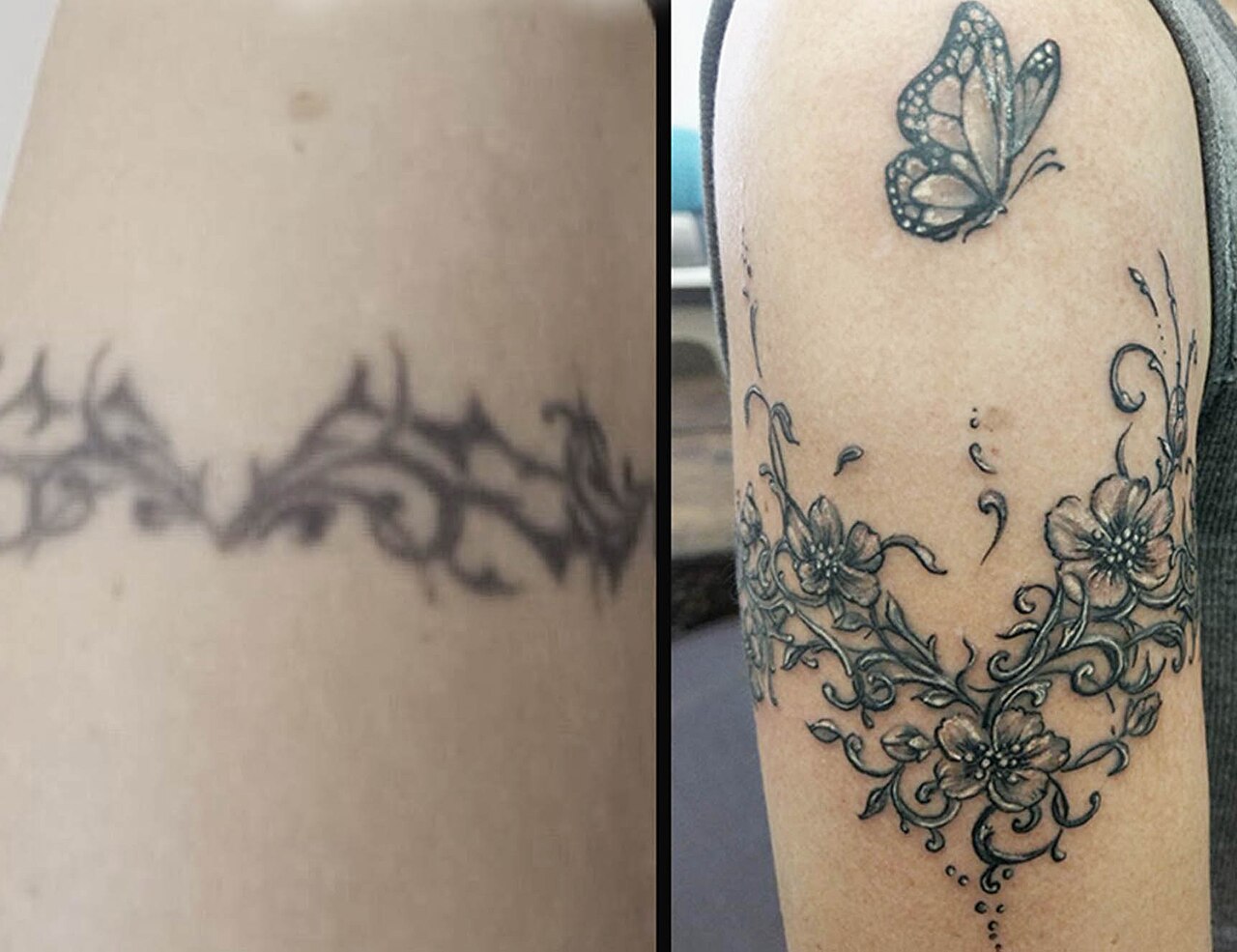
None of that is a rule, and treating it as one is how you end up with a tattoo that belongs to a template instead of to you.
How the Design Changes the Meaning
Design choices move the message more than the flower does. Wind lines and falling petals push the reading toward impermanence and motion, a bare branch holding only a few petals reads as loss or as time already gone, and water reflections calm the whole piece down into something meditative. Companion motifs add a second meaning on top.
A dragon coiled through the branches adds protection and power on top of renewal, while koi swimming beneath the blossoms turns the piece into a story about perseverance.
Placement belongs to the design rather than to the paperwork afterwards. A wrist piece reads as intimate. A back piece has room for a full scene.
Style Choices for a Sakura Tattoo
Five styles cover most sakura work: traditional Japanese irezumi, fine line, watercolor, illustrative and x-ray floral. They differ in line weight, color and scale, so the style sets how the piece looks while the motifs and the petal treatment do the work of shifting what it means.
Traditional Japanese, or Irezumi
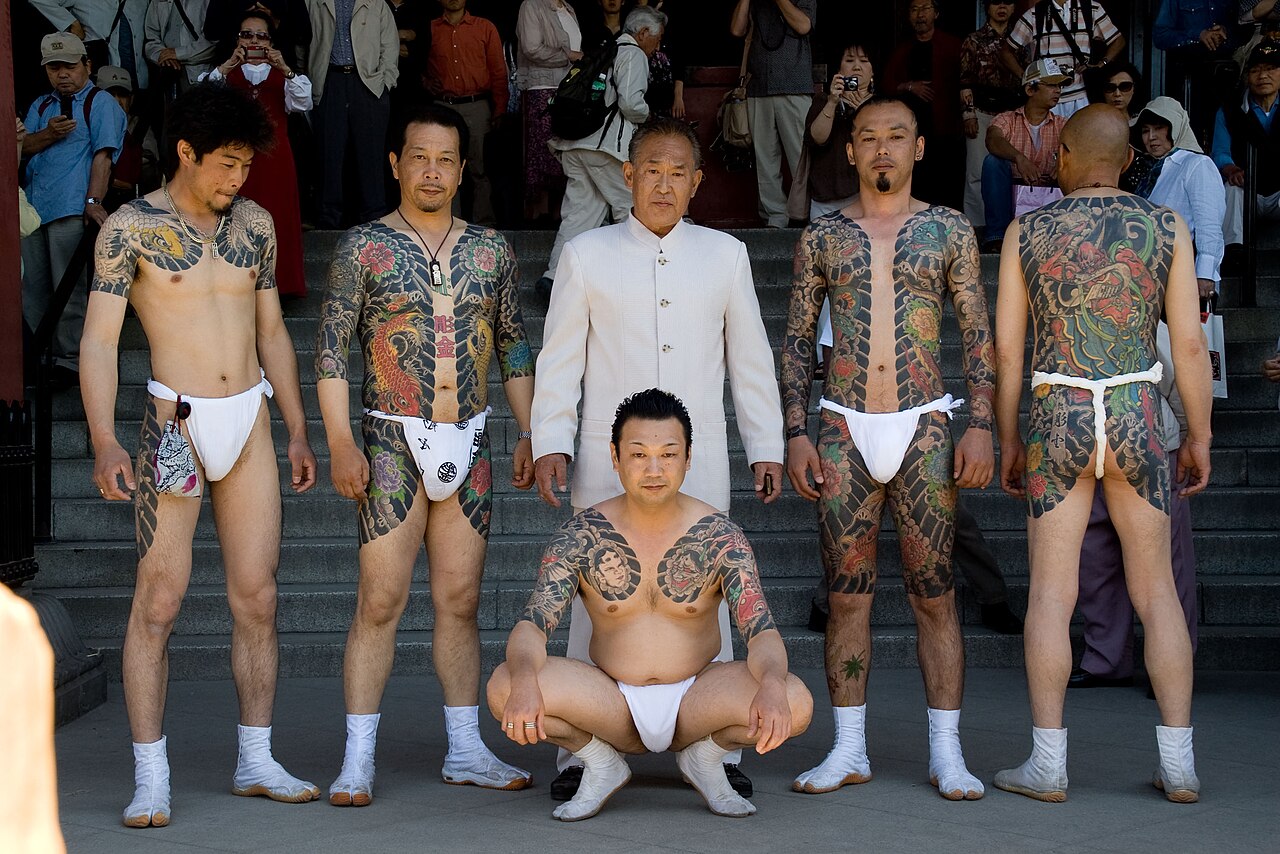
Bold outlines, saturated color, large scale. Irezumi rarely leaves the blossom on its own, setting sakura against waves, dragons and wind bars across a full sleeve or a back piece, often beside a koi.
Fine Line
Thin, precise linework with minimal shading. It stays soft and wearable, which is why it suits forearm wraps, ribs and collarbones.
Watercolor
Soft washes of pink and blush with no hard outlines. The result feels dreamy and organic, closer to a painting than to a tattoo.
Illustrative
A looser interpretation, with exaggerated proportions, abstract elements and sometimes geometric pattern worked in. At the abstract end, artists mix abstract branches with realistic flowers so only part of the piece resolves.
X-Ray Floral
The newest of the group. It shows the internal structure of the flower, translucent and almost scientific.
Where to Place a Cherry Blossom Tattoo
Placement decides how loud a cherry blossom tattoo reads. The shoulder and collarbone give the branch a natural line to follow, the forearm suits a wrap, the wrist stays small and delicate, and a full arm or hikae has room for a whole scene. An ankle sakura stays quiet, while the hip takes color well but is one of the more painful places to sit for.
Shoulder or Collarbone
A good fit for traditional, realistic work in pink. The collarbone in particular gives the branch a natural line to follow.
Forearm
Traditional Japanese style sits well here, and a forearm wrap is one of the standard homes for fine line work.
Wrist
Small and delicate, and the spot where the abstract-illustration hybrid tends to land.
Full Arm and Hikae
Sakura across the entire arm gives the branch somewhere to go. Hikae goes further, black ink covering arms, shoulders, collarbone, back and chest.
Ankle and Hip
An ankle sakura in black ink stays quiet. The hip takes delicate pink and green well, though it is one of the more painful places to sit for.
FAQs
What does a Japanese cherry blossom tattoo mean?
It means impermanence above all. Sakura blooms for only a few days, so the tattoo reads as a reminder that life is short and worth noticing while it lasts. Rebirth, beauty, feminine grace, resilience and the samurai ideal of dying at the peak of one’s power all attach to that same core idea.
Can anyone get a cherry blossom tattoo?
Yes. The blossom is a shared symbol across Japan, China and Korea, and its core meanings of impermanence, rebirth and beauty are not restricted to one group. Knowing what the flower carries before you commit is the respectful part, not avoiding it.
Is a sakura tattoo the same as a cherry blossom tattoo?
They are the same flower. Sakura is the Japanese word for cherry blossom, so a sakura tattoo and a Japanese cherry blossom tattoo describe one design under two names.
Does the meaning change if the petals are falling?
It sharpens. Wind lines and falling petals push the piece toward impermanence and movement, while a bare branch with only a few petals left reads as loss or as time already passed.
Do cherry blossom tattoos read as feminine?
In Japan the flower is tied to feminine beauty and elegance, and in China to feminine power and independence. The samurai reading is just as old, so the design carries a warrior’s meaning as easily as a romantic one.
If a sakura branch is the piece you keep coming back to, the same traditional Japanese visual language shows up in what Kamicrew prints. The Kamicrew ukiyo-e shirt collection works in that woodblock idiom, if you want to wear the motif for a while before committing it to skin.
Kamicrew Best Seller

Dont Touch Me Yokai Ukiyo-E Japanese T-Shirt
$25.49+
$29.99
(15% off)


Summer Vibes Salty Kawaii Japanese Hoodie
$44.99+
$49.99
(10% off)


Japanese Pin Horror 80s Retro Aesthetics T-Shirt
$25.49+
$29.99
(15% off)


El Gran Maja Japanese Kaiju T-Shirt
$25.49+
$29.99
(15% off)


Who Wants The Perfect Body Japan Capybara Kawaii Japanese Unisex Shirt
$25.49+
$29.99
(15% off)


Monster 8 Mask Vintage Animal Hoodie
$44.99+
$49.99
(10% off)


I Hate People Japanese Opossum Vintage Animal Hoodie
$44.99+
$49.99
(10% off)


I Got That Dog In Me Small Turtle Vintage Animal T-Shirt
$25.49+
$29.99
(15% off)

The Creation Of Cat Ukiyo-E Japanese T-Shirt
$25.49+
$29.99
(15% off)