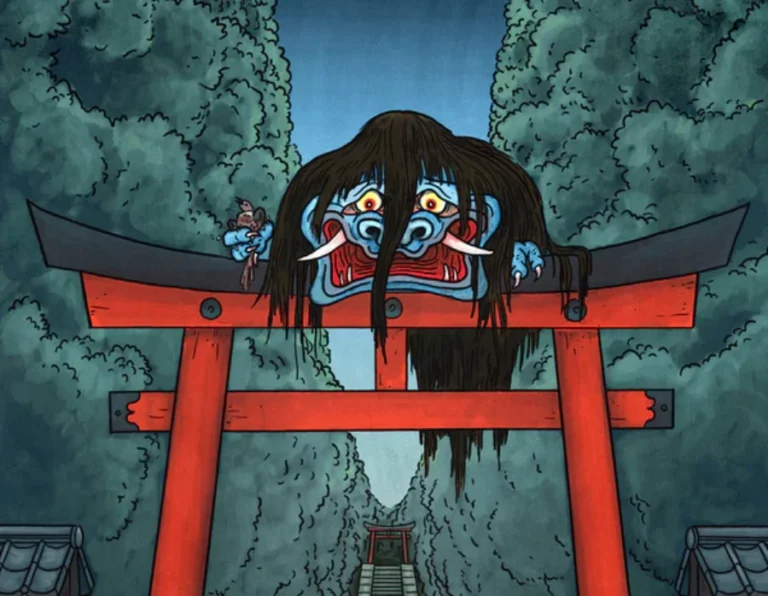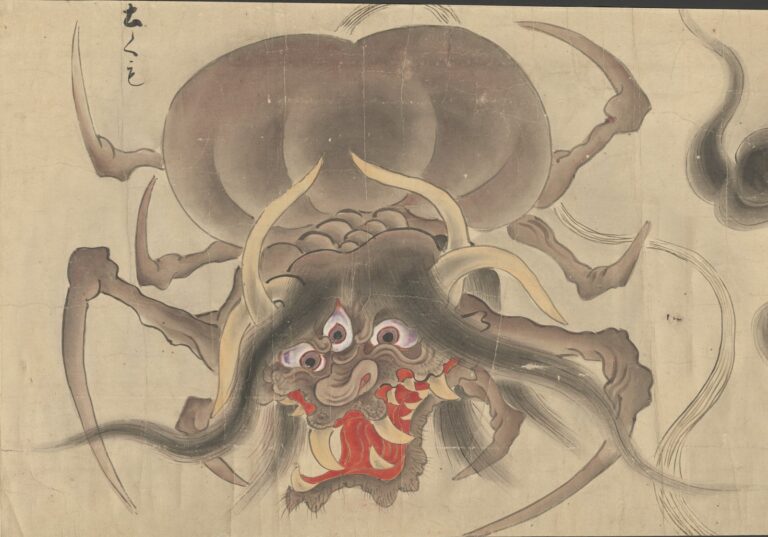


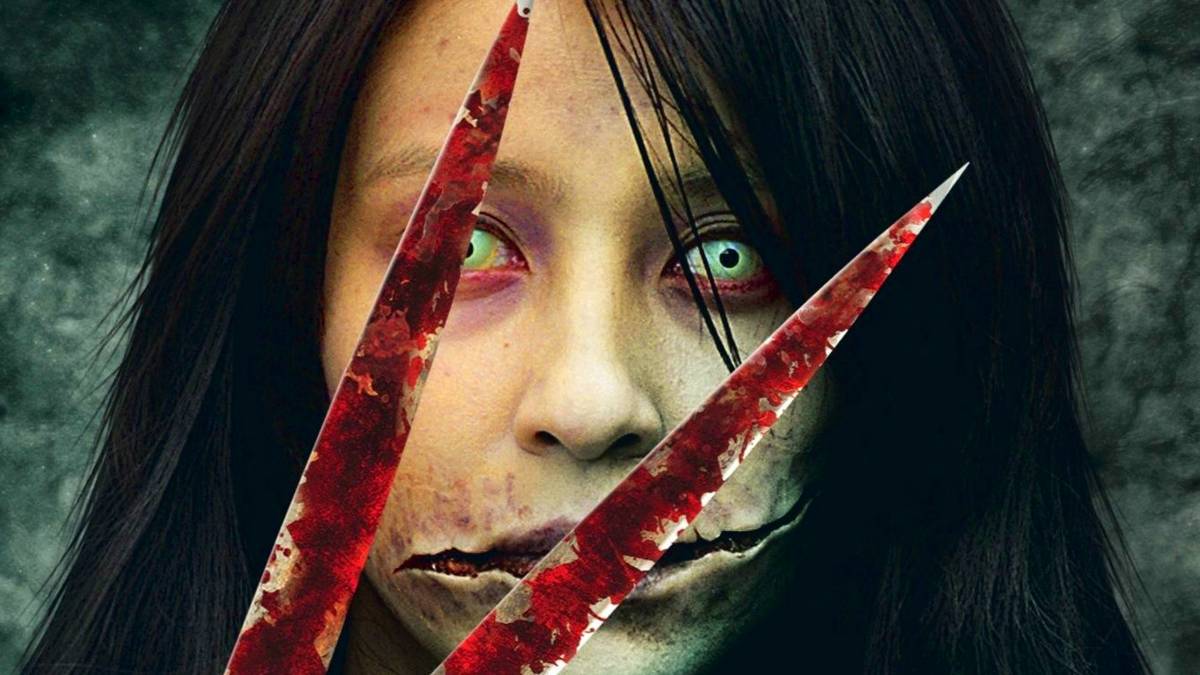
Kuchisake Onna (口裂け女, “slit-mouthed woman”) is a Japanese urban legend about a masked woman who stops someone alone at night, asks whether she is pretty, then lowers the mask to show a mouth cut open from one ear to the other. Unlike almost every other figure in Japanese folklore, she can be dated: the rumor surfaced in Gifu Prefecture in late 1978, reached the whole country inside about six months, and faded by the summer of 1979. She is a twentieth century invention rather than an inherited yokai, and she was catalogued into the yokai canon only after the panic. What follows separates what the rumor actually said from the origin stories attached to her afterwards.
Kuchisake Onna at a glance
Kuchisake Onna is the masked slit-mouthed woman of a Japanese rumor that began in Yaotsu, Gifu Prefecture, in late 1978 and spread nationwide by spring 1979. She is described as a tall woman with long black hair who carries scissors, asks “Watashi, kirei?” (Am I pretty?), and reveals a mouth cut from ear to ear. The table below collects the recurring details.
| Detail | What the record says |
|---|---|
| Japanese name | 口裂け女 (kuchisake onna), also written くちさけおんな |
| English name | The slit-mouthed woman (literal translation) |
| First reported | Late 1978, Yaotsu, Gifu Prefecture |
| National spread | Within roughly six months, peaking in spring 1979 |
| Faded | Around the summer school holidays of 1979 |
| Appearance | Long straight black hair, pale skin, roughly 175 to 180 cm, lower face hidden by a surgical mask, fan, or handkerchief |
| Weapon | Usually scissors, sometimes a knife, sickle, or scythe |
| Signature question | “Watashi, kirei?” (Am I pretty?), then “Kore demo?” (Even now?) |
| Classification | Modern urban legend, catalogued among the yokai by Shigeru Mizuki |
What does Kuchisake Onna mean?
Kuchisake onna means “slit-mouthed woman”. The name is written 口裂け女: 口 (kuchi) mouth, 裂け (sake) split or torn, 女 (onna) woman. English retellings render it as the slit-mouthed woman, which is a literal translation rather than a nickname. In Japanese she is also written in kana as くちさけおんな.
Her question carries a pun that does not survive translation. She asks “Watashi, kirei?”, meaning “Am I pretty?”, and kirei is a near homophone of kire, to cut. The question and the threat are the same sound, which is part of why the line stuck in the mouths of a generation of schoolchildren.
What does Kuchisake Onna look like?
Kuchisake Onna is described as an otherwise beautiful woman with long straight black hair and pale skin, tall for the setting at around 175 to 180 cm, with the lower half of her face hidden behind a surgical mask, a hand fan, or a handkerchief. She carries a blade, most often a pair of scissors, sometimes a knife, a sickle, or a scythe. Some versions give her a red coat, and most give her impossible speed. The variant catalogue collected by folklorist Iikura Yoshiyuki includes the claim that she could run 100 metres in six seconds.
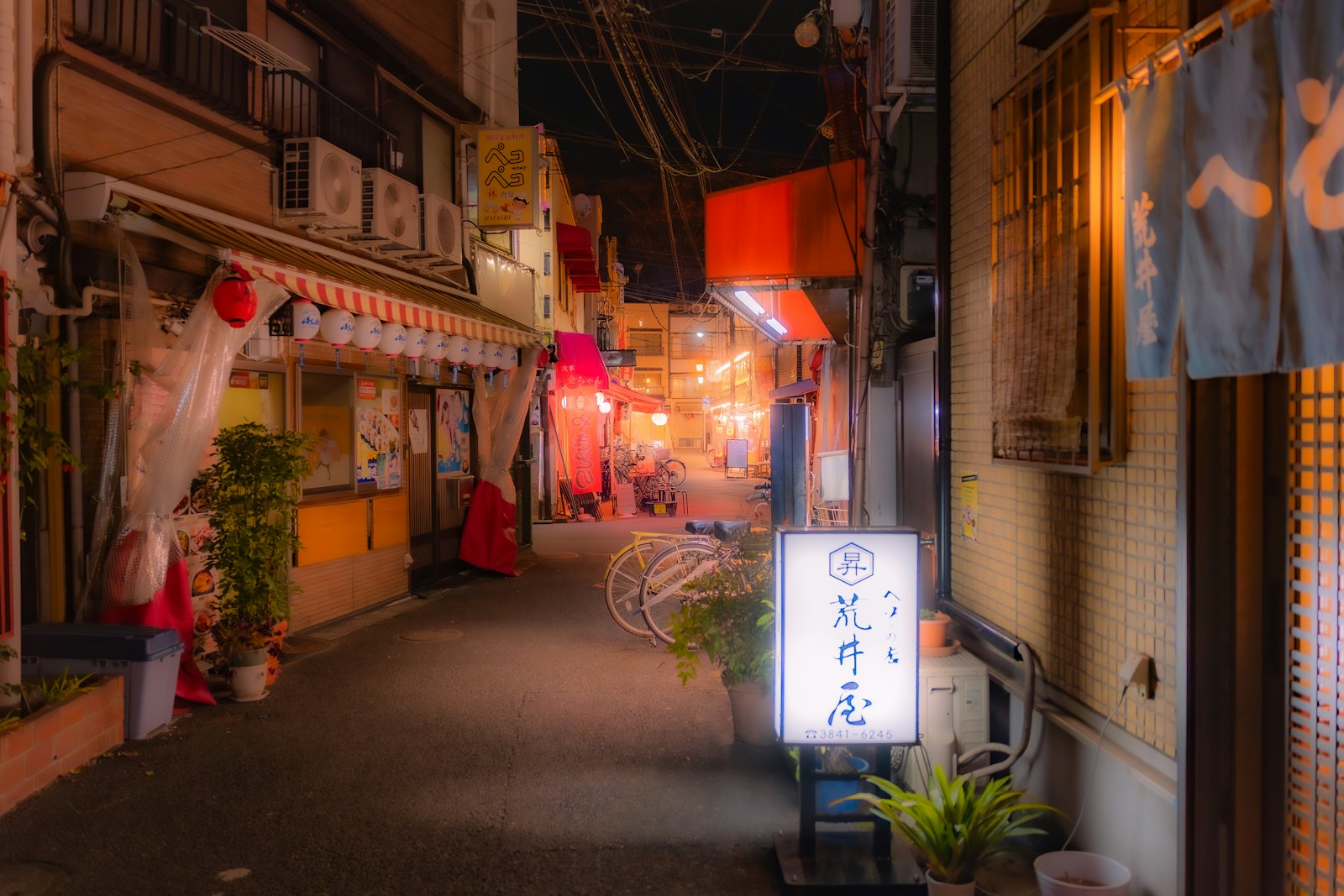
The mask is the detail that made her plausible in 1978 rather than absurd. A woman covering her mouth on a Japanese street was, and still is, completely ordinary, so the disguise required no supernatural explanation and no imagination from the listener. Everything terrifying about her is hidden behind an object children saw every day.
What happens when Kuchisake Onna stops you?
The encounter runs in two beats. Kuchisake Onna approaches a person walking alone, usually a child on the way home after dark, and asks whether she is pretty. Whatever the answer, she pulls down the mask and asks a second time, “Kore demo?”, meaning roughly “Even now?”. The second question is the one that decides what happens.
| Answer | What the rumor says follows |
|---|---|
| “No” to the first question | She attacks with the blade she carries |
| “Yes”, then “no” after the reveal | She kills the person outright |
| “Yes” again after the reveal | She cuts the mouth open to match her own |
| “Yes” twice, then walking away | She follows the person home |
There is no safe answer in that structure, which is the point. Praise gets you her face, rejection gets you her scissors, and leaving gets you followed. She belongs to the same family as the onryo, the spirits of people who died violently and came back angry, and like them she is not negotiating so much as passing on what was done to her.
How do you escape Kuchisake Onna?
The escape answers passed around Japanese playgrounds in 1979 contradict each other, because no single version of the rumor was ever canonical. The recurring ones are answering that she is average, saying you are late, offering bekkō-ame hard candy, and saying “pomade” three times. None carries any authority beyond repetition, and the full list is below.
- Answering that she is average or so-so, which is neither praise nor insult
- Saying you are running late, at which she apologises and lets you pass
- Offering her hard candy, specifically bekkō-ame, the amber caramelised sugar sweet
- Saying the word “pomade” three times, which she is said to hate
- Throwing money or candy on the ground and leaving while she is distracted
- Turning the question back on her
- Reaching a shop, a crowd, or any lit and populated place
The pomade detail is the one that shows the process. It appears in Iikura’s list of variants alongside the mask and the sickle, and it indicates a rumor being improvised and retold at speed rather than inherited from an older story.
When did the Kuchisake Onna legend spread across Japan?
The rumor began in late 1978 in Yaotsu, a town in Gifu Prefecture, where word went round that a woman with a slit mouth had appeared in a farming family’s garden. Local newspaper coverage picked it up and the story left the district. The Gifu Nichi Nichi Shinbun carried it on 26 January 1979, the weekly Shukan Asahi on 23 March, and Shukan Shincho on 5 April, by which point it was national.
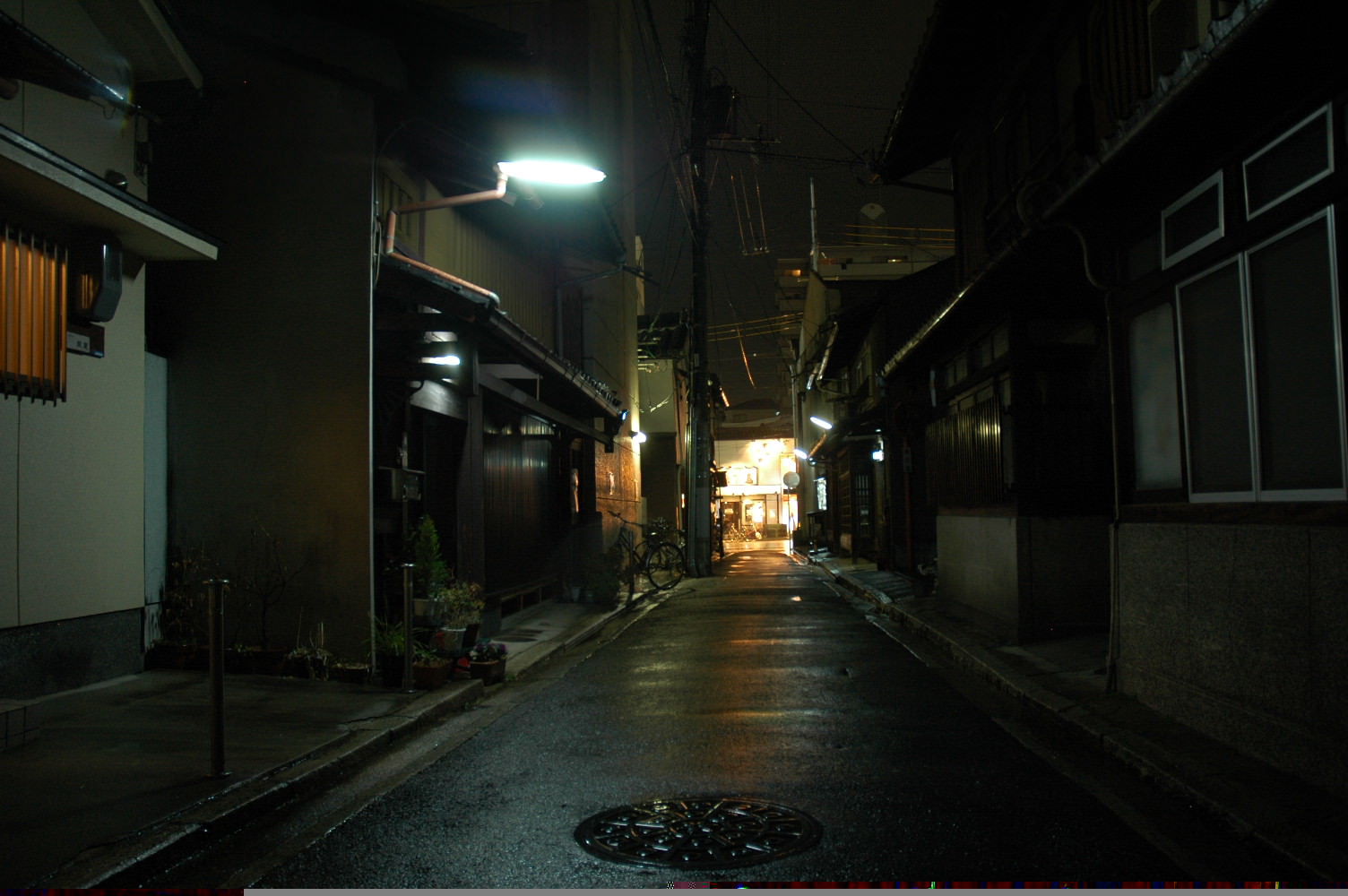
Within roughly six months of the first sighting the rumor had covered Japan, peaked in the spring of 1979, and then thinned out around the summer school holidays. That timeline, reconstructed from the contemporary press and from folklore scholarship, is why folklorist Iikura Yoshiyuki calls her the first purely Japanese urban legend: she has a start date, a route, and an end. Inherited folklore rarely comes with that paper trail, since most of Japan’s yokai and strange-phenomena reports survive as collected oral accounts, 35,307 of them catalogued in the Nichibunken database of folktales and yokai as of April 2025.
Why did the 1978 to 1979 Kuchisake Onna panic happen?
The panic spread through Japan’s cram school system. Evening classes gathered children from different districts into one room, then sent them home separately after dark, and the telephone did the rest. A rumor that would once have stayed inside one neighbourhood now had a nightly relay between neighbourhoods, and the press amplified whatever the relay produced.
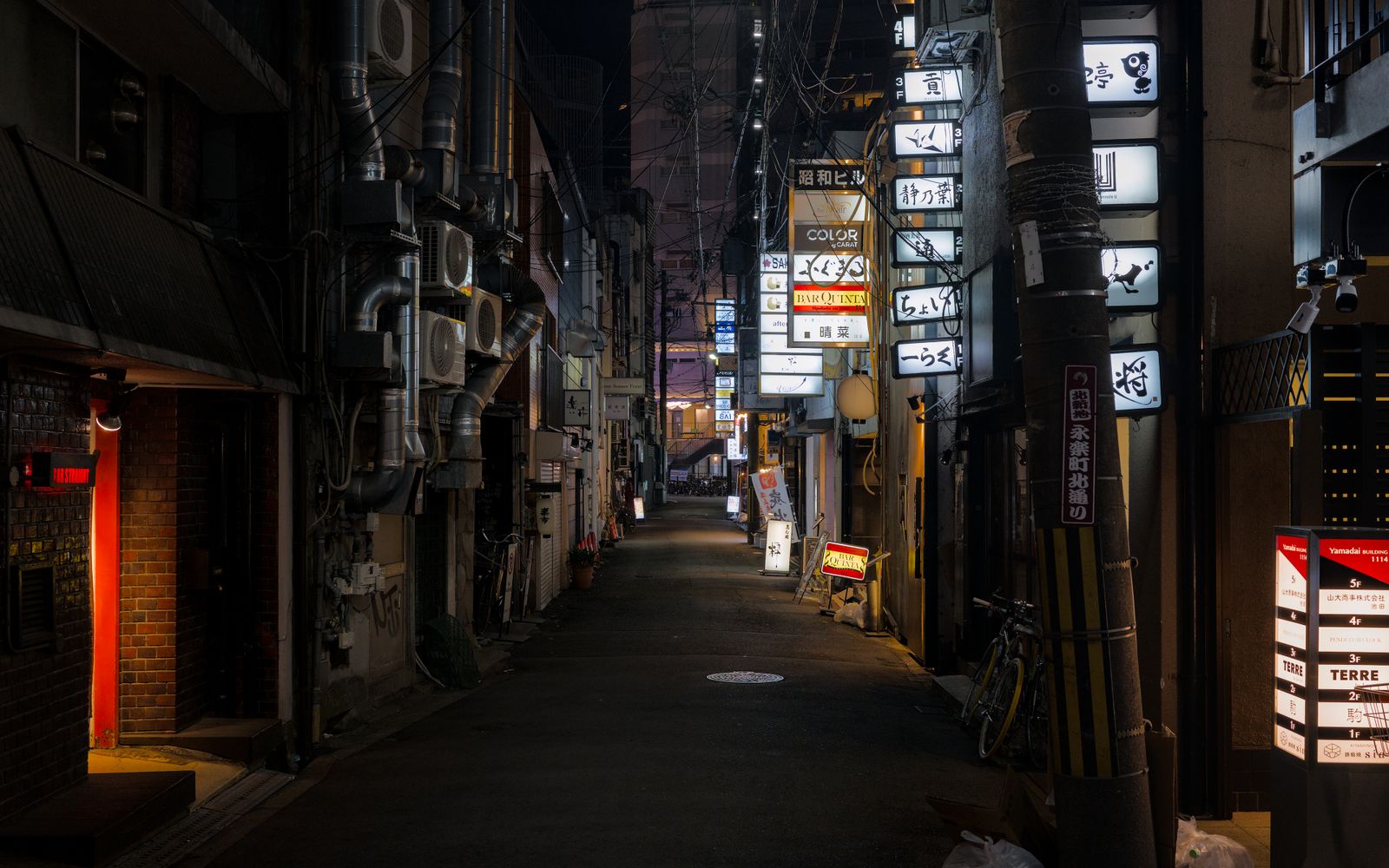
Iikura’s reading of the content is that the fear was real even though the woman was not. Late 1970s Japan was in the middle of a consumer and infrastructure boom, evening schedules pushed children through streets they did not know at hours they had not previously been out, and the adults they passed were nightlife workers and intoxicated commuters. Kuchisake Onna gave that unease a face and a script. Teachers and parents responded to the rumor rather than to any incident, running escort patrols and accompanying children home from school.
Japan’s school corridors kept producing figures on the same principle afterwards. Hanako-san of the haunted school bathroom works the same way, placing a supernatural woman in a spot children have no choice but to visit alone.
Is Kuchisake Onna an ancient yokai?
No. Kuchisake Onna is a modern figure, not an ancient one. No documented Heian or Edo period lineage connects to her, and folklorist Iikura Yoshiyuki places her origin in the 1970s. The one genuine pre-modern parallel is an illustrated collection of 1801, the Ehon Sayo Shigure, which contains an image of a slit-mouthed woman. It is a precedent and nothing more, since nothing links it to what happened in Gifu 177 years later.
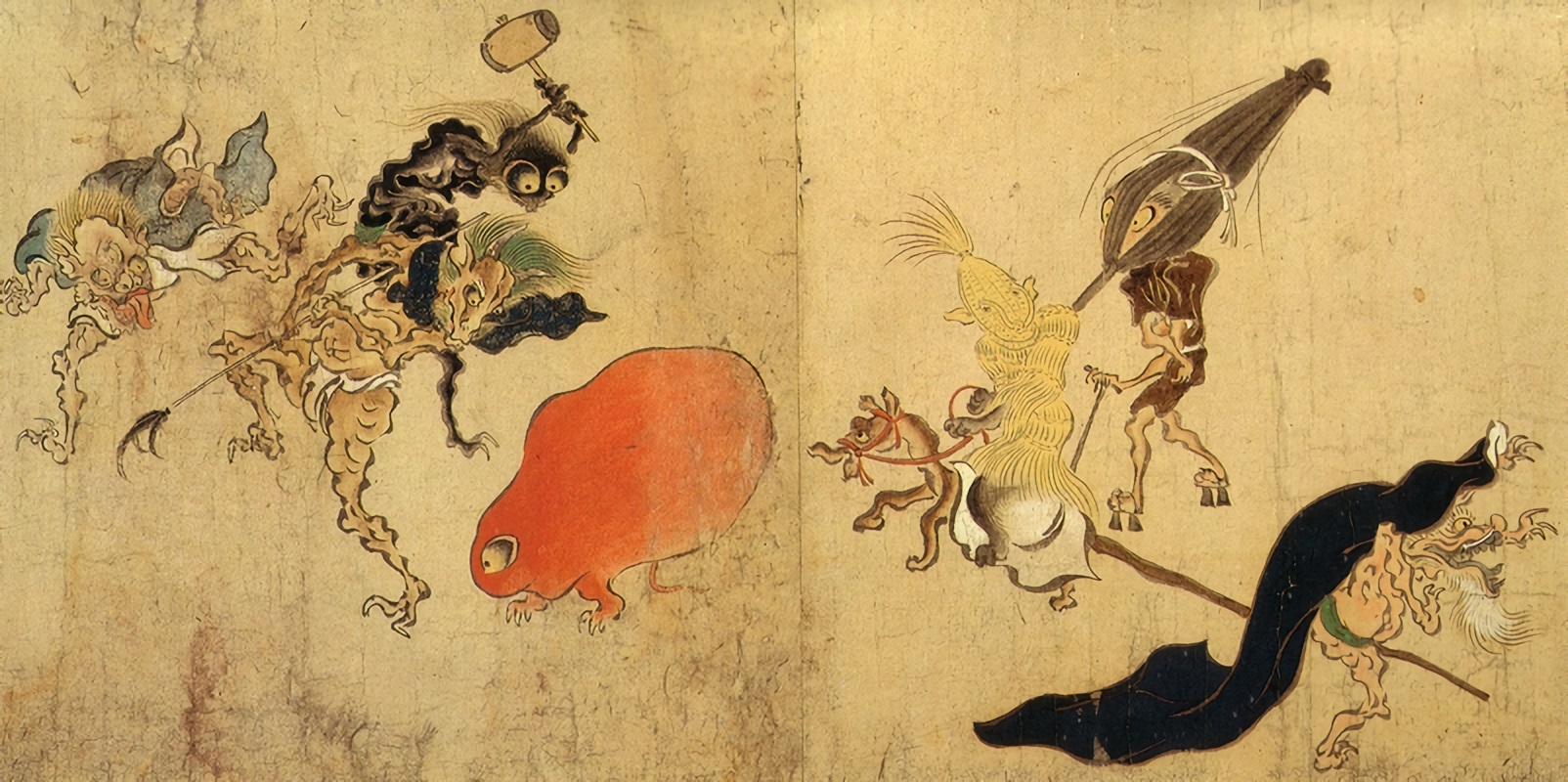
What did settle her status was modern cataloguing. Manga author and folklore historian Shigeru Mizuki included her among the yokai he documented, and that inclusion, rather than any older record, is what is usually credited with making her officially one. Edo period yokai earned their place differently, through illustrated catalogues such as Toriyama Sekien’s Gazu hyakki yagyo, held by the National Diet Library of Japan. The mechanism behind her is old even if she is not: during the Edo period unexplained attacks on travellers were blamed on shapeshifted kitsune playing pranks, and in the twentieth century the same events were attributed to ghosts, killers, and mass hysteria. The explanations changed while the pattern of blame did not.
Where do the Kuchisake Onna origin stories come from?
Her origin stories were attached to the character while the rumor travelled, which is why five sources give five different accounts of how her mouth was cut. None of them is documented history. The five recurring versions are listed below.
| Origin story | What it claims |
|---|---|
| The samurai’s wife | An unfaithful wife mutilated by a jealous husband |
| The jealous relative | A woman disfigured by a rival, often her own sister |
| Cosmetic surgery | A procedure that went wrong |
| Dental work | A complication from treatment |
| Traffic accident | Injury from a collision |
The split runs geographically. English language retellings gravitate to the samurai’s wife, which reads as history and is not, while Japanese versions lean on the jealous relative or the botched surgery. Both halves of that pattern say more about the audience than about her.
How does Kuchisake Onna compare to Yuki Onna and the Hannya mask?
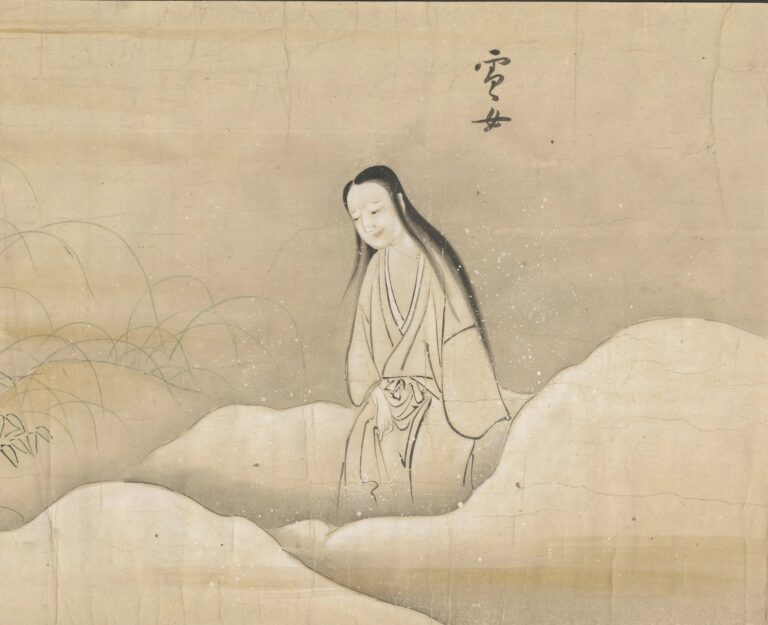
All three belong to a long Japanese tradition of the beautiful woman who is not what she appears, and Kuchisake Onna is the only one of them with a documented start date. Yuki Onna meets travellers in a snowstorm and kills with cold rather than a blade. The Hannya of Noh theatre freezes a jealous woman’s face at the moment it becomes a demon, horns already through the skin. Yuki Onna and the Hannya were handed down over centuries; Kuchisake Onna has a newspaper date in 1979.
Where does Kuchisake Onna appear in film, anime, and games?
Kuchisake Onna has appeared in Japanese film since the 1990s and in anime and games since the 2010s. A short film carrying her name appeared in 1996, directed by Teruyoshi Ishii, and she was name-dropped in Hideo Nakata’s Ring in 1998. Kōji Shiraishi directed the widest released version, Carved: The Slit-Mouthed Woman, in 2007 with Miki Mizuno in the lead, followed by two 2008 films, Carved 2: The Scissors Massacre and The Slit-Mouthed Woman 0: The Beginning. Studio Ghibli had already slipped her into Pom Poko in 1994.
She has since spread through the rest of Japanese pop culture and out of it. She turns up in the games Ghostwire: Tokyo and World of Horror, in Dandadan, Jujutsu Kaisen and Mob Psycho 100, and she reached American television as the basis of a Constantine episode.
Why does Kuchisake Onna work as a fashion motif?
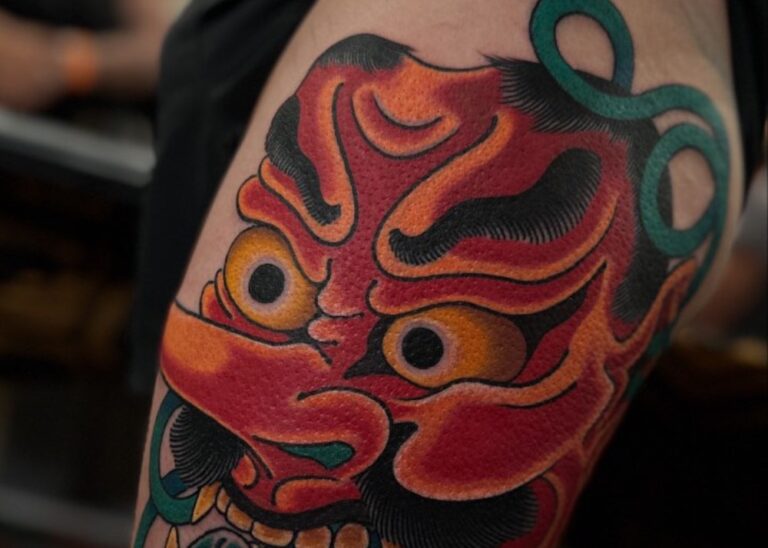
Kuchisake Onna works on clothing because she is a two-stage image rather than a monster. The mask is ordinary, the face behind it is not, and a designer gets to put both states in one graphic. That is the same logic that drives the older Japanese folklore masks, where a fixed expression carries a whole emotional story, and it is why her silhouette reads instantly on a print even to people who could not name her.
Streetwear takes her in two directions. One is the literal reveal, a masked face with the slit showing at the edges, which works as a chest print because it holds a single strong shape. The other is abstraction, using scissors, a red coat, or the mask alone as a signal that other fans of the legend recognise. Both stay closer to a wink than to gore, which is generally how yokai motifs earn a place on clothing rather than a costume rack.
If she is the yokai you would rather wear than meet, Kamicrew’s yokai shirt collection is a reasonable place to start.
FAQs
Is Kuchisake Onna real?
No. There is no documented case behind her, and folklorists have tracked the 1978 to 1979 episode as a rumor from the beginning. Iikura Yoshiyuki reads the fear as genuine and the woman as invented, with children projecting real anxieties about walking home after dark onto a figure that explained them.
What does the name Kuchisake Onna mean?
Kuchisake Onna means “slit-mouthed woman”. It is written 口裂け女, from 口 (kuchi) mouth, 裂け (sake) split or torn, and 女 (onna) woman. Her line “Watashi, kirei?” (Am I pretty?) also plays on kire, meaning to cut, so the compliment and the threat sound almost identical in Japanese.
When did the Kuchisake Onna legend start?
Late 1978, in Yaotsu in Gifu Prefecture, with a rumor about a slit-mouthed woman appearing in a farming family’s garden. Local press coverage carried it out of the district in January 1979, it went national by that spring, and it faded around the summer holidays of the same year.
What does Kuchisake Onna do to her victims?
She asks whether she is pretty, lowers her mask to show the cut, and asks again. Depending on the answer the rumor has her attacking with scissors or another blade, following the person home, or cutting their mouth open from ear to ear so that it matches her own.
How do you escape Kuchisake Onna?
The commonly repeated answers are calling her average rather than pretty or ugly, telling her you are late, offering bekkō-ame hard candy, or saying “pomade” three times. None of these is canonical, since the escape rules were improvised alongside the rest of the rumor.
Is Kuchisake Onna a yokai or a ghost?
Both labels are used. She behaves like a vengeful spirit, and Shigeru Mizuki’s decision to catalogue her among the yokai is what is usually credited with giving her the formal classification. She is a twentieth century addition to the category rather than an inherited member of it.
Kamicrew Best Seller

Dont Touch Me Yokai Ukiyo-E Japanese T-Shirt
$25.49+
$29.99
(15% off)


Summer Vibes Salty Kawaii Japanese Hoodie
$44.99+
$49.99
(10% off)


Japanese Pin Horror 80s Retro Aesthetics T-Shirt
$25.49+
$29.99
(15% off)


El Gran Maja Japanese Kaiju T-Shirt
$25.49+
$29.99
(15% off)


Who Wants The Perfect Body Japan Capybara Kawaii Japanese Unisex Shirt
$25.49+
$29.99
(15% off)


Monster 8 Mask Vintage Animal Hoodie
$44.99+
$49.99
(10% off)


I Hate People Japanese Opossum Vintage Animal Hoodie
$44.99+
$49.99
(10% off)


I Got That Dog In Me Small Turtle Vintage Animal T-Shirt
$25.49+
$29.99
(15% off)

The Creation Of Cat Ukiyo-E Japanese T-Shirt
$25.49+
$29.99
(15% off)