

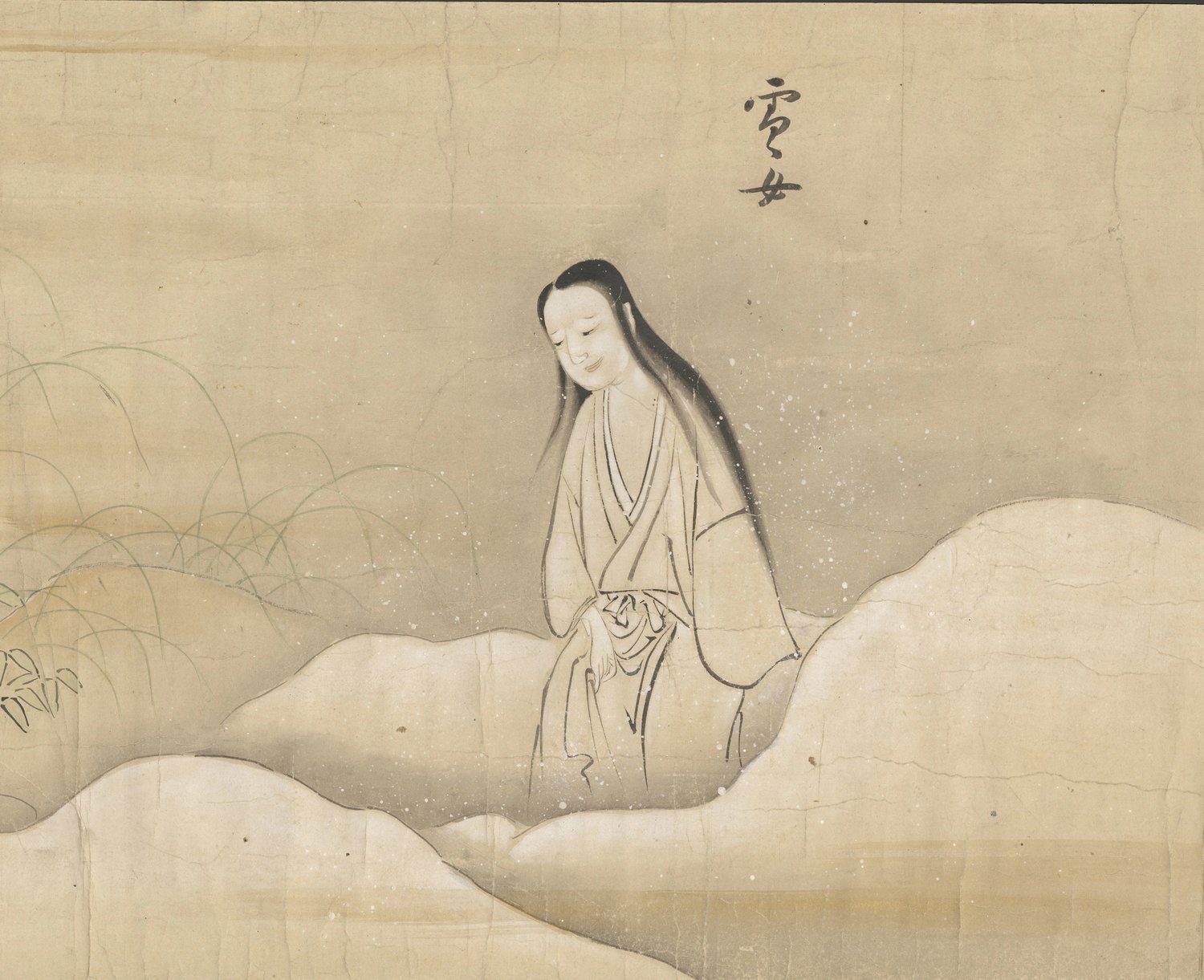
Yuki Onna (雪女, “snow woman”) is a yokai from Japanese folklore who appears to travellers during snowstorms as a tall, beautiful woman in a white kimono, and who kills them with her freezing breath, by draining their life force, or by leading them astray in the cold. Her legends belong to Japan’s snow country and are documented at least as far back as the Muromachi period (1333 to 1573), with the earliest recorded encounter set in Echigo Province, now Niigata Prefecture. Regional versions run from Tottori in the west to Iwate in the north, and they range from a merciless winter predator to a wife who loved a human man and could not bring herself to kill him. The version most readers know is Lafcadio Hearn’s retelling in Kwaidan.
What Is Yuki Onna?
Yuki Onna is a snow yokai, a spirit of the winter itself rather than the ghost of a specific dead person. Yokai are the otherworldly beings of Japanese folk belief, described by the Japan Society of Boston as supernatural entities that occupy the liminal boundary between nature and reality. That distinction separates Yuki Onna from the yurei, who were once living people. She is winter given a face and a will.
Her name is written with the characters for snow and woman. Regional storytellers gave her many others: yuki-musume (snow daughter), yukihime (snow princess), yuki-onba (snow granny), and in Nagano the yukifuri-baba. The variety of names is the first clue to how she works in Japanese folklore, because Yuki Onna is less a single character than a shape that each snowbound village filled in for itself.
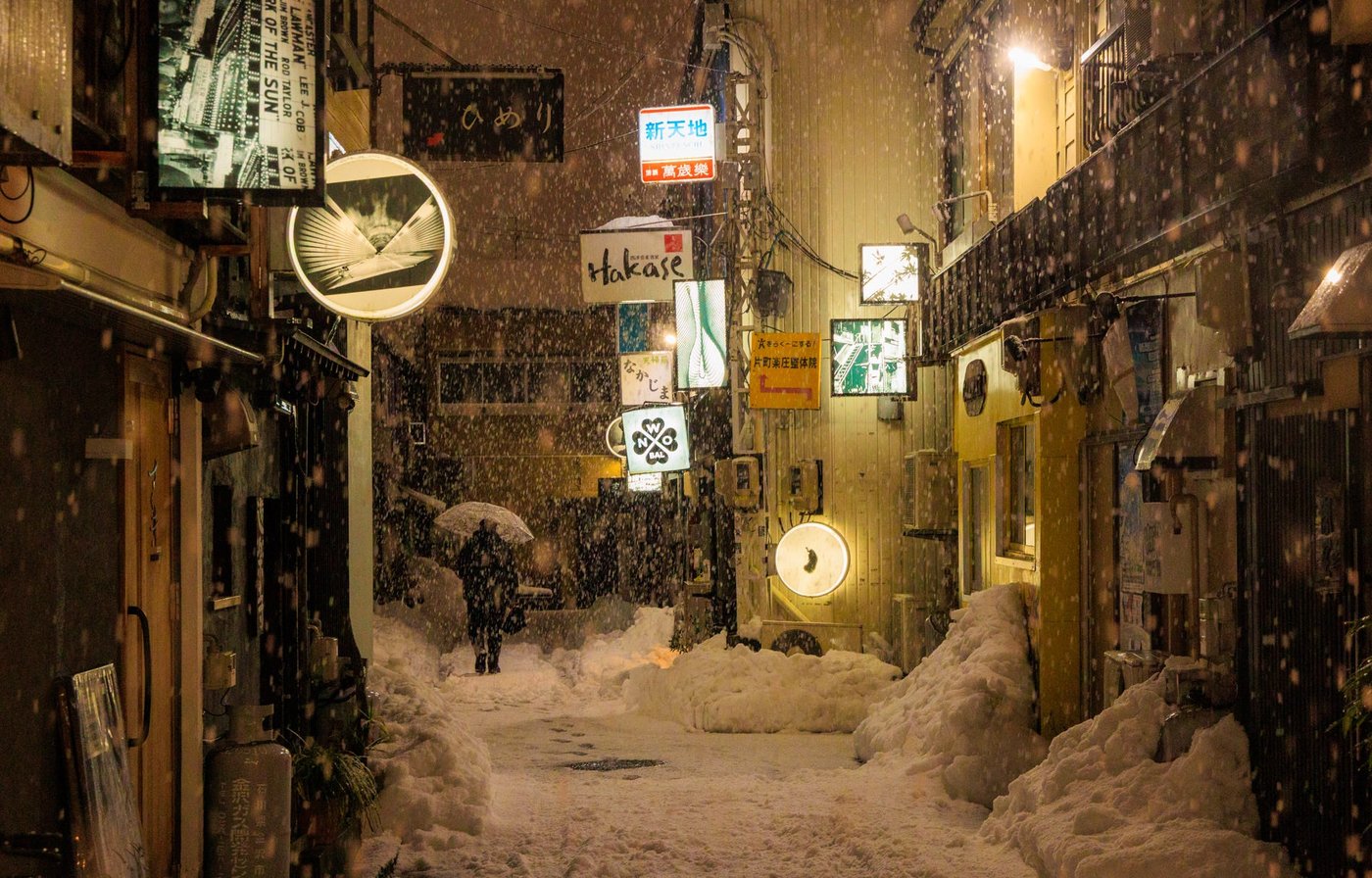
In the accounts collected on her, she haunts mountain passes and snowy regions, and the Japanese Alps in deep winter are her classic ground. Nothing about her is warm. Her skin is cold to the touch, her body carries the temperature of the snow she comes out of, and she can dissolve into mist or into falling snow when she wants to leave.
Where the Yuki Onna Legend Came From
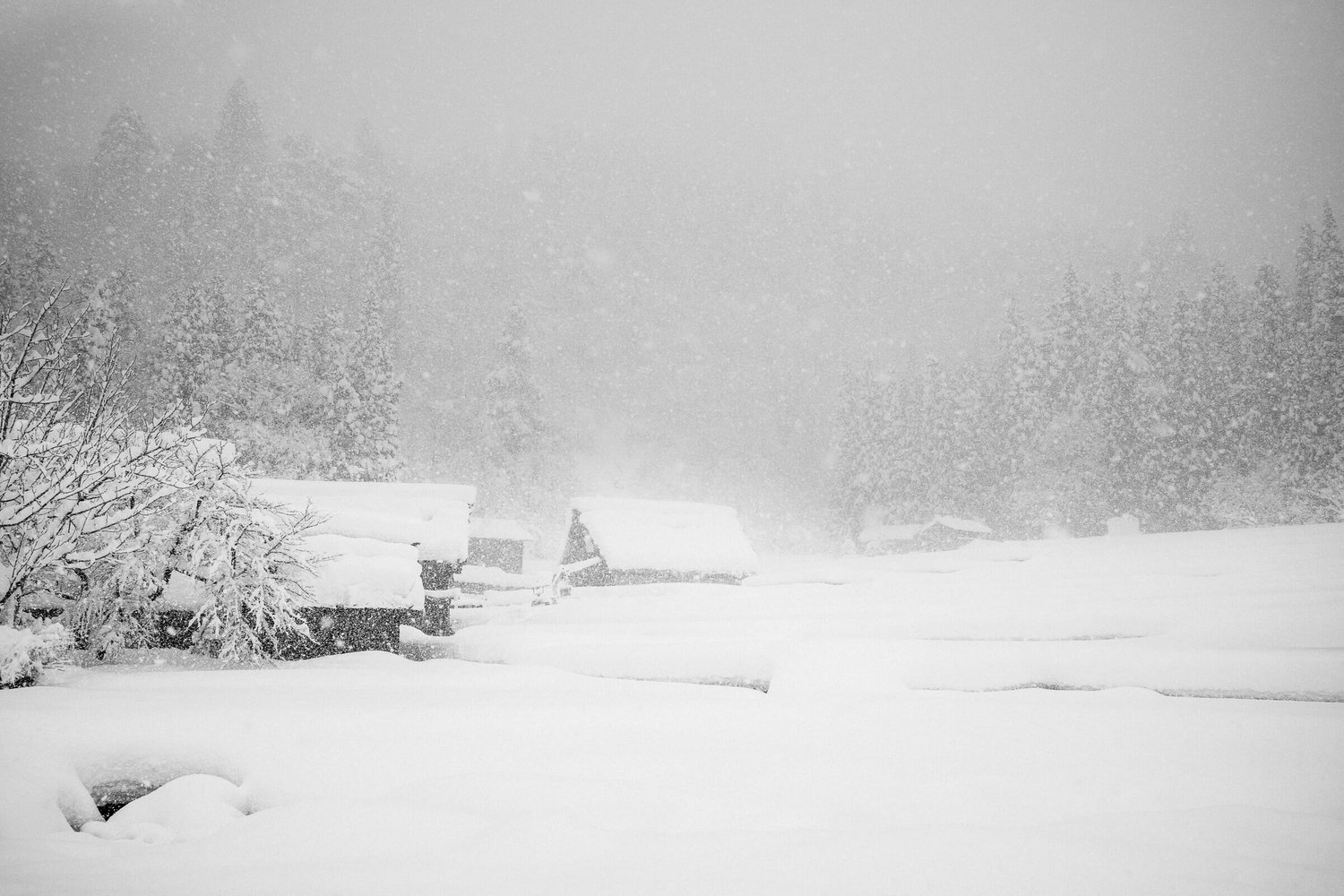
The Yuki Onna legend comes from Japan’s snow country and is documented at least as far back as the Muromachi period (1333 to 1573). The earliest recorded encounter belongs to the renga poet Sogi, who wrote of meeting a snow woman while staying in Echigo Province, the region that is now Niigata Prefecture. That account survives in the Sogi Shokoku Monogatari.
Geography explains her better than any single story does. Yuki Onna belongs to the cold prefectures where a blizzard could kill a woodcutter or a traveller who misjudged the weather, and her legends work as a warning against walking into a winter storm. The Edo period scholar Yamaoka Genrin went further and argued that she was born out of the deep snow itself, treating her as a natural product of the drifts rather than a wandering spirit that happened to arrive in them.
What Yuki Onna Looks Like
Yuki Onna is described as tall and strikingly beautiful, with long black hair, dark piercing eyes, blue lips, and skin as pale as freshly fallen snow, sometimes almost transparent. Most accounts dress her in a white kimono, worn impossibly light for the weather she stands in, though a few describe her nude against the snow. She leaves no footprints, and in some tellings she glides rather than walks.
Temperature is the second tell. Yuki Onna is beautiful enough to approach and cold enough to kill on contact, which is why she is often described as a visual paradox, delicate and lethal in the same figure.
The Most Famous Yuki Onna Story: Minokichi and O-yuki
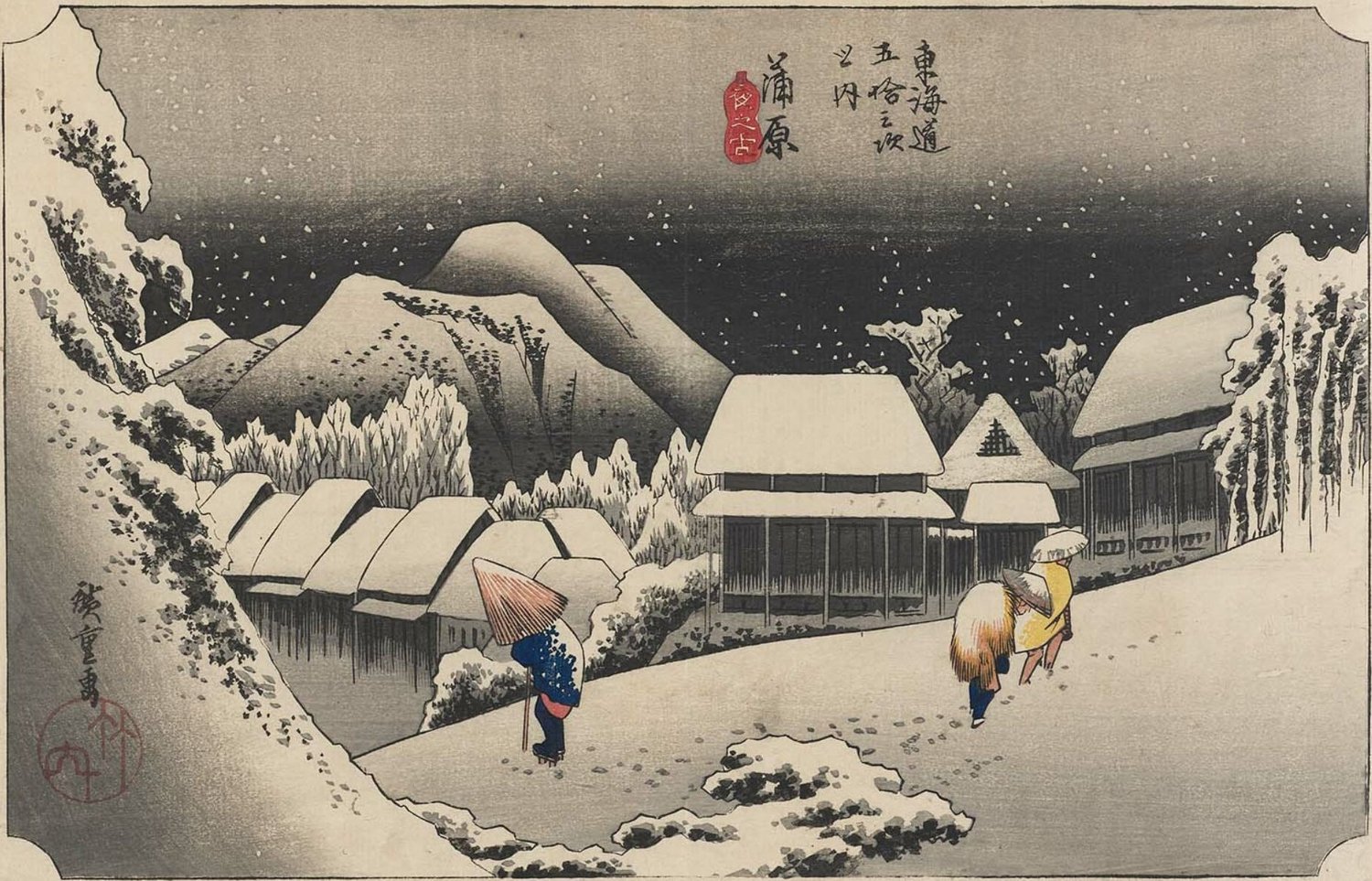
The most widely retold Yuki Onna story is the one Lafcadio Hearn published in Kwaidan. Two woodcutters, the young Minokichi and the elderly Mosaku, shelter in a mountain hut during a snowstorm. A beautiful woman in white appears and freezes Mosaku with her breath. She spares Minokichi because he is young and handsome, on one condition: he must never tell anyone what he saw.
Years later Minokichi marries a woman named O-yuki, whose name contains the word for snow. She is a good wife and she does not age. One night he tells her about the strange woman in the mountain hut, and O-yuki reveals that the woman he met was her. She spares him again, this time because of their children, and then melts away.
The tale is doing two things at once. It is a warning about breaking a promise, and it is a story about a supernatural being who chose a human life and lost it. Masaki Kobayashi’s film anthology Kwaidan carried that version to a wider audience, in a portrayal that keeps her menace intact.
Regional Variations Across Japan
Yuki Onna changes shape from prefecture to prefecture, appearing as a beggar, a moon princess, a life draining predator, a crone, or a one legged child depending on who tells the story. Collected folklore accounts place versions of her across the snow prefectures, each with its own name and its own rules of engagement. Regional variation on this scale is exactly what Japan’s International Research Center for Japanese Studies catalogues in its database of yokai and mysterious-phenomena folktales, which held over 35,000 recorded items as of April 2025.
- In Tottori she carries a white gohei wand and asks for water, swelling when given cold water and melting when given hot, answering the call “koori gose yu gose”, give me ice, give me hot water.
- In Yamagata she is a princess of the moon, stranded on earth and appearing on snowy nights when the moon is full.
- In Aomori, Gunma, Niigata and Miyagi she drains seiki, the vital life force, from her victims, with children described as her preferred targets.
- In Ibaraki, Fukushima, Akita and Fukui she speaks with travellers before attacking them.
- In Ojiya, Niigata she is the tsurara-onna, the icicle woman, who avoids bathing and leaves half melted icicles behind when she disappears.
- In Nagano she is the yukionba, also called yukifuri-baba, a crone closer to the mountain yama-uba than to a young beauty.
- In Iwate she carries children off on Little New Year, the koshogatsu.
- In Wakayama she is the yukinbo, a one legged child who leaves circular prints in the snow.
Two regional stories show her range in full. In Yamagata a beautiful young woman arrives at a mountain inn during a blizzard, and when the innkeeper takes her hand to stop her leaving, the cold kills him while she turns to mist and vanishes up the chimney. In Niigata a man marries a woman with marble white skin who refuses to bathe, and when he forces her into a bath on a winter night he finds half melted icicles where his wife had been.
What Yuki Onna Does to People
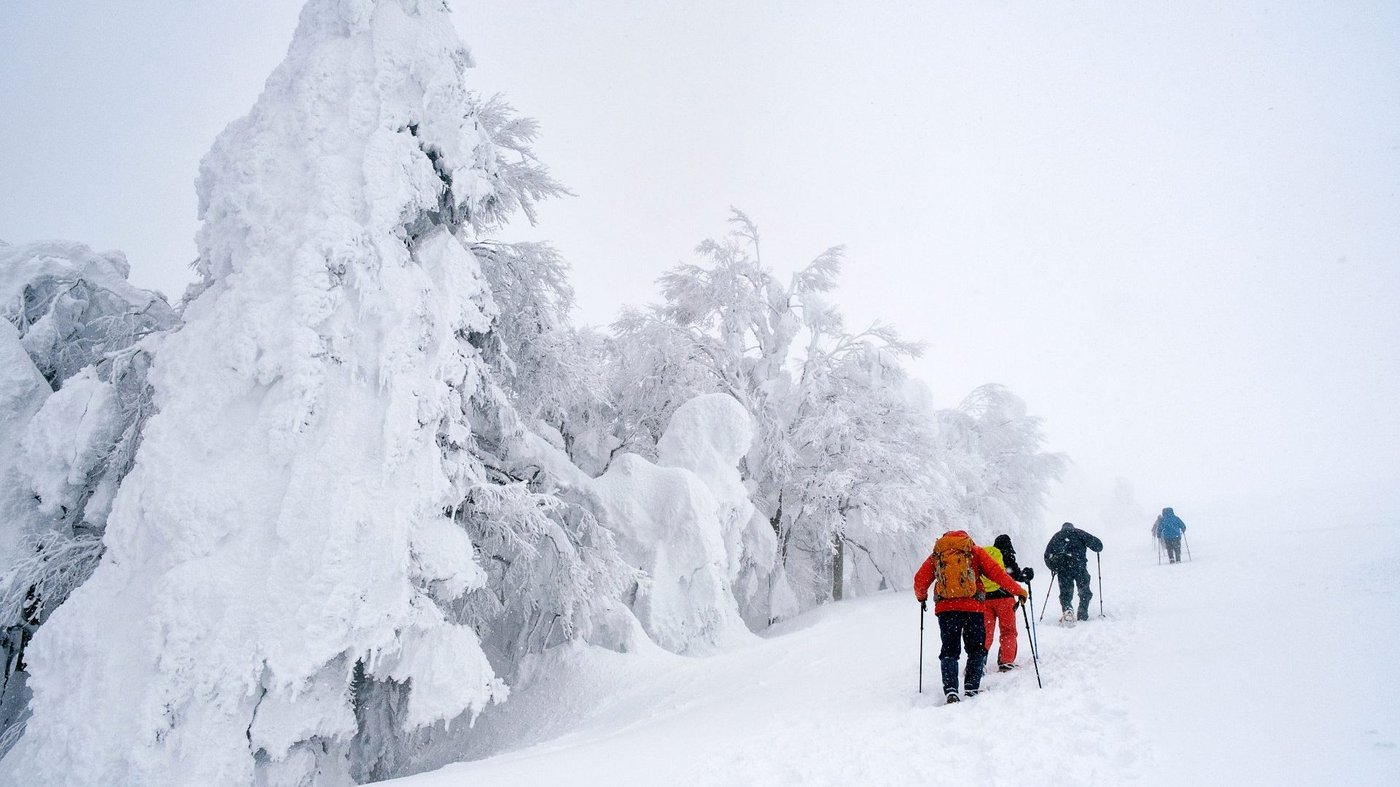
Yuki Onna kills in three ways: she freezes people with an icy breath, she draws out their life force, and she leads travellers off the path until exposure finishes the job. She hunts in snowstorms and, in some accounts, enters houses at night. Her diet in the collected accounts is that stolen life energy, although she is also described as able to eat ordinary food.
One recurring trap is a child. Yuki Onna appears holding an infant and asks a passerby to take it, and whoever accepts is frozen where they stand.
Mercy is part of the pattern too, not an exception to it. She sometimes lets a victim go for reasons the stories leave half explained: a young man is too beautiful to kill, someone shows her kindness, a father cannot be killed without harming her own children. Some accounts have her falling in love with the person she came for and releasing him instead.
From Villain to Tragic Figure
Yuki Onna’s reputation reversed over time. Until the eighteenth century she was portrayed almost uniformly as evil, a killer with a beautiful face. Modern retellings tend to colour her as closer to human, capable of love and grief, and the marriage stories carry most of that weight. A yuki onna who marries a man cannot stay, because she never ages and the discovery of what she is ends the marriage. That failure is what makes the modern version sad rather than frightening.
Yuki Onna in Modern Culture
Yuki Onna has one of the widest footprints of any yokai in contemporary media, with at least six anime, game and card franchises building characters on her, plus one landmark film. The range runs from a children’s monster mascot to straight horror.
Froslass in Pokemon is based on her. She also supplies Mizore Shirayuki in Rosario + Vampire, Yukina in YuYu Hakusho and Letty Whiterock in Touhou Project. Yo-kai Watch aims its own yuki-onna at children, localised in English as Frostina, and Magic: The Gathering drew on her for the Saviors of Kamigawa set. Masaki Kobayashi’s Kwaidan is still the reference point for the frightening reading of the character.
The gap between Froslass and Kwaidan is the whole point. Yuki Onna survives because she can be played as horror or as heartbreak without changing a single detail of her description.
Wearing the Snow Woman: Yuki Onna in Design
Yuki Onna works on apparel because her palette is already fixed: white, pale grey, black hair, a cold blue at the lips, and the empty white of a snowfield behind her. That restraint is why she reads clearly on a garment where a busier yokai does not, and why illustrators keep returning to the white kimono and the long black hair rather than inventing new attributes for her.
The styling logic follows the story. Keep the contrast high and the colour count low, let one dark element carry the whole composition, and lean on the same winter layering that Japanese snow country dressing already does well. Her stories were told in the coldest months, so she sits naturally alongside Japanese winter fashion rather than fighting it. Understanding what a yokai symbolises also changes how the graphic reads, since a snow spirit on a hoodie carries a warning about winter, not just a pretty face.
FAQs
Is Yuki Onna evil?
It depends on the era of the story. Before the eighteenth century Yuki Onna was portrayed almost uniformly as evil, killing travellers without hesitation. Later and modern accounts often make her more human, and several legends have her sparing people out of pity, attraction, or love for her own children.
What is the most famous Yuki Onna story?
The best known version is Lafcadio Hearn’s retelling in Kwaidan. Two woodcutters shelter from a snowstorm in a mountain hut; the snow woman freezes the older man, Mosaku, and spares the young Minokichi on condition he never speaks of it. Years later his wife O-yuki reveals she was that woman, spares him for their children’s sake, and melts away.
Can Yuki Onna fall in love with a human?
Yes, and it is one of her most common story shapes. Some accounts describe Yuki Onna falling for an intended victim and letting him live, and others have her marrying a human outright. Those marriages always break down, because she never ages and the discovery of her nature ends the relationship.
What does the name Yuki Onna mean?
It is written 雪女 and translates literally as snow woman. Regional variants include yuki-musume (snow daughter), yukihime (snow princess) and yuki-onba (snow granny), along with local names such as tsurara-onna in Niigata and yukinbo in Wakayama.
If a snow spirit with black hair and a white kimono is the kind of story you would rather wear than shelve, Kamicrew’s yokai shirt collection is where those designs live.
Kamicrew Best Seller

Dont Touch Me Yokai Ukiyo-E Japanese T-Shirt
$25.49+
$29.99
(15% off)


Summer Vibes Salty Kawaii Japanese Hoodie
$44.99+
$49.99
(10% off)


Japanese Pin Horror 80s Retro Aesthetics T-Shirt
$25.49+
$29.99
(15% off)


El Gran Maja Japanese Kaiju T-Shirt
$25.49+
$29.99
(15% off)


Who Wants The Perfect Body Japan Capybara Kawaii Japanese Unisex Shirt
$25.49+
$29.99
(15% off)


Monster 8 Mask Vintage Animal Hoodie
$44.99+
$49.99
(10% off)


I Hate People Japanese Opossum Vintage Animal Hoodie
$44.99+
$49.99
(10% off)


I Got That Dog In Me Small Turtle Vintage Animal T-Shirt
$25.49+
$29.99
(15% off)

The Creation Of Cat Ukiyo-E Japanese T-Shirt
$25.49+
$29.99
(15% off)