

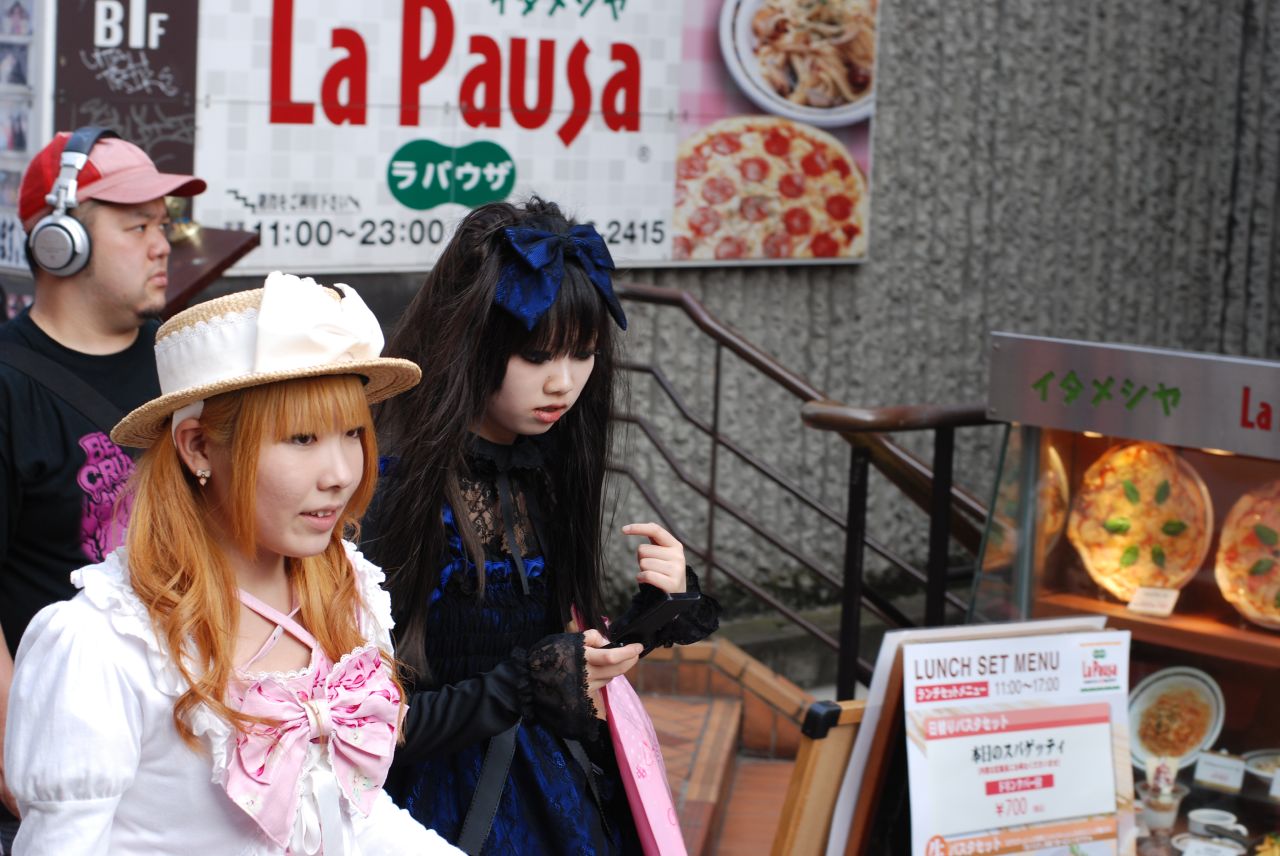
Lolita fashion does not trace back to goth culture. Lolita took shape in Japan during the 1980s and 1990s out of Victorian and Rococo dress, while goth emerged in Britain in the late 1970s and early 1980s out of the post-punk music scene. The two formed on opposite sides of the world, roughly a decade apart, for different reasons. Gothic Lolita, the substyle that makes people ask this question in the first place, only appeared once both styles already existed.
The mix-up is understandable. Black lace, high necklines and historical silhouettes show up in both wardrobes, and a dark Lolita coord can read as goth from across the street. Here is where each style actually came from, and what Gothic Lolita really is.
What Lolita Fashion Actually Is
Lolita fashion is a Japanese street fashion that originated in the late 20th century, particularly in the 1980s and 1990s, and drew heavily on Victorian and Rococo era clothing. Its priorities are modesty, elegance and intricate detail rather than exposure. It began as a clothing movement, not a music scene.
The key elements include:
- Puffy knee-length skirts
- Lace, ribbons and bows
- High-neck blouses
- Petticoats for volume
- Doll-like shoes and accessories
The overall effect is closer to a porcelain doll or a historical European painting than to anything on a modern runway. And the point is not childish cuteness. Lolita is about reclaiming elegance and individuality on the wearer’s own terms.
The style is not one look either. It spans sub-genres including Sweet Lolita, Classic Lolita, Gothic Lolita, Pirate Lolita and the lesser-known Grotesque Lolita. The pastel end of that range, where bows and confectionery prints dominate, is what most people picture as sweet Lolita fashion, and it sits about as far from goth as the wardrobe gets.
What Goth Culture Is
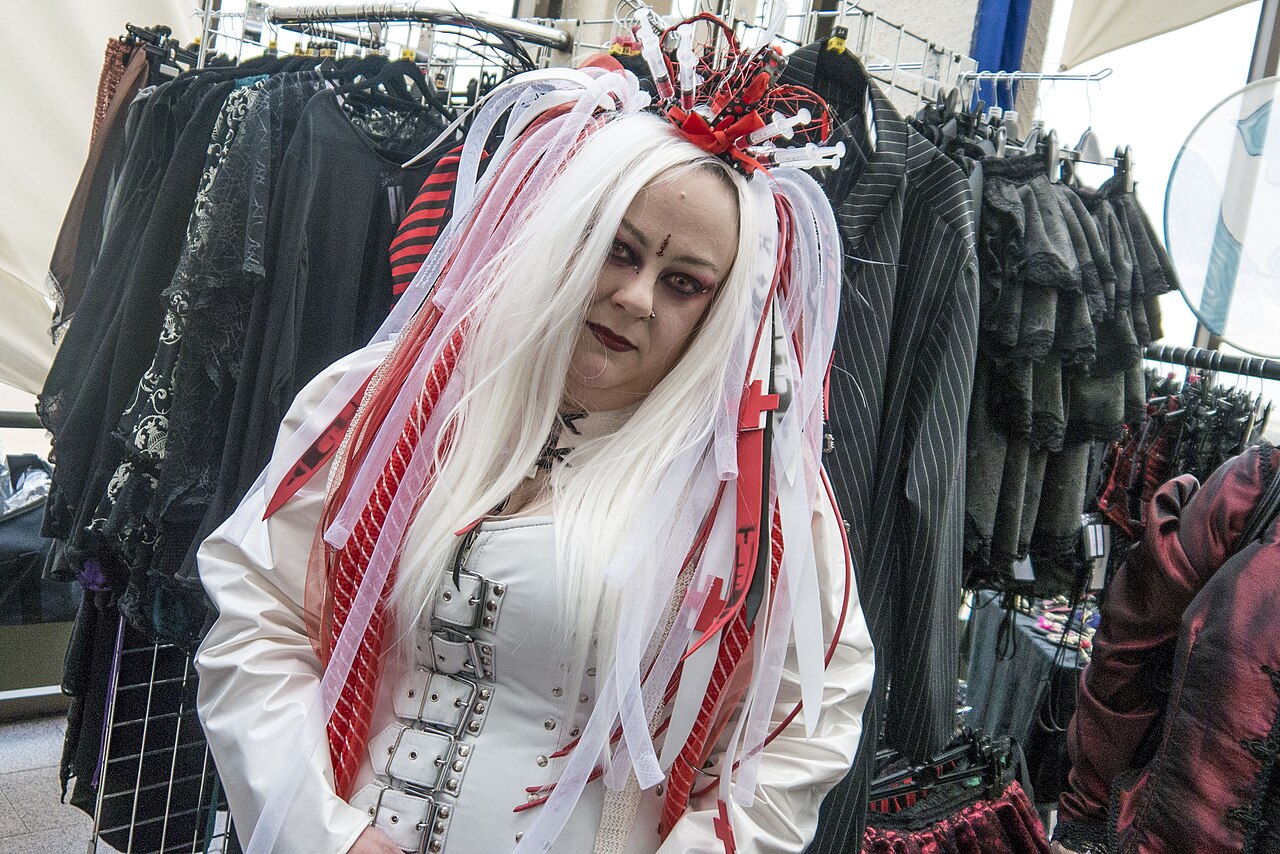
Goth culture is a subculture that emerged in the late 1970s and early 1980s, mainly in the UK, out of the post-punk music scene. That is the first and biggest difference from Lolita fashion: goth started with sound, not with clothes. The clothing followed the music rather than leading it.
The themes it gathers around are darker:
- Mystery
- Melancholy
- Romanticism
- The supernatural
Goth fashion typically includes black clothing, dark makeup, leather, lace and velvet, and dramatic hairstyles. It also borrows from Victorian aesthetics, which is exactly why the visual overlap with Lolita exists, but the tone is moodier and the silhouette is rarely doll-like.
Where the Confusion Comes From
The confusion comes from Gothic Lolita, a substyle of Lolita fashion that uses goth’s dark colour palette. Because a Gothic Lolita coord looks like both styles at once, people assume Lolita descends from goth. Gothic Lolita is in fact a later crossover: it borrows goth’s colours while keeping Lolita’s silhouette, petticoat and rules of modesty.
Gothic Lolita combines two things:
- The structure of Lolita fashion
- The dark colour palette of goth style
So you get black dresses, crosses, dark lace and sometimes dramatic makeup, all still built on a soft, doll-like silhouette with a petticoat underneath. Anyone building a Gothic Lolita wardrobe is working within Lolita’s rules of shape and modesty, only in a darker colourway. Because the blend is so seamless, it is easy to read one style as the parent of the other.
Did Lolita Fashion Come From Goth Culture?
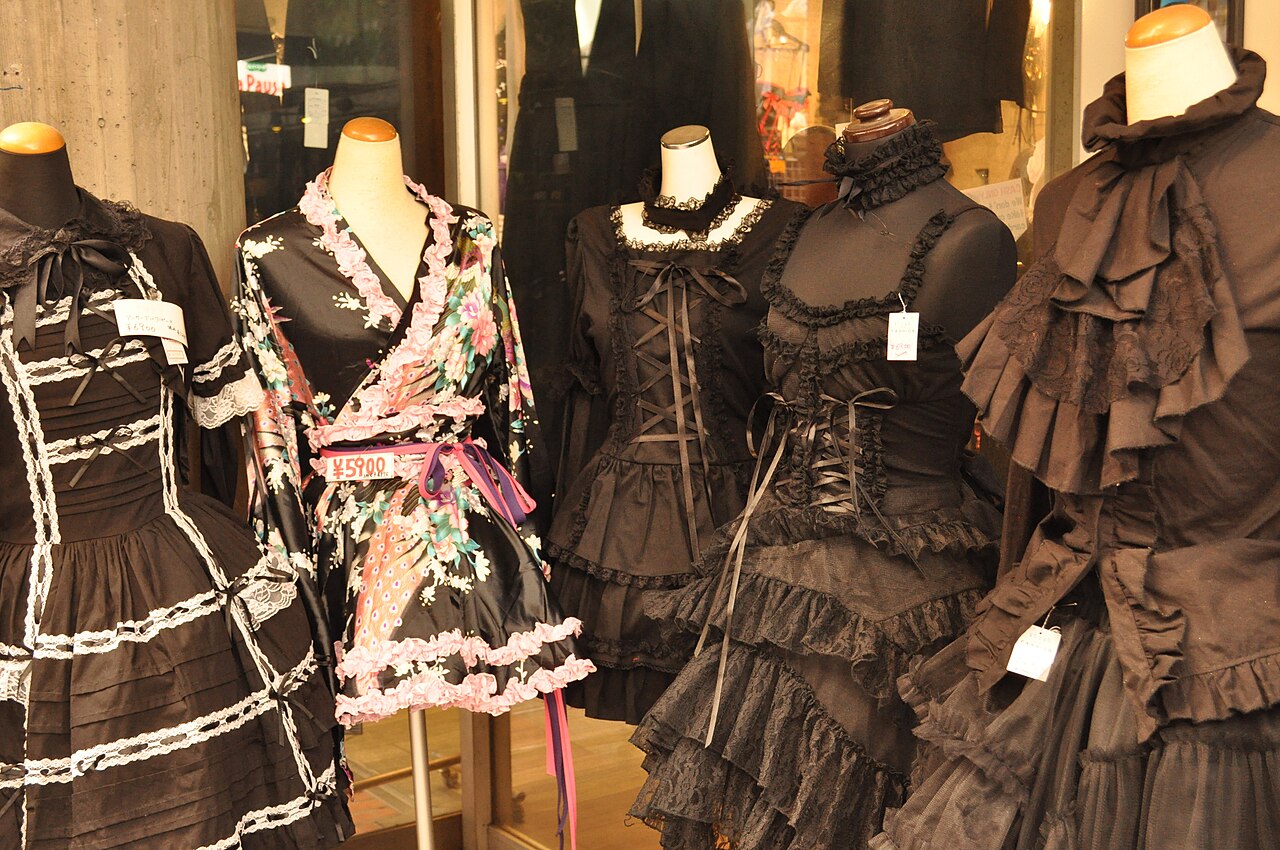
No. Lolita fashion does not trace back to goth culture. The two developed independently: Lolita in Japan in the 1980s and 1990s as a reaction against revealing, body-hugging fashion, and goth in the UK in the late 1970s and early 1980s out of post-punk music. Gothic Lolita is a fusion of the two, not the origin of either.
| Lolita fashion | Goth | |
|---|---|---|
| Emerged | Japan, 1980s and 1990s | UK, late 1970s and early 1980s |
| Grew out of | Victorian and Rococo dress | The post-punk music scene |
| Driven by | Reaction against revealing, body-hugging fashion | Artistic expression tied to sound and mood |
| Core themes | Elegance, femininity, fantasy | Darkness, emotion, rebellion |
| Signature look | Knee-length bell skirt over a petticoat | Black clothing, leather and velvet, dramatic hair |
Different origins
Lolita developed in Japan as a reaction against modern fashion trends that emphasised revealing or body-hugging clothing. It was a push toward modesty and individuality in a fashion climate moving the other way. Goth grew out of a music movement in the West, with roots in artistic expression tied to sound, mood and subculture. One begins in a wardrobe, the other in a record shop.
Different intentions
Lolita focuses on elegance, femininity and fantasy. Goth focuses on darkness, emotion and rebellion. Two coords can share a colour palette and a lace trim and still be doing completely different work for the person wearing them.
Gothic Lolita is a fusion, not a foundation
Gothic Lolita arrived after both styles already existed. It is a crossover, not an origin point. Mixing two colours gives you a third, but it does not mean either of the first two came from the other.
What Actually Inspired Lolita to Develop
Lolita fashion developed as a response to conditions inside Japan, not to anything happening in goth. It stands as a response to the rigidity and homogeneity of modern Japanese society and its harsh gender norms. Rather than dealing with rapid commercialisation, a rigid social system and an increasingly body-focused fashion norm, as Teresa Younker put it in the Stanford Journal of East Asian Affairs, a select group of youth chose to find comfort in an over-the-top imaginary world of lace, frills, bows, tulle and ribbons.
Timing helped. The kawaii craze of the 1970s, which pushed cute aesthetics like teddy bears, curly handwriting and Hello Kitty merchandise into Japanese popular culture, was already at mainstream scale by the 1980s. Cuteness in Japan had historically never been restricted to children, so an adult wardrobe built on kawaii fashion principles had somewhere to land. The basic Victorian doll image came from historical Europe, but it flourished in Japan for that reason.
What participants get out of it is not only clothes. Academic work on the subculture, including Kang and Cassidy’s study of Lolita as a trans-global subculture, describes the style as offering resistance against conventional cultural pressures alongside happiness through an escape into fantasy. Demure manners and sweet femininity are part of it, but without the passivity usually assigned to sexualised women.
The name is a separate matter from the fashion. The term may have originated from Vladimir Nabokov’s 1955 novel, but the subculture’s origins and contemporary meaning are vastly different from the book’s.
How Gothic Lolita Emerged as a Style
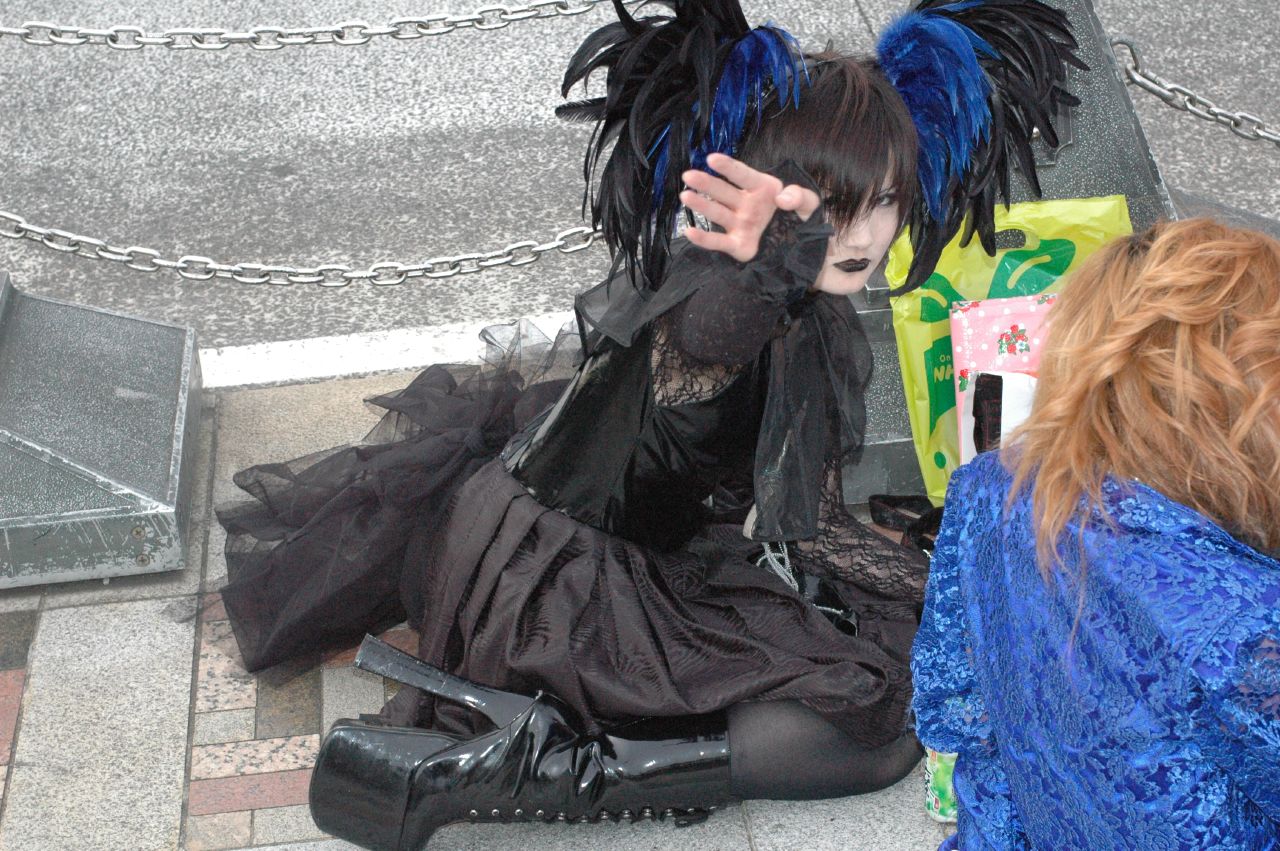
Gothic Lolita emerged in 1990s Japan, where music is the point at which goth and Lolita finally met. Visual kei rock bands of that decade often supported Lolita aesthetics with an emphasis on Victorian Goth fashion. Malice Mizer, founded in 1992, is the clearest example, and guitarist Mana later used those French romantic and Gothic influences to create his own clothing line, Moi-meme-Moitie, which became widely popular with Gothic Lolitas.
That shared lineage is why visual kei fashion and Gothic Lolita carry so much of the same lace and eyeliner: the bands were putting Victorian Goth styling in front of a Lolita audience every time they performed.
There was an emotional pull as well. Failed dreams and cynicism are a large part of Lolita culture and often the reason for escape, and those feelings may have fuelled the emergence of separate sub-genres such as Gothic Lolita with its gloomy, darker aesthetics. The scene documented itself too, most visibly through the quarterly magazine and book hybrid The Gothic and Lolita Bible.
Visual kei also turned out to be the vehicle for export. The androgyny and unmistakable styling of those bands carried Lolita aesthetics beyond Japan and across East Asia, and by the early 2000s, with globalising technology, into the Western world.
Where the Two Styles Genuinely Overlap
Lolita fashion and goth are not related by descent, but the overlap is real, and it sits in three places:
- Both draw on Victorian-inspired elements
- Both value individual expression
- Both reject mainstream fashion norms
That shared appetite for historical dress, rather than any shared ancestry, is what makes a dark Lolita coord read as goth at a glance. Two people can arrive at black lace and a high collar from completely different directions.
Lolita and Goth Today
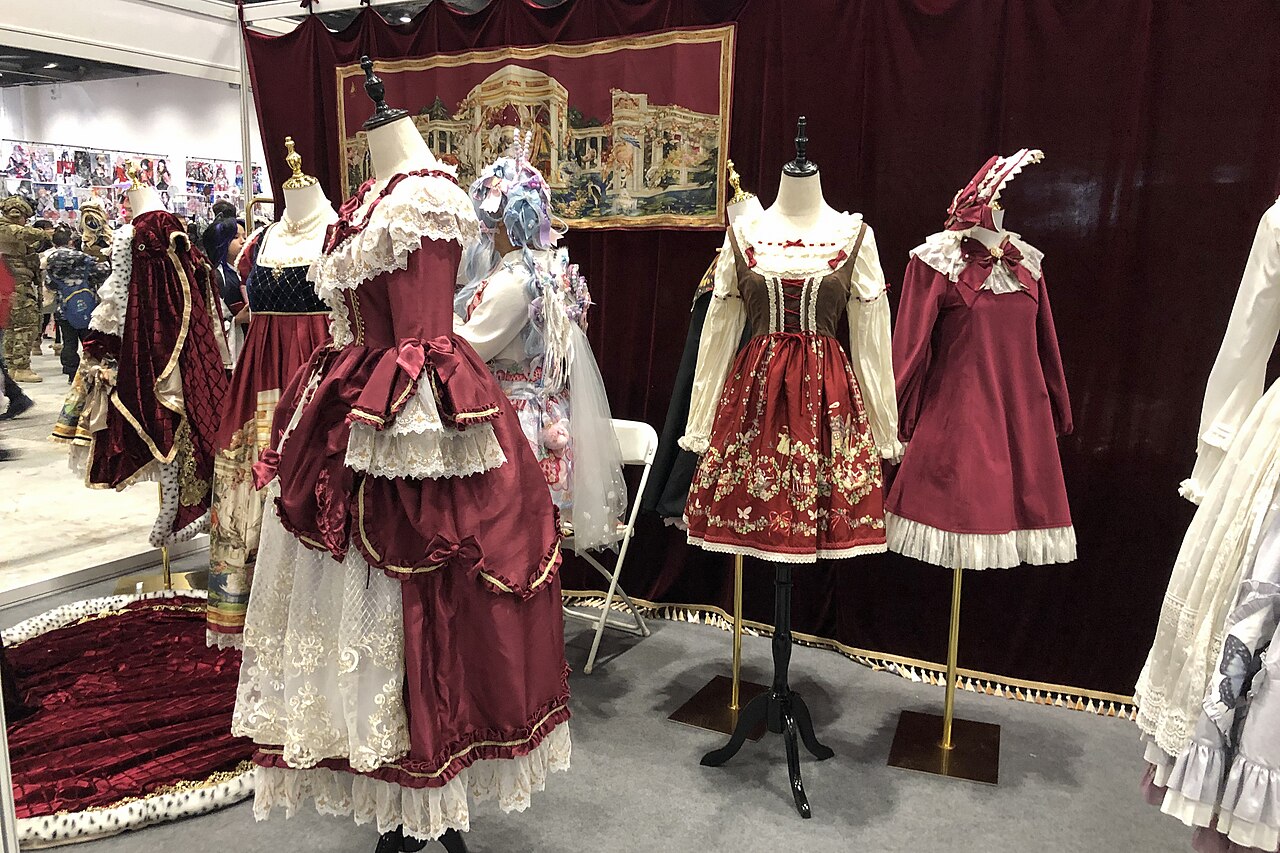
Both styles have spread well past their starting points. Lolita, which began in Japan, has gained popularity across Asia and in parts of the Western world including Spain, Britain and the United States, where wearers organise meet-ups and tea parties to socialise and talk about the fashion. Goth has had its own global life since the 1980s, and social media has widened the audience for both.
Wearers now treat the boundary as optional. Plenty of them mix elements from both, a Lolita dress with goth makeup or goth accessories with a Lolita silhouette. Knowing that the two styles came from different places does not stop you combining them. It just means you are blending two traditions rather than following one.
FAQs
Does Lolita fashion trace back to goth culture?
No. Lolita fashion took shape in Japan in the 1980s and 1990s out of Victorian and Rococo dress, as a reaction against revealing, body-hugging clothing. Goth emerged separately in the UK in the late 1970s and early 1980s out of post-punk music. Neither style descends from the other, and Gothic Lolita is a later fusion of the two.
Which came first, Lolita fashion or goth?
Goth came first. Goth emerged in the UK in the late 1970s and early 1980s, while Lolita fashion took shape in Japan during the 1980s and 1990s. Being older does not make goth the source of Lolita: the two developed independently in different countries, and Gothic Lolita only appeared once both already existed.
Is Gothic Lolita the same as goth?
No. Gothic Lolita is a Lolita substyle that borrows goth’s dark palette while keeping Lolita’s shape, modesty and doll-like silhouette. Goth is a separate subculture rooted in post-punk music, with its own fashion that rarely uses petticoats or knee-length bell skirts.
Does the name Lolita come from the Nabokov novel?
The term may have originated from Vladimir Nabokov’s 1955 novel, but the subculture’s origins and contemporary meaning are vastly different. The novel introduced Western readers to the sexualised child, while the fashion is built around modesty, elegance and resistance to being sexualised.
Is Lolita fashion a substyle of goth?
No. Lolita is its own fashion movement with its own substyles, including Sweet, Classic, Gothic, Pirate and Grotesque Lolita. Gothic Lolita is one branch of Lolita that references goth aesthetics, not evidence that Lolita sits underneath goth.
What is the main difference between Lolita fashion and goth culture?
Intent and origin. Lolita began in Japan as a fashion response to restrictive gender norms and body-focused clothing, aiming at elegance, femininity and fantasy. Goth began in the UK as a music-led subculture built around mystery, melancholy and rebellion, with clothing following the sound.
If reading this made you want to put some of that Japanese street style into your own wardrobe, Kamicrew’s Japanese-inspired shirt collection is a relaxed place to start, no petticoat required.
Kamicrew Best Seller

Dont Touch Me Yokai Ukiyo-E Japanese T-Shirt
$25.49+
$29.99
(15% off)


Summer Vibes Salty Kawaii Japanese Hoodie
$44.99+
$49.99
(10% off)


Japanese Pin Horror 80s Retro Aesthetics T-Shirt
$25.49+
$29.99
(15% off)


El Gran Maja Japanese Kaiju T-Shirt
$25.49+
$29.99
(15% off)


Who Wants The Perfect Body Japan Capybara Kawaii Japanese Unisex Shirt
$25.49+
$29.99
(15% off)


Monster 8 Mask Vintage Animal Hoodie
$44.99+
$49.99
(10% off)


I Hate People Japanese Opossum Vintage Animal Hoodie
$44.99+
$49.99
(10% off)


I Got That Dog In Me Small Turtle Vintage Animal T-Shirt
$25.49+
$29.99
(15% off)

The Creation Of Cat Ukiyo-E Japanese T-Shirt
$25.49+
$29.99
(15% off)