
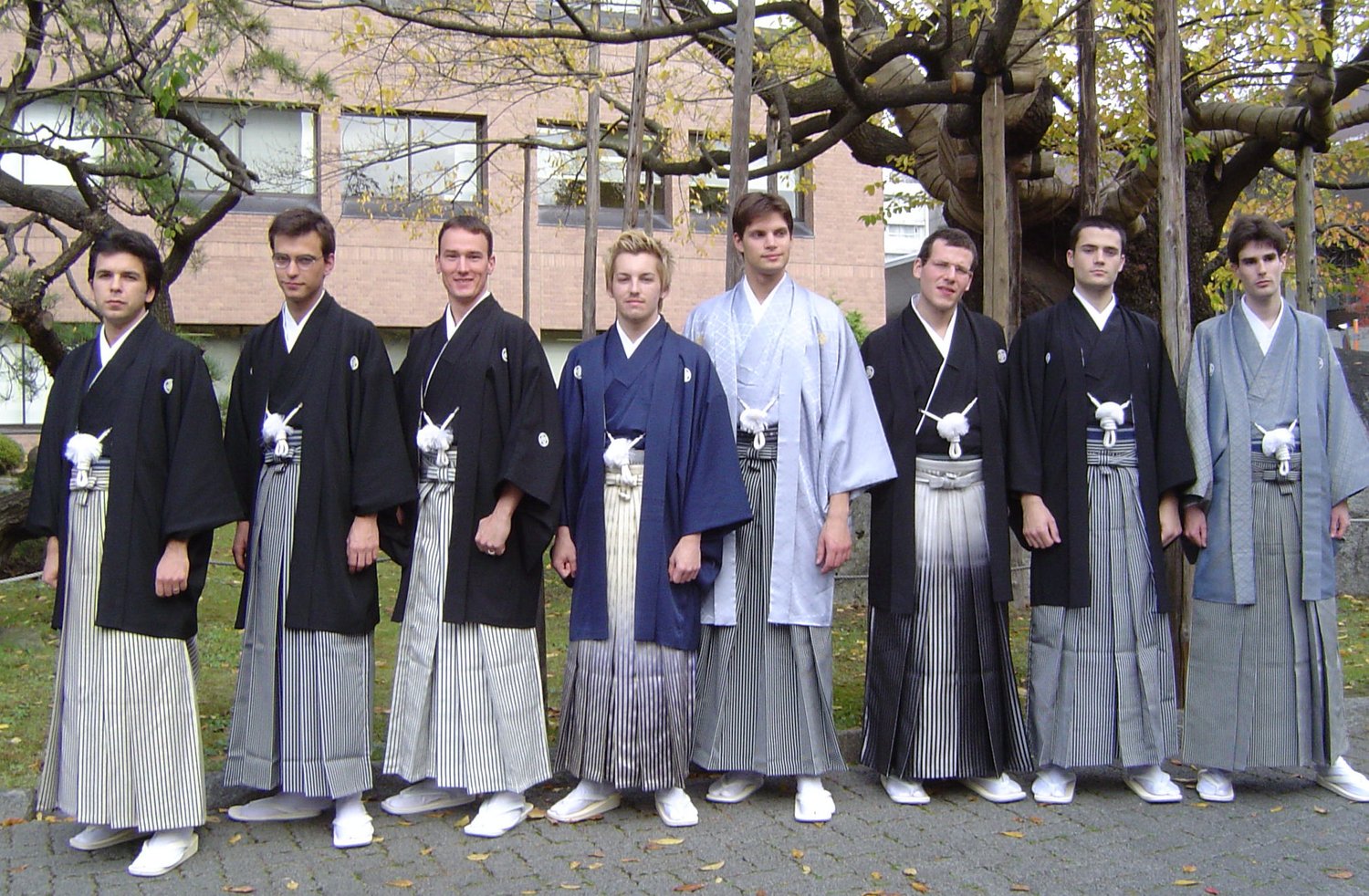
A hakama is a pleated Japanese garment for the lower body, tied at the waist with four long cloth straps and falling to roughly the ankles. A hakama is worn over a kimono, not instead of one, so the phrase hakama kimono names a two part outfit: the kimono as the base layer, the hakama over it.
People wore the hakama over a kimono for practical and social reasons at the same time, and samurai relied on every one of them. Hakama are still in use in Japan today, mostly in martial arts, ritual and ceremony.
What is a hakama?
The pleats are what identify the garment. Hakama made for martial arts commonly carry seven deep pleats, five at the front and two at the back. The kimono underneath is usually a hakamashita, literally “under the hakama”, though any kimono except a yukata, the light cotton summer robe, works just as well.
Of the four straps, called himo, two long ones attach at either side of the front and two shorter ones at the rear. The back of the garment may carry a rigid trapezoidal panel called a koshi-ita, and below that on the inside sits a spoon shaped piece known as a hakama-dome or hera, which tucks behind the obi and stops the hakama shifting. The front arrangement itself splits as two pleats on the right and three on the left, an asymmetry that Japanese design tends to prefer over perfect mirroring.
The main types of hakama
- Umanori: the horse riding cut, with divided legs like trousers, and the version martial artists use.
- Andon bakama: the lantern cut, an undivided skirt style that looks almost identical from the outside.
- Mountain or field umanori: looser at the waist and narrower in the leg, worn traditionally by field and forest workers.
- Sendaihira: stiff striped silk, usually black and white or black and navy, and the highest grade of formal men’s hakama.
Sendaihira earns that status through weaving rather than decoration. It uses a dense warp, the weft is woven wet and beaten firmly into place, and the untwisted silk is treated with lye, which makes the finished cloth glossy and the stripe fine. The workshop that still produces sendaihira in Sendai weaves it the same way. Stripes in colors other than black, gray and white belong on less formal outfits, and solid or graduated tones are common.
How the hakama layers over a kimono
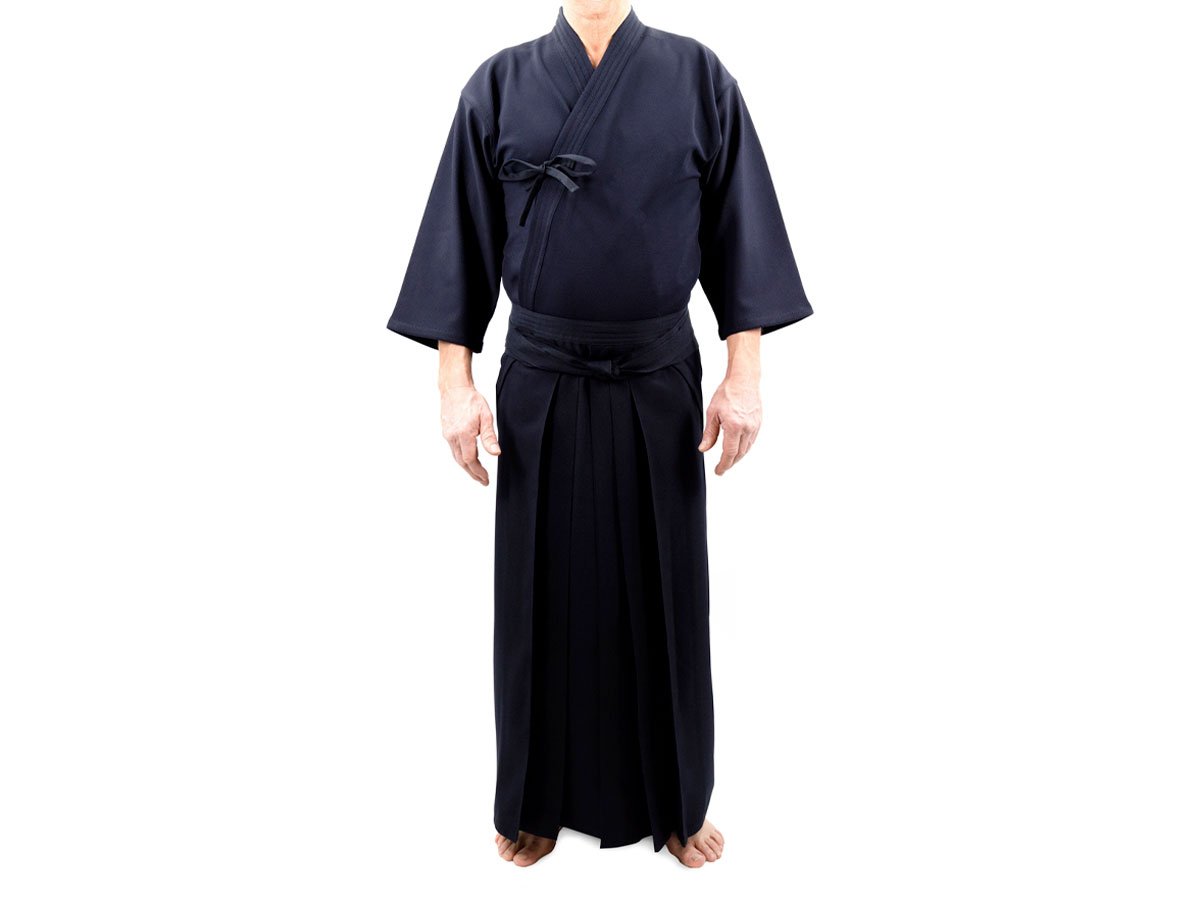
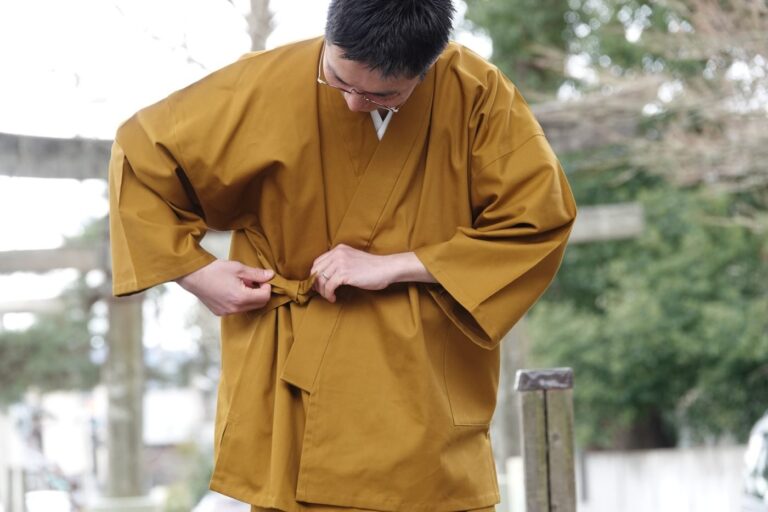
The hakama goes on last, over three layers: a nagajuban under kimono, the kimono itself, and an obi tied at the rear in a knot specific to this outfit. Men tie a hakama at the waist, women just below the bust line. Tying it takes six steps, from stepping into the pleats to smoothing them flat.
The same care that goes into putting on the kimono itself matters more here, not less, because the hakama will lock those layers in place for the rest of the day.
- Tie the obi firmly at the waist over a properly fitted kimono.
- Hold the hakama open and step into it with the pleats facing forward.
- Bring the front ties around the waist, cross them over the top of the obi knot, return them to the front and cross them below the waist.
- Set the koshi-ita against your lower back and tuck the hakama-dome behind the obi.
- Bring the rear ties around to the front, cross them over the front ties and tie them off there. The most formal method produces a knot that looks like two bow ties crossed.
- Smooth the pleats so each one falls clean and visible.
Height on the body carries the outfit. A men’s set tied too low breaks the vertical line of the kimono and makes walking uncomfortable. White tabi, the divided toe socks, and zori sandals finish a formal outfit.
Why samurai wore hakama over a kimono
Protection was the everyday argument for the garment. The outer layer took the dust, mud, grass and the hard edges of armor that would otherwise reach silk which was expensive to replace and awkward to clean.
Movement was the second argument, and it changed what the wearer could do. Wide pleats let someone take a longer stride, drop to a knee and rise again without dragging or straining the kimono underneath, which mattered on horseback and mattered again during sword practice.
The social case was just as real. What a samurai tied on in the morning was partly a statement about where he stood, since cut, pattern and fabric were read as markers of rank and of how formal the occasion was. The hakama sat inside a samurai’s everyday clothing rather than at the ceremonial edge of it, worn for training and travel as readily as for an audience at court. Martial arts tradition also links each of the seven pleats to a virtue of Bushido, among them courage, respect, honesty and loyalty, which is why folding and tying the garment neatly is still treated as part of the practice rather than a chore before it.
| Period or group | Main use | How the hakama looked |
|---|---|---|
| Heian court nobles (794 to 1185) | Formal court dress marking rank | Flowing, richly decorated fabric over silk kimono |
| Samurai (Kamakura to Edo) | Riding, sword practice, formal audiences | Wide pleats for movement, subdued colors |
| Farmers and monks | Work clothing and ritual dress | Rougher weaves, tied tight for manual labor |
Samurai era hakama: kamishimo, naga-bakama and armored cuts
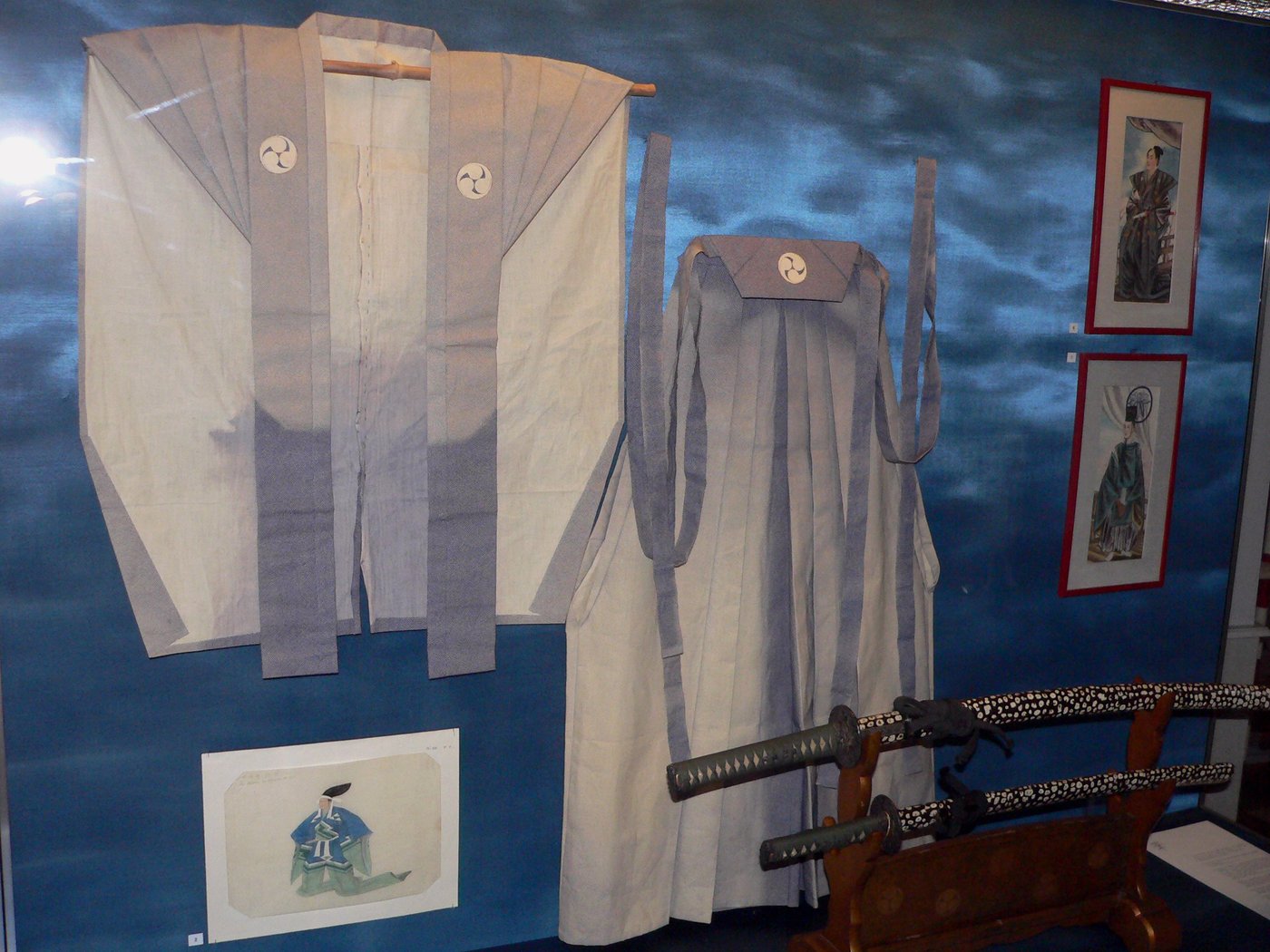
Edo period samurai wore the hakama inside a kamishimo, a set of three pieces: a formal kimono, the hakama, and a sleeveless jacket with exaggerated shoulders called a kataginu. A visit to the shogun or a high ranking daimyo could require naga-bakama, long hakama trailing one or two feet of fabric.
The length of the naga-bakama was deliberate. It made normal walking difficult, which made a surprise attack or an assassination attempt at court far harder to bring off. The Costume Museum’s record of the kamishimo shows the pairing as court dress. Naga-bakama now appear mainly in Noh and kyogen, in kabuki, and in Shinto ritual.
Other variants answered other problems. Some Sengoku period hakama had hems cut narrower than the body in imitation of the ballooning trousers worn by the Portuguese, with a band of cloth sewn around each hem so the fabric could not open out; these carried on into the Edo period as karusan-bakama, also called tattsuke-hakama. Sashinuki, or nu-bakama, ran a cord through the hem and drew it tight to blouse the leg and expose the foot, and the more formal version used six panels rather than four to carry the extra volume. Court nobles wore them with leisure and semi formal dress from the Heian period onward. Yoroi hakama went further still, with small armor plates or mail sewn onto the cloth so the legs were covered much like the rest of a samurai’s armor.
How men’s and women’s hakama differ
The split shows up in two places: where the garment sits on the body, and whether the cloth speaks through stripe or through color. One rule catches people out, since women do not wear hakama at tea ceremony and men do.
| Feature | Men’s hakama | Women’s hakama |
|---|---|---|
| Tied at | The waist | Just below the bust line |
| Fabric and pattern | Striped sendaihira silk for formal wear | Solid or graduated color, sometimes embroidered |
| Main occasions | Weddings, funerals, tea ceremony, martial arts | Graduations, kyudo, aikido, kendo |
| Worn with | Black montsuki kimono, white tabi | Bright kimono, often a furisode |
The most formal men’s outfit sets striped sendaihira against a black montsuki kimono carrying one, three or five family crests on the back, chest and shoulders, with white tabi and a white nagajuban underneath. In cool weather a montsuki haori and a white haori-himo complete it.
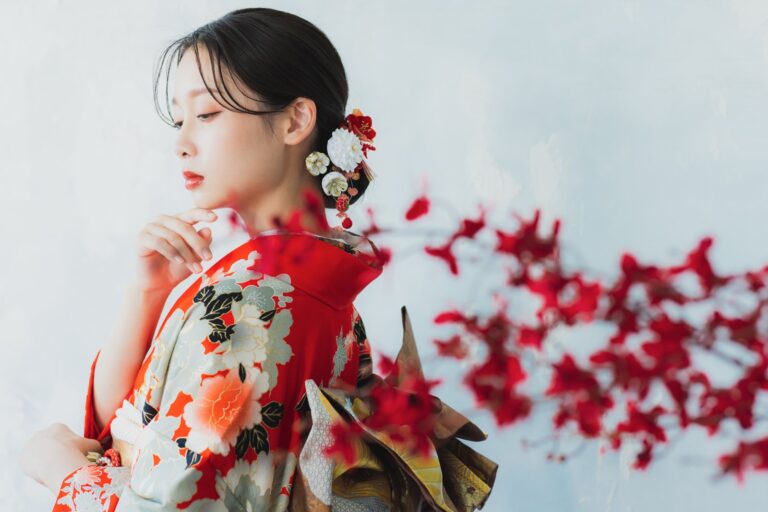
Women’s sets for young wearers are sometimes sparsely embroidered with flowers such as cherry blossoms. Graduation outfits usually pair an andon hakama with a bright kimono, often a furisode with its long swinging sleeves.
That graduation image has a specific origin. Utako Shimoda (1854 to 1936), an educator and dress reformer, found the kimono too restrictive for girls to move and take part in physical activity, and rejected Western corsets on the same grounds. She adapted the clothing worn by ladies in waiting at the imperial court into a uniform for her own school, and other women’s schools followed during the Meiji and Taisho periods. Hakama became standard high school wear, and the association stuck so firmly that many Japanese teachers still attend graduation ceremonies in kimono and hakama, much as Western professors wear caps and gowns.
Shrine dress runs on a separate track. A miko, or shrine maiden, wears a plain white kimono with a bright red hakama, sometimes a red naga-bakama for formal ceremonies, a look that descends from high ranking aristocratic women of the Heian era and from court performers such as shirabyoshi.
Where hakama are worn today
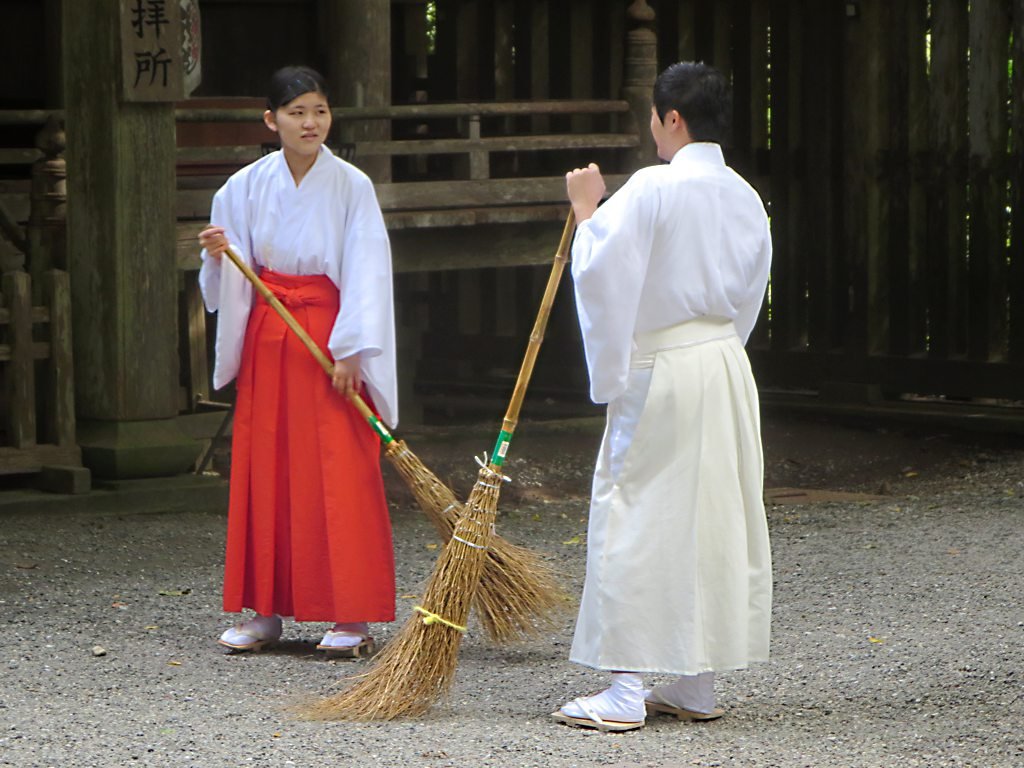
The hakama survives as specialist dress rather than daily wear, kept in circulation by martial arts schools, Shinto practice, family ceremony and the school calendar. Performers of Noh, kyogen and kabuki also wear them on stage, and among martial artists the garment reaches well beyond kendo into iaido, taido, aikido, jodo, ryu-te and kyudo.
Contemporary Japanese men reach for a hakama only at the most formal moments, and the black montsuki hakama is the peak of that scale. Coming of age and graduation ceremonies invite more color and more modern patterning. Sumo wrestlers do not wear hakama in the ring, but because they are required to appear in public in traditional dress, they are often seen in hakama at formal functions.
Boys meet the garment early. A boy traditionally received his first pair at the age of five, marked by the hakama ceremony sometimes called chakko during Shichi-Go-San, and wore hakama from then on as a recognition of leaving early childhood. At the other end of the register, a recent trend among young Japanese men treats the hakama as casual day wear with a T-shirt.
| Setting | What is worn | Why it holds |
|---|---|---|
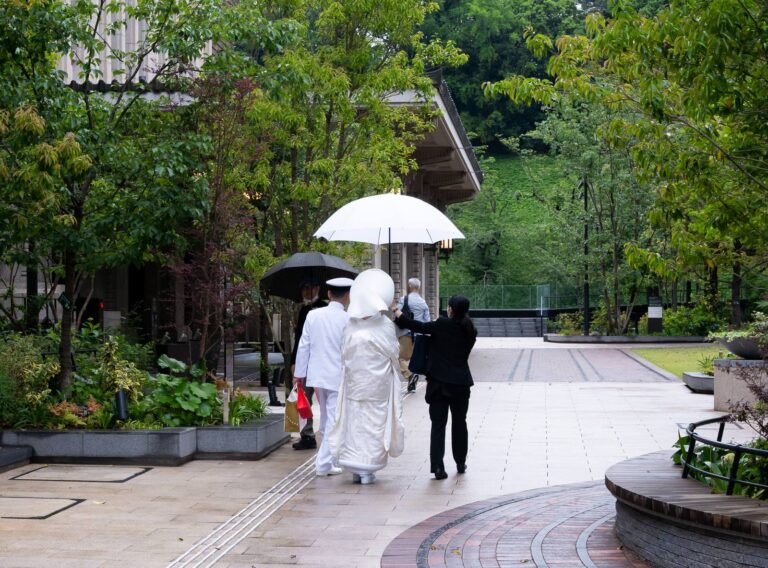
| Weddings and formal rites | Black montsuki kimono with striped sendaihira hakama | The highest level of men’s formal dress |
| Graduations | Andon hakama over a bright kimono or furisode | Echoes the Meiji era students who wore it to class |
| Martial arts | Umanori hakama over a training top | Pleats guide posture and conceal leg movement |
| Shrines | White kimono with red or plain hakama | Everyday working dress for miko and priests |
Pleats, folding and hakama etiquette
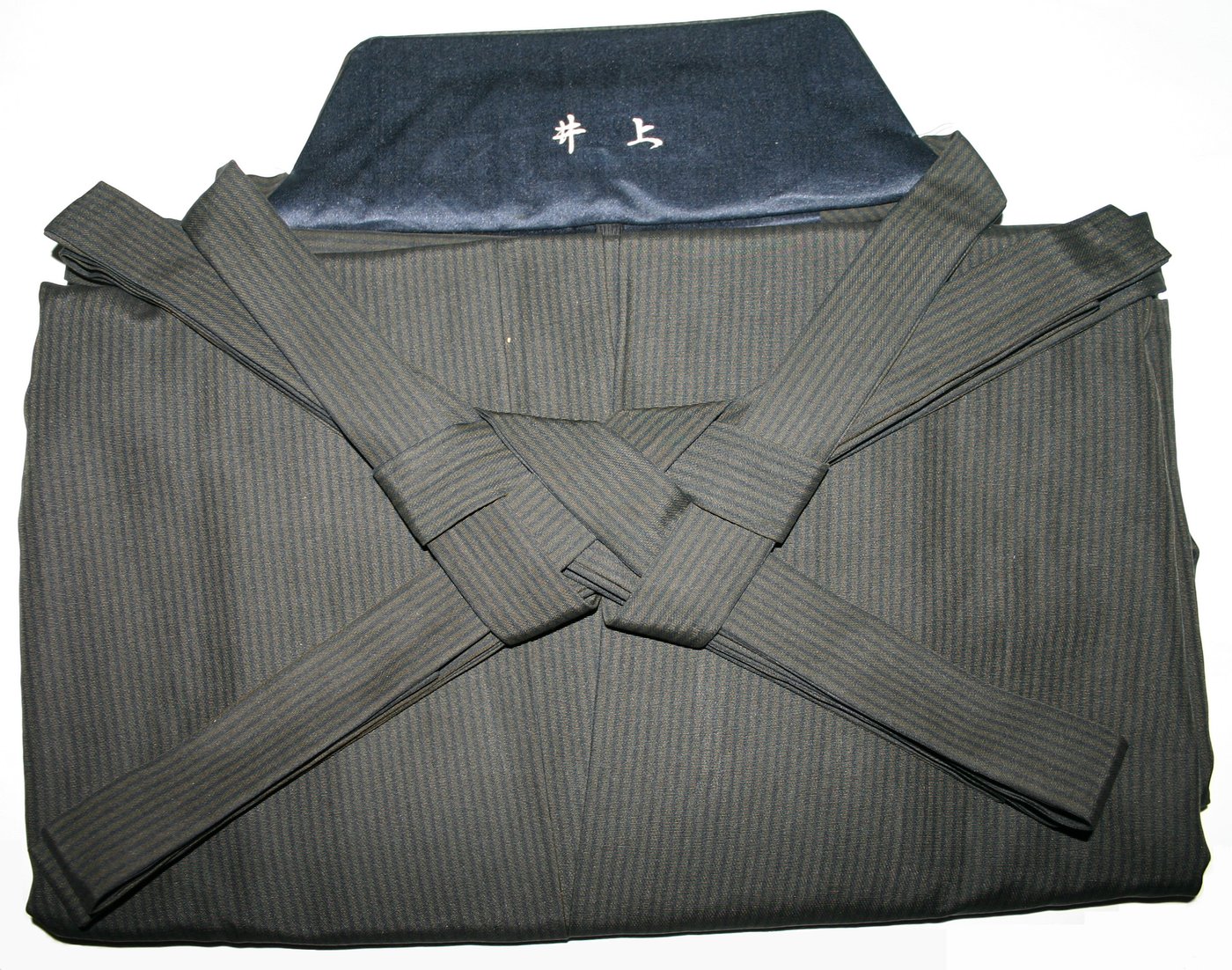
A hakama is folded along its pleats after every wear, because the creases fall out easily and re-creasing a silk pair can require specialist attention. It counts as one of the harder pieces of traditional Japanese clothing to fold, since the long himo ties have to be smoothed and gathered before they can be tied in the prescribed pattern.
Martial arts traditions each have their own folding method and treat it as etiquette rather than housekeeping. In some schools the highest ranking student folds the teacher’s hakama as a token of respect, which shows how the garment is regarded once you are inside the practice.
FAQs
What is the difference between a hakama and a kimono?
A kimono is the full length robe that forms the base of the outfit, and the hakama is the over garment that goes on top of it. The phrase hakama kimono refers to the two worn together: the kimono gives the outfit its line, the hakama gives it structure and formality.
What kimono is worn with a hakama?
Traditionally a hakamashita, a kimono made to be worn under a hakama, though a regular kimono works as well. For formal men’s wear that means a black montsuki kimono with family crests. The one exception is the yukata, which is not worn with hakama.
Why did samurai wear hakama over a kimono?
The extra layer absorbed the dirt and abrasion that would otherwise ruin the silk beneath it, the pleats opened the leg up for mounted work and low stances, and the cloth itself placed the wearer in the social order.
Do people still wear hakama in Japan?
Yes, though the occasions are narrower than they once were. Men wear hakama at weddings, funerals, tea ceremonies and coming of age ceremonies, women mostly at graduations, martial artists at training and competition, and Shinto priests and shrine maidens every working day.
Is it okay to wear a hakama if you are not Japanese?
It is, provided the garment is worn properly and in a fitting context. Hakama are part of the standard uniform for kendo, aikido and iaido practitioners worldwide, and visitors regularly wear kimono and hakama sets in Japan. Tying it correctly and knowing what the outfit is for is the respectful part.
If the Edo period visual language behind all of this is what draws you in, the woodblock print motifs in Kamicrew’s ukiyo-e shirt collection come from the same era that gave the hakama its most familiar shape.
Kamicrew Best Seller

Dont Touch Me Yokai Ukiyo-E Japanese T-Shirt
$25.49+
$29.99
(15% off)


Summer Vibes Salty Kawaii Japanese Hoodie
$44.99+
$49.99
(10% off)


Japanese Pin Horror 80s Retro Aesthetics T-Shirt
$25.49+
$29.99
(15% off)


El Gran Maja Japanese Kaiju T-Shirt
$25.49+
$29.99
(15% off)


Who Wants The Perfect Body Japan Capybara Kawaii Japanese Unisex Shirt
$25.49+
$29.99
(15% off)


Monster 8 Mask Vintage Animal Hoodie
$44.99+
$49.99
(10% off)


I Hate People Japanese Opossum Vintage Animal Hoodie
$44.99+
$49.99
(10% off)


I Got That Dog In Me Small Turtle Vintage Animal T-Shirt
$25.49+
$29.99
(15% off)

The Creation Of Cat Ukiyo-E Japanese T-Shirt
$25.49+
$29.99
(15% off)