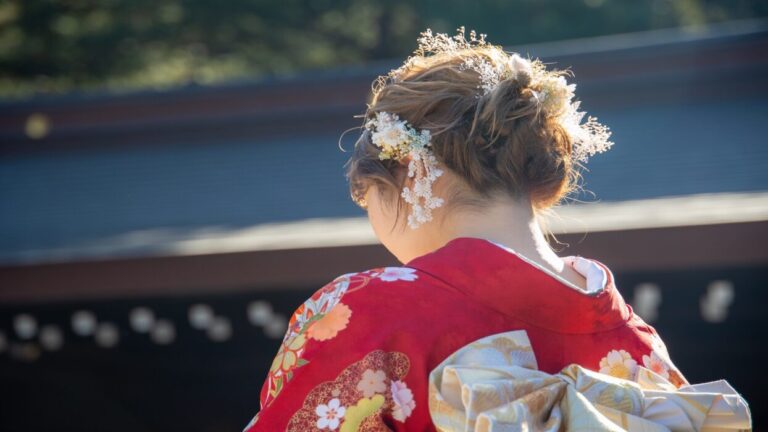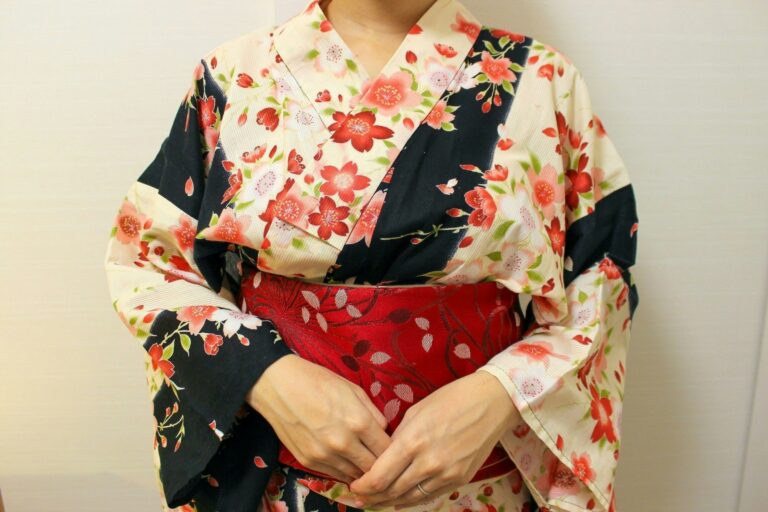

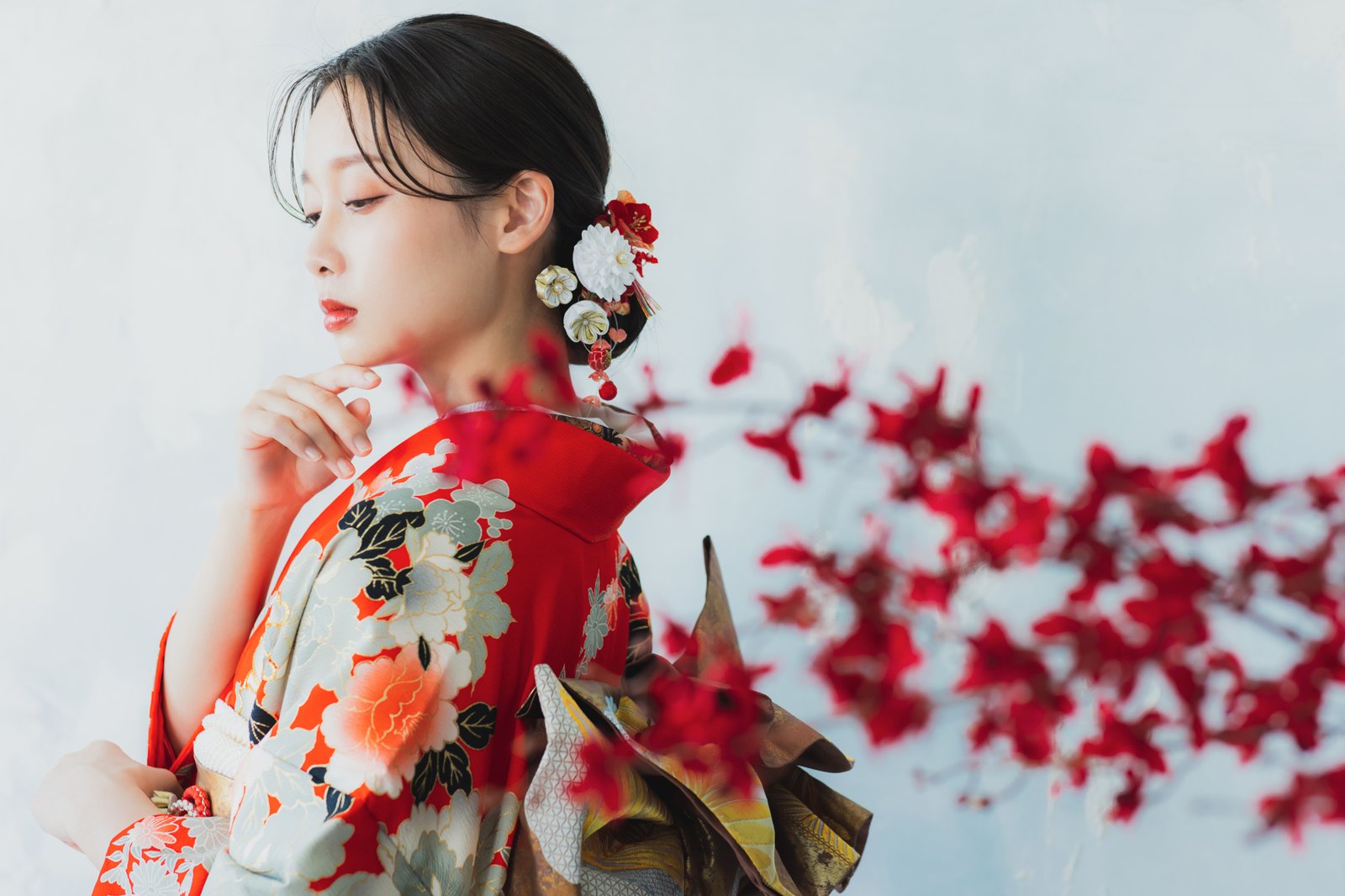
A furisode is the most formal kimono worn by young, unmarried women in Japan, identifiable by long, swinging sleeves that stretch from about 85 to 114 centimeters. The name literally means “swinging sleeves,” and the garment is closely tied to Coming of Age Day, weddings, and other occasions where a young woman’s family wants to mark the moment with color and ceremony.
What Is a Furisode?
Unlike everyday kimono, a furisode is cut with sleeves that hang open past the shoulder rather than sewn closed at the underarm, which lets the underkimono show and leaves room for the obi to sit high on the body. It is made almost always of silk in bright, youthful colors reserved for a young woman’s most significant occasions. Families typically buy or rent one for a daughter to wear on the year she turns an adult.
The style traces back to the mid-1500s, when it started as children’s clothing worn by both boys and girls rather than an adult garment. Sleeves were short at first and lengthened gradually as the look became reserved for special occasions instead of daily wear. By the 17th century, boys wore furisode only until their own coming-of-age ceremony, while girls were expected to retire theirs once married or once they reached their twentieth year.
That expectation was not just tradition, it was enforced through the same sumptuary codes that also dictated samurai clothes, spelling out which sleeve lengths, colors, and crests were appropriate for a given age or rank. After marriage, a woman traditionally had her furisode’s sleeves cut down and reworked into a tomesode, a shorter-sleeved kimono for married women, turning a physical alteration into a symbolic one.
Types of Furisode and What the Patterns Mean
Furisode fall into two main types graded by sleeve length: the kofurisode, about 85 centimeters, worn for standard formal occasions, and the ofurisode, closer to 114 centimeters and the more formal of the two, worn at weddings and by brides at their reception. Embroidered motifs such as chrysanthemums, cranes, and pine-bamboo-plum symbolize longevity, good fortune, and resilience rather than serving as pure decoration.
In earlier decades, shorter and more subdued furisode also existed for informal daily wear, though today the garment defaults to formalwear only.
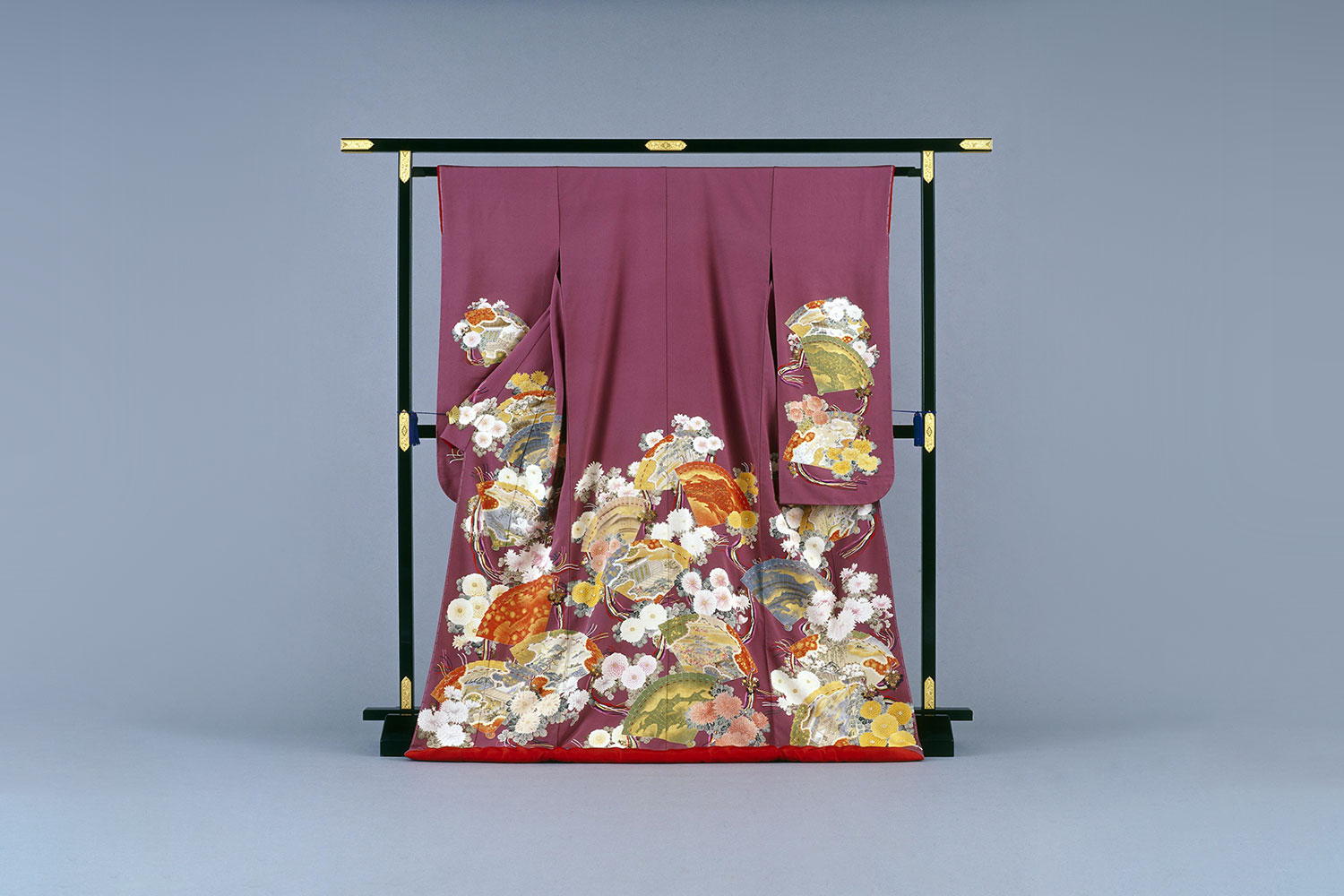
A furisode from the late Edo period held in the Art Institute of Chicago’s collection shows how deliberate that formality was: it belonged to a family whose crest was the tachibana, or Mandarin orange blossom, and features a plum tree embroidered in gold and white thread that climbs from hem to shoulder, a level of handwork reserved for a garment meant to be worn once and remembered.
The motifs stitched into a furisode are rarely decorative alone. Common patterns include:
- Chrysanthemum (kiku): longevity, and a flower long associated with the Imperial family
- Pine, bamboo, and plum (shochikubai): resilience and perseverance, a trio borrowed from wider East Asian art
- Crane (tsuru): good fortune, fidelity, and a long life
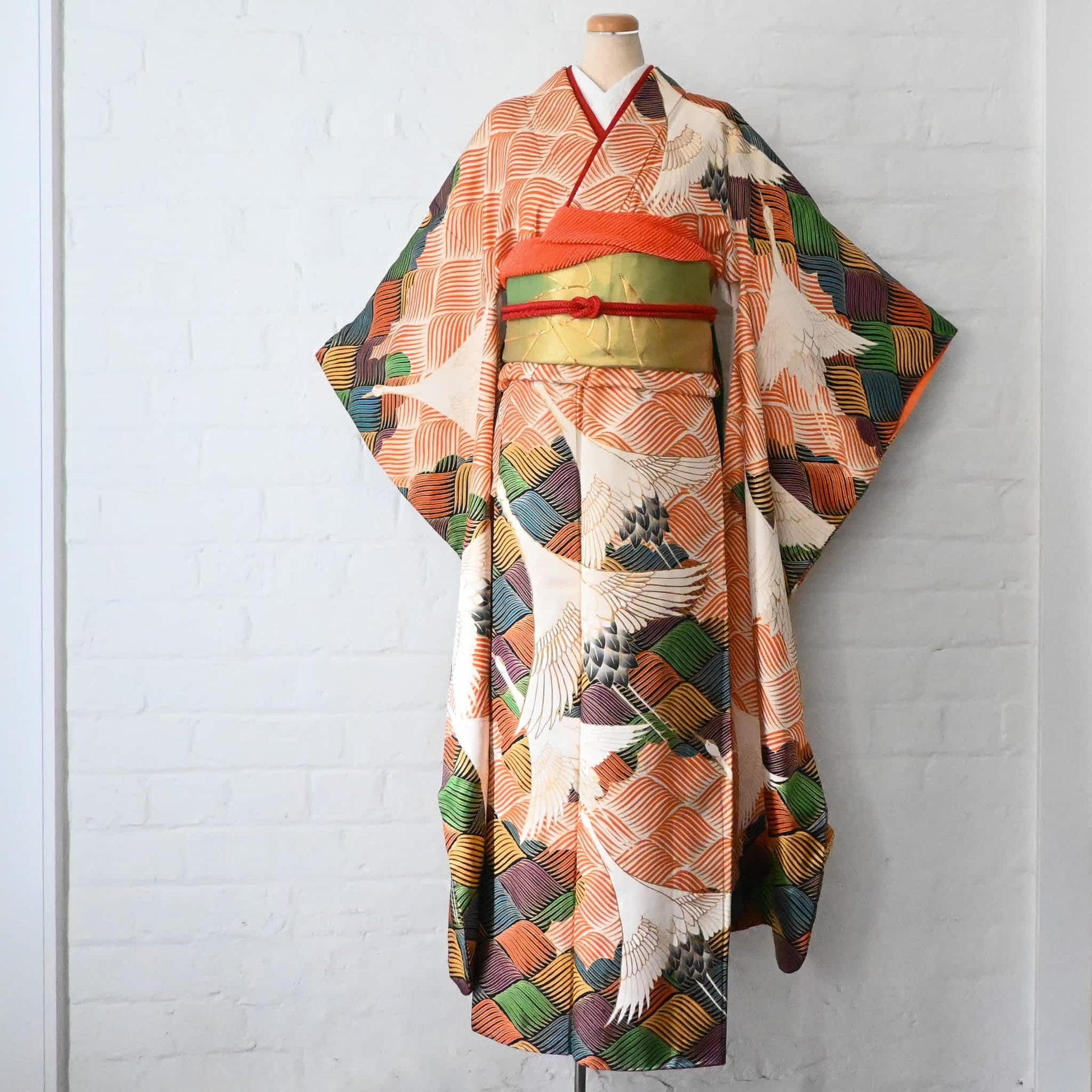
The same auspicious imagery shows up across traditional Japanese clothing for women more broadly, from wedding kimono to the obi tied over them, which is part of why furisode motifs still read as celebratory rather than arbitrary.
How Furisode Are Worn Today
Furisode are worn today mainly on Seijin no Hi, or Coming of Age Day, and by wedding guests and brides during the reception, with graduations occasionally calling for shorter-sleeve variations. Most families rent rather than buy, since a formal silk furisode with hand embroidery is worn for only a handful of events.
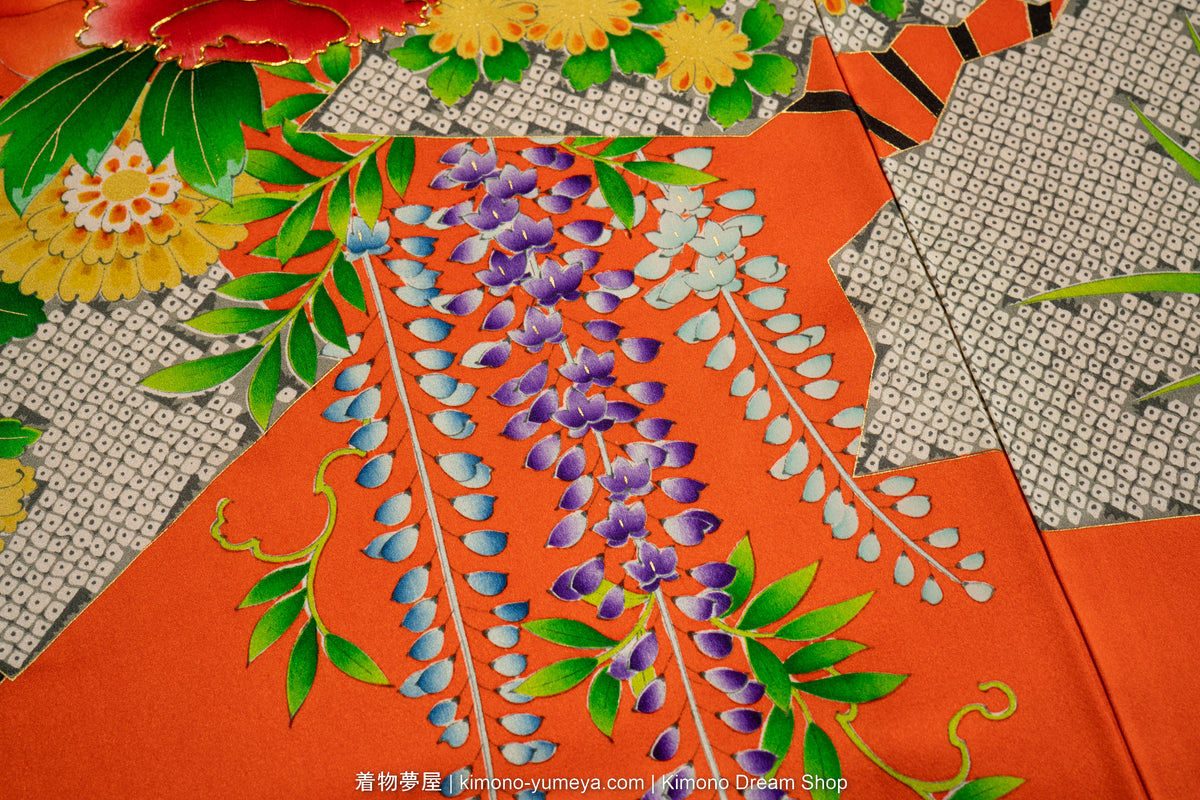
Modern wearers have also adapted the garment for practicality. One common technique, called o-hashori, folds and tucks the excess fabric at the hem to create a clean, ankle-length silhouette instead of letting it trail on the floor the way a highly formal Edo-period furisode would. That adjustment makes the kimono easier to walk in without changing its formality, and it is the main reason a furisode that looks museum-grade in photos can still be worn comfortably for a full day of ceremonies and photos.
Formality rules around furisode have also loosened generally. What was once tied strictly to marital status is now treated more as a matter of age, with women past their early twenties usually choosing shorter-sleeved formal kimono instead, and some choosing Western formalwear altogether for the same occasions.
FAQs
How wide are furisode sleeves?
Furisode sleeves run from about 85 to 114 centimeters long, depending on the type. The kofurisode measures around 85 centimeters and covers standard formal occasions, while the ofurisode reaches closer to 114 centimeters and is reserved for the most formal settings, such as weddings.
What is the difference between a furisode and a kimono?
Furisode is a specific style of kimono, not a separate garment. What sets it apart is sleeve length: a furisode’s sleeves swing loose from 85 to 114 centimeters, while most other kimono, including the tomesode worn after marriage, have sleeves sewn closer to the body.
Who can wear a furisode?
Historically only unmarried women wore furisode, since marriage traditionally marked the end of the style. That divide has relaxed into more of an age guideline today, with young women generally wearing furisode through their early twenties regardless of marital status before moving to shorter-sleeved formal kimono.
How do you pronounce furisode?
Furisode is pronounced “foo-ree-SO-deh,” with the stress falling closer to the third syllable and every vowel given its full, clipped Japanese sound rather than blended together.
What does furisode mean?
The word combines furi, meaning “to swing” or “wave,” with sode, meaning “sleeve,” so it translates literally to “swinging sleeves,” a direct reference to how the long fabric moves when the wearer’s arms are raised.
If the furisode’s flowing silhouette and symbolic motifs speak to you, browse Kamicrew’s ukiyo-e-inspired streetwear for graphic tees and hoodies that carry the same traditional Japanese aesthetic into everyday wear.
Kamicrew Best Seller

Dont Touch Me Yokai Ukiyo-E Japanese T-Shirt
$25.49+
$29.99
(15% off)


Summer Vibes Salty Kawaii Japanese Hoodie
$44.99+
$49.99
(10% off)


Japanese Pin Horror 80s Retro Aesthetics T-Shirt
$25.49+
$29.99
(15% off)


El Gran Maja Japanese Kaiju T-Shirt
$25.49+
$29.99
(15% off)


Who Wants The Perfect Body Japan Capybara Kawaii Japanese Unisex Shirt
$25.49+
$29.99
(15% off)


Monster 8 Mask Vintage Animal Hoodie
$44.99+
$49.99
(10% off)


I Hate People Japanese Opossum Vintage Animal Hoodie
$44.99+
$49.99
(10% off)


I Got That Dog In Me Small Turtle Vintage Animal T-Shirt
$25.49+
$29.99
(15% off)

The Creation Of Cat Ukiyo-E Japanese T-Shirt
$25.49+
$29.99
(15% off)