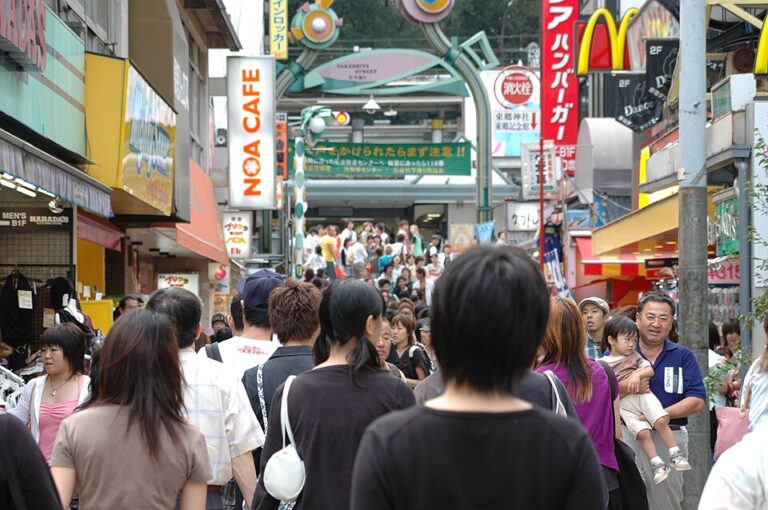

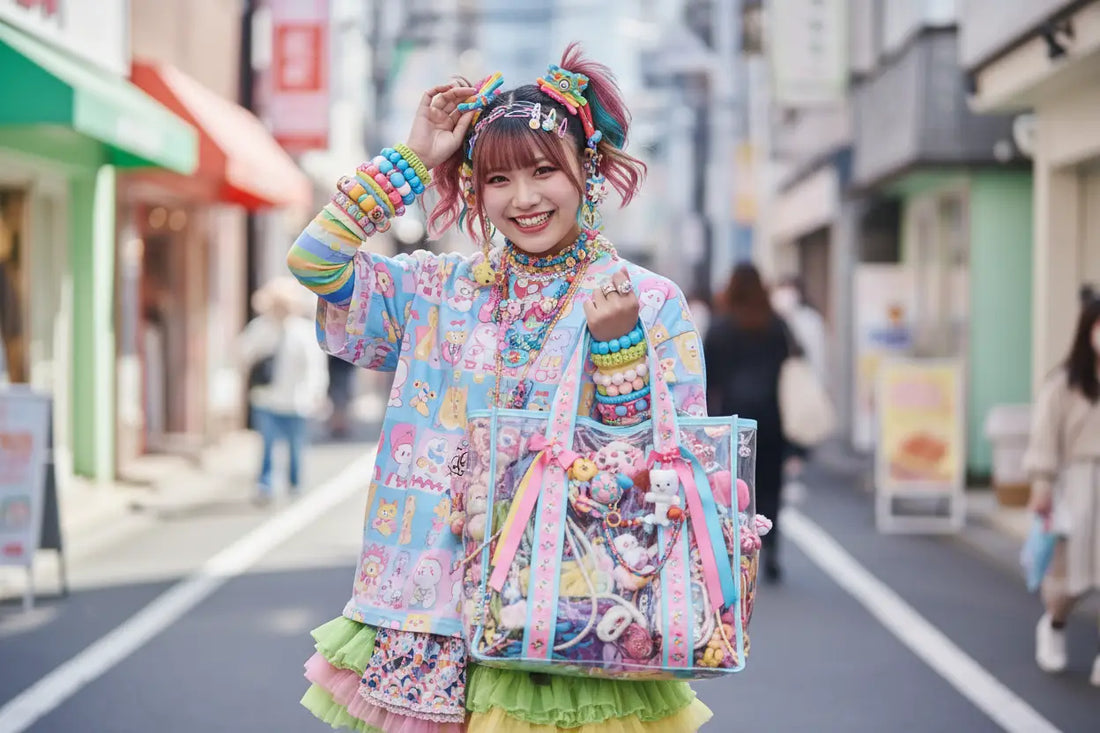
Decora fashion is a Japanese street style built on accessories rather than silhouette: bright colors, clashing patterns, and as many clips, bracelets, and charms as one outfit can physically hold. It formed in the late 1990s around Takeshita Street in Harajuku, peaked in the mid-2000s, and is still worn and recognized in Harajuku today. Decora became the international face of Harajuku fashion, even though Harajuku is a district rather than a single style.
The style has a rule, and the rule is quantity. Where most fashion asks what to leave out, decora asks how much more will fit on a sleeve, a bag, or a fringe of bangs.
What decora fashion is
Decora is a Japanese street style defined by accessory volume rather than by shape. The name comes from the Japanese word for decoration, デコレーション, which is exactly what the style does. Three things decide whether a coordinate reads as decora: the accessories, the motifs, and the color scheme, in roughly that order. The clothing underneath is only the surface the decoration sits on.
Decora is playful and childlike, and it has less of a silhouette than most Japanese subcultures. That makes it unusual among Japanese street styles. Gothic lolita has a shape it must keep. Gyaru has a specific beauty standard. Decora has neither, which is why a decora coordinate can be built on overalls, a tutu, or sweatpants.
Where decora came from
Decora formed in the late 1990s around Takeshita Street in Harajuku. Its direct predecessor was Shinora, the look worn in the 1990s by fans of the idol Tomoe Shinohara. Two Harajuku institutions turned decora into a documented style: 6%DOKIDOKI, opened by Sebastian Masuda in 1995, and Shoichi Aoki’s FRUiTS magazine, which began photographing the district’s streets late in the decade.
Shinora already used abundant color, but it read differently: childlike hats shaped like stuffed animals, decoration concentrated in bracelets and badges, solid colors with almost no prints, chunky buttons, pom-poms, and tulle accents. It was also more tomboyish than what followed, with shorts worn under suspenders left hanging down the legs. Shinohara’s fans, the Shinorers, turned her clashing outfits into a movement without knowing they were building the groundwork for something else.
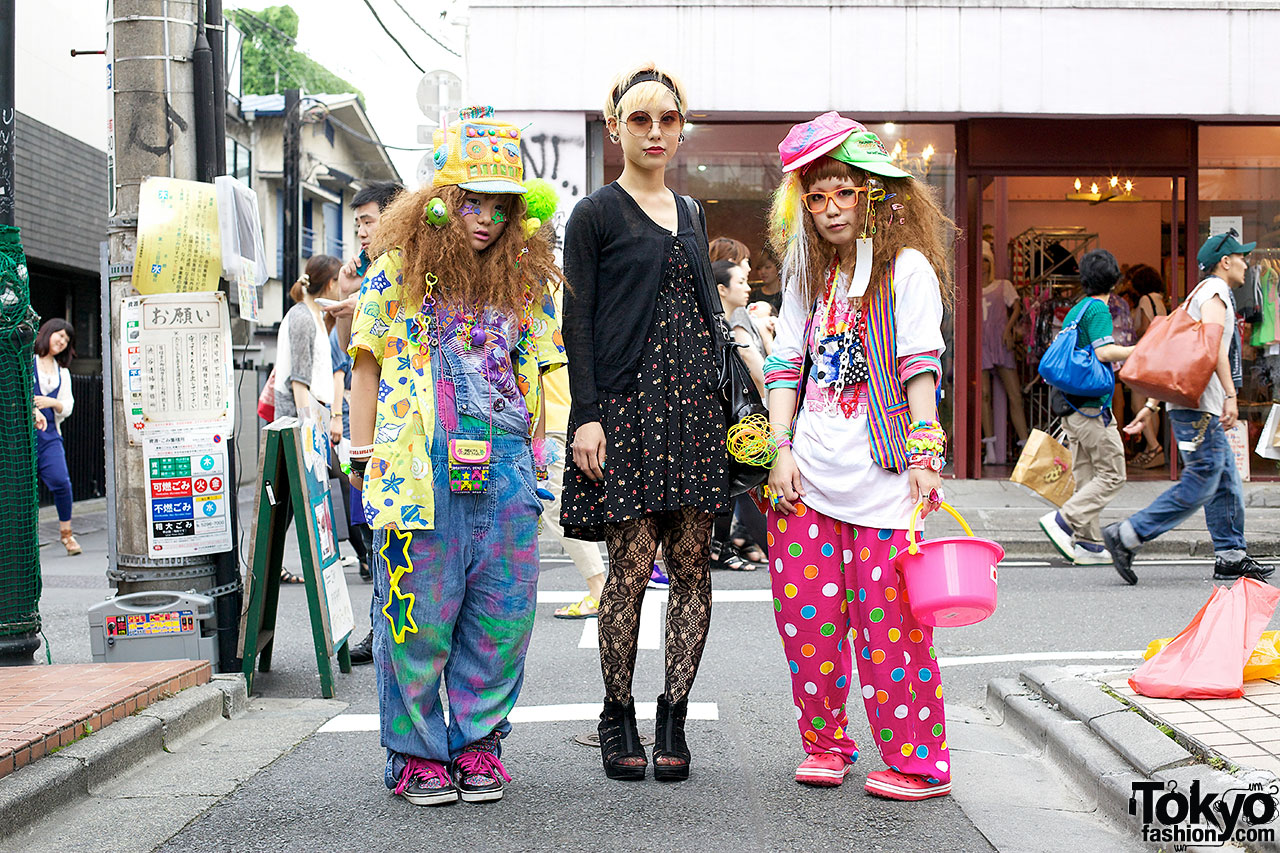
Takeshita Street worked as a place to test ideas that would not have survived anywhere else in Tokyo. 6%DOKIDOKI stocked neon accessories and oversized charms and became a gathering point for the area’s most colorful dressers. FRUiTS gave the look legitimacy it had not had before, turning something treated as eccentric into a style with a photographic record.
Decora’s reach outgrew Japan. Jeremy Scott and Moschino pulled its maximalism into runway collections, and events like Japan Expo in Paris and Anime Expo in Los Angeles became places where the style is worn in person. Sanrio collaborations keep its motifs circulating, Kyary Pamyu Pamyu carried its visual language into music videos, and Decora Day gives wearers around the world a date to post their most extreme coordinates. The current revival owes a lot to Y2K nostalgia, which put the whole late-1990s Harajuku palette back in play.
What a decora coordinate is built from
A decora coordinate is assembled from five elements: a bright or pastel color scheme, deliberately clashing patterns, a plain printed base of tops and tutus, layered legwear and armwear, and accessories in quantity. Accessories carry the most weight of the five. Hair, makeup, and shoes follow the same logic as the rest, judged on color and cuteness rather than shape.
Color schemes and patterns
Pink and blue are the most common base colors in decora, with pastels close behind and neon used heavily. Colors are used in abundance, so multicolored and rainbow themes are standard rather than daring. Darker variants of decora do exist, but the overwhelming majority of coordinates sit on the bright side of the spectrum.
Patterns clash on purpose. Polka dots run against stripes, cartoon characters sit next to florals and checkerboards, and matching is treated as an afterthought.
Clothes and base layers
The base of a decora outfit is deliberately plain: printed t-shirts and hoodies do most of the work, with tutu skirts, leg warmers, arm warmers, and knee-high socks layered over them. The graphics lean on retro cartoon and character properties, which is why Strawberry Shortcake, Care Bears, and The Smurfs turn up on the tops alongside Sanrio characters such as Hello Kitty and later franchises like Pokemon.
A single outfit usually mixes several textures to keep the eye moving, so a knit, a mesh, and a tulle layer can appear in the same coordinate.
Accessories
Accessories are the part that makes an outfit decora rather than merely colorful. The first rule is to wear as many as possible, and there is no such thing as too many. The recurring pieces are clips, bows, and ribbons in the hair, bracelets, necklaces, and rings, patterned dental masks, and band-aids with colorful patterns worn across the bridge of the nose.
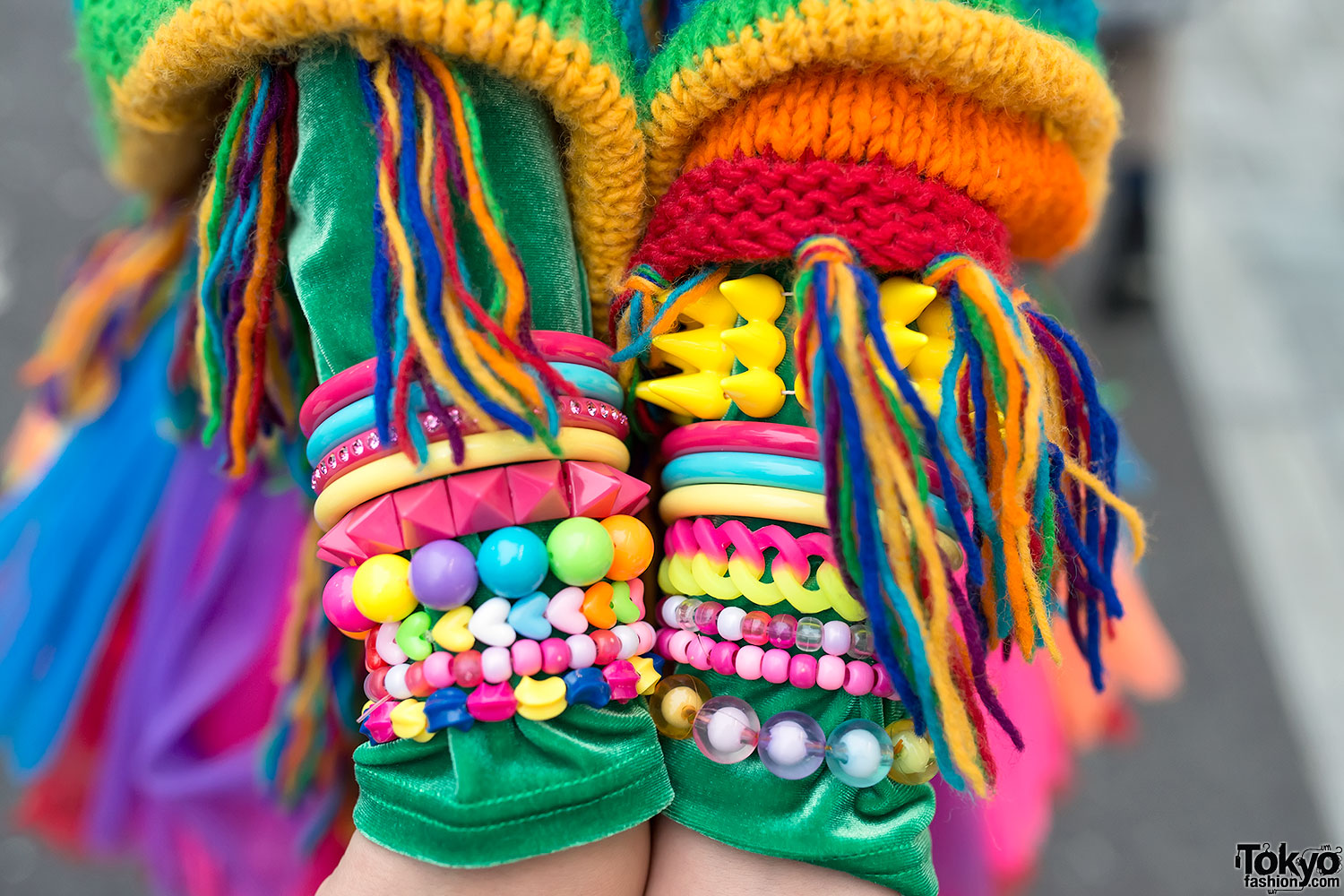
Two classic uses show what the quantity is for: clips applied until they cover the hair and the bangs, and bracelets stacked until they almost cover the forearm. Accessories should be cute as well as numerous, so motifs stay in kawaii fashion territory, mostly stars, hearts, and characters such as Hello Kitty or Little Twin Stars.
Hair and makeup
Hair in decora is treated as a mounting surface for clips. Pigtails, braids, curls, twin tails, and short bobs all serve the same purpose, which is giving clips somewhere to sit. Makeup runs in the opposite direction and is usually minimal, because a childlike face suits the style better than a mature one.
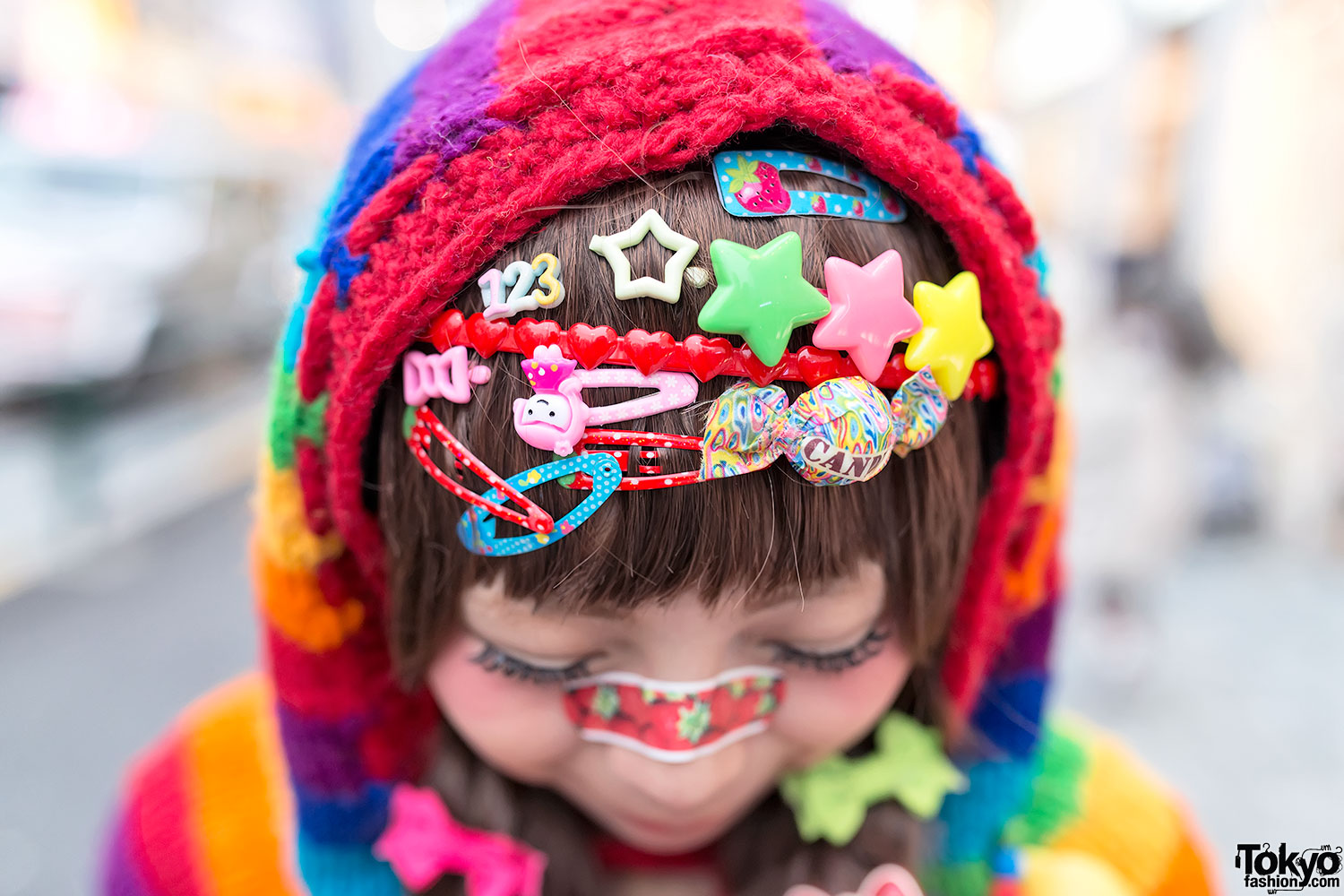
Hairstyles vary more than any other element. Some wearers carry the outfit’s colors into the hair itself and dye it bright, and others keep a natural color and let the accessories do the work. Pigtails, braids, and curls are the common bases for women, and longer hair is more common among men in the style.
Some wearers do accessorize the face as well, adding glitter, stickers, or crystals under the eyes in shapes like hearts and stars.
Shoes
Footwear in decora is open. Mary Jane shoes, sneakers, high-tops, and rocking-horse shoes all appear in the style, and the deciding factors are color and cuteness rather than any particular shape.
How decora layering works
Layering in decora creates surface rather than warmth or proportion. Skirts go over leggings, graphic tops go under patterned cardigans, and extra socks or leg warmers go over tights, so that every part of the body carries something and every layer adds another place for clips, charms, or bracelets to live.
The guiding principle is that more is more. A coordinate that looks chaotic at first glance is usually assembled deliberately. A bag hung with charms works the same way as a sleeve of bangles, which is why clear totes stuffed with plush and trinkets are so common.
The substyles of decora
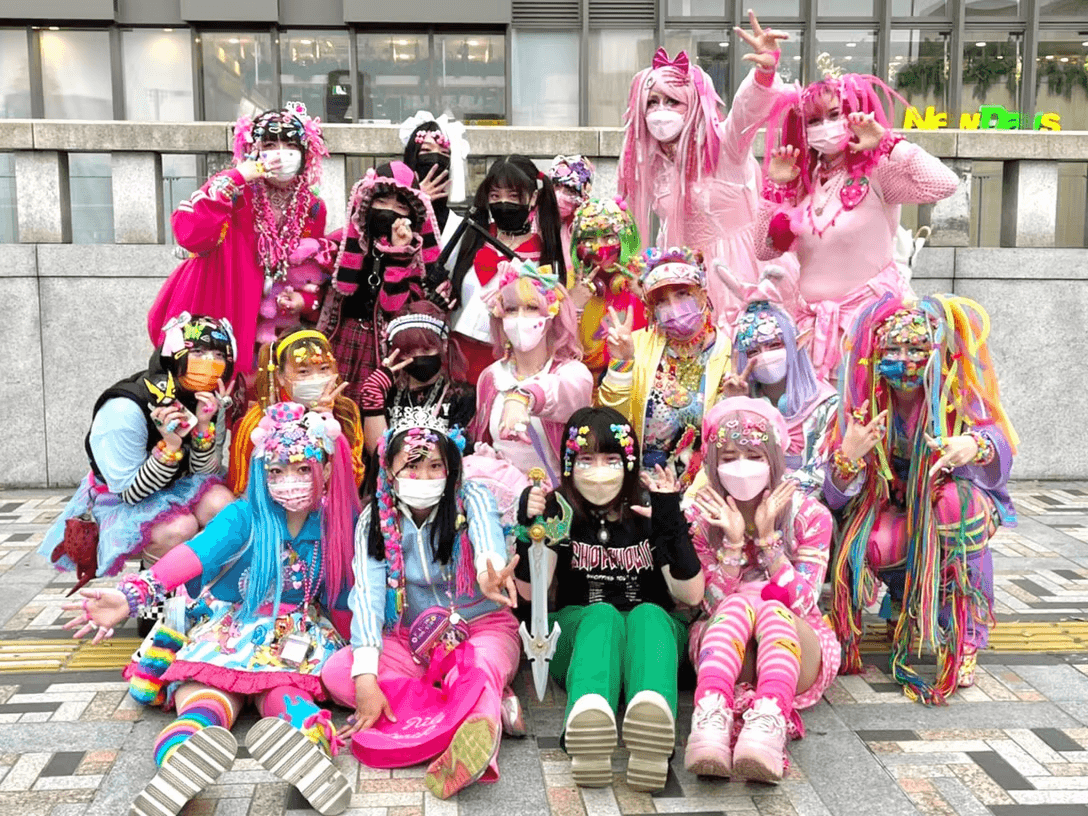
Four substyles are recognized within decora, and most of them differ by palette rather than by structure: pink decora, built entirely or mostly from pink; dark decora, which swaps in black, red, and white plus punk motifs; casual decora, bright but toned down; and decora lolita, a lolita silhouette loaded with decora accessories.
| Substyle | Palette | What changes |
|---|---|---|
| Pink decora | All pink, or pink with small accents | Only the color scheme |
| Dark decora | Black, red, white, sometimes pink | Punk and creepy motifs added |
| Casual decora | Bright, toned down | Fewer layers and accessories |
| Decora lolita | Mostly pastel | Lolita silhouette underneath |
Pink decora is the closest to the original. The only real difference is the color scheme: outfits are made up entirely of pink items, or lean so heavily on pink that other colors read as accents. Early pink decora, around the beginning of the 2000s, favored bright or hot pink and was more likely to be all pink. More recent coordinates usually swap hot pink for pastel pink, and the substyle is seen less often than it was.
Dark decora, also called black decora or punk decora, keeps everything else and changes the palette to blacks, reds, and whites, with hints of pink appearing sometimes. It also allows in punk and slightly creepy details that the original style does not use, such as skull patterns, punk t-shirts, and studded necklaces and headbands. Those borrowings come from the same Harajuku scene that produced Japanese punk fashion. Underneath, the tutus, knee socks, and heavy decoration are unchanged.
Casual decora is the version built for ordinary days. Layers and accessories are toned down, but bright colors, playful patterns, and a handful of signature accessories stay.
Decora lolita, sometimes written decololita or decolita, means two different things depending on where the term is used. In Western communities it describes combining lolita and decora into one look, usually a cuter lolita base such as classic or sweet lolita loaded with decora accessories: many hairclips, stacks of bracelets and necklaces, bags covered in charms, and leg warmers or extra socks over tights. In Japan the same term mainly refers to over-the-top lolita styles instead. Coordinates are generally pastel-based, though some use classic lolita pinks and reds. It was most popular early in decora’s run and is only occasionally seen now.
Harajuku fashion versus decora
Harajuku is a place, not a style, and decora is one named style that grew there. That is why the two words get used interchangeably even though they are not the same thing. Harajuku is the Tokyo district whose main avenue, Takeshita Street, became the testing ground for a long list of subcultures, and the same neighborhood also produced the Ura-Harajuku streetwear scene that has nothing to do with decoration or pastels.
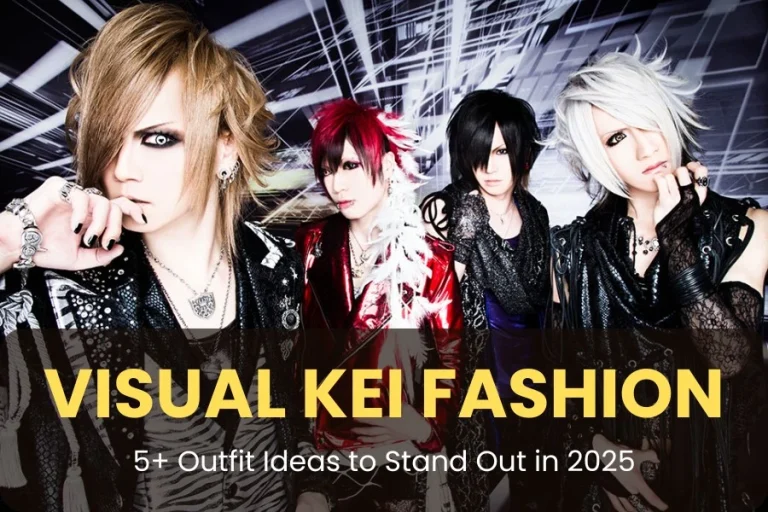
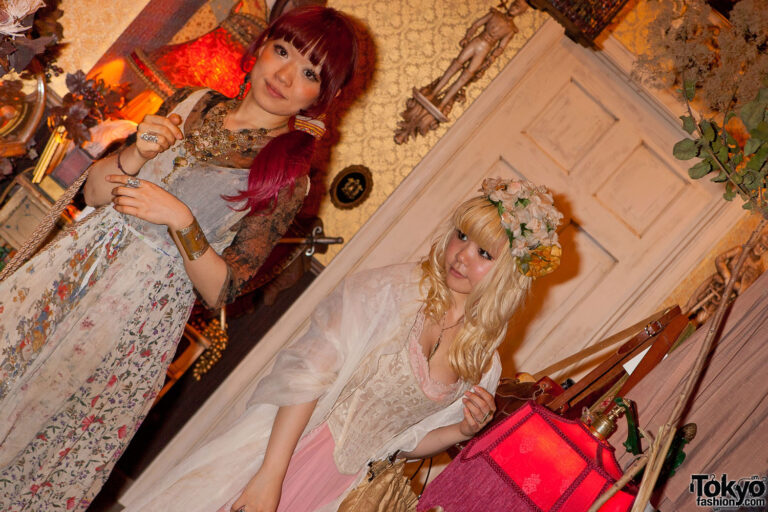
The confusion has a reason. Decora photographed well and travelled far, so it became the international shorthand for Harajuku fashion. Anyone comparing the broader Harajuku fashion styles will find decora sitting alongside lolita, gyaru, visual kei, and several others, all sharing a district rather than a look. The Tokyo Convention and Visitors Bureau’s own official guide to Harajuku introduces the area as a neighborhood around a station and lists decora kei next to Harajuku goth and punk as looks found on its streets, and the long-running street photography archive at Tokyo Fashion shows how differently the styles read side by side on the same pavement.
How to build a decora outfit
Build a first decora coordinate layer by layer rather than as a whole outfit, because the clothing matters less than what goes on it. A printed base comes first, then a tutu or a skirt over leggings, then layered legwear and armwear, then accessories in the hair, on the wrists, and on the bag. Work through it in this order.
- Base: a printed t-shirt or hoodie, ideally with a cartoon or character graphic.
- Bottom: a tutu skirt, or a skirt worn over leggings.
- Legs: knee-high socks, striped tights, or leg warmers, layered rather than chosen.
- Arms: arm warmers, plus bracelets stacked until the forearm is mostly covered.
- Hair: clips, bows, and ribbons pinned across the bangs until the hair is covered.
- Jewelry: rings and layered necklaces, kept in cute motifs.
- Face: optionally a patterned dental mask, or a printed band-aid across the nose.
- Shoes: Mary Janes, sneakers, or high-tops in a color that fights with the rest.
- Bag: anything that will hold charms on the outside as well as the inside.
Filling one layer at a time is far easier than sourcing a whole coordinate at once, because hair clips and headbands, tights and legwear, jewelry, bags, and wigs are each their own small hunt. If a full coordinate feels like a lot to commit to, casual decora is the easier entry point, since it uses the same colors and motifs with a fraction of the volume.
FAQs
What is decora fashion in one sentence?
Decora is a Japanese street style, born in Harajuku in the late 1990s, that layers bright colors and as many cute accessories as possible over a simple base of printed tops, tutus, and knee socks.
Does goth decora exist?
Yes, under the name dark decora, also called black decora or punk decora. It keeps decora’s accessory volume, tutus, and knee socks but switches the palette to black, red, and white and adds punk details like skull patterns and studded necklaces.
Is decora fashion the same as Harajuku fashion?
No. Harajuku is a Tokyo district rather than a style, and it produced lolita, gyaru, visual kei, and the Ura-Harajuku streetwear scene alongside decora. Decora became the international shorthand for Harajuku fashion because it photographed well and travelled far, but it is one named style inside a much wider family.
What is the 3-3-3 rule in fashion, and does it apply to decora?
The 3-3-3 rule is a minimalist capsule-wardrobe method: three tops, three bottoms, and three pairs of shoes, mixed into a small set of outfits. It is the opposite of how decora works, since decora is organized around adding layers and accessories rather than limiting them.
Is decora still worn today?
Yes. Its peak was the mid-2000s, but it is still popular and well known in Harajuku, and Y2K nostalgia has brought new wearers to it. Online events such as Decora Day and continued Sanrio collaborations keep the style visible.
If a decora palette is more than your wardrobe is ready for, a single printed character tee is the easiest place to start, and Kamicrew’s kawaii shirt collection is built around exactly that kind of graphic.
Kamicrew Best Seller

Dont Touch Me Yokai Ukiyo-E Japanese T-Shirt
$25.49+
$29.99
(15% off)


Summer Vibes Salty Kawaii Japanese Hoodie
$44.99+
$49.99
(10% off)


Japanese Pin Horror 80s Retro Aesthetics T-Shirt
$25.49+
$29.99
(15% off)


El Gran Maja Japanese Kaiju T-Shirt
$25.49+
$29.99
(15% off)


Who Wants The Perfect Body Japan Capybara Kawaii Japanese Unisex Shirt
$25.49+
$29.99
(15% off)


Monster 8 Mask Vintage Animal Hoodie
$44.99+
$49.99
(10% off)


I Hate People Japanese Opossum Vintage Animal Hoodie
$44.99+
$49.99
(10% off)


I Got That Dog In Me Small Turtle Vintage Animal T-Shirt
$25.49+
$29.99
(15% off)

The Creation Of Cat Ukiyo-E Japanese T-Shirt
$25.49+
$29.99
(15% off)