
The Japanese symbol for family has two correct answers. As a written word it is 家族 (kazoku), the everyday term for family members, written with two kanji and read かぞく. As a visual mark standing for one particular family it is a kamon (家紋), the monochrome crest a Japanese household inherits and wears, and between 20,000 and 25,000 kamon are thought to be in use today. Most pages give you one and drop the other, which is why so many family tattoos and gifts end up using the wrong thing.
Here is what each one actually says, and how to pick between them.
家族 (Kazoku): The Direct Japanese Word for Family
家族 is read かぞく, romanized kazoku, and it means family or family members. It covers parents, children, siblings, partners, grandparents, and anyone else understood as part of a household. If your design needs to say “family” and be read as “family” by a Japanese speaker, this is the word.
Two characters may feel like a lot when you were hoping for a single elegant glyph. It is still the safer choice. 家族 says family directly, and it stays balanced in calligraphy, in a horizontal layout, or stacked vertically on a badge or a back print.
Inside the Kanji: What 家 and 族 Actually Mean
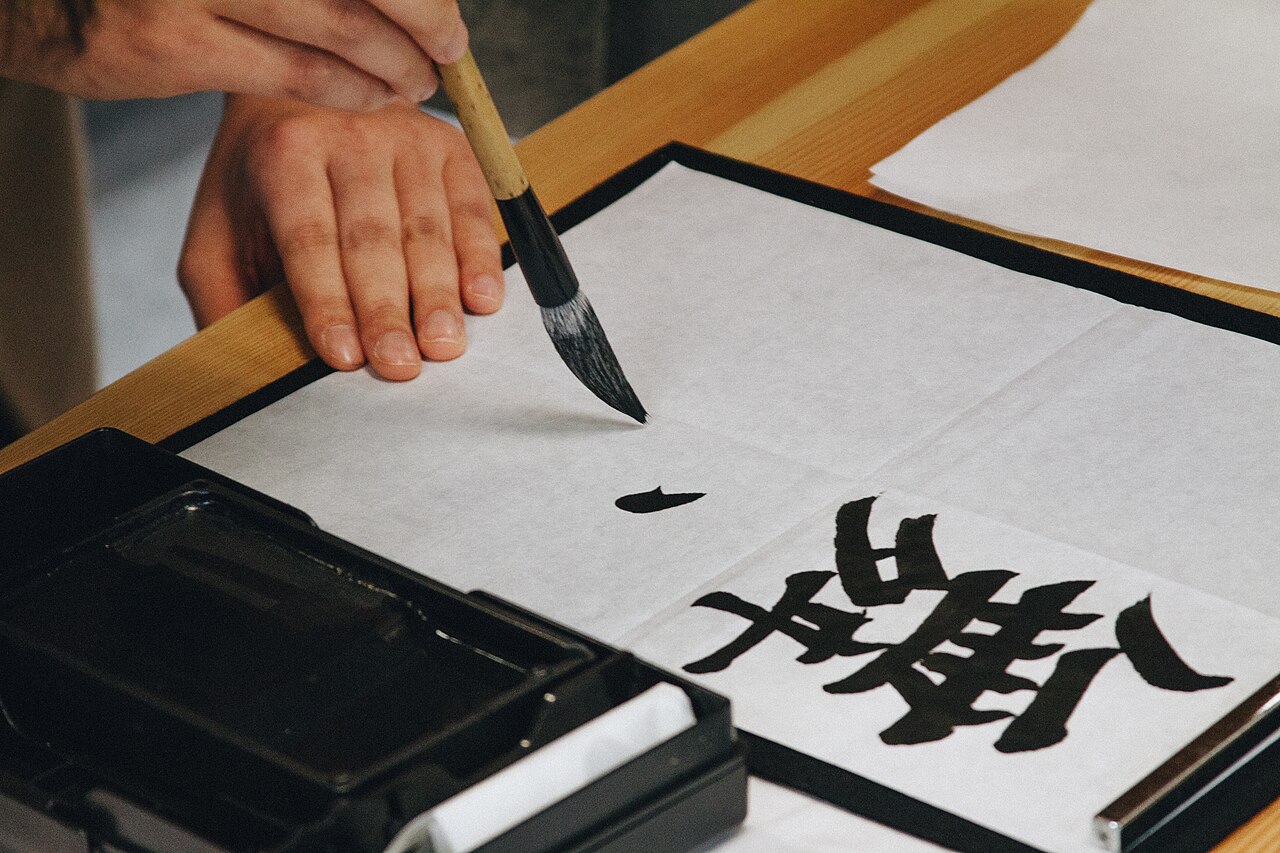
家 carries house, home, and household. 族 carries tribe, kin, clan, and lineage. Together the two kanji read as a group of kin under one roof, which is close to a literal picture of a family, and the detail behind that reading sits in their components.
家 has ten strokes and sits under the radical 宀, the roof. Its components are 宀 (roof or shelter) plus 豕 (pig), and the character is widely read as a pig kept under a roof: livestock and shelter together, the signature of a settled household in an early farming society. From there it grew to carry house, home, and family. It is a grade 2 character, JLPT N3, with the readings カ (ka) and ケ (ke) on one side and いえ (ie), や (ya), うち (uchi) on the other.
族 has eleven strokes and sits under 方, read as a banner or flag. Its parts are 方 plus 矢 (arrow), which scholars read as a group gathered under a shared standard, possibly identified by a shared weapon. Its only common reading is ゾク (zoku). Both characters are kanji rather than kana, so if you are still sorting out how the three Japanese scripts divide the work, that is the layer 家族 belongs to.
家 vs 家族, and Where 絆 Fits
家 on its own is not the word for family. It usually means house or home, while 家族 is the term for the people in a household. 絆 (kizuna) is a third option that means a bond or tie between people rather than the family unit itself.
Treating 家 alone as the one-kanji symbol for family is the most common mistake in these designs. In the right context it can point to a household, a family line, or a professional house or school, and it appears in compounds like 作家 (sakka), a writer. What it does not do is stand in for the modern word family the way English speakers expect a single symbol to.
Choose 家 only when the design is genuinely about home, roots, or lineage. Choose 家族 when the message is the people.
絆 (kizuna) gets pulled into family designs because a bond between people is close to the idea, but it is not the same claim. A piece about the connection shared by relatives, partners, or a chosen family can lean on that idea, but it needs surrounding context or it reads as an invented translation. The same caution applies to 愛 (ai), the kanji for love, which suits affection and care rather than the family unit itself.
Kamon: The Visual Symbol of a Japanese Family
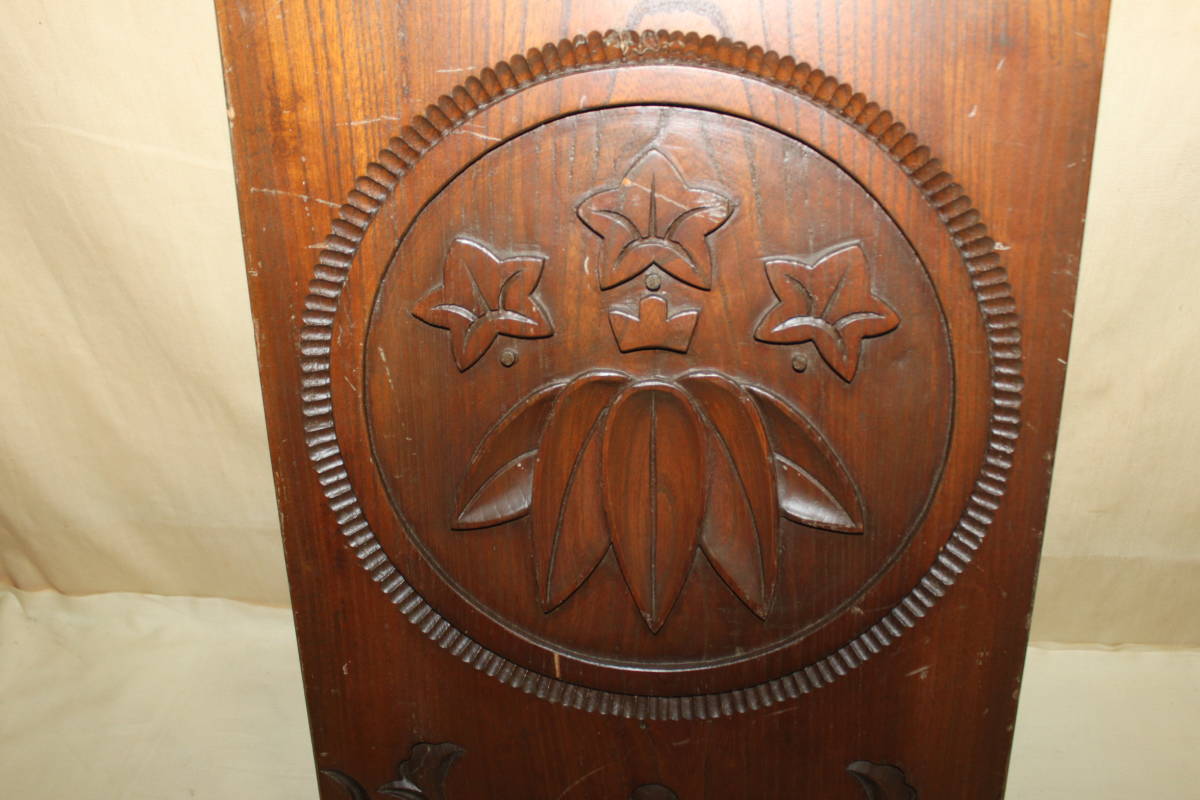
A kamon (家紋) is the inherited crest that identifies one Japanese household. Aristocrats began using crests in the mid-Heian period, the samurai class adopted them as battlefield standards by the twelfth century, and ordinary households were choosing their own by the Genroku era (1680 to 1709).
紋 (mon) is the general word for a Japanese emblem that identifies a person, a family, or an institution. Applied to a household it becomes kamon, literally the mon of the house, also called monshō or mondokoro. Shrines, temples, and deities have their own versions, shamon, jimon, and shinmon respectively. The character 紋 means design or pattern in Chinese, but using it for a stylized identifying symbol is something Japan and Korea did on their own.
Popular use began in the mid-Heian period, roughly 900 to 1000, among the aristocracy. Nobles painted crests on their bullock carts so that rank was readable when two vehicles met on a road. The samurai class picked the practice up by the late Heian period, and by the twelfth century mon were serving as army standards on flags, tents, and equipment, a full century or more before European heraldry formalized the same idea. Crests turned up on war flags, armor, helmets, swords, kimono, roof tiles, and curtains, and the colors inside a crest sometimes steered how a samurai’s armor was colored.
By the Muromachi period the practice had spread downward, with merchants putting emblems on shop signs. In the Edo period kabuki actors adopted them and the general public was allowed to choose designs freely, and by the Genroku era (1680 to 1709) crest use was firmly established across ordinary households. Only two designs stayed off limits: the imperial chrysanthemum and the Tokugawa hollyhock. Today there are thought to be between 20,000 and 25,000 crests in use, and the count keeps moving because families still create variants.
What Japanese Family Crests Represent
Kamon motifs fall into five groups: animals, plants, natural phenomena, buildings and vehicles, and geometric patterns. The motif rather than the color carries the meaning, because kamon are monochrome and the same crest drawn in any color is still the same crest.
- Animals such as the crane and the turtle, both read as longevity, plus swallowtail butterflies, plovers, and prawns
- Plants, the largest group, with wisteria alone accounting for more than 150 variants, plus paulownia, gentian, bamboo, flowering quince, and creeping woodsorrel
- Nature in the abstract: the moon, mountains, thunder
- Buildings and vehicles, including torii gates for a Shinto connection, cart wheels for noble descent, and nail pullers for construction families
- Geometric patterns: hexagons, circles, crosses, and the manji
The five most common motifs are grouped as the godaimon (五大紋): wisteria, paulownia, hawk feathers, flowering quince, and creeping woodsorrel. Some individual crests are famous enough to read on sight.
| Family or house | Crest |
|---|---|
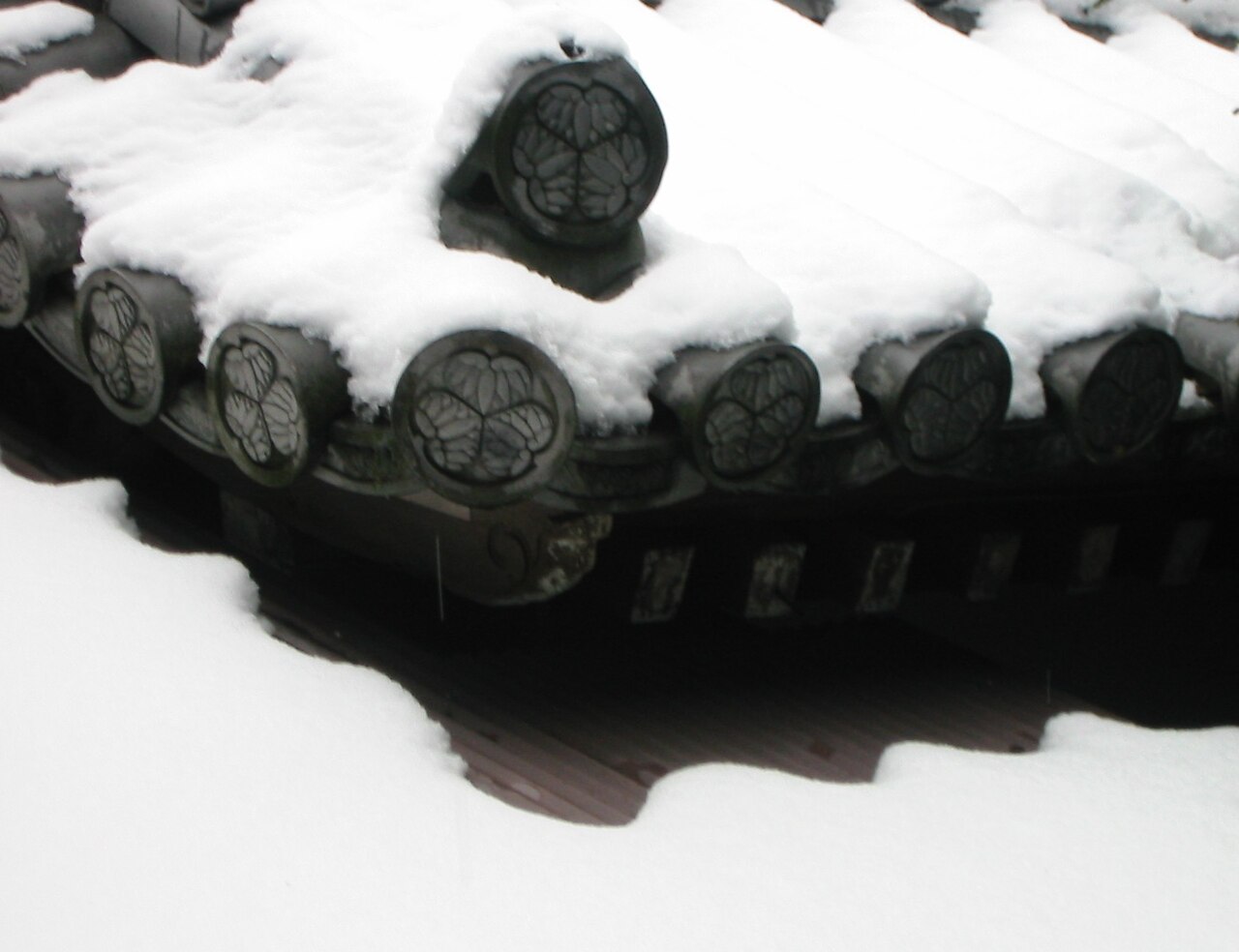
| Tokugawa shogunate | mitsubaaoi, three hollyhock leaves in a circle |
| Minamoto clan | sasa rindō, bamboo and gentian |
| Fujiwara | wisteria |
| Hōjō | three scales |
| Date | sparrows in bamboo |
A few crests carry a reading of their own: the mitsudomoe, three interlocking swirls, is tied to Hachiman and read as man, earth, and god.
A household’s official crest is its jōmon (定紋). Secondary or informal versions are kaemon, and a woman marrying into a family may take an onnamon, a crest made by modifying the one she grew up with. Inheritance is looser than European heraldry suggests: a woman can keep her maiden crest and pass it to her daughters, and taking her husband’s is a choice rather than an obligation. If you want to look up a specific design, there is a free searchable database of more than 17,000 crest varieties.
Where Kamon Still Appear Today
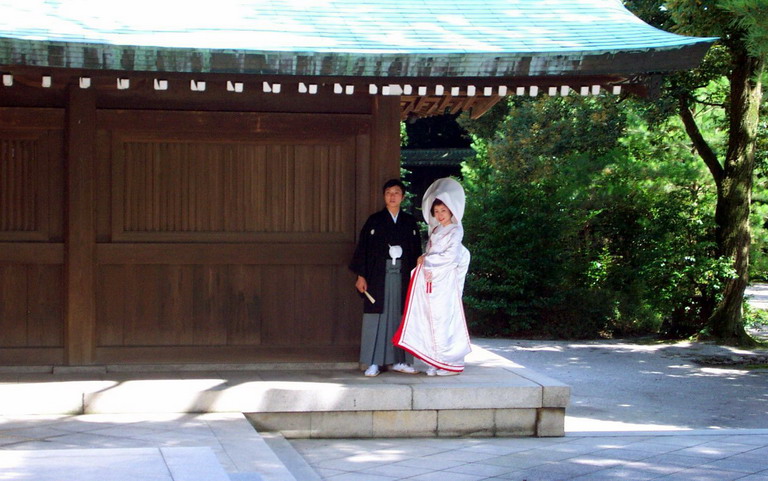
Kamon remain in daily use on formal kimono, ceramic roof tiles, geisha house identity, food packaging, and corporate logos including Mitsubishi and Kikkoman. Formal kimono is where most people meet one in person.
Garments carry one, three, or five crests depending on how formal the occasion is, and the crest style shifts with it, from a single kage (shadow) crest up to five hinata (facing the Sun) crests placed on the chest, the backs of the sleeves, and the center back. Five hinata crests on a black montsuki is the top of the scale, which is why you see them on the montsuki hakama a groom wears and at funerals. The crest itself is applied by dyeing (removing color, then dyeing back in), by painting, kaki, or by embroidery, nui.
Outside clothing, crests are everywhere once you know the shape. Ceramic roof tiles on older houses carry them. Geisha wear the crest of their okiya, and whole districts have their own, such as the plover crest of Ponto-chō in Kyoto. Sake, tofu, and senbei packaging uses crests to signal tradition. Mitsubishi built its logo by merging the founder’s family crest with the Tosa Domain’s, producing the three lozenges the name describes, and Kikkoman and the Japanese police insignia work the same way. The paulownia crest even sits on the 500 yen coin. Mon are not regulated by law apart from the imperial chrysanthemum and the prime minister’s paulownia, though local governments and associations that use one as a logo get trademark protection through the usual route.
Family Words Beyond 家族
Japanese splits family, home, relatives, and lineage into separate words, so 家族 is not a catch-all. Picking the wrong one is how a design ends up saying something slightly off. These are all established words, not decorative fragments.
| Word | Reading | Meaning |
|---|---|---|
| 家族 | kazoku | family; family members |
| 家族愛 | kazoku ai | family love |
| 家族写真 | kazoku shashin | family photo |
| 家族旅行 | kazoku ryokō | family trip |
| 家族団欒 | kazoku danran | happy family gathering |
| 家庭 | katei | household; home life |
| 親族 | shinzoku | relatives; kin |
| 家系 | kakei | family lineage |
| 実家 | jikka | family home; parents’ home |
| 一家 | ikka | one family; household |
Choosing a Family Symbol for a Tattoo, Gift, or Garment
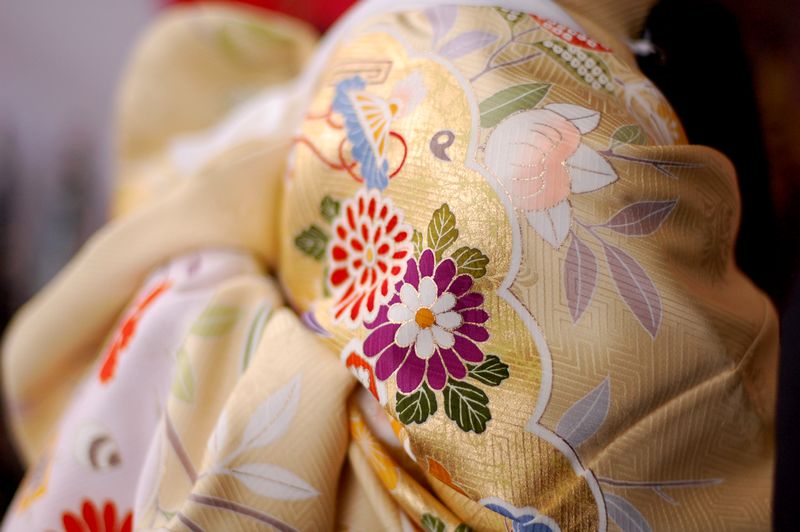
Choose 家族 when the design is about family as people, and a kamon when it is about one specific family line. 家族 suits a family tattoo, a parent or grandparent gift, a reunion shirt, or wall art about home and roots; an inherited crest suits formal wear and anything meant to mark a lineage.
家族 works for those pieces because it says family plainly without inventing a poetic meaning a Japanese reader would not recognize. A kamon carries its weight only when it is a particular family’s crest, which is why inherited crests work on formal wear and generic ones do not.
Legibility decides the rest. 家族 runs 21 strokes across two characters, so it needs real spacing and contrast to survive on a sticker, a mug, a chest print, or a tattoo at small scale. Crests behave better under shrinking because they were built as monochrome silhouettes, which is exactly why they scale from a sleeve crest to a roof tile without falling apart. Whichever you choose, work from a verified glyph or a documented crest rather than a copied image, and let the meaning drive the layout.
Around Obon and other remembrance occasions, 家族 can carry ideas of reunion, gratitude, and ancestry, but keep the wording plain and respectful rather than promotional.
FAQs
What is the Japanese symbol for family?
For the written word, it is 家族 (kazoku), meaning family or family members. For a visual emblem tied to one specific family, it is that family’s kamon, an inherited crest.
Does 家 on its own mean family?
Not as the modern word. 家 usually means house or home, and depending on context it can point to a household, a family line, or a professional school. Use 家族 when you mean family members.
What is a kamon and how is it used?
A kamon is a Japanese family crest, a monochrome emblem that identifies a household. It began among Heian aristocrats, spread to samurai as a battlefield standard, and today appears mainly on formal kimono, graves, roof tiles, and company logos.
What do Japanese family crests represent?
Motifs come from animals, plants, natural phenomena, buildings and vehicles, or geometric patterns, and many carry a reading such as the crane and turtle for longevity. Plants are the largest group, with wisteria, paulownia, hawk feathers, flowering quince, and creeping woodsorrel making up the five most common crests.
How many strokes does 家族 have?
家 has 10 strokes and 族 has 11, for 21 strokes in total.
How do you write family in Japanese characters?
Write the two kanji 家族, read かぞく (kazoku). Written horizontally it runs 家 then 族; written vertically, 家 sits above 族.
If a family crest or a piece of Japanese lettering is the kind of thing you want to wear rather than frame, our Japanese graphic shirts are built around motifs like these.
Kamicrew Best Seller

Dont Touch Me Yokai Ukiyo-E Japanese T-Shirt
$25.49+
$29.99
(15% off)


Summer Vibes Salty Kawaii Japanese Hoodie
$44.99+
$49.99
(10% off)


Japanese Pin Horror 80s Retro Aesthetics T-Shirt
$25.49+
$29.99
(15% off)


El Gran Maja Japanese Kaiju T-Shirt
$25.49+
$29.99
(15% off)


Who Wants The Perfect Body Japan Capybara Kawaii Japanese Unisex Shirt
$25.49+
$29.99
(15% off)


Monster 8 Mask Vintage Animal Hoodie
$44.99+
$49.99
(10% off)


I Hate People Japanese Opossum Vintage Animal Hoodie
$44.99+
$49.99
(10% off)


I Got That Dog In Me Small Turtle Vintage Animal T-Shirt
$25.49+
$29.99
(15% off)

The Creation Of Cat Ukiyo-E Japanese T-Shirt
$25.49+
$29.99
(15% off)