
A tengu is a mountain spirit from Japanese folklore, pictured with a red face, a long nose, wings, and the robes of a wandering ascetic. Early Buddhist writing treated the tengu as a demon that abducted travelers and led proud priests astray. By the Edo period the same creature was being honored at mountain temples as a guardian of the peaks, and folklore ranks it in two main forms: the human-faced daitengu and the beaked karasu tengu. That split reputation, half monster and half protector, is what keeps the tengu at the front of Japan’s supernatural cast.
From a Chinese Celestial Dog to a Japanese Mountain Spirit
The tengu began as a Chinese import and became a Japanese mountain spirit. Its name is written 天狗 and reads as “heavenly dog”, after the tiangou, a dog-like Chinese beast associated with meteors and bad omens. The name crossed into Japan but the shape did not, and what emerged instead was a winged being of the deep mountains, modeled closely on the black kite that circles above forested ridges. The creature sits at exactly that crossing point between imported Chinese cosmology and native mountain worship.
Medieval Buddhist texts gave the tengu its first steady role in Japanese folklore, and it was not a flattering one. Monks who died full of pride, who mastered doctrine but never mastered their own vanity, were said to be reborn as tengu and condemned to haunt the mountains. In that reading the tengu is a warning about arrogance rather than a beast in the woods. A medieval war chronicle even has tengu gathering to foretell the fall of the Kamakura shogunate, which put the creature in the position of commenting on national politics rather than merely frightening woodcutters.
What a Tengu Looks Like
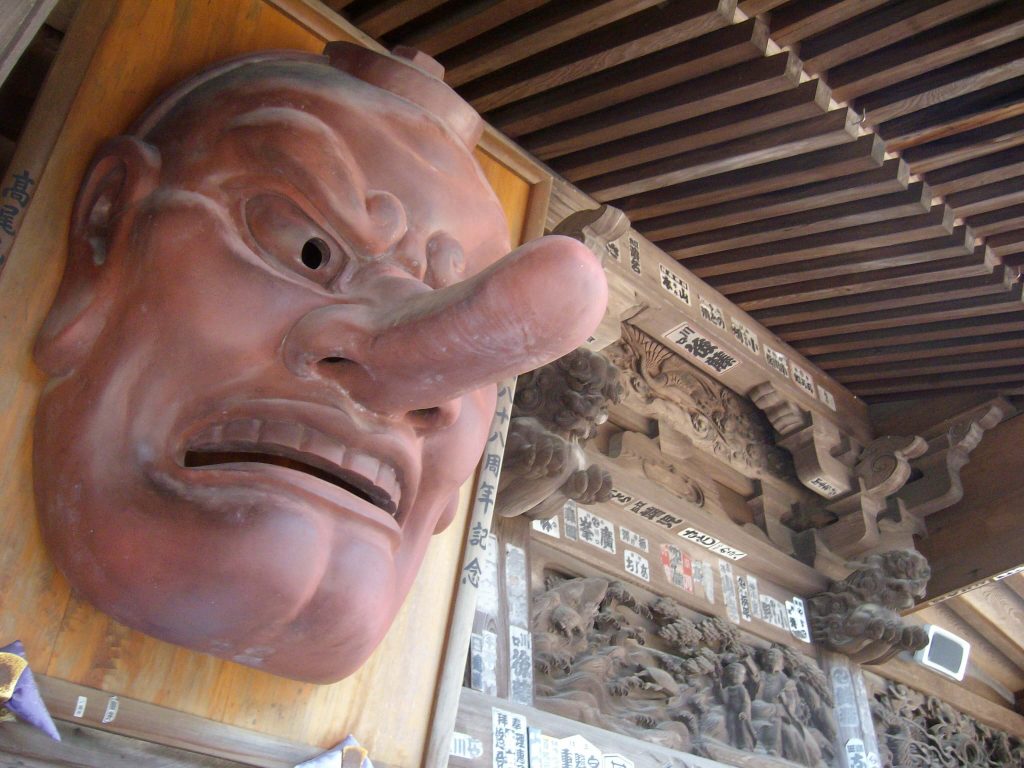
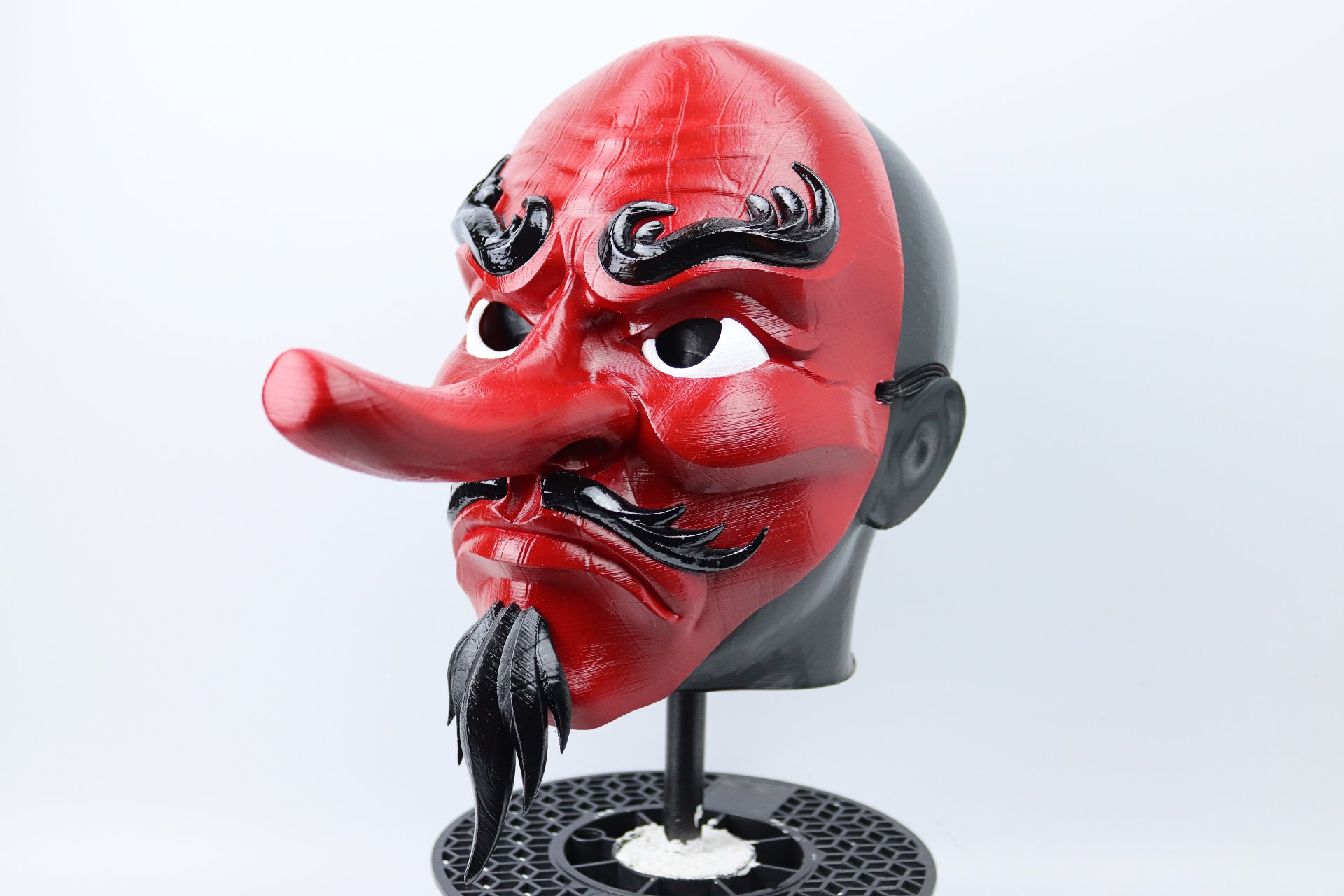
A tengu is depicted with deep red skin, wide glaring eyes, and a nose so long it becomes the whole face, with wings sitting behind the shoulders and, in older depictions, a beak where the nose would later grow. The clothing is borrowed wholesale from the yamabushi, the mountain ascetics of Shugendo who trekked the same ridges: a small black tokin cap tied at the forehead, layered robes with a pom-pom trimmed sash, and tall one-toothed geta that no ordinary walker could balance on. In one hand the tengu carries a hauchiwa, a fan of feathers, and often a sword or a staff in the other.
The long nose is the interpretive key to the whole figure. It reads as pride made visible, which is why Japanese still says a boastful person’s nose is high and why “becoming a tengu” is a way of saying someone has grown conceited. The beak of the earlier bird form gave way to the nose as the creature took on human features, and the swap carried the moral with it.
The Main Types of Tengu
Folklore sorts tengu into three recurring types: the human-faced daitengu, also called hanataka tengu, the beaked karasu tengu, and the great winged konoha tengu of the forest.
| Type | Form | Standing |
|---|---|---|
| Daitengu (hanataka tengu) | Human face, red skin, long nose | Leaders, close to divine |
| Karasu tengu (kotengu) | Crow or kite head, beak, talons | Lesser, mischievous, quick |
| Konoha tengu | Great winged form of the forest | Tied to trees and leaves |
The difference in standing matters in the stories. Karasu tengu are the lesser and more mischievous form, quick and prone to snatching things, while a daitengu sits closer to the divine and is described as a leader rather than a mere monster. The most famous of the daitengu is Sojobo, king of the tengu of Mount Kurama.
What Powers Tengu Are Said to Have
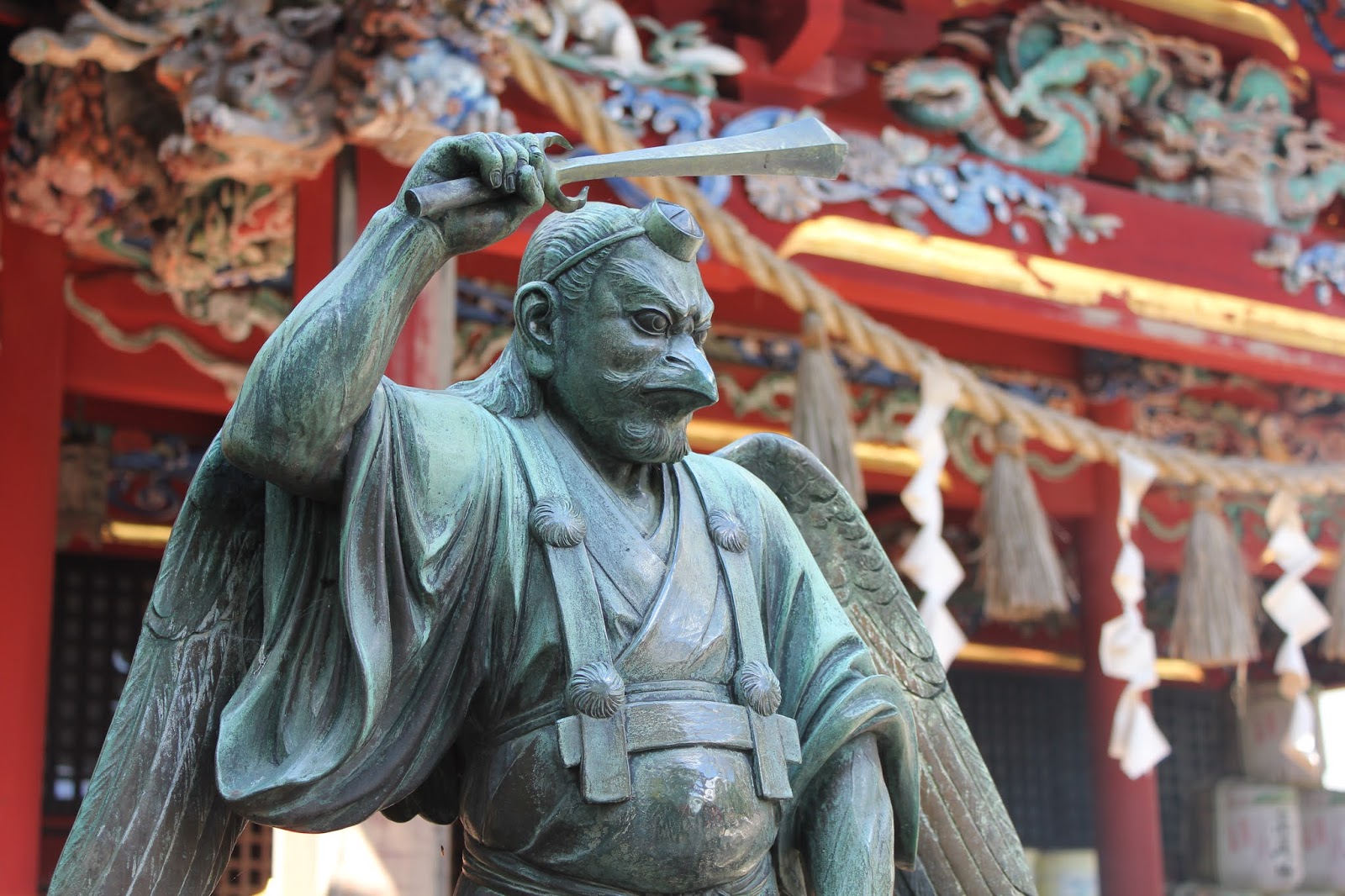
Tengu are credited with flight, shapeshifting, wordless speech placed into a person’s mind, wind raised with a feather fan, possession, abduction, and extraordinary swordsmanship. Most of that ability set grows out of the tengu’s role as master of a territory no human fully controls.
- Flight, on wings or without them, and movement between distant places in an instant
- Shapeshifting, most often into a monk, a woodcutter, or a beautiful stranger
- Speech placed directly into a person’s mind, with no sound involved
- Wind and whirlwinds raised with a sweep of the feather fan
- Possession of a human, known as tengutsuki, which folklore blamed for sudden raving or delusion
- Abduction, especially of children and of the arrogant, who vanish into the mountains and return changed or not at all
- Extraordinary skill with the sword, which a tengu can hand to a human it favors
That last power produced the most widely retold tengu story. The young Minamoto no Yoshitsune is said to have trained in secret on Mount Kurama under Sojobo, learning a swordsmanship no human teacher could give him, which is how Japan’s most celebrated warrior ended up with a mountain demon for a master.
Demon or Guardian? A Reputation That Changed
The tengu is a demon in medieval Buddhist writing and a guardian in later mountain worship, and both readings are historically correct. Buddhist authors of the medieval period needed an enemy that embodied spiritual pride, and the tengu filled the role: an obstacle to enlightenment, a corrupter of monks, a snatcher of the unwary. Over the following centuries the emphasis shifted, and the birdlike demons underwent a steady promotion from demon to quasi-deity that was largely complete by the Edo period.
By the Edo period tengu were receiving offerings, appearing as attendants of temple deities, and being asked for protection rather than warded off. Villagers credited them with guarding the forests, punishing loggers who took more than they should, and humbling anyone who came up the mountain too pleased with themselves. Read that way the tengu never really changed sides. It always punished vanity, and the only question was whether the punishment counted as demonic or holy. Their trajectory follows a pattern common to yokai generally, where fearsome outsiders slowly become local protectors.
Mountains Where Tengu Are Honored
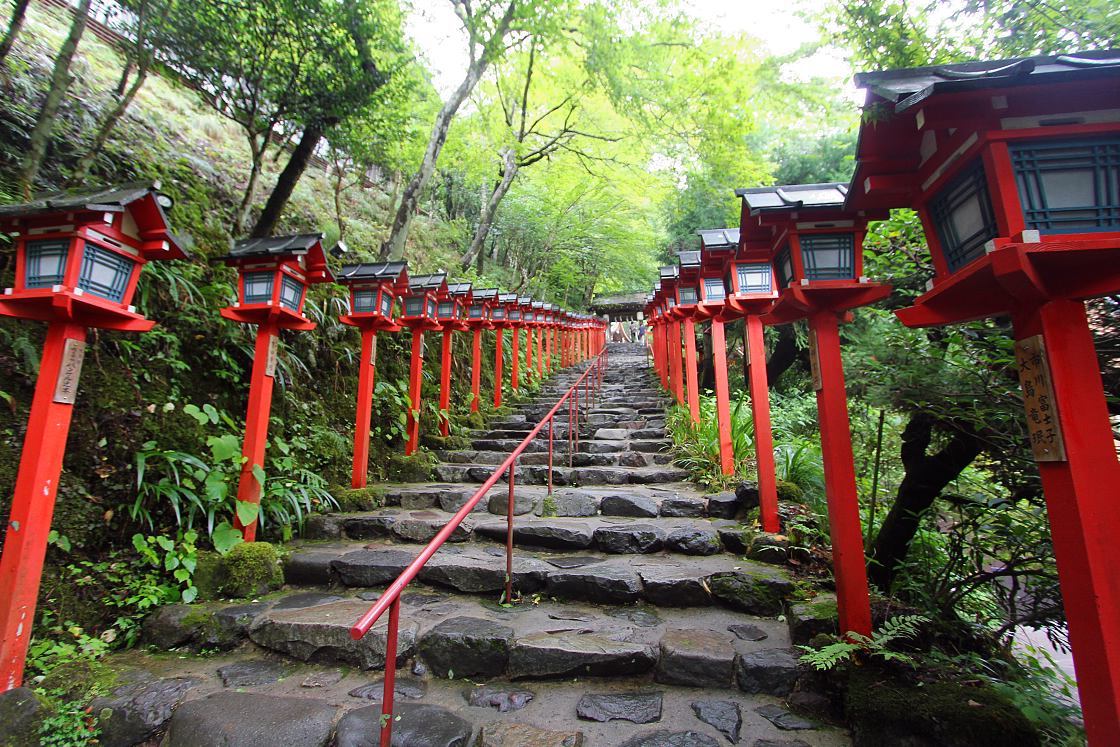
Mount Kurama north of Kyoto and Mount Takao west of Tokyo are the two peaks most closely associated with tengu. Kurama is the home of Sojobo and of the cedar slopes where Yoshitsune is said to have trained. At Takao, an easy trip from central Tokyo, Yakuoin temple venerates tengu as servants and protectors of its deity, and statues of the long-nosed daitengu and the beaked karasu tengu stand along the approach, fan and sword in hand.
Tengu belong to specific places rather than to a vague wilderness, and the pattern behind both sites is the same. Steep, forested, hard to farm, sacred to mountain ascetics, and therefore tengu country. Anywhere in Japan where Shugendo practitioners walked the ridges, tengu legends tend to follow.
The Tengu in Modern Culture and Fashion
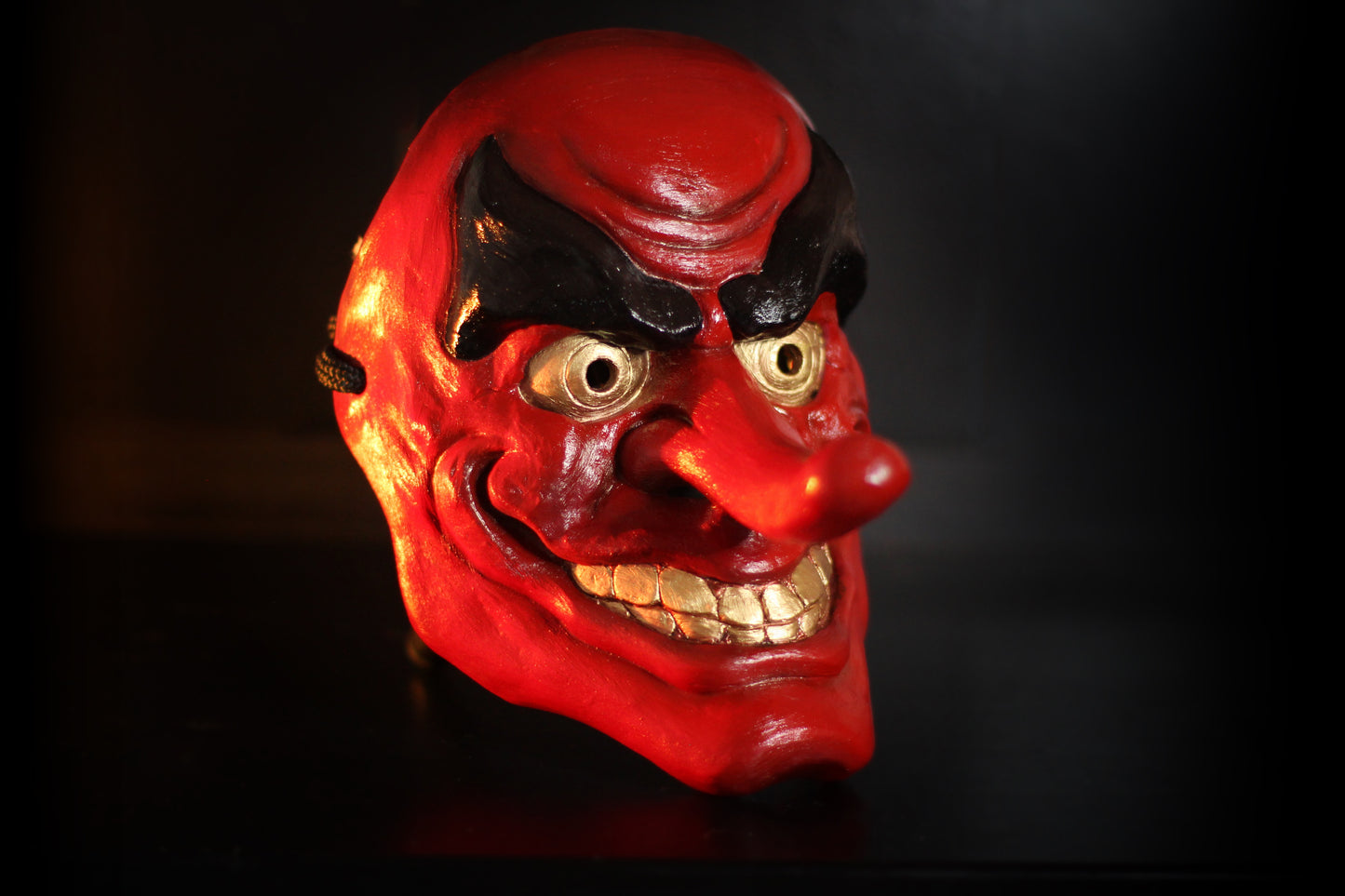
The tengu reaches modern audiences mainly through its mask, a red face with a jutting nose that is legible even to people who could not name the creature. The mask appears in kagura dance, in classical theatre, on festival floats, and hanging in homes as a charm against misfortune, and it sits alongside oni and fox faces in the broader family of Japanese folklore masks, usually as the one non-specialists recognize first.
From there the figure spread easily. Tengu turn up as characters in manga, anime, and video games, generally cast as a proud and dangerous martial arts master, which is a fair reading of the source material. Tattoo artists use the figure the same way, and the two-sided symbolism of a tengu tattoo comes straight from that demon and guardian tension.
Apparel treats the tengu the same way. The mask crops on a chest print without losing its meaning, the red and black palette works on a hoodie, and the wings and fan give a graphic designer plenty to build a back print around. Wearing one reads less as a costume and more as a nod to a creature that has always distrusted people who take themselves too seriously.
If a tengu is the yokai you would want on your chest, Kamicrew’s yokai shirt collection is a good place to start looking.
FAQs
Are tengu demons or gods?
Both, depending on the period. Medieval Buddhist texts cast tengu as demons that corrupted proud monks and abducted travelers, while by the Edo period mountain temples honored them as guardians of the peaks and attendants of temple deities. The behavior described stays the same across both readings, since tengu punish arrogance either way, and only the verdict on that punishment changed.
What does a tengu mask mean?
A tengu mask stands for the creature’s twin identity as punisher of pride and guardian of the mountains. Its exaggerated nose points to arrogance, so the mask is often hung or worn as protection against misfortune and bad intentions rather than as a portrait of a villain.
Are tengu connected to the yamabushi?
Closely. The tengu’s costume, the small tokin cap, layered robes, and pom-pom sash, is the working dress of the yamabushi, the Shugendo ascetics who trained on the same mountains. Folklore and iconography grew together, and the tengu became the supernatural counterpart of the men walking those ridges.
What is tengu possession?
Tengutsuki is the folk belief that a tengu can take hold of a person’s mind. Sudden ranting, delusions of grandeur, or a personality that turns boastful overnight were all explained as tengu possession, which fits neatly with the creature’s association with unchecked pride.
Why does a tengu carry a feather fan?
The hauchiwa is a weapon rather than an accessory. A single sweep is said to raise wind strong enough to flatten trees or throw an enemy off a mountainside, and it doubles as the mark of a high-ranking daitengu.
Kamicrew Best Seller

Dont Touch Me Yokai Ukiyo-E Japanese T-Shirt
$25.49+
$29.99
(15% off)


Summer Vibes Salty Kawaii Japanese Hoodie
$44.99+
$49.99
(10% off)


Japanese Pin Horror 80s Retro Aesthetics T-Shirt
$25.49+
$29.99
(15% off)


El Gran Maja Japanese Kaiju T-Shirt
$25.49+
$29.99
(15% off)


Who Wants The Perfect Body Japan Capybara Kawaii Japanese Unisex Shirt
$25.49+
$29.99
(15% off)


Monster 8 Mask Vintage Animal Hoodie
$44.99+
$49.99
(10% off)


I Hate People Japanese Opossum Vintage Animal Hoodie
$44.99+
$49.99
(10% off)


I Got That Dog In Me Small Turtle Vintage Animal T-Shirt
$25.49+
$29.99
(15% off)

The Creation Of Cat Ukiyo-E Japanese T-Shirt
$25.49+
$29.99
(15% off)