
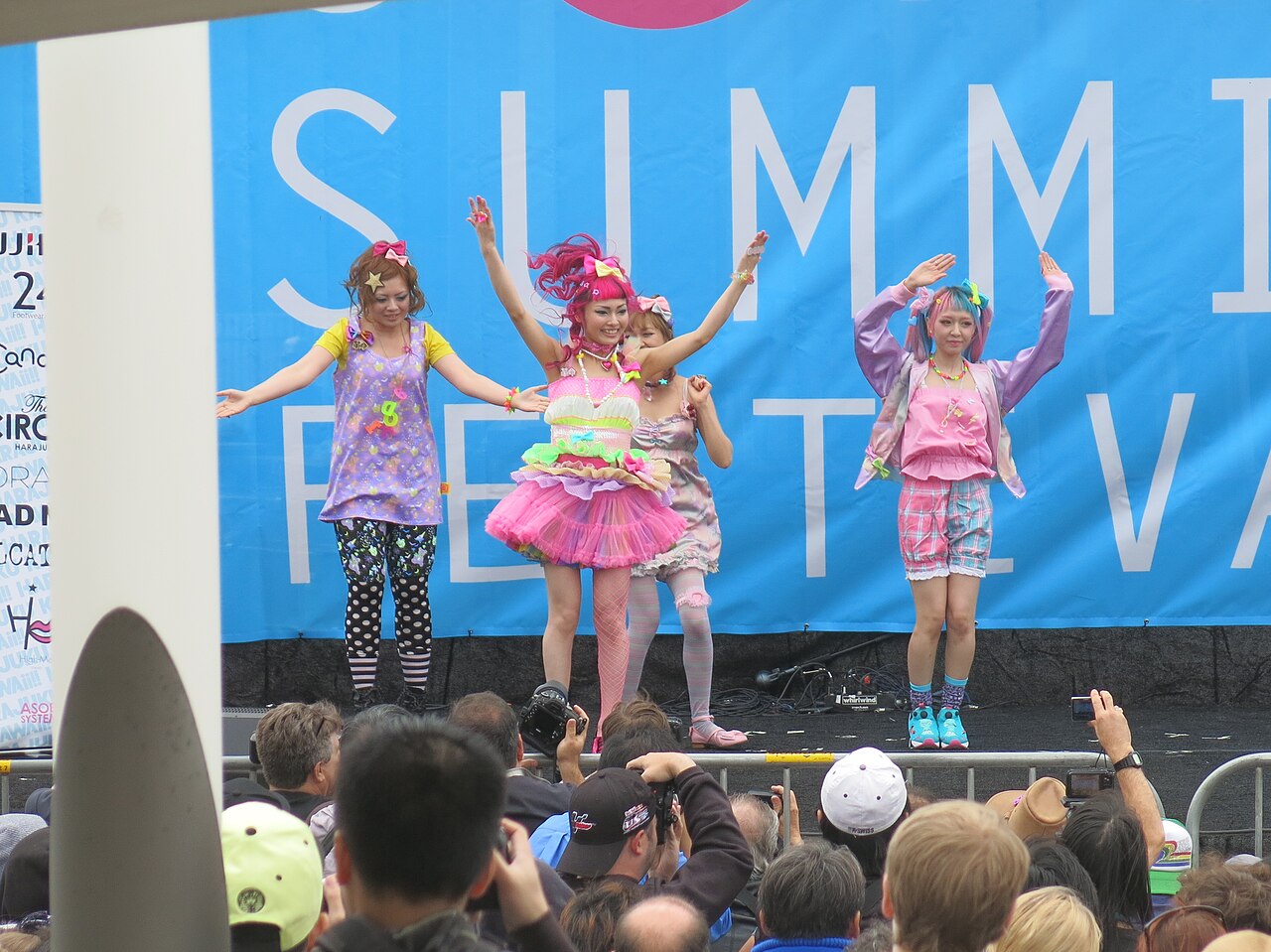
Fairy kei (フェアリー系) is a Japanese street style built on muted pastels and 1980s children’s pop culture, worn loose and layered so the whole outfit reads soft rather than sharp. It formed in Harajuku in the mid 2000s alongside the growth of several pastel boutiques, and the name loosely translates as “fairy style”, although nobody has pinned down who coined it. The look is defined by color rather than by silhouette: pastel pink, baby blue, lavender, mint and light yellow, with small cute details spread across the whole body instead of one statement piece.
If you already know decora fashion, fairy kei is its quieter cousin. Same Harajuku roots, same love of 1980s cartoon nostalgia, completely different volume setting.
What Fairy Kei Is
Fairy kei is a pastel-based kawaii style that treats color as the rule and the garment as a variable. Almost anything can be fairy kei if it is light, cute and pastel; almost nothing is fairy kei if it is dark, tight or severe. One widely cited description sums the look up as cute and vintage with no fixed silhouette and no strict rulebook, which is unusual among Japanese fashion subcultures.
Two Japanese words do most of the descriptive work. Fuwafuwa means soft and fluttery, and kirakira means glittering. A coord that hits both, with pastel color throughout and small details spread over the whole body, is fairy kei.
Where Fairy Kei Came From
Fairy kei came out of Harajuku’s second-hand and pastel retail scene, which was already running through the 1990s, and crystallized in the mid 2000s around the boutique SPANK!, opened in 2004 by Sayuri Tabuchi. It reached mainstream and then international visibility from 2010 onward, through the singer Kyary Pamyu Pamyu and the wider kawaii export wave.
Harajuku Retail Set the Stage in the 1990s
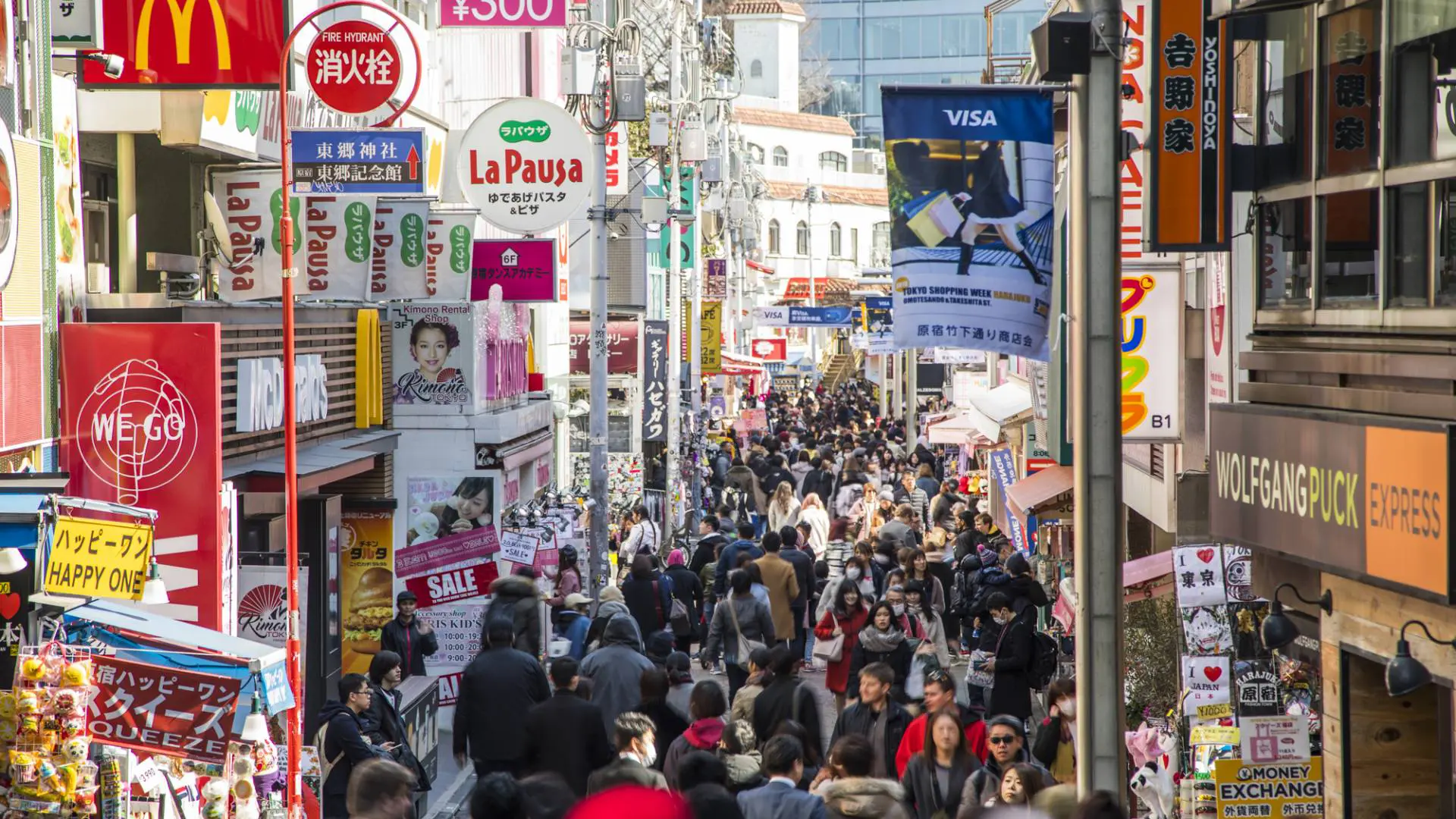
The style has a prehistory longer than its name. Through the 1990s, designers including Sebastian Masuda and Sayuri Tabuchi were already running second-hand and designer shops that catered to a very similar pastel, toy-nostalgic taste. Masuda produced 6%DOKIDOKI, open in Harajuku since 1995, and the street-fashion magazine FRUiTS was documenting that scene before “fairy kei” existed as a label. The same decade’s Tokyo styling that produced 1980s Japanese fashion revivals sits next to fairy kei rather than inside it: fairy kei’s nostalgia points mostly at American girls’ toys, not at Japanese tailoring.
SPANK! and the Style’s Actual Starting Point
The trend crystallized around the opening of the vintage and repurposed-vintage boutique SPANK! in 2004, founded by Sayuri Tabuchi, who goes by Tavuchi. The sources disagree on the exact mechanism. One j-fashion source credits SPANK!’s opening with jumpstarting fairy kei; the aesthetics wiki says it began as Tavuchi’s own personal style and spread from there; a longtime fairy kei blogger dates the style’s first appearance to roughly two months after SPANK! emerged, and treats spank kei and fairy kei as two separate things.
That last distinction matters, because it comes from the founder. Tavuchi has said publicly that she does not want the two conflated, and Tokyo Fashion’s profile of the shop frames SPANK! as second-hand 1980s pop and disco rather than as a fairy kei label. So the honest version of the origin story is that fairy kei formed around SPANK! without being SPANK!’s own style.
Why It Spread Beyond Harajuku
Fairy kei’s visibility faded for a while after its first Harajuku wave. Then in 2010 the singer and model Kyary Pamyu Pamyu, whose public image runs straight through kawaii and decora culture, pushed pastel Harajuku styling into mainstream and then international visibility. Masuda has directed and designed performances for her, which links the 1995 Harajuku shop scene to the global audience the style reached fifteen years later. That is the cultural weight fairy kei carries now: a small Harajuku retail subculture that became a recognizable export.
What Defines the Fairy Kei Look
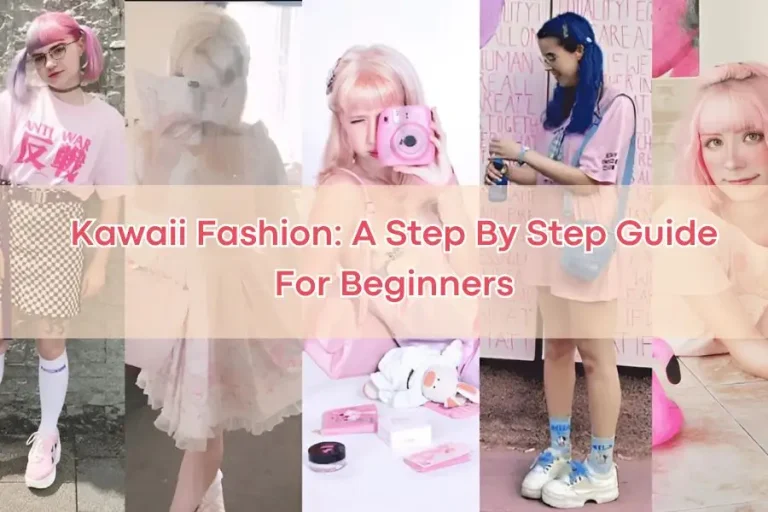
Fairy kei is defined by four things: muted pastel color, with dark and high-bright shades kept to tiny accents; lightweight fabric given volume through cardigans, fluffy sweaters and petticoats; a loose shape that avoids form-fitting cuts; and small cute details distributed over the whole body rather than concentrated in one statement piece. Color comes first, structure second.
White is fair game as a way to break up how much color is in play, and a coord made entirely of pastels is equally correct. Dark or overly bright colors stay out of everything except the smallest accents.
After color, the priority is volume in the right places. Fabric stays lightweight for dresses and skirts, and bulk gets added on top through cardigans, thick fluffy sweaters, oversized 1980s sweatshirts and fluttery petticoats. Traditionally form-fitting or overtly sexy clothing is discouraged, and hem length is genuinely open: ankle, knee or mini all work as long as the piece moves.
One long-running fairy kei blog describes the target shape as a triangular silhouette, with bottoms that flare at the hem and tight jeans or sharp pleated tennis skirts avoided as too hard-edged for the style. Treat that as one experienced wearer’s framing rather than a universal law, since the wikis explicitly say fairy kei has no required silhouette. It is still a useful practical test for whether an outfit is landing.
Detail distribution is the last piece. The goal is small cute details spread across the whole body instead of one statement item, which is why graphic and patterned tops matter so much and why plain solid-color shirts tend to fall flat on their own.
The Fairy Kei Color Palette
The fairy kei color palette is built on pastel pink, baby blue, lavender, mint and light yellow, the colors that appear most frequently across sources, with peppermint and violet appearing alongside them. Neon-tinted and high-saturated pastels have also come into use, so the palette is not strictly chalky. Black is the notable exclusion.
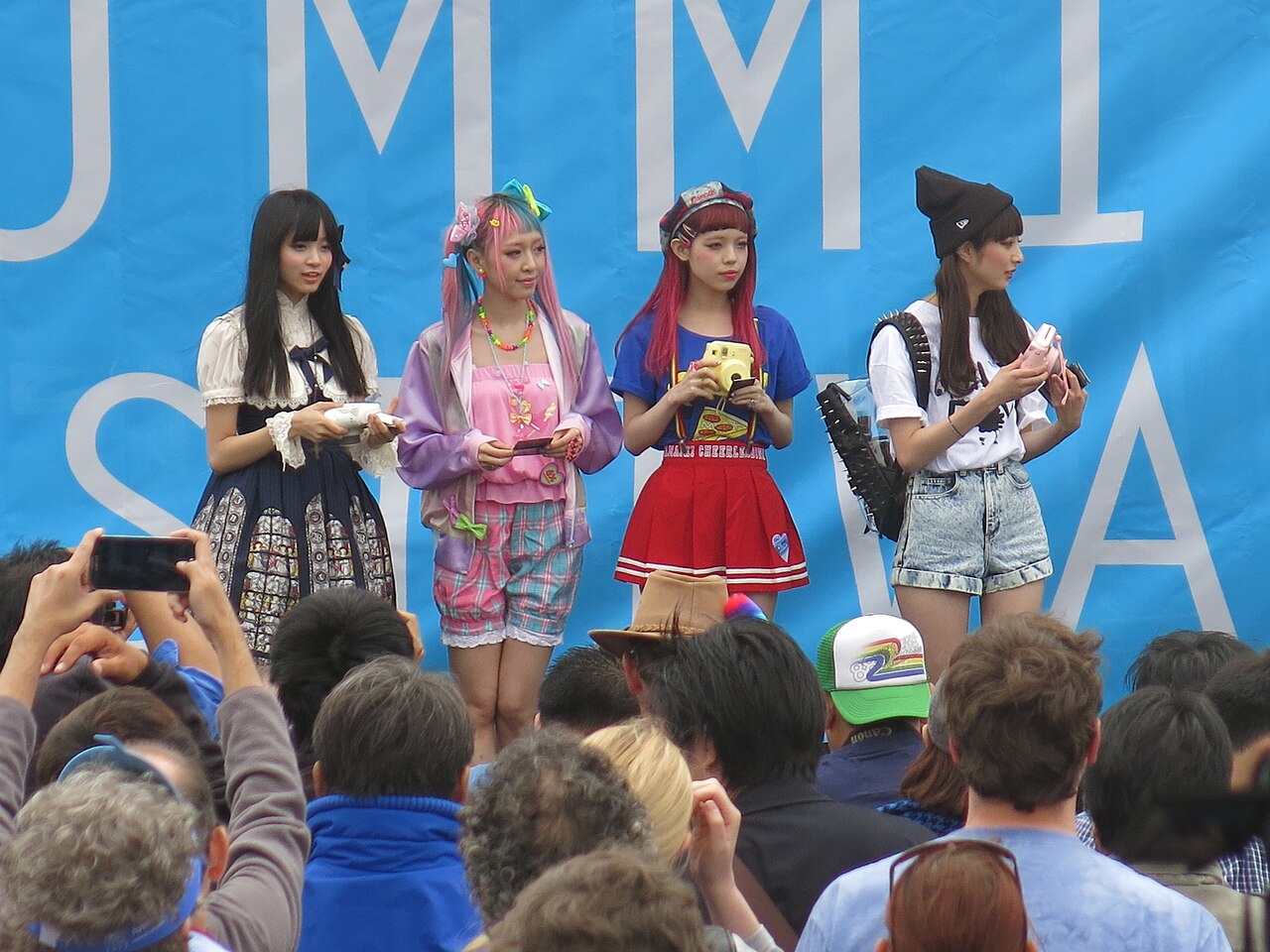
Where black does appear, it comes in doses small enough to read as a pattern rather than a color, most often as white with black dots. If you want to test a color, the question is whether it could plausibly have been printed on a plastic toy in 1985.
Motifs Pulled From 1980s Toy Shelves
Fairy kei’s motifs come almost entirely from 1980s girls’ toys and cartoons, which makes it a vintage, retro strain of kawaii. The most cited are My Little Pony (the original G1 line specifically), Care Bears, Rainbow Brite and vintage 1980s Barbie, with Little Twin Stars and the wider Sanrio catalog alongside them. Unicorns are the single most characteristic non-licensed motif.
Magical-girl series such as Magical Angel Creamy Mami and Fairy Princess Minky Momo feed the same well, and the overall effect is described as emulating the worlds of 1980s girls’ cartoons and early shoujo manga.
Beyond licensed characters, the standing visual vocabulary is small and consistent:
- Unicorns, the single most characteristic motif, followed by kittens
- Moons, stars and rainbows
- Sweets: cotton candy, milkshakes, and conversation hearts, the chalky American candies printed with messages like “UR CUTE”
- Polka dots, confetti and balloons
- Teddy bears and plush animals, often sewn directly onto sweaters, scarves or bags
- Vinyl records, rollerblades and other 1980s object nostalgia
Mixing patterns, textures and colors in one coord is normal here rather than a mistake, which is part of why the style tolerates thrifted and DIY pieces so well.
Building a Fairy Kei Coord Piece by Piece
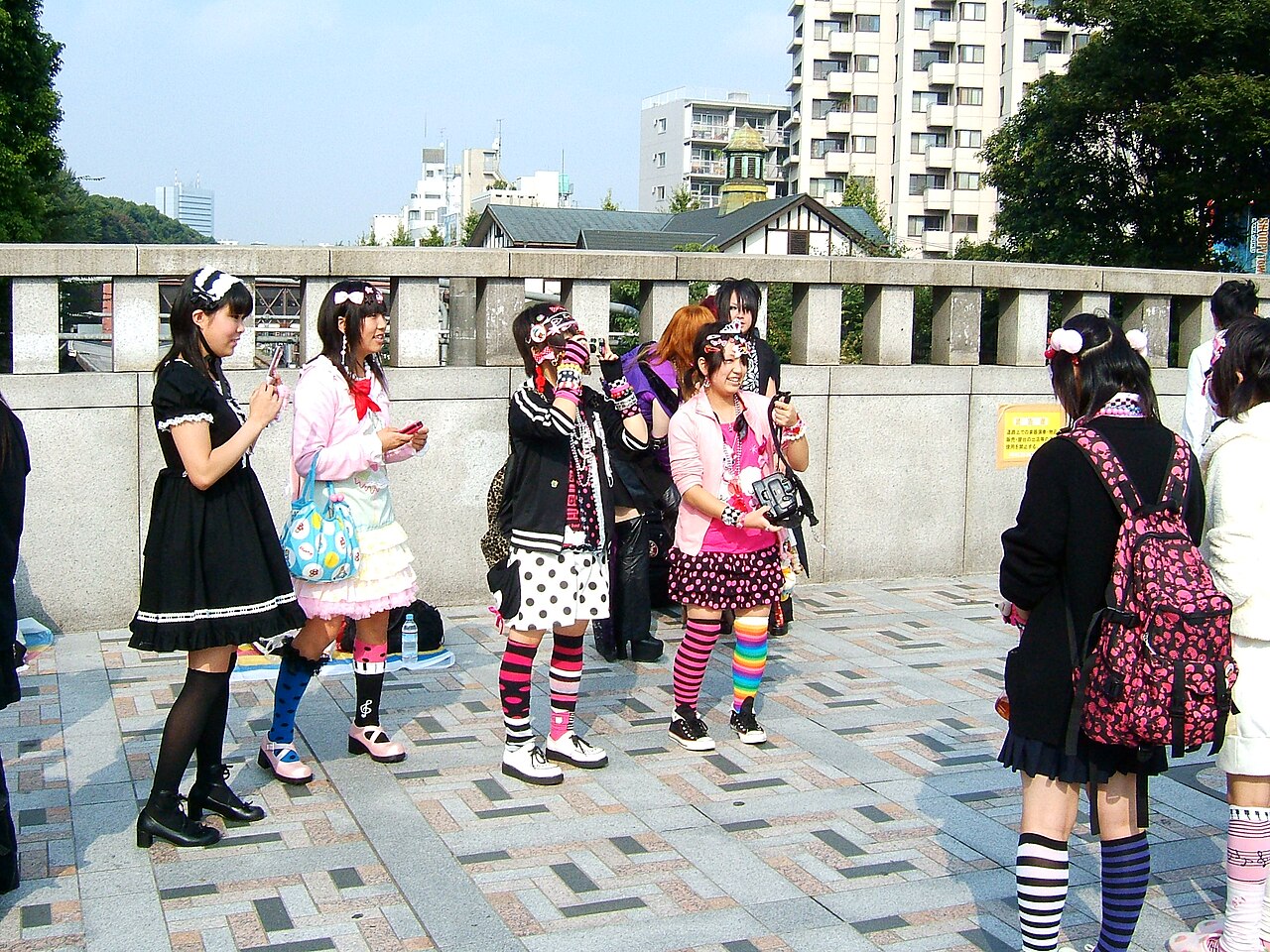
A fairy kei coord is assembled from a pastel graphic or patterned top, a light skirt or dress given volume by a petticoat, layered cardigans or an oversized 1980s sweatshirt, tights or socks with legwarmers over them, pastel flats or platforms, and bows plus small cute accessories spread across the body. No single piece has to be Japanese or new.
Tops and Layers
Layering is the mechanism that creates the floaty feel. Cardigans, peignoirs and cutesy faux collars add bulk without weight, and graphic tees, sweaters and oversized 1980s sweatshirts carry the motifs. Look for low-contrast pastel prints with cute art, and pair anything solid with a floaty camisole or similar over the top so it does not read as plain.
Bottoms
Tulle and tiered skirts, petticoats and colorful fluffy skirts are the staples. A-line dresses and puffy bloomer shorts do the same job. Trousers work when they are oversized: harem pants, joggers and pastel trousers all qualify, and layering a tutu or small petticoat under a circle skirt is a standard trick for holding the shape.
Legwear
Legwear is a load-bearing part of a fairy kei coord and the cheapest component to get right. Tights, over-the-knee socks, crew or ankle socks and legwarmers all appear, often bunched deliberately, and pastel tights of the kind sweet lolita coords use transfer directly. Solid white tights with colorful legwarmers over them is a reliable starting combination. Leggings are worn under a skirt or shorts, never as trousers.
Shoes
Any pastel shoe can work. The common picks are pastel sneakers and boots, chunky platforms, rocking-horse shoes, mary janes and tea party shoes. Canvas shoes take paint and swapped ribbon laces well, which is why they show up so often in DIY coords.
Accessories
Accessories are plentiful but deliberately less dense than in decora. Bows and cute clips lead, then beaded bracelets, resin necklaces, rings, vintage jewelry, bunched socks, painted nails, cute backpacks, plush bags and vintage lunchboxes. Repurposed 1980s objects such as cassette tapes are a recurring trick, and simple star or heart bead bracelets are easy to make rather than buy.
Hair and Makeup
Hair runs either natural or pastel-dyed, with wigs and extensions used as a no-commitment route to pastel color. Loose curls and waves, bangs, pigtails, ponytails, buns and twin buns all read correctly, dressed with bows, fluffy clips, ribbons, scrunchies and headbands. Makeup stays minimal and soft: a large-eye look with nude or shimmery pastel shadow, bright pink blush, and glitter or rhinestones as face accessories.
Fairy Kei Next to Decora, Yume Kawaii, and Sweet Lolita
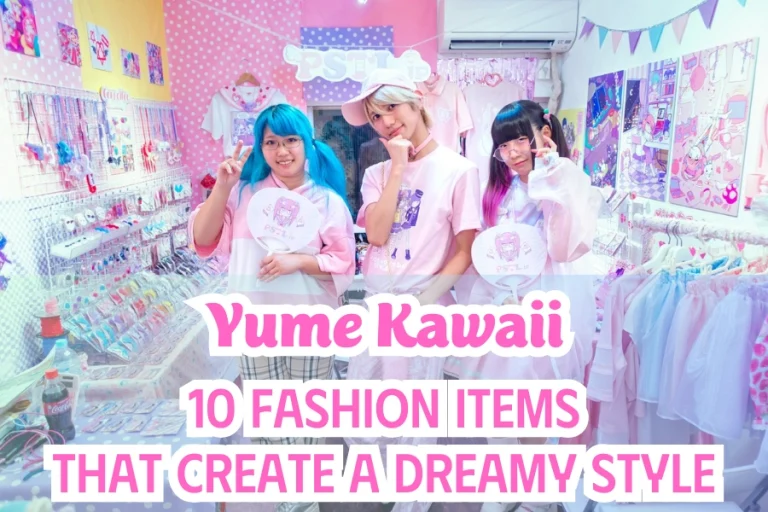
Fairy kei is separated from its neighbors by tone and density rather than by garment. Decora shares the Harajuku origin and the 1980s cartoon references but runs a warm-bright color tone and piles on decoration until the wearer reads like a walking toy box. Yume kawaii is a more modern, dreamy pastel offshoot. Sweet lolita shares the pastels and petticoats but keeps a defined silhouette.
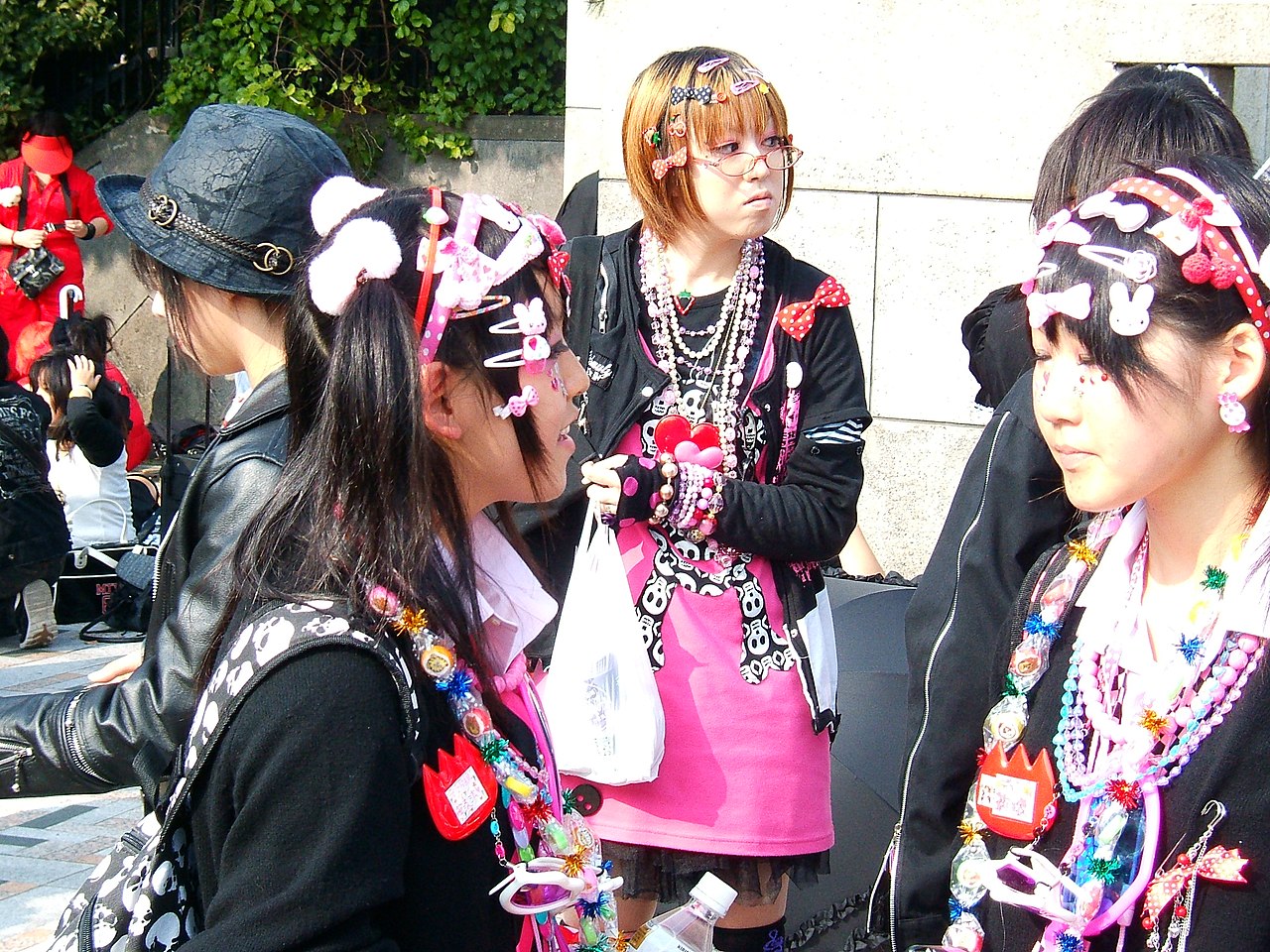
Fairy kei gets mistaken for decora, pop kei and sweet lolita constantly, and the tell in each case is the tone: fairy kei keeps it soft and pastel and the accessory count lower.
The style has also branched. Yume kawaii covers more modern, dreamy territory and leans on Japanese pop culture motifs such as magical girls and shoujo manga. Yami kawaii derives from it and adds deliberately unsettling elements, bandages and syringes and melting patterns, all still rendered in pastel. Uchuu kei is a substyle proper, taking the pastel base toward outer space and alien motifs with fluorescent color and artificial materials like PVC. Fairy kei is sometimes worn as a casual substitute for sweet lolita, which keeps its own rules.
| Style | Color tone | Accessory density | Silhouette |
|---|---|---|---|
| Fairy kei | Muted pastels | Moderate | Loose, no fixed rule |
| Decora | Warm and bright | Very high | Loose |
| Yume kawaii | Pastels | Moderate | No fixed form |
| Sweet lolita | Pastels | Low to moderate | Defined and structured |
FAQs
Where did fairy kei originate?
Fairy kei originated in Harajuku, Tokyo. Pastel, toy-nostalgic second-hand shops were already operating there through the 1990s, including 6%DOKIDOKI, open since 1995, and the style crystallized in the mid 2000s around the 2004 opening of the boutique SPANK!. The sources disagree on whether the shop’s opening or its founder’s own personal style started it.
Is fairy kei the same as spank kei?
No. They emerged around the same shop and the same moment, but SPANK!’s founder Tavuchi has explicitly asked that the two not be conflated, and considers pop kei a better description of the store’s actual output.
Can anyone wear fairy kei?
Yes. It is clothing, and Harajuku fashion has always functioned as a way to step outside a regular dress code. There is no gatekeeping requirement built into the style beyond the color palette and the soft, layered shape.
Do you have to buy Japanese brands to wear fairy kei?
No. Retro and vintage thrift finds and DIY pieces are valued sources in fairy kei styling, not substitutes. Vintage pastel shirts, secondhand cardigans and homemade bead accessories are standard rather than budget compromises.
Is fairy kei still worn today?
Yes, though it is smaller than it was at its 2010-era peak, and several of the original Harajuku shops that defined it have closed. The aesthetic persists partly through its branches, yume kawaii especially, and partly through the secondhand market that always supplied it.
If pastel is not where your wardrobe lives but Japanese street style is, Kamicrew’s kawaii shirt collection is a reasonable place to start looking for the softer, character-led end of what we make.
Kamicrew Best Seller

Dont Touch Me Yokai Ukiyo-E Japanese T-Shirt
$25.49+
$29.99
(15% off)


Summer Vibes Salty Kawaii Japanese Hoodie
$44.99+
$49.99
(10% off)


Japanese Pin Horror 80s Retro Aesthetics T-Shirt
$25.49+
$29.99
(15% off)


El Gran Maja Japanese Kaiju T-Shirt
$25.49+
$29.99
(15% off)


Who Wants The Perfect Body Japan Capybara Kawaii Japanese Unisex Shirt
$25.49+
$29.99
(15% off)


Monster 8 Mask Vintage Animal Hoodie
$44.99+
$49.99
(10% off)


I Hate People Japanese Opossum Vintage Animal Hoodie
$44.99+
$49.99
(10% off)


I Got That Dog In Me Small Turtle Vintage Animal T-Shirt
$25.49+
$29.99
(15% off)

The Creation Of Cat Ukiyo-E Japanese T-Shirt
$25.49+
$29.99
(15% off)