
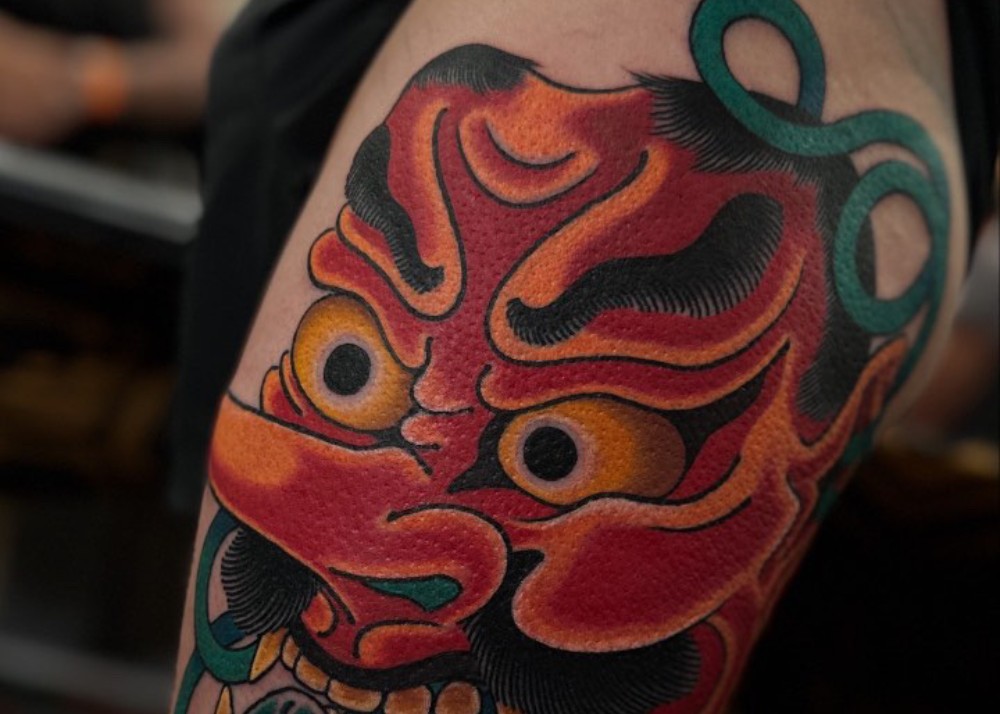
A tengu tattoo carries a mix of meanings drawn from Japanese folklore: mischief and trickery on one side, protection and hard-won wisdom on the other. Most designs pull from one of two tengu types, the long-nosed daitengu or the crow-faced karasu tengu, and the meaning usually shifts with which one a person picks.
What a Tengu Tattoo Means
A tengu tattoo generally represents one of two things: strength, protection, and wisdom, or mischief, trickery, and rebellion. Tattoo-meaning sites describe the ink in slightly different but overlapping terms. Wabisabi Mart lists strength and resilience, wisdom gained through hardship, and protection from deception and misfortune as the core meanings people look for. Red Crowned Tattoo’s rundown leans into the creature’s darker reputation, describing tengu as mischievous, trickster, prankster, and rebellious, tied historically to destruction and war.
- Strength and resilience
- Wisdom gained through hardship
- Protection from deception and misfortune
- Mischief, trickery, and rebellion
Which meaning reads strongest in a given tattoo often comes down to how the creature is drawn. An imposing, red-faced figure leans toward strength and protection, while a beaked, crow-like face leans toward the trickster reading.
Where the Symbolism Comes From
Tengu (天狗), literally heavenly dog, are supernatural mountain spirits considered one of the best-known yokai in Japanese folk religion. The name and concept trace back to tiangou, a celestial dog blamed for eclipses in Chinese mythology, before the figure took on its own identity as a Japanese mountain spirit, one of the figures behind Japan’s tradition of folklore masks.
Early Japanese accounts cast tengu as disruptive, misleading monks and punishing arrogance. Wabisabi Mart notes that by the Edo period the reputation had softened into something closer to a guardian of forests and temples, though the punishment for arrogance stuck around. That dual reputation, demon and protector in the same figure, is exactly what yokai symbolize at their best: a fear and a virtue given the same face.
Daitengu vs Karasu Tengu: Two Tattoo Styles
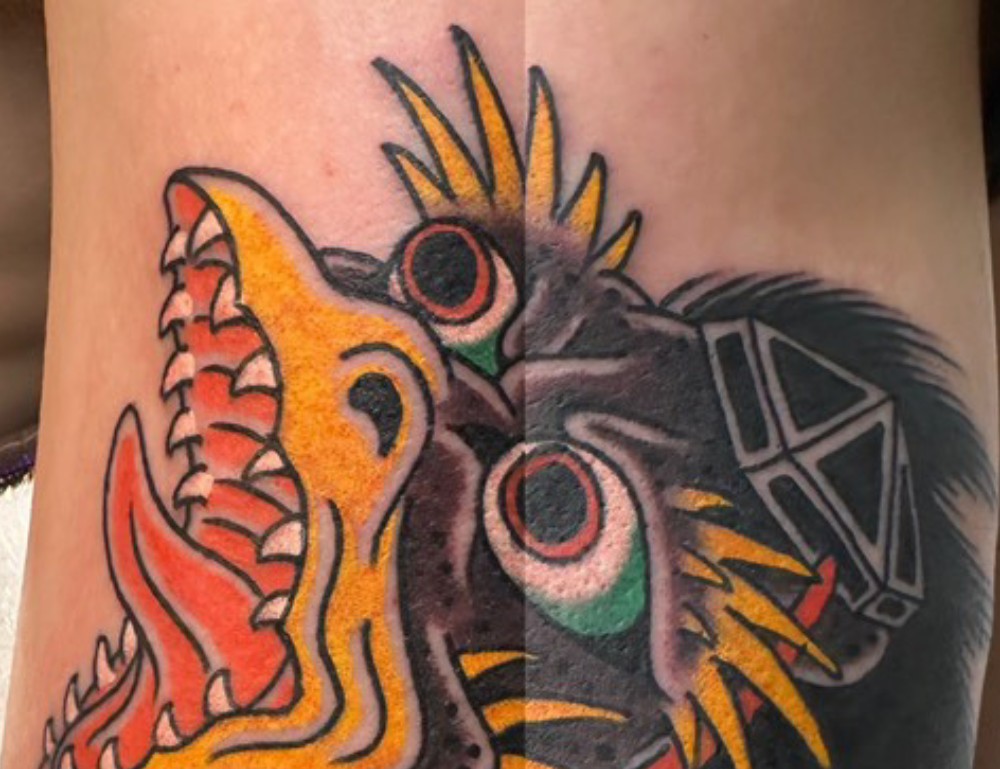
Most tengu tattoo designs draw from one of two recognized types. The daitengu, or great tengu, has a red face and an exaggerated long nose, styled after a fierce mountain monk. Wabisabi Mart describes the long nose as a symbol of pride, power, and sharp intellect, with some accounts tying the feature back to a once-proud monk or warrior transformed by his own arrogance.
The karasu tengu, or crow tengu, keeps the older bird-like form: a beak, wings, and talons standing in for the daitengu’s human face. Red Crowned Tattoo notes that the karasu tengu is the earlier version of the two, with the daitengu’s long, exaggerated nose developing later as the figure became more humanlike.
How Tengu Are Represented in Tattoos
Tengu tattoos generally take one of two forms. Red Crowned Tattoo notes that the creature can appear as a full figure, whole body, wings and all, or reduced to just its Noh theater mask, a format that carries weight given how central tengu masks are to Noh performance and Japan’s wider tradition of ceremonial masks. Either version can lean more human, favoring the daitengu’s red, long-nosed face, or more bird-like, favoring the karasu tengu’s beak and feathers.
Wabisabi Mart adds that the red coloring on a daitengu design typically signals the same traits Noh performances built into the mask: pride, power, and unpredictability, carried over from a role built to portray tempters and lesson-teaching tricksters on stage.
Tengu Tattoos at Kamicrew
A tengu design carries enough built-in contrast, protector and trickster in the same face, to stand out among the more straightforward yokai already common in tattoo flash and streetwear alike. If a symbol with that much duality fits what you’re after, Kamicrew’s yokai and mythology tees put tengu and other folklore figures on wearable designs instead of skin.
FAQs
What does a tengu tattoo mean?
A tengu tattoo usually points to one of two clusters of meaning: strength, resilience, and protection from deception on one side, or mischief, trickery, and rebellion on the other. Wabisabi Mart ties the design to hard-won wisdom and guardianship, while Red Crowned Tattoo frames the same creature as a trickster historically linked to destruction and war. Which reading dominates usually depends on how human or bird-like the design leans.
Why does the tengu mask have a long nose?
The long nose belongs to the daitengu, the red-faced tengu type. Wabisabi Mart explains it as a symbol of pride, power, and sharp intellect, with some interpretations linking the exaggerated feature to a once-proud monk or warrior whose arrogance transformed him into a tengu.
What is the difference between a daitengu and a karasu tengu tattoo?
The daitengu is the more human of the two, with a red face and a long nose modeled on a fierce mountain monk. The karasu tengu keeps the older, bird-like form, with a beak, wings, and talons instead of a human face. Red Crowned Tattoo notes the karasu tengu came first, with the daitengu’s human features developing later as the legend evolved.
Kamicrew Best Seller

Dont Touch Me Yokai Ukiyo-E Japanese T-Shirt
$25.49+
$29.99
(15% off)


Summer Vibes Salty Kawaii Japanese Hoodie
$44.99+
$49.99
(10% off)


Japanese Pin Horror 80s Retro Aesthetics T-Shirt
$25.49+
$29.99
(15% off)


El Gran Maja Japanese Kaiju T-Shirt
$25.49+
$29.99
(15% off)


Who Wants The Perfect Body Japan Capybara Kawaii Japanese Unisex Shirt
$25.49+
$29.99
(15% off)


Monster 8 Mask Vintage Animal Hoodie
$44.99+
$49.99
(10% off)


I Hate People Japanese Opossum Vintage Animal Hoodie
$44.99+
$49.99
(10% off)


I Got That Dog In Me Small Turtle Vintage Animal T-Shirt
$25.49+
$29.99
(15% off)

The Creation Of Cat Ukiyo-E Japanese T-Shirt
$25.49+
$29.99
(15% off)