
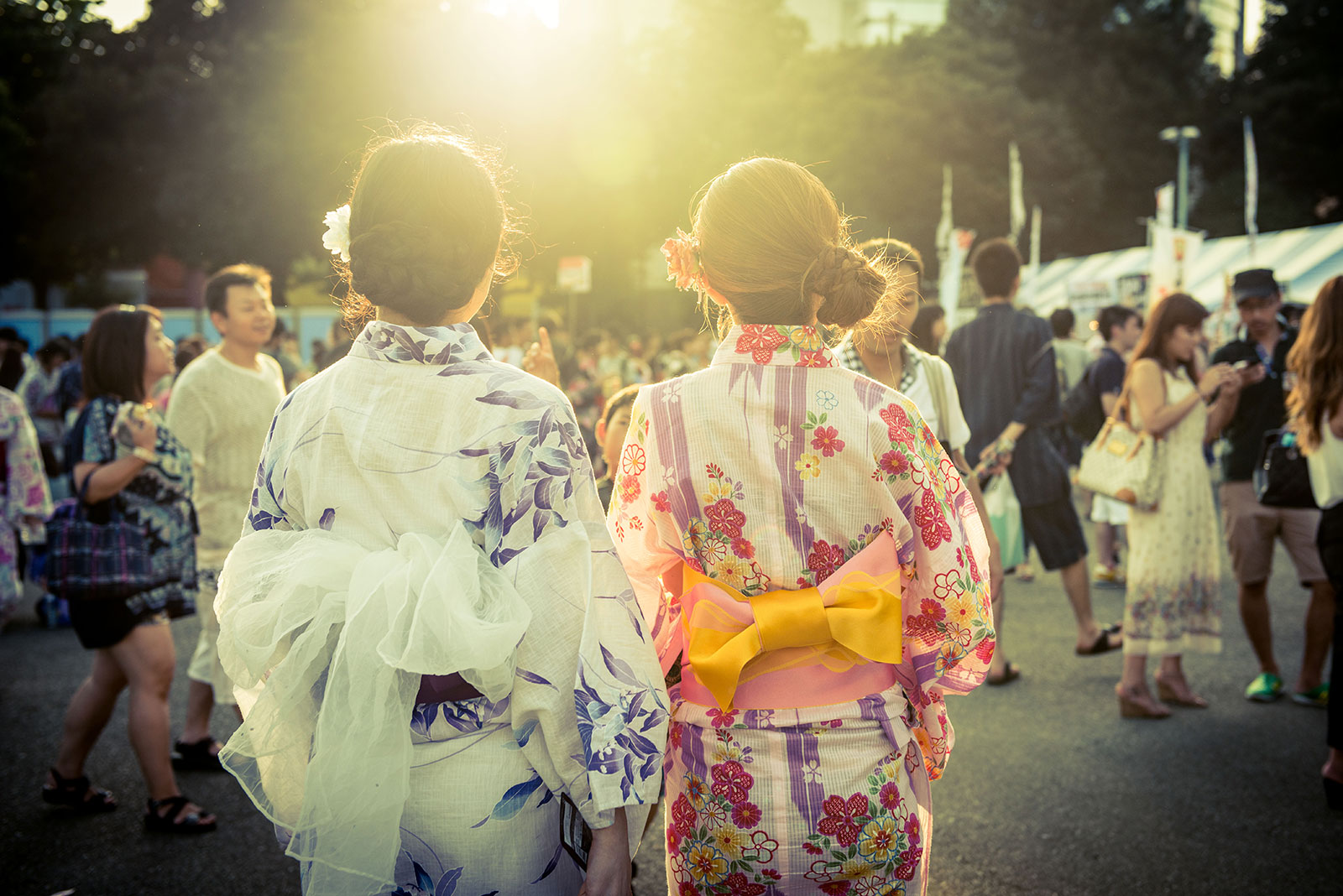
A yukata is a lightweight, unlined cotton kimono worn for casual summer occasions in Japan, from a neighborhood festival to an evening stroll around a hot spring town. The word itself means “bathing cloth,” a nod to its original life as post-bath loungewear at ryokan and public bathhouses. A basic cotton yukata runs from around a thousand yen for a simple version to several tens of thousands of yen for a finer one.
What a Yukata Is and Where It Comes From
A yukata is an unlined cotton, linen, or synthetic robe wrapped left over right and secured with an obi sash, distinguishing it from the lined silk kimono worn for formal occasions. It shares the same straight seams and wide sleeves as other traditional Japanese garments.
The garment’s roots trace back to a robe worn after soaking in a communal bath, and yukata are still handed to guests at ryokan and worn around onsen towns such as Atami, Kinosaki, and Kusatsu today. Traditional yukata were dyed indigo and white using a technique called Nagaita Chugata, which stencils a pattern onto both sides of the cloth. Because that process was costly, dyers in the late Edo period developed Chusen, a cheaper way to reach a similar double-sided effect, and Japan’s Ministry of Economy, Trade and Industry recognized the technique as a traditional craft in 2023.
Because both garments share that same wrapped, straight-seam construction, fashionable modern designs can make a yukata and a dressier kimono hard to tell apart at a glance, though the two part ways on fabric weight, lining, and formality, the exact attributes broken down in Kamicrew’s yukata vs kimono comparison.
Styles and Types of Yukata
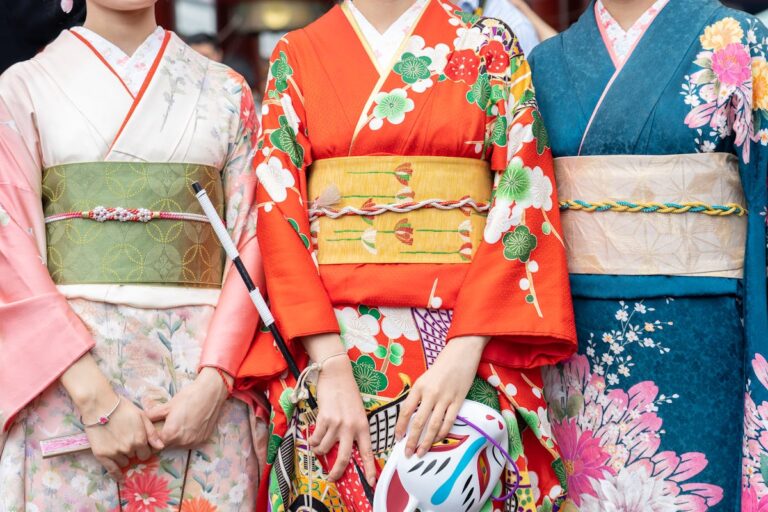
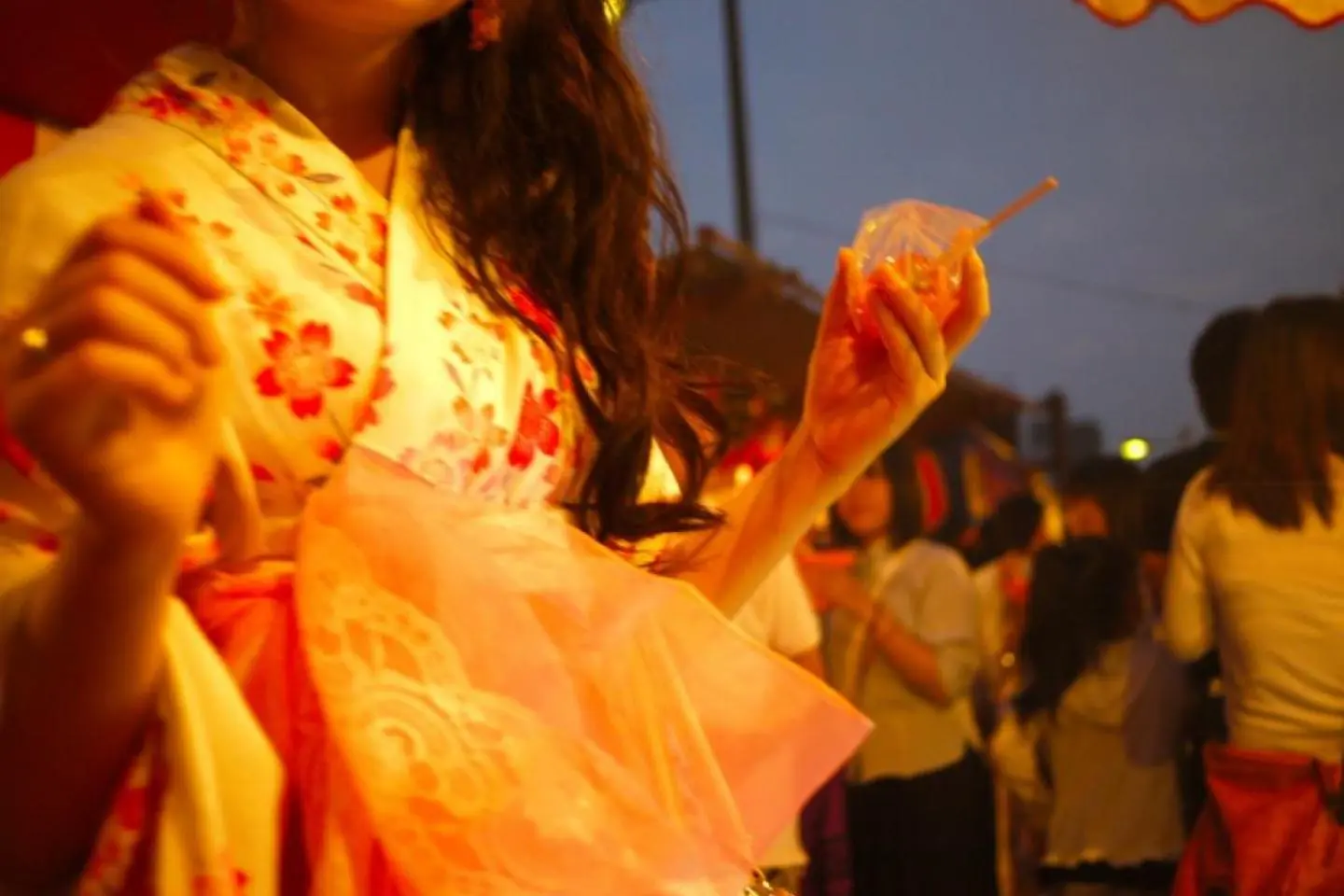
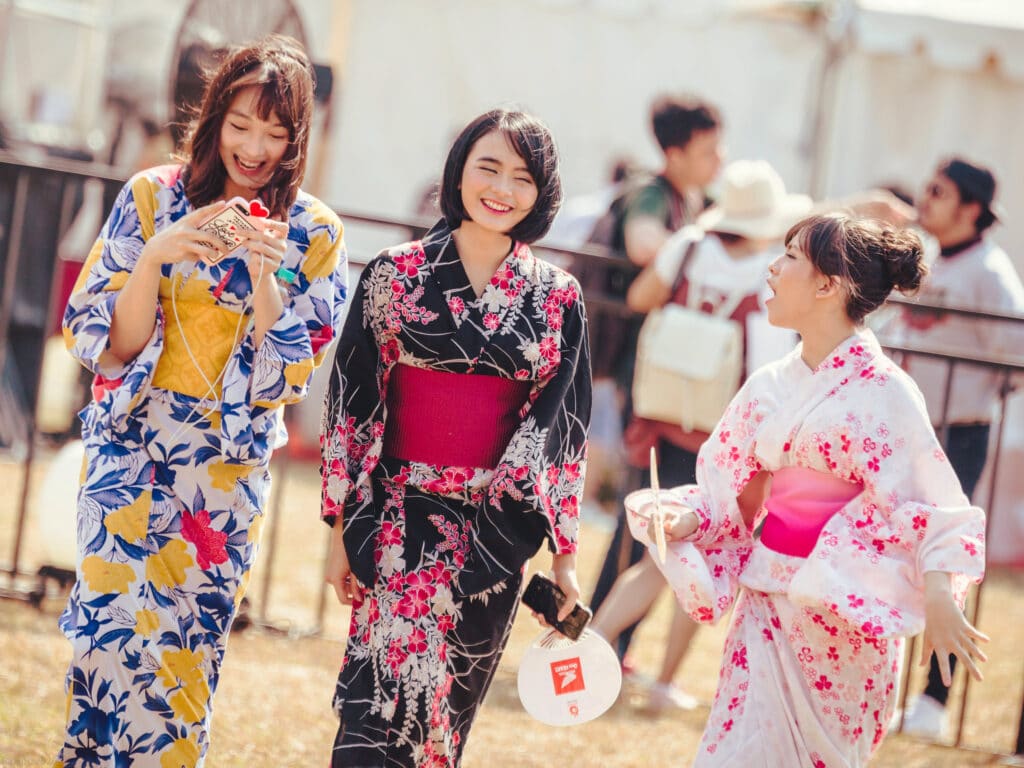
Yukata styles vary mainly by sleeve length and color: men’s sleeves extend about 10 centimeters from the armpit seam in darker, subdued tones, while women’s sleeves extend closer to 20 centimeters in brighter, floral patterns. A full outfit adds an obi sash, geta sandals worn without socks, and accessories like a folding fan or a kinchaku pouch.
Yukata made for older women tend to be less flashy than the bright, floral prints favored by younger women. Traditionally the fabric stayed indigo and white, but a wider range of colors and prints has been common since a surge in yukata’s popularity in the late 1990s.
A folding hand fan or a small drawstring pouch called a kinchaku are common accessories, and the kinchaku today doubles as a way to carry a phone. The yukata is one of several types of traditional Japanese clothing women wear, sitting alongside pieces like the furisode in that broader wardrobe, while men’s versions are part of the same lineup covered by traditional Japanese clothing for men.
How and When to Wear a Yukata Today
Yukata are provided at ryokan for wear inside and around onsen towns, worn as the standard outfit for summer festivals and fireworks, and available to rent in tourist hubs like Kyoto or buy at department stores and souvenir shops from about a thousand to tens of thousands of yen. Putting one on follows a fixed five-step sequence.
Staying at a ryokan usually means being provided one to wear both inside the inn and out on the streets. Some Western-style hotels hand out yukata too, but there they are meant only as room wear and should not be worn outside.
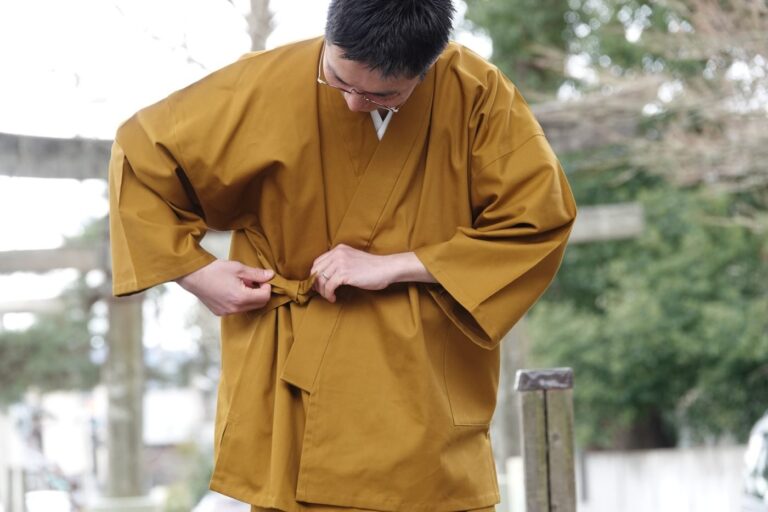
- Step 1: slip your arms into the sleeves and hold the front hem, one side in each hand, at about waist level.
- Step 2: fold the right side under, then fold the left side over it and hold it in place while you pick up the obi.
- Step 3: wrap the obi around your waist starting from the front, then cross it around your back and tie it in front.
- Step 4: rotate the knot to your right hip; men typically wear the sash low on the hips, while women tie it at the waist.
- Step 5 (optional): add an outer jacket over the yukata in cooler weather.
Since the wave of new colors and prints took off in the late 1990s, dressing in a patterned yukata for a summer festival has become as much a fashion statement as a traditional one. The same shift in how kimono-family garments are read as style rather than only formalwear is visible in exhibitions like the Metropolitan Museum of Art’s survey of kimono design from the Edo period onward, which traces how everyday and dressed-up pieces drifted apart over time.
FAQs
Is a yukata basically a casual kimono?
Yes, in everyday use a yukata functions as the casual, unlined branch of the kimono family, made of cotton, linen, or synthetic fabric for hot-weather wear rather than formal occasions. It skips the extra layers, socks, and silk lining that come with dressier kimono.
Can men and women both wear a yukata?
Yes, yukata are made for both men and women. The main differences are sleeve length and coloring: men’s yukata have a shorter sleeve extension and lean toward darker, subdued colors, while women’s have longer sleeves and often brighter or floral patterns.
Is it okay for visitors from other countries to wear a yukata?
Yes. Yukata are routinely provided to any ryokan or hot spring hotel guest regardless of nationality, and rental shops in tourist areas like Kyoto dress visitors in yukata as a normal part of the experience.
If yukata’s mix of pattern and history speaks to you, Kamicrew’s ukiyo-e inspired shirts carry that same traditional Japanese art style into everyday streetwear.
Kamicrew Best Seller

Dont Touch Me Yokai Ukiyo-E Japanese T-Shirt
$25.49+
$29.99
(15% off)


Summer Vibes Salty Kawaii Japanese Hoodie
$44.99+
$49.99
(10% off)


Japanese Pin Horror 80s Retro Aesthetics T-Shirt
$25.49+
$29.99
(15% off)


El Gran Maja Japanese Kaiju T-Shirt
$25.49+
$29.99
(15% off)


Who Wants The Perfect Body Japan Capybara Kawaii Japanese Unisex Shirt
$25.49+
$29.99
(15% off)


Monster 8 Mask Vintage Animal Hoodie
$44.99+
$49.99
(10% off)


I Hate People Japanese Opossum Vintage Animal Hoodie
$44.99+
$49.99
(10% off)


I Got That Dog In Me Small Turtle Vintage Animal T-Shirt
$25.49+
$29.99
(15% off)

The Creation Of Cat Ukiyo-E Japanese T-Shirt
$25.49+
$29.99
(15% off)