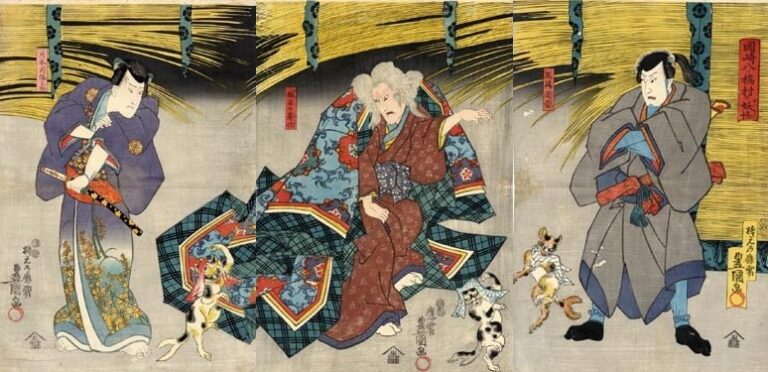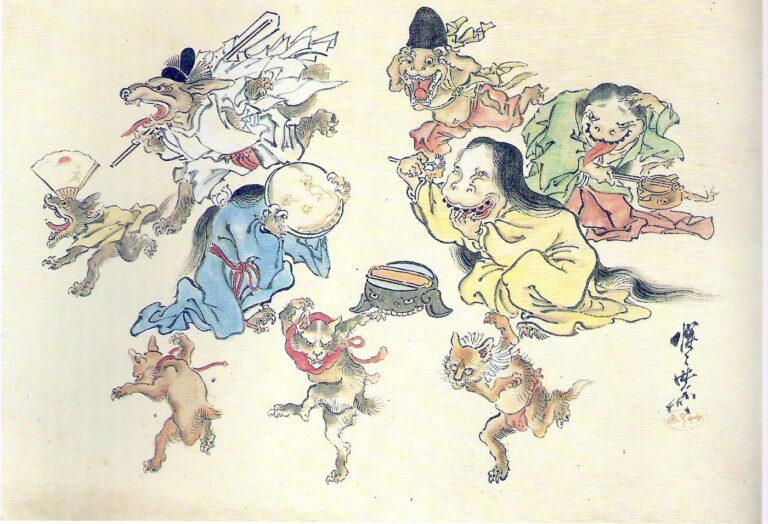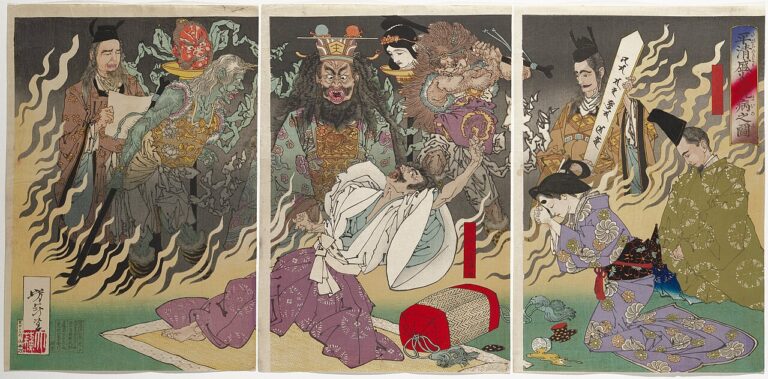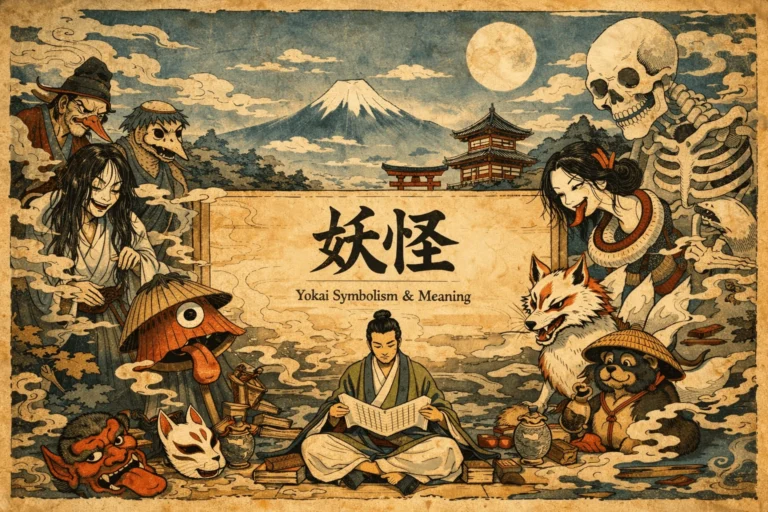

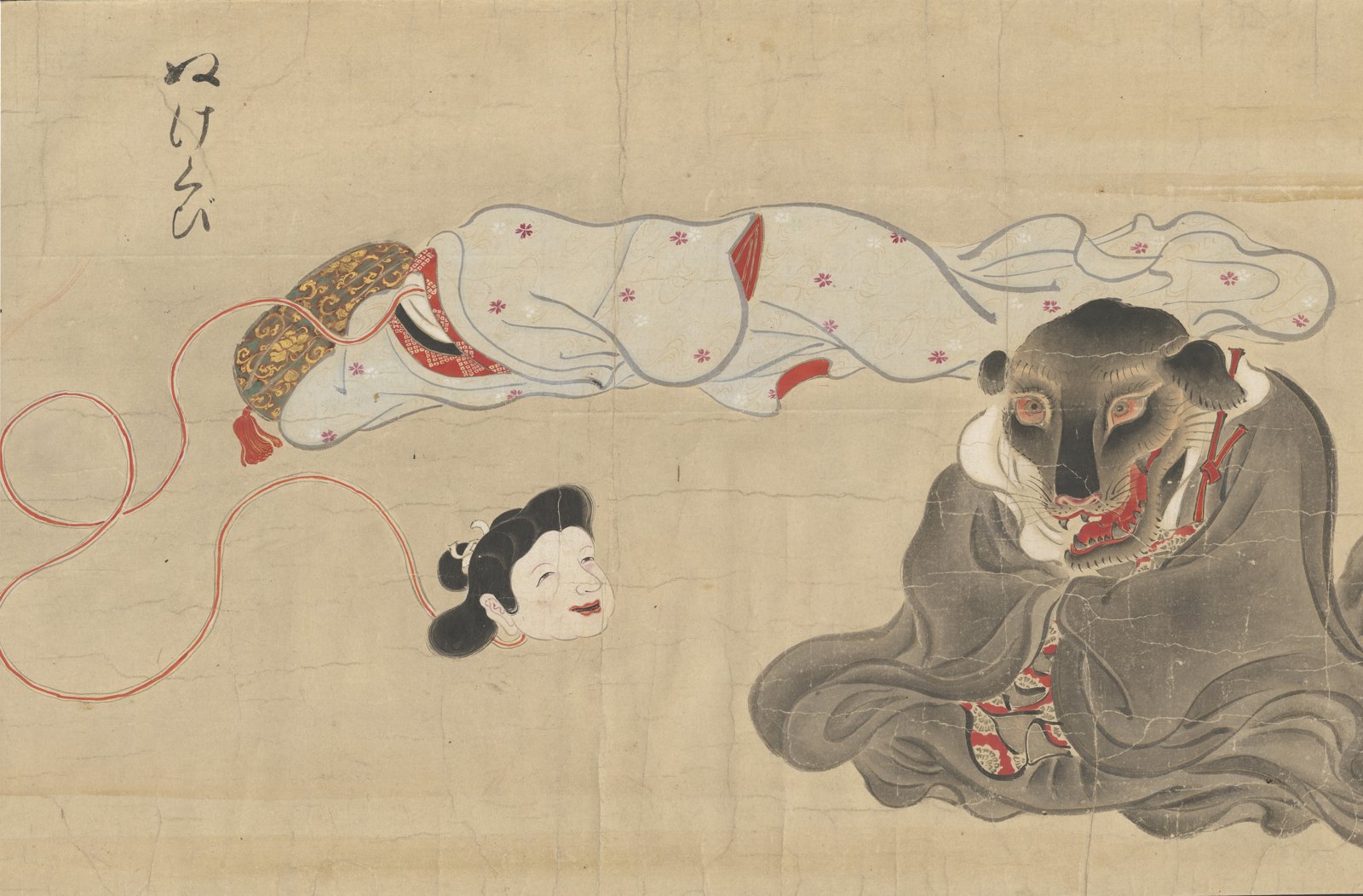
A rokurokubi looks like an ordinary woman by day. After dark, her neck stretches into a long, snake-like shape, or her head separates from her shoulders entirely and drifts through the house on its own. Japanese folklore treats the stretching-neck version and the detached-head version, called nukekubi, as two branches of the same yokai, first written down in the ghost stories and yokai scrolls of the Edo period.
Origin and Mythology
Rokurokubi originated in Edo-period Japan as tales of humans transformed by a curse, not born monsters, and the name reflects the one thing every version of the story shares: something stretching far past its resting length. The name is built from rokuro, a word tied to a potter’s wheel, a well pulley, or an umbrella handle, three ordinary objects with that same trait. Historians disagree on which object gave the yokai its name, but all three point at the same image.
Most yokai are described as monsters from the start. Rokurokubi are different. Wikipedia’s entry on the creature notes that rokurokubi and nukekubi are treated as former humans, transformed by a curse that follows some evil act, and the curse falls on women even when a husband or father committed the actual sin. Some classical writers went further and treated the whole phenomenon as a wandering soul rather than a monster, the same idea behind Japan’s yurei ghosts: a spirit that slips loose from a sleeping body and returns before morning.
The origin story retold most often follows a monk named Kaishin and a woman named Oyotsu. The two eloped together, and when Oyotsu fell ill on the road, the monk killed her rather than spend their travel money on her treatment. He later stayed at an inn and shared a bed with the innkeeper’s daughter. That night her neck stretched and her face changed into Oyotsu’s, accusing him of the murder. Kaishin confessed everything to the girl’s father, who admitted that he too had killed his own wife for her money and used it to build the inn, and that the rokurokubi curse had passed to his daughter as punishment.
By the Meiji period, the legend had become popular enough to stage. Magicians recreated the stretching neck with a headless doll in a kimono, a curtain, and a performer crouched behind it who stood and squatted to make the fake neck extend and contract, a trick that magazines of the era eventually explained in print.
Appearance and Behavior
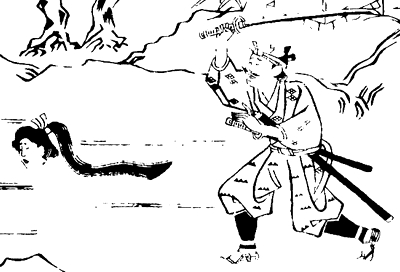
Edo-period accounts most often placed the curse on ordinary women, especially servants and women working in brothels. By day she looked and acted like anyone else. After she fell asleep, her neck stretched out like a long snake, or, in the nukekubi version, her head came free of her body and floated through the room while she slept on undisturbed.
Most rokurokubi cause mischief rather than harm: they lick the oil out of paper lanterns, startle people who catch them wandering, or peer into rooms they have no business seeing into. Nukekubi have a rougher reputation. Wikipedia records nukekubi that attack small animals or people, and one described weakness: if the sleeping body is moved while the head is away, the head cannot find its way back.
Unlike oni, who are horned demons from the moment they appear in a story, rokurokubi begin as recognizably ordinary people, and the yokai only shows itself after dark. That is also why nearly every recorded case is a woman: one Edo-period source ties the curse to unfaithfulness or a broken vow, almost always blamed on the woman even when a male relative caused it. The exception on record is a male rokurokubi who appeared in a freak show in Edo in 1810, noted in the Shoho Kenbunroku as unusual enough to write down.
Art historians have another explanation for how the two versions merged into one creature. Early illustrations of nukekubi showed a string connecting the floating head to the sleeping body. Later artists and readers appear to have mistaken that string for an impossibly long neck, and the two images blurred together until rokurokubi and nukekubi were treated as the same yokai with two behaviors instead of two separate creatures.
Rokurokubi in Modern Pop Culture
The stretching neck and floating head have kept resurfacing in art and entertainment long after the Edo period ended.
- The rokurokubi inspired the design of The Teacher in Little Nightmares 2, according to the game’s art director in an interview with VICE.
- Pokemon’s Misdreavus and Mismagius are built on the nukekubi rather than the stretching-neck version.
- Yo-kai Watch‘s Lady Longnek reimagines the rokurokubi for a younger audience.
- Hellboy: Sword of Storms puts Hellboy face to face with both a nukekubi and a rokurokubi in the same story.
- Sekibanki, a stage-two boss in Touhou 14: Double Dealing Character, fights as a rokurokubi but attacks using a nukekubi’s detached head.
Rokurokubi in Fashion Today
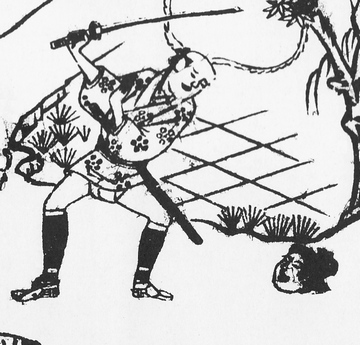
A creature built around one exaggerated, graphic detail, a neck or a head untethered from its body, translates directly onto a shirt or hoodie panel in a way that busier yokai designs sometimes do not. The same Edo-period woodblock look that illustrated Hokusai’s version of the rokurokubi still shows up on Japanese streetwear today, usually rendered in the same ink-wash style as the yokai it symbolizes. If a folklore creature built entirely around one unsettling, stretched-out silhouette appeals to you, Kamicrew’s yokai and mythology tees are where that kind of design lives.
FAQs
Is a rokurokubi the same as a nukekubi?
They are usually treated as the same yokai with two behaviors. In the stretching-neck version, the rokurokubi’s neck extends while the body stays put. In the nukekubi version, the head detaches completely and floats on its own. Wikipedia notes that the nukekubi form is considered the earlier version, and some historians believe the stretching neck grew out of artists misreading the string that connected a floating nukekubi head back to its body.
Are rokurokubi dangerous?
Most rokurokubi are more mischievous than dangerous: they lick oil from lamps, wander at night, or scare people who spot them. Nukekubi have the rougher reputation on record, with some accounts describing attacks on small animals or people, though the classic legends center on a curse and its consequences rather than deliberate cruelty.
Can a rokurokubi be male?
Almost every recorded rokurokubi is a woman, since the curse in most legends punishes a woman for a sin, often one a husband or father actually committed. One exception survives in the record: the Shoho Kenbunroku describes a male rokurokubi who appeared with an elongated neck at a freak show in Edo in 1810.
Kamicrew Best Seller

Dont Touch Me Yokai Ukiyo-E Japanese T-Shirt
$25.49+
$29.99
(15% off)


Summer Vibes Salty Kawaii Japanese Hoodie
$44.99+
$49.99
(10% off)


Japanese Pin Horror 80s Retro Aesthetics T-Shirt
$25.49+
$29.99
(15% off)


El Gran Maja Japanese Kaiju T-Shirt
$25.49+
$29.99
(15% off)


Who Wants The Perfect Body Japan Capybara Kawaii Japanese Unisex Shirt
$25.49+
$29.99
(15% off)


Monster 8 Mask Vintage Animal Hoodie
$44.99+
$49.99
(10% off)


I Hate People Japanese Opossum Vintage Animal Hoodie
$44.99+
$49.99
(10% off)


I Got That Dog In Me Small Turtle Vintage Animal T-Shirt
$25.49+
$29.99
(15% off)

The Creation Of Cat Ukiyo-E Japanese T-Shirt
$25.49+
$29.99
(15% off)