
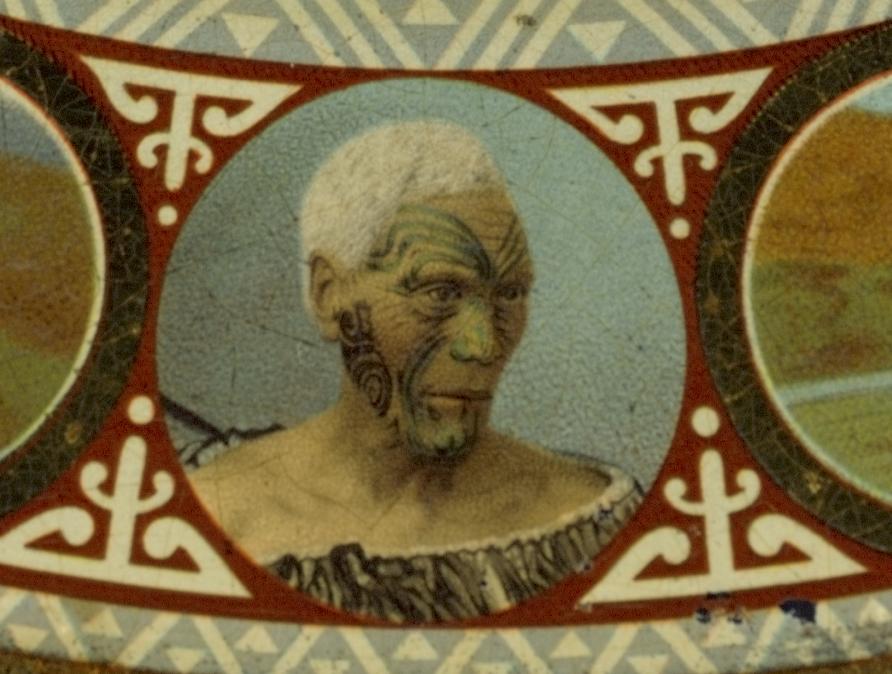
A Māori tattoo, or tā moko, is the tattoo tradition of the Māori of Aotearoa New Zealand, and its lines record a person’s whakapapa (ancestry), rank, and achievements. Traditionally it was chiseled into the skin with uhi rather than punctured, and the Australian Museum compares a moko to a résumé. Tā moko is reserved for Māori, while kirituhi is Māori-inspired art open to everyone else.
Moko is the mark itself and tā moko is the act of tattooing, according to the Polynesian Cultural Center. Te Papa also spells the practice tāmoko.
What Does a Māori Tattoo Mean?
A Māori tattoo shows who the wearer is and where they come from. Sources describe moko as a record of genealogy, social standing, and life events, worn on the head because it was the most sacred part of the body. The Australian Museum adds that moko reminded people of their responsibility in life and that receiving it was a huge honour.
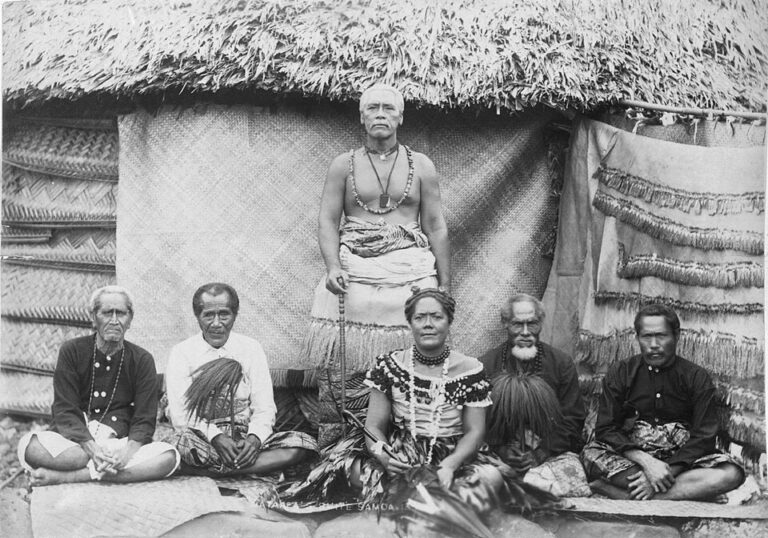
The Polynesian Cultural Center, drawing on Robbie Whitmore, says all high-ranking Māori were tattooed and people without tattoos were seen as having no social status. In that account the moko works as an ID, showing the wearer’s rank, status, power, position, and lineage. Mitai Māori Village describes each pattern as personal to the bearer’s whakapapa and calls tā moko a visual language for telling a person’s story.
Not every source is so certain about the codes. Te Papa, the Museum of New Zealand, describes the motifs as a complex interplay between high aesthetic and a visual language of excellence, identity, and role, and says the link to social status and genealogy remains unclear.
How Tā Moko Was Traditionally Made
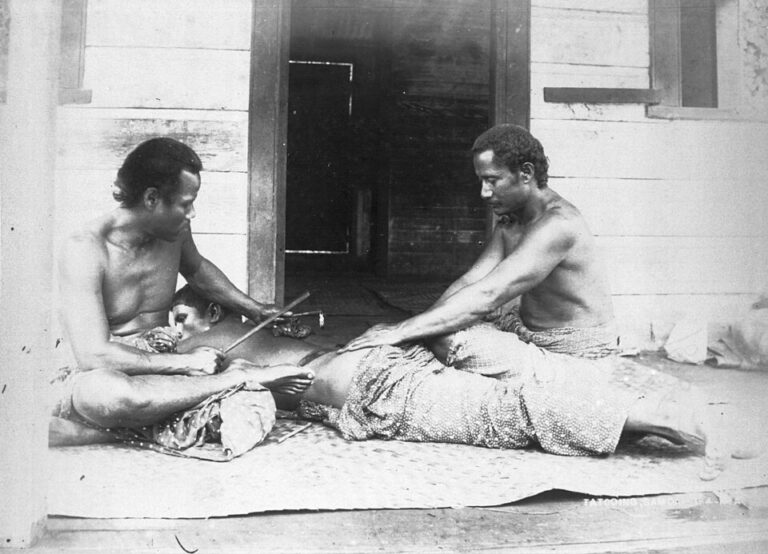
Tā moko was traditionally carved, not pricked. Te Papa explains that Māori brought the Eastern Polynesian method of striking toothed combs called uhi into the skin with a small mallet called a tā, then developed narrower uhi without teeth that cut grooves through the skin, followed by small toothed uhi that applied the pigment.
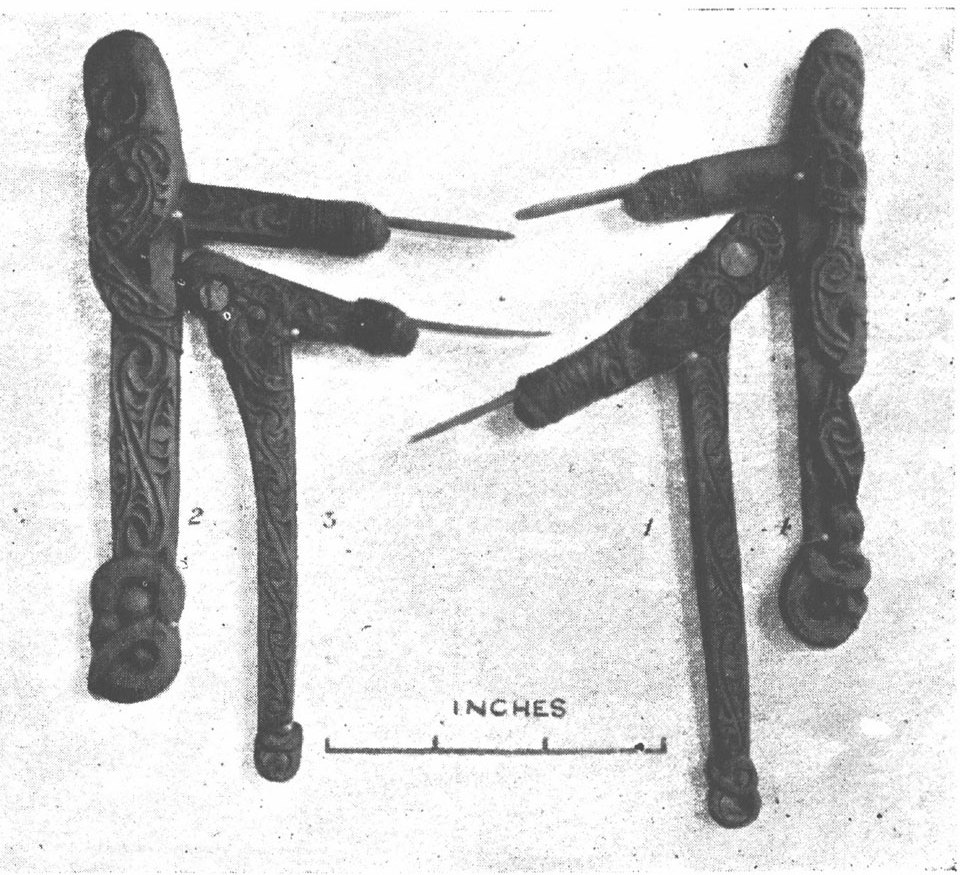
On the face the result was a form of scarification, which Te Papa says is very similar to wood carving: deep grooved furrows stained with dark pigment. Huhana Rare, quoted by the Australian Museum, says the uhi was originally made from albatross bone and that pigments came from gum and other vegetation burned to soot and mixed with oil, with each tribal area using different pigments.
The tools changed after contact. Te Papa says that by the 1840s metal had started to replace bone in uhi. Mitai describes the process as painful and a rite of passage, especially for young men coming of age, and notes that modern tā moko is usually done with a tattoo machine.
The Story of Mataora and Niwareka
In Māori tradition, tā moko came from Rarohenga, the underworld, through the chief Mataora. Both Te Papa and the Australian Museum tell the story: Mataora followed his wife Niwareka to the underworld after striking her, and her father Uetonga, a master of tattooing, marked his face. Mataora then brought tā moko back to the surface world.
In the Australian Museum version, Mataora’s face had only been painted before Uetonga tattooed him, and he sang of his sorrow during the tattooing until Niwareka returned to him. His tattoo served as a reminder to avoid the evil actions of the upper world, and Niwareka brought weaving back with her. Te Papa notes that the name Mataora means “living face.”
Facial Moko: Mataora and Moko Kauae
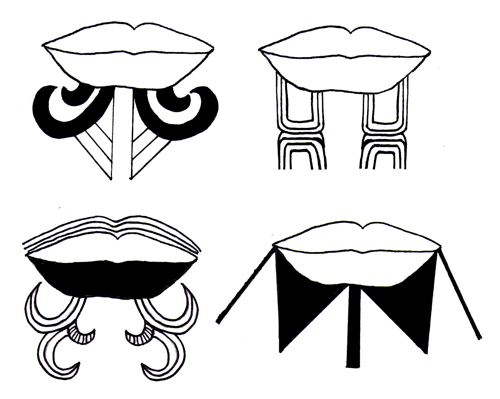
Facial moko differs for men and women. Mitai says men traditionally wore moko on the face, thighs, and buttocks, while women wore it on the lips and chin. The Australian Museum adds the shoulders for women and notes that women sometimes made small markings on the face or shoulders when someone close to them had died.
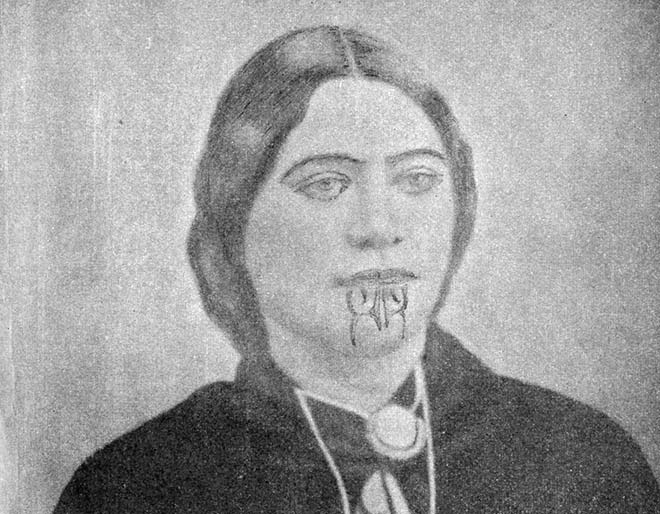
Women’s chin moko is known as moko kauae. Te Papa describes the photographs Marti Friedlander took of the last Māori women to have received the chin moko in a customary manner. For men’s facial work, Te Papa says the spirals on the nose, cheeks, and lower jaw and the curved rays on the forehead are shared by many moko, while the other elements were chosen to enhance the individual’s features, giving meaning to the expression Mataora, the living face.
According to Whitmore, as summarised by the Polynesian Cultural Center, a male facial moko is divided into eight sections:
- Ngakaipikirau: center forehead, the wearer’s rank
- Ngunga: around the brows, the wearer’s position
- Uirere: eyes and nose, the wearer’s basic political rank
- Uma: temples, first or second marriage
- Raurau: under the nose, the wearer’s signature
- Taiohou: cheeks, the wearer’s line of work
- Wairua: chin, the wearer’s mana (achievements)
- Taitoto: jaw, the wearer’s birth status
Both the Polynesian Cultural Center and the Australian Museum say the left side of the face relates to the father’s line and the right side to the mother’s. The Australian Museum also says there were no set patterns and that meaning depended on placement on the face, and the Polynesian Cultural Center adds that symmetry is rare.
Common Māori Tattoo Symbols and Their Meanings
The most cited Māori tattoo symbols are the koru, the single twist, the double or triple twist, the hei matau, pākati, taratarekae, unaunahi, ahu ahu mataroa, and manaia. The koru, a spiral based on an unfurling fern, stands for new beginnings and growth. The meanings below come from the Polynesian Cultural Center’s list, with manaia from Mitai.
| Symbol | Commonly given meaning |
|---|---|
| Koru (spiral, unfurling fern) | New beginnings, growth, harmony |
| Single twist | Path of life, eternity |
| Double or triple twist | Two people or cultures joined for eternity |
| Hei matau (fish hook) | Prosperity, strength, good health |
| Pākati (dog skin cloak) | Warriors, battles, courage |
| Taratarekae (whale teeth) | Strength and sensitivity |
| Unaunahi (fish scales) | Abundance and health |
| Ahu ahu mataroa | Talent in sport, a new challenge |
| Manaia | Spiritual guardianship |
Mitai says each element connects the wearer to their past, present, and future. The Polynesian Cultural Center notes that these designs also appear on carvings, weapons, and clothing, often in wood and jade.
Some articles use “Māori tattoo” loosely for any Polynesian work. Aranui’s guide, for example, illustrates the term with Marquesan symbols such as enata and tiki.For the wider region, see the guide to Polynesian tattoo meaning.
Suppression and Modern Revival
Tā moko nearly stopped in the 19th and early 20th centuries and has since been revived. Te Papa says the practice was disrupted by colonisation and the adoption of Christianity in the mid 19th century. The last men tattooed in that period died during the 1920s, while women in various districts kept receiving moko through to the 1920s.
Missionaries, and Pākehā generally, saw moko as distasteful even while fascinated by it, according to Te Papa, and that view affected young Māori men most. Mitai describes a resurgence in recent years, with many Māori reclaiming their identity through tā moko and reconnecting with their whakapapa, and notable Māori figures wearing moko on global platforms.
Te Papa credits Sāmoan whanaunga (Pacific cousins) with a hugely significant role in that revival, especially for pūhoro, the thigh moko, by sharing their knowledge of customary tatau. The guide to Samoan tattoo meaning covers that tradition.
Tā Moko vs Kirituhi: Who Can Wear It
Tā moko is reserved for Māori, while kirituhi is Māori-inspired skin art open to non-Māori. Mitai says tā moko is directly linked to a person’s heritage and genealogy, and that kirituhi lets non-Māori wear Māori designs without those ancestral connections. The Polynesian Cultural Center says descent is a foremost requirement before a moko can be undertaken.
For anyone without Māori ancestry, Mitai’s advice is to choose kirituhi rather than tā moko, which it calls a respectful way to honour the tradition without appropriating a sacred practice.
FAQs
Can anyone have a Māori tattoo?
Not every kind. Tā moko is reserved for Māori because it is tied to the wearer’s whakapapa, and the Polynesian Cultural Center calls descent a foremost requirement. Non-Māori can wear kirituhi, Māori-inspired skin art without the ancestral connection, which Mitai Māori Village describes as the respectful choice.
What are the main Māori tattoo symbols?
Sources do not agree on a fixed set of five or six symbols. The Polynesian Cultural Center lists the koru, single twist, double or triple twist, hei matau, pākati, taratarekae, unaunahi, and ahu ahu mataroa, and Mitai Māori Village adds manaia, which represents spiritual guardianship.
What is the difference between tā moko and kirituhi?
Tā moko is the Māori tattoo tradition linked to a person’s genealogy and reserved for Māori. Kirituhi, meaning skin art, uses Māori designs without that ancestral connection, so non-Māori can wear it, according to Mitai Māori Village.
What does the koru mean in a Māori tattoo?
The koru is a spiral based on an unfurling fern frond. The Polynesian Cultural Center and Mitai Māori Village both say it symbolises new beginnings and growth.
If Māori patterns inspire you, browse the Māori tattoo designs at Kamicrew.
Kamicrew Best Seller
Fiji Polo Shirt Fiji Coat Of Arms With Polynesian Tattoo Gold
$31.49+
$34.99
(10% off)
Tonga Polo Shirt Tonga Coat Of Arms With Polynesian Tattoo Gold
$31.49+
$34.99
(10% off)
Samoa Polo Shirt Samoa Coat Of Arms With Polynesian Tattoo Reggae
$31.49+
$34.99
(10% off)
Samoa Polo Shirt Samoa Coat Of Arms With Polynesian Tattoo Red BN22
$31.49+
$34.99
(10% off)
Fiji Polo Shirt Fiji Coat Of Arms With Polynesian Tattoo Blue
$31.49+
$34.99
(10% off)
American Samoa Polo Shirt American Samoa Coat Of Arms With Polynesian Tattoo Blue
$31.49+
$34.99
(10% off)
Tonga Polo Shirt Tonga Coat Of Arms With Polynesian Tattoo Blue BN22
$31.49+
$34.99
(10% off)
Tonga Polo Shirt Tonga Coat Of Arms With Polynesian Tattoo Reggae
$31.49+
$34.99
(10% off)