
Samoan tattoo meaning centers on the tatau, a hand-tapped tradition that marks adulthood, identity, courage, and a person’s place in family and village. It takes two main forms: the peʻa, worn by men from the waist to the knees, and the malu, worn by women from the upper thigh to below the knee. Both are applied by a master tattooist, the tufuga tā tatau, with handmade tools called ʻau. This guide covers the word itself, the two forms, the masters and their tools, the origin story, the motifs, who receives tatau, and how the tradition lives on in Samoa and abroad.
Where the Word Tatau Comes From
The English word tattoo comes from the Polynesian word tatau, and the word is linked to sound. A U.S. National Park Service lesson plan says tatau comes from the tapping of the tool during tattooing, and The Koko Sāmoa, a Samoan-owned brand, describes the comb being struck with a mallet to drive pigment into the skin.
The Koko Sāmoa also says the Oxford English Dictionary traces the borrowing to the Samoan, Tahitian, and Tongan forms, and that Joseph Banks recorded the word during Captain Cook’s 1769 voyage.
Sources give different ages for the tradition. The Koko Sāmoa describes it as more than 2,000 years old, while SAPIENS, a magazine of anthropology, puts it at 3,000 years. The first Europeans to land in Samoa, on a French expedition in 1787, reported that the men’s thighs were tattooed so fully “that one would think them clothed,” according to the National Park Service.
The Peʻa and the Malu
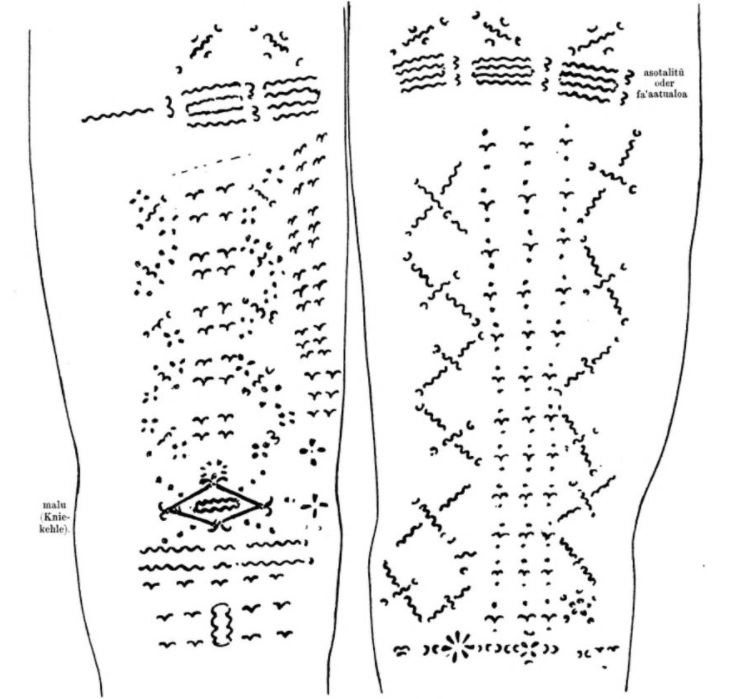
Samoan tatau has two forms. The peʻa is the men’s tattoo, from the waist to the knees, and the malu is the women’s tattoo, from the upper thigh to below the knee. The National Park Service says both show that the wearer is ready for adulthood and ready to serve the community.
The peʻa, also called the malofie, is the male tatau. It covers the body from the waist to the knees in dense geometric patterns of heavy black lines, and SAPIENS describes it as running from mid-torso to the knees. The National Park Service says each section of the design carries a meaning tied to the wearer’s character, family, and culture.
A man who completes the peʻa is called a sogaʻimiti and is respected for his courage. A man who starts but does not finish, because of the pain or, more rarely, because he cannot pay the tattooist, is called a peʻa mutu, which the National Park Service describes as a mark of shame. Untattooed men are known colloquially as telefua or telenoa, meaning “naked.”
The malu is the female tatau, applied from the upper thigh to just below the knee. It is lighter and more open than the peʻa. The word malu means to be protected and sheltered, and The Koko Sāmoa connects it to a woman’s role as a source of protection within her ʻaiga (extended family). Because of where it sits, the malu is rarely seen, though women traditionally showed it during the siva dance.
The Tufuga Tā Tatau and the ʻAu Tools
The master tattooist is the tufuga tā tatau, which The Koko Sāmoa calls one of the most respected figures in traditional Samoan society. The Utah Museum of Fine Arts, which hosted the traveling exhibition Tatau: Marks of Polynesia, describes the ʻau as sacred handmade tools and gives special attention to the influential Suluʻape family of masters.
The role passes through families. The National Park Service says that traditionally only descendants of a tattooist could continue the practice, with fathers passing the skill to their children. The Koko Sāmoa names two hereditary clans, the Sa Suʻa family of Savaiʻi and the Sa Tulouʻena family of Upolu.
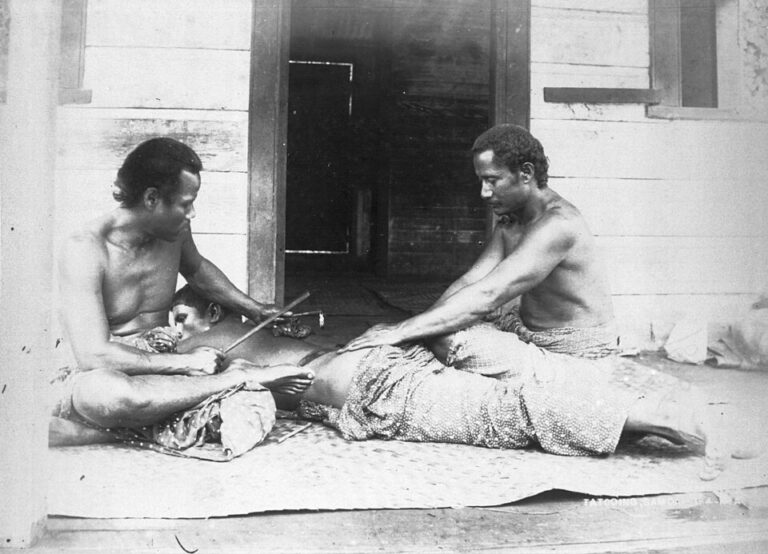
The tools were combs of sharpened bone or boar tusk with serrated teeth like needles, fixed to a piece of turtle shell on a wooden handle, and several comb widths were made for thin and thick lines. Pigment came from candlenut, called lama: the nuts were burned, a coconut shell collected the soot, and the soot was mixed with sugar water. Assistants stretch the skin and wipe away blood, and women sing to help the person being tattooed through the pain. The National Park Service says a peʻa takes weeks or even months, because only one section is tattooed at a time.
The Origin Story and How Tatau Survived
In the best known account, tatau reached Samoa with twin sisters, Taema and Tilafaiga, who swam from Fiji with a basket of tattooing tools. They sang a chant saying only women should be tattooed, but the words reversed on the way, so by the time they arrived the chant said only men should receive it. The National Park Service version adds that no one wanted the women’s art at first, until a chief offered himself for the ordeal.
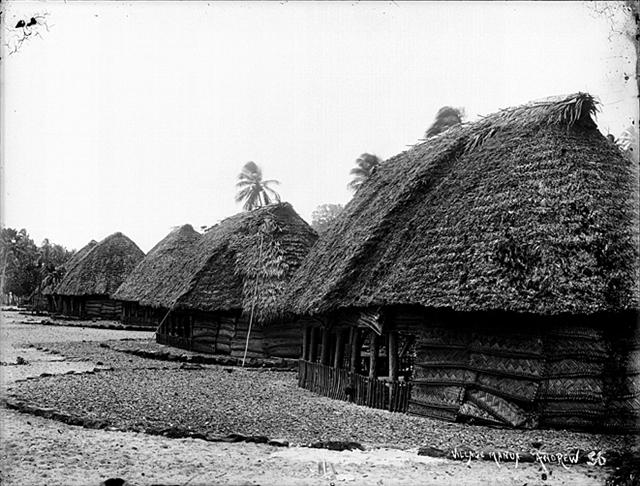
Missionaries arrived in the 18th and 19th centuries and largely wiped out tattooing elsewhere in the South Pacific, but they failed in Samoa, SAPIENS reports. The London Missionary Society, which reached Savaiʻi in 1830, banned tatau in some areas. Anthropologist Sébastien Galliot told SAPIENS that Samoa’s decentralized system of chieftainship helped: some villages converted, others carried on.
When chiefs in eastern Samoa banned tatau in the 1860s, young men traveled west to be tattooed, and they were allowed home by the 1890s if they paid a fine. Catholic missionaries, who arrived in 1845, received permission from Rome to allow tattooing among converts on the grounds that it was not religious. Galliot later found records linking a local shrine to Taema and Tilafaiga, a religious link the missionaries had missed. In modern Samoa, a pastor often opens the process by blessing the place where the tattooing will happen.
What Samoan Tatau Motifs Mean
Samoan tatau motifs carry meaning tied to identity, genealogy, and spirit, and the National Park Service says the designs represent manufactured objects and images from the natural environment. The readings below come from The Koko Sāmoa’s guide, and other sources may read individual motifs differently.
| Motif | Meaning given by The Koko Sāmoa |
|---|---|
| Shark teeth | Protection, guidance, ferocity |
| Spearheads | Warrior spirit, courage, defending family |
| Ocean patterns | The sea as life, travel, ancestry |
| Symmetry and flow | Balance between person and community |
The same guide says the shark is sacred and tied to the god Tagaloa, and that for diaspora Samoans the ocean patterns can also mark the distance they have crossed. It adds that the tufuga draws on the recipient’s family history, village ties, and personal story, so each tatau is unique even though the overall structure of the peʻa and malu stays the same.
Rank, Status, and Who Receives Tatau
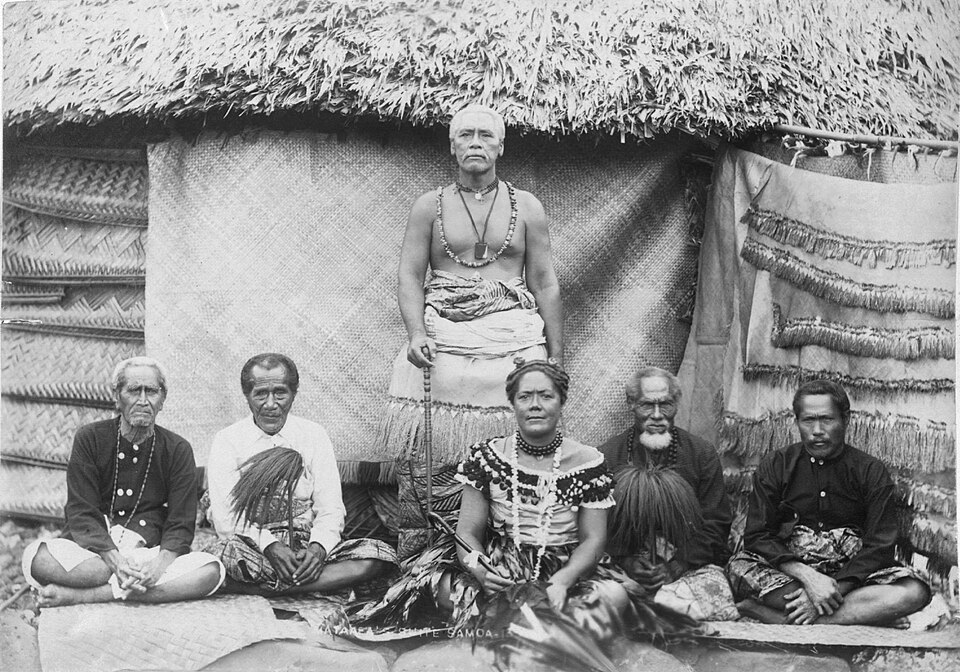
In Samoa, tatau has long been bound up with rank and title, and it marks who can take on adult duties. The National Park Service says hand tattooing was defined by rank and title, with chiefs and their assistants descending from notable families, and that tattooing ceremonies for young chiefs, usually held at the onset of puberty, were elaborate affairs and a key step in their rise to leadership.
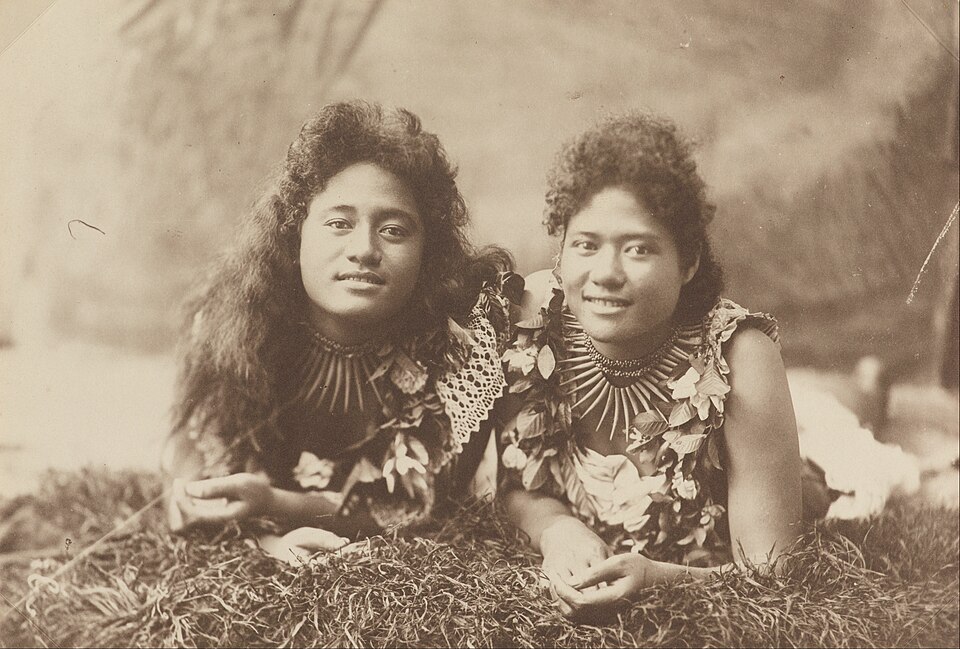
For men, SAPIENS says the peʻa grants adult status and the right to perform certain duties for the village chief. Samoan tattoo artist Siʻi Liufau told the magazine, “You’re not respected without your tatau.” The ritual is expensive, and many people now save until midlife to afford it.
The malu also brings privileges. Tattooed women can serve ceremonial drinks or collect gifts at a funeral, according to SAPIENS, and some women now receive the malu to mark events such as a university graduation or a job promotion.
Tatau in the Diaspora Today
Samoans have migrated mainly to the United States, New Zealand, and Australia, and SAPIENS says people of Samoan ancestry now use tatau to connect with their roots and to identify as Samoan rather than as Māori or Tongan. Liufau grew up in Southern California and discovered tatau in his 20s, and it brought him back to Samoan traditions and language as he trained to perform the ritual.
Tatau masters now travel to serve diaspora communities in New Zealand, Australia, and the United States, The Koko Sāmoa says, and young Samoans are receiving the peʻa and malu in growing numbers at home and abroad. SAPIENS adds that masters have helped revive lost tattoo practices on other Pacific islands. The Utah Museum of Fine Arts names Tonga, Tahiti, New Zealand, Hawaiʻi, and the Cook Islands among the neighbors that have drawn on tatau to preserve their own traditions, which are covered in our guide to Polynesian tattoo meaning.
Can Non-Samoans Get a Samoan Tattoo?
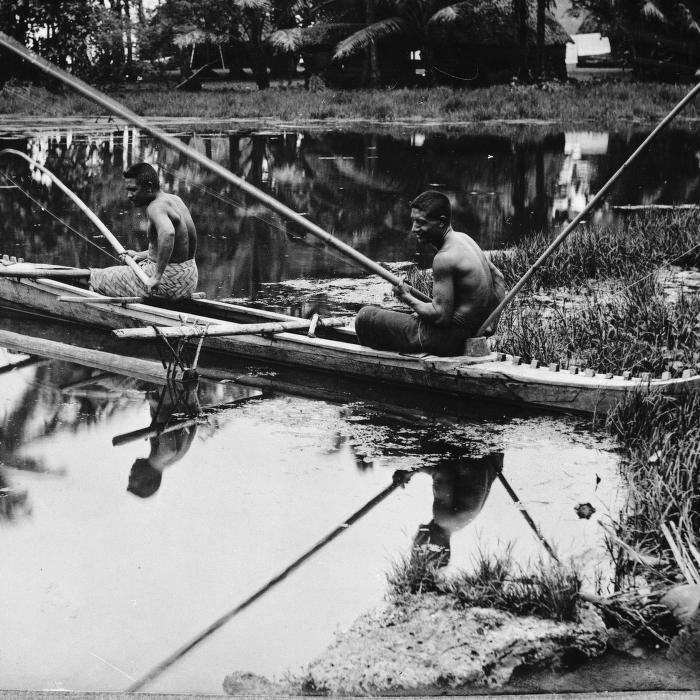
Whether a non-Samoan can get a Samoan tattoo depends on the source and on the design, and the sources do not agree on one answer. The National Park Service lesson plan says Samoan designs are a mark of pride to be worn only by Samoans, and that displaying them without cultural heritage is an act of disrespect. SAPIENS reports that tatau masters have worked on clients both Samoan and non-Samoan.
IslandTAT, a Polynesian tattoo studio in San Diego, treats the full peʻa and malu as closed marks it will not apply outside Samoan cultural context. Its view is that Samoan-style work can honor the geometric density, symmetry, and bold black work without copying the ritual marks. The Koko Sāmoa draws a similar line for clothing: a printed design can carry the visual language, but it is not the tatau and does not carry its standing.
FAQs
What does a Samoan tattoo mean?
A Samoan tattoo, or tatau, marks adulthood, identity, courage, and readiness to serve family and community. The peʻa is the male form and the malu is the female form. The Koko Sāmoa says the tufuga shapes each design around the wearer’s family history, village ties, and personal story.
What is the difference between the peʻa and the malu?
The peʻa is the men’s tatau, from the waist to the knees, in dense black patterns, and a man who completes it is called a sogaʻimiti. The malu is the women’s tatau, from the upper thigh to below the knee, and it is lighter and more open. Malu means to be protected and sheltered.
Can non-Samoans get Samoan tattoos?
Sources differ. The National Park Service says Samoan designs are only to be worn by Samoans, while SAPIENS reports that tatau masters have tattooed non-Samoan clients. IslandTAT will not apply the full peʻa or malu to outsiders, but it offers Samoan-style work that honors the density and symmetry without copying those ritual marks.
Why do so many Samoans have tattoos?
SAPIENS links tatau’s survival to what it gives the wearer: status, proof of strength and courage, adult privileges, and improved desirability to potential partners. Samoans were not willing to give these up for the missionaries’ religion. Abroad, tatau also helps people of Samoan ancestry stay connected to their islands.
What are the five main Polynesian tattoo styles?
IslandTAT names five main styles: Samoan (tatau), Māori (tā moko), Marquesan, Hawaiian (kākau), and Tahitian. It calls Samoan tatau the deepest unbroken Polynesian tattoo lineage still practiced today.
If Samoan patterns speak to you and you want to wear the look rather than the ritual mark, browse the Samoan tattoo designs at Kamicrew.
Kamicrew Best Seller
Fiji Polo Shirt Fiji Coat Of Arms With Polynesian Tattoo Gold
$31.49+
$34.99
(10% off)
Tonga Polo Shirt Tonga Coat Of Arms With Polynesian Tattoo Gold
$31.49+
$34.99
(10% off)
Samoa Polo Shirt Samoa Coat Of Arms With Polynesian Tattoo Reggae
$31.49+
$34.99
(10% off)
Samoa Polo Shirt Samoa Coat Of Arms With Polynesian Tattoo Red BN22
$31.49+
$34.99
(10% off)
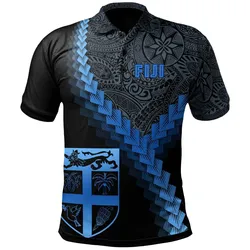
Fiji Polo Shirt Fiji Coat Of Arms With Polynesian Tattoo Blue
$31.49+
$34.99
(10% off)
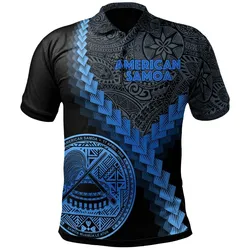
American Samoa Polo Shirt American Samoa Coat Of Arms With Polynesian Tattoo Blue
$31.49+
$34.99
(10% off)
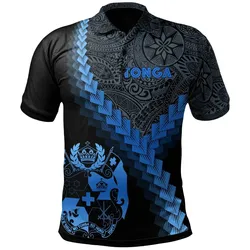
Tonga Polo Shirt Tonga Coat Of Arms With Polynesian Tattoo Blue BN22
$31.49+
$34.99
(10% off)
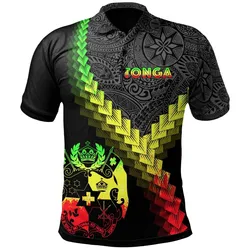
Tonga Polo Shirt Tonga Coat Of Arms With Polynesian Tattoo Reggae
$31.49+
$34.99
(10% off)