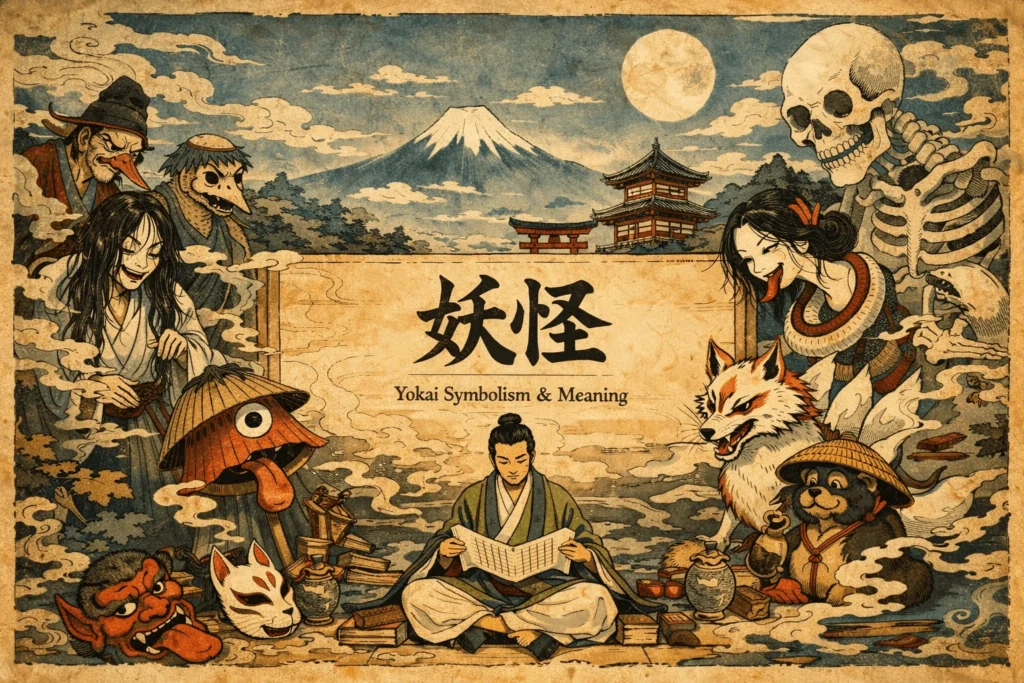
Yokai symbolize humanity’s oldest instinct: the need to name what cannot be explained. In Japanese culture, these supernatural beings represent fear, nature, moral consequence, and the invisible forces that shape everyday life. The word yokai (妖怪) combines characters meaning “bewitching” and “mysterious wonder,” and that tension between attraction and dread defines everything these creatures stand for.
Yokai are not simply monsters. They are answers. When a river swallowed a traveler, when illness struck without warning, when a forest felt suddenly wrong, yokai gave those experiences a face and a name.
This guide breaks down what yokai symbolize, what specific creatures represent, and why their meaning has lasted over a thousand years.
The Roots of Yokai Symbolism: Shinto, Nature, and the Unknown
Japanese Shinto belief holds that kami, or spirits, inhabit all natural things. Mountains, rivers, trees, and unusual rock formations all carry spiritual presence. This animist worldview created the conditions for yokai to exist.
Shinto distinguishes between two types of spirits. Nigi-mitama are peaceful spirits that bring good fortune. Ara-mitama are violent spirits that bring illness, disaster, and misfortune. Yokai emerge from this second category: they are the supernatural explanation for everything that could harm, confuse, or overwhelm a person.
By giving these forces a name and a shape, communities could respond to them. Rituals, prayers, and offerings were performed to convert ara-mitama into nigi-mitama. Naming the threat was the first step toward managing it.
Yokai, at their root, symbolize the human need to make the invisible visible.
What Specific Yokai Symbolize
Each yokai carries a symbolic meaning tied to its origin, environment, and behavior. Here are the most culturally significant.
Kitsune: Intelligence, Deception, and Spiritual Power
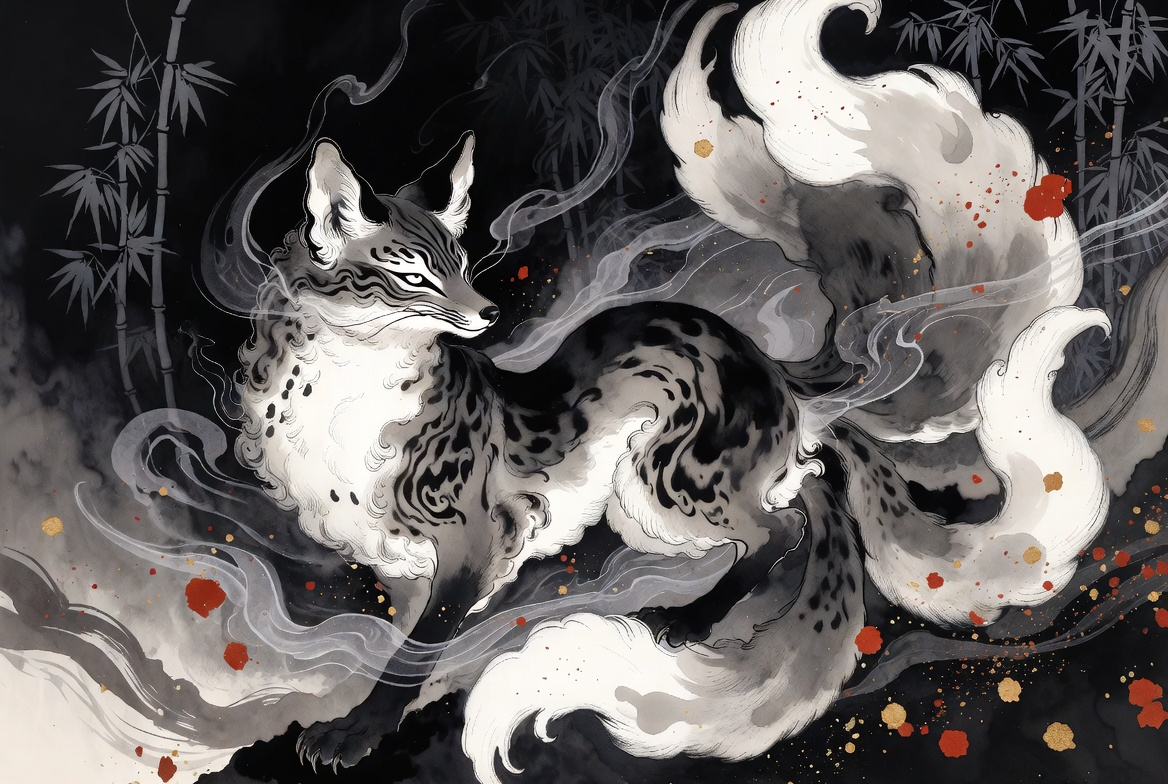
Kitsune, the shapeshifting fox, symbolizes intelligence operating at the edge of human understanding. In Shinto tradition, kitsune serve as messengers of Inari, the god of rice, fertility, and prosperity. A nine-tailed kitsune represents immense accumulated spiritual power. KamiCrew’s piece on Tamamono-mae, the legendary nine-tailed fox, explores this mythology in depth.
The kitsune carries a dual nature. Benevolent foxes guide and protect. Malevolent foxes deceive, possess humans, and sow confusion. This duality makes the kitsune a symbol of the unpredictability of intelligence itself: the same mind that creates can manipulate.
Oni: Punishment, Moral Consequence, and the Shadow Self
Oni are towering demons with red or blue skin, iron clubs, and horns. They serve as enforcers of Buddhist hell under the god Enma, punishing the wicked after death. Oni symbolize the moral cost of wrongdoing made physical.
But oni also represent the parts of human nature that civilization suppresses. Some become oni not through supernatural origin, but through accumulated anger and resentment. The Setsubun festival tradition of scattering beans to drive out oni reflects this: the ritual isn’t just about external demons. It’s about expelling the darkness within.
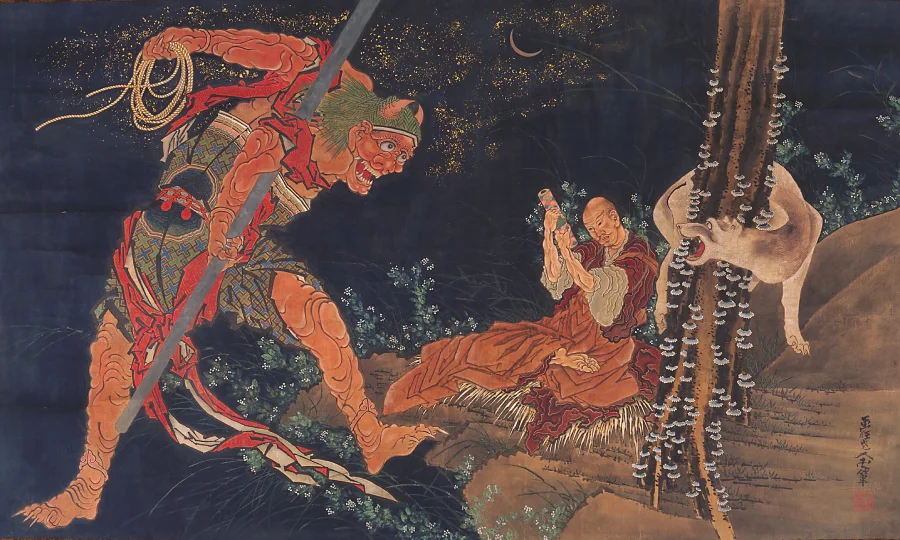
Kappa: Respect for Water and the Danger of Complacency
Kappa are river creatures that drag careless humans beneath the surface. They symbolize the real danger that rivers and open water posed to communities in preindustrial Japan, where drowning accidents were common and unpredictable.
Kappa gave those accidents a cause. Believing in kappa also functioned as a practical warning system: children who feared the river creature were children who stayed away from dangerous currents. Fear, here, is a tool of survival.
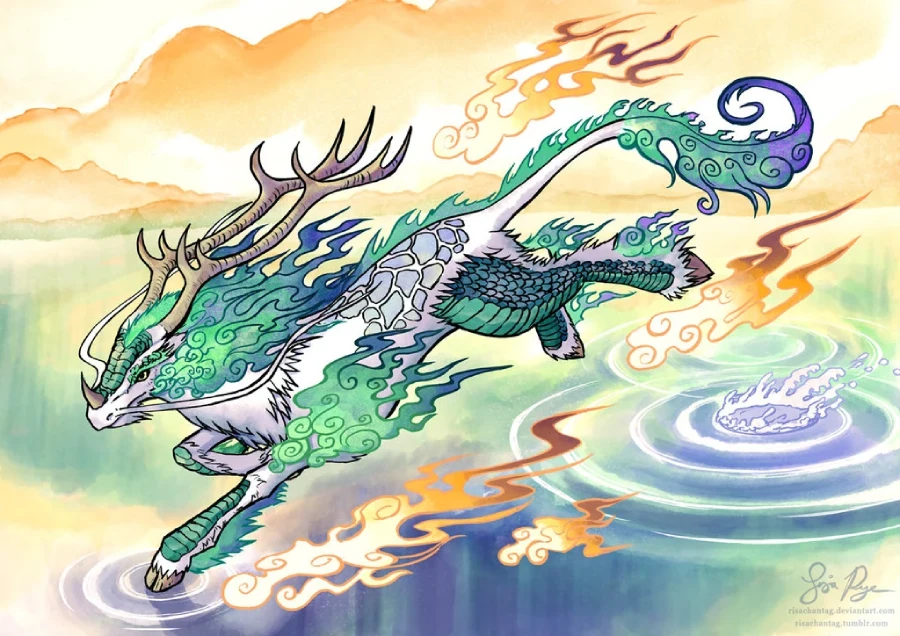
Kirin: Purity, Justice, and the Arrival of the Virtuous
Kirin stands apart from most yokai. Where many supernatural creatures embody danger or moral complexity, kirin symbolize justice, purity, and good omens. Kirin appear only in times of peace, or to herald the arrival of a wise ruler.
The creature walks so gently that it leaves no trace in soft earth and crushes no blades of grass. This detail isn’t decorative. It signals that true virtue leaves the world undamaged.
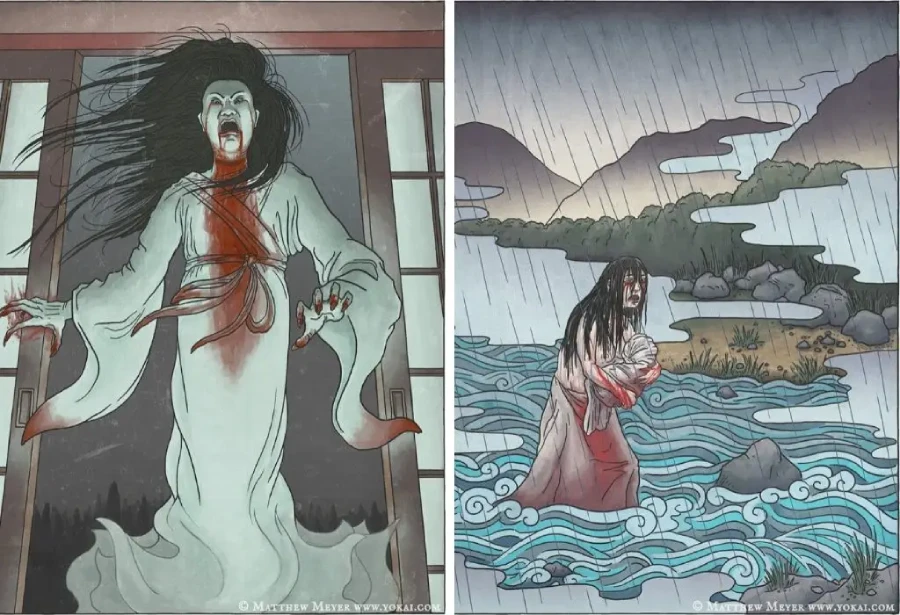
Yurei: Grief, Unfinished Business, and the Cost of Injustice
Yurei are the ghosts of people who died in states of intense emotion: grief, rage, jealousy, or sorrow. They cannot move on because something in the living world remains unresolved. Yurei symbolize the weight of emotional debt.
Most yurei stories involve injustice left unaddressed. A wronged woman. A murdered innocent. A broken promise. The yurei returns not merely to haunt, but to demand acknowledgment. They represent the idea that unresolved pain doesn’t disappear. It transforms.
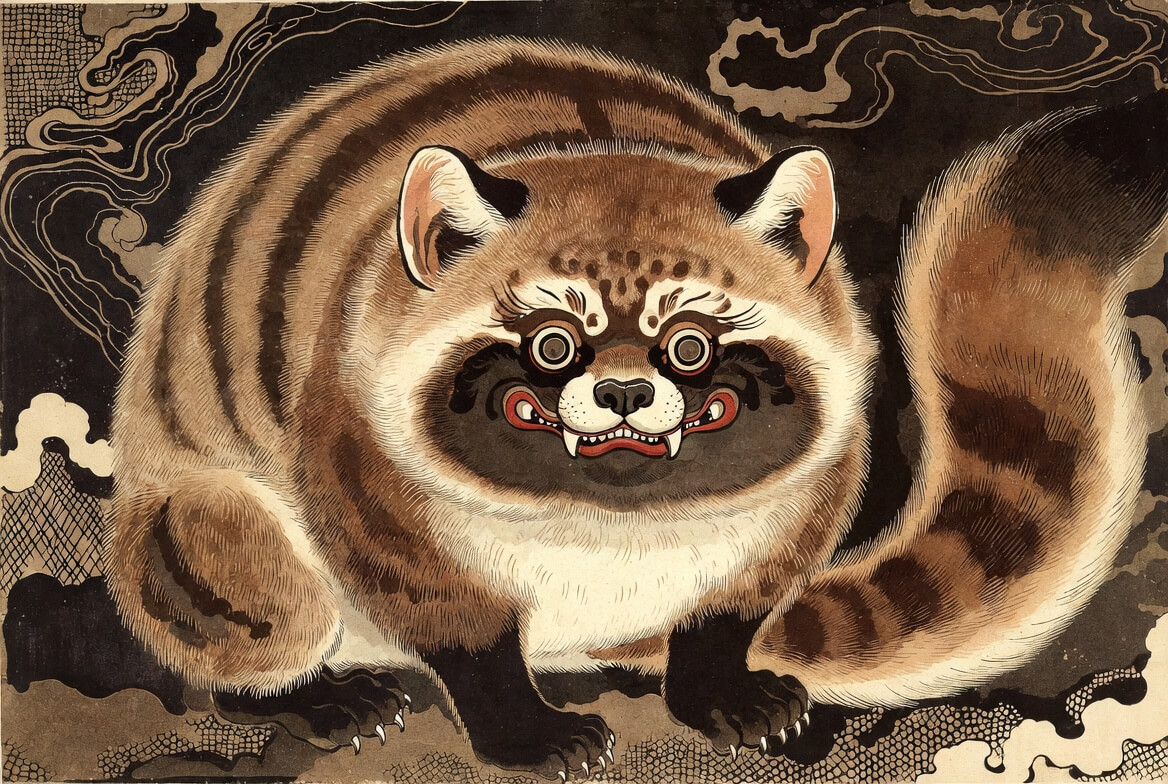
Tanuki: Luck, Abundance, and the Wisdom of Lightness
The tanuki, Japan’s raccoon dog, is a trickster and shapeshifter. Unlike the kitsune, whose trickery carries menace, the tanuki is fundamentally good-natured. Tanuki symbolize luck, abundance, and the value of playfulness.
Tanuki statues stand outside restaurants and sake shops across Japan, bellies forward, sake flask in hand. The symbolism is direct: life should be enjoyed. Good fortune follows those who don’t grip it too tightly.
Tengu: Pride, Discipline, and the Mountain’s Warning
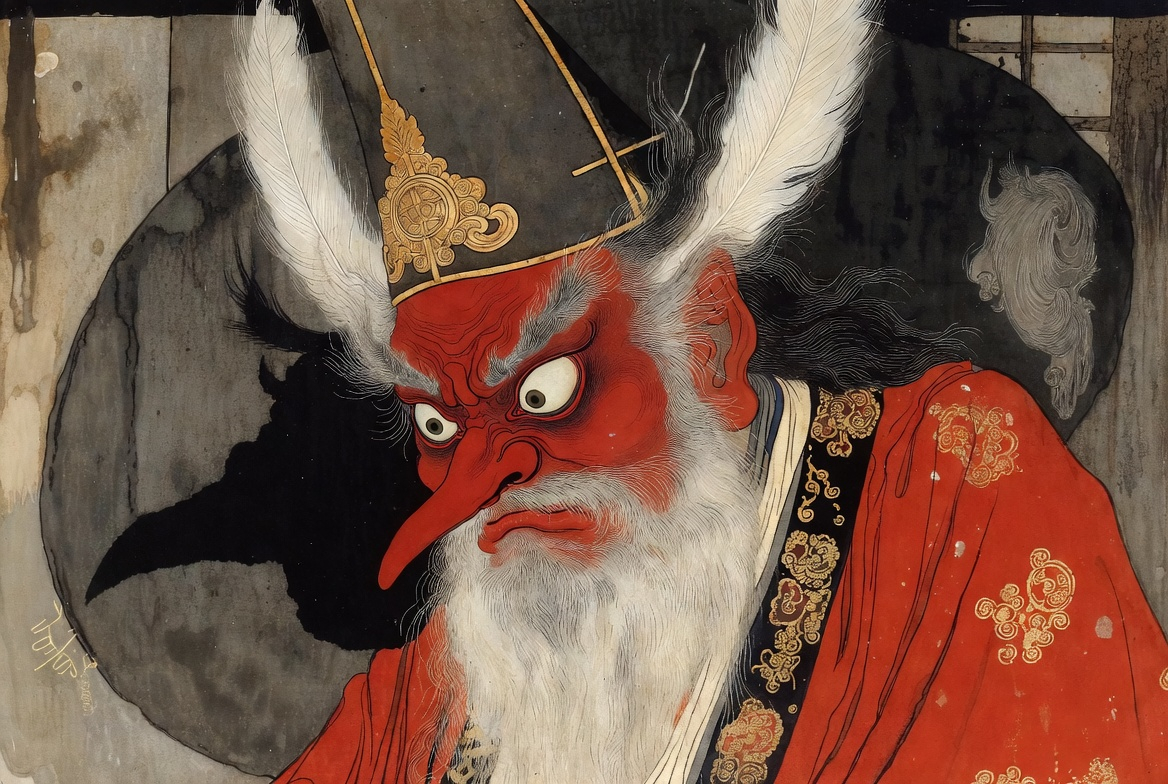
Tengu are bird-like mountain spirits, often depicted with long noses and red faces. They symbolize the danger of pride and the discipline required for true mastery. In some traditions, tengu are fallen Buddhist monks whose arrogance corrupted their practice.
Tengu also appear as martial arts masters in folklore, occasionally training human heroes. The mountain, their domain, demands both respect and preparation from anyone who enters.
Yokai as Moral Instructors
Yokai teach. This is one of their core symbolic functions.
Some punish specific transgressions. The Gashadokuro, a giant skeleton formed from the bones of warriors who died without proper burial, symbolizes the consequence of forgetting the dead. The Mokumokuren, eyes that appear through damaged paper screens, punishes homeowners who neglect their property.
Others protect. The Zashiki Warashi, a child spirit that inhabits old homes, brings fortune to the household it chooses. Its departure signals disaster. Communities that honor their traditions keep what they have. Communities that don’t lose even that.
Yokai also cluster around liminal spaces: bridges, crossroads, the edge of water, the hour between 2am and 3am. These are thresholds where the rules of the ordinary world grow thin. The symbolism is consistent: danger lives at the edge of the known. Proceed with awareness.
From Ancient Folklore to Modern Streetwear
Yokai symbolism has never stopped evolving. During the Edo period (1603–1868), artist Toriyama Sekien compiled illustrated encyclopedias of yokai, standardizing their appearance and codifying their cultural meaning. His work transformed oral tradition into visual language.
After World War II, manga artist Shigeru Mizuki revived yokai through his series GeGeGe no Kitaro, introducing millions of Japanese readers to creatures that urbanization had pushed to the margins of daily life. Mizuki understood that yokai don’t lose their symbolic power when the forest is paved over. They find new homes.
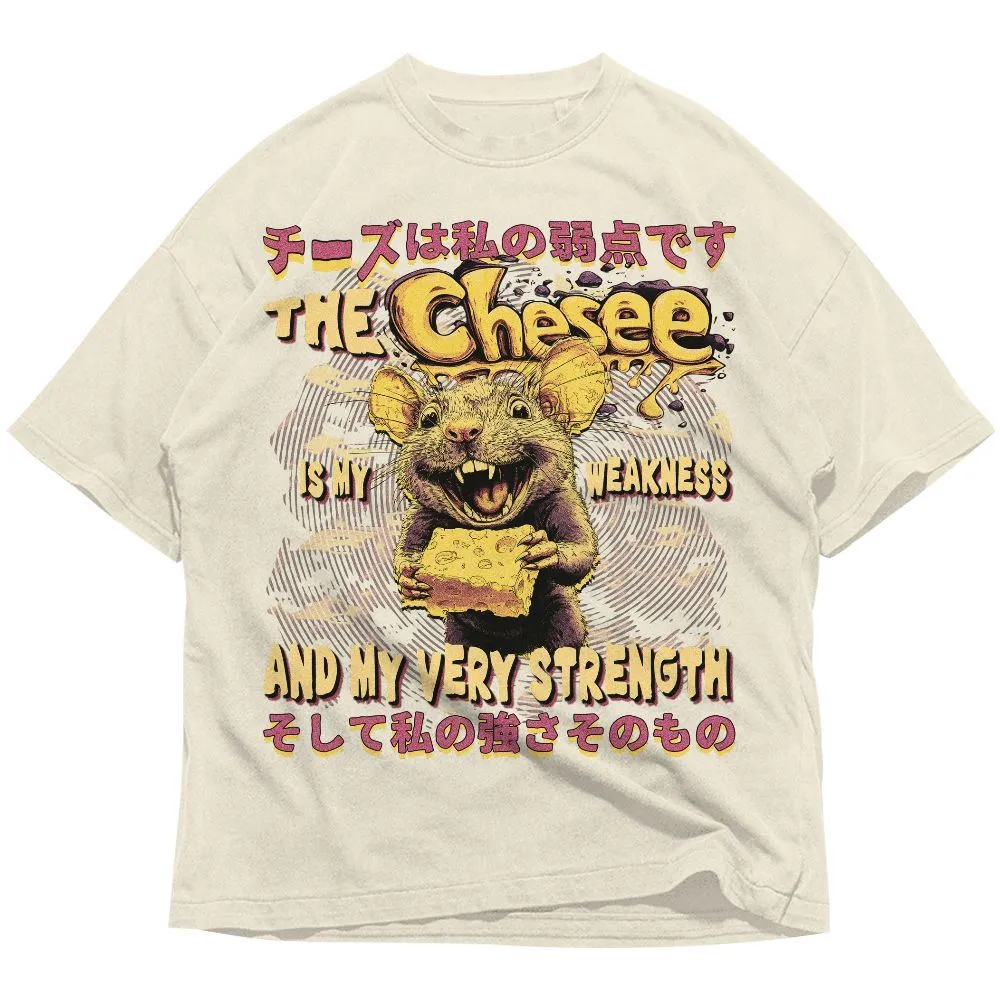
Today, yokai appear in anime, video games, films, and fashion. Wearing a kitsune or an oni is not simply putting on a graphic. It is choosing which symbol to carry. The kitsune wearer signals something about intelligence and duality. The oni wearer signals something about power and transformation. The kirin wearer signals something about the kind of virtue they aspire to.
KamiCrew’s yokai designs draw on exactly this tradition. The symbolism built over a thousand years of Japanese folklore lives in the artwork. That is the difference between a graphic tee and wearable mythology.
Frequently Asked Questions
What is the difference between yokai and yurei?
Yokai is a broad category covering all supernatural beings in Japanese folklore: monsters, nature spirits, transformed animals, and possessed objects. Yurei are specifically the ghosts of deceased humans, defined by unfinished emotional business that keeps them bound to the living world. All yurei are yokai, but not all yokai are yurei.
Are yokai good or evil?
Most yokai are neither purely good nor purely evil. Their behavior reflects the circumstances of the encounter and the conduct of the human involved. A tanuki may bring luck to someone who treats it with respect and cause chaos for someone who shows contempt. The moral framework of yokai is relational, not fixed.
Why do so many yokai appear near water?
Rivers and open water held immense symbolic weight in preindustrial Japan. They provided irrigation and transportation but also drowned people, flooded villages, and spread disease. Yokai like kappa and Umibouzu give form to that danger. They also reflect Shinto’s view that water contains powerful spiritual forces that demand ongoing respect.
Conclusion
Yokai symbolize the full range of what Japanese culture has tried to understand: the danger of nature, the weight of moral consequence, the unpredictability of intelligence, the persistence of grief, and the arrival of genuine virtue. They are not relics of the past. They are a living vocabulary for forces that still shape human experience.
The next time you see a kitsune on a hoodie or an oni on a graphic tee, you’re looking at a thousand years of meaning compressed into a single image.
Read more on the KamiCrew blog: Oni, Kirin, Yurei, Umibouzu, and Tamamono-mae.
References
[1] Wikipedia. (2026). “Yōkai.” Retrieved from en.wikipedia.org/wiki/Yōkai
[2] Your Secret Japan. (2026). “Yokai: Spirits Between the Seen and Unseen.” Retrieved from yoursecretjapan.com/articles/yokai
[3] Yokai.com. (2026). “Introduction to Yōkai.” Retrieved from yokai.com/introduction/
[4] Japan Objects. (2026). “What is a Yokai? 30 Mysterious Japanese Demons.” Retrieved from japanobjects.com/features/yokai
Kamicrew Best Seller


You May Also Like