虎狼狸
Korouri
Korouri Lore
Origins & Lore
Korouri
Kanji: 虎狼狸
Kana: ころうり
Pronunciation: korouri (also korōri)
TRANSLATION: Tiger Wolf Tanuki (a phonetic play on the Japanese word for cholera)
ALTERNATE NAMES: Kororijū; Korori
ORIGIN: Edo and early Meiji period folklore; codified in an 1877 Nishiki-e Shinbun newspaper article
HABITAT: Houses, towns
DIET: Fear, filth
ABILITIES:
- Plague-bringing — brings cholera into Edo households
- Possession — takes up residence in a home and gives the people inside cholera
- Stealth — moves unseen, like the invisible microbe behind the disease
- Corpse-feeding — feeds on the bodies of cholera victims
WEAKNESSES:
- Exorcism rites and protective charms
- Physical force in one famous legend
- A healthy household, which makes the beast leave
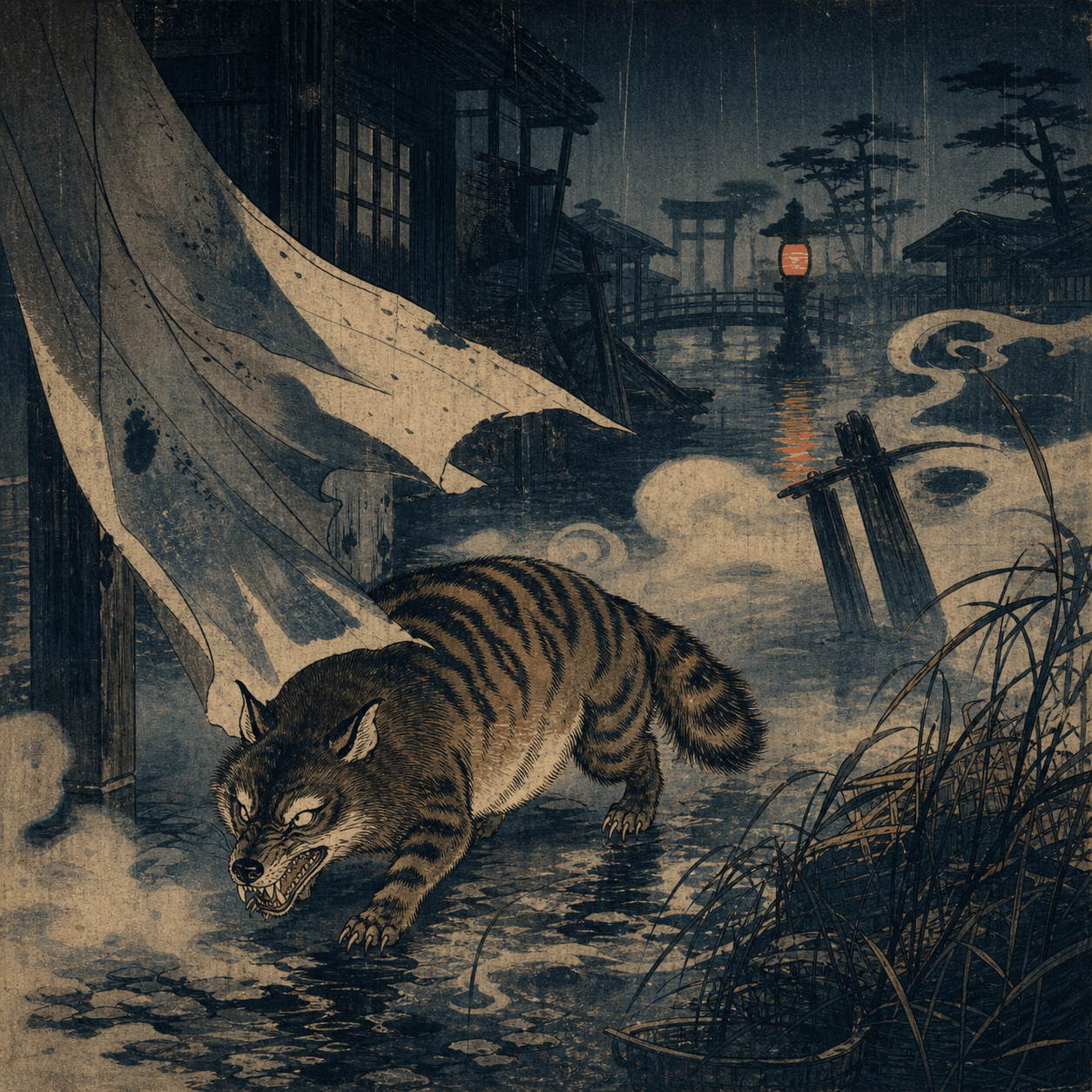
OVERVIEW: Korouri is a chimeric plague yokai blamed for the deadly cholera epidemics of late Edo and early Meiji Japan. The beast appears in homes hit by cholera and in crowded towns.
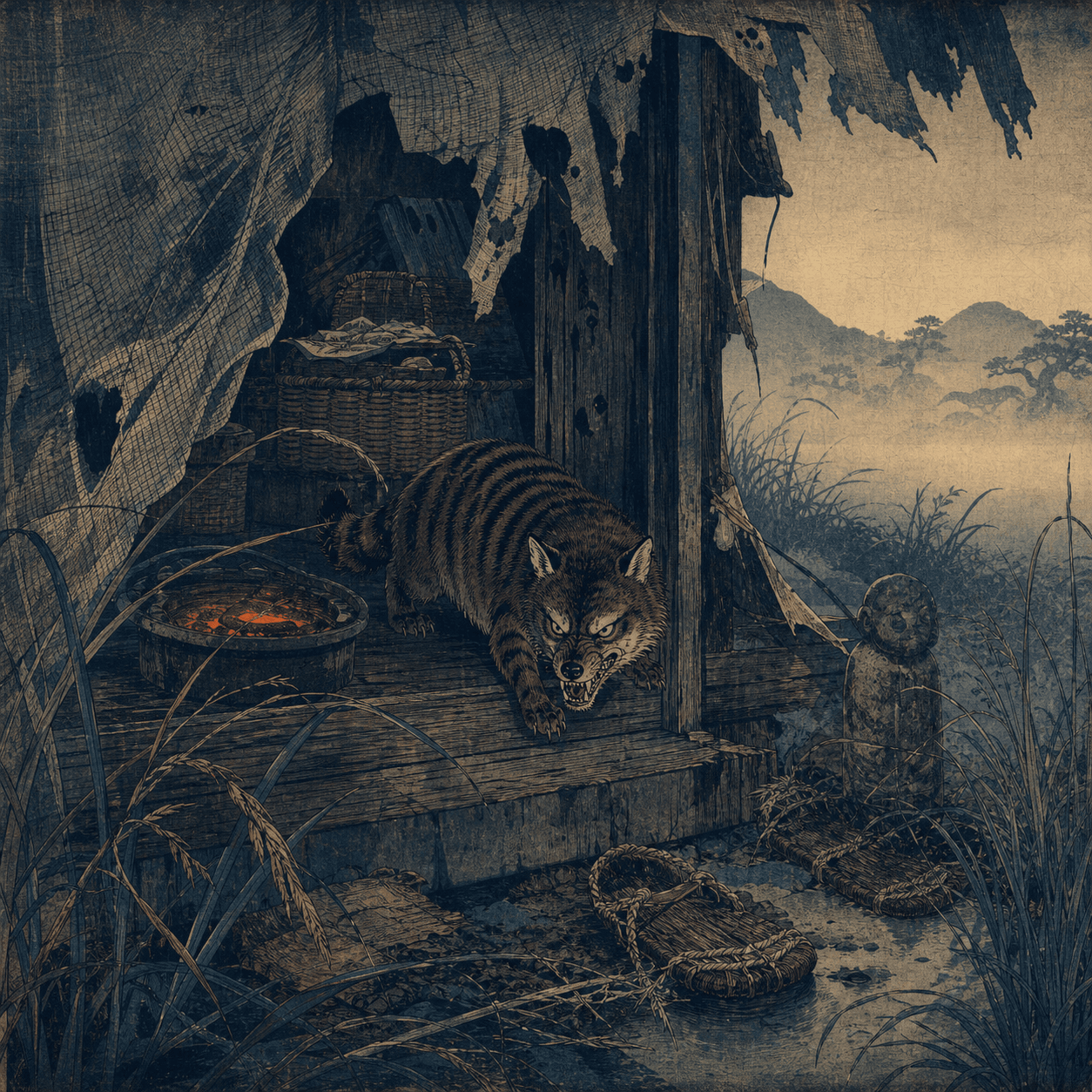
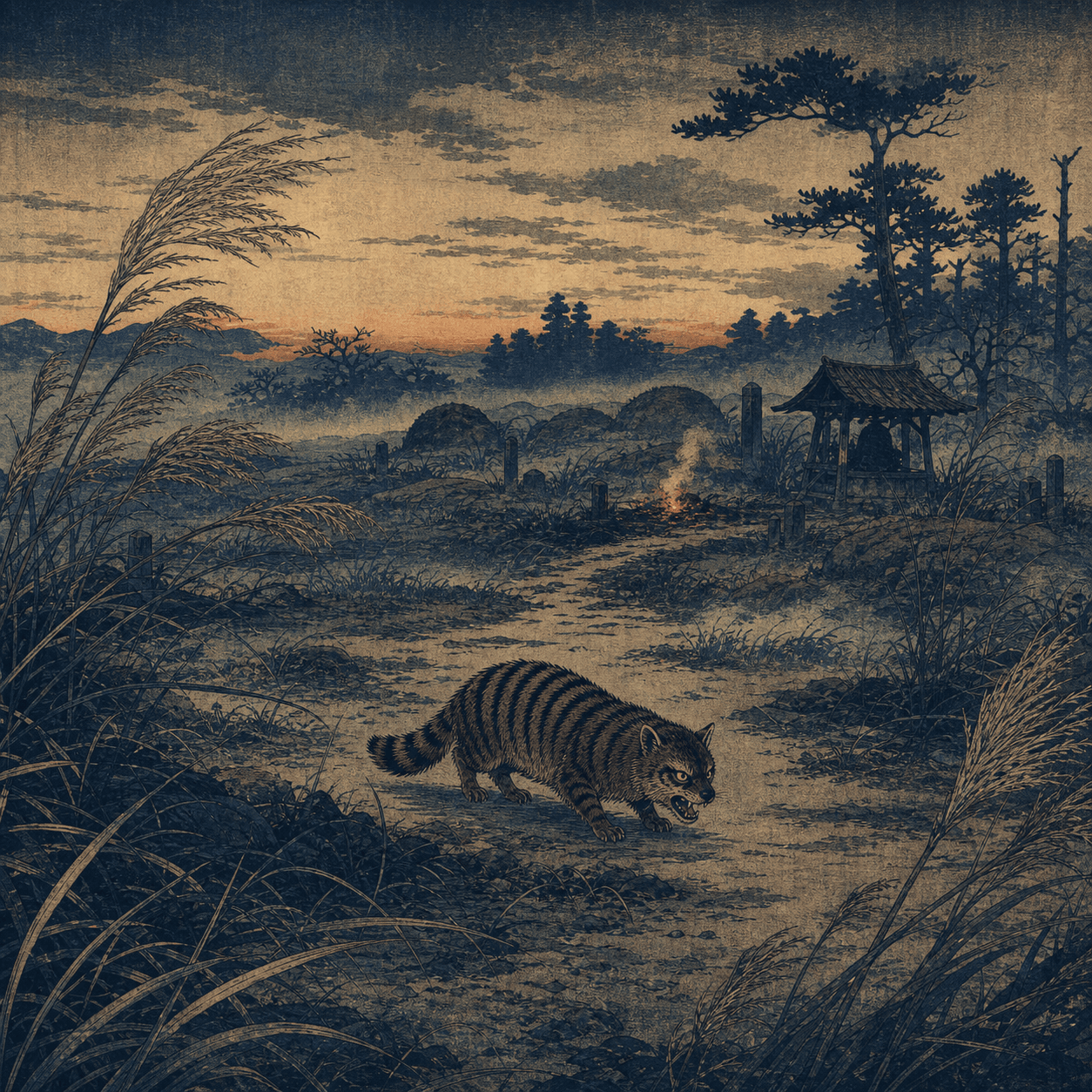
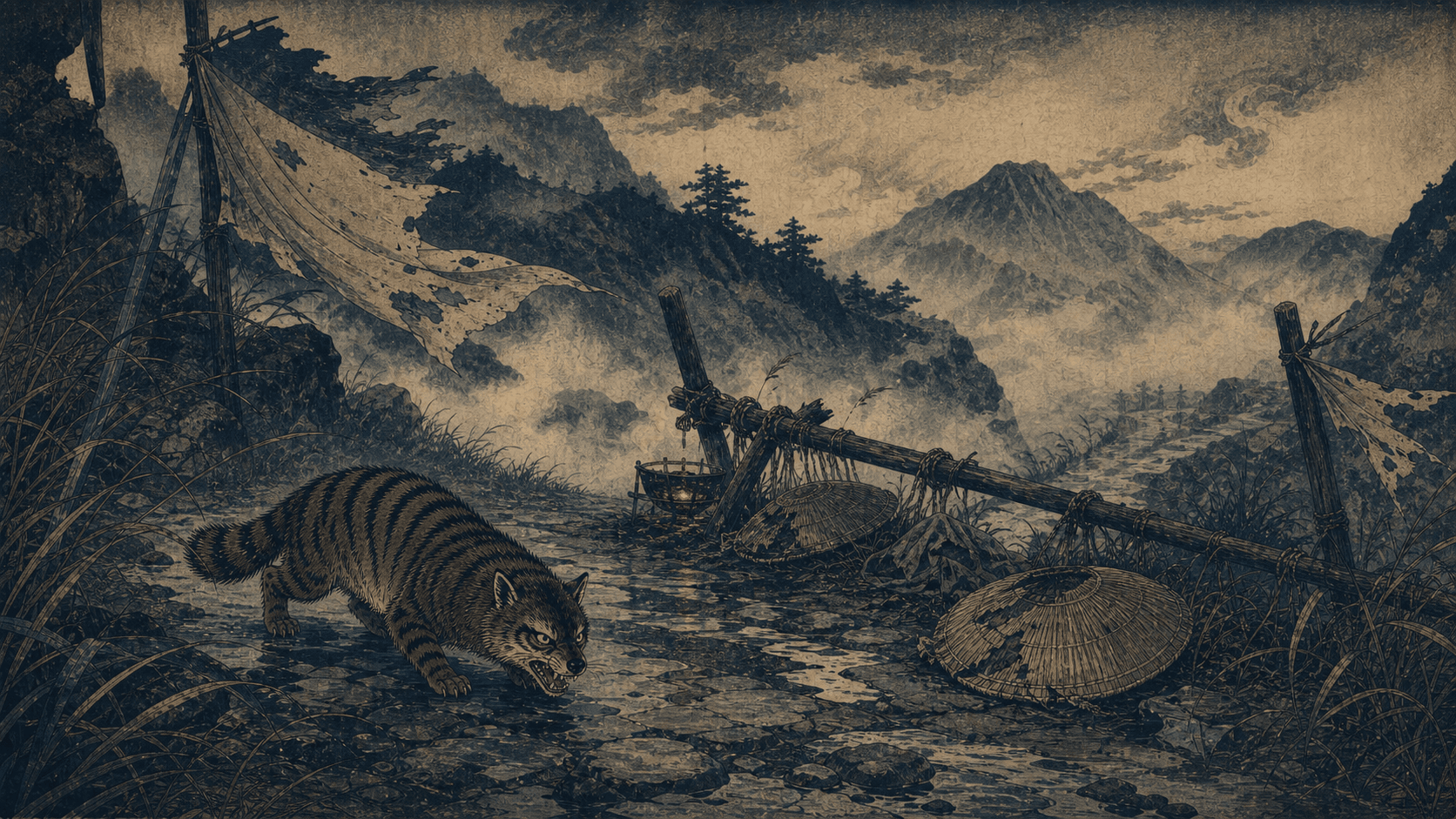
APPEARANCE: Korouri has the general body shape of a tanuki. Its fur has the dark stripes of a tiger. The mouth is the fearsome maw of a wolf. The whole creature is small, about the size of a tanuki or a weasel. Some witnesses said it looked like a weasel moving near sickbeds. The mixed body is a true chimera and reminds viewers of the three kanji in its name.
BEHAVIOR: Korouri enters a house where a person is sick and takes up residence there. The yokai then brings cholera to everyone inside. When the residents get better, the beast leaves the home and looks for a new house. In other reports, korouri feeds on the corpses of those who have died and is even seen coming out of their bodies.
INTERACTIONS: Edo townspeople feared korouri as the bringer of sudden death during the 1858 and 1862 cholera outbreaks. People used charms, prayers, and exorcism rites to ward it off. In one well-known legend from 1862, a samurai who was getting better saw a strange weasel-like beast near his home, attacked it with firewood, and ate it. After that, more families in the same village reported similar sightings near their sick rooms.
OTHER FORMS: The newspaper Nishiki-e Shinbun introduced the beast as Kororijū, meaning "cholera beast," in 1877. A second written form uses the kanji 虎狼痢, which replaces "tanuki" with "diarrhea"; the physician Ogata Kōan used this form on the cover of his cholera handbook Korori Chijun. Some accounts give korouri a weasel-like body instead of the standard tanuki shape. In all forms the beast remains a personification of the fear of cholera, not a real animal.
Special Abilities
Archive of Sightings
Tap any record to view details.