地獄
Jigoku
Jigoku Lore
Origins & Lore
Jigoku
Kanji: 地獄
Kana: じごく
Pronunciation: Jigoku (Jee-goh-koo)
TRANSLATION: Earth Prison; Hell
ALTERNATE NAMES: Naraka; Diyu; Buddhist Hell; The Underworld
ORIGIN: Ancient Japan; Buddhist import from India via China, set down by the monk Genshin in the Ōjōyōshū of 985 CE.
HABITAT: The afterlife, deep beneath the earth.
DIET: None.
ABILITIES:
- Punishes sinners with tortures matched to each sin.
- Brings the dead back to life and ends them again in an endless cycle.
- Changes time, so one day in hell equals thousands of human years.
- Holds souls until their karma clears, then returns them to rebirth.
- Reigns over the dead through Enma-Daiō and the Ten Kings.
WEAKNESSES:
- Prayers and Buddhist memorial services by living relatives.
- Sutras and the nembutsu chant to Amida.
- Jizō Bosatsu, who walks into hell to help trapped souls.
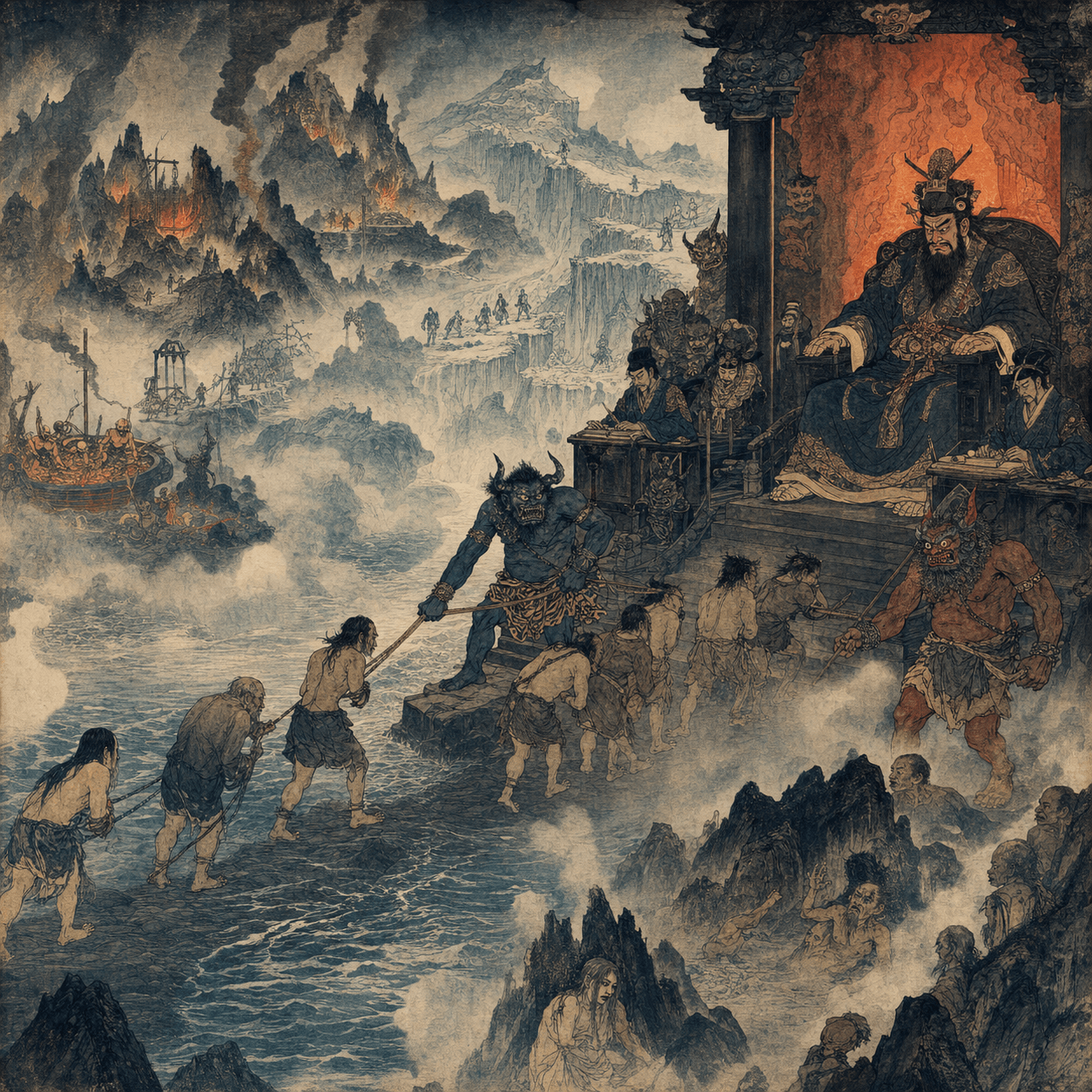
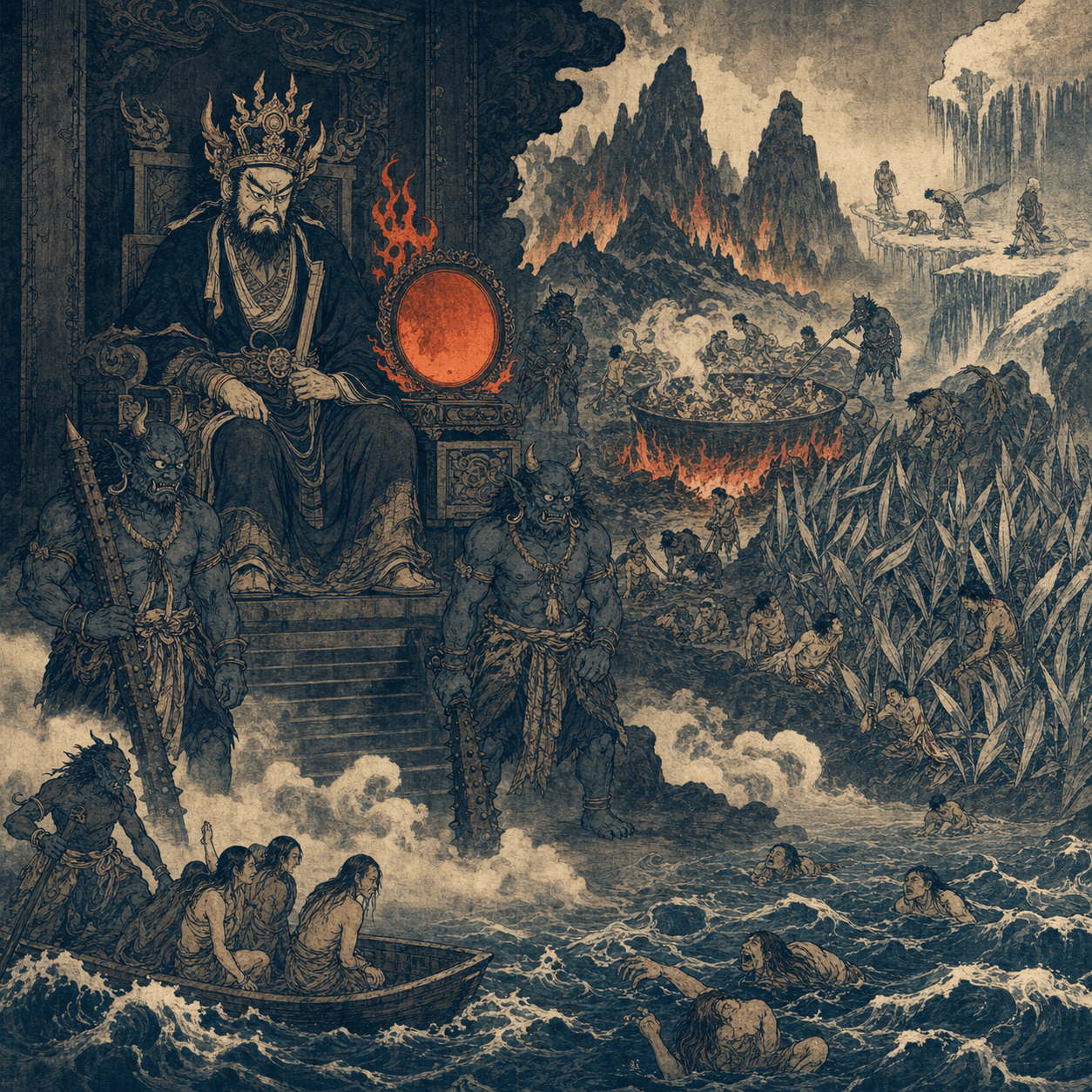
OVERVIEW: Jigoku is the Buddhist hell of Japan, a vast realm of punishment ruled by Enma-Daiō. It exists under the earth and takes the souls who fail to earn rebirth in the higher Buddhist realms.
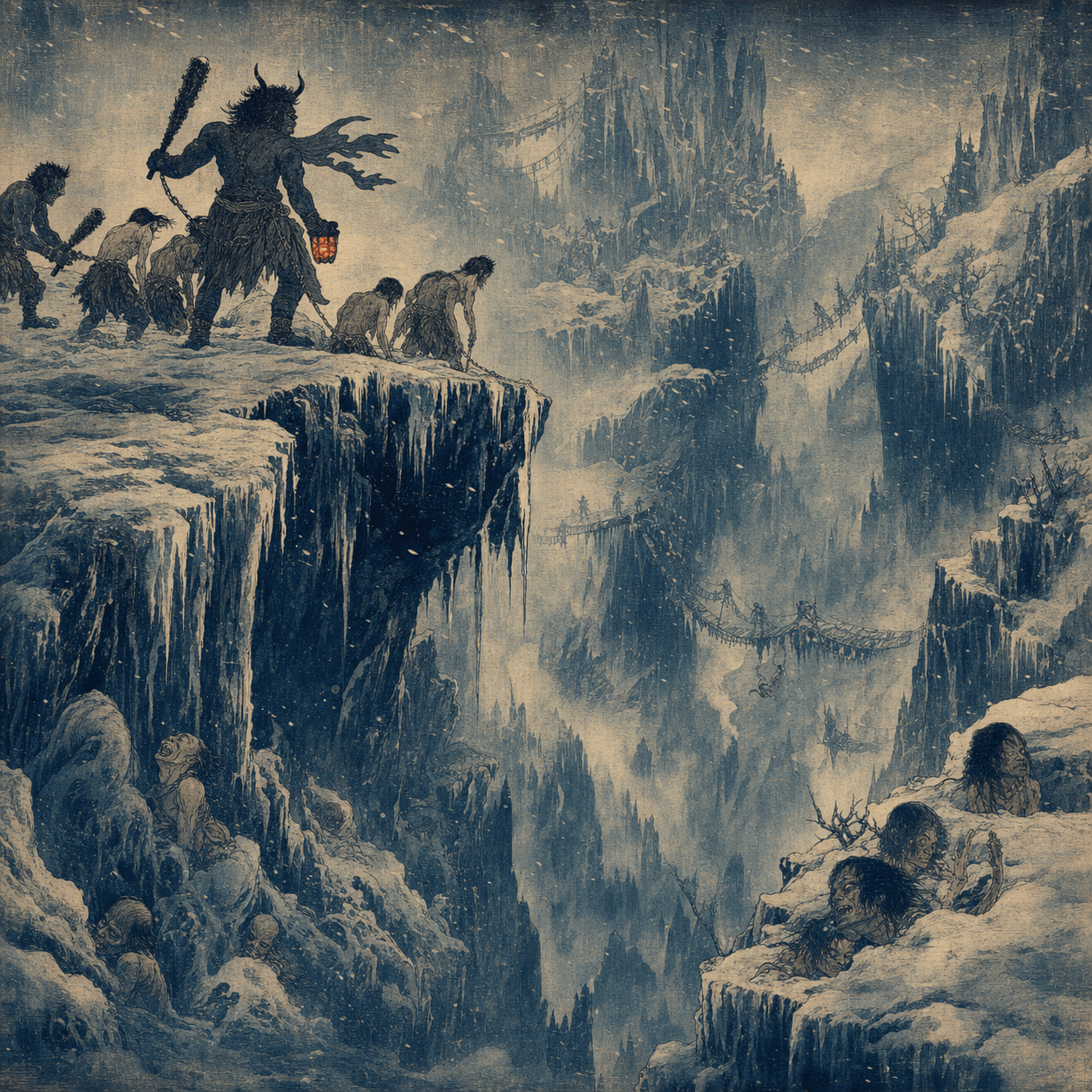
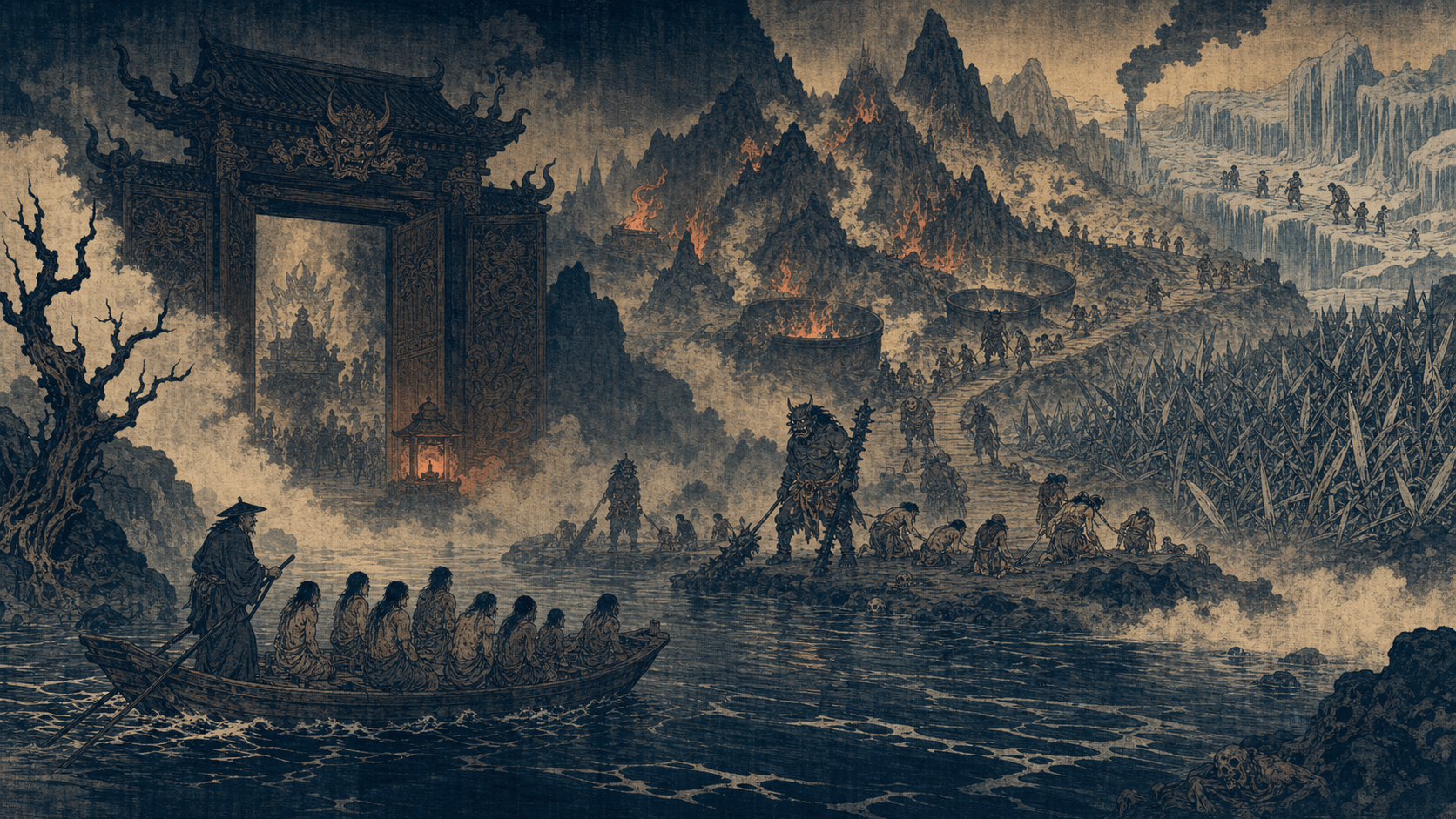
APPEARANCE: Jigoku is not one place but a system of sixteen named hells. Eight of these are hot hells and eight are cold hells, and together they hold over 64,000 smaller sub-realms. The hot hells contain burning ground, iron mountains, boiling pots, and forests with razor-sharp leaves. The cold hells contain frozen voids where the cold attacks the body. Oni walk every level with iron clubs, and the deepest hell, Mugen Jigoku, sits so far down that a falling soul needs 2,000 years to go all the way to the bottom.
BEHAVIOR: Jigoku is not a creature but a cosmic system of karmic justice. It runs on its own rules and shows no malice, only consequence. The oni who staff the realm act as jailers and torturers rather than free agents, and the Ten Kings act as judges. Souls move through trials at 100 days, one year, two years, six years, twelve years, and thirty-two years after death.
INTERACTIONS: Humans go to Jigoku only after they die, and their sins decide which level takes them. Living relatives can help by holding memorial services on the trial dates, since these prayers may reduce or end the sentence. A few legendary monks were said to visit Jigoku and return with warnings for the living. Genshin wrote his Ōjōyōshū in 985 to scare readers away from sin and toward rebirth in the Pure Land of Amida.
OTHER FORMS: Jigoku has roots in Naraka from Indian Buddhism and Diyu from Chinese Buddhism. Mugen Jigoku, the eighth hot hell, is the deepest level and the most famous in Japanese fiction. Related places include Meido, the dim underworld where souls first come, and Sai-no-Kawara, the riverbank where children's souls put stones in piles under the care of Jizō. Jigoku never joined the older Shinto underworld Yomi, and the two remain separate traditions.
Special Abilities
Archive of Sightings
Tap any record to view details.