☠☠☠
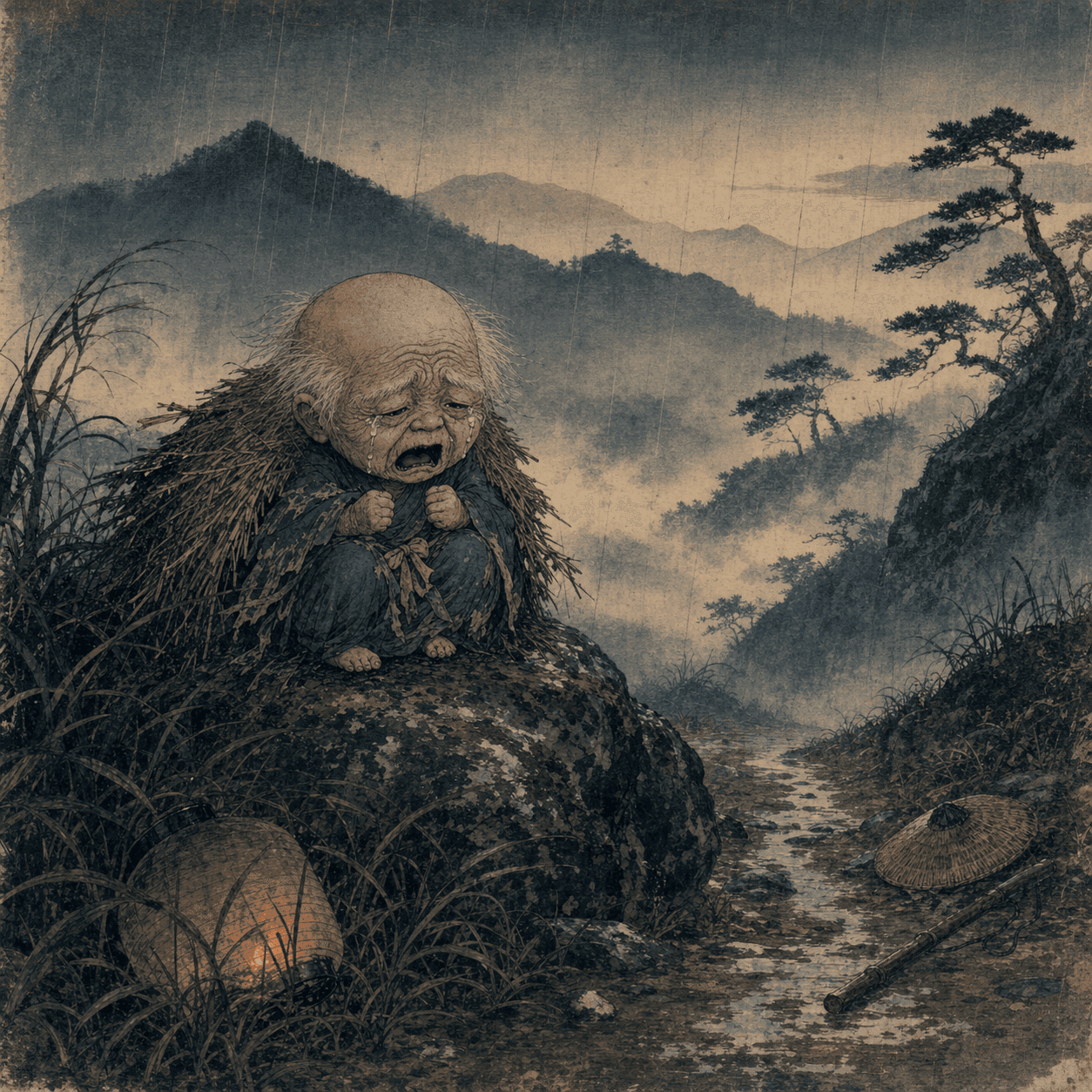
Konaki Jijii
子泣き爺
Konaki Jijii
tag-dangeroustag-mountaintag-baby
Shikoku

The Regional Landscape Print
四国
Sacred paths guarded by spirits and ancient temple guardians
Shikoku is the smallest of Japan's four main islands, renowned for its spiritual heritage and natural beauty. It is most famous for the 88 Temple Pilgrimage, a 1,200-kilometer loop that encircles the island. Its isolation has helped preserve a slower, more traditional pace of life.
Traditionally isolated from the mainland, Shikoku developed a unique identity. It is the birthplace of the monk Kukai (Kobo Daishi), founder of Shingon Buddhism. In the 19th century, the Tosa domain (modern Kochi) produced key revolutionary figures like Sakamoto Ryoma who helped overthrow the Shogunate.
The 'Henro' (pilgrimage) culture of hospitality deeply influences the local mindset; locals traditionally offer support to walking pilgrims. The Awa Odori in Tokushima is one of Japan's most energetic dance festivals. The island is also famous for Sanuki Udon noodles and Yosakoi dancing.
Shikoku is mountainous and lush, with the Yoshino River cutting through deep valleys like the Oboke Gorge. It faces the calm Inland Sea to the north and the open Pacific Ocean to the south, creating distinct climate zones even within the small island.
Kobo Daishi is said to have established the 88 Sacred Sites, creating a spiritual circuit still walked today.
Shikoku native Ryoma brokers the alliance that would eventually topple the Tokugawa Shogunate.
The massive bridge system connects Shikoku to Honshu by road and rail for the first time.
子泣き爺
Konaki Jijii

犬神
Inugami
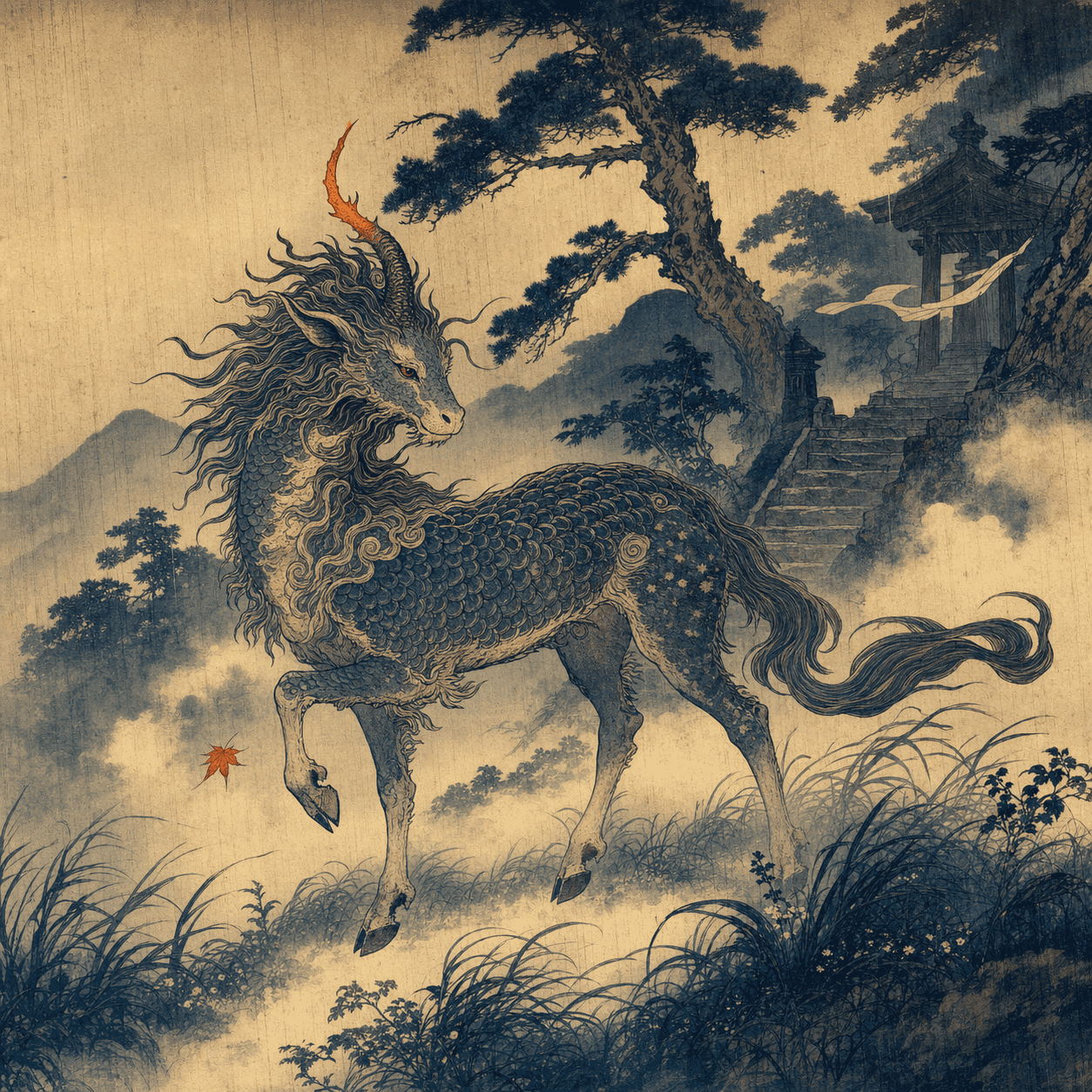
麒麟
The Kirin is one of the most sacred divine beasts in Japanese folklore. It appears only during times of great peace or to herald the birth of a sage. In Japan it is considered more divine than even the dragon or the phoenix.