☠☠☠☠☠
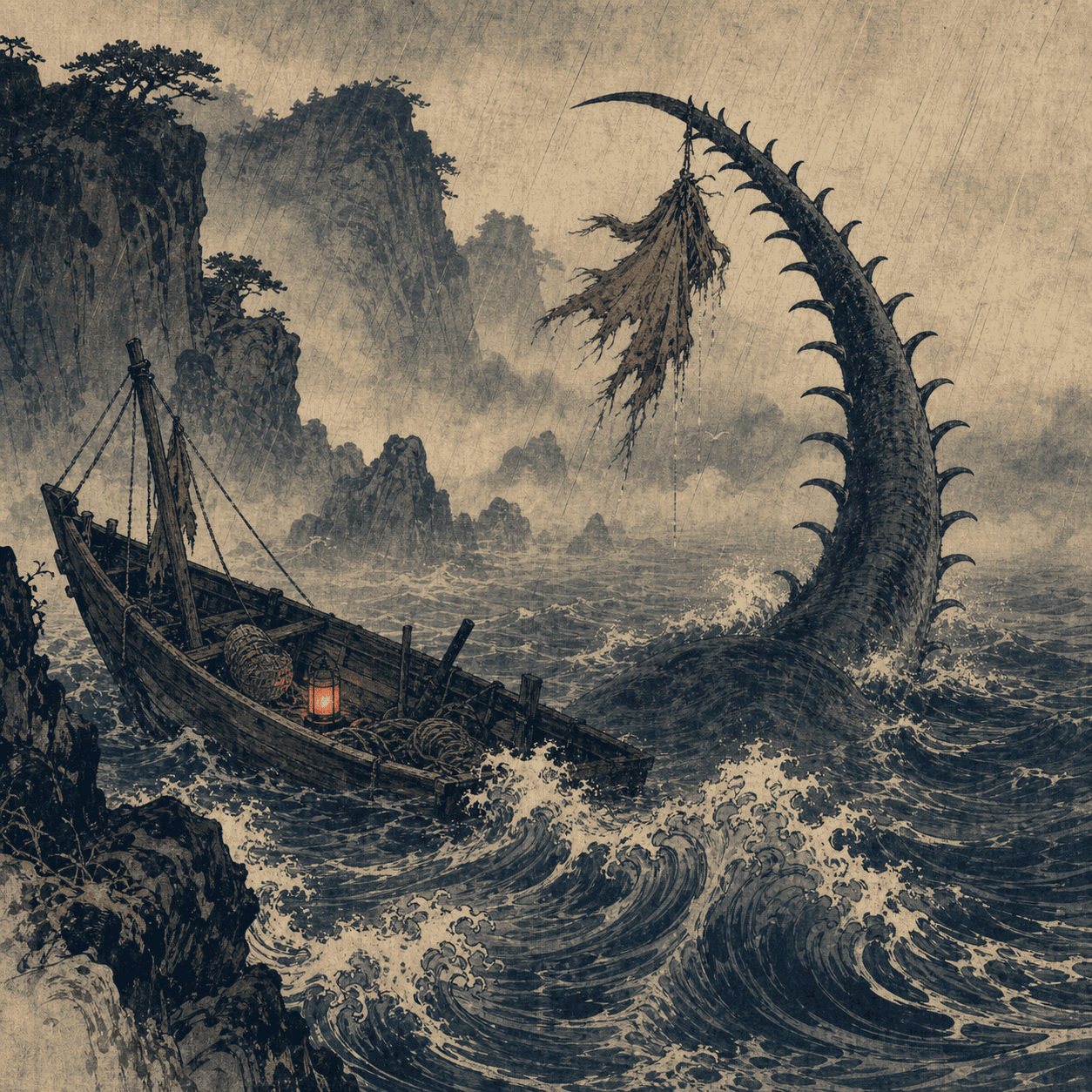
Isonade
磯撫
The Isonade is a giant shark-like sea yokai of western Japan. It strokes sailors off their boats with a barbed tail and carts them into the deep.
tag-seatag-monstertag-shark
Kyushu

The Regional Landscape Print
九州
Where volcanic spirits and sea demons rule the southern waters
Kyushu is the southernmost of the main islands, a subtropical land of active volcanoes and hot springs. As Japan's nearest point to the Asian mainland, it has historically been a gateway for foreign trade, religion, and culture. It is known for its warm hospitality, hearty cuisine, and dramatic volcanic landscapes.
Kyushu is often called the cradle of Japanese civilization; the Imperial family's mythical origins are traced to Takachiho. It was the entry point for rice cultivation, Buddhism, and later, Christianity and Western firearms. The port of Nagasaki remained Japan's only window to the West during the centuries of national isolation.
Kyushu has a distinct culture influenced by centuries of trade. Its ceramics (Arita, Imari) are world-renowned. The food culture is rich and flavorful, featuring tonkotsu (pork bone) ramen, Nagasaki champon, and shochu liquor. The people are often described as passionate and energetic.
The island is geologically active, home to Mount Aso (one of the world's largest calderas) and Sakurajima, which frequently dusts Kagoshima city with ash. The climate is subtropical in the south, supporting lush vegetation and heavy rainfall.
Kyushu samurai defend Japan against Mongol fleets; a 'divine wind' (kamikaze) aids the defense.
A Portuguese ship drifts ashore on Tanegashima, introducing firearms and Christianity to Japan.
Saigo Takamori leads the last stand of the samurai class in Kagoshima.
磯撫
The Isonade is a giant shark-like sea yokai of western Japan. It strokes sailors off their boats with a barbed tail and carts them into the deep.
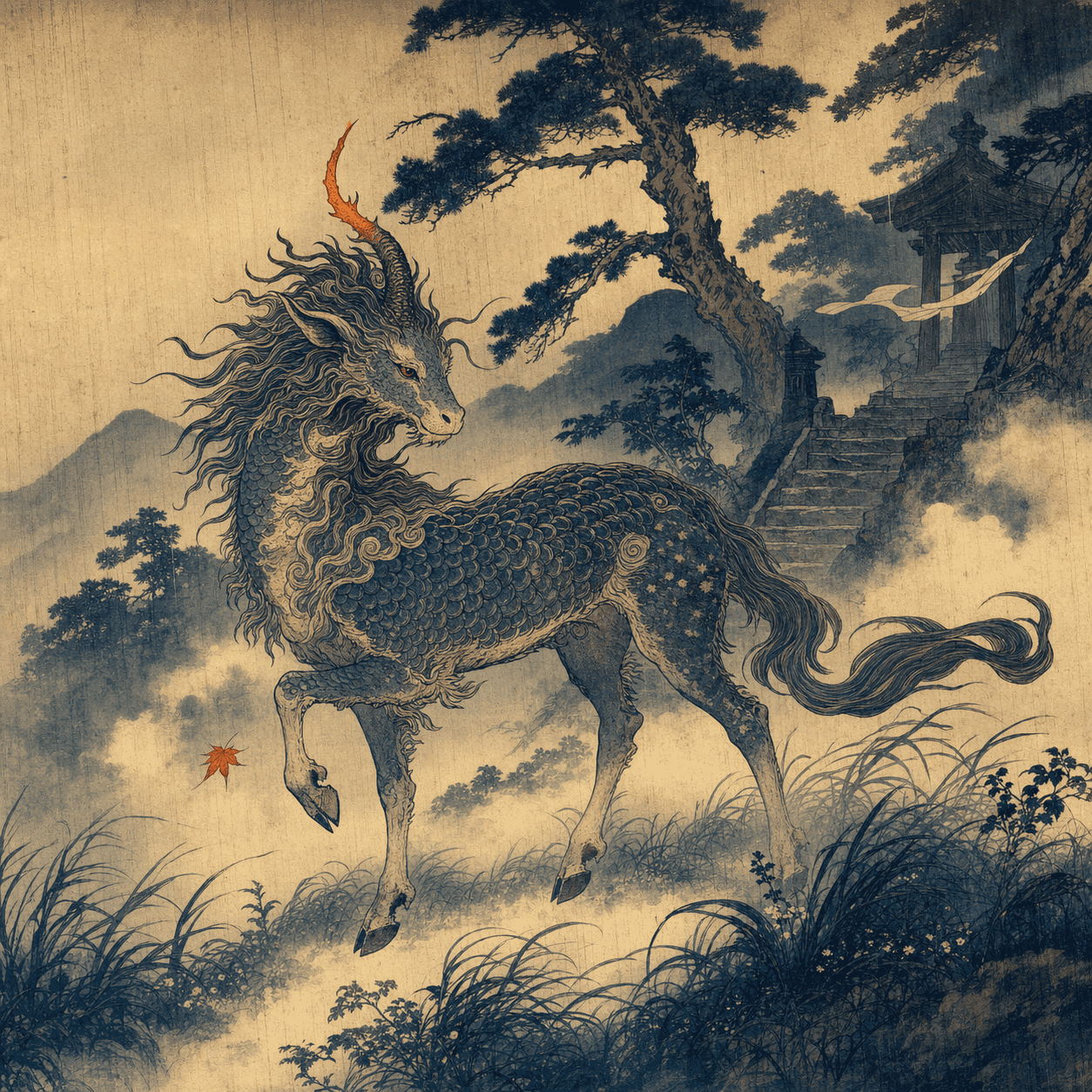
麒麟
The Kirin is one of the most sacred divine beasts in Japanese folklore. It appears only during times of great peace or to herald the birth of a sage. In Japan it is considered more divine than even the dragon or the phoenix.