☠☠
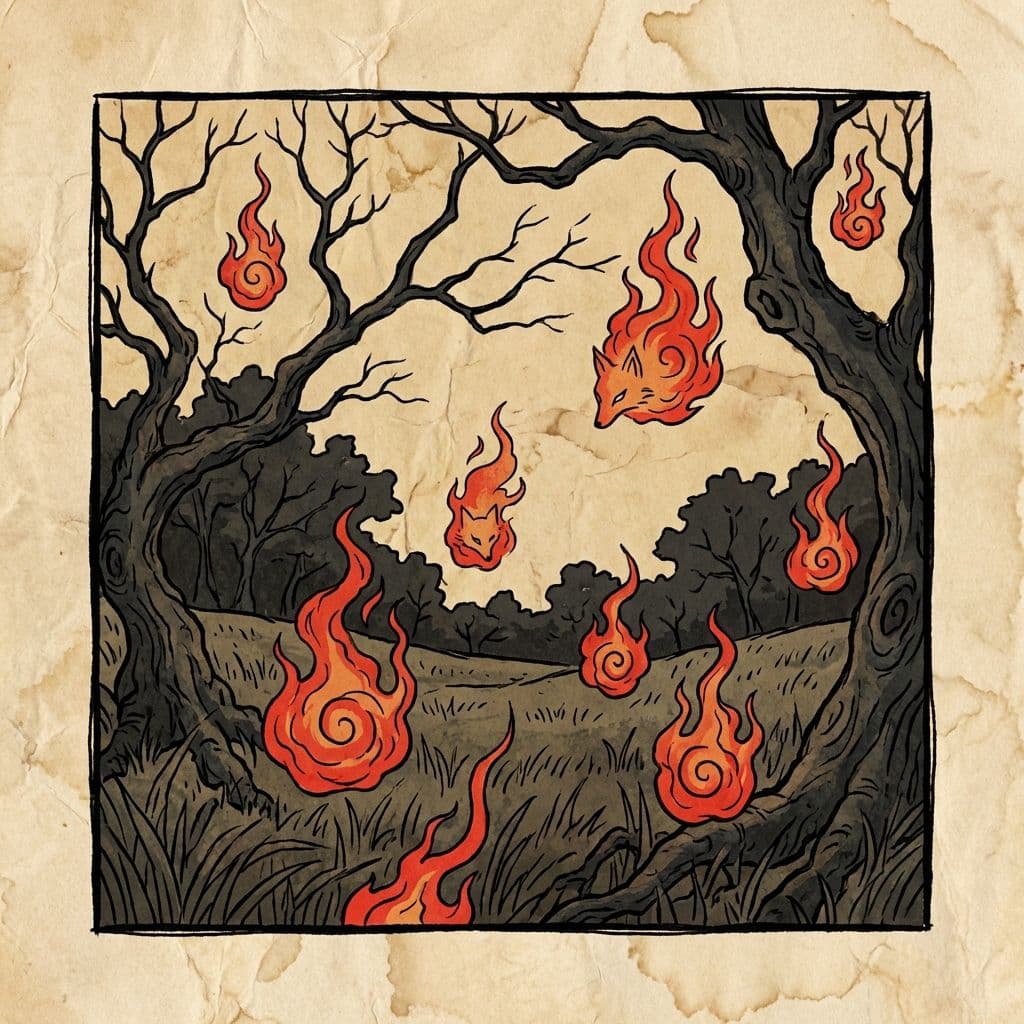
Kitsunebi
狐火
Kitsunebi is a ghost-light yokai made by kitsune. The orbs appear at night across rural Japan and float above fields and mountain trails.
tag-firetag-foxtag-spirit
KantoTohoku
The Regional Landscape Print
関東
Ancient spirits persist amid the neon lights and bustling streets
Kanto is the political, economic, and cultural engine of Japan, centered around the sprawling metropolis of Tokyo. It is a region of contrasts, where futuristic skyscrapers stand alongside ancient shrines, and bustling urban centers give way to scenic coastlines and mountains on the periphery.
Kanto rose to prominence in the 12th century when Minamoto no Yoritomo established Japan's first military government in Kamakura. Its true golden age began in 1603 when Tokugawa Ieyasu made Edo (modern Tokyo) the seat of his Shogunate. During the Meiji Restoration of 1868, the Emperor moved to Edo, renaming it Tokyo and solidifying Kanto's status as the capital region.
The region is a melting pot defined by 'Edo-ko' (child of Edo) spirit—chic, fast-paced, and novelty-seeking. It is the center of modern Japanese pop culture, including anime and fashion, while deeply respecting traditions like Kabuki theater and Sumo wrestling. The cuisine features dark soy sauce-based broths and Edomae sushi.
The Kanto Plain is the largest flatland in Japan, allowing for massive urbanization. It is bordered by mountains to the north and west, and the Pacific Ocean to the east and south. Though largely urban, it includes natural escapes like Hakone and the Chichibu mountains.
Minamoto no Yoritomo establishes the first samurai government in Kamakura.
Tokugawa Ieyasu establishes the shogunate in Edo, starting 250 years of peace and urban growth.
Edo is renamed Tokyo, and the Emperor formally relocates from Kyoto.
狐火
Kitsunebi is a ghost-light yokai made by kitsune. The orbs appear at night across rural Japan and float above fields and mountain trails.
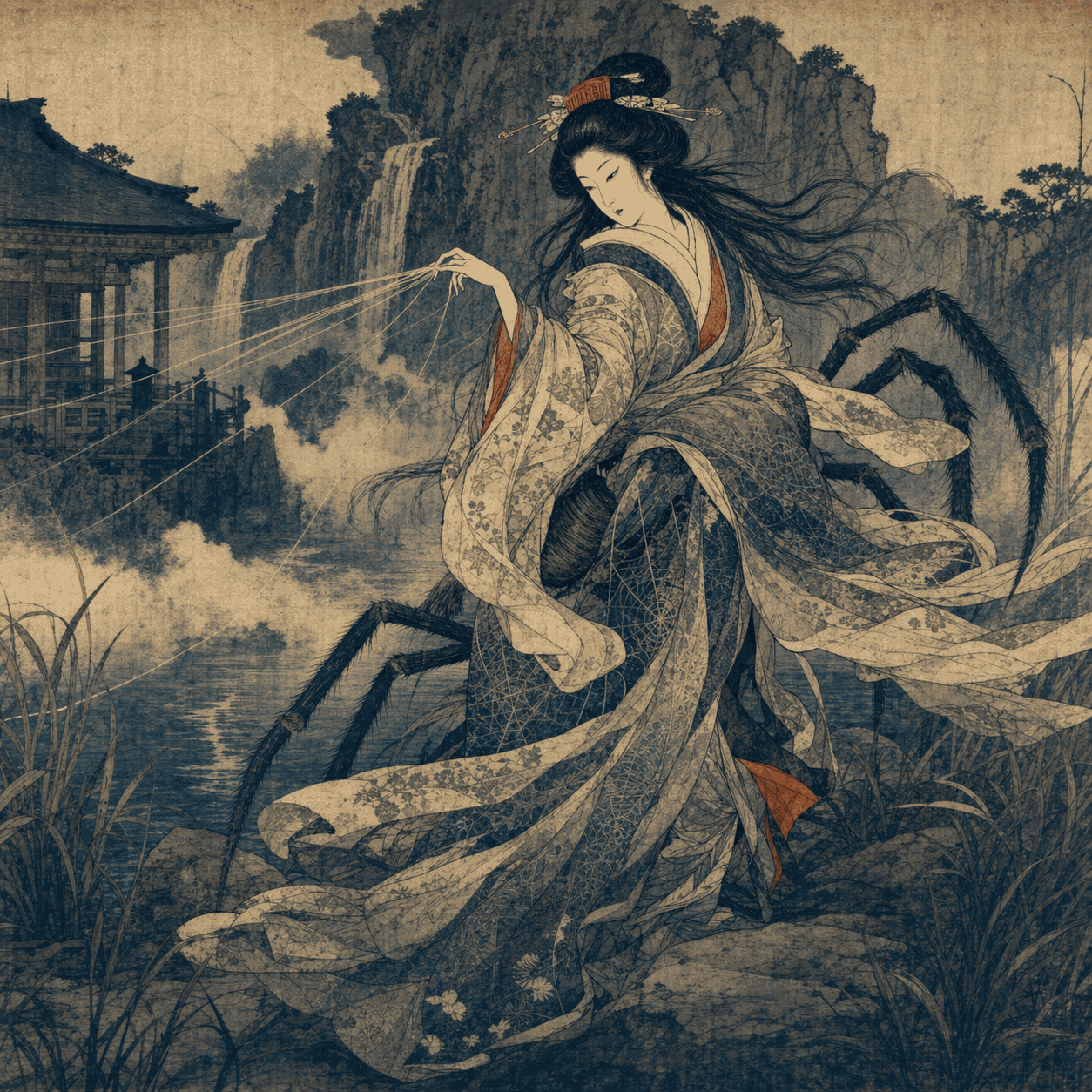
絡新婦
The Jorogumo is a giant spider yokai that can transform into a beautiful woman. It lures men into quiet places, seduces them, and then binds them in sticky webs to devour them later.
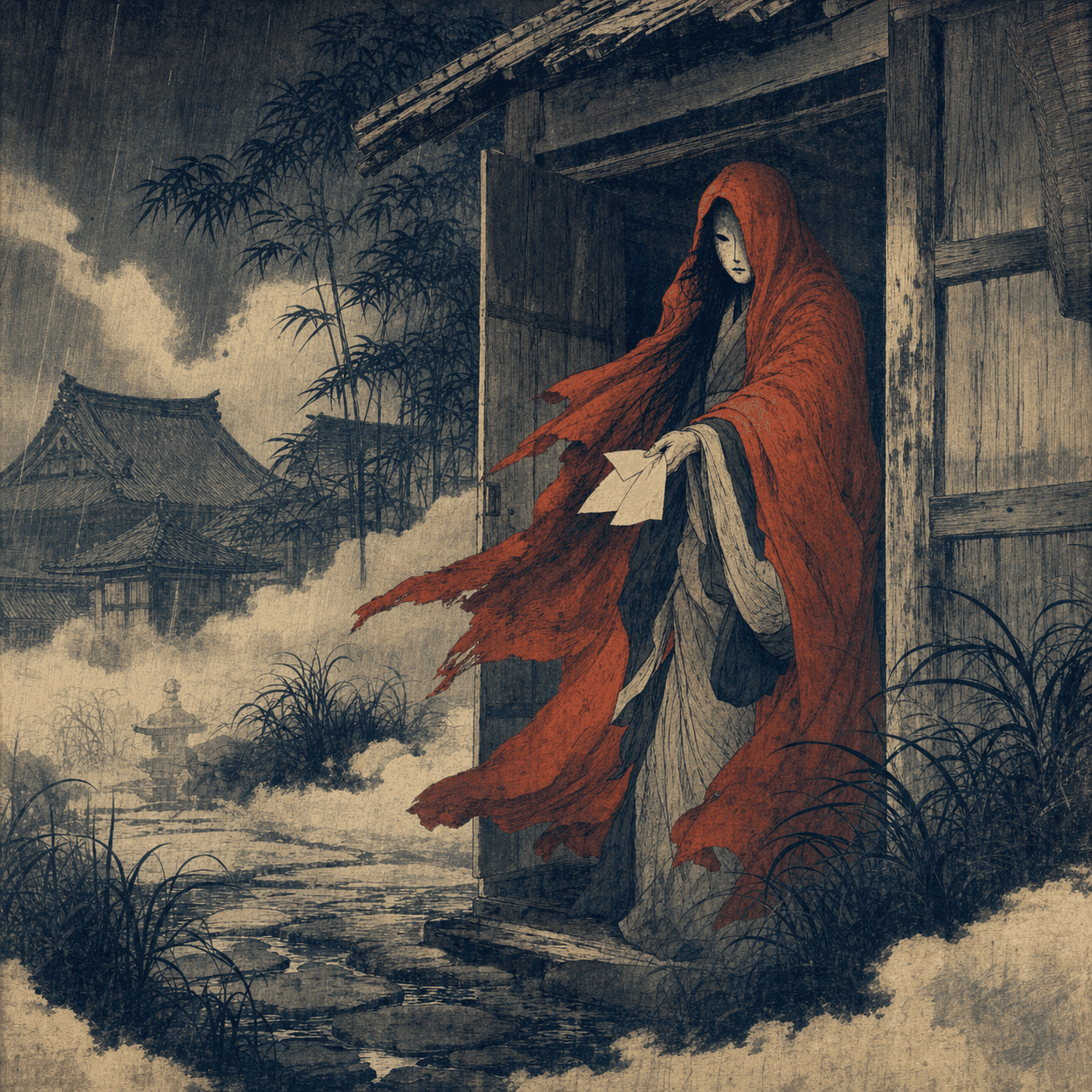
赤マント
Aka Manto is a famous Showa-era urban legend about a malicious masked spirit who appears in school and public toilets. The spirit asks every victim the same trick question — "Red paper or blue paper?" — and punishes both answers with a matching death.
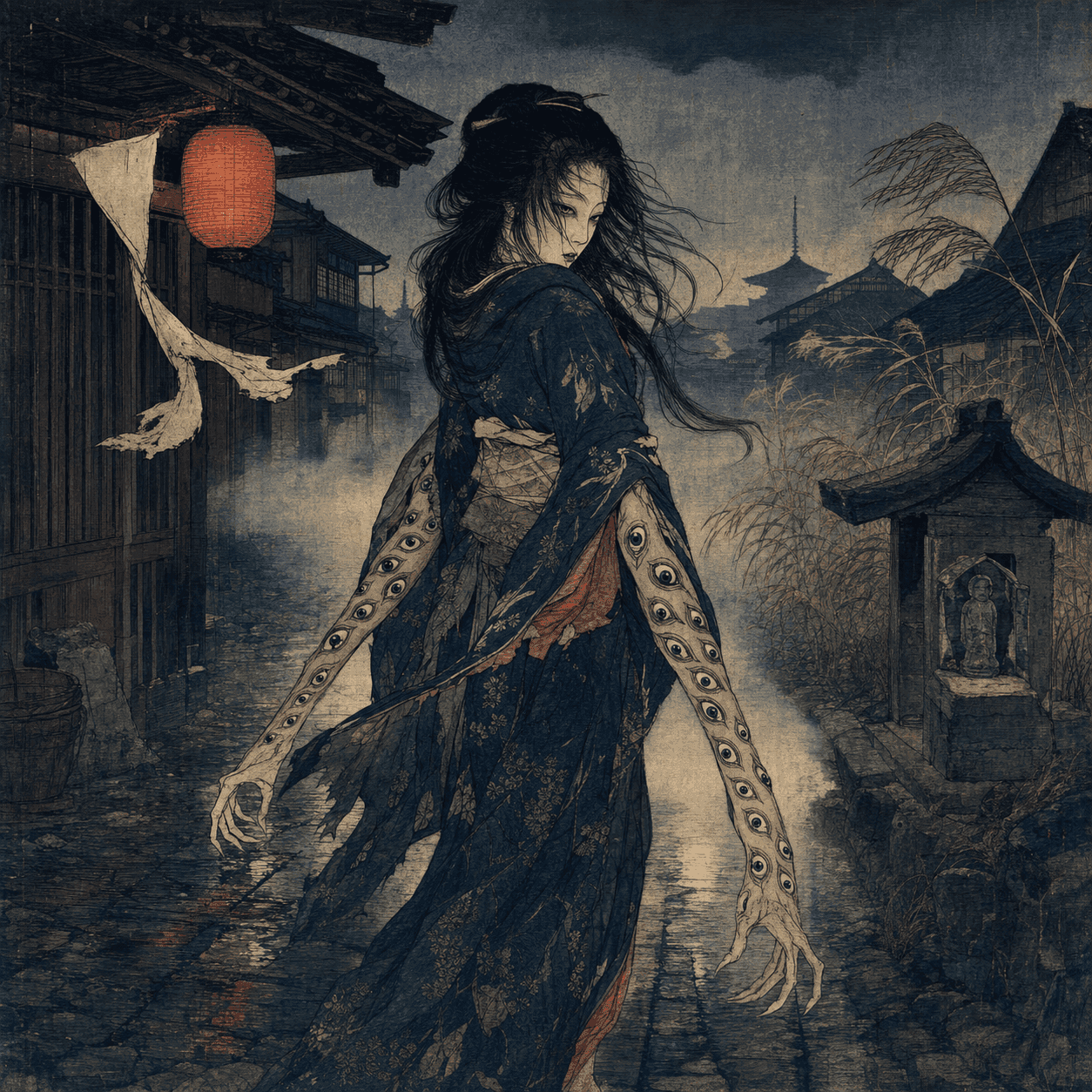
百々目鬼
Dodomeki is a cursed Edo-period yokai woman whose long arms carry hundreds of tiny bird's-eye coins. She punishes the habit of theft.
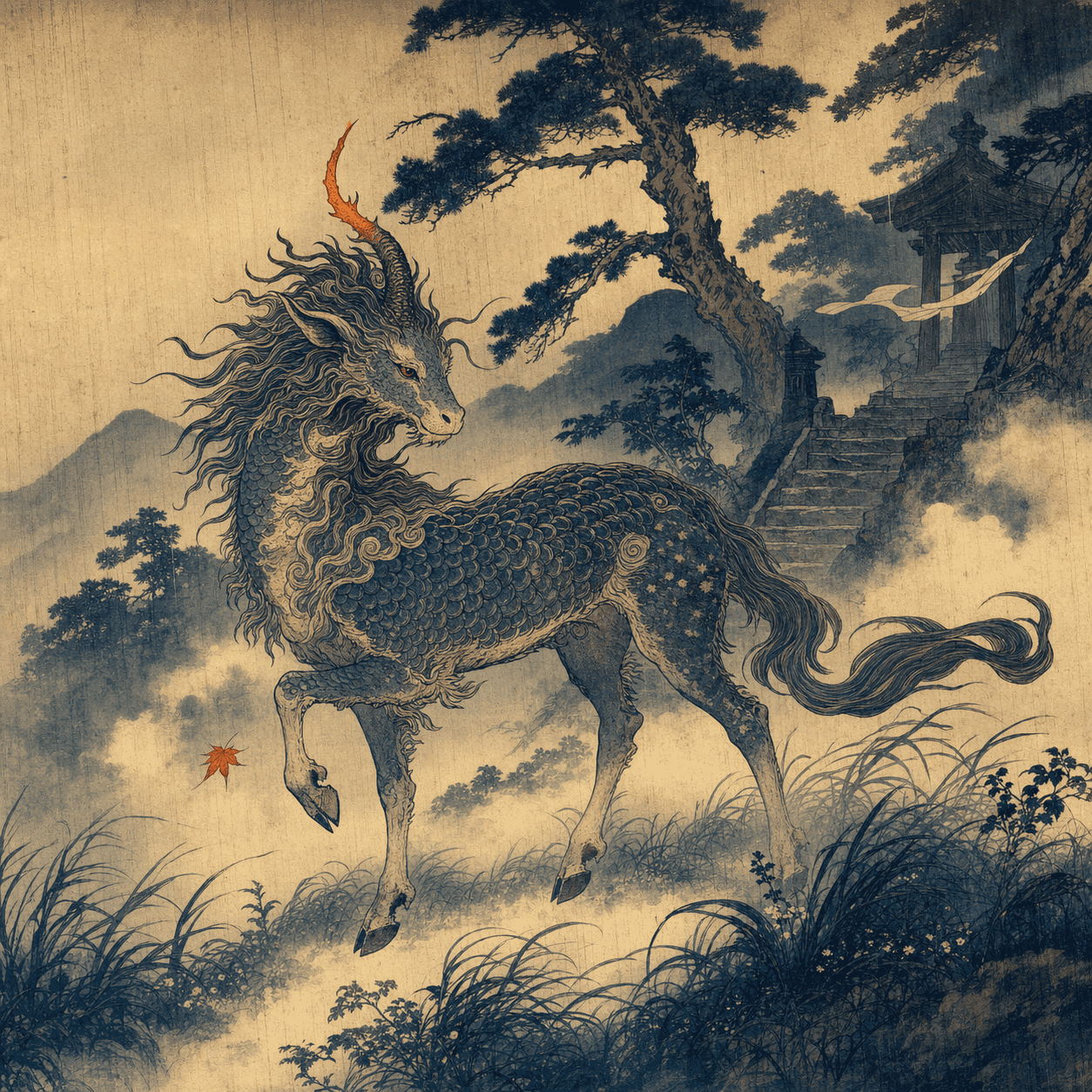
麒麟
The Kirin is one of the most sacred divine beasts in Japanese folklore. It appears only during times of great peace or to herald the birth of a sage. In Japan it is considered more divine than even the dragon or the phoenix.